

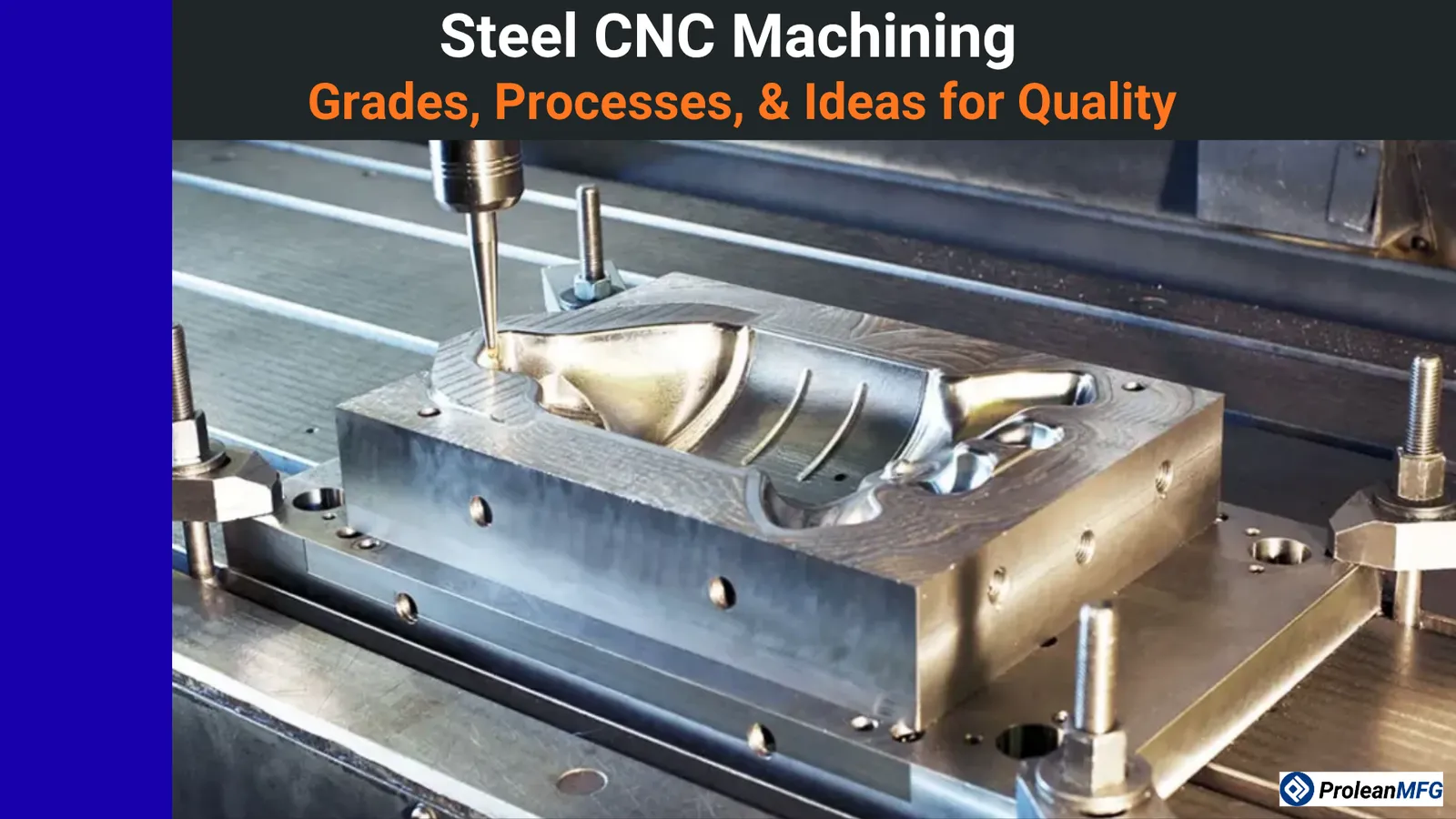

What is Steel CNC Machining?
Steel CNC machining is a computer-controlled method of cutting and shaping steel stock into desired parts. Lathes, milling machines, and other computer numerical control machines are used to execute the toolpaths.
The grades of steel covered range from stainless to low-carbon to alloy – each with its set of requirements in tooling, cutting parameters, and process control. Each steel type has distinct machinability, tensile strength, and other characteristics that determine how it can be cut and shaped.
How Steel CNC Machining Works – The Steps
A typical steel CNC machining part undergoes five steps: Design and CAD modeling, CAM programming, machine setup, CNC machining, and quality inspection. Each step is part of the series, so the quality of each matters. An error in CAD modeling will be reflected in the quality inspection and will probably trigger a rework.
Step 1: Design and CAD Modeling
CAD software is used to define dimensions, material, and tolerance requirements. This is where unique steel machining properties such as thermal expansion and MRR are accounted for.
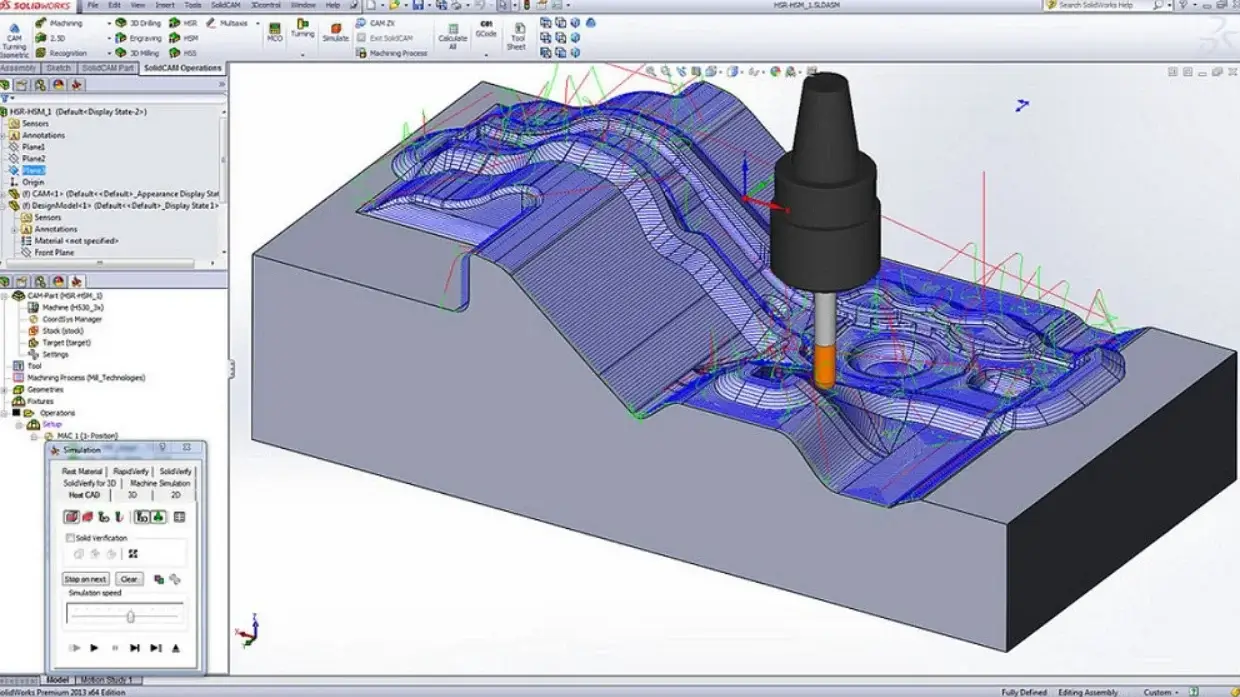
Step 2: CAM Programming
It’s the translation of the CAD model into G-code, which is a language the CNC machine can decipher. The specific steel grade defines crucial machining elements such as feed rates, cutting speeds, and optimized toolpaths.
Step 3: Machine Setup
Whether its round bar stock or steel blocks for machining, the stock is fixed on the machine, and the respective tooling is identified. The correct cutting parameters are also set up. Since machining steel generates relatively high cutting forces, sufficient workholding is emphasized.
Step 4: CNC Machining
Whether it is drilling, grinding, milling, or turning, the programmed steel CNC machining operation can now proceed. The cutting tool follows the optimized toolpath, removing material pass after pass, until the final shape and size are attained.
Step 5: Quality Inspection
Calipers, gauges, and CMMs are then used to confirm the measurements based on the tolerances in the CAD. Alongside the dimensions, the quality inspection team also checks the surface finish.
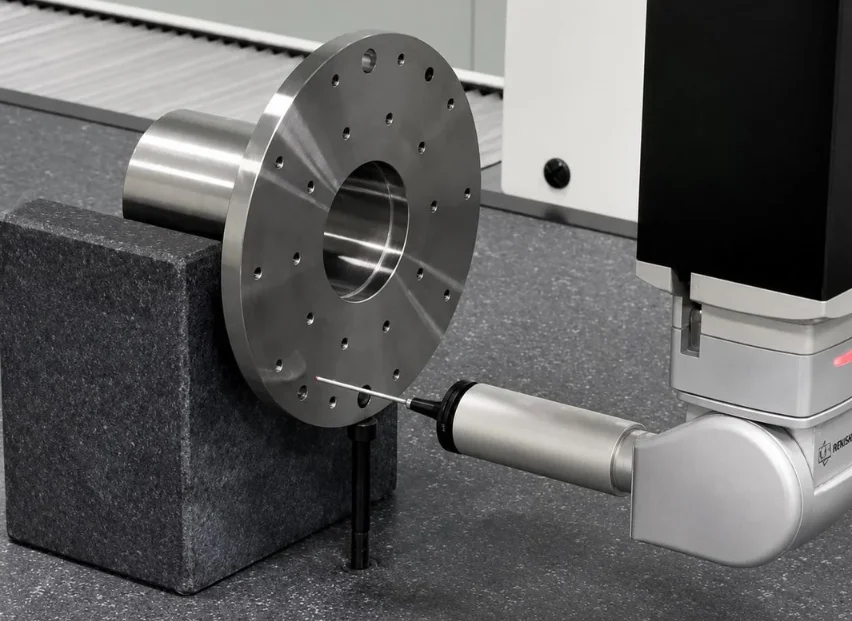
Quality inspection
Common Steel CNC Machining Processes
Steel CNC machined parts are normally produced using one or a blend of these processes: CNC turning, CNC milling, CNC grinding, CNC drilling, and Wire EDM (Electrical Discharge Machining).
The processes are applied based on the tolerance, geometry, and accuracy requirements. Matching a part to the relevant process is a fundamental requirement of the best CNC machining.
Steel CNC Turning
A stationary cutting tool removes material from a rotating steel workpiece. CNC turning is ideal for shafts and bushings.
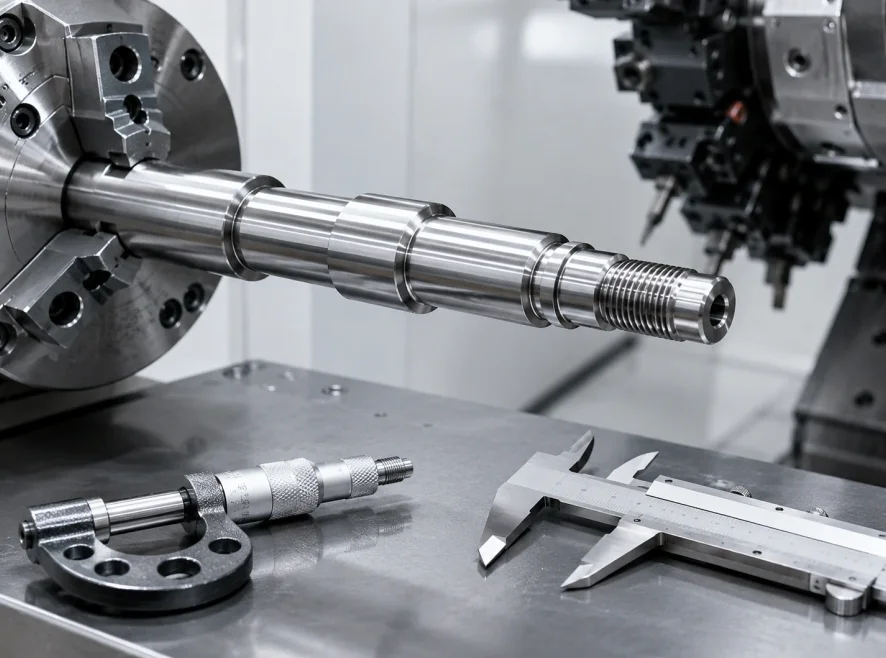
CNC turning steel shaft
Steel CNC Milling
In this case, the steel workpiece is stationary, and rotating multi-point cutters remove material. Manufacturers use steel CNC milling to produce contoured shapes, complex geometries, and pockets.
Steel CNC Grinding
CNC grinding is one of the final machining processes; it generates tight tolerances and a smooth surface finish. It usually follows the final passes from turning and milling.
Steel CNC Drilling
Rotating drill bits are used to produce precise holes for various applications, including fluid flow and fasteners. The right drill bit for the steel grade helps avoid shorter tool life and inaccurate holes. Specific machining problems associated with an incorrect drill bit are rapid flank wear and built-up edge formation.
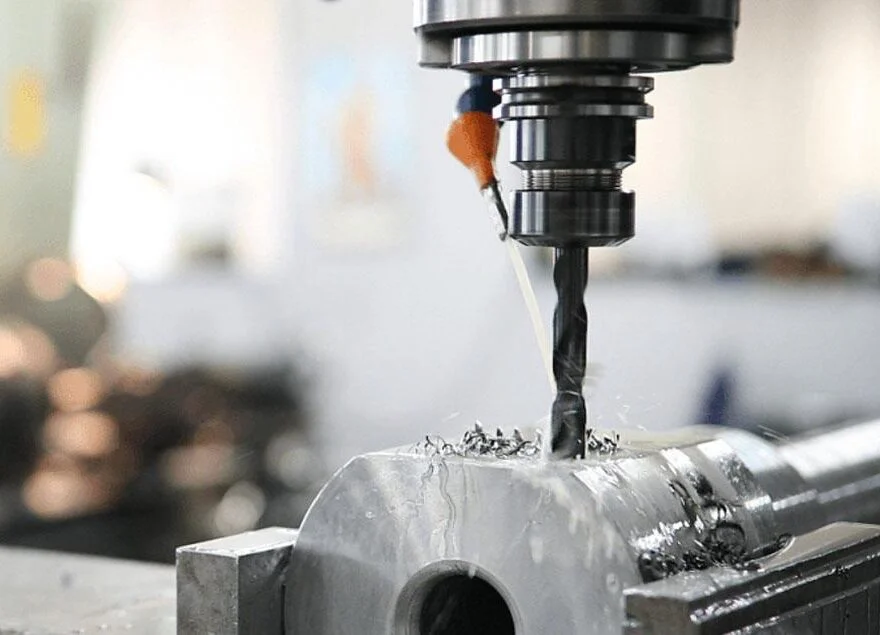
Steel CNC drilling
Wire EDM (Electrical Discharge Machining) for Steel
This machining method is based on spark erosion. The design includes an electrically charged thin wire that erodes the steel workpiece along the set toolpath. It machines complex shapes in hardened steel, something that is challenging for other steel CNC machining methods.
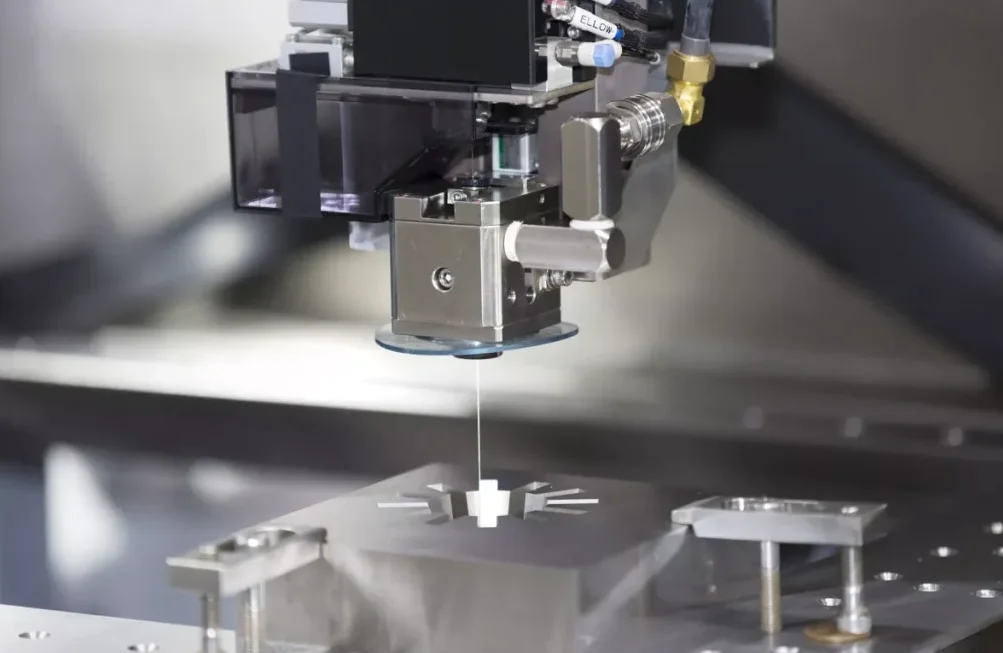
Electrical discharge machining
What Is The Best Steel for CNC Machining? Key Grades of Steel
The options for the best steel for machining include low carbon steel, alloy steel, free-machining steel, stainless steel, heat-treated steel, annealed steel, and machining tool steel.
Low Carbon Steel: Is 1018 steel hard to machine?
No, 1018 steel is one of the best steel for machining. It is ductile, slightly hard, and forms chips predictably. Machinists categorize low-carbon steel as easy to machine and use it for many general-purpose parts.
Alloy Steel
Alloying elements such as chromium and nickel are added to enhance wear resistance and strength. These enhancements can increase tool wear, so the machining process should be designed for such challenges.
Stainless Steel
304 and 316 stainless steel are used for higher corrosion resistance. However, their work-hardening properties make machining challenging; controlled feed rates and sharper tooling are the main strategies.
If you are torn between alloy steel and stainless steel, read our comprehensive guide on Alloy Steel vs Stainless Steel.
Free Machining Steel
Free machining steel is specifically designed for higher machinability. You can consider these as stainless and carbon steels with above-average sulphur, manganese, and phosphorus content. They also contain lower-than-average carbon and silicon content.
Heat-Treated Steel
Tempering and quenching harden steel for higher strength. Due to the risk of tool wear, carbide tooling is a preferred machining solution. For the sections that are too hard, EDM is applied.
Annealed Steel
Annealing is a technique used to soften the steel for easier machining. If a grade will be heat-treated after machining, this pre-machining treatment can be applied.
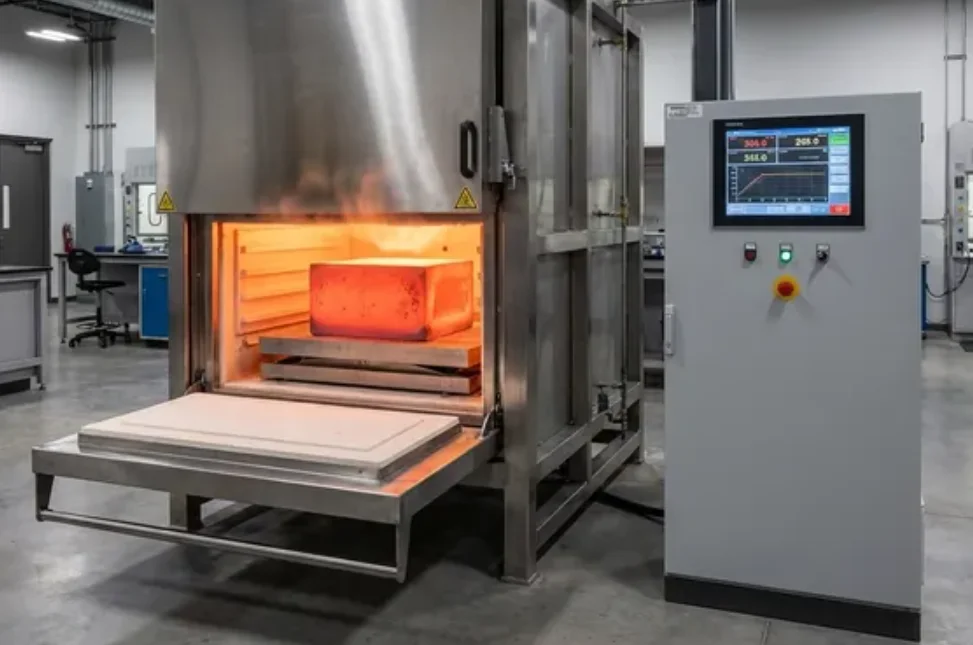
Annealing
Machining Tool Steel
Tool steel is wear-resistant and durable. Machining tool steel is relevant in the manufacture of dies, molds, automotive components, and cutting tools.
Benefits of Steel CNC Machining
The benefits of steel in CNC machining include;
- Good machinability for most grades
- High corrosion and wear resistance
- Compatible with many surface finishes
Limitations of Steel CNC Machining
Here are the limitations of steel CNC machining;
- Some grades are more challenging to machine
- Some grades are heat-sensitive
Recommended Considerations for Steel CNC Machining
The most important parameters or considerations for accurate and effective steel CNC machining are cutting speed and feed rate, coolant and lubrication strategy, and tool selection.
Cutting Speed and Feed Rate
Harder steel alloys require lighter feed rates and slower machining speeds to minimize tool wear and heat buildup.
Coolant and Lubrication Strategy
High-pressure or flood cooling helps dissipate heat from steel during machining, enhancing surface finish and slowing down tool wear.
Tool Selection
The abrasiveness and hardness of the material should match the cutting tool’s capability. Most grades of steel are machined using carbide tooling.
Where Steel CNC Machining Parts Are Used
The major industries using steel CNC machining parts include aerospace, automotive, medical devices/healthcare, industrial machinery,
tooling/mold making, and energy generation.
Machined Steel for the Aerospace Industry
Machined steel is ideal for exhaust parts, tanks, and engine parts in the aerospace industry. Stainless Steel 304, 316, and 17-4 PH grades are commonly used for mission-critical parts.
A reputable CNC machining service provider for aerospace should follow guidelines such as ISO 9001:2015 and AS9100D [1] to ensure parts always meet industry standards.
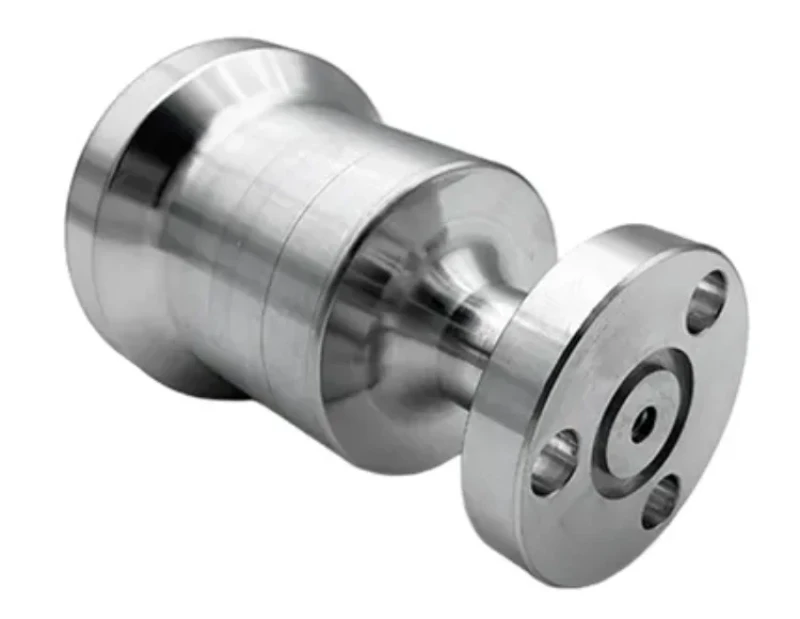
Stainless steel aerospace part
Steel CNC Machined Automotive Parts
Stainless steel is renowned for its corrosion resistance, strength, and good machinability (grade dependent). Machined stainless steel is used for select structural parts, fuel systems, and exhaust systems.
Other steel varieties for machined automotive parts include High-Strength Low-Alloy Steels (HSLA) and Advanced High-Strength Steels (AHSS).
Steel Parts for Medical Devices/Healthcare
Various grades of steel apply to medical/healthcare devices, including 316L, 316LVM, 17-4 PH, 420, and 304.
Popular uses of steel in this industry include wheelchairs, prostheses, chemical containers, bone screws, and orthopedic implants.
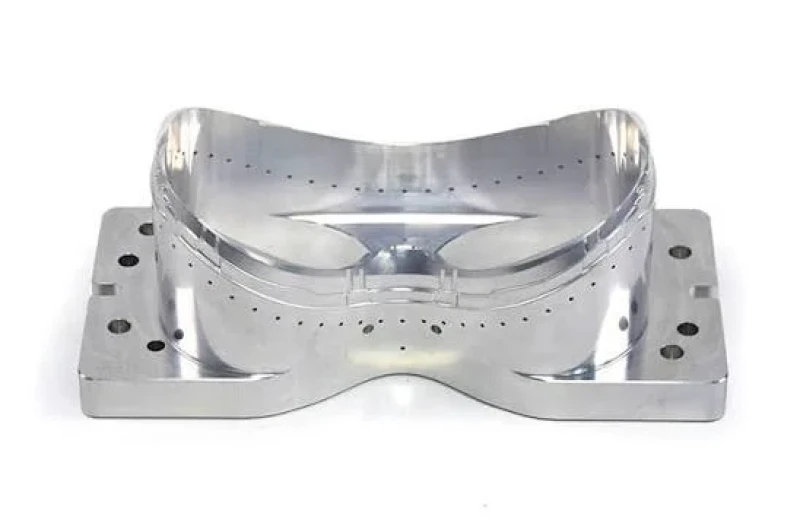
Machined medical device
Industrial Machinery from Machined Steel
Industrial components undergo continual mechanical stress. Steel is used to make load-bearing parts such as bearings and gears. Machine bases and structural frames are other application areas.
Steel Machining in Tooling/Mold Making
Hardened steel is popularly used for cutting tools, molds, fixtures, and jigs. It has superior hardness and enhanced durability. Wear resistance and hardness ensure the cutting tools maintain their sharpness.
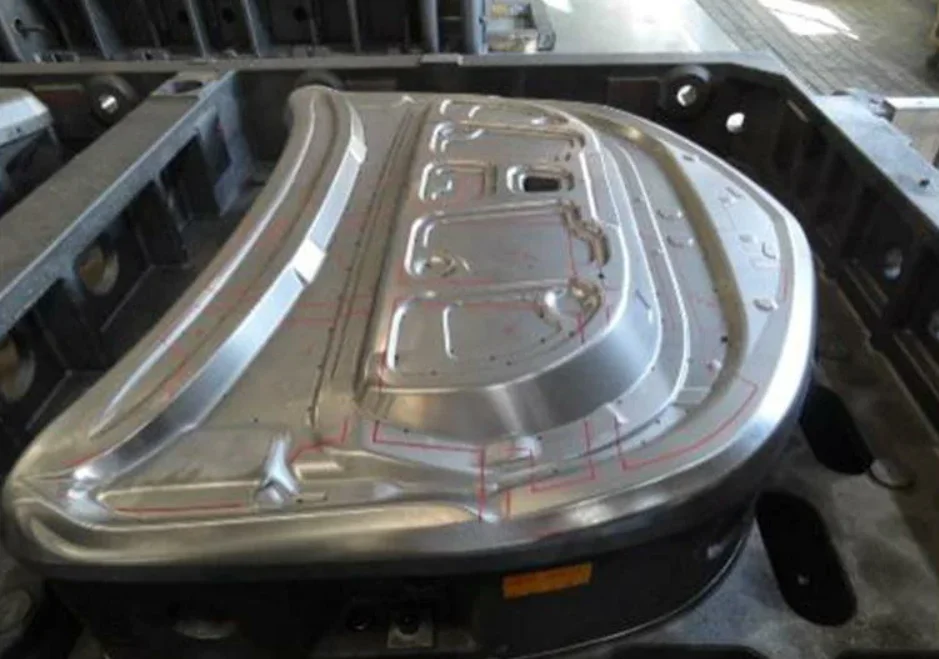
Hardened steel mold
The capability to withstand high pressures and temperatures also makes hardened steel suitable for mold making.
Energy Industry Reliance on Machined Steel
You can find machined steel parts in various energy sectors, from renewable and nuclear to distribution and transportation. Popular applications include heat exchangers, wind turbines, mining equipment, storage tanks, and generators.
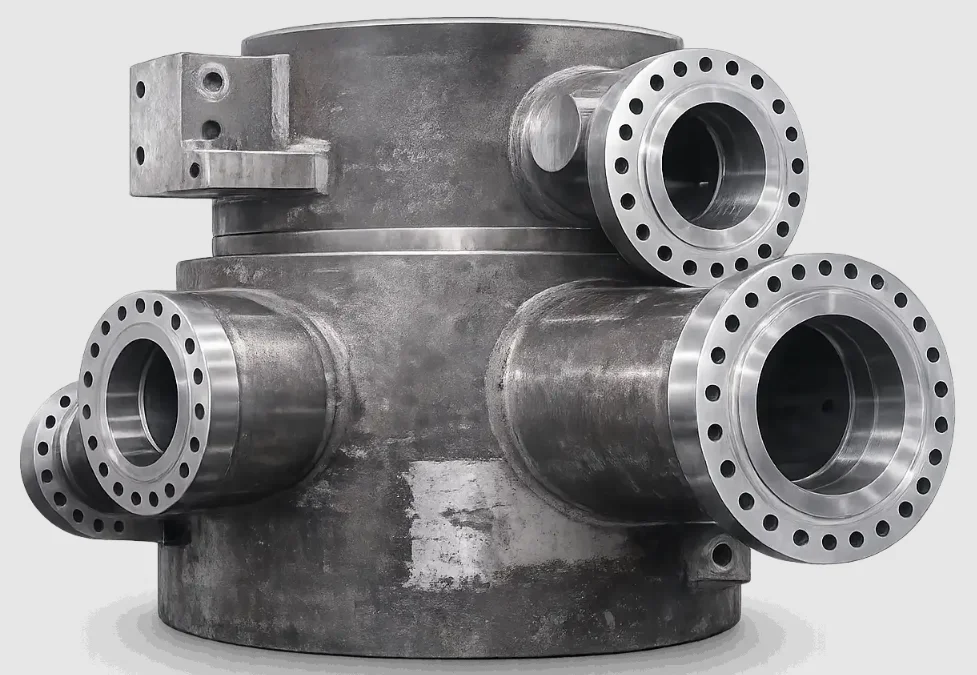
Component for energy generation
Steel CNC Machining Strategies for Quality Parts
The best CNC machining service providers use these levers to ensure consistent quality in machined parts: Tool coatings, balance between feed rate and depth of cut, optimized toolpath geometry, and optimized load distribution for roughing vs. finishing.
Tool Coatings
TiCN and TiAlN tool coatings can extend tool life by lowering heat transfer and tool wear. These coatings are recommended for machining harder steel grades.
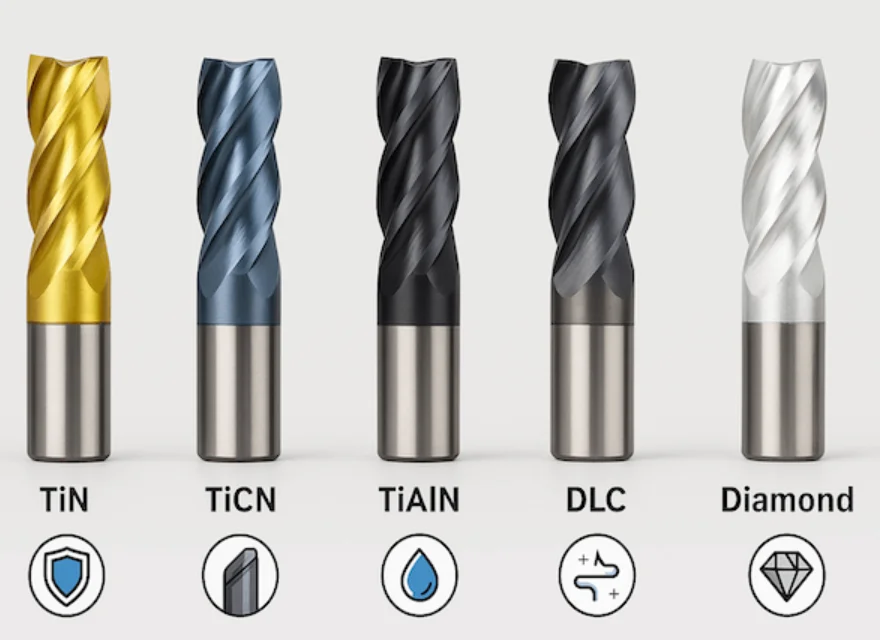
Cutting tool coatings
Balance Between Feed Rate and Depth of Cut
The relationship between feed rate and depth of cut (DOC) is instrumental in chatter and deflection prevention. If it’s roughing, slower feed rates and higher DOC are mostly preferred. Finishing operations are usually done at higher speeds and lower DOC.
Optimized Toolpath Geometry
Tool path optimization in steel CNC machining directly affects machining cost, part cost, and efficiency. By optimizing this property, machinists can improve part quality and increase machining productivity.
Optimization techniques include high-speed machining (HSM) and adaptive machining.
Optimized Load Distribution for Roughing vs. Finishing
The correct machining load distribution ensures that CNC roughing focuses on efficient removal of bulk material, and CNC finishing on meeting tolerance and surface finish requirements.
What Drives the Cost for Steel CNC Machining?
Steel CNC machining cost is influenced by the steel grade, part complexity,
tolerance requirements, and batch size.
Steel Grade
The steel grade determines machinability and price for the stock material. Heat-treated and harder steel alloys are more challenging to machine. The higher cycle time and increased tool wear increase machining cost.
Part Complexity
Thin walls, deep pockets, and complex profiles make machining more demanding. Again, the increased machining time and requirement for specialized, custom machining increase the overall machining cost.
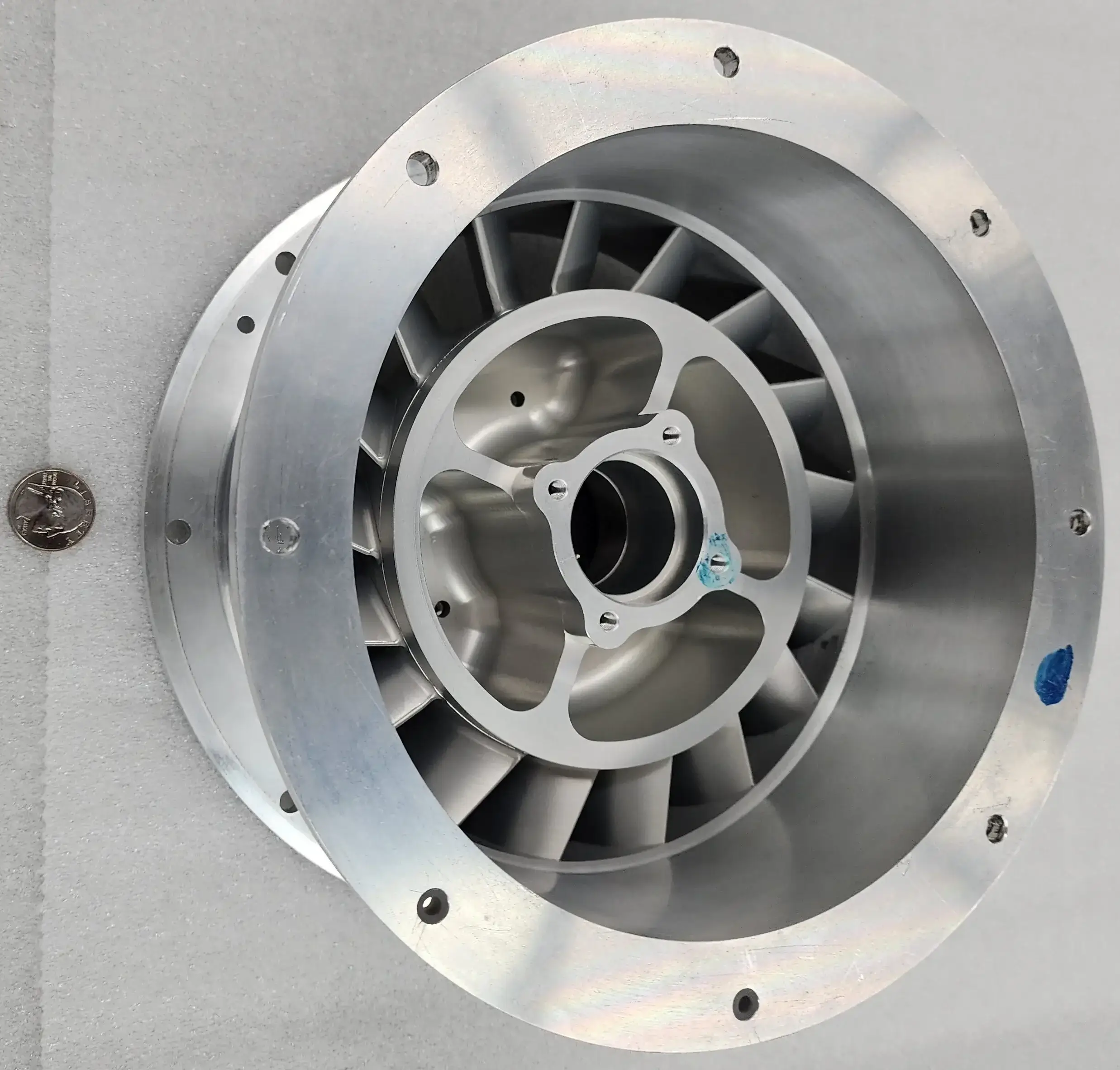
Complex machined part
Tolerance Requirements
If the tolerance requirements are tighter than normal, the machining process tends to be slower. The inspection requirements are also likely to be tighter. These additional requirements affect the final cost of the machined steel part.
Batch Size
Smaller steel batches will often cost more than larger batches. Larger batches attract lower costs because of economies of scale – the costs are spread out more. So, the question is whether it makes sense to increase the batch size for lower cost per part.
Wrapping Up
Steel CNC machining reliably produces strong, accurate, and long-lasting steel parts for aerospace, automotive, energy generation, tool making, and other demanding industries.
From picking the right steel grade for CNC machining to using the right cutting parameters, steel CNC machining is driven by a professional strategy from experienced hands. A good machining partner knows that tool life, part functionality, and part durability point to the machining approach.
It doesn’t matter whether you are interested in a medical prototype component or a low-volume supply of automotive shafts; the secret is to embark on the journey hand-in-hand with the right machining partner.
Don’t compromise on the quality of your steel CNC-machined parts – partner with a company that understands the unique interactions between part material, size, design complexity, and tolerance requirements.
Our Steel CNC Machining team will engage you at every step. Contact us today to get expert guidance within 24 hours. Once you upload your part design, we will help with alloy selection and take you through the stages until you have a precisely machined steel part.
FAQ
How much is CNC per hour?
The cost of CNC per hour for steel parts depends on several factors, including steel grade, part complexity, and production volume. Looking at the general cost per hour, most simple parts cost approximately $30 per hour and complex parts $50 per hour.
Sources