
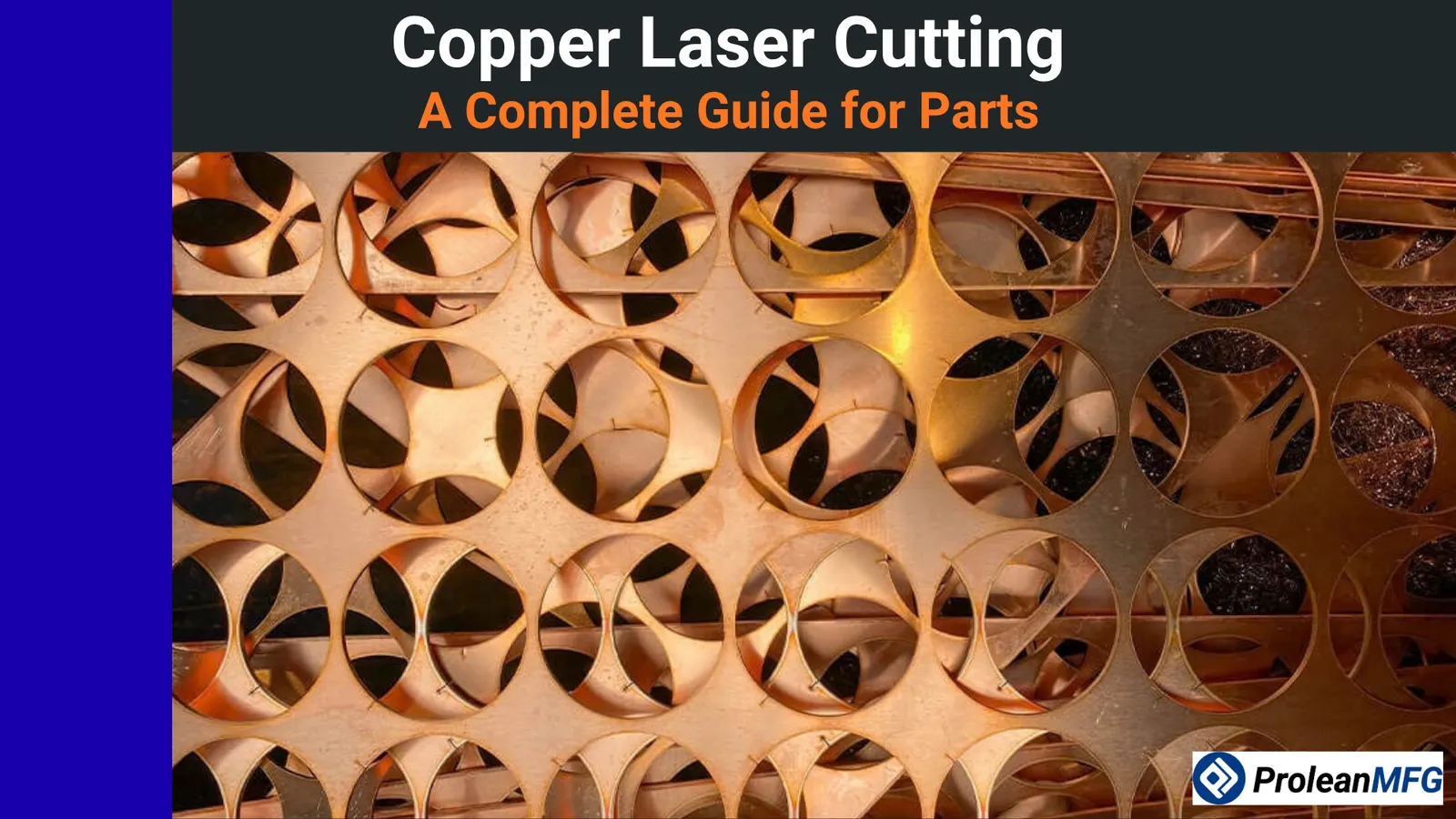

Copper laser cutting is the process of melting and cutting copper using a powerful laser guided by a CNC program. This process may sound simple, but copper’s high thermal conductivity and reflectivity are a serious challenge.
Poor machine settings can cause incomplete cuts, inconsistent edges, and worse of all, increased scrap. Cutting copper on laser is even tougher if you are using the wrong cutting technology.
But with mastery of sheet metal laser cutting requirements for copper – cutting technology, the right assist gas, and accurate machine settings, plumbing, healthcare, and electrical applications get the precision-cut copper parts they require.
If you are specifying copper parts, it pays to understand how copper laser cutting works, the applicable copper grades, and factors in cut quality. This guide provides details to help you get consistent cuts and prevent costly errors.
Can You Cut Copper with a Laser Cutter?
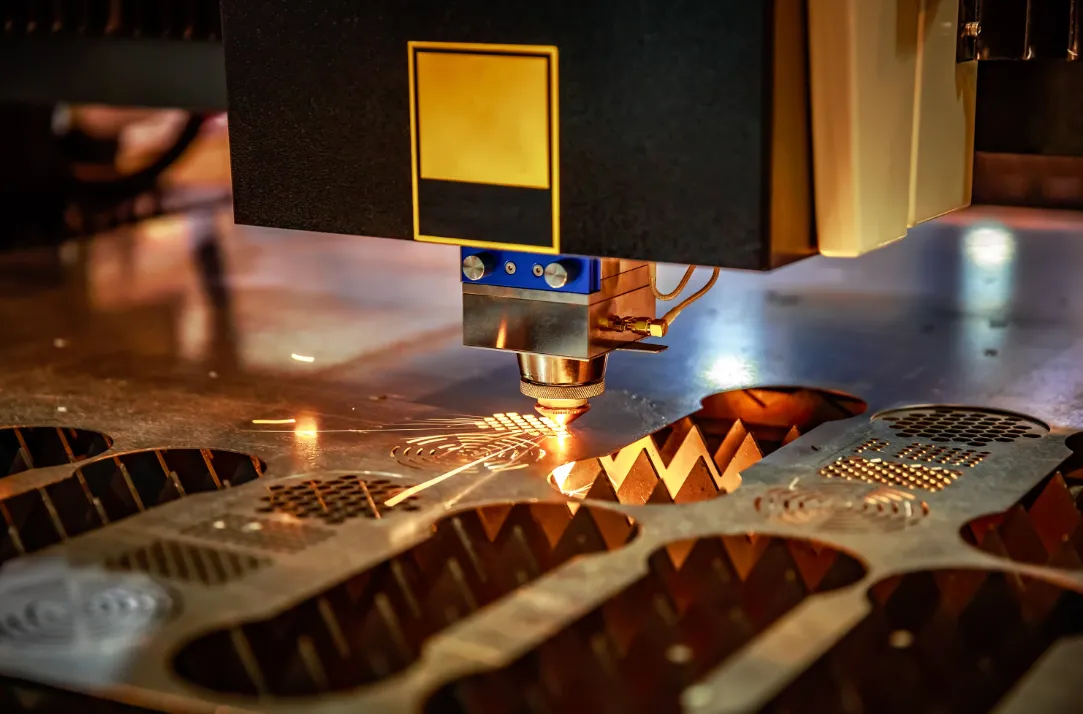
Copper laser cutting
Yes, you can cut copper with a laser cutter. However, the right laser cutting technology and strategy are necessary. Diode and CO2 lasers are not as powerful as fiber lasers, which handle copper’s reflectivity and thermal conductivity well.
Cutting copper is more than just passing through the width. Process reliability is measured by factors such as burring, tolerance, heat marks, and edge quality.
What is Copper Laser Cutting?
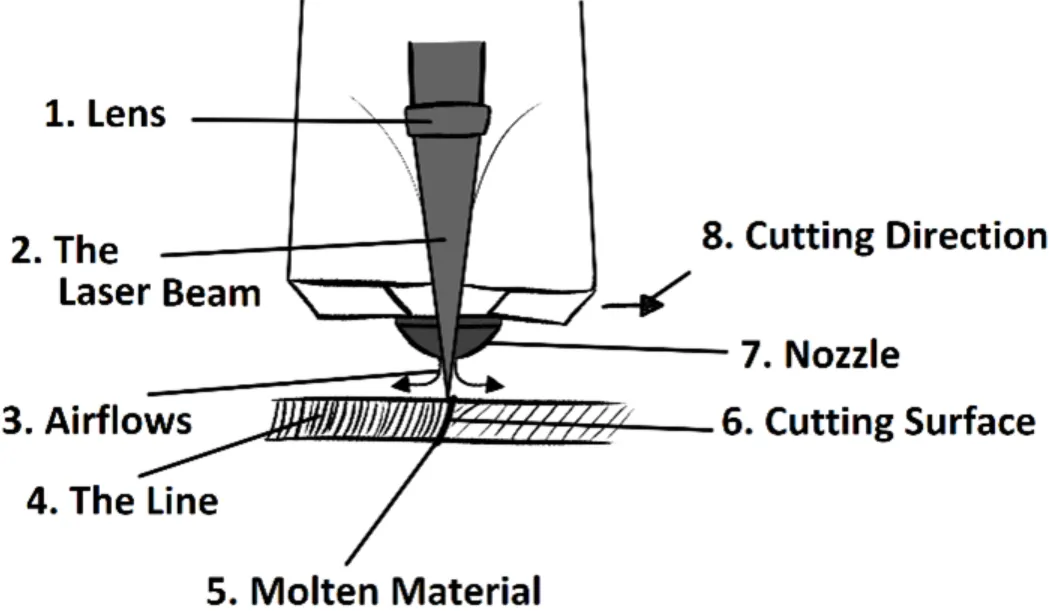
Copper laser cutting uses a computer numerical control (CNC) to direct a high-power laser as it cuts through copper. Laser cutting melts a localized area of the material, with the help of a coaxial gas jet.
Laser cutting machines can use fiber laser sources, CO₂ laser sources, or diode lasers. Copper vapor lasers are less common, but they are noteworthy.
Fiber Laser
Fiber laser cutting technology
Fiber laser cutting is widely accepted for copper because it effectively manages to produce clean cuts on the reflective material. Modern machines mainly have fiber laser sources. A major reason for this preference is the versatility the technology exhibits by even cutting other reflective metals such as aluminum and silver.
In addition, the high peak power of fiber lasers ensures intricate, precise cuts. Another benefit of the technology is an optimal wavelength for copper absorption.
CO₂ Laser
CO₂ laser cutting technology uses a laser produced from a gas mixture, which includes carbon dioxide. The mixture also contains nitrogen, helium, and hydrogen.
The electrical stimulation of the gas mixture electrifies the carbon dioxide molecules. This leads to the production of a 10.6 µm-wavelength laser beam. [2]
Can a CO₂ Laser Engrave Copper?
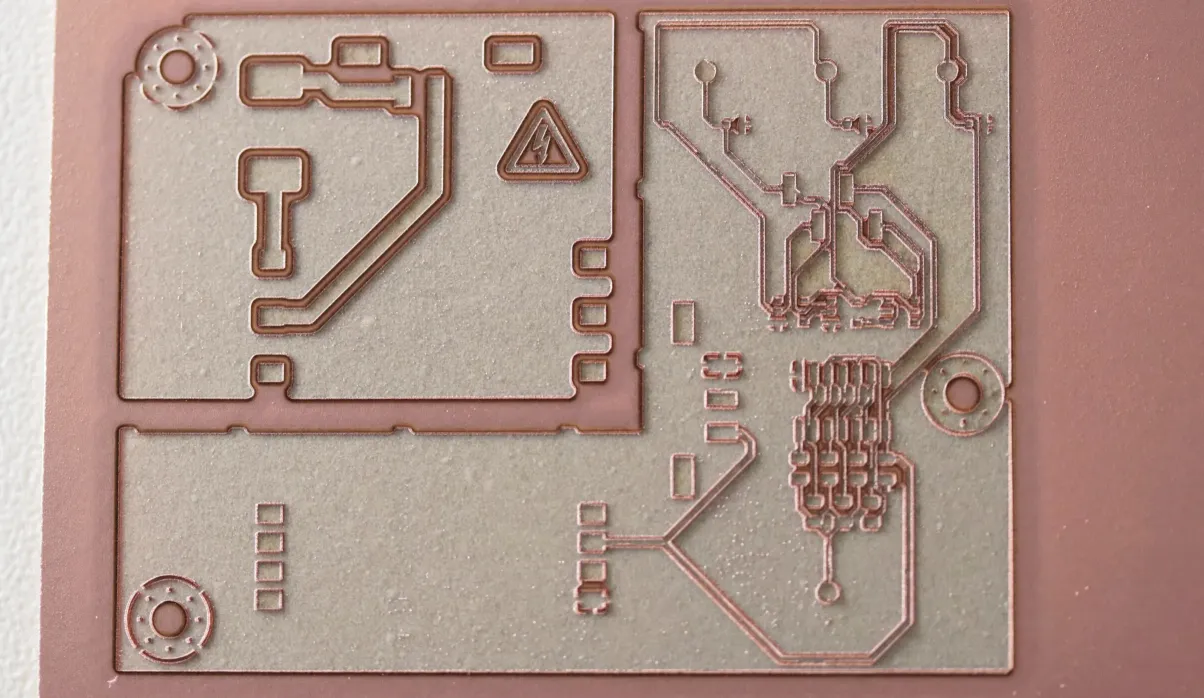
Laser engraved copper
Yes, a CO₂ laser can engrave copper, but with coating/painting on the metal or a laser bonding solution (metal marking powder).
Painting/Coating – A CO₂ laser can be used to manipulate painted or coated surfaces, exposing the copper beneath. With the right settings, the coating can be eliminated without affecting the metal.
Laser Bonding Solution (Metal Marking Powder) – Using a specialized chemical compound is the most effective method. When the CO₂ laser strikes the compound-treated copper surface, a dark mark forms after a chemical reaction.
Diode Laser
The laser beam for the diode laser cutter comes from a semiconductor diode. The energy-efficient blue light wavelength (approximately 450 nm) can cut, engrave, and mark across a range of industrial applications.
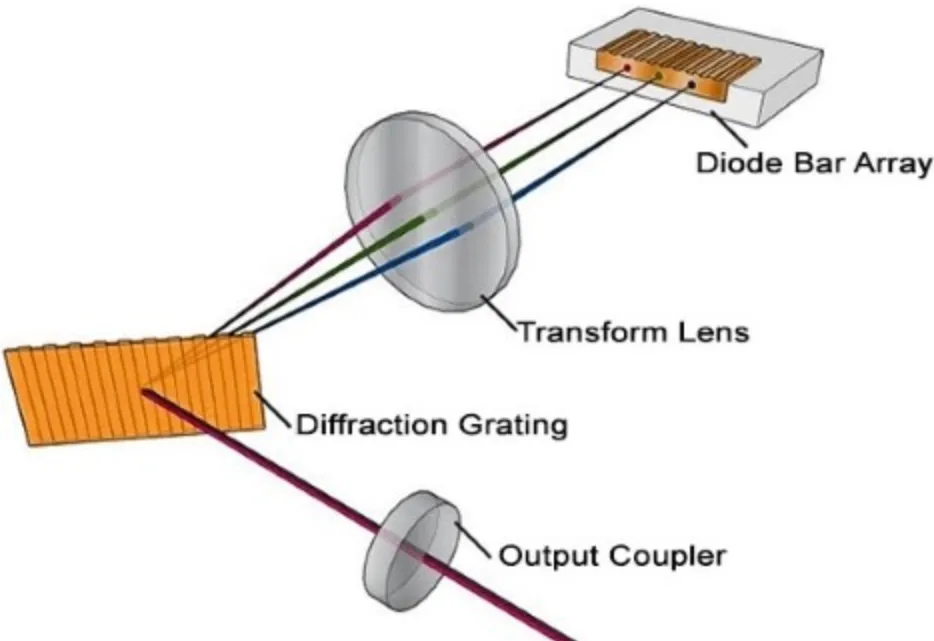
Diode laser cutting
Diode laser cutting is limited to high-contrast engraving and cutting thin materials. It is popularly used to cut paper, cardboard, and plywood. Since this is a blue light wavelength, it cannot cut clear glass and clear acrylic.
Copper Vapor Lasers
Copper vapor lasers produce a beam from an electric pulse on vaporized copper metal. They have minimal heat spread and high peak power. This technology is suitable for high-speed micromachining in microelectronics and other fine machining applications.
What is the Best Laser for Engraving Copper?
Fiber is the best laser for engraving copper. The metal absorbs the 1064 nm wavelength very effectively, which renders this laser cutting method the default choice for engraving metal.
The engraving from a fiber laser is corrosion-resistant and permanent, capable of withstanding normal use and cleaning. It also holds fine tolerances required for applications like serial numbers.
Normally, engraving requires less power than laser cutting. Where laser etching copper would cut through the sheet, engraving goes only a fraction of the depth.
However, the fiber laser engraving machine could work more slowly and require more power if you are engraving pure copper, which is more reflective.
Copper Grades for Laser Cutting
The common copper grades for laser cutting are:
C101: This 99.9% minimum copper grade offers high electrical and thermal conductivity. Its laser-cut parts are used for heat exchangers and electrical terminals.
C103: It is also called oxygen-free copper because it contains no residual oxygen. Because C103 does not embrittle at high temperatures, its laser-cut parts are used in high-conductivity electronics.
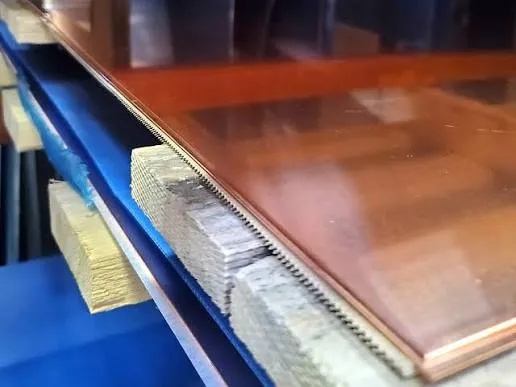
Copper C103 sheets
C106: This copper grade is renowned for enhanced formability and weldability. Laser-cut parts can be used in heat exchangers and plumbing fittings.
Antimicrobial Copper: Antimicrobial copper is engineered for surface bacteria minimization. These laser-cut copper parts are common in healthcare-related applications.
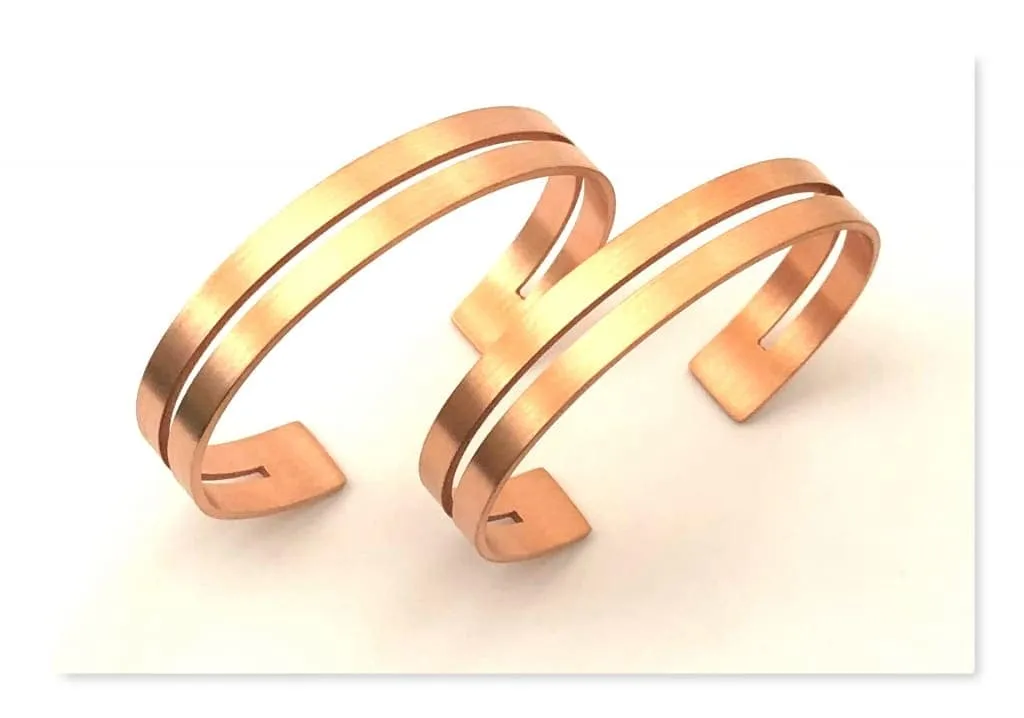
Antimicrobial copper
If your preferred copper grade is not in the list, ProleanMFG can still source it and produce quality parts. Please share the grade required for more guidance from an expert in materials for laser cutting.
Common Applications for Copper Laser Cut Parts
Some of the most popular applications of copper laser-cut parts are in automotive, electronics, architectural, construction, and renewable energy industries.
Automotive Industry
Copper’s thermal performance and conductivity are widely used in vehicle electrical systems. Consider applications such as;
- Grounding terminal lugs
- Battery pack busbars
- Sensor housings
Electrical and Electronics Industry
Copper’s conductivity is also important in electronics, especially regarding heat management, electrical connections, and signal quality. Cutting copper on laser is used for parts like heat spreaders, connectors, and busbars.
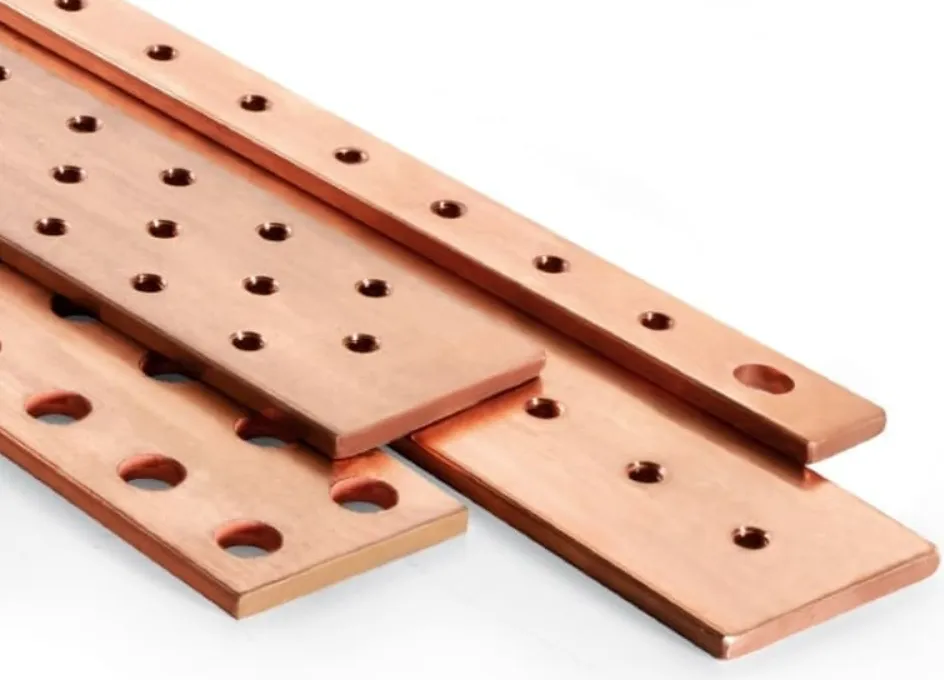
Laser-cut copper busbar
Architecture/Construction
Exposed architectural elements can be made from copper laser-cut parts to benefit from the material’s durability and corrosion resistance. Talk about elements such as aesthetic facades, panels, and flashing, which require accurate, intricate cutting.
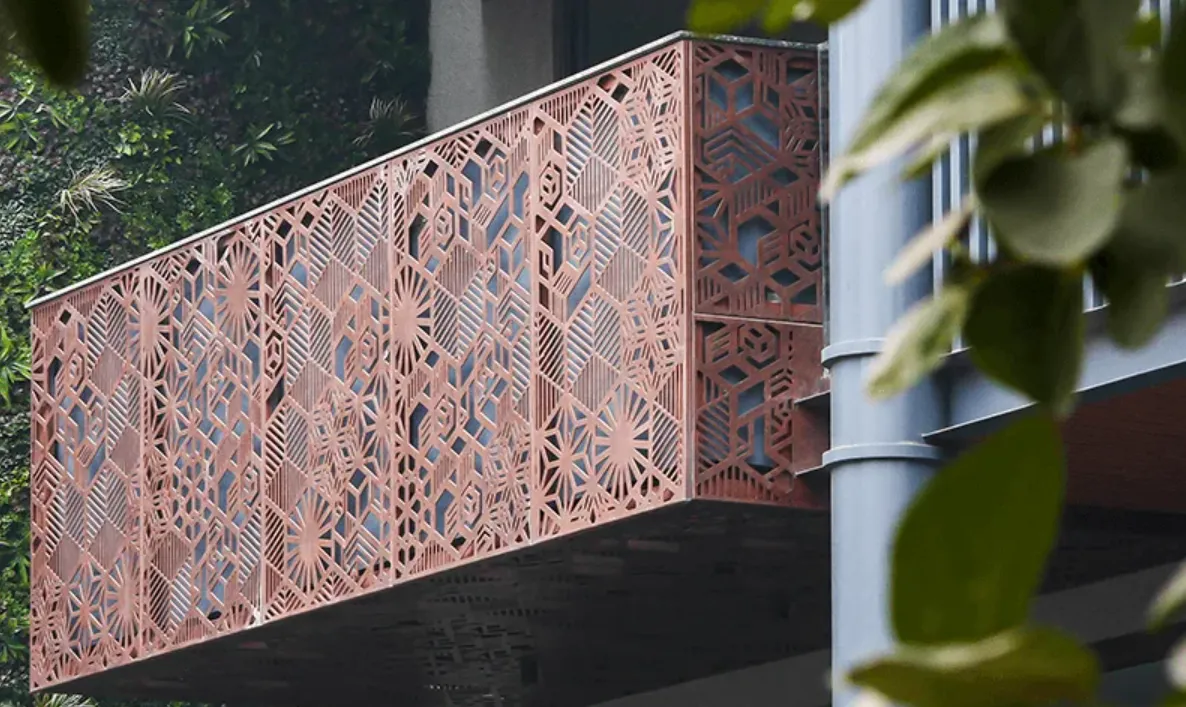
Laser-cut copper facade panel
Renewable Energy
Solar and wind energy facilities can rely on laser-cut copper parts for inverter connections and precision busbars. If the DC is high, cut consistency and edge finish should be verified to prevent hotspots under high load.
Why is Copper Laser Cutting Challenging?
Copper laser cutting is so challenging because of the material’s high conductivity and reflectivity. Copper reflects light and loses heat rapidly, problems that reduce cutting efficiency.
It does affect the cutting efficiency because the basic requirement of laser cutting is for the beam to heat a small area in a fraction of a second. The energy supplied must account for energy loss to ensure no distortions, dark edges, or burrs occur.
What are the Key Factors Contributing to Successful Cuts of Copper?
When cutting copper on laser, the key factors to consider are the type of assist gas, laser power, cutting speed, and focus position. The assist gas determines molten metal behavior; laser power and focus position affect cut quality, and cutting speed affects cut stability.
Type of Assist Gas
Assist gas affects the cost and quality of laser cuts.
- Nitrogen – Suits electrical parts because it produces precise, oxide-free edges
- Compressed Air – More cost-effective option, but the finish can be rougher. It is often specified for less demanding jobs.
- Oxygen – It is based on a fast exothermic reaction. The challenge is that it produces an oxidation mark.
Laser Power
The laser should be powerful enough to adequately cut through the highly reflective copper. Power balance is critical; too much power and the kerf widens, too low and the cut is incomplete.
Cutting Speed: If the cutting speed is fast, will the cutting effect on copper be better?
Not necessarily. The cutting speed determines the duration of the beam on a section of the copper piece. The key is to find a balance between the cutting stability and processing time.
Focus Position
The focus position should be set slightly below the workpiece surface for better energy coupling. A wrong focus position can mean incomplete penetration or poor kerf width.
Copper Laser Cutting vs Marking, Etching, and Engraving
Copper laser cutting, marking, welding, and engraving are regularly confused, but they are distinct processes. Of these, only laser cutting cuts through the metal. The rest work on the surface.
Here is a table highlighting the differences.
| Fabrication process | Main function | Does it pass through the material? |
|---|---|---|
| Copper laser cutting | Cutting copper sheets into different pieces | Yes |
| Copper laser marking | For traceability and identification | No |
| Copper laser welding | Joining copper parts | No |
| Laser engraving copper | Surface engraving | No |
How To Cut Copper Sheet Metal: Process Checks
No single setting works for all copper laser cutting. The machinist must check the machine capability, workpiece thickness, surface conditions, and desired edge quality.
The basic elements to verify before laser cutting copper include;
- Sheet thickness
- Copper grade
- Laser output power
- Nozzle condition
- Edge condition
- Tolerance
- Type of assist gas
If you are wondering where the laser cutting thickness chart applies, it is usually in the early evaluation stages. Generally, the figures given in the charts are indicative; the specific cutting thickness should be determined by the actual environment and other project requirements.
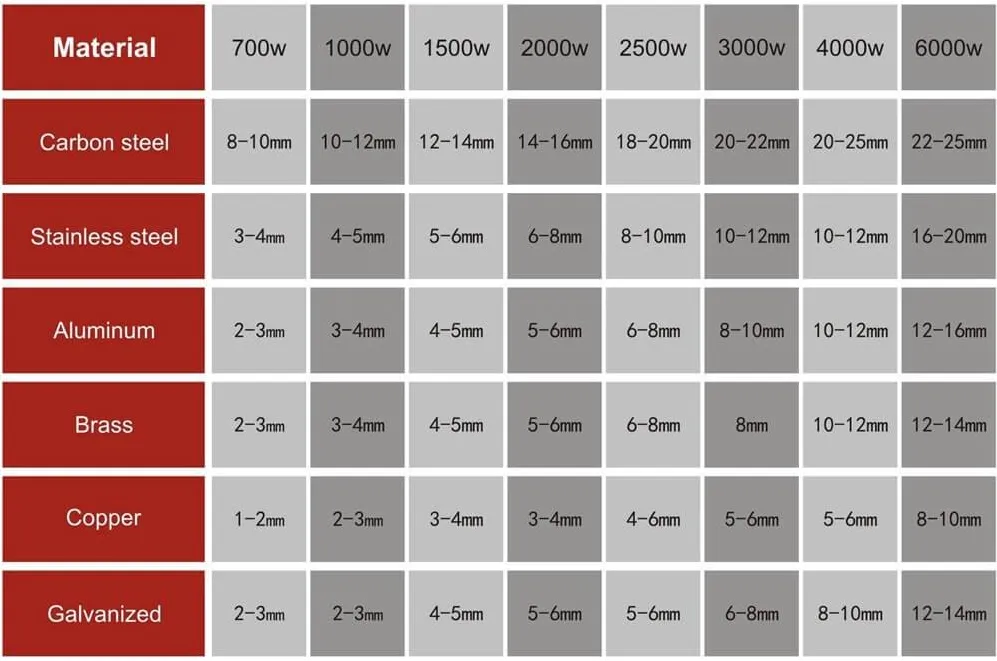
Maximum laser cutting thickness reference list
[1]
*These laser cutting parameters are for reference only. For actual data, consider the environment and other project requirements
Wrapping Up
Copper is difficult to cut because of conductivity and reflectivity, but the right laser cutting method can produce quality parts for diverse industrial applications. Whether for architectural, medical, renewable energy, or electrical applications, precision laser-cut copper parts can be produced.
A project’s timeline and budget matter; you don’t want a copper cutting process that results in incomplete cuts, burred edges, or poor tolerances.
You need a trusted sheet metal fabrication company experienced in copper laser cutting. We match the right copper grade with laser technology and cutting settings. You can always expect tight tolerances, durable performance, and industry relevance from our copper laser cutting services.
Upload your copper part design and let our engineering team review it and respond with recommendations or a quote within 24 hours.
FAQs
What tool is best for cutting copper?
The best tool for cutting copper depends on cut complexity, allowable edge quality, and material thickness. Options include power tools such as a plasma cutter and angle grinder, and manual tools such as a hacksaw and tube cutter.
Resources
[1]https://laseracc.com/the-ultimate-guide-to-laser-cutting-parameters.html