

You have a metal part in mind, a bracket, housing, shaft, or stamped clip, and the first question that comes to mind is ‘how much to get a metal part made’. There is no fixed price. Two similar parts can differ by a factor of 5 to 10. The difference comes from process, material, tolerance, and quantity. A CNC machined part may take several minutes per piece, while a stamped part in volume runs in seconds. That alone changes cost.
Each process incurs costs in different ways. Machining adds cost through cycle time and tool wear. Stamping and casting require upfront tooling but reduce the cost per part at higher volumes. If the process does not match your quantity, the cost rises quickly.
In sheet metal work, cost usually increases during production. Cutting time, number of bends, material thickness, and finishing steps all add time. Even a small change, such as an extra bend or a tighter tolerance, can increase setup time and scrap rate.
This article breaks down where the sheet metal fabrication cost comes from, what changes during production, and what you can adjust to keep pricing under control without affecting part function.
How Much to Get a Metal Part Made – Techniques and How Cost Builds
Sheet metal fabricators use multiple forming steps to produce a metal part. Each step adds to the overall production time, setup costs, and material handling. Therefore, the cost of a single component increases because it has been moved from one process to another, not simply because of the material.
Sheet Metal Cutting
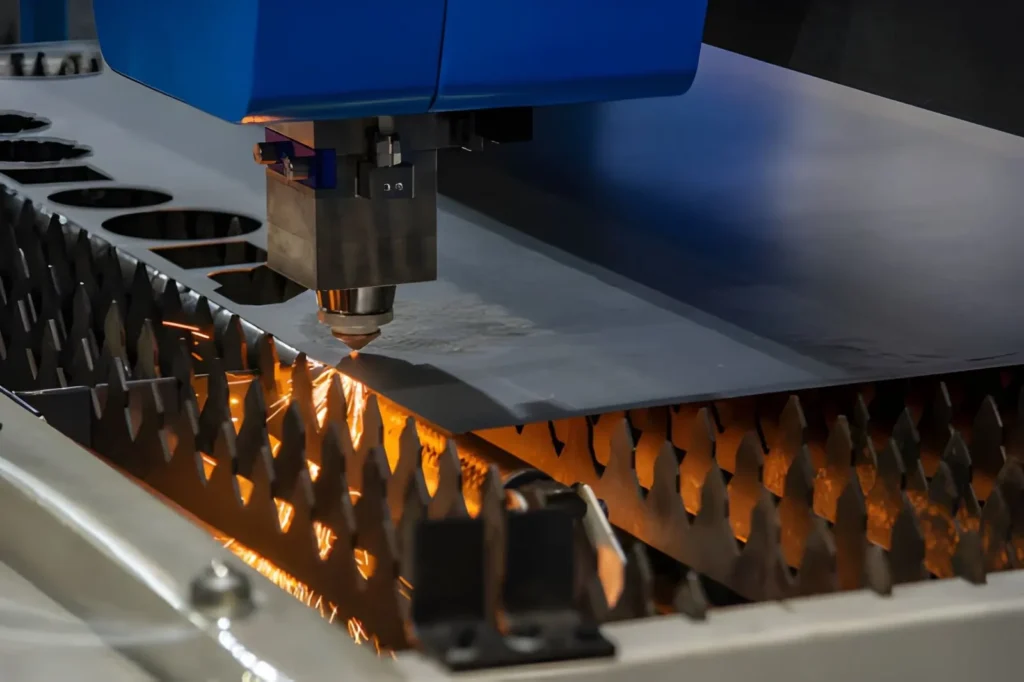
Cutting is the first of all the various fabrication methods. It converts a flat sheet into a “blank” form. Most cutting methods are laser, plasma, waterjet, or punch cutting, depending on the required precision and/or the thickness of the metal being cut.
The price for processing small parts through cutting processes typically ranges from $5 to $30, depending on whether you’re purchasing a standard piece.
However, larger pieces with longer cut paths or complex geometries may cost $50-$500 or more. For linear cutting costs (i.e., straight lines), prices are approximately $1.50-$6.00 per foot.
Additionally, any non-linear designs (e.g., circles or hexagons) result in increased pierce times due to the need to slow the cutting head.
Thus, if your design contains multiple interior cuts, small holes, or sharp edges/angles, the overall production cost will be higher, as more piercing time will be required.
Bending & Forming
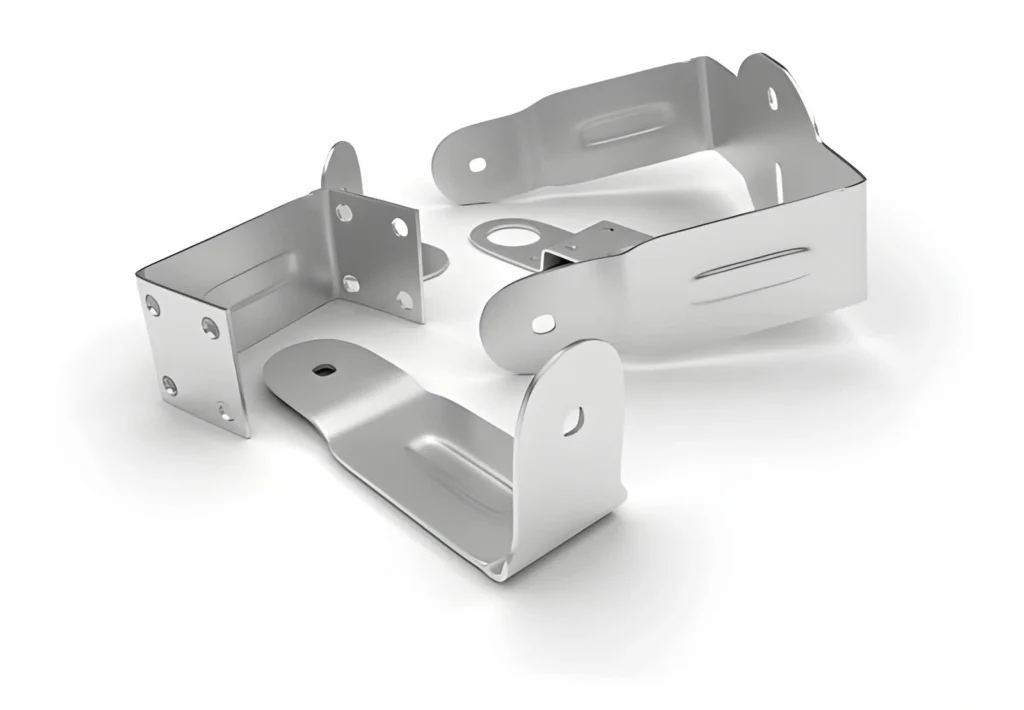
Once the part has been cut, the flat blank is bent or formed using a press brake or other specialised bending/forming tools. Press brakes produce angles, whereas forming produces curves or deeper shapes.
The cost of making basic bends ranges from $1 to $5 per bend. If forming is necessary to create more complex shapes with tighter tolerances, the cost of precision sheet metal fabrication could range from $2 to $10 per piece.
As previously mentioned, the primary reason for this increase in cost stems from the number of bends, the thickness of the metal, and how close to the edge of the bend you can get.
In general, more bends mean more setups and more repositioning, which ultimately translates into more time spent producing the part and potentially greater variability in dimensional consistency.
Welding
When two or more parts need to be combined as a single assembly, welding is used. Welding uses a variety of processes, including MIG/TIG/arc welding, to join dissimilar as well as similar metals.
Small welds (such as short seams/tack welds) typically cost anywhere from $20-$50. Medium-sized assemblies can run from $50-$250.
Precision welding, particularly with stainless steel/aluminium, can cost upwards of $200-$1,000+. Ultimately, the cost of welding is directly related to length, joint type, and the need to maintain distortion/alignment.
Machining
In addition to forming, machining is frequently utilised to add specific features to a part (threads/holes/very precise surfaces). Machining encompasses drilling/milling/turning processes.
Typically, CNC machining rates range from $60 to $120 per hour for standard work. Depending on the complexity/precision, some jobs can exceed $ 120- $200 per hour. Cost increases with tighter tolerances/deeper features/harder materials as they require lower cutting speeds and generate more tool wear.
Assembly
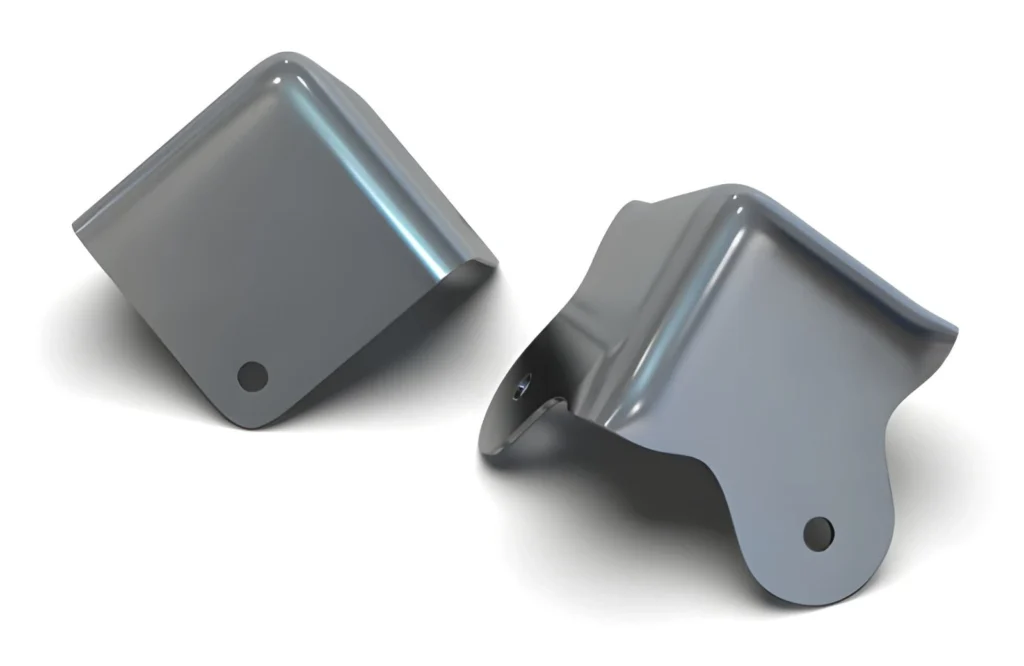
Combining fabricated parts into a finished product is known as assembly. Assembly utilizes a wide range of fastening/bonding/welding techniques.
Most assemblies are priced based on labor hours at shop rates ranging from $50-$100 per hour. Assemblies become more expensive as the number of components increases, along with the level of criticality in properly aligning/fitting parts.
Finishing
Finishing is utilized to enhance corrosion resistance and surface aesthetics. Common finishing processes include powder coating/painting/plating/surface polishing.
Basic coatings typically range from $2 to $5 per square foot. Multi-layer/durable coatings can range from $5 to $15 per square foot or higher.
Ultimately, finishing costs depend on surface area/preparation work/finish requirements. Large parts/high finish standards increase both material/labor costs.
Process Breakdown with Actual Sheet Metal Fabrication Cost Drivers
Table 01: Cost estimate for industrial sheet metal fabrication
| Operation | Typical Cost Range | What Actually Drives Cost |
| Cutting | 5 to 500 dollars per part | Cut length, internal features, material thickness, piercing count |
| Bending and forming | 1 to 10 dollars per feature or part | Number of bends, bend radius, thickness, setup changes |
| Welding | 20 to 1000 dollars per assembly | Weld length, joint type, distortion control, and material type |
| Machining | 60 to 200 dollars per hour | Tolerance level, feature depth, tool wear, material hardness |
| Assembly | 50 to 100 dollars per hour | Part count, alignment effort, fastening method, fit accuracy |
| Finishing | 2 to 15 dollars per square foot | Surface area, preparation work, coating type, quality level |
What Actually Drives the Final Cost of a Sheet Metal Part?
A metal part’s total price does not depend on one item. Its price is determined by the materials selected, the product’s geometric form, the time required by a particular process, and the number of units to be produced.
All of these decisions affect machine operating time, the level of manual labour, and the time required to prepare the equipment (setup), which ultimately determines the price.
Material Behaviour During Cutting and Fabrication
Not only does selecting the material influence how a product behaves during cutting or forming, but it also affects overall pricing. At large volumes, aluminium alloy 5052, mild steel, and stainless steel alloy 304 typically have very comparable prices.
A basic part may cost $8 to $9 in either aluminium or mild steel, whereas the same basic part in stainless steel may cost $12.
Why the differences? Due to the performance characteristics of each material. Stainless steel results in lower cutting speeds and increased tool life.
Aluminium alloy 5052 forms faster; however, it requires thicker cross-sections for strength. Steel allows for average cutting speed and moderate tool wear; finish requirements can significantly add additional manual labour.
Grade Selection and Structural Overdesign Cost
Within a specific family of materials (e.g., metals), the chosen grade can determine both manufacturing costs and the potential for producing defective products.
For example, aluminium alloy 6061 is more expensive than 5052, but it provides greater strength. However, this additional strength may not provide value unless there exists an engineering requirement for this strength on your part.
Feature Density and Cutting Time Growth
Both grades within the same family of materials can vary in terms of performance capabilities. For instance, 5052 exhibits better forming performance than 6061, bending more easily without increasing the risk of cracking.
Although 6061 offers greater strength, it can cause parts to be rejected when tight bending radii are present.
Therefore, when you do not need high-strength levels in your part, purchasing a higher-strength material adds unnecessary expense without providing additional functionality and can lead to slower production times due to forming limitations.
Why Complex Profiles Increase Machining Time?
Your part’s geometry dictates how much time you spend running the cutting operation and thus dictates your cost. Parts with simple profiles, few bends, no internal corners, and short, straight cutting paths will flow quickly through the machine.
As you increase feature density in your part design (more bends, tighter radii, etc.), your cutting path lengthens, and your machine slows down to maintain accuracy.
In actual production, a simple sheet-metal part may cost less than $10. An engineered part with detailed content (e.g., small holes, tight internal corners) may cost over $25. This increase in sheet metal fabrication price is not due to increased material use but rather to increased machine operating time, increased piercings, and decreased cutting speed.
Surface Treatment Load and Post-Processing Effort
Adding finishing to your part can also drive up the cost. Depending on how complex your design is, a basic uncoated part may cost approximately $25-$30. After adding powder coating or other finishing processes, the cost may jump to $40 or more.
Whereas the additional finishing creates improved corrosion protection and appearance, it only meets an application requirement. For example, adding excessive finishing to a part that is only used internally or exposed may add high cost without creating a benefit.
How Quantity Changes Per Part Cost?
Batch size strongly influences unit cost because the setup cost is spread across all parts.
| Order Quantity | Cost Per Part (USD) | Cost Behavior |
| 1 unit | 150 to 300 | The setup cost dominates |
| 10 units | 45 to 80 | Partial amortization of setup |
| 100 units | 25 to 50 | Machine time becomes the primary cost |
| 500 units | 18 to 35 | Optimized production efficiency |
As quantity increases, machine setup and programming costs are shared, significantly reducing the per-part cost.
Part Scale and Material Utilization Impact
The size of your part will affect two main things: material use and manufacturing time. A larger part requires more of your raw material (sheet), a longer cut path through it, and more time and effort to bend and handle.
Even if you have an optimal “nesting” strategy that puts your largest piece at the centre of the sheet, using less efficient geometry will still result in wasted material and increased scrap.
A heavier part is slower to handle from one operation to the next. Each step involved in making your product — including bending, inspecting, and finishing — takes longer as the part grows larger. Therefore, a larger part can be significantly more costly than a smaller one, regardless of how simple its design may be.
Time as the Controlling Factor in Cost
In every single aspect of sheet metal production, time is the true cost driver. As such, each addition you make to your part (each new feature, each extra bend, each tighter tolerance, etc.), and each process step you add to your fabrication process, increases the overall time required for production.
As mentioned above, the more time required for production results in greater amounts of machine time, labour, and handling. And therefore, represents the greatest predictable increase in costs.
How Much Does CNC Machining Cost Per Part?
Machine time, setup, and the amount of material resistance to cutting determine CNC machining cost. This is why prototyping and low to mid-level production use CNC machining. The reason is that no special tooling is needed, therefore making design changes cheaper.
When you make a basic aluminium part, the cost will be relatively low; however, when you make an extremely precise aluminium part (or any other type), the cost will rise quickly due to longer cycle times and greater difficulty in cutting.
If you add many features to your parts, the cost will vary, and each feature will take longer to cut.
Low-Complexity Aluminium Parts
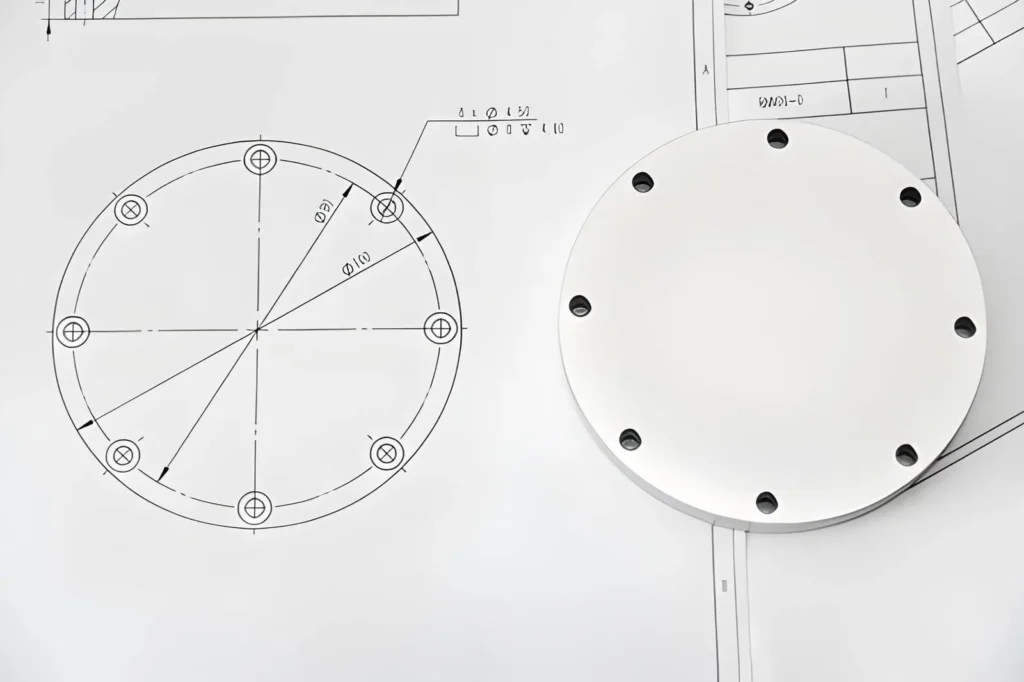
Most aluminium parts made from basic shapes and common tolerances cost approximately $10-$50 per part for small-batch orders.
The majority of these parts will need a single setup, basic milling or drilling, and quick cycle times. The path(s) taken by the tools will be straightforward (e.g., flat-bottomed hole, rectangular pocket, etc.), so the time spent on the machine will remain low. Additionally, since the tools will experience very little wear during machining, the overall cost will remain steady.
In addition, most of the expense will come from the actual time spent on the machine rather than the difficulty of the process.
Medium Complexity Parts with Multiple Features
If a part needs several features, requires closer tolerances, or requires more than one operation, it will likely fall into the $50 to $200 per unit range at low to mid-volume.
Typically, these parts require more tool changes, longer machining cycles, and possibly multiple setups.
For example, if a part takes 30 to 90 minutes to complete on a CNC machine based on its geometric complexity, every feature added (such as threads, pockets, or precision holes) will increase both cycle time and, ultimately, cost.
High Precision and Multi-Axis Machining
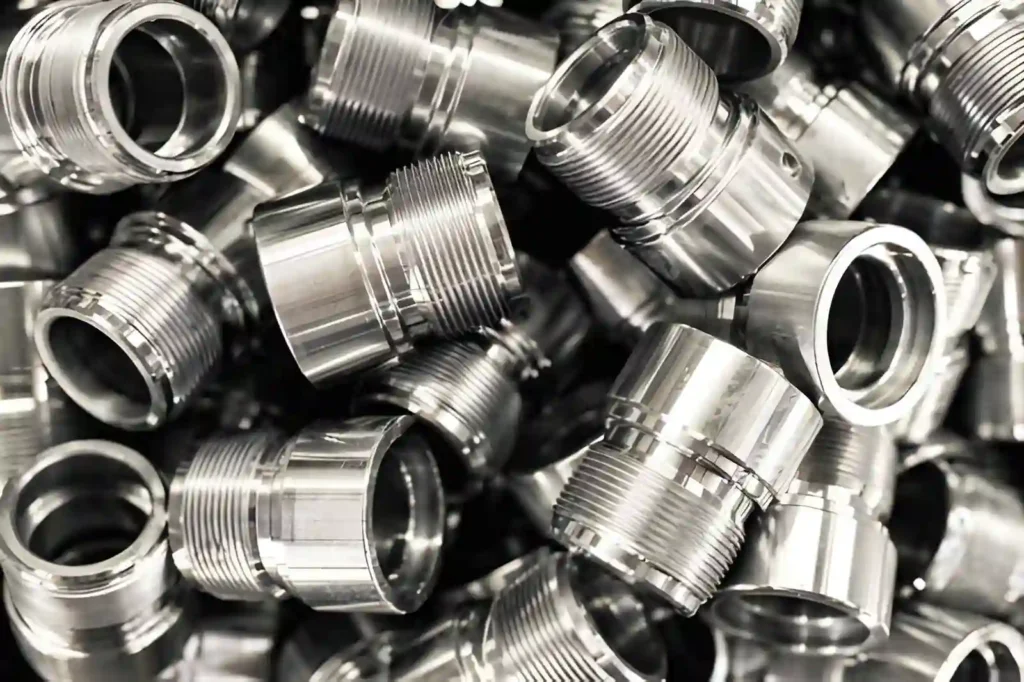
Parts requiring 4-axis or 5-axis machining, with high-precision requirements, and/or machined from hard materials such as titanium, can cost $200 to $500 per part or more.
Due to both precision requirements and the potential for tool damage, these types of jobs run slower. Additionally, the time spent writing program code increases due to the complexity of the tool paths.
Also, due to their complexity, parts requiring multiple setups are often needed. Inspection time is also extended to verify tolerance compliance. Overall, these factors contribute to higher production costs.
Setup and Programming Cost per Job
Setup and programming costs are constant regardless of product quantity. Setup/programming costs typically range from $50 to $1,000 per job, depending on the part’s complexity and the number of fixtures required.
Regarding prototype development, a large portion of this cost is applied solely to the first part developed. Therefore, the unit price of a single prototype is significantly higher than for a multi-unit production run.
Once quantities are built beyond a single prototype, the same programming/setup costs are spread across many parts, thereby reducing their impact on unit cost.
Effect of Quantity on Unit Cost
Product quantity has a significant impact on cost-per-part because while the costs associated with setup/programming are constant and do not decrease with increasing volume, production volume does increase.
At the level of a single prototype production run (i.e., only one piece created), the cost of the product is typically $150-$300 per part. At approximately 10 pieces produced, the cost typically decreases to $45-$80 per part.
At 100 pieces produced, it drops to $25-$50 per part. At 500 produced pieces, by optimising machining methods and material usage, costs can drop further to $18-$35 per part.
As quantities build in production runs, setup time is spread out, and efficiency improves, thereby lowering the overall cost per unit.
Machine Hour Rates That Define Cost
CNC pricing is directly linked to hourly machine rates. These rates vary depending on machine capability and precision level.
| Machine Type | Hourly Rate Range | Cost Impact |
| 3-axis CNC machining | 30 to 75 USD per hour | Lower setup complexity, standard parts |
| 4-axis to 5-axis machining | 75 to 200 USD per hour | Higher precision, complex geometries |
| CNC turning operations | 50 to 110 USD per hour | Cylindrical parts, moderate complexity |
Higher machine capability increases hourly cost but reduces manual repositioning in complex parts.
How to Reduce Sheet Metal Fabrication Cost?
Sheet Metal costs, in most cases, will be determined by design. Design has established much of how it will go into production. The potential for changing the way things are made after they have been designed is generally very limited. To reduce costs, keep your design simple, use the right material, and plan production correctly.
Keep Geometry Simple
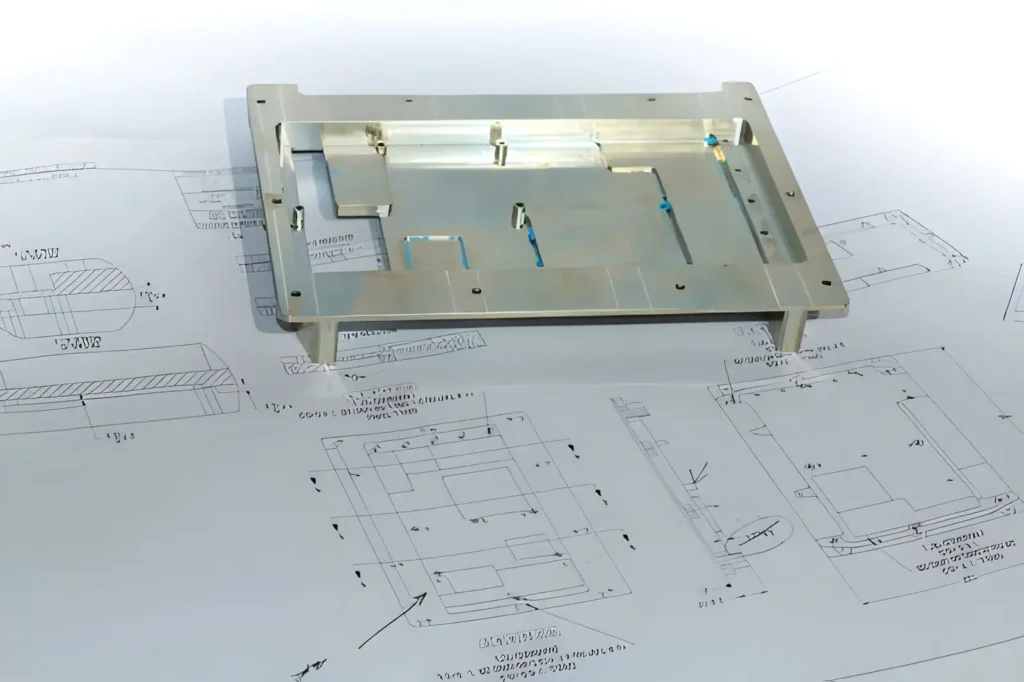
Each added design element (feature) increases the amount of time required to cut, bend, or handle the piece. Increased time means increased cost. Parts with fewer bends, fewer holes, and a simple profile will run through machines faster than those with multiple bends, holes, etc., and require less setup.
In some instances, simply eliminating one design feature can lead to reduced manufacturing time and a lower defect rate. Simplifying your designs will always save money when producing them.
Choose Material Based on Requirement
When designing a part, select materials based on its functional requirements; do not select based on preference. If mild steel meets all requirements, using stainless steel is an excessive expense that does not improve performance. Additionally, stainless steel cuts more slowly and causes rapid tool wear.
Selecting aluminium instead of other materials may provide a lighter-weight product; however, this will add material thickness to meet strength requirements.
Properly selecting materials for your application will result in lower processing and finishing costs for your products.
Improve Sheet Utilization
Waste is still an area that incurs direct costs for products, regardless of whether the parts were produced with a simple design.
By making small changes to the part’s dimensions or layout, you can improve the standard sheet layouts, e.g., 4 x 8 ft and 5 x 10 ft. Improved sheet utilization results in less scrap and lower per-unit costs. In addition, material usage is particularly beneficial in batch quantities since the cost of wasted material escalates rapidly.
Match Process with Quantity
The manufacturing method will vary depending on the desired quantity. Low to mid-quantity production is best accomplished via laser cutting.
Higher-volume production requires stamping because the tooling cost can be spread across many units. Using the incorrect manufacturing method for the intended quantity will increase the total cost per unit.
Standardize Basic Features
Reduced setup changes occur when standardization exists regarding common elements such as hole diameters, bend radii, and screw sizes. Machines require less adjustment when the same features are present across parts.
Reducing machine adjustment time allows for faster production. Smaller standardizations will still allow for some improvement in reducing overall fabrication time.
Involve the Fabricator Early
Manufacturers can assist designers in avoiding decisions that will increase costs. Manufacturers can suggest ways to simplify bends, improve tolerance requirements, and offer alternative machining options prior to production commencing.
Avoiding redesign during production results in cost savings and typically fewer operations. Early consultation typically saves by avoiding unnecessary operations.
Plan Production Volume Early
Quantities affect the manufacturing method selected and the associated costs. Lower-volume parts are best fabricated using flexible fabrication techniques, such as CNC or laser cutting.
High-volume production is more likely to justify fabrication processes that require tooling to reduce per-unit cost. Establishing production quantities early eliminates the need for changes in manufacturing methods. This results in increased costs.
Work Consistently with One Fabricator
Working repeatedly with the same manufacturer allows manufacturers to gain a better understanding of designer specifications, tolerancing requirements, and preferred fabrication processes.
Communication gaps are eliminated, and repetition is reduced thanks to the manufacturer’s knowledge. Reduced delays and stabilized pricing are typical benefits of working with a single fabricator consistently.
Sheet Metal Manufacturing Support at Prolean MFG
Prolean MFG provides sheet metal fabrication with a focus on practical cost control and stable production results. The approach is based on reducing unnecessary complexity, selecting the right process for the job, and keeping production aligned with real functional requirements.
- Design for Manufacturability review to reduce unnecessary bends, features, and tight tolerances
- Material and process selection based on strength, application, and production volume
- Efficient fabrication planning to reduce cutting time, setup effort, and material waste
- Quality checks to maintain consistent dimensions and reduce rework during production
The goal is to keep parts simple to manufacture while still meeting performance requirements, especially at prototype and production scales.
If you need Sheet Metal Fabrication Services optimized for cost and manufacturability, Prolean MFG can support you from the design stage through final production with a practical engineering approach.