
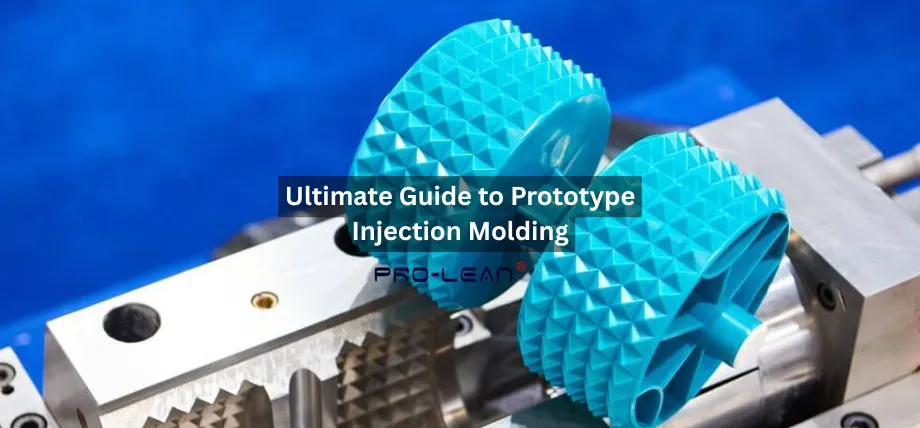

Testing a plastic component with production-grade materials and manufacturing methods before you commit to hardened steel tooling is the first step in product development. Prototype plastic injection molding is an efficient and, more importantly, cost-effective solution for product developers.
In this article, you’ll learn about prototype molds, the injection molding process, and material selection considerations before prototyping costs.
What Is Prototype Plastic Injection Molding?
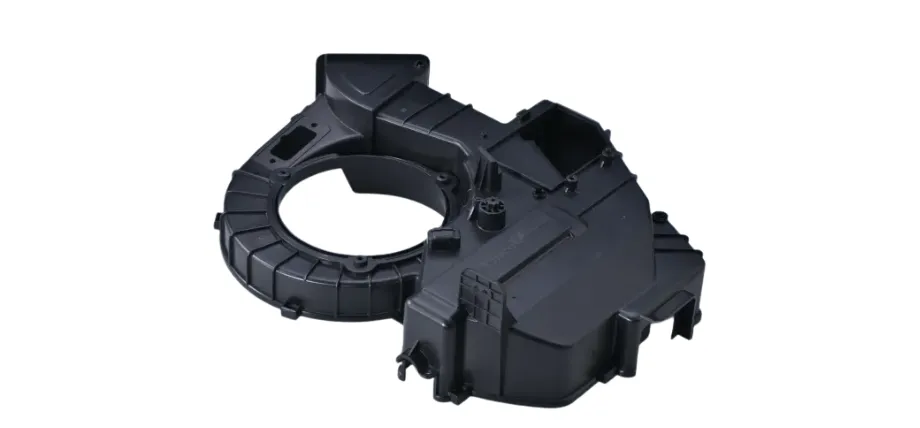
Complex injection molded component
Prototype injection molding is a manufacturing process that is applied to produce small batches of plastic parts using the same production-grade resins for full-scale production. Therefore, the prototype plastic parts are also representative dimensionally of the final production parts. This is a fast and cost-effective manufacturing process. Therefore, prototype injection molding is beneficial for
- Functional evaluation
- Fit and assembly checks
- Design validation
- Regulatory or performance testing for manufacturing processes that require accurate injection-molded parts instead of 3D- printed substitutes.
The first step of this method is to inject molten thermoplastic resin into a mold cavity under pressure. Then it is allowed to cool, and the finished solid plastic part is ejected from the mold. Prototype injection molding is also great for flexible and elastomeric materials and thermoset plastics.
Prototype Injection Molding VS Production Injection Molding
The main difference between prototype molds and production molds is the mold material. Prototype molds are machined from aluminum or lower-hardness steel grades, as they need to produce a small batch of plastic components ranging from a few hundred to ten thousand parts quickly at a lower cost.
Between aluminum and hardened steel as mold material, the specific choice is based largely on expected shot life and tolerance requirements. These molds are usually created as single-cavity designs with minimal automation to start producing a small batch of plastic parts.
The main advantage of prototype plastic injection molding is that you can reproduce the molding part more accurately than 3D-printed or vacuum-cast prototypes, as it uses production-grade resins under real injection molding conditions. The limitations of prototype molds include reduced mold lifespan, less efficient thermal management, and limitations in maintaining tight tolerances when molding materials that are abrasive or glass-filled.
Production molds are manufactured with hardened steel such as P20, H13, or S7, and their expected service life depends on mold class, material, and part complexity.
High-quality production molds can withstand thousands to millions of molding cycles, and these molds have multiple cavities and automated features like side action and lifters to accommodate complex part geometry.
These are also engineered with multiple cavities and automated features such as side actions or lifters to accommodate complex part geometries. Therefore, production injection molding is more expensive than prototype injection molding and costs between $20,000 and $100,000 or more, depending on the number of cavities and lead time.
You should consider that the lead time of prototype injection molds is less than that of production injection molds. The lead time for prototype molds is 1 to 4 weeks, while it ranges from 8 to 20 weeks for production molds.
The following table summarizes the differences between prototype injection molds and production injection molds.
| Factor | Prototype Mold | Production Mold |
| Mold material | Aluminum or soft steel | Hardened tool steel (P20 and H13) |
| Typical shot life | 500 to 10,000 shots | 500,000 to 1,000,000+ shots |
| Tooling cost | $1,500 to $15,000 | $20,000 to $100,000+ |
| Lead time | 1 to 4 weeks | 8 to 20 weeks |
| Cavity count | single-cavity | Multi-cavity |
| Part material | Same as production material | Final part material |
Types of Injection Molding for Product Development
You should understand the types of injection molding in prototyping to choose the most suitable method for your production process. The following are the three types of prototype injection molding.
Thermoplastic Injection Molding:
This is the most commonly used conventional prototype molding injection method in the manufacturing process. The process involves the following steps.
- First, a thermoplastic resin such as ABS, polypropylene, nylon, or polycarbonate is heated to a molten state.
- Then the molten resin is injected into a mold cavity under pressure
- It is then allowed to cool
- Finally, the finished part is ejected from the mold
Here, you can use thermoplastics as these can be reheated and remolded. Therefore, you can use them for design modifications and material testing.
Thermoset and LSR Molding:
Thermoset materials such as liquid silicone rubber (LSR) are used for prototype molding injection to produce the final product through a chemical cross-linking reaction series inside the mold, instead of solidifying through cooling alone. Thermoset materials cannot be used for remolding like thermoplastics because the final product of thermoset materials forms a permanent structure.
This process requires heated tooling and precise flash control during the process, as cross-linking reactions are involved.
You can apply LSR molding for the prototyping of components that require elasticity, thermal stability, or biocompatibility of silicon, such as seals, gaskets, wearable devices, and medical-grade flexible components.
Overmolding & Insert Molding:
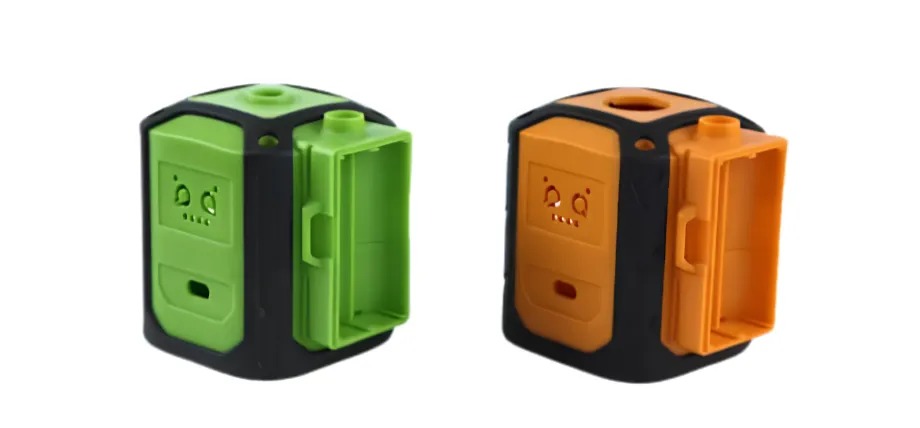
Overmolded plastic housing prototypes
You can apply both overmolding and insert molding for prototyping of components that require multi-material construction, integrated soft-touch surfaces, or embedded hardware components.
- Overmolding: This is the process of molding a secondary material over an existing substrate. You can add a soft thermoplastic elastomer (TPE) or TPU grip layer onto a rigid structural component.
- Insert molding: In this process, you should add a preformed component, such as a threaded brass insert or other metal hardware, into the mold before the injection of resin. Then, the molten resin can encapsulate the insert during the molding cycle.
Prototype Injection Mold Materials
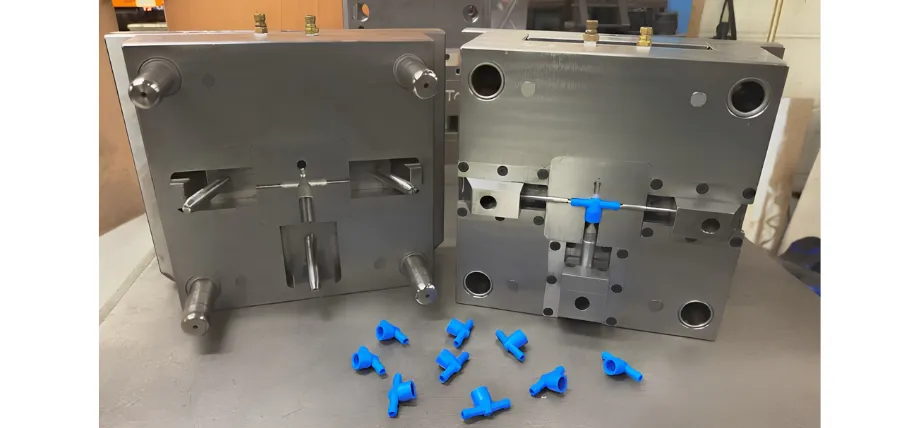
Plastic prototype connectors
Selection of prototype injection mold materials is based on many factors, including expected production volume, resin type, tolerance requirements, and part geometry.
The most common mold materials for prototype molds are Aluminum 7075, low-hardened steels like P20 and 4140 pre-hardened, and any other specified alloy for thermal performance.
Aluminum Injection Molds
This is the most commonly used prototype injection mold material as it can be machined more quickly than steel while reducing the tooling cost. You can select aluminum injection molds for prototyping if your production volume ranges from a few hundred to around 10,000 parts, depending on the resin type and complexity of the component design.
There are benefits of using aluminum molds other than time savings and affordability. These include,
- Aluminum molds have high thermal conductivity, which shortens the time required to cool the melted resin.
- This type of mold can increase the cycle efficiency more than steel because of its thermal conductivity for faster and more uniform cooling of the parts.
- You can modify aluminum molds easily if you need revisions for your designs, such as removing material and changing design dimensions.
Although aluminum molds have several benefits over steel, there are limitations that you must consider if you are going to choose aluminum molds for prototype production.
The possibility of wear during the process of aluminum is higher than that of steel. Therefore, you may face difficulties if you use abrasive materials such as glass-filled or mineral-filled resins. Furthermore, it will be difficult to maintain tight tolerance if you continue extended production runs. Therefore, aluminum is less suitable for applications that involve welding repairs.
Steel molds and hardened steel
Pre-hardened steel such as P20 provides you with both long-term durability of hardened steel and rapid machinability of aluminum while providing production volume ranging from 20,000 to 100,000 cycles. Therefore, P20 is the most widely used steel mold in the industry for prototype injection molding. You can use P20 for the production of higher prototype quantities and abrasive resin applications.
Furthermore, this is also suitable as a temporary bridge before transitioning to a full-scale production process.
You can use hardened steel such as H13, D2, and S7 for production molds to achieve long service life while running millions of molding cycles, maintaining dimensional accuracy and tight tolerance consistently.
Another advantage of using hardened steel is that you can repair or modify it by welding and re-machining. But using this material is expensive, and the lead time for the production process is longer than that of aluminum and pre-hardened steel.
Mold classes
Depending on the expected production volume, material of the mold, and the applications of cavity surface, the Society of the Plastics Industry (SPI) has categorized injection molds into different classes as mentioned in the following table.
| SPI Mold Class | Shot life (# of cycles) | Common Mold Materials | Applications |
| Class 105 | <500 | Epoxy, cast aluminum3D- printed tooling | Early-stage prototypeValidation of the design |
| Class 104 | Up to 100,000 | Aluminum, mild steel | Prototype toolingPilot production |
| Class 103 | Up to 500,000 | P20 Steel | Bridge toolingLow-volume manufacturing |
| Class 102 | Up to 1,000,000 | Hardened steel | Full-scale production (medium to high volume) |
| Class 101 | >1,000,000 | Hardened steel with multiple cavities | Full-scale production (Millions of cycles) |
According to the above table, most prototype injection molding tools are classified under classes 105 and 104, while production injection molding tools are categorized under classes 101 and 102 for full-scale production. You can use molding tools categorized under 103 for low-volume production applications.
Prototyping Methods: 3D Printed Molds vs. Traditional Tooling
You can use injection molding from 3D-printed molds as a viable solution for the production of low-volume prototypes compared to traditional molds such as aluminum or mild steel. For 3D-printed mold production, high-temperature SLA, DLP photopolymer resins, or SLS nylon materials are used.
You can use production-grade thermoplastic resins to produce prototypes using these printed molds installed in a standard injection molding machine or benchtop press.
The durability of these 3D-printed molds is less than that of conventional injection molds. Furthermore, heat exposure and dimensional control of these 3D printed molds decrease gradually and require longer cooling and cycle time than conventional metal molds.
But these 3D printed molds have several benefits over conventional tooling. These are highly effective for the validation of early-stage designs using a small batch of molded parts at a lower cost. This allows you to assess issues such as gate placement, filling behavior, wall thickness performance, and part ejection characteristics.
You can shift from 3D printed molds to aluminum tools or hardened steel once you validate the design for higher production quantities.
You can refer to the following table to understand the differences between 3D printed molds and traditional molds.
| Tooling method | Typical production volume (parts) | Typical lead time | Estimated tooling cost ($) | Main limitations |
| 3D printed resin mold | 10 to 100 | 1 to 3 days | ~100 to 500 | Lifespan and heat dissipation are limited |
| 3D printed SLS nylon mold | 50 to 1000 | 3 to 7 days | ~300 to 1500 | Mainly suitable for lower temperature resins |
| Aluminum prototype mold | 500 to 10,000 | 1 to 4 weeks | ~1500 to 15000 | The ability to wear when molding abrasive or filled materials is higher |
| P20 steel bridge mold | 10,000 to 100,000 | 4 to 8 weeks | ~8000 to 30000 | The initial cost for tooling is higher |
| Hardened steel production mold | 100,000+ parts | 8 to 20 weeks | ~20,000 to 100,000 | Lead time is longer, and the cost for early prototyping is higher |
Low Volume Injection Moulding & Bridge Production
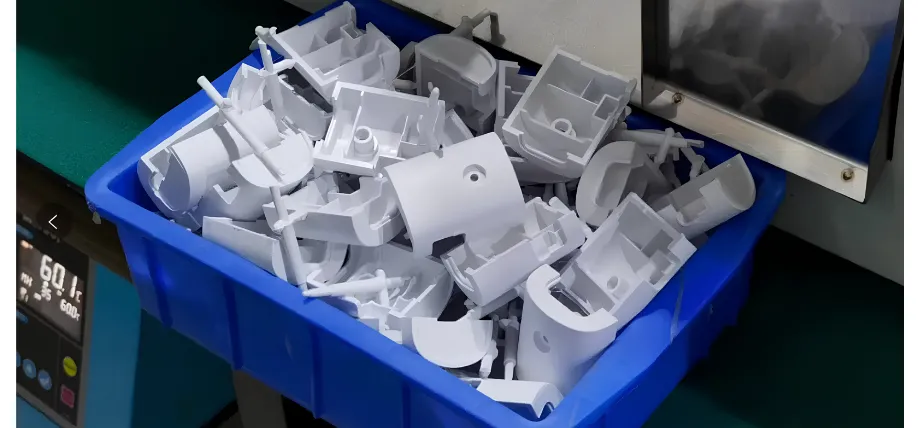
Molded plastic prototype components
The production of 100 to 10,000 molded plastic parts using prototype injection mold tooling is referred to as low-volume injection molding. You can apply this method to supply production-quality components before investing in expensive molds, such as hardened steel, for full-scale production.
Bridge production is an application of Low volume injection molding. You may need a solution to support production launches, regulatory testing, pilot programs, or early customer demand, as hardened steel takes three to five months for the process. Aluminum or P20 steel bridge tooling solves this problem by producing parts within two to six weeks.
Furthermore, you can use low-volume injection molding for late-stage design changes, as it is faster and less expensive to revise aluminum tools than hardened steel tools. Therefore, low-volume injection molding is preferable for you as a strategic step to validate the design and dimensions of the final part before manufacturing it on a full scale.
Applications of Prototype Plastic Injection Molding
You can apply prototype injection molding services in the following four primary areas.
- Functional and mechanical testing:
You should evaluate components subjected to structural stress, snap-fit engagement, or press-fit assembly using the actual production material and molding process. Injection-molded prototypes provide more accurate data for stiffness, elongation, and durability.
- Regulatory and compliance testing:
For medical devices and automotive parts, compliance testing and approval from regulatory agencies are required before full-scale manufacturing. At this point, you should submit parts manufactured with the production-grade materials using the exact same manufacturing process.
- Market evaluation and investor demonstrations:
You should produce prototype parts that represent the final product for the evaluation of customer satisfaction, trade shows, and investor demonstrations. Prototype injection molding is the most suitable method compared to injection molding from 3D printed molds to reproduce parts accurately.
- Assembly and fit validation:
You should validate your product under actual injection molding conditions, including shrinkage, tolerance variation, and warpage behavior. You can verify mating interfaces and assembly performance more reliably than 3D printed molds.
How Much Does Prototyping Cost?
You should consider how much prototyping costs, along with the injection molding type. The cost for thermoplastics is relatively lower than that of other materials, depending on the resin type, part weight, and molding cycle time.
An aluminum prototype mold costs between $1500 and $5000 for smaller and less complex parts, while the costs of advanced designs increase from $8000 to $15,000. The cost for 3D-printed molds is lower for simple and low-volume applications than the cost for aluminum molds. But the cost for parts produced with printed molds ranges between $10 and $30 per part.
The following table represents the cost per unit and tooling cost for each type of mold.
| Scenario | Number of parts | Tooling cost ($) | Per-part cost ($) | Application |
| 3D printed mold | 50 | 100 to 500 | 10 to 30 | Preliminary flow analysisVerification of dimensions |
| Aluminum mold | 500 | 2000 to 8000 | 8 to 30 | Testing functionsSamples for regulatory agencies |
| Aluminum mold | 5000 | 2000 to 8000 | 2 to 8 | Pilot productionAnalyzing market trend |
| P20 bridge mold | 20000 | 8000 to 25000 | 1.50 to 5 | Bridge production and early market launch |
| Hardened steel | 100,000+ | 25000 to 100000+ | 0.50 to 2 | Full-scale production |
Injection Molding Service
Proleantech provides high-quality, low- and high-volume injection molding service for custom parts. We provide sub-mm precision, 0.02 mm, and optimized cycle times for your parts. Our hot runner systems ensure fast cycle times and a broader material selection. Proleantech ensures rapid prototyping-to-production support for your next project.
Request a free quote today!
Conclusion
Prototype injection molding involves the production of parts using the same product material and manufacturing process as the final product before beginning full-scale production. Before creating prototypes, you should determine the prototype injection mold material, the type of prototype injection mold, and the cost of the process.