

Face and end milling are two different types of CNC Milling operations, used to produce complex 3D parts and profiles with tight precision, from a simple automotive prototype to high-performance aircraft components and electronics parts.
There are several milling variations and material shaping operations; End milling & face milling are two of them. The primary difference is in their machining capabilities and tool engagement.
This guide will present a comparative discussion of Face milling vs End milling. By the end, you will be able to decide which milling operation best fits your project.
What is Milling Used For?
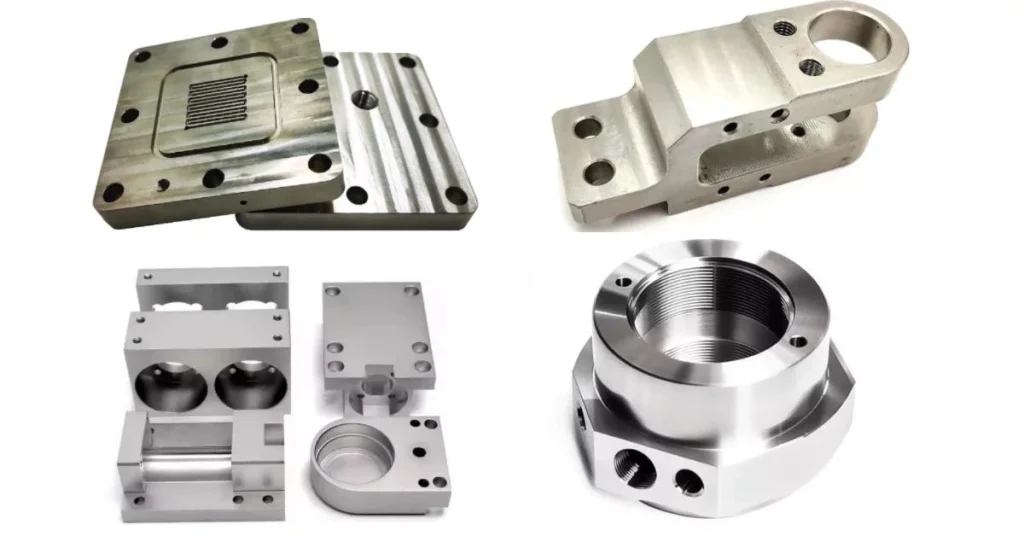
Although we are discussing only two milling operations, it is a more diverse and versatile machining method. Milling is used for surface flattening, slotting, grooving, profiling, contouring, hole drilling, etc.
Moreover, it is used to make precise & complex parts for automotive, aerospace, medical, machinery hardware, robotics, energy, electrical & electronics, construction, and other industries.
Some part examples include cylinder heads of automobile engines, gearbox housings, mold toolings, power turbine blades, robotics joint components, hydraulic cylinders, and medical implants.
What is Face Milling?
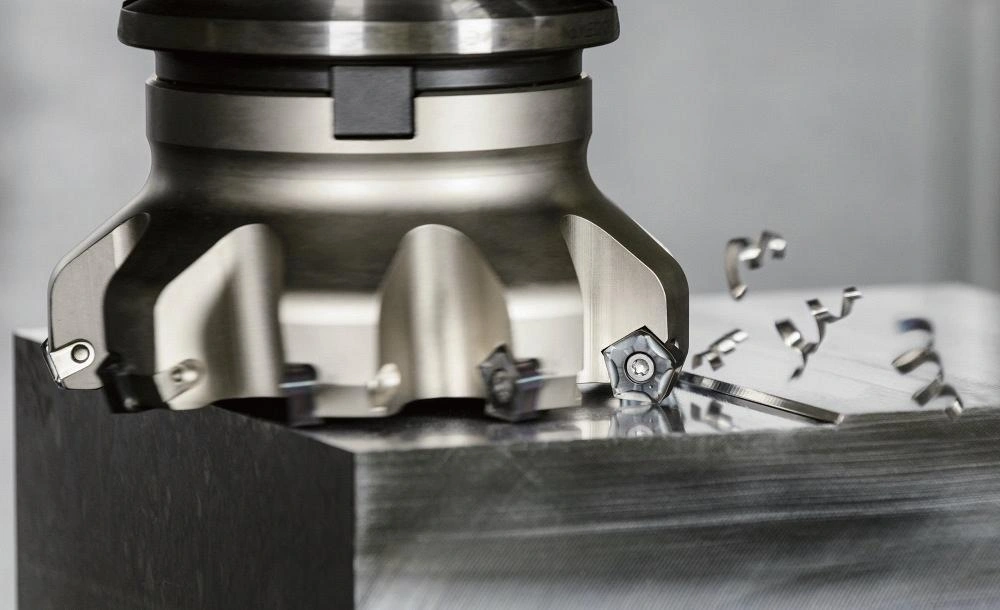
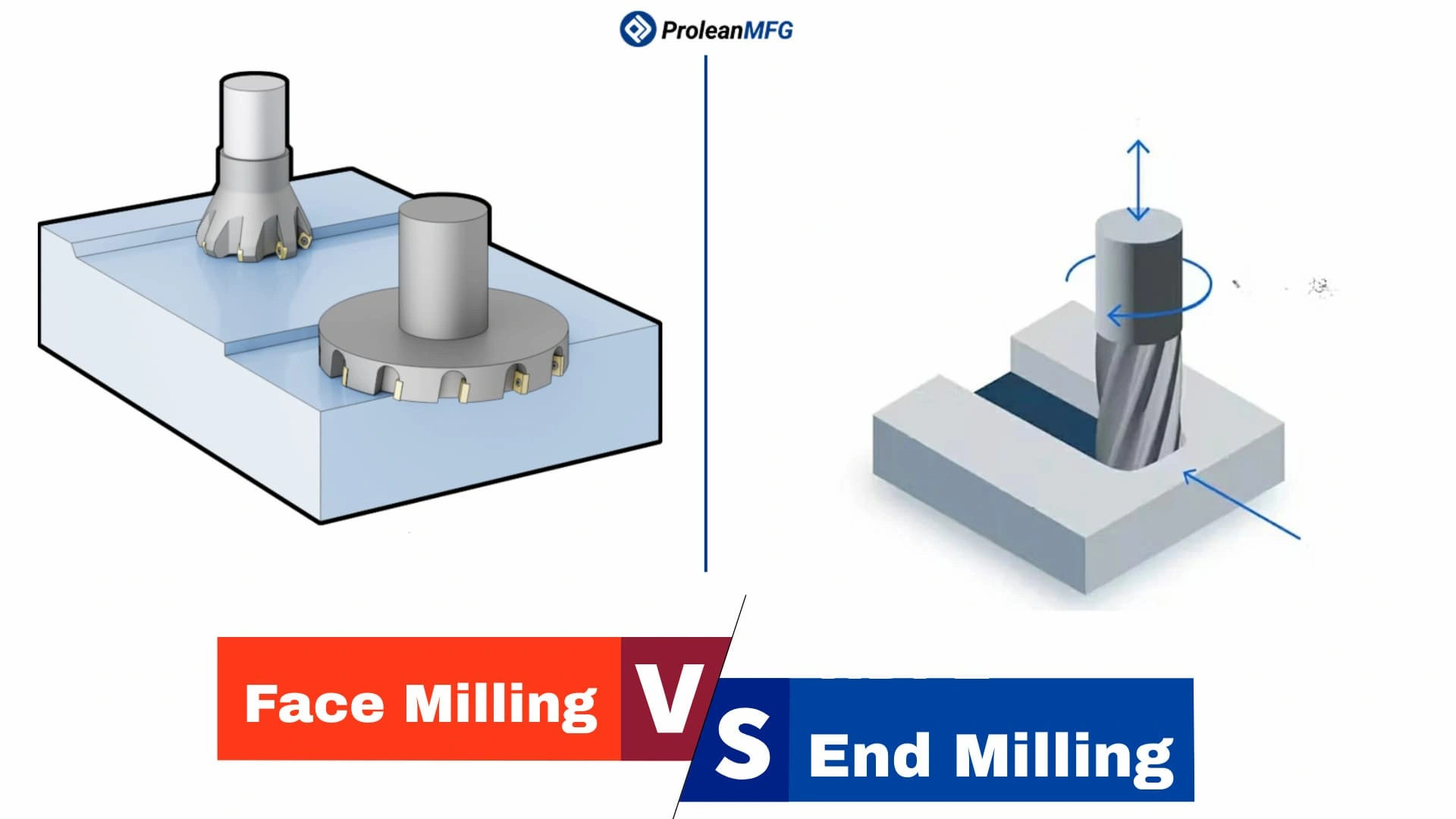
Face milling is a type of milling operation where the rotating tool axis is perpendicular to the machining surface during material removal. Multiple replaceable inserts on the face (and periphery) engage the material and remove to produce a smooth flat surface. Fly cutters, shell mills, and round insert cutters are the common face milling tools.
⤷ “Why is it face milling? Because most of the cutting action happens at the tool’s face.”
Furthermore, it is often considered a preparatory step in machining; the workpiece is face-milled before performing secondary operations for complex geometrical features.
Working of Face Milling
Once the tool and workpiece are set on the correct initial co-ordinates with a perfect 90° between the tool axis and the machining surface, the cutting edges on the circumference and the face engage with the material simultaneously. Edges on the tool face do the primary cutting, and the other ones smooth the surface.
The tool includes replaceable inserts on its head, and they can be set to meet the desired material removal rate. It means you can use face milling for bulk material removal.
Furthermore, face mills enter & exits continuously, and you need multiple passes for large workpieces and finishing milling.
What is End Milling?
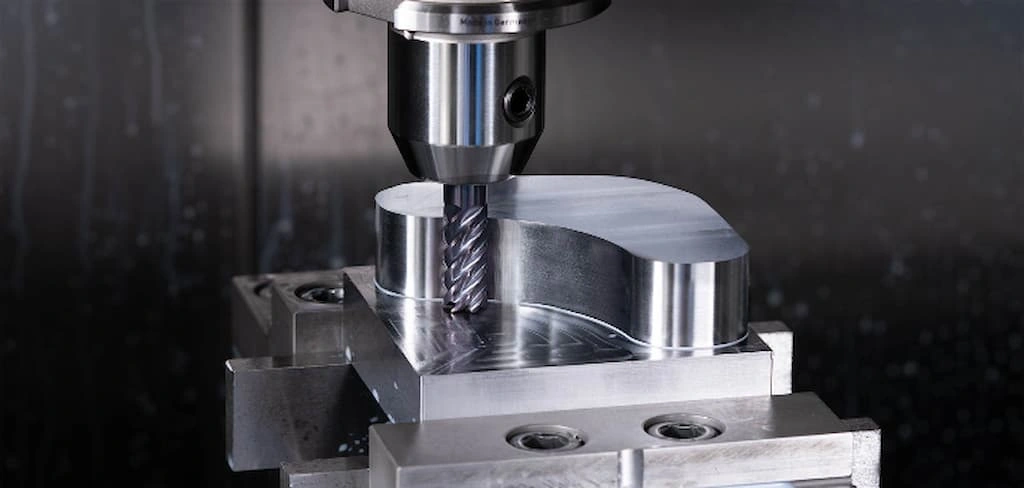
End milling is a versatile milling operation that can create complex geometrical shapes and features, including contours, slots, pockets, profiles, cavities, angled walls, and chamfers. Meanwhile, the machining surface is positioned parallel to the tool’s axis.
What makes end milling different from face milling is that the end mill tool continuously engages with material along its side and end.
Working of End Milling
As the machining process starts, the cutting edges on the tool end (tip) and its periphery engage the material simultaneously. So, both vertical milling (plunging) and side cutting can be performed with end mills.
The geometry of end mills includes a long, slender body with edges along its periphery and at its tip. Peripheral teeth are for profiling/contouring, and the end tip for axial cutting (plunging). So, more detailed & intricate machining features can be achieved.
Face Milling Vs End Milling: How They Differ?
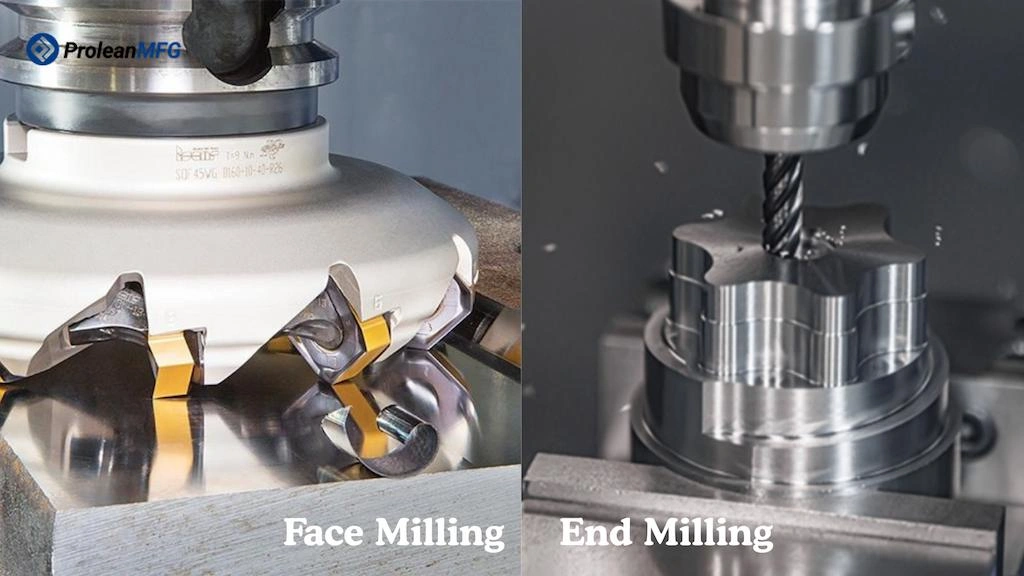
Face and end milling are not drastically different processes; they mainly differ in tooling & engagement, depth of cut, machining capabilities, application preferences, as-machined finish quality, etc.
Let’s look at a quick comparison table for key face milling vs end milling, and then break down of key differences.
| Aspect | Face Milling | End Milling |
| Tools & Geometry | Wide cutters with main cutting edges on the face | Slender cutters with edges on the face and sides |
| Cutting Orientation | Tool axis perpendicular to surface | Tool axis parallel to the surface |
| Material Removal | Removes large volumes of material | Low rate, but precise |
| Precision & Finish | Better surface smoothness and flatness | Higher precision for complex features |
| Applications | Surface flattening, large workpieces, and recesses | Slots, contours, profiles, complex 3D shapes |
| Depth of Cut | Low | High |
| Tool Access | Limited to open surfaces | Can reach confined/internal areas |
| Machining Speed | Higher feed and speed | Lower |
| Chip Formation | Short, thin chips | Continuous/semi-continuous chips |
Face milling Vs End milling: Tools and Cutting Orientation
Face mill cutters involve a wider geometry, whereas end milling cutters are slender with edges along the face and side. So, face mills are used for large material removal, whereas end mills are suitable for removing small amounts of material.
In face milling, the tool’s axis is perpendicular to the machining surface of the workpiece. On the other hand, this cutting orientation is parallel during end milling.
Next, comparing face mill vs end mill, end mills can perform more versatile operations.
Face milling Vs End milling: Precision & Finish
Face milling produces a smoother surface than end milling, especially when you are removing bulk material from large workpieces.
End milling provides tighter tolerances for complex features, ranging from ~ ±0.01 to ±0.05 mm. On the other hand, face milling is better for flatness tolerance.
Face milling Vs End milling: Preferred Applications
Face milling is preferred for surface flattening of large workpieces and creating recesses. For instance, metal plates, mold bases, and engine block surfaces.
On the other hand, end milling is suitable for complex 3D features, including profiles, contours, and slots. For instance, mold cavities, shaft keyways, and gear profiles.
Sometimes, both processes are combined to achieve surface and shape accuracy in complex parts.
Face milling Vs End milling: Depth of Cut
Cutting depth can be adjusted in both processes by changing the tool setup and fixtures. It typically varies from 0.5 to ~4 mm for face milling and 0.1 to 6 mm (and axial cut up to 20mm) for end milling. If you need to remove material to a higher depth for surface preparation or features, choose face milling.
Face milling Vs End milling: Tool Access
Comparing the tool access of a face mill vs end mill, a face mill tool approaches the workpiece only; it can not machine the enclosed surfaces. On the other hand, an end mill tool is more flexible due to its long & slender geometry, so it can reach confined areas, corners, and internal spaces.
Face milling Vs End milling: Machining Speed
Comparing face milling vs end milling speed: both feed rate and spindle speed are higher for face mill operations, as more cutting edges engage the material. Consequently, tool deflection and vibration also limit the face milling speed.
Face milling vs End milling: Chip Formation
As multiple cutting edges frequently enter and exit on workpieces, face milling produces short and thin chips. On the other hand, end milling produces longer (semi-continuous or continuous) chips. This difference results in a smoother machining finish with face milling.
What Are the Face Mill Tools?
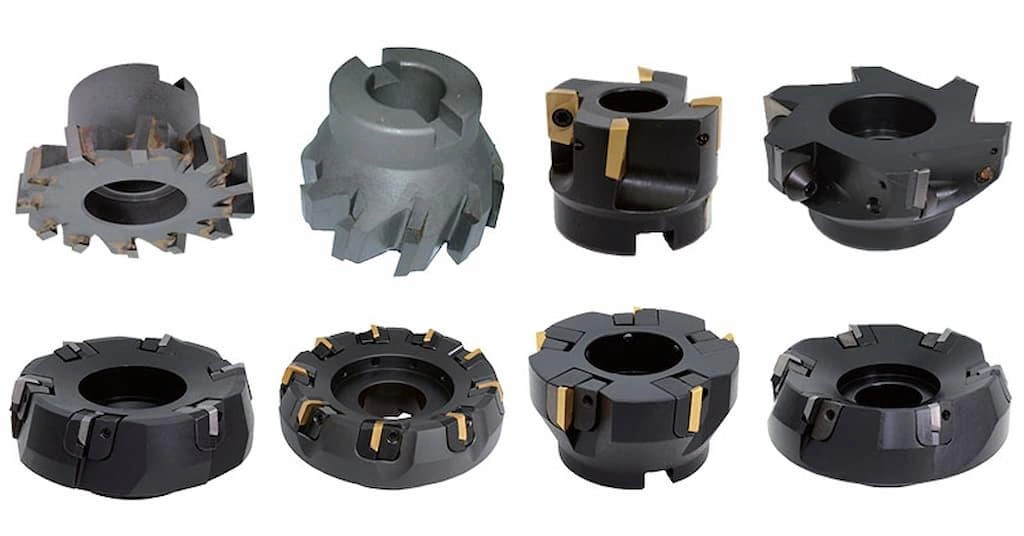
Face milling cutters can be adjusted with replaceable inserts to meet the desired material-removal requirements. So, higher efficiency and speed can be achieved with face milling tools.
Here is the list of common face mill cutters;
- Chamfer-tipped
- Lead Angle face mills
- Radius-tipped
- shoulder face mills
- Ball nose
- Fly cutters
What Are the End Mill Tools?
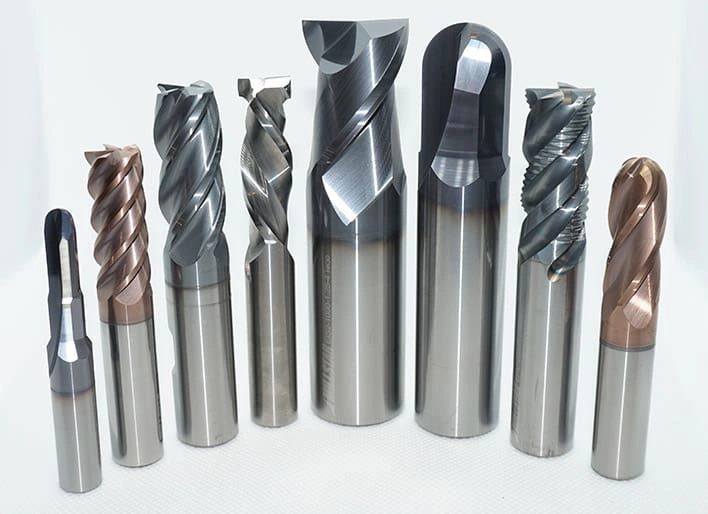
End mill tools are more versatile and available in a range of variations, including square, corner radius, roughing, finishing, tapered, ball end, chamfered, and micro end mills.
- Square(flat) End Mill: It is a flat tip cutter used for flat surfaces & sharp edges
- Corner Radius End Mill: It involves a flat tip with rounder corners, suitable for semi-finished edges.
- Roughing End Mill: For bulk material removal from the workpiece.
- Finishing End Mill: It involves smooth cutting edges and is used for finishing milling.
- Tapered End Mill: For angled walls and die & mold cavities.
- Ball End Mill: It features a round tip and is suitable for contouring, 3D profiling, and other applications.
- V-bit End Mill: Also called a chamfered end mill, used for chamfering & deburring.
- Micro End Mill: Characterized by its size, typically < 3mm in diameter.
Industrial Applications of Face Milling and End Milling
Face milling applications involve removing a large volume of material and preparing a surface for further machining. On the other hand, end milling applications are versatile and used to craft complex parts across industries.
Next, the table below outlines the application examples of face milling and end milling in general manufacturing, aerospace, automotive, medical, tool& die, electronics, and medical sectors.
| Industry | Face Milling Applications | End Milling Applications |
| General Manufacturing | Raw material leveling | Profile milling, chamfering, drilling features, and contouring |
| Aerospace | Flattening wing surfaces, structural panels, and mounting bases | turbine and engine components, structural parts, and mounting brackets. |
| Automotive | Engine block surfacing and machining preparation for transmission housings | Cutting gear profiles, slots, keyways, and complex engine components |
| Heavy Machinery | Preparation of casted workpieces and machine base flattening | Grooving, pocketing, and profiling for machinery parts |
| Tool & Die | Die surface and mold base preparation | Producing cavities, contours, and intricate mold geometries |
| Electronics | Preparing flat surfaces of enclosures and heat sinks | Engraving, PCB slotting, and profiling small components |
| Medical | Surfacing implant bases and surgical instrument platforms | Producing precise implants, prosthetics, and micro-components |
What Are the Advantages and Disadvantages of Face Milling?
Machining speed, tight flatness tolerance, the ability to machine large workpieces, and reduced stress concentration are the main advantages of Face milling. On the other hand, it has limited design flexibility and poses the risk of material warping.
| Face Milling Advantages | Face Milling Disadvantages |
| Higher speed and material removal rate | It can not create complex contours, cavities, and internal geometry |
| Smooth as-machined finish & tight flatness. | Tool access is limited to open surfaces |
| Low stress concentration in the machining area. | Higher risk of material warping than end milling |
| It is compatible with diverse materials | The tooling cost is relatively higher |
| Multiple cutting edges and deeper cuts are possible. | Depth limited to > ~4 mm |
What Are the Advantages and Disadvantages of End Milling?
Firstly, end milling is a versatile process that can create complex geometric shapes and features. Other advantages include precision, detailing, tool accessibility, and a wider application range.
On the other hand, end milling has drawbacks like slower feeds, tool deflection, wear, and limited tool access for large surfaces.
| End Milling Advantages | End Milling Disadvantages |
| It can create complex 3D shapes with internal features. | Limited capability in machining large surfaces |
| Precise machined parts with a good finish | Slow spindle speed & feed rate |
| Diverse application range, from simple holes to mold cavities & profiles. | Incompatible with long & thin features. |
| Cost-effective for prototypes & small volumes | Relatively high tool deflection & vibration compared to face mills. |
| More effective for deep & narrow cuts | The tool wear rate is also higher. |
Factors to Consider While Choosing Between Face Milling and End Milling
Part geometry, material removal rate, desired flatness & finish, type of available machine, depth of cut, application type, and cost-effectiveness are the major factors to consider while choosing between face and end milling.
- Part Geometry: Shape and features of parts you want to machine.
- Material Removal Rate: Do you need to remove bulk material, or not?
- Flatness and Finish: Consider desired flatness tolerances and finish quality.
- Type of Machine: Type of CNC machines and tooling options available to you.
- Depth of Cut: Consider whether you need shallow or deeper cuts.
- Application Type: Consider the type of application you are choosing between face milling vs end milling for, such as surface leveling, roughing, profiling, slotting, and engraving.
- Cost: Consider which is more cost-effective while fulfilling your machining requirements.
When to Choose Face Milling?
Choose face milling when the desired part’s geometry involves flat surfaces with minimal intricacy, requires a uniform, smooth finish, demands tight flatness tolerances, or demands higher material removal for higher machining speed.
Additionally, face milling is a good option if you are going to create secondary features with end milling but need a uniform surface beforehand.
When to Choose End Milling?
Choose end milling when your part design is complex and includes features like slots, cavities, profiles, and irregular shapes. Additionally, it is also a better choice for deep and narrow cuts.
Peripheral Milling vs Face Milling: What Are the Differences?
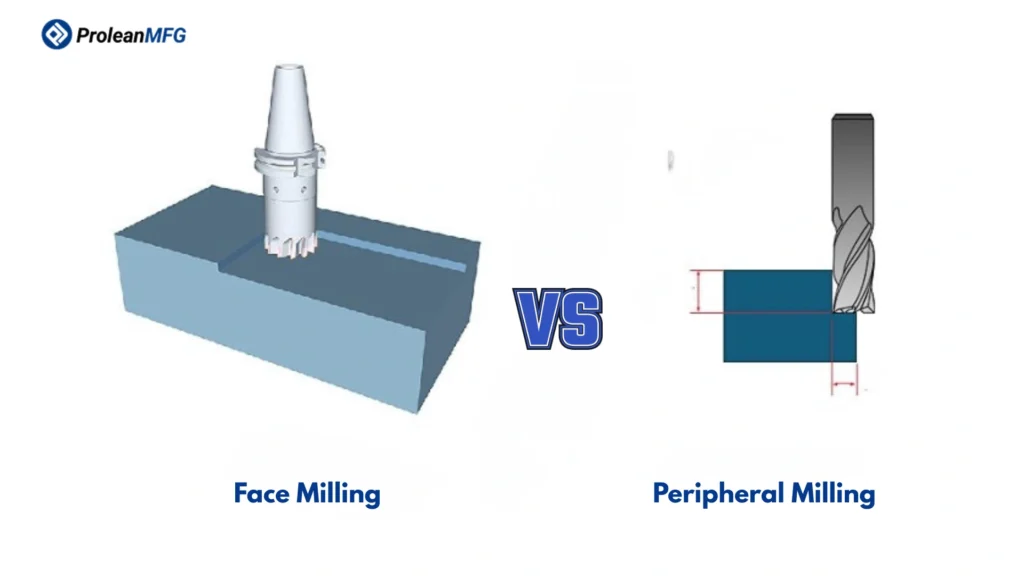
Peripheral milling involves machining action along the tools’ circumferences, and its axis remains parallel to the work surface, whereas this engagement is perpendicular during face milling.
You can choose peripheral milling when you need to create keyways, grooves, or narrow slots. It also provides higher edge accuracy and can machine more confined and deep areas, compared to face milling. However, peripheral milling can not cover a large machining area.
Shell Mill Vs Face Mill: How are they Different?
The key difference between a shell mill vs face mill is their design and machining purpose. A shell mill involves a hollow body that can be mounted on an arbor and used for heavy-duty machining. A shell mill can be used for face milling operations.
On the other hand, face mill cutters do not involve any center bore; instead, they include a rigid body with multiple inserts that can be mounted on a spindle.
Can I Combine Face Milling and End Milling?
Yes, you can combine face milling and end milling. First, for face milling for workpiece surfacing and then end milling for complex machining operations. However, combining two can be costlier if the part geometry and your machining requirements do not demand so.
Combine end milling with face milling in the following conditions;
- When a part includes large surfaces and complex features
- When you need roughing of the surface first before shaping
- When you have CNC machines with the capability of multiple tool operations
Summing Up
Choosing between face milling vs end milling mainly depends on the shape or features of the part you want to machine, followed by other factors, such as material removal rate, application type, and tool access.
If you are still confused about which one to choose, contact ProleanMFG. We are a leading on-demand manufacturing company offering comprehensive CNC milling services across diverse industries. Our advanced CNC machine shop is equipped with 3-, 4-, 5-, and higher-axis milling machines and machining centers to deliver high part complexity and precision.
FAQs
Face milling is used to create flat & horizontal surfaces, whereas side milling is performed to cut vertical surfaces and features.
The difference between face milling & plain milling is the orientation of the tool & cutting direction. Plain milling involves a cutter parallel to the machining surface, whereas it is perpendicular in face milling.
Yes, end milling cutters can be used for face milling operations, but they are less efficient and can not cover a large surface area.