
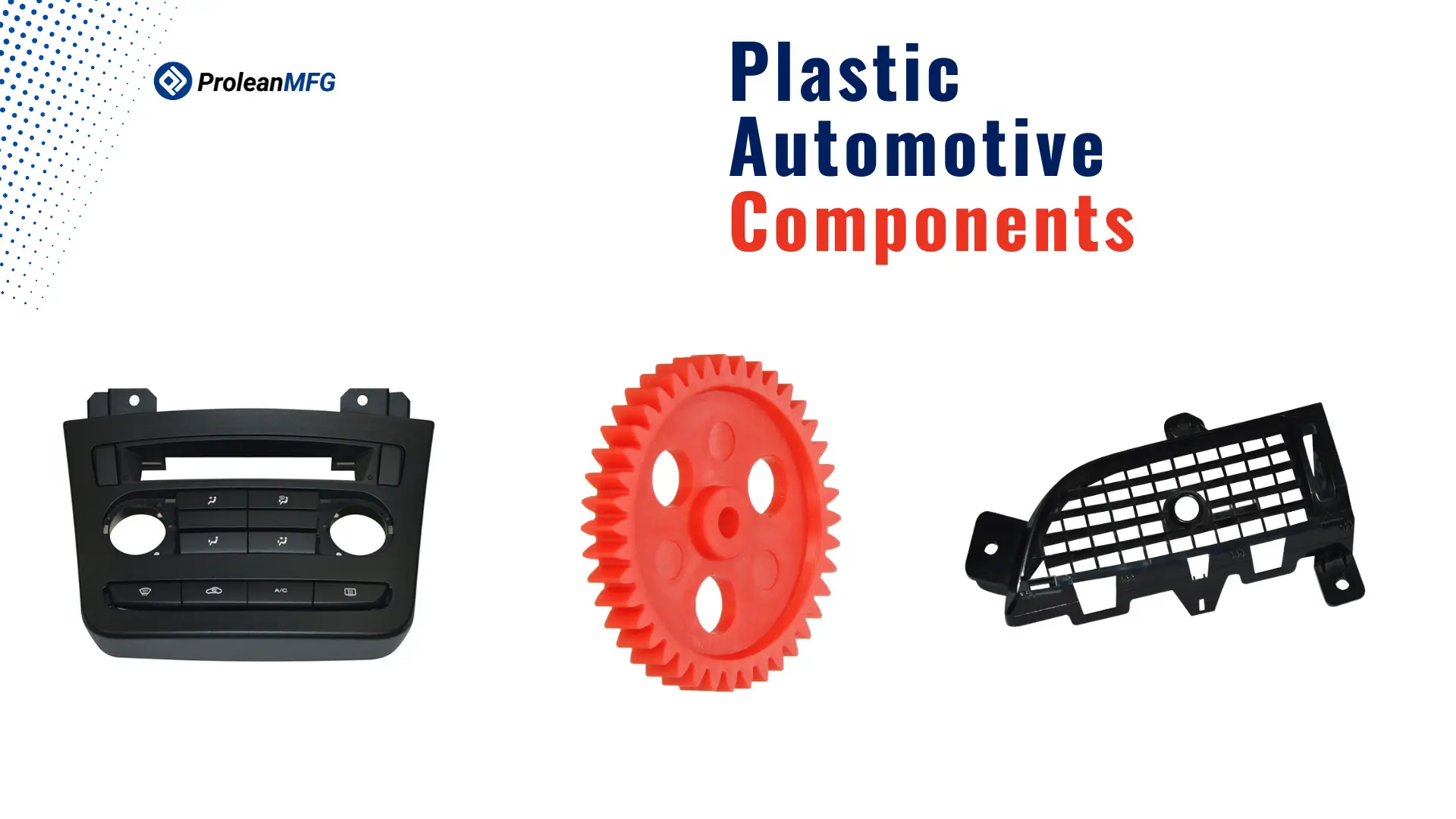

Plastic automotive components are used in many vehicle systems. The common examples include interior panels, automotive fasteners, electrical housings, fluid reservoirs, connectors, and exterior trim.
These parts must maintain strength, dimensional stability, and resistance to heat, vibration, and automotive fluids during vehicle operation.
Engineers select plastics for automotive components because they provide good strength-to-weight performance and can be molded into complex shapes.
Compared with metal parts, plastics simplify the manufacturing of brackets, covers, ducts, and housings that require integrated features such as clips, ribs, or mounting points.
Material selection is important because different components operate under different conditions. Parts near the engine must resist heat and oil exposure, while interior parts must maintain appearance and impact resistance. Exterior components must tolerate UV exposure and weather changes.
This article explains the common materials used in the automotive industry manufacturing, their properties, and how manufacturers select suitable plastics for different automotive parts.
Engineering Benefits of Plastic Automotive Components
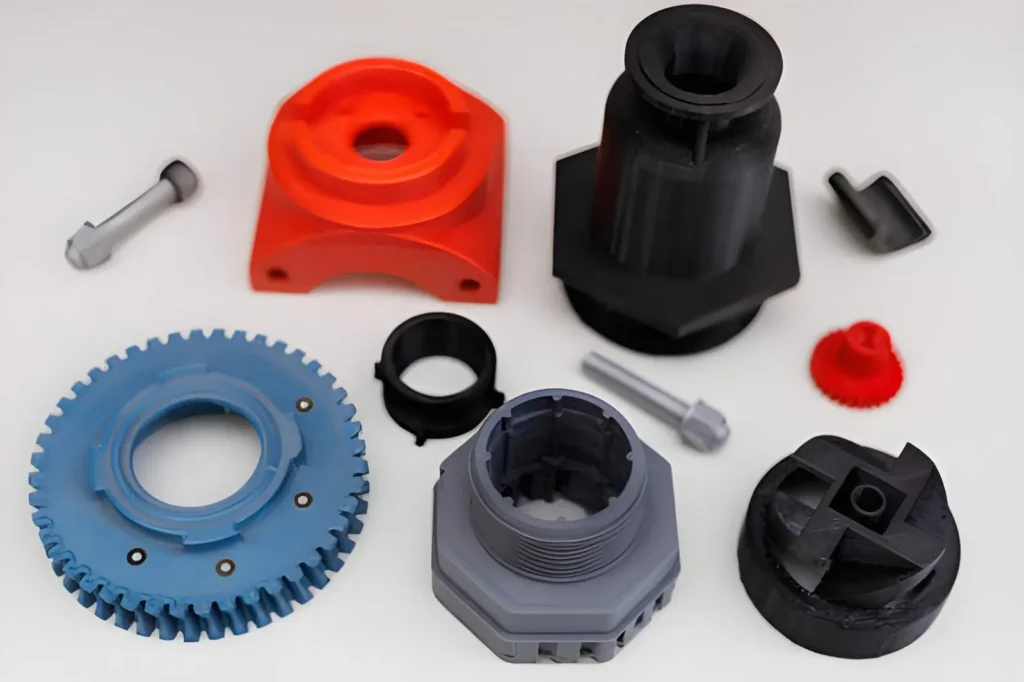
Engineers choose several plastic components in automotive fabrication, primarily because they can produce lighter-weight parts, provide better corrosion protection, and are manufactured efficiently.
In addition, because they can form more complex shapes, plastics enable simpler assemblies and fewer individual components.
Lower Component Weight
The primary advantage of using plastic parts is that they are generally significantly lighter than their metal counterparts.
As a result, many metal covers, ducts, and other interior structural members have been replaced with plastics (such as polypropylene or nylon).
The reduced component weight will help reduce overall vehicle weight, thereby improving the fuel efficiency of gasoline-powered vehicles and extending the range of battery-electric vehicles.
Resistance to Corrosion
Because many automotive parts operate in environments (exposed to water/moisture, road salts, and automotive fluids) that cause metals to corrode, plastic parts do not corrode.
Therefore, it is common practice for manufacturers to use plastics in applications such as reservoirs, housings, connectors, and protective covers.
Impact Resistance
In some cases, vehicle components need to withstand an abrupt load rather than fracture. Acrylonitrile Butadiene Styrene (ABS) and Polycarbonate offer excellent energy-absorption capabilities. Both types of plastics are typically utilized for bumper trim and protective components.
Efficient Part Manufacturing
Automotive plastic parts can be created using manufacturing techniques such as injection molding and auto CNC machining.
Utilizing these manufacturing processes enables engineers to build into the part itself (ribs, clips, etc.) those features that would otherwise require additional assembly steps. This greatly simplifies the manufacturing process.
Flexible Material Properties
The material properties of plastics can be adjusted via additions or reinforcement. Reinforcement with glass fibers increases the stiffness of plastics, whereas UV stabilizers enhance their exterior durability against ultraviolet light exposure from the sun.
Common Plastics Used for Automotive Components and Their Typical Uses
Vehicle manufacturers use various types of engineering plastics to manufacture automotive parts. Each type of plastic has unique physical, thermal, and chemical properties that depend on how the component will operate and the types of stress it will experience.
Polypropylene (PP)
Polypropylene is among the most widely applied plastics in motor vehicles. It provides effective chemical resistance, has a relatively low density, and exhibits dependable impact strength. Additionally, PP is easily molded into parts of considerable size with built-in design elements.
Polypropylene is widely used in interior automotive parts such as battery housings and trims. Exterior bumpers usually use PP copolymers or blends for better impact resistance.
Polyamide (PA) (Nylon)
Polyamide is often chosen for components that require greater mechanical strength and thermal endurance than other plastics. Also, polyamide performs well under sliding friction and wear. Glass-reinforced nylon grades exhibit greater stiffness and structural stability than unreinforced PA.
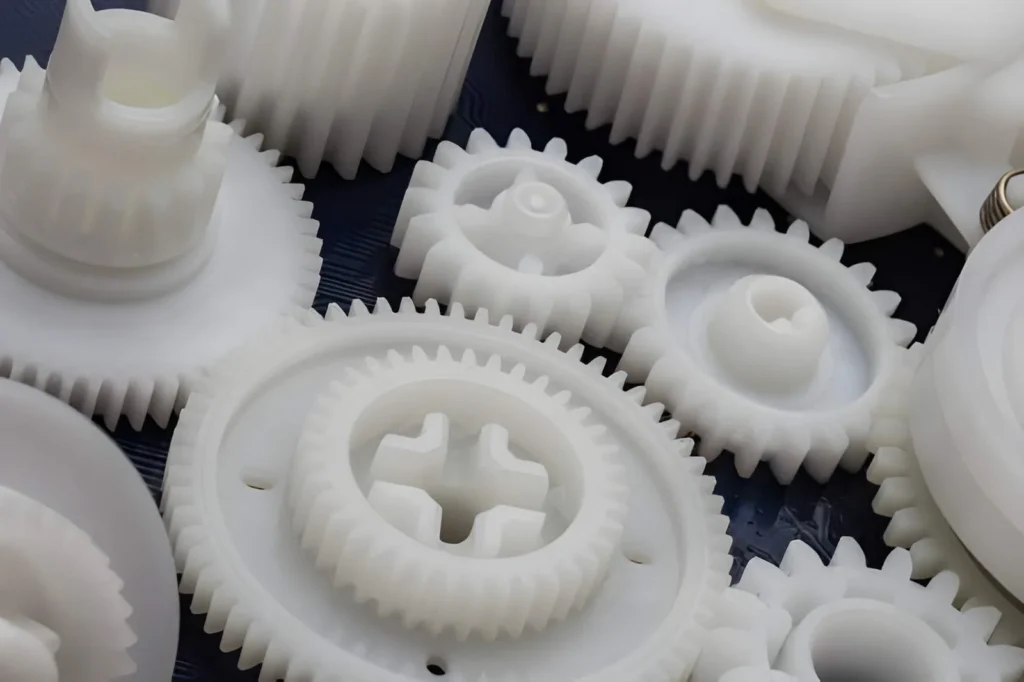
Plastic parts for automotive applications include gears, fuel system components, engine covers, door handles, and mechanical housings.
Acrylonitrile Butadiene Styrene (ABS)
ABS is a rigid thermoplastic. It is recognized for having excellent impact resistance and stable dimensions. It produces a smooth surface finish, making it suitable for all vehicle components that require an aesthetically pleasing appearance.
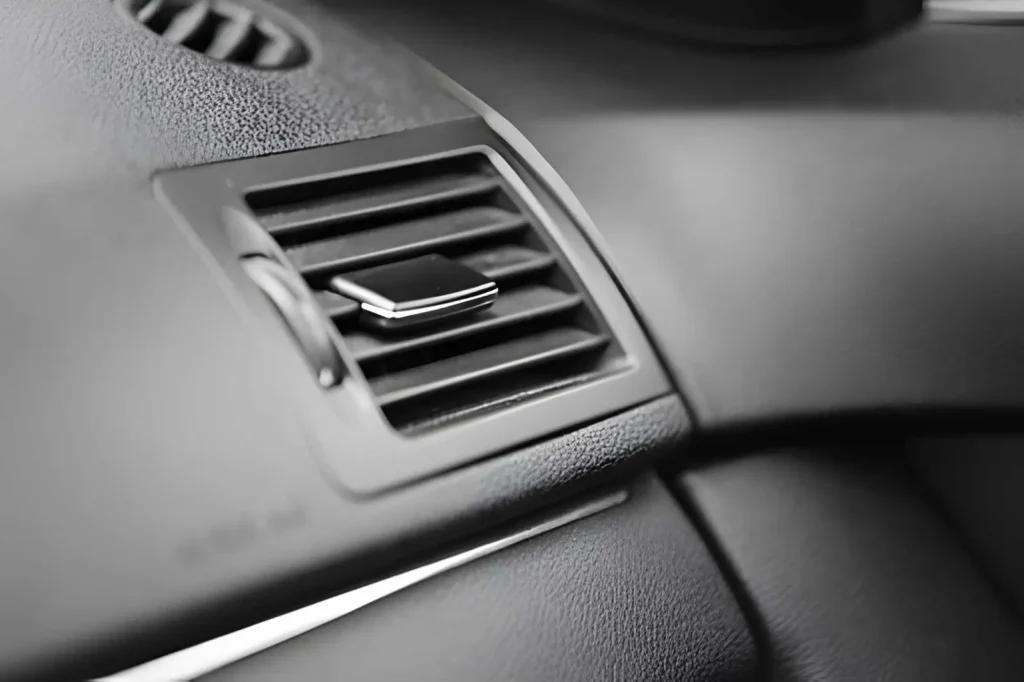
The majority of automotive manufacturers use ABS in dashboard air vents, wheel covers, interior panel assemblies, and decorative trim components.
Polycarbonate (PC)
Polycarbonate has superior impact resistance compared to many other automotive plastic materials. Also, it offers excellent optical clarity. Therefore, polycarbonate is commonly used in components that either need to be clear or withstand rapid shock impacts.
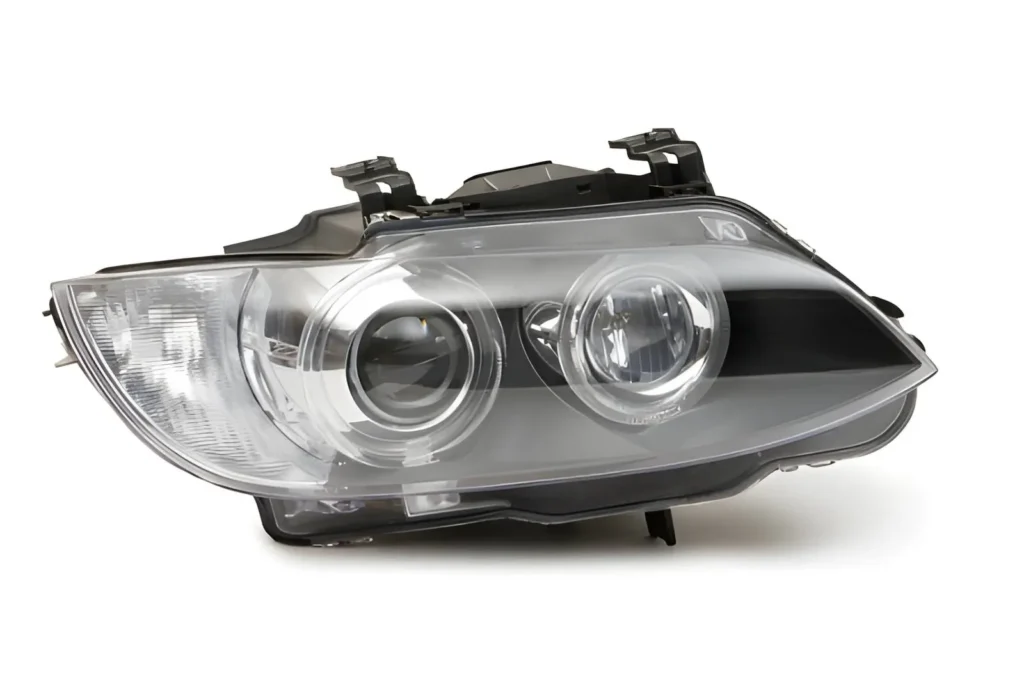
Polycarbonate components are used as headlight lenses, light covers, and transparent protective panels for automobiles.
Polyoxymethylene (POM)
POM, also known as Acetal. It is a highly prized automotive plastic material for its dimensional stability and low friction. As such, POM is particularly suited for parts needing precision and consistent movement.
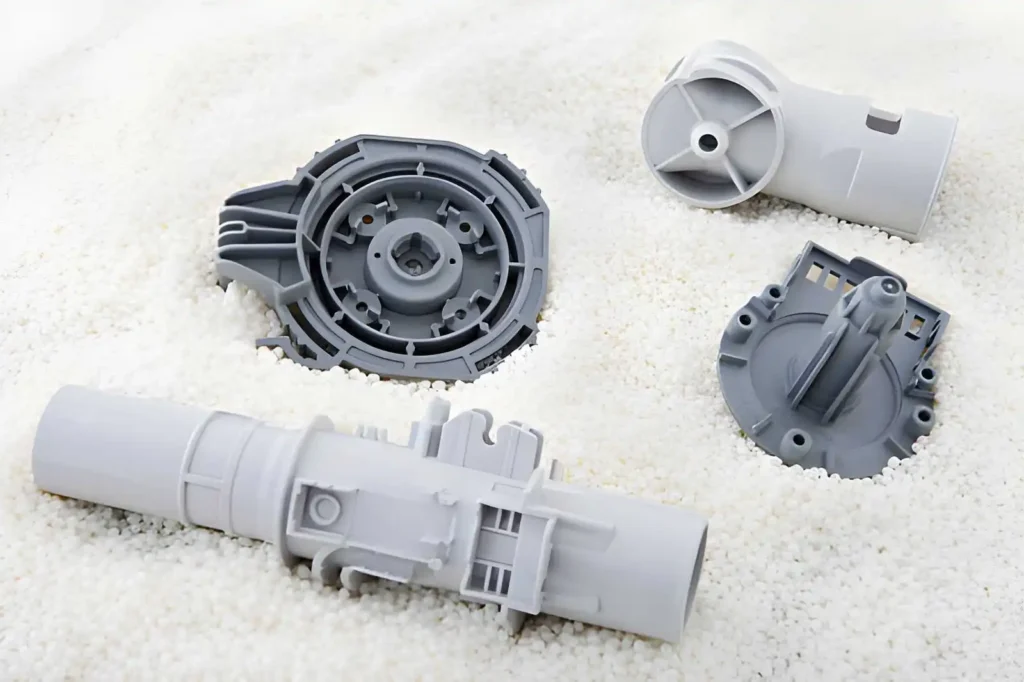
Examples of typical automotive applications for POM are fuel system components, fasteners, small gear sets, and interior mechanical parts.
Polyethylene (PE)
Polyethylene has significant chemical and long-term exposure resistance when exposed to various automotive fluids. PE’s flexibility enables the production of larger hollow parts.
Polyethylene is commonly used in fuel and fluid storage tanks and as protective liners for various parts.
Polyurethane (PU)
When a manufacturer requires flexibility or cushioning properties within their products, they use polyurethane. Depending on the specific requirements, polyurethane can be produced in either a rigid form or a flexible foam.
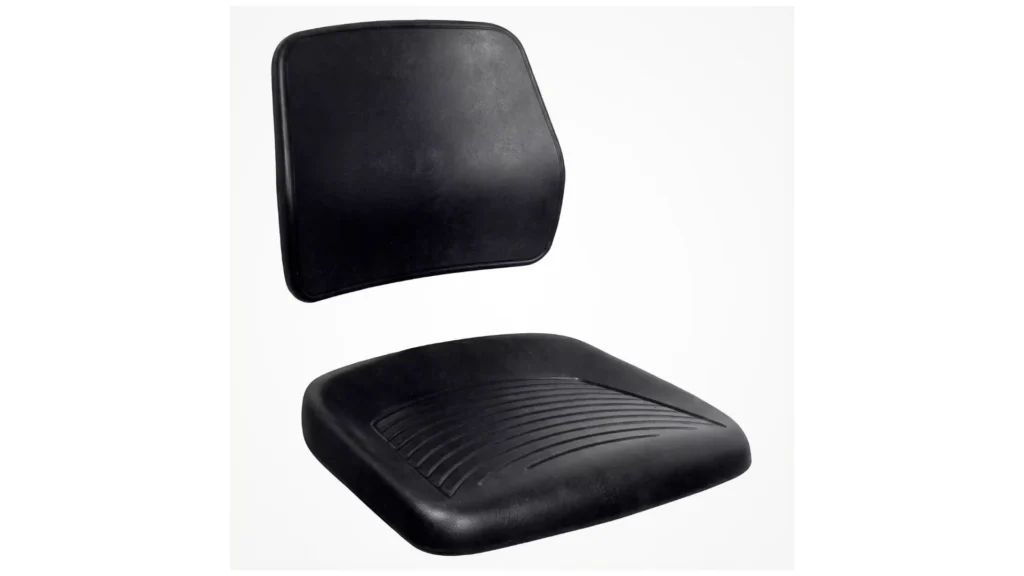
Common uses of polyurethane by automobile manufacturers include seat cushions, interior padding materials, insulating components, and vibration-damping components.
Applications of Plastic Automotive Components
Automotive plastic components have become an integral part of today’s vehicles. Their versatility offers a combination of durability, low weight, and design freedom that is not possible with metals. They are used throughout the automobile, in those locations where metals would be too heavy or unmanageable to shape.
Exterior Automotive Components – Bumpers, Fenders, and Mirror Housings
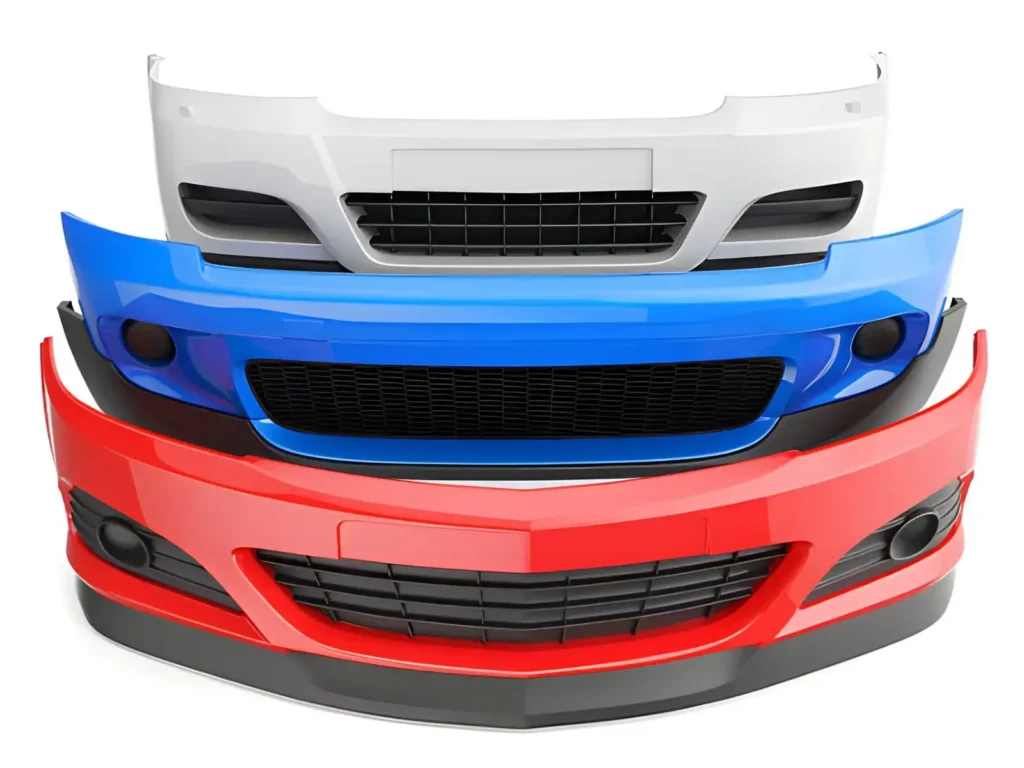
Exterior automotive parts are made from plastics suited to each component: bumpers use PP copolymers for impact resistance, while mirror housings and fender skins often use ABS. Both are lightweight and moldable into complex shapes.
Interior Components – Dashboards, Door Panels, and Center Consoles
Dashboards, door panels, and center consoles are typically made using ABS or polycarbonate-based alloys. These plastics offer good stiffness and durability, as well as the ability to withstand the effects of sun exposure on the dashboard surface. Additionally, these plastics enable highly accurate molding of small features, such as buttons, vents, and mounting locations for display housings.
Seat Frames and Cushion Support Structures
Seat frame structures, headrest assemblies, and armrest support structures commonly employ plastics such as polyurethane and reinforced nylon. By providing structural integrity at minimal additional weight, they help to dissipate vibrations caused by road irregularities and provide a stable location for securing seat cushion pads.
Under-the-Hood Components – Engine Covers, Air Intake Ducts, and Coolant Tanks
Components such as engine covers, air intake ducts, and coolant tanks utilize heat-resistant plastics such as Polyether Ether Ketone (PEEK) or Nylon (PA6). These plastics offer the advantage of operating effectively under extreme temperature conditions; exhibit excellent resistance to automotive fluids; and can be produced at a much higher rate than corresponding metal components.
Contact Prolean MFG for Plastic Automotive Components
If you need strong and precise plastic parts for your automotive projects, Prolean MFG can help. We provide high-quality plastic components made to fit your specific requirements. Our engineers work closely with you to choose the right materials and processes for your parts.
We support automotive manufacturers and suppliers with practical solutions for both small and large projects. Reach out to us today to talk about your project, get a quote, or see how we can help turn your automotive ideas into real components. Call us or use our contact form to get started.