

Metal strength is an important factor when choosing a metal for a project. It shows how much force a metal can withstand before bending, deforming, or breaking. Because of this, strength helps engineers decide where a metal can be used.
For example, some metals work well in construction, while others are better for aircraft parts or machinery.
In simple terms, “Strength” is a metal’s ability to withstand loads without collapsing. As such, in the design process, engineers assess the actual strength (load-carrying capacity) of the metals they use for various applications where weight and/or pressure will be applied.
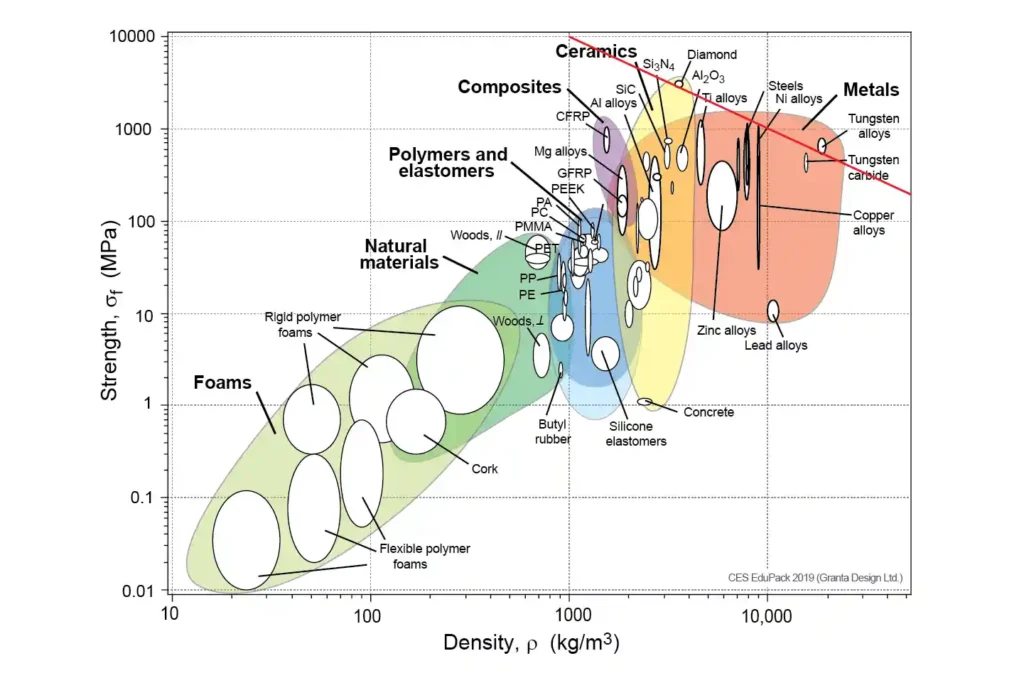
For example, a metal strength comparison chart enables an engineer to compare different metals. The strength charts generally include data on tensile, yield, and compressive strengths.
These data points indicate how a particular metal responds to different forces. By reviewing these comparisons, engineers select a specific type of metal that provides the required characteristics needed for their application.
This guide explains the main types of metal strength, the factors that affect them, and includes a metal strength chart to help you compare common metals.
Comprehensive Metal Strength Chart
Core Reference Points (Engineering Notes)
- Strength in metals: Use tensile and yield strength to pick materials for load-bearing parts.
- Hardness: Choose based on wear resistance or cutting/tooling needs.
- Density: Consider for weight-critical parts, especially in aerospace or automotive.
- Fatigue & Impact: Look at these for parts under repeated stress or shocks.
- Elongation: Check ductility when bending, forming, or stamping is needed.
- Applications: Match properties to intended part uses, such as structural, aerospace, marine, or electrical.
The table below provides a detailed comparison of commonly used metals and alloys based on their mechanical properties. It includes tensile strength, yield strength, hardness, density, fatigue strength, impact strength, elongation, and typical applications.
Use it as a practical guide to choose metals for CNC machining for fabrication applications.
Table 01: Comprehensive Metal Strength Reference
| Metal Type | Tensile Strength (MPa) | Yield Strength (MPa) | Hardness (HB / HV / Rockwell) | Density (g/cm³) | Fatigue Strength (MPa) | Impact Strength (J) | Elongation (%) | Typical Applications |
| Maraging Steel | 1890 | 1930 | 500 HV | 8.0 | 600 | 40-50 | 3-5 | High-strength tooling, aerospace |
| Inconel 718 | 1240 | 1035 | 400 HV | 8.0 | 400 | 30-40 | 15-20 | High-temp aerospace, turbines |
| Titanium (Ti-6Al-4V / TC4) | 1200 | 830-1150 | 349-380 HV | 4.43-4.5 | 480-500 | 25-35 | 10-15 | Aerospace, medical implants, marine parts |
| Nickel Alloy 625 | 1030 | 760 | 270 HV | 8.44 | 380 | 40-50 | 30-40 | Corrosive environments, marine |
| Stainless Steel 17-4PH | 1150 | 1250 | 350 HV | 7.93 | 450 | 50-60 | 15-20 | Chemical processing, aerospace |
| Stainless Steel 304 | 515 | 205 | 201 HB / 88 Rockwell B | 7.93-8.0 | 180 | 30-40 | 40-50 | General-purpose, corrosion-resistant |
| Stainless Steel 316L | 400 | 600 | 271 HV | 7.93 | 150 | 20-30 | 40-50 | Medical devices, food processing |
| Steel A36 | 400-550 | 250-350 | 120 HB | 7.85 | – | – | 20-25 | Construction, structural parts |
| Steel Grade 50 | 450-650 | 360-500 | – | 7.85 | – | – | – | Bridges, heavy structures |
| Tool Steel D2 | 700 | 400 | 600 HV | 7.85 | 250 | 20-30 | 5-8 | Cutting tools, dies |
| Aluminum 7075 | 572 | 503 | 150 HV | 2.81 | 140 | 25-35 | 10-15 | Aerospace, military |
| Aluminum 6061-T6 | 300-310 | 180-276 | 120-125 HB | 2.70 | 80 | 10-20 | 8 | General structural parts |
| Aluminum 5052-H32 | 230 | 28 | – | 2.68 | – | – | – | Sheet metal, lightweight parts |
| Aluminum 3003 | 150-170 | 21 | 20-25 HB | 2.73 | – | – | – | Roofing, siding, panels |
| Copper C11000 | 210-250 | 69 | 35-65 HB | 8.94 | 50 | 10-12 | 30-40 | Electrical wiring, heat exchangers |
| CuCrZr Copper Alloy | 432 | 543 | 90 HV | 8.94 | 180 | 35-45 | 5-10 | Heat exchangers, contacts |
| Brass (Yellow / Red) | 340-470 | 40-65 | 55-65 HB | 8.44-8.74 | – | – | – | Plumbing, decorative, industrial |
| Aluminum Bronze | 270 | 77 | – | 7.7-8.7 | – | – | – | Marine, wear-resistant parts |
| Titanium (Pure) | 63,000 PSI ~ 430 | 37,000 PSI ~ 255 | 80 Rockwell | 4.5 | – | – | – | Aerospace, medical implants |
| Tungsten | 1725 MPa | – | 350-400 HV | 19.3 | – | – | – | Cutting tools, heavy machinery |
| Chromium | – | – | 8.5 Mohs | 7.19 | – | – | – | Alloying, plating |
How Metals Withstand Forces
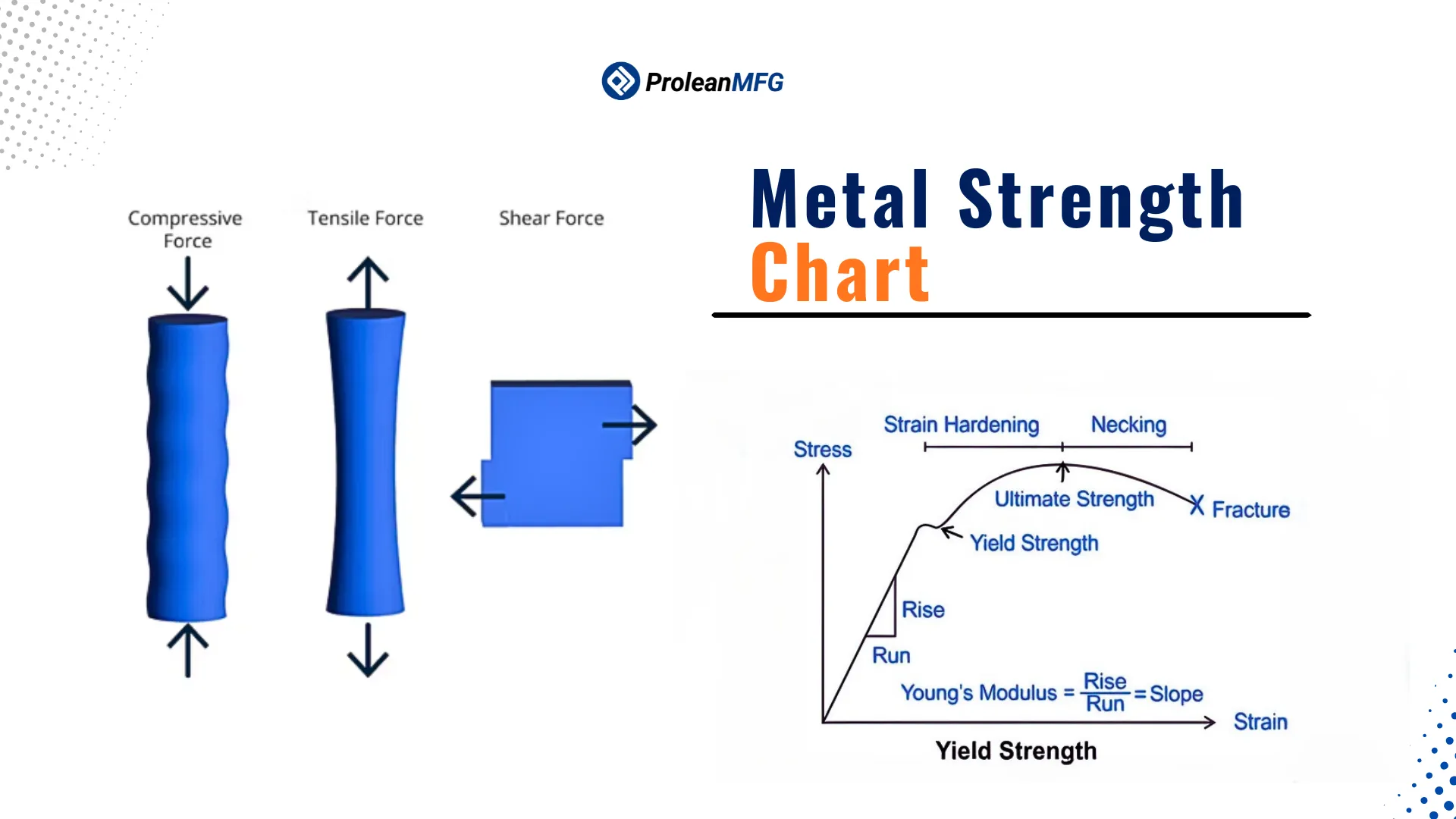
High-strength alloys or metals respond differently depending on the type of stress (force) applied. By knowing these differences, engineers can choose the best material for their parts.
Tensile Strength
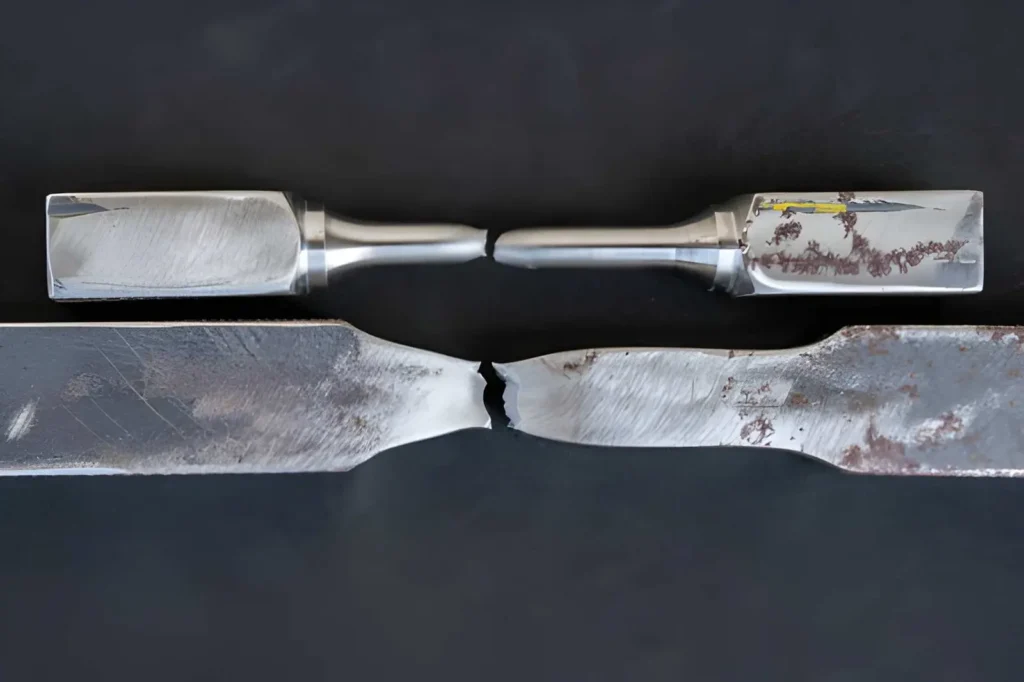
Tensile strength is the amount of stretch a metal can withstand before breaking. A metal’s tensile strength indicates how strong it is under tension (pulling).
Yield Point: The point at which the high-strength alloys or a metal first undergoes permanent deformation. Engineers use yield points as a design reference to create safe operating conditions.
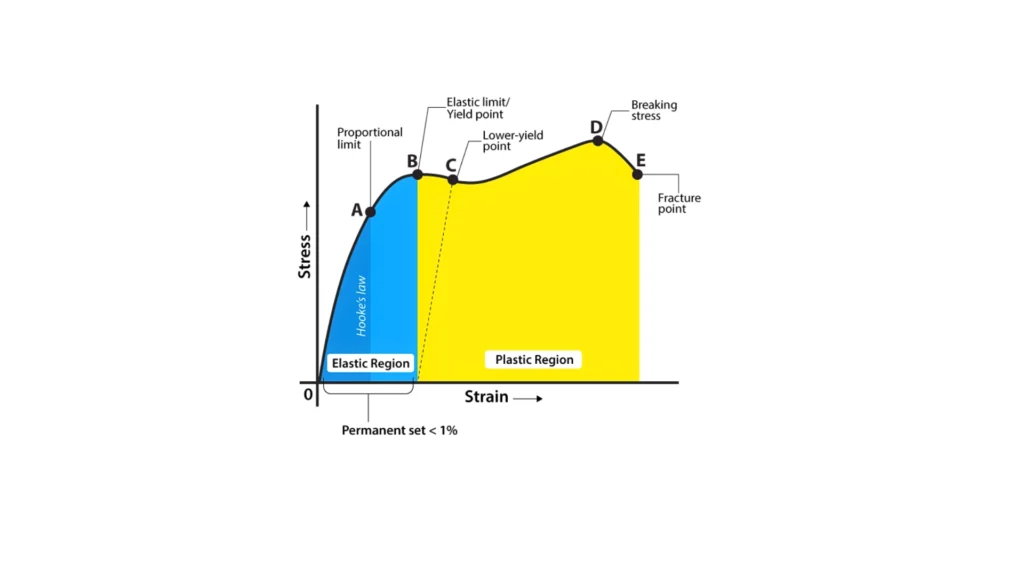
Max Load: The maximum load a metal can withstand before thinning out.
Break Point: The point at which the metal fails under tensile loading.
To test tensile strength, engineers use a tensile tester that stretches the metal while recording the load and elongation until it fails.
Compressive Strength
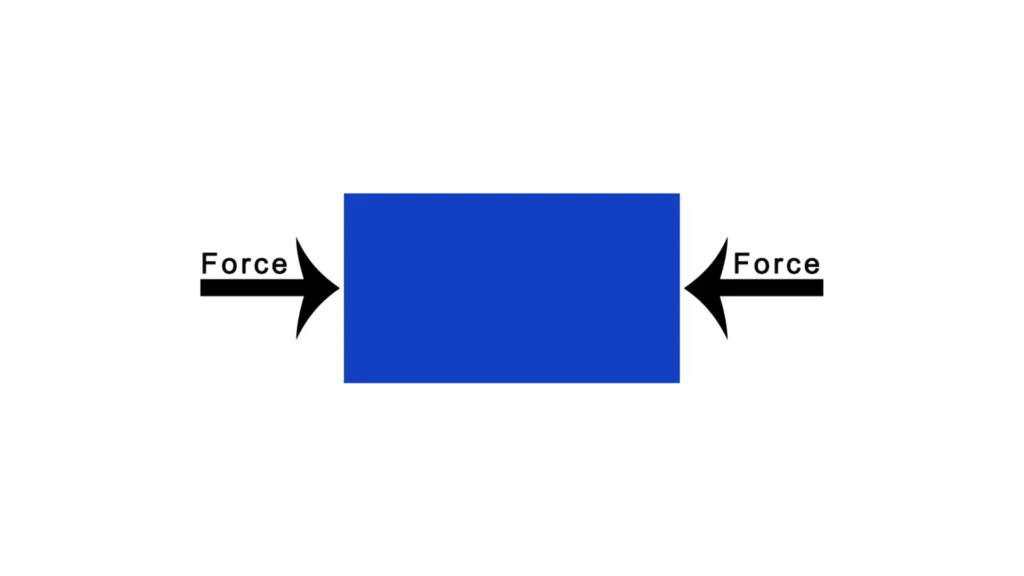
The compressive strength of a metal provides information regarding the ability of the metal to resist forces that compress/press down upon it. The compressive strength of a metal is the maximum compressive load it can withstand without significant deformation.
A compression testing machine applies equal pressure to both sides of the specimen until the metal buckles, bends, or fractures. When a specimen begins to exhibit some degree of deformation, it has reached its compressive strength.
Shock Resistance
Impact toughness quantifies how effectively a metal can absorb an instantaneously applied shock/load without failing. Materials used in applications requiring safety or heavy-duty components require a high level of impact toughness.
Testing machines, such as Charpy or Izod testers, hit a notched sample and record the energy absorbed before it fractures.
Strong Metals Commonly Used in Fabrication
The strength in metals is generally higher compared to many other materials. To select suitable materials for building structures, designers must consider the type of structure being built, the intended service conditions of each structural element, and the environmental conditions in which it will operate.
There are many different metals available to the designer; however, this paper focuses on six metals recognised for their mechanical strength and versatility for practical applications.
Titanium
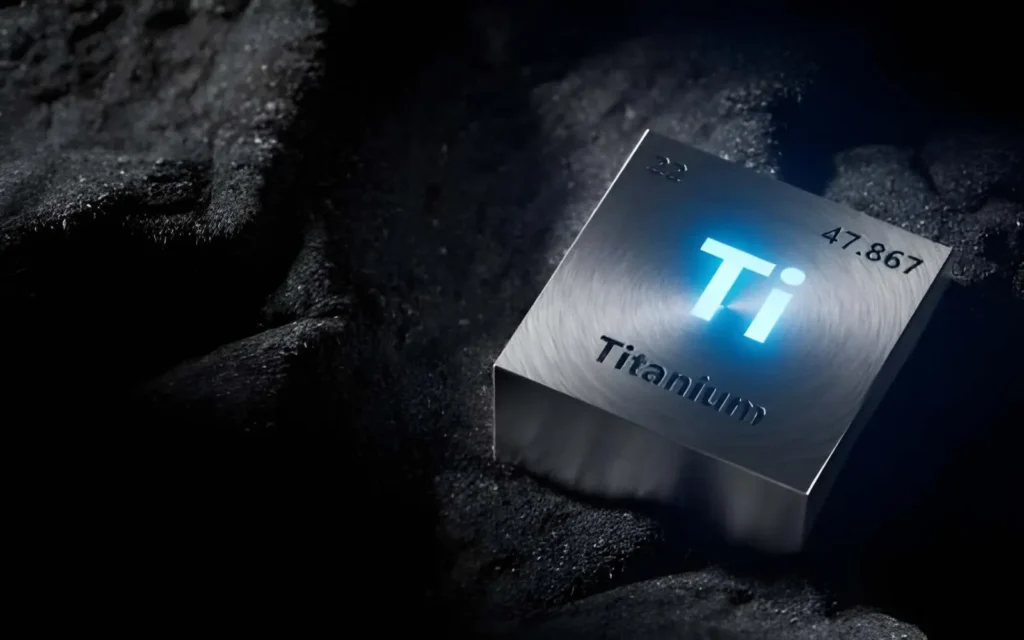
Titanium can provide a high strength-to-weight ratio, though this varies with the alloy composition and processing methods. Additionally, it exhibits excellent corrosion resistance. Because of these characteristics, titanium is typically used in aircraft, medical implants, and various high-performance automotive parts.
When the strength in metals needs to be enhanced for certain applications, titanium is frequently alloyed with other elements.
A popular type of titanium alloy is Ti-6Al-4V. This alloy contains aluminum and vanadium. This alloy is primarily used in the aerospace industry and other applications that require high-strength, lightweight metals.
Tungsten
Tungsten is among the strongest naturally occurring metals. In terms of tensile strength, tungsten has the highest value among pure metals, reaching approximately 1,725 MPa. Due to its extremely high melting point (over 2,400 degrees Celsius), tungsten can withstand extreme temperatures without damage.
However, due to its brittleness, tungsten is typically combined with other elements to produce tungsten-based alloys. A common example of a tungsten alloy is tungsten carbide. These alloys possess exceptional hardness and durability and are frequently used for applications including manufacturing cutting tools, wear-resistant surface coatings, and mining machinery.
Chromium
Pure chromium is ranked 8.5 on the Mohs scale, making it relatively hard. When incorporated into an alloy, chromium enhances strength. Due to its brittleness, pure chromium is rarely used as a base material. Instead, it is typically added to other metals to enhance their strength or plated onto existing surfaces to protect against corrosion.
A common use of chromium is in the production of stainless steel. Stainless steel offers a combination of corrosion resistance, wear resistance, and strength. Therefore, it remains one of the most widely produced and used metals in industry.
Steel
Many ask: Is aluminum stronger than steel? Steel, made by alloying iron with carbon and other elements, generally offers greater strength than aluminum. Generally, the amount of carbon contained in the steel determines its strength.
Some examples of high-strength steel alloys include:
- Stainless Steel: Iron mixed with chromium and possibly manganese. It has good corrosion resistance and has a yield strength of 1,560 MPa. It is used in construction, medical instruments, and kitchen tools.
- High-Strength Low-Alloy (HSLA) Steel: Lighter than regular steel but still very strong. HSLA steel includes small amounts of copper, nickel, vanadium, and titanium. It is used in bridges, cars, and pipelines.
- Maraging Steel: A nickel-cobalt-molybdenum-titanium alloyed iron. Maraging steel is extremely strong. It is used in aerospace applications, tooling, and rocket components.
- Tool Steel: Composed of tungsten, chromium, and vanadium. Tool steel is extremely hard and abrasion-resistant. It is best suited for producing cutting tools, molds, and dies.
Inconel
Inconel is a nickel-chromium alloy developed to provide high strength and corrosion resistance at extremely high temperatures. Turbine blades, turbochargers, heat exchangers, and various forms of equipment used in chemical processing are typical applications for Inconel.
How to Improve Metal Strength
The method of altering a metal’s internal properties will increase its strength. Metal engineers have created techniques to control how metals react, including through alloying, heat treatment, and cold work.
Alloying
Adding an element to another element changes the way that the atoms of each element are arranged. Elements added include aluminium, vanadium, and nickel. They block the gaps in the metal lattice where further dislocations could develop.
Dislocations are weak points in a metal that allow it to be deformed. Blocking dislocations in a metal increases its load-bearing capacity and overall strength. Titanium alloys such as Ti-6Al-4V exhibit higher strength than non-alloyed titanium. Stainless Steel is also an example of a metal whose strength can be enhanced by alloying with chromium and nickel, along with improved corrosion resistance. In addition, alloying alters the metal’s atomic structure, improving both yield and tensile strength.
Heat Treating
Heat treating is the process of adjusting a metal’s microstructure to achieve a balance between increased strength and toughness.
Quenching: Heating a metal to its critical temperature and rapidly cooling it in water or oil. It quickly solidifies carbon or other alloying elements into a hardened state known as martensite, which provides extremely high hardness.
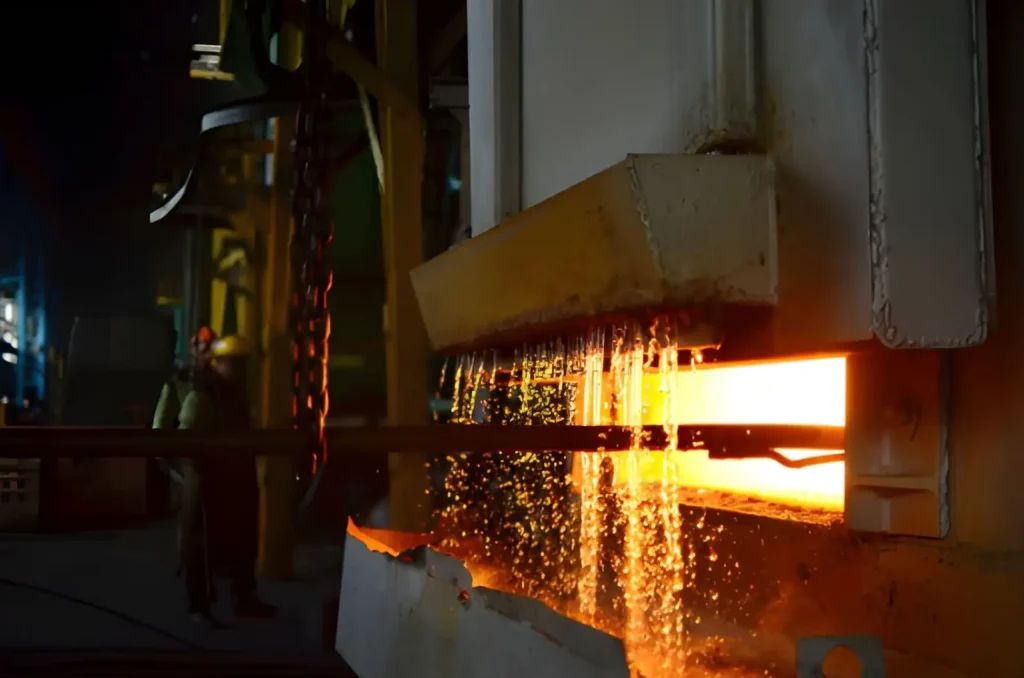
Tempering: Tempering involves heating quenched metal at a moderate temperature. During tempering, the internal stresses are released, and brittleness decreases, although most of the original hardness remains. Therefore, tempered metal is strong but retains much of the parent metal’s impact resistance.
Normalizing: Similar to annealing, it involves heating the metal to its critical temperature and then cooling it slowly in air. Normalising refines the grain structure, making the resulting material more uniform and therefore stronger than the original. However, normalizing leaves enough plasticity for the metal to be fabricated without cracking.
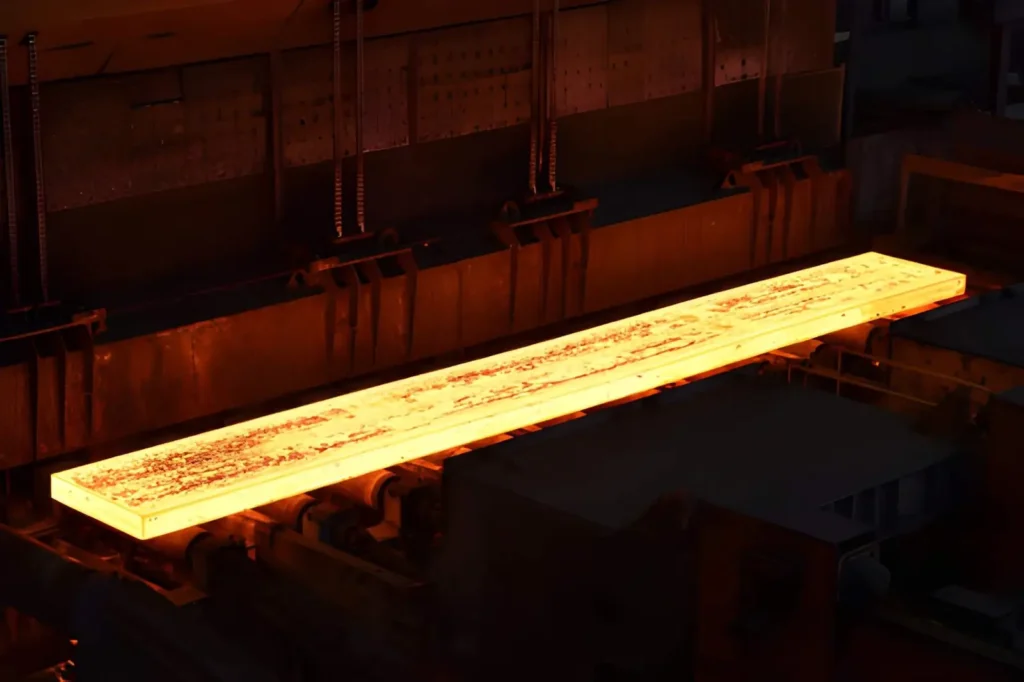
Precipitation Hardening (Ageing): Precipitation hardening is achieved by heating the metal to a very low temperature for a specific period of time, thereby creating small particles within the crystalline structure. These particles act as barriers to dislocation motion, thereby increasing the metal’s yield strength.
Annealing: Gradually heating and cooling a metal. Annealing reduces internal stresses and enables grains to recrystallize. The resulting metal is generally softer and more pliable than before, and less likely to crack during fabrication.
Hardening: Hardening involves heating a metal to cause internal compounds to dissolve and then quenching it to produce extreme hardness and significant improvements in strength. Unfortunately, the process eliminates nearly all ductility.
Prolean MFG: Expertise in Metal Machining and Material Selection
At Prolean MFG, we specialize in CNC Machining Services, working with a wide range of metals to meet different project requirements. We produce high-precision parts from Aluminum (AlSi10Mg), Titanium (TC4), Stainless Steel 316L, and maraging steel.
Our multi-axis CNC machines enable us to deliver accurate, high-quality components from a range of metals. We also provide post-processing and surface treatments, including anodizing, heat treatment, polishing, and coating, to ensure each part meets both functional and aesthetic standards.
With over 95% on-time delivery, less than 0.5% in quality complaints, and More than 2 million parts delivered annually, our engineers combine material expertise and precise machining to support your projects. For guidance on material selection or project planning, contact us today.