

The weight of components is important in engineering. The material you select will affect performance, fuel efficiency, and, most importantly, money when you build an aircraft fuselage or a surgical implant. In these cases, lighter metals, which are a stronger option, are often used. In the past decade, the demand for these metals has skyrocketed.
The global market for these lighter metals is projected to be around 260 billion by 2026, with the automotive and aerospace industries driving demand. These industries value weight savings in their structures, provided safety and durability are maintained. While these metals include aluminum and titanium, each has its own unique properties that are important to its function. Before a company can make design or purchasing choices, it must understand the differences in these metals.
Choosing the lightest metal is not solely a question of material science, but one of manufacturing as well. For instance, ProLean MFG’s Materials for CNC Machining showcases how different metals behave when subjected to cutting tools. Additionally, our custom metal machining services include all of the lightweight alloys mentioned in this article.
What Advantages do Light Metals Offer for the Projects?
Switching to lighter metals has several advantages, and is not just a question of mass reduction. A number of benefits in performance, cost, and durability can be gained with the metal machining process. Therefore, these materials are chosen by engineers for a variety of highly demanding situations.
Strength to Weight Ratio
While it might be a common assumption that the heaviest and densest metals are the strongest, applied structural engineering shows us that this is not the case. One example is titanium. Although it has less weight than aluminum, its tensile strength is on par with that of steel. Within the 7000 series aluminum alloys, there is a level of strength that was previously unimaginable for early aerospace design. This is why stiff, lightweight, load-bearing structures are a reality now and completely revolutionize structural and transport engineering.
Corrosion Resistance
Many light metals have protective oxide layers that guard against corrosion. For example, aluminum oxide forms on aluminum surfaces as soon as they are exposed to the atmosphere, requiring no additional coatings for passive corrosion protection. Even more advantageously, titanium – the most corrosion-resistant metal – withstands corrosion from seawater, chlorides, and even industrial acids, reducing maintenance and lengthening the life cycle of components.
Thermal Properties
Regarding heat resistance and management, both aluminum and magnesium are heat conductive, making them suitable materials for heat sinks and thermal management frameworks, while titanium serves as a thermal insulator. This property is desirable for thermal barriers in medical equipment and jet engines, where heat transfer has to be minimized.
Sturdy and Durable
Modern alloy compositions and heat treatment processes have made it possible for aluminum and titanium to gain more durability. In the most challenging and demanding environments, components made from materials such as quality lightweight alloy can even surpass the lifespan of heavier alternatives.
Recyclability
Inevitably, designing with sustainability in mind is now a necessity rather than a choice. As a material, aluminum is one of the most recyclable in the industry. Its recycling requires only 5% of the energy needed to create it from ore, which makes it very attractive for use. Other lightweight alloys, such as titanium, magnesium, etc., are also recyclable.
Types of Lightweight Metals
If you are wondering what the lightest metals are, the four metals that are lightweight for structural and functional purposes include aluminum, titanium, beryllium, and magnesium. Each of these metals has a distinct alloy family, different processing requirements, and a different performance envelope.
Aluminum and Aluminum Alloys
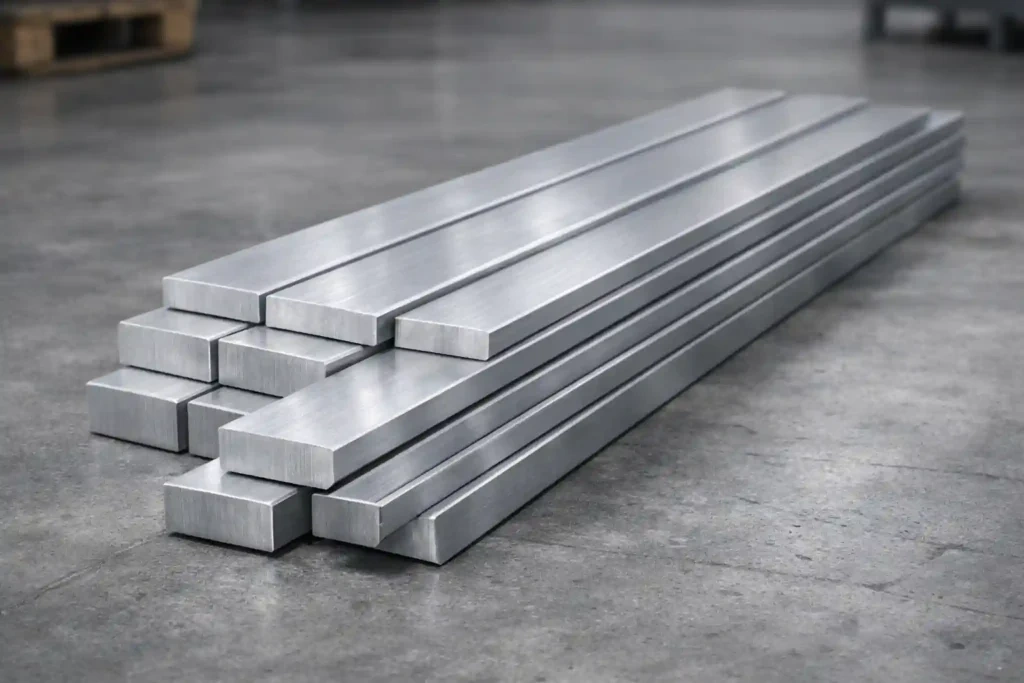
Aluminum is a lightweight metal that is widely used in manufacturing. The density of aluminum is approximately 2.7g/cm3, which is one-third of that of steel. Modern alloy formulations provide impressive tensile strengths, excellent machinability, and reliable corrosion resistance. It is the material of choice for aerospace, automotive, and marine industries, as well as consumer electronics.
Grades of Aluminium and Aluminum Alloy
Aluminum alloys can be grouped into different series according to their main alloying element.
- Use in foil, chemical equipment, and other products.
- 2000-series: Copper alloy — high strength used in aircraft structural parts (e.g., 2024-T3)
- Magnesium alloyed – excellent corrosion resistance. Used in marine and pressure vessel applications
- Magnesium + silicon — versatile, welded, widely used for structural profiles (e.g, 6061-T6)
- 7000-series: Zinc alloyed — strongest aluminum alloys used in aerospace and defence (e.g. 7075-T6)
Advantages of Aluminum and Aluminum Alloy
Aluminum is lightweight and easy to form, machine, and weld. High electrical and thermal conductivity and natural corrosion resistance are among its many benefits. It is also available in a variety of standard shapes and profiles. The cost per kilogram of this material is lower than that of most other lightweight materials, so it’s the default choice for many design engineers when they start a new project.
Limitations of Aluminum Alloy
Generally, aluminum’s lower melting temperature (approximately 660 °C) limits its use in environments with high temperatures. However, some aluminum alloys can perform well at elevated temperatures when properly treated. The high thermal expansion coefficient can cause dimensional problems in precision assemblies. Aluminum’s fatigue resistance is adequate for most applications but lower than that of titanium. It is also susceptible to galvanic corrosion when it comes into direct contact with other metals.
Aluminum and Aluminum Alloy Applications
Aluminum is used in aerospace manufacturing for airframe skins and wing ribs. It’s also used to make fuselage frames, interior structural components, and bicycle frames. Aluminum is also used for automotive body panels and heat exchangers. It’s also found in bicycle frames, marine vessels, electronics enclosures, and bicycle frames. Its combination of low weight, processing ability, and cost makes it hard to replace in high-volume manufacturing environments.
Why Engineers Use Aluminum?
When weight, cost, and manufacturing are all important, aluminum is the choice of engineers. Aluminum is ideal for high-volume production of consumer products, automotive panels, and aerospace structures, where budgets are limited and operating temperatures remain below 150 °C.
Titanium Alloys and Titanium
Titanium occupies a unique position among lighter metals. At first glance, it may not appear to be a lightweight metal. Its density is 4.5 g/cm3, which is nearly twice that of aluminum. Its specific strength is the highest among metals, and its strength remains constant at high temperatures. Aluminum loses this advantage. Designers often ask: Is titanium lighter than aluminium? The answer is no by absolute density — but it is far lighter than steel, and its strength-per-unit-weight ratio makes it the superior choice in structurally demanding, weight-sensitive applications.
Titanium Alloy and Titanium Grades
- Grade 1: Commercially Pure — Lowest strength, highest ductility. Used in chemical processing
- Grade 2: The most widely used CP Titanium — a good balance between strength, formability, and weldability
- Grade 5 (Ti-6Al-4V), the workhorse of alloys, is used in aerospace and medical implants as well as motorsport.
- Grade 23 (Ti-6Al-4V): Extra-low interstitials — superior strength, medical-grade titanium
- The beta alloys (e.g, Ti-15V-3Cr), which are stronger and cold-formable, can be used for airframe fasteners, springs, etc.
Advantages of titanium and titanium alloys
Titanium is resistant to corrosion in many environments, including hostile environments such as seawater, aggressive chemicals, and bodily fluids. Because of titanium’s biocompatibility, it is used in dental and orthopedic implants. Aluminum cannot keep its structural integrity higher than 600 °C. Therefore, in terms of which lightweight metal is strongest for high-performance applications, titanium alloys are always the answer.
Disadvantages of titanium alloys
Both the base material and the machining costs are higher. It is a work-hardening metal, so special tooling and slower feed rates are required, as well as increased cycle times due to the low thermal conductivity, which concentrates heat on the cutting edge of the tool.
Uses of titanium alloys
Titanium is used for structural frames, turbine blades, and landing gear components in the aerospace industry, and also for medical implants and hardware used in marine applications. Furthermore, high-performance motorsport components also utilize titanium. Due to its weight, corrosion, and strength, titanium is increasingly being used in high-end consumer products such as cycling components, dive gear, watches, and luxury watch cases.
Why Do Engineers Choose Titanium?
A component will be made with titanium when it cannot afford a failure. Titanium is used in hardware for the marine industry, surgical implants, and parts for jet engines. Titanium cannot be matched by aluminum in terms of strength, temperature stability, and corrosion resistance.
Magnesium Alloys and Magnesium
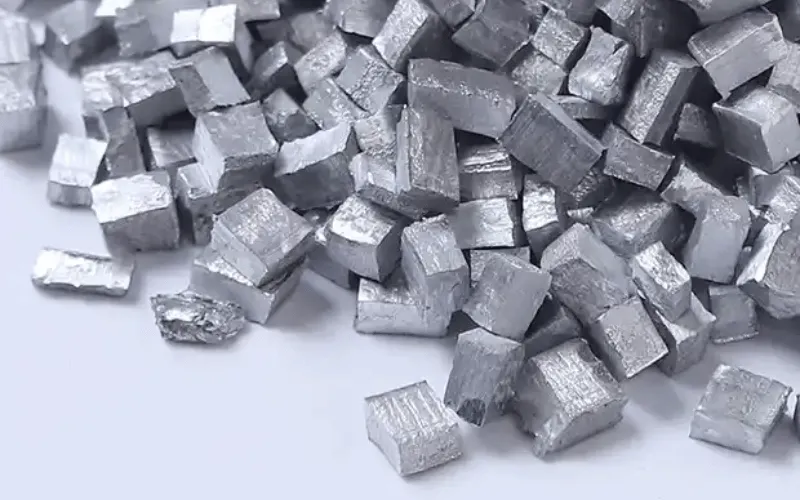
Magnesium is the lightest structural material available. It has a density of 1,74 g/cm3 and is 35% lighter in comparison to aluminum. Magnesium is therefore extremely useful in applications that require a reduction of mass.
Magnesium and Magnesium Alloys
- AZ31B is the most common wrought steel. It has good formability and can be welded.
- AZ61A High-strength Alloy Wrought – Used for Extrusions
- AZ91D has excellent casting properties and is widely used in automobiles, housings and otherings.
- WE 43: High-temperature aluminum alloy with rare earth added. Used in aerospace and medium cal applications
Magnesium Advantages and Magnesium for Alloys
Magnesium is the structural material of choice, and it offers the best mechanical properties at the lowest weight. Magnesium can be cut at higher speeds and with less force than aluminum. This means that less energy is required for the process. Magnesium is a great material for applications where aluminum is too heavy. Its superior vibration-damping ability makes it an ideal choice. Magnesium’s damping ability, which reduces vibrations of rotating and reciprocating components, makes it a good material for applications in which lightweight aluminum would be too heavy.
Magnesium: Its Risks and Downsides
Magnesium is flammable and carries a high fire risk. This is the most important and obvious downside. Fine magnesium powders and chips can ignite and require special fire safety procedures and care when being machined. Additionally, Magnesium alloys need finishing treatments to avoid galvanic corrosion. The strength of all magnesium alloys is lower than that of steel and titanium. Magnesium’s melting point is low, and its thermal stability at high temperatures is poor.
Magnesium Uses Alloys
Magnesium alloys can be found in automotive applications, such as transmission housings, steering wheels, and seat frames. Also, they are used in electronic components, including the housings for laptops, the cases of cameras, and other electronic components. Magnesium alloys, which are extremely lightweight, can also be used in aircraft interiors and power tool casings. Magnesium is a lightweight alternative to aluminum that can be used in all applications where aluminum is used.
Why Engineers Use Magnesium
Magnesium is a good choice when weight reduction is the primary design goal. When the environment is controlled and protective coatings can be applied reliably, magnesium is an excellent choice for electronic housings and aircraft interiors.
Beryllium and Beryllium Alloys
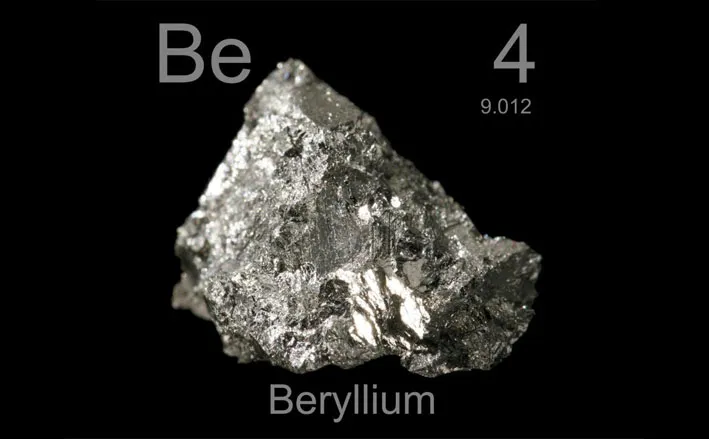
Beryllium is one of the lightest metals and most highly specialized. It has a density of 1.85 g/cm3 and a higher stiffness-to-weight ratio than competing engineering materials. It is stiffer than most other structural materials. It is rarely used commercially because of its expense and associated health risks.
Beryllium grades and alloys
I-400 is the highest purity instrument-grade Beryllium used in optical and precision grade applications. Beryllium is alloyed with copper in BeCu, one of the most common alloys used in springs, connectors, and precision tools.
AlBeMet Beryllium-Aluminum is used in aerospace optics and satellites as a lightweight structural composite alloy. S-200F is the standard structural grade and is used in the aerospace and defense industry.
Benefits of Beryllium and its alloys
Beryllium is six times stiffer than steel, and it’s great for inertial navigation and precision optical systems. It is dimensionally stable over wide temperature ranges and is therefore useful for aerospace guidance systems and satellite structures. Beryllium/Copper alloys have the best strength and conductivity of all metal alloys.
Drawbacks of Beryllium and Its Alloys
Handling Beryllium requires special regulations and equipment because Beryllium dust and fumes are extremely toxic and carcinogenic, and legally classified as such. In addition to legally regulated hazardous dust and fumes, the risk of physical damage due to the metal’s extremely limited and highly expensive availability, as well as the alloy’s inability to be used in commercial and general manufacturing processes, further cements the need for very high precision defense, scientific, and aerospace applications.
Applications of Beryllium Metals and Beryllium Alloys
Beryllium is used in missile guides, nuclear reactors, and in the aerospace industry. It is also used in high-speed aerospace application windows and satellite structures. Also, Beryllium is in aerospace mirrors, X-ray windows, and precision inertial sensors. Beryllium-Copper is used in many applications that require non-magnetic and conductive materials, and is used to make electrical connectors, precision molds, and springs.
Why Use Beryllium?
Beryllium must be reserved as a last option and is only specified when the extreme stiffness-to-weight ratio is non-negotiable. This is the case for missile guidance systems, satellite structures, and precision optical assemblies, where no alternative materials can provide equivalent stability.
Lightweight Metals Comparison Table
| Metal | Density (g/cm3) | Tensile strength (MPa) | Max Service Temp in DegC | Corrosion resistance | Cost Relative | Machinability |
| Aluminum (7075) | 2.7 | 570 | ~150 | Good | Low-cost | Excellent |
| Titanio (Ti-6Al-4V). | 4.5 | 950 | ~600 | Excellent | High-quality | Difficult |
| Magnesium (AZ91D). | 1.74 | 230 | ~120 | Moderate | The Medium | Very Good |
| Beryllium (S-200F) | 1.85 | 345 | ~650 | Good | Very High | Specialized |
| Mild Steel (reference). | 7.85 | 400 | ~400 | Poor (uncoated). | Very Low | Good |
How to Choose the Right Lightweight Material
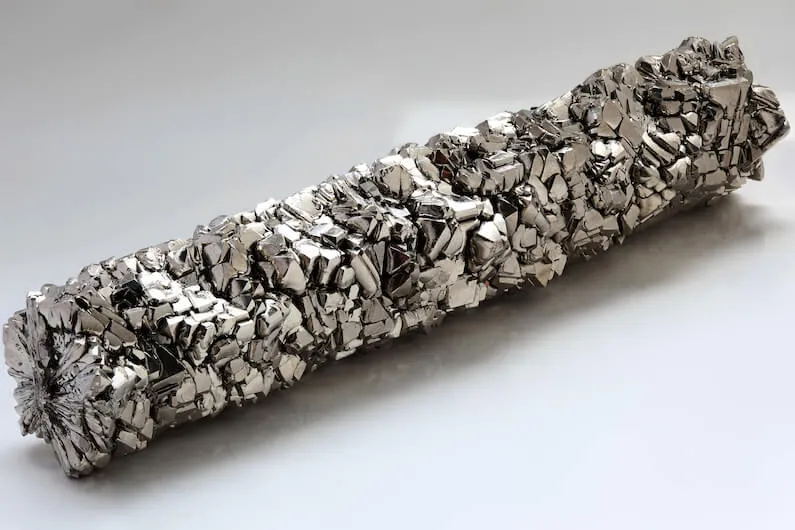
The best material to use for a particular application is often a complex decision. Material selection is often a trade-off between mechanical, economic, and thermal considerations. The lightest material may not be the best option.
Mechanical Properties
Start with the load case. Specify the tensile, compressive, and fatigue loads that the component will likely experience in service. Titanium is the best lightweight material to use for applications that require high sustained loads. Aluminum is a good option for applications with low- to moderate-loads. Magnesium is only suitable for applications with low to medium loads or when the load conditions are restricted.
Thermal properties
The operating temperature can narrow down your options quickly. Aluminum will not perform if you plan to expose the component to temperatures above 150 degC. Titanium will maintain its properties up to 600 degC. Both titanium and aluminum perform well in cryogenic applications. Magnesium is only useful under load up to 1120 degrees Celsius, which limits the use of magnesium in engine-related applications.
Weight Consideration
Magnesium and beryllium are the lightest structural materials, especially when weight is a major factor (e.g., portable devices, wearables, or aircraft interiors). Aluminum is a lightweight structural material, but it is not considered the best option. The only exception is true lightweight steel, which is rare. True lightweight steel is the best material to use when ultra-high strength or weight reduction is required.
Corrosion Resistance
This criterion is application-driven. Titanium is an excellent material for implantable medical devices, marine applications, chemical processing, and other industrial environments. Anodized aluminium is adequate in most industrial and outdoor settings. A protective coating is required for all applications that expose magnesium. Beryllium is resistant to corrosion, but because of the cost and handling difficulties, it’s not often used for its corrosion-resistant properties.
Cost
Aluminum is the least expensive per kg in terms of cost. Aluminum is therefore the winner. Due to the higher raw material costs and machining costs, titanium has the highest cost per part and per kg. Magnesium falls between the two extremes. Beryllium is a special case due to its performance-critical needs.
Available Manufacturing Techniques
Consider your processing options. Standard equipment can be used for die-casting, rolling, extruding, and machining lightweight aluminum and magnesium. Titanium, on the other hand, requires carbide tools, specialized machining procedures, and very tight control of processes. Beryllium also has special requirements, including certified facilities that control airborne particles. It is important to use your own contacts, manufacturing capabilities, or partners when working with materials.
Manufacturing Process Compatibility
The material used in downstream manufacturing can also influence the choice. Aluminum is easily welded and machined with standard equipment. It is also easily anodized and accepts a variety of surface treatments. Titanium is best protected by carbide tools and slow cutting speeds. Inert gas shielding during welding can also be used. Magnesium needs to be treated with protective coatings and fire-safe conditions before any surface treatment. You can turn a cost-effective material into a production nightmare if you don’t take these requirements into consideration when choosing a material.
Lightweight Metals and Other Alternatives
Even for weight reduction designs, lighter materials may not be appropriate in certain applications. It may actually be that a nonmetallic material is better for certain performance criteria.
Composite Materials
Many polymer-based composites have stiffness that is equal to or greater than that of metals.
Their Properties
- The density varies from 1.4 g/cm3 to 2.0 g/cm3 based on the fibers and matrix.
- Layout orientation can produce a design that has a high level of anisotropy – strength direction.
- Under cyclic load, the material exhibits excellent fatigue resistance.
- Metals are the most common form of material that exhibits low impact resistance.
- The complexity of the design increases tooling costs and processing costs.
Carbon Fiber
In many aerospace and high-performance automotive applications, CFRP (Carbon Fiber Reinforced Polymer) has replaced aluminum.
Carbon Properties Fiber
- The density of magnesium is 1.6g/cm3, which is lighter than that of magnesium.
- The tensile strength is up to 3,500MPa, which is higher than that of any other metal on the list
- The fibers do not expand much at all when heated.
- Failure mode is brittle, i.e., no ductile deformation takes place prior to fracture.
The Most Common Errors in Choosing Lightweight Materials
Mistakes when choosing lightweight materials can even be made by the most seasoned engineers. These mistakes are most common and are identified in redesign loops.
The most common is specifying aluminum without considering the operating temperature. Aluminum significantly loses strength above 150 °C. Components that are located close to heat-producing electronic components, like engines, exhaust systems, or electronics, require the use of titanium or other high-temperature metals.
Disregarding galvanic corrosion risks at the outset of design can lead to corrosion of magnesium, aluminum, and copper when coupled with electrical connectors or steel bolts. Therefore, the design of the assembly needs to incorporate coating and insulating materials.
Underestimating titanium machining costs. Engineers tend to choose titanium for its properties, and are often surprised by the machining costs. Cycle timings are longer, and tool costs are higher. Fewer machine shops are capable of working with titanium while maintaining tight tolerances. Plan to increase the budget early.
Disregarding surface treatments. The raw corrosion resistance of metals is greatly affected by surface finish. In humid atmospheres, bare Magnesium will corrode. In the same conditions, anodized Aluminum will not corrode. Surface treatment should be a priority when selecting materials, not an afterthought.
FAQs
Does Titanium Rust?
Titanium does not rust in the conventional sense. It forms a layer of Titanium Dioxide, which is very stable and corrosion-resistant in most environments, including seawater, acids, and biological fluids. It is one of the most corrosion-resistant metals for engineering purposes.
In What Way Do Lightweight Materials Affect the Design of the Part?
Since lighter metals have lower elastic moduli, when the same load is applied, the components can deflect more. Without changing cross-sections, this can result in significant deflection. To avoid this, designers tend to increase the section thickness or use ribbed geometries. Even with the added material, the net effect is an overall reduction in the part’s mass, because the loss in material density is greater than the increase in volume.
What is the Lightest and Cheapest Metal that Can be Used to Manufacture Parts?
Aluminum is the lightest metal and gives the best value for money. It is a wise option in raw materials because of its low cost, good machinability, and availability as a standard stock. Magnesium is lighter yet is costlier and less available. Beryllium is the lightest structural material, but prohibitively expensive, and as for metals, it is the most expensive.
Is Titanium Lighter than Aluminum?
The answer to this is aluminum. Titanium has a much higher density than aluminum. The weight of aluminum is 2.7g/cm3. The weight of titanium is 4.5g/cm3. However, titanium’s strength is much higher. What this means is that a titanium part designed to carry the exact same load as an aluminum one would have thinner walls, and could potentially result in a similar weight or less weight for structural applications. It is often asked if titanium is lighter than aluminum. Specific strength is a much better comparison for most engineering decisions.
Conclusion
The lightweight metals industry is quite diverse, as the aluminum used in countless components used in various applications is much lighter and significantly cheaper than the exotic beryllium used in satellite structures or guidance systems. It should be mentioned that there is not a single metal that is superior in every area. Considering cost and machinability, aluminum is the best.
For strength, corrosion resistance, performance at elevated temperatures, and for all other criteria, titanium is the best. Magnesium has the lowest density for use in structural applications. Be is used for a very small niche, but very important applications in precision and defense. Knowing the grades, processing methods, and thermal limits of each part is what makes a good part or one that will fail in service.
ProLean Tech offers precision manufacturing of all lightweight alloys. With aerospace manufacturing capabilities, they have developed an end-to-end metal machining service to cover the specifications of these materials. Contact us to get a quote now!