
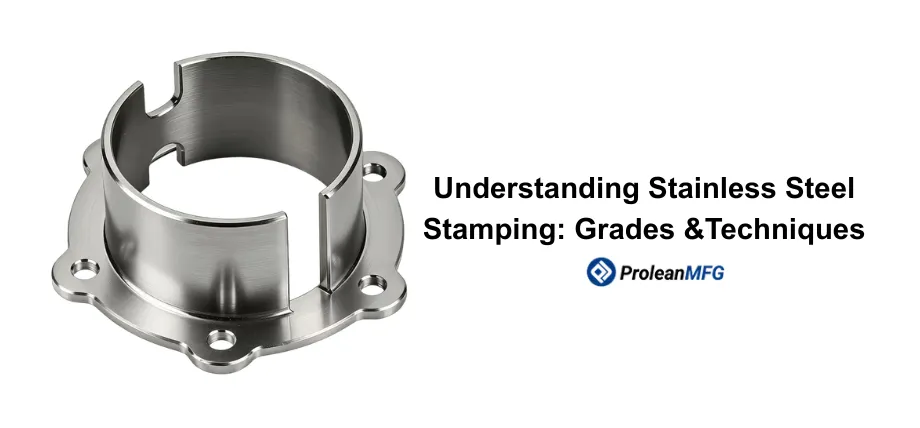

Stainless steel stamping is a technique involving sheet metal stamping used to stamp flat stainless steel into perfect shapes in a stamping press and die. When you require components that are accurate, corrosion-resistant and durable, you use them. It is commonly used in such industries as automotive, medical, electronics, and food service. The point where stability in quality and long-term functioning is needed.
What Is Stainless Steel Stamping?
Stainless steel stamping is a manufacturing method in which flat sheets of stainless steel are pressed and stamped into a specific component by using a press and die. It is a technique called stainless steel metal stamping that involves the manufacture of accurate parts by controlled deformation instead of cutting.
Its basic process is to insert a stainless steel sheet or coil into a stamping press. Then a punch presses the material into a die to shape it into the required shape. Depending on the design of the part, this sheet metal stamping process may involve several steps. The steps include blanking, piercing, bending, drawing, and flanging.
Stainless steel does not act like other metals during stamping. It hardens easily, making it stronger as it is deformed, but increasing forming resistance. It also shows greater springback as the material partially reverts to its original shape after its formation. Such properties demand perfect control of tooling, force, and process factors to ensure accuracy and quality of parts.
Properties of Stainless Steel That Make It Ideal for Stamping
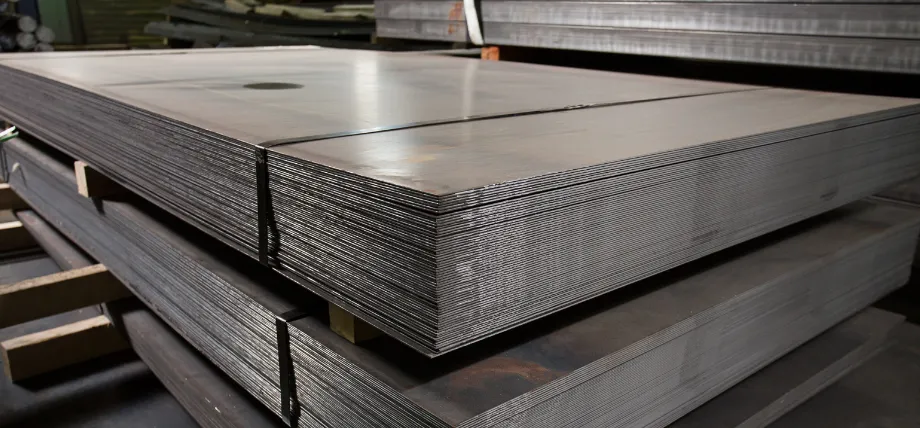
Stainless steel is a common material in stainless steel stamping. Since their material characteristics support the performance and manufacturability, these characteristics are what make them preferred over other metals in demanding applications.
1. Corrosion Resistance (Chromium Layer Logic)
Chromium present in stainless steel is oxidized by oxygen to form a passive layer of oxide on the surface. This coating helps retain the material, rust and corrosion free without coating. Since stamped components are frequently used in wet, chemical or outside conditions. Self-protective surface minimizes maintenance and increases product life (this is one of the main reasons why stainless steel is used).
2. Strength and Fatigue Resistance
Stainless steel has excellent tensile strength and can work under repetitive stress. When the stainless steel is stamped, the material is able to resist the forces of forming without structural degradation. This is important in components used in mechanical systems, where loading and vibration are repeated. Harder materials reduce the chances of deformation or failure with time.
3. Ductility for Forming Complex Shapes
Stainless steel, particularly 304, has high ductility, allowing it to stretch and deform without cracking. This property is essential in stamping. Since several components need to be bent, drawn, or shaped into complex shapes. Good ductility means that the material is capable of shaping itself and still maintains its strength.
4. Hygiene and Clean Surface Properties
Stainless steel has a smooth and dense surface, which makes it easy to clean and less likely to be contaminated. That is why food service and medical uses of custom-stamped stainless steel equipment are so common. The material is hygienic and does not need any further coating to increase the safety and reliability.
Stainless Steel vs Other Metals in Stamping
In the metal stamping process, the choice of material is based on performance rather than on the ease of forming. Various metals will react differently to load, a factor that affects production and final product performance.
Comparison Table
| Metal | Corrosion Resistance | Formability | Cost | Best Applications |
| Stainless Steel | Very High | Moderate | Moderate | Medical, food service, automotive |
| Aluminum | Moderate | High | Low | Electronics, enclosures |
| Brass | Moderate | High | Moderate | Connectors, decorative parts |
| Beryllium Copper | Low | High | High | Precision electrical contacts |
Why Stainless Steel Is Preferred?
When the component should work in a harsh environment, stainless steel stamping is used. Compared to aluminum or brass, stainless steel gives better long-term performance under stress, temperature variation, and exposure to external conditions.
Aluminum and brass are easier to form and need less pressing force. They are normally used in areas where weight reduction or electrical properties are more crucial than durability. However, Stainless steel is selected when strength and reliability are of main concern.
Trade-Offs: Cost vs Performance
The primary trade-off is between performance and ease of manufacturing. Stainless steel metal stamping needs a higher forming force and controlled process control due to work hardening and springback. This adds tooling work and extra production hurdles.
Nonetheless, the extra effort leads to strong and stable parts that work better with time. In cases where failure of the parts is unacceptable, stainless steel is preferred even though greater processing is required.
Types of Stainless Steel Stamping Processes
Stainless steel stamping is done in different ways, based on the volume of production, the geometry of the part, and the accuracy needs. Each process is selected on the basis of control forming, cost and consistency.
1. Progressive Stamping
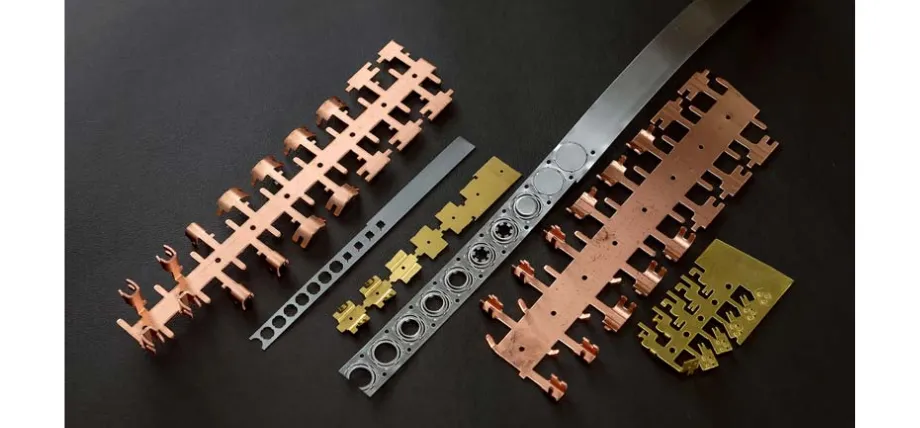
High-volume production that involves progressive stamping of parts made on the coil of a metal piece. The material goes through several units, and each unit does a certain work like cutting, bending or forming.
This is a multi-step process that ensures consistent output as each part is manufactured within the same controlled conditions. Therefore, stainless steel metal stamping with progressive dies is used in large production volumes.
2. Deep Draw Stamping
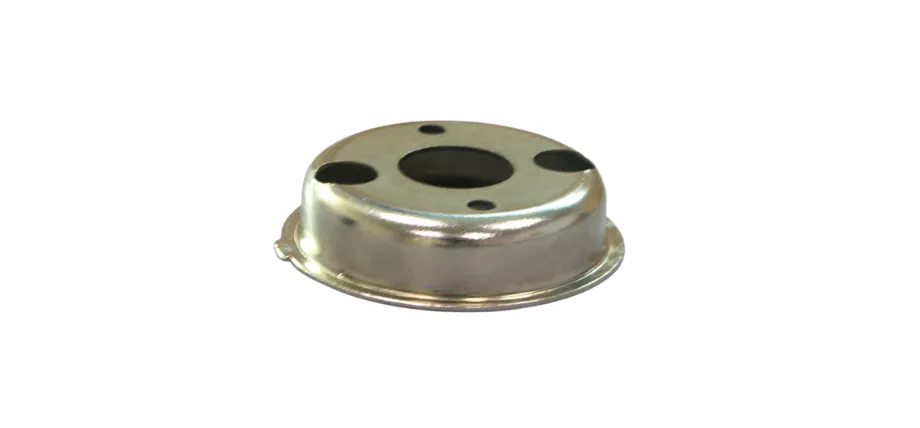
Through deep draw stamping, cylindrical or hollow parts are made out of flat sheets. During this process, a punch is used to pull the material into a die cavity. Stainless steel is more difficult to form.
Because it becomes harder when it is being shaped, but the outcome is a smooth structure, which enhances strength and removes weak joints. It is suitable for use in applications such as containers and housings.
3. Short Run Stamping
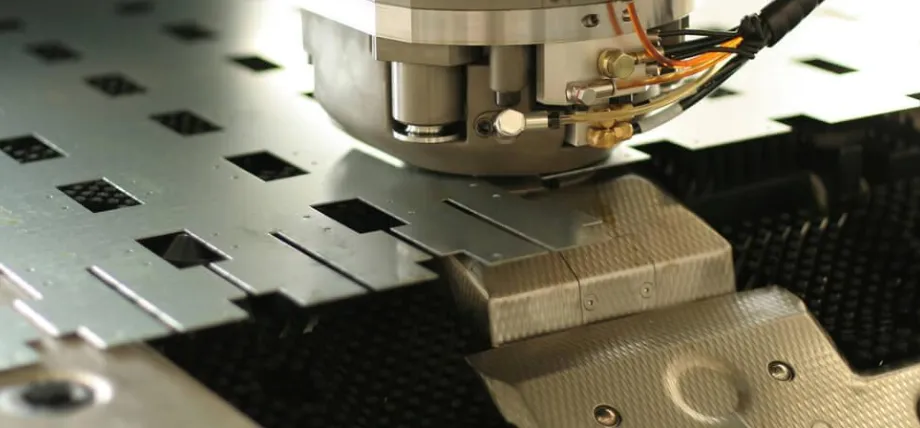
Short-run stamping is designed to support small-volume production where large-scale tooling is not feasible. It works with simpler tooling arrangements. Thus lowering initial cost and set-up time. This is suitable for prototyping, small quantities or unique parts. It is more flexible with quicker turnaround than high-volume methods.
4. Precision Metal Stamping
Precision stamping is concerned with high-precision manufacturing and high-dimensional accuracy parts. It is done under controlled conditions and with advanced tooling to provide consistent results.
It is typically applied in fields like medicine and electronics, where even small differences can have an impact on performance. In such applications, precision control is the main point. Hence, the reason as to why this method is applied to complex and high-accuracy components.
304 Stainless Steel Stamping: The Most Common Grade
Why 304 Is Widely Used?
Stamping with 304 stainless steel is common as it offers good cost-benefit. This material is used for general applications requiring good corrosion resistance without the increased expense of materials such as 316. It is also highly formable, making it ideal for a variety of stamped shapes.
Properties That Make 304 Ideal
A major property of 304 stainless steel is its high ductility. Allow it to be stretched into shapes without breaking. This allows it to be formed into complex shapes and in deep draw applications.
It is also non-heat treatable, which makes it easier to work with as it does not require further heat treatment. This reduces the complexity of the process in stainless steel metal stamping.
Corrosion resistance is another major benefit. The chromium content makes a layer on the surface, meaning that the material is suitable for humid, food-grade, and other industrial environments.
304 vs Other Stainless Steel Grades
| Grade | Thickness Range (mm) | Corrosion Resistance | Heat Treatable | Applications |
| 304 | 0.5 – 6.0 | High | No | Food service, medical, and general manufacturing |
| 316 | 0.5 – 6.0 | Very High | No | Marine, chemical, pharmaceutical |
| 17-4 PH | 0.3 – 5.0 | High | Yes | Aerospace, high-strength components |
As you can see, 304 stainless steel stamping is the standard choice for most uses. The use of 316 is recommended when high corrosion resistance is needed, such as for chemical or marine applications. In applications that require high strength, 17-4 PH can be heat-treated, but it is difficult to shape.
Industries That Rely on 304 Stainless Steel Stamping
304 stainless steel stamping is used in many industries due to its good properties of corrosion resistance, formability and cost. This makes it ideal for applications that demand both strength and clean surface capabilities.
1. Food Service
In the food service industry, 304 stainless steel is used for trays, enclosures, and kitchen accessories because of its corrosion resistance from moisture and cleaning agents, and its smooth, non-reactive nature. It’s also safe to use in food, and can be used without an extra protective lining.
2. Medical
The 304 stainless steel is used in casings and other structural medical equipment. Because it can be easily cleaned and sterilized, it can be cleaned without damage, ensuring that medical staff can maintain high standards of hygiene.
3. Automotive
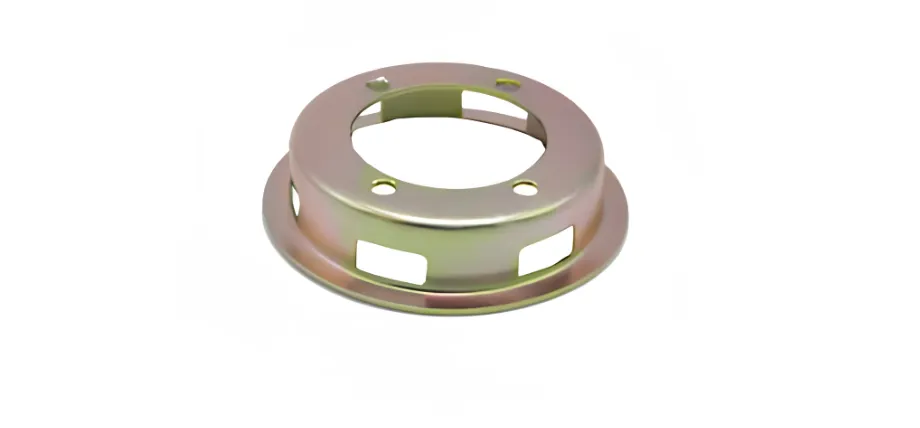
In the automotive industry, 304 stainless steel stamping is used for making brackets, heat-resistant layers and structural pieces. It is selected for its corrosion resistance and formability properties, allowing for complex designs. This ensures good performance in high-temperature, moist, and vibratory conditions.
4. HVAC
304 stainless steel is used in HVAC ducts, panels and other structures. This is due to its corrosion resistance in a moist air environment and good strength. It also remains stable under thermal conditions, making it ideal for long-term system use in air handling and ventilation systems.
Industries That Use Stainless Steel Stamping
Stainless steel stamping is mostly used in industries that need precision, strength and corrosion resistance. Different industries use it for different purposes according to their needs.
Automotive & Electronics
Stamped components are used for connectors, brackets, and shields when dimensional tolerance and vibration resistance are needed.
Medical Equipment
Structure units are used in housings and monitoring equipment where accuracy and sterilization compatibility are necessary.
Food Service Applications
Structure units are used in trays and housings where non-absorbent surfaces and resistance to cleaning chemicals are required.
Energy & Telecom
Applications include housings and terminal components that must perform reliably in outdoor or industrial environments.
Industry Applications Table
| Industry | Common Stainless Steel Components | Recommended Grade |
| Automotive & Electronics | Connectors, brackets, shields | 304, 409 |
| Medical | Surgical housings, monitoring parts | 316, 17-4 PH |
| Food Service | Trays, enclosures, fasteners | 304, 316 |
| Energy & Telecom | Terminal plates, housings | 304, 316 |
This shows the versatility of stainless steel stamping across industries through material characteristics and manufacturing capabilities.
Advantages of Stainless Steel Stamped Parts
Stainless steel stamping has various benefits that make it suitable for both performance and high-volume parts. These advantages are a result of material properties and the stamping process.
- Corrosion Resistance
Stainless steel is resistant to moisture, corrosion, and outside conditions. This reduces the need for painting and lowers maintenance costs.
- Long-Term Durability
Stamped parts keep their shape and strength over time. It makes them ideal for applications that require durability and long-term service.
- Precision in High-Volume Runs
Stamping provides reliable parts once the tooling set is settled. This results in accurate part dimensions in a large volume production batch.
- Cost Efficiency at Scale
The multiple forming operations reduce process steps, saving time and cost per part when producing in large quantities.
- Custom Configuration Flexibility
Custom-stamped stainless steel can be used to produce parts in various shapes, sizes and finishes to meet the needs for specific use.
Stainless Steel Stamping Design Considerations
Stainless steel stamping design affects product quality, tooling damage, and efficiency. Due to the unique properties of stainless steel, all factors need to be checked to avoid defects and ensure repeatability.
Choosing the Right Stainless Steel Grade
The first step in the process is grade selection. Each grade has different properties, including corrosion resistance, strength and formability.
| Grade | Corrosion Resistance | Thickness Range (mm) | Common Stamped Parts |
| 304 | High | 0.5 – 6.0 | Food service, medical, enclosures |
| 316 | Very High | 0.5 – 6.0 | Marine, chemical, pharma parts |
| 17-4 PH | High | 0.3 – 5.0 | Aerospace, high-load components |
| 410 | Moderate | 0.4 – 5.0 | Automotive, wear-resistant parts |
The right grade ensures the component meets the requirements in its intended use environment at an economical cost.
Grain Direction
Stainless steel sheets are made of rolled pattern and have a grain direction. This can lead to cracking when bent along the grain direction. Bending across the grain reduces the risk of failure and enhances formability during stamping.
Material Plasticity
Plasticity refers to how much the material can deform without breaking. This allows the material to stretch during deformation, which is needed for more complex shapes. Low plasticity can lead to cracking in bending and drawing operations.
Bend Height and Bend Relief
Bend height and relief structures need to be considered to avoid stress concentrations. Short or edge-proximate bends can cause stress concentrations and cracks. Bend relief cuts also help to manage stress and enhance part life or working efficiency.
Dimensional Shape and Springback
The strength of stainless steel also causes springback after forming. This is because the material tries to revert to its original shape after forming. When forming, tooling must compensate for springback to get the desired shape.
Thickness and Tooling Selection
Thickness impacts design and tooling choices. Holes should be large to avoid distortion, typically two times the material thickness. Tooling also needs to be carefully selected as stainless steel increases friction and damage. Hard tools and proper clearances will ensure accuracy and tool longevity.
Custom Metal Stamping
Proleanmfg provides high-quality sheet metal stamping services for low-volume to high-volume production across electronics and automotive applications. Proleanmfg capabilities include progressive, deep draw, and precision stamping.
We provide bend angles with a precision of 0.5°, precision tolerances of ± 0.01” (standard). We work with many stainless steel grades and provide materials beyond stainless steel stamping.
Request a free quote today!
Conclusion
Stamping stainless steel is an efficient way to manufacture high-quality, durable parts. 304 stainless steel is the standard material stamped, while other grades are used for particular applications. Using the right material, stamping process, and design considerations will give consistent results.