

The first CNC machine was created in early 1952, but it wasn’t until later that it actually transformed manufacturing. CNC machining is now a whole part of today’s production because it is a rapidly changing sector that is expected to hit USD 187.2 billion by 2034 from USD 73.5 billion in 2024 at a CAGR of 9.8%.
Nowadays, the advantages of CNC machining extend much deeper than automation. It’s changing the way industries produce parts with remarkable speed, accuracy, and efficiency.
CNC machining, or Computer Numerical Control machining, has transformed the way of machining metal, plastic, and other materials. Whether you are producing one prototype or masses of parts, the benefits of CNC machining are too numerous to overlook.
We’ve split the 11 top benefits of CNC machining and will show you why it’s currently the backbone of modern manufacturing.
11 Top Benefits of CNC Machining
CNC machining today is a part of modern manufacturing, offering more than just speed. CNC machining capabilities set the industry apart and make it an essential part of today’s high-demanding manufacturing needs.
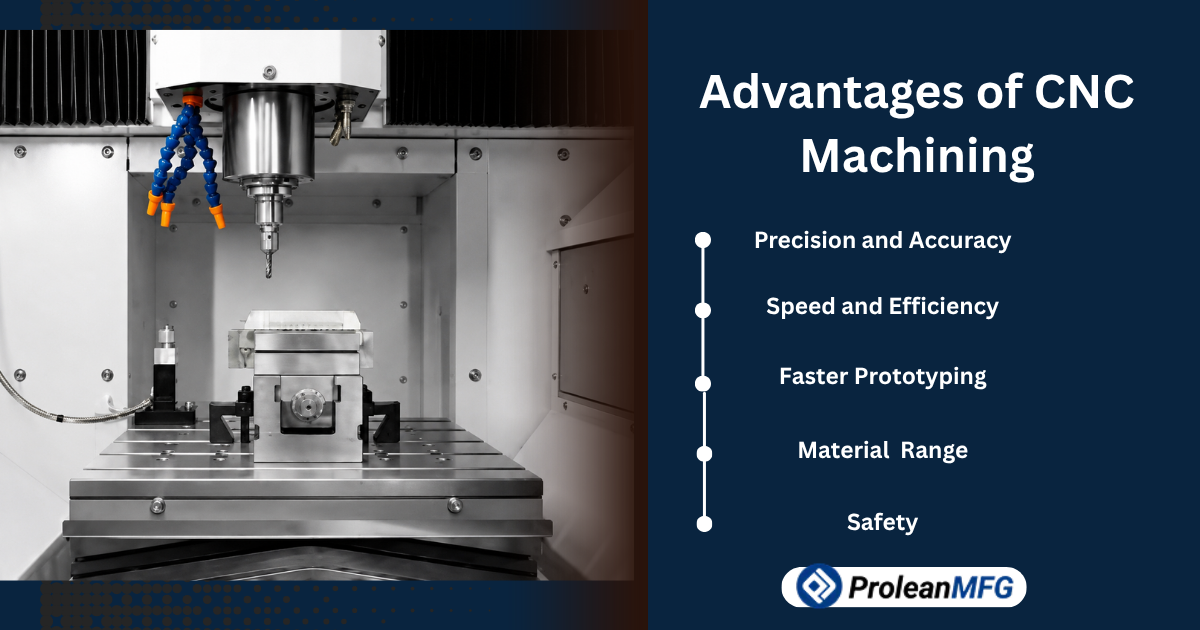
Here are 11 key advantages of CNC machining: high precision and accuracy, speed and efficiency, less wastage, fewer human errors, safety, repeatability and consistency, cost effectiveness, and fast prototyping.
High Precision and Accuracy
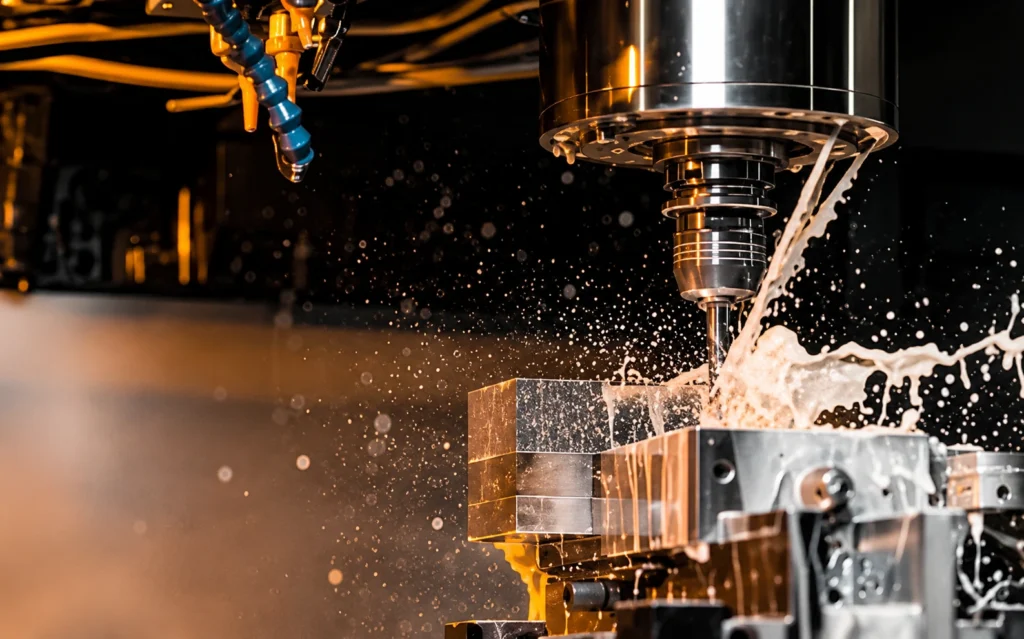
High-Precision CNC Milling
The CNC equipment is given precise commands by a computer program with no margin for error. All the turns, all the cutting, and all the drilling are defined by software, so the outcome is an identical copy of the plan each time. They are self-operated in the way that they perform each step of the process under computer control. Once it is set up, it repeats continuously, producing parts with precise tolerances and accurate dimensions time and time again. This is important when producing complex or detailed parts for the aerospace and medical equipment industries, and others.
The industries that demand tight tolerances heavily rely on CNC precision machining for accuracy. With precision to thousandths of an inch, it guarantees finished CNC machining products to be of top quality and limits room for defects in each batch.
Speed and Efficiency
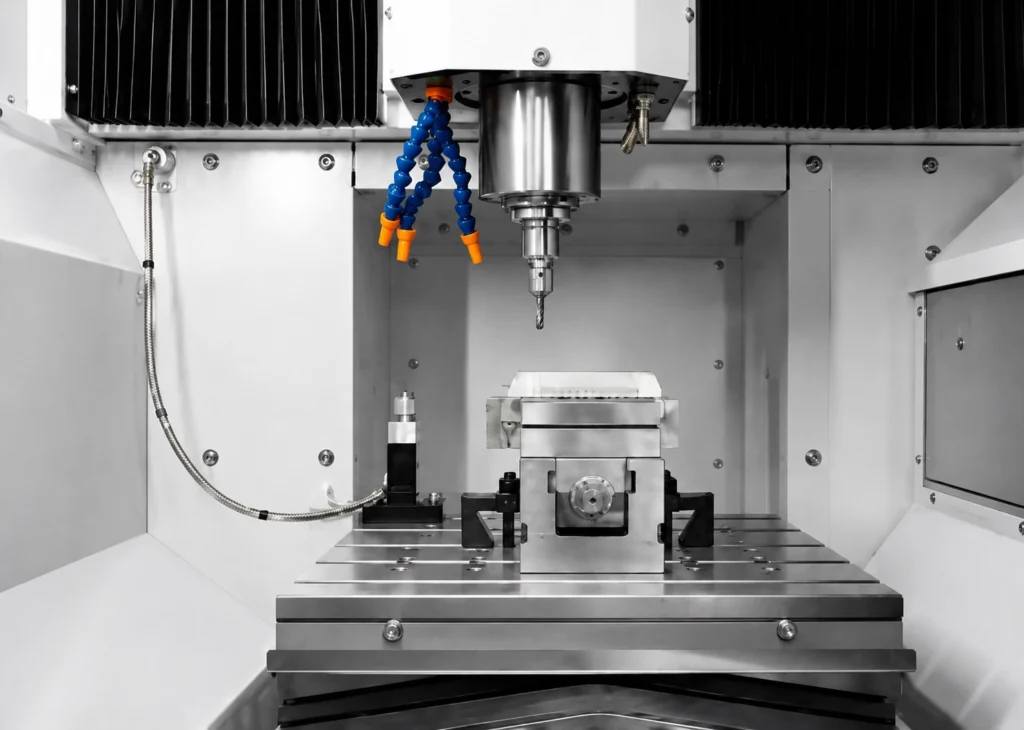
Automated CNC Machining Interior
CNC machines are designed to be fast. After the program has been installed, the machine can operate by itself. Unlike human-operated machines that rely on the availability of the operator, CNC machines are able to produce multiple parts in a matter of minutes with the same accuracy each time.
It cuts, drills, and shapes at the same time, enabling quicker turnaround for small orders as well as bulk production.
In addition, CNC equipment is easy to switch from project to project. From one prototype to hundreds of parts of CNC-machined items, production configurations can be changed in a matter of minutes.
The capability becomes even more valuable in high-volume CNC machining, where manufacturers produce thousands of identical parts quickly and efficiently.
Less Waste and Eco-Friendly
CNC machining saves resources by cutting exactly every time. Provided that the design is accurate, the machine cuts it to the letter, minimizing errors and scrap.
Since the CNC machining operations are fully automated, it prevents over-cutting and incorrect angles that typically result in scrap if done manually. CNC is thus a wise selection for manufacturers wishing to save money while being environmentally friendly as well.
Though companies focus their vision on more environmentally friendly processes, the low-waste, controlled CNC production process coexists with sustainability without compromising between speed and quality.
Fewer Human Mistakes
Human mistakes, computing errors, stumbles, or wild cuts are the biggest danger of hand machining. CNC machining stops this by performing exact digital instructions with no room for guessing.
After a design is programmed into a computer, the machine duplicates it flawlessly over and over again, piece after piece. This minimizes errors, rework, waste, time, and cost as well.
The capabilities of CNC machines provide consistent quality and minimize the risk of defects in manufacturing.
Enhanced Workers’ Safety
CNC machines are programmed to operate with little or no direct human intervention. After programming the machine, it performs all the cutting, drilling, and shaping within a closed setup.
This minimizes the risk of cuts from sharp edges, whizzing debris, or hot surfaces that are typical in conventional machining. Computer software programs execute the cycle-by-cycle CNC machining operation.
Repeatability and Consistency
One of the best advantages of CNC machining is that it is very repeatable. CNC machining can make the same part over and over without any change. Once a model is programmed into the machine, it can do the same task for hundreds or thousands of pieces.
Repeatability and consistency are critical in industries such as aerospace, medical, and automotive, where even a minor deviation can result in failure or safety problems. In CNC, deviation is virtually nil because all movements are governed by accurate software commands.
The software used in CNC machining and manufacturing does not modify unless deliberately changed. That means all parts are the same as the original specifications, whether it is the first off the line or the thousandth.
Lower Operating Costs over the Long Term
Though the initial cost of the CNC machinery might be steep, it will repay itself handsomely in the long run. They will result in fewer mistakes, quicker manufacturing, and less wastage of material, which all mean lower long-term operating costs.
Since CNC machines need little supervision, businesses also save on labor costs. A few machines can be operated by one person, which means less manpower is needed. In the long run, the advantages of CNC machining go to a more efficient, cost-saving business that makes firms competitive without sacrificing quality.
Faster Prototyping
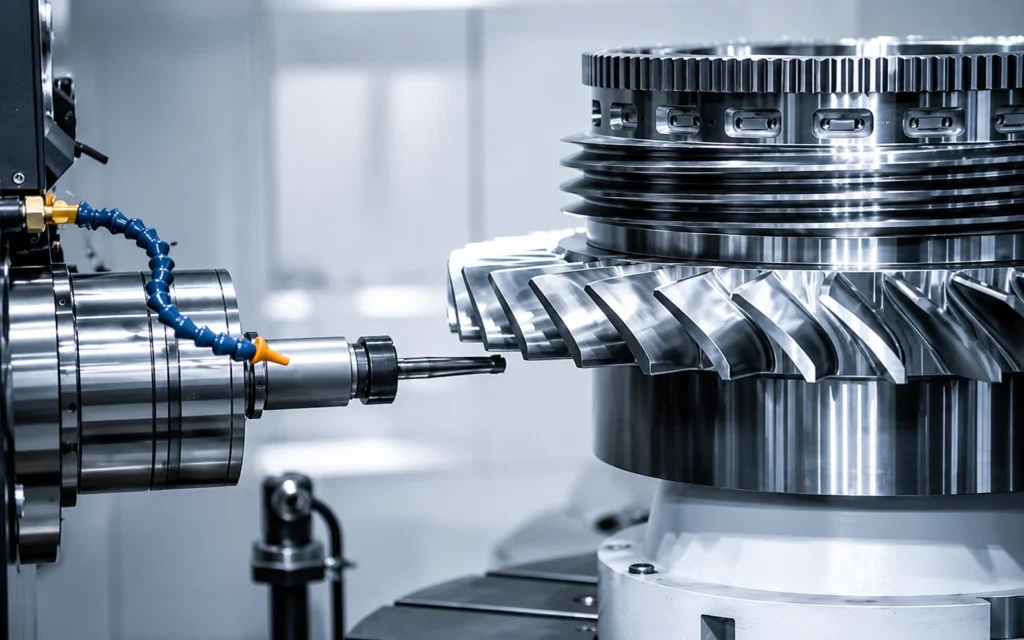
Precision CNC Prototyping Process
CNC machining allows for instant change from computer model to actual part within a matter of minutes. This is a significant benefit in product development, where speed and accuracy are critical.
Engineers can upload a CAD file, let the machine be set up, and produce a functional prototype within a matter of minutes. If some changes are to be made, they can modify the file and repeat it.
Though 3D printing is also favored for prototyping, CNC machining is better for producing more solid and accurate parts, particularly for examining the fit, endurance, or ultimate performance.
CAD/CAM Software Integration
CNC machines are in harmony with CAD (Computer-Aided Design) and CAM (Computer-Aided Manufacturing) software. Such compatibility makes the whole process from design to production faster, more accurate, and easier.
Designers utilize CAD tools to design intricate parts and merely copy the same instructions onto the CNC machine, utilizing CAM tools. It minimizes error possibilities and setup time. It is one of the most significant reasons the CNC machining industry continues to expand in high-technology industries such as aerospace, electronics, and medical manufacturing.
Energy Efficiency
CNC machines are designed to accomplish more using less. Their automated features prevent the machines from running idle, avoid unnecessary movement, and consume energy only when necessary. Compared to older or manual machines that can take longer or require constant adjusting, CNC systems maximize every cut.
All big energy-intensive industries, such as aerospace and automotive, are adopting CNC to minimize the overall usage. The machines ensure high output with very little consumption of electricity or labor.
Cuts a Variety of Materials
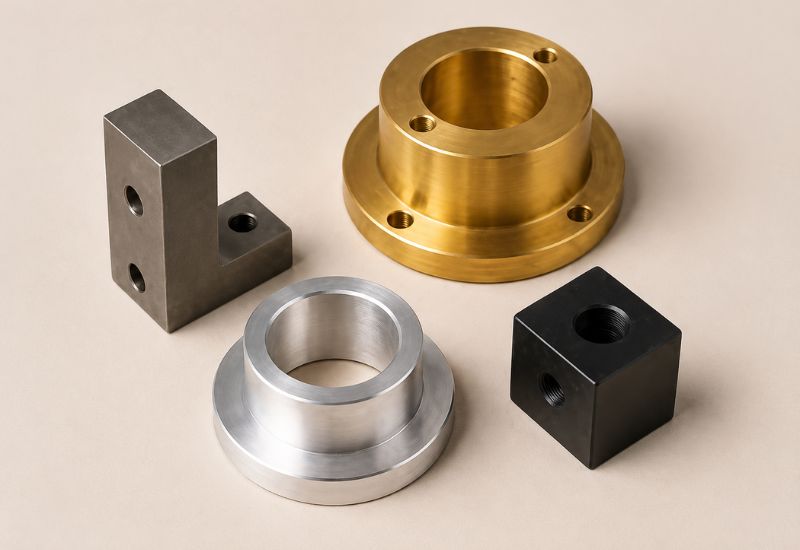
Precision Machined Metal Components
Some of the most significant benefits of CNC machining are that it can cut through a variety of materials. All metals, such as aluminum, steel, and titanium, and plastics, wood, and even foam, can be easily processed by the CNC machines.
This makes CNC a powerful tool for all industries, whether you are making aircraft components, medical equipment, or household items. The machine can be programmed to handle the type of material, providing the optimal speed, pressure, and finish each time.
This flexibility invites innovation and enables manufacturers to produce CNC-machined goods that fit precise specifications regardless of the material.
What is a CNC Machine?
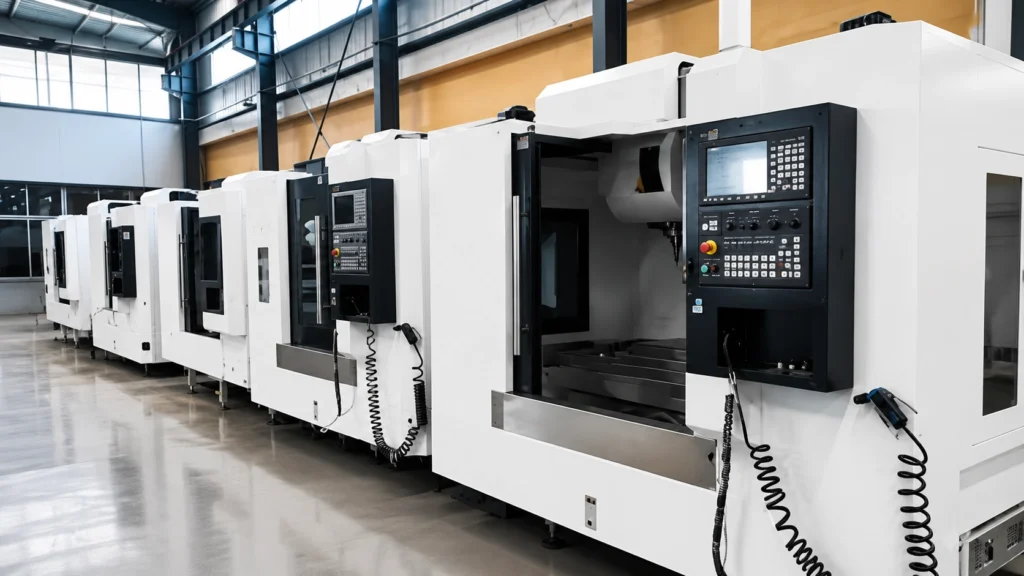
Industrial CNC Machine
A CNC machine, or Computer Numerical Control machine, is one of the most advanced production tools, which is operated by pre-programmed software. The machines make cuts, drill, mold, or mill materials such as metal, plastic, and wood with excellent precision without the need for constant human intervention.
In contrast to human-operated machines, CNC machines function through computerized directions from CAD or CAM software. This enables them to carry out complicated operations with precision and uniformity, even for mass production.
CNC machines have an important role in modern production. They enable manufacturers to fulfill contemporary requirements for quality, consistency, and low-cost products. As industries move towards automation and computerized manufacturing, the significance of CNC machines becomes further emphasized.
Applications of CNC Machines Across Industries
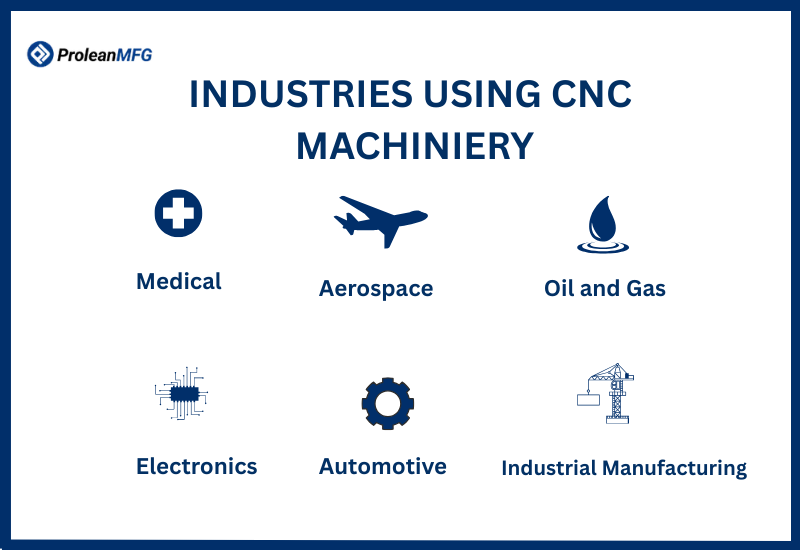
CNC Machining Industry Applications
The advantages of CNC machining are much broader than accuracy and efficiency. They find practical application in numerous areas of business. Some of the key industries using CNC technology are:
- Automotive
- Aerospace
- Medical and Healthcare
- Electronics
- Oil and Gas
- Defense and Military
- Industrial Equipment Manufacturing
- Woodworking and Furniture
- Consumer Products
- Marine
- Metal Fabrication
- Construction and Architecture
- Jewelry and Artisanal Design
- Agriculture Equipment Manufacturing
- Renewable Energy
Is CNC Machining for Me?
If you are unsure if CNC machining is the way to go for your business or project, it depends on your production requirements, budget, and objectives. CNC machining could be the ideal solution, but begin by asking yourself some serious questions:
- What product or component are you attempting to create?
- Is the design easy or extremely intricate?
- What type of material are you manufacturing, such as metal, plastic, or other?
- How many items do you require?
- Do you have a hard time constraint or a flexible time tolerance?
- Do fast turns and high volume have top priority with you?
If your responses are in the direction of high precision, long-lifespan materials, and high-volume production, then the benefits of CNC machining lead you towards an intelligent solution.
In contrast to 3D printing, CNC machining is more ideal for creating solid, three-dimensional parts with close tolerances. It’s also more material-independent; CNC can machine metals, plastics, composites, and so on.
CNC is best suited for companies that require speed, repeatability, and efficiency in competitive markets such as aerospace, medical, automotive, or electronics. CNC has no human error, saves time in production, and always produces quality parts, even on intricate designs.
However, if you have a tiny shop with simple components produced in small quantities, manual tools or 3D printing would be more economical.
How to select the appropriate CNC Machine?
There are numerous things to take into account when purchasing or utilizing a CNC machine. Note the following points while selecting the appropriate CNC machine: material selection, required precision, production volume, machine size, capability, and software compatibility.
1. Material You’ll Be Cutting: Various machines are designed to cut different materials. When you’re cutting through tough metals such as steel or titanium, you’ll want a heavy-duty CNC lathe or mill. For cutting less dense materials such as plastic or wood, a lightweight, high-speed machine might be sufficient.
2. Precision You Need: Close tolerances are one of the most important benefits of CNC machining. Ensure that the machine you select has space for the degree of precision your sector requires, particularly in aerospace, electronics, or medicine.
3. Volume of Production: Do you need to produce several prototypes or produce thousands of the same component? A multi-axis CNC can provide faster cycles, improved repeatability, and greater efficiency for high-volume production.
4. Machine Size and Capability: If your designs are intricate or multi-dimensional, utilize machines with higher axes (e.g., 4-axis or 5-axis).
5. Software Compatibility: Computer Numerical Control machines nowadays closely interact with CAD/CAM software. Utilizing a machine that is highly compatible with your design software will enhance your CNC manufacturing process and minimize mistakes.
What is a Major Disadvantage of CNC Machines?
If you’re planning to invest in it, it’s also important to understand its downsides. One of the biggest disadvantages of CNC machines is the high initial cost. These machines can be expensive, especially for small businesses or individual users, along with the software and setup.
Second, CNC machinery is also technical and thus needs technical proficiency to operate. Although they minimize the possibility of human mistakes, program mistakes, or design mistakes in the CAD model can nevertheless cause expensive issues.
And yet, to most producers, these limitations are more than compensated for by the long-term advantages of CNC machining, including precision, quick production, consistency, and reduced operating expenses over the long term.
CNC vs Conventional Machining: Key Differences and Advantages
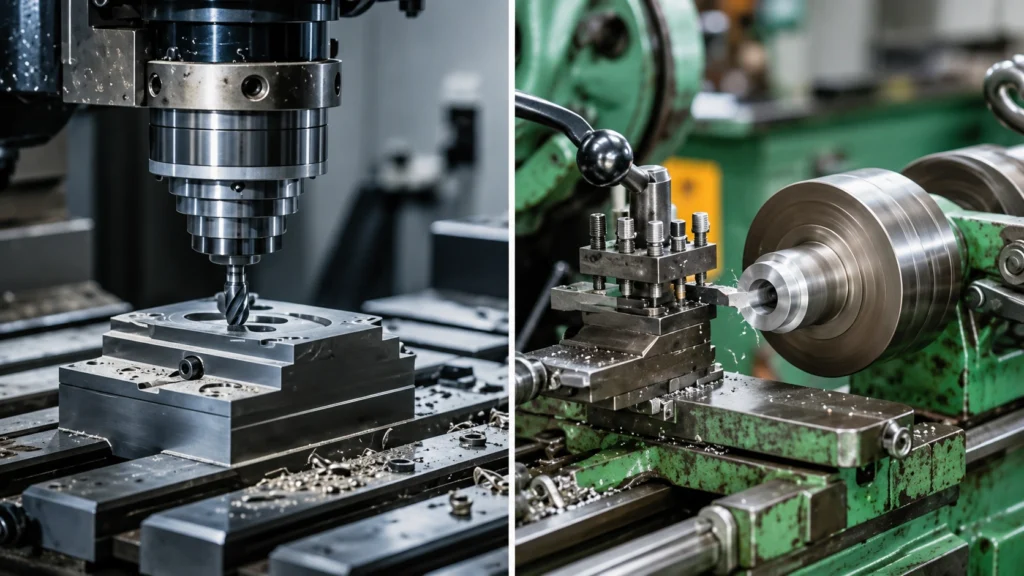
CNC Machining vs Manual Machining
CNC and conventional machining both have their own applications, but they are quite different in operation, accuracy and consistency, production speed, complexity of parts and material wastage, function, and method.
1. Operation
All traditional machining is done manually. Each cut, drill, and adjustment must be manually controlled by an experienced operator. Whereas CNC machining is mechanical. It uses programmed instructions to execute operations with precision.
2. Accuracy and Consistency
Manual machines employ human hands, so there are bound to be minor mistakes, especially with extended runs. CNC machines employ accurate instructions, generating identical and highly precise results each time.
3. Speed and Productivity
Conventional machining is slower and more labor-intensive for setup and oversight. CNC machining is faster, can run continuously 24/7, and can even run parts without supervision, greatly increasing productivity.
4. Complexity of Parts
Manual methods are appropriate for basic shapes. CNC machining accommodates complex, three-dimensional shapes.
5. Capability Needs
Manual machining needs skilled staff to carry out detailed work. CNC machines need programming skills but fewer hands-on inputs, minimizing the need for a large population of skilled laborers.
6. Material Waste
Manual setups tend to contain errors and wasted material. And CNC machining minimizes waste by producing accurate cuts and optimizing toolpaths, lowering its environmental footprint.
The Bottom Line
Advantages of CNC machining are not just about speed, accuracy, and quality production. CNC machining is an integral part of modern production, as it reduces errors made by humans and provides safety.
It is more evident that CNC machines give their competitors an edge and allow them to take steps to be ahead in high quality, zero defects, low environmental impact, etc.
Prolean provides a wide range of manufacturing capabilities, from small-scale production to large-scale manufacturing. Our CNC machining services provide precise, accurate, fast, and affordable manufacturing solutions tailored to your needs.
Contact our expert team to get custom manufacturing solutions for your projects.
FAQs
What is the main advantage of CNC machining?
CNC machining can produce output for large production with a high degree of accuracy and precision.
What is the primary advantage of CNC machining over manual machining?
CNC machining increases production capacity without compromising quality. It is much faster in producing intricate designs than manual machining. Moreover, it provides output with greater precision, which is difficult to achieve with manual machining.
What are the advantages of CNC machines over machines like lathes?
CNC machining performs a wide range of operations, including complex parts production, but lathe machines are not suited for complex tasks. Moreover, adjustments and setting up the programming are labor-intensive. In CNC machining, it is time-consuming, but once the program is set up, it performs automated tasks with high production.
What are a few benefits of a milling machine?
CNC milling machines, in particular, offer automation and efficiency that other mills, being manual, are unable to provide. CNC mills, once they are programmed, can be operated continuously around the clock, day after day, without fatigue to the operator or the need to be constantly monitored.