
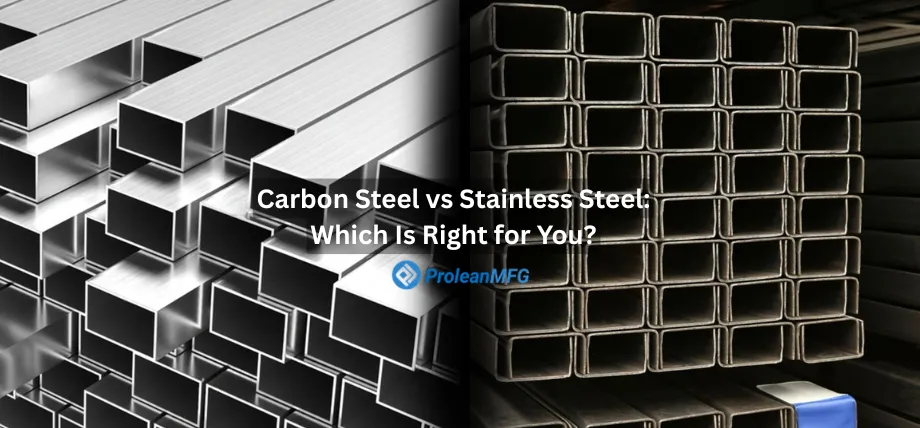

The answer to which steel is better depends on the application. Carbon steel has better strength and hardness, and is a cost-effective option, making it ideal for heavy-duty applications. If you look at stainless steel, you’ll mostly find it in aesthetic uses, kitchen, sheet metal, and moisture-prone environments. It has lower maintenance and better longevity, but costs more. The better choice between carbon steel and stainless steel depends on your requirements.
What Is Carbon Steel?

Machined Drive Shaft
Carbon steel is an iron and carbon alloy that is characterized by the presence of carbon in it. Low-carbon, medium, and high-carbon steel are the general classifications of steel. The carbon content of the most commonly used grade can vary from 0.02% to 2.1% by weight, with structural grades having below 1% carbon content. Carbon steel is cost-effective and versatile, which makes it ideal for a wide range of industries and applications.
Low-carbon steel is easier to machine compared to high-carbon steel because the amount of carbon present changes the material’s properties, such as hardness, wear resistance, and strength.
Low Carbon Steel vs High Carbon Steel
Low-carbon steel is the most widely used carbon steel grade. Its carbon composition is less than 0.25% by weight. It is soft, ductile, and flexible, which makes it easy to machine and weld compared to high-carbon steel.
The low-carbon steel is less brittle, which makes it great for mechanical and structural components, leading to high durability.
High carbon steel contains more than 0,6% carbon by weight. The high carbon content makes it harder. Its tensile strength is close to 1200 MPa. The high carbon content does mean that it has poor ductility and formability.
The extreme hardness and toughness of such a steel make it harder to machine compared to low-carbon steel. It is widely used in high-performance parts such as suspension in the automotive industry.
What Does Carbon Steel Look Like?
The appearance of carbon steel depends on the processing method. Generally, it has a dark grey and black appearance with a rough surface, which is characteristic due to the oxide layer that forms during high-temperature rolling. In contrast, cold-rolled carbon steel is much cleaner and has a lighter tone with a gaslight reflective surface.
What Is Stainless Steel?
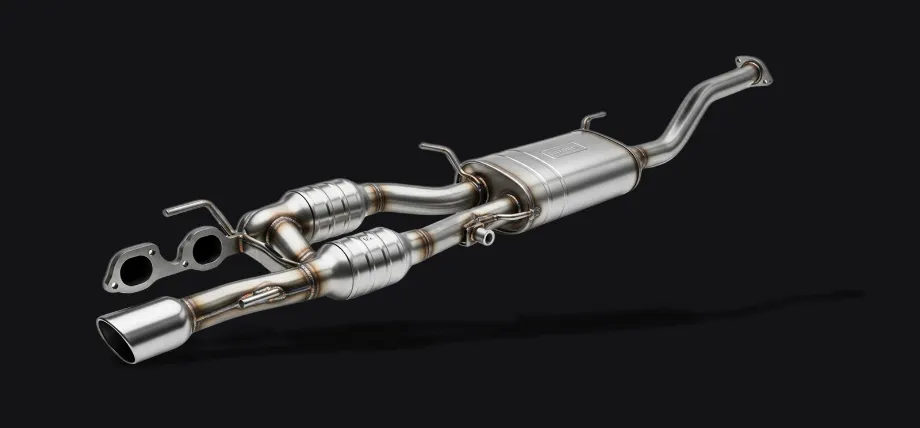
Stainless Exhaust Manifold
Stainless steel is a type of steel that is characterized by its rust resistance due to the addition of chromium and other alloying metals such as nickel. Stainless steel is high-strength, durable, and rust-resistant, which makes it versatile in a wide variety of applications.
Alloy Content and Corrosion Resistance
The chromium content of stainless steel is over 10.5% by weight, and the carbon content is generally below 1%. Other alloys present include molybdenum, manganese, and nickel in different quantities depending on the required properties.
Stainless steel is highly resistant to corrosion, which is due to the chromium present in its composition. The chromium forms an unreactive oxide layer on the steel by reacting with oxygen in the atmosphere.
The oxide layer helps protect the steel from any further oxidation and degradation. Making it rust-resistant. Different grades, such as 904L and 316L stainless steel, have different rust resistance due to different chromium and alloy content.
What Does Stainless Steel Look Like?
Stainless steel is highly reflective, shiny, and has a silver and light gray appearance. Its appearance depends on the processing method, which can range from cold-rolled to machined parts. The exact appearance is determined by grade and finish option; austenitic grades are shinier and reflective, while ferritic and martensitic grades, such as 400 and 410, are dull.
Carbon Steel vs Stainless Steel: The Main Differences
Strength and Hardness

Steel Locking Carabiner
The strength and hardness of carbon steel are directly related to the carbon content. Low carbon content, such as A36 with a tensile strength of 400 MPa to 500 MPa, is great for structural and low-stress work.
High carbon steel is excellent for high-stress and mechanical force applications since its tensile strength can exceed 1200 MPA, and with hardness levels that can reach 62 HRC. It is an excellent option for cutting tools, mold dies, and high-load mechanical components.
Stainless steel has varying hardness and strength. Authentic grades have a tensile strength close to 600 MPa, which can’t be improved by heat treatment as in martensitic and precipitation-hardened steels, although you can improve the steel’s strength through cold working. At the same time, it is possible to heat treat martensitic and precipitation hardened stainless to raise their tensile strength beyond 1200 -1500 MPa and performance.
Corrosion and Rust Resistance
Carbon steel is prone to corrosion and corrodes really fast due to the iron present in the alloy, which reacts with oxygen to form oxides. Substances such as acids, chlorides, and high temperatures increase the rate of corrosion. To improve its rust resistance, it is crucial to have protective coatings.
On the other hand, stainless steel is highly rust-resistant due to the presence of chromium, which makes the alloy corrosion-resistant. Although it has greater corrosion resistance, not all grades are immune to rust. 304 stainless steel can rust in heavy chloride environments.
Maintenance Requirements
Maintenance requirements and frequency depend on how often and how prone the materials are to rust and degradation. Carbon steel requires more maintenance since it rusts more quickly; it is often painted or has protective coatings that need to be reapplied to elongate its lifespan and ensure performance.
Stainless steel requires less maintenance compared to carbon steel because it is less prone to corrosion. Although in extreme conditions it can rust and often pit. It is generally less demanding than carbon steel.
Cost
Cost difference between carbon and stainless steel is a major factor that determines what you use for your project. Carbon steel does not use expensive alloying elements such as chromium and nickel, which reduces the cost of carbon steel significantly. This makes carbon steel an economical option for your project.
Stainless steel costs more than carbon steel due to the presence of alloy and a more lengthy manufacturing process that drives cost. This, however, isn’t the only cost-determining factor; sometimes, the initial cost trade-off is better in the long run.
Machining Properties Of Carbon Vs Stainless Steel
| Feature | Carbon Steel (e.g., 1018, 1045) | Stainless Steel (e.g., 304, 316) |
| Machinability | Generally high; 1212 and 1215 are considered the industry benchmarks (100). | Significantly lower, typically 35% to 50% of the benchmark for the 300-series. |
| Work Hardening | Minimal; the material remains relatively stable under the tool. | Severe; the surface hardens rapidly if the tool rubs or dwells. Requires constant feed. |
| Thermal Conductivity | High heat is effectively dissipated through the workpiece and chips. | Low; heat remains concentrated at the cutting edge, leading to rapid tool wear. |
| Typical Cutting Speeds | Higher ranges from 100 to 350 SFM, depending on the grade and tooling. | Lower, typically 60 to 150 SFM, to prevent localized overheating. |
| Chip Formation | Formable; chips tend to break easily into manageable “C” or “6” shapes. | Stringy and tough; chips are difficult to break and can lead to “bird-nesting” without chip breakers. |
Machinability
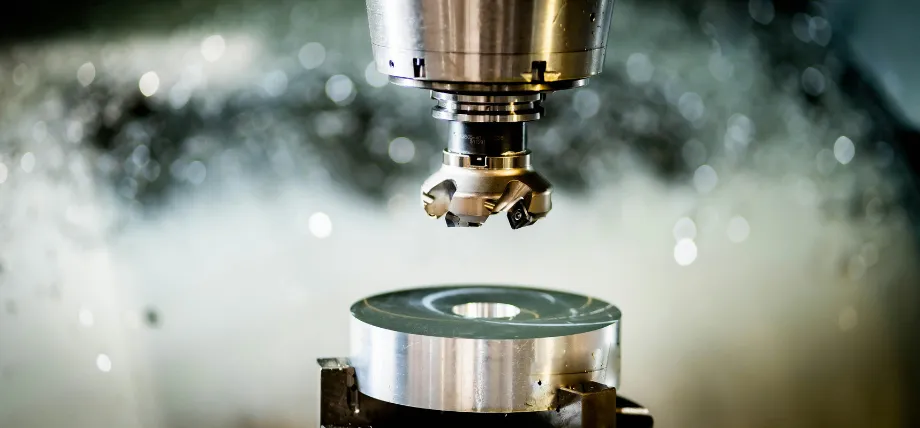
CNC Face Milling
Machinability is an independent factor that determines various other factors, such as cost and versatility. Carbon steel has higher machinability than stainless steel. Low carbon steels are soft and ductile, which makes them easier to machine with surface speeds up to 200m/min. The chip formation is excellent and does not require special tools. High carbon grades are harder and more demanding, requiring specialty tooling in some cases. Additionally, metal laser cutting is a commonly used option to efficiently cut high carbon steels, although it leaves a thin oxide layer.
Stainless steel machining time depends on grade, tooling, and hardness. Hardened and stringy chip formation often causes built-up edges. Although they have different challenges, both materials allow for custom CNC machining.
Work Hardening
When it comes to work hardening in carbon steel vs stainless steel, carbon steel shows light work hardening that generally does not affect the carbon steel machining process. Stainless steel, however, work hardens really fast, which often causes tool wear and built-up edges. This requires you to have precise control over cutting speed and feed rate during stainless steel machining.
Thermal Conductivity
The thermal conductivity of carbon steel surpasses stainless steel. Carbon steel dissipates heat much better during machining. This prevents localized heating and extends tool life. Stainless steel has poor thermal conductivity, which often causes heat to concentrate at the cutting point. To address this issue, coolant use is essential when machining stainless steel.
Feed Rate
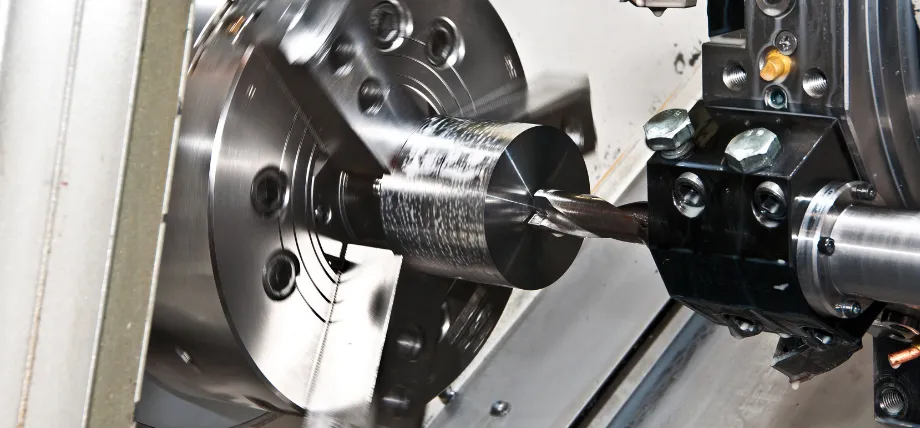
Precision Lathe Turning
Carbon steel allows for a higher feed rate when compared to stainless steel. Carbon steel feed rate can be up to 200m/rev. Stainless steel feed rates need to be carefully monitored and set to avoid work hardening. Recommended feed rate for austenitic 304L stainless steel is 30-60 m/min, which is a fifth of carbon steel.
Surface Finish Options
Carbon steel or stainless steel, both materials have a wide variety of surface finish options. Carbon steel is often painted with a protective finish since it rusts. Surface finishes such as brushed and bead blasted are also viable options with carbon steel. Galvanization, painting, and powder coating are better suited for them.
Stainless steel does not have rust issues, so signs such as mirror polishes, brushed surface, and bead blasting are feasible. The table below shows different surface finishes for carbon vs stainless steel.
Advantages Of Carbon Steel Vs Stainless
Carbon steel
- Carbon steel has higher strength and hardness than stainless steel
- Cost-effective than stainless steel
- Wear-resistance makes it great for high-wear applications
- Durable and shock-resistant
- Safe to handle and work with compared to other metals
- Carbon steel is recycled and can be reprocessed
- The manufacturing process is far simpler than that of stainless steel
Stainless steel
- Corrosion-resistant properties
- Stainless steel is temperature-resistant
- Different grade options that allow for versatile material choice depending on the application
- Strong and highly durable
- Low maintenance and easily cleaned. Long-lasting, with a relatively low cost over the course of its lifecycle
- It has a wider range of surface finish options. Such as brushed and mirror-polished for cosmetic and aesthetic applications
- Does not tarnish easily
- Environmentally friendly and recyclable
Limitations of Carbon Steel Vs Stainless Steel
Carbons steel
- Corrosion: Carbon steel corrodes really quickly due to rapid oxidation. This makes it unsuitable for marine and humid environments.
- Protective coating: requirement: It requires protective coatings such as galvanizing and painting for protection against rust.
- Maintenance: Carbon steel requires more maintenance compared to stainless steel, costing more.
- Less formability: high carbon grades have better strength but are less ductile and more brittle.
- Weldability: High-carbon steel can crack during welding, requiring pre- and post-heat treatment for proper welding
Stainless steel
- High Cost: Stainless steel costs far more than carbon steel due to the high raw material cost. This can be a strain on budgets.
- Machining Difficulty: It has lower machinability than carbon steel, requiring higher cutting forces, which increase tool wear
- Work Hardening: Stainless steel is really prone to work hardening, which causes built-up edges and needs careful monitoring of feed rates.
- Low Thermal Conductivity. The low thermal conductivity of stainless steel means it does not dissipate heat efficiently, which can cause thermal distortion if coolants aren’t used.
How To Choose Between Carbon Steel and Stainless Steel?
Both carbon steel and stainless steel are excellent CNC machining materials that cater to different applications. The choice of materials you use for your project depends on several different factors that include performance requirements, application environment, and budget.
Carbon steel is a great option for jobs that have tight budgets and where corrosion risks are minimal. It is also a great choice for applications that require high hardness and strength, such as chassis and tools.
Stainless steel is a great choice where corrosion resistance and aesthetics are crucial. It offers longevity, easy cleanup, and better resistance in humid environments. Environmental conditions are the primary determining factor.
Custom CNC Machining
Proleanmfg is a CNC machining service, and we specialize in tight-tolerance machining of carbon steel and stainless steel, providing technical edge where it matters most.
Our team understands high-speed machining and handling of gummy chips for a burr-free finish on all your parts. Get integrated DFM support for large volume projects and lower your per part costs. We also provide a scaling solution with rapid prototyping in as little as 24 hours and scaling to production in as little as 72 hours.
Request a free quote today!
Conclusion
Carbon steel and stainless steel are both versatile and different materials that cater to different applications. Hardness, strength, and cost effectiveness are the strong suits of carbon steel, whereas corrosion-resistance, aesthetics, and longevity of stainless steel are far superior. Carbon steel has great machinability and strength, which makes it great for structural components, while stainless steel’s corrosion resistance makes it the preferred choice for harsh environments.
FAQ
Is Stainless Steel Stronger Than Carbon Steel?
The short answer is no. Carbon steel is stronger than stainless steel and more suitable for loading conditions because of its higher tensile strength.
Is Stainless Steel Harder Than Carbon Steel?
No. Carbon steel with higher carbon percentage variants is harder than stainless steel.