

If you need scalable and practical metal components in this modern manufacturing era, aluminum machined parts are the go-to choice across industries. Since nowadays we have aluminum precision machining capabilities, you can even achieve complex shapes and micro-features with strong dimensional accuracy.
What are Aluminum Machined Parts?
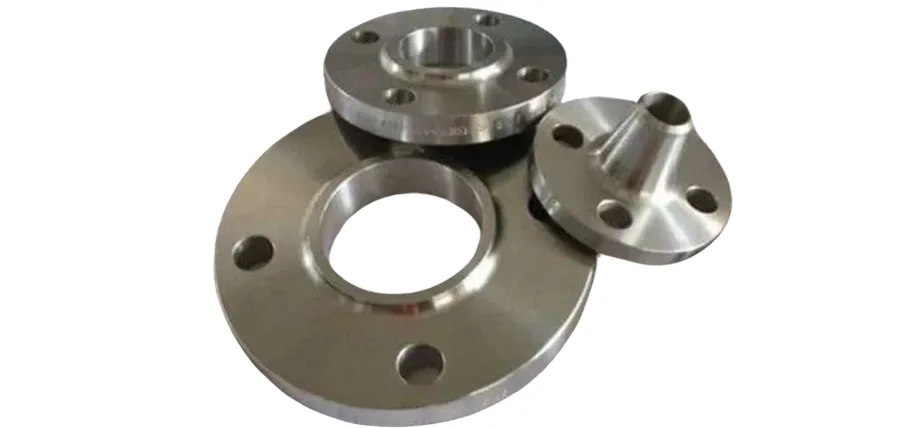
Aluminum Pipe Flanges
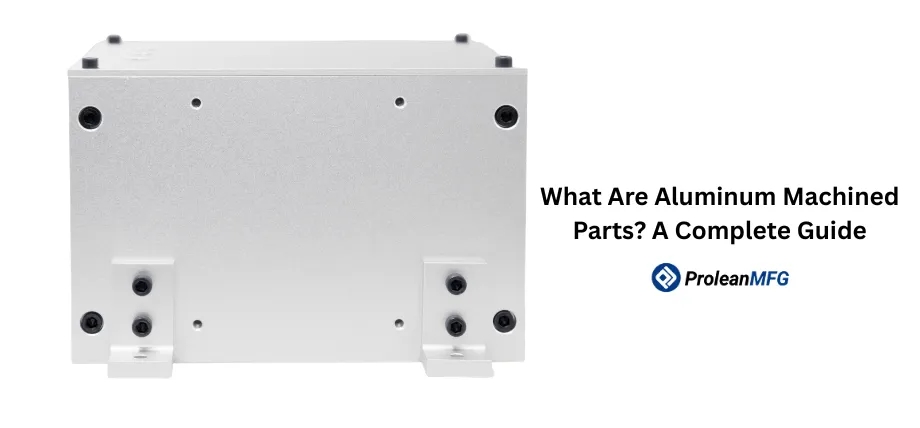
Aluminum machined parts can be technically defined as components produced by CNC machining material from aluminum stock.
Manufacturing of machined aluminum parts mainly uses subtractive processes such as CNC milling, turning, drilling, etc. These are way better in dimensional accuracy and performance than typical simple aluminum cast or stamped parts. In addition, these processes also give superior surface finish and repeatability to your parts.
Precision-machined aluminum components are produced directly from solid billets using techniques like aluminum machining, CNC milling aluminum, and precision turning of aluminum parts. The below example scenarios will give you a better understanding of machined parts.
- Using aluminum CNC turning for forming round components (like shafts or pins). Rotational cutting technique in CNC turning helps you maintain stable dimensions.
- Using CNC milling aluminum for making complex shapes and holes. You can create detailed surfaces with clean edges using CNC milling.
- When your parts have curves and angles, you can use multi-axis aluminum machining. It can achieve these fine contours that a simple setup cannot reach.
- Using precision drilling and threading for obtaining parts that fit properly during assembly.
Key Benefits of Using Aluminum for Precision Components
Because of aluminum’s unique combination of properties, it brings many engineering advantages when choosing aluminum machined parts. The following are the main benefits you gain due to the inherent properties of CNC machining materials.
- Excellent strength-to-weight ratio compared to other metals, with competitive strength levels
- High corrosion resistance due to its naturally occurring passive oxide layer
- Good thermal and electrical conductivity
- High machinability compared to steel
- High dimensional stability of machined parts
- High market availability and the ability to find in different grades targeting various needs
In addition to the above direct advantages, aluminum precision machining reduces tool wear and machining time. Aluminum machining services significantly reduces overall production cost and give quality outputs as well.. Therefore, aluminum machined parts are a strong candidate for high-efficiency production lines.
Machinability and Performance Characteristics
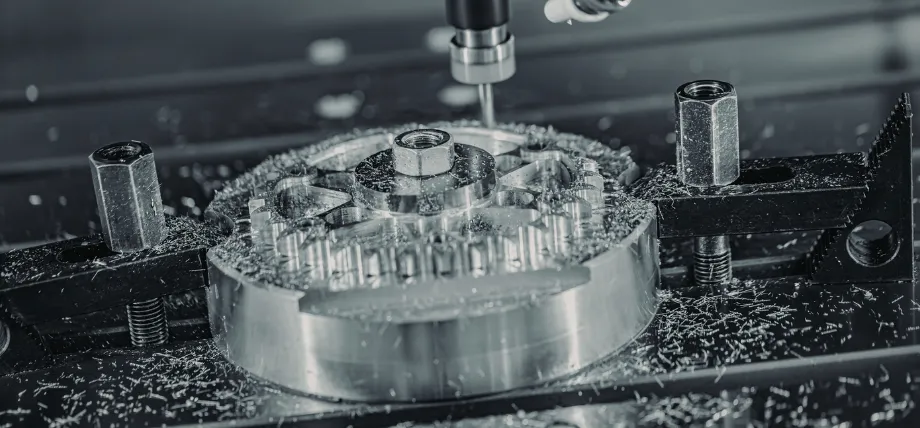
CNC Gear Machining Process
Aluminum is considered one of the most machined metals in the industry, although its machinability vary depending on the alloy. The main machinability properties of aluminum are:
- Compatibility for high cutting speeds – Aluminum shears fast, and its “push back” effect is very low. So, you can run higher RPMs and feed without stalling or chattering. Also, it does not overheat easily due to its excellent heat dissipation properties.
- Ability to be machined with low cutting forces – The tool removes material with less pressure. This reduces vibration, deflection, and stress on the spindle and fixtures.
- Low tool wear – Since aluminum gets machined with low forces and has better heat dissipation, tool wear is very low.
- Smooth surface finish after CNC milling aluminum – Aluminum has clean chip flow. So, the amount of material that sticks to the cutter is very low, and the parts come out smoothly and cleanly.
- High dimensional controllability in precision turning of aluminum parts – Since the cutting forces are low, both tool and part deflections become small. It keeps diameters and curved parts stable and consistent.
Common Aluminum Alloys Used in Machining
You can find aluminum in different grades. You must match your functional requirements with the properties of the grades before doing the final selection. A few popular grades and their properties are explained below.
Aluminum 6061: The Versatile General-Purpose Alloy
Aluminum 6061 is the most widely used grade for manufacturing. It is highly suitable for general-purpose applications that need a balance of strength, corrosion resistance, and other performance metrics. its applications include marine fittings due to high corrosion resistance and making fuselages for aircraft in the aerospace industry due to its great strength to weight ratio. A few important properties and features of this grade are listed below.
- Tensile strength: 310 MPa (average)
- Excellent weldability
- Good anodizing response
- Stable during CNC milling of aluminum and turning
Aluminum 7075: High Strength for Aerospace Applications
If your main goal is achieving the highest strength over other properties, 7075 aluminum is the ideal choice. Its mechanical performance is significantly higher compared to 6061. However, it’s harder to machine, and you’ll need to provide specific process parameters and protect tools. Its main technical advantages are:
- Ability to reach up to 570 MPa in tensile strength
- High fatigue resistance
- Excellent performance and convenient process control during aluminum precision machining
- Go-to choice for load-bearing aluminum machined parts
It is mainly used in the aerospace industry and is the standard for aircraft manufacturing. Other uses include a replacement for steel frames in performance sport to make vehicles lighter without compromising structural integrity
Specialty Alloys: 2024, 5052, and 6063 Performance
Other than the two most popular grades, there are specialty aluminum alloys made for specialized engineering needs. To simply mention the unique properties of 2024, 5052, and 6063 grades:
- 2024: Comes with high fatigue strength, especially for aerospace structures
- 5052: Improved corrosion resistance exclusively for marine environments
- 6063: Owns a smooth finish. Excellent for decorative and aesthetic machined parts
Aluminum 6063 is used in structural components such as window frames and door frames for a high quality surface finish. 5052 grade is used for marine components such as hulls and alumnum 2024 is commonly used to make aerospace components.
These alloys perform well in aluminum CNC turning parts and multi-axis machining, but proper tooling and special care are essential when handling. Sometimes, using specialty grades can increase production costs due to the above reason.
Material Comparison and Property Tables
Given below is a comparison between the two most common aluminum grades and steel. This will clearly show you aluminum’s most powerful advantage in lightweightness and strength.
Table 1: Property Comparison Between Aluminum 6061,7075, and Steel
| Property | Aluminum 6061 | Aluminum 7075 | Steel (Reference) |
| Density (g/cm³) | 2.7 | 2.8 | 7.85 |
| Machinability | Excellent | Good | Moderate |
| Corrosion Resistance | High | Moderate | Low (can be improved with coating) |
| Strength-to-Weight Ratio | High | Very High | Moderate |
| Thermal Conductivity | High | Medium | Low |
Precision Machining Processes for Aluminum
CNC Milling and Multi-Axis Machining
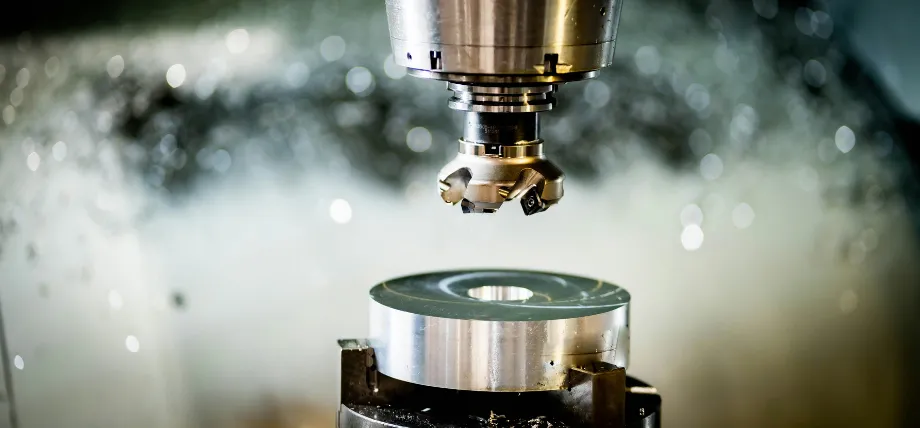
CNC Milling
CNC milling of aluminum is the main technique used for making complex aluminum machined parts. With advanced multi-axis machining, you can cut deep cavities, undercuts, and create 3D geometries at once. Otherwise, you’ll have to go for multi-stage processes to achieve those features with simple machining methods.
CNC milling has a big advantage of high positional accuracy (up to ±0.01 mm). It reduces alignment and setup errors in large batches of parts.
CNC Turning and Swiss Screw Machining
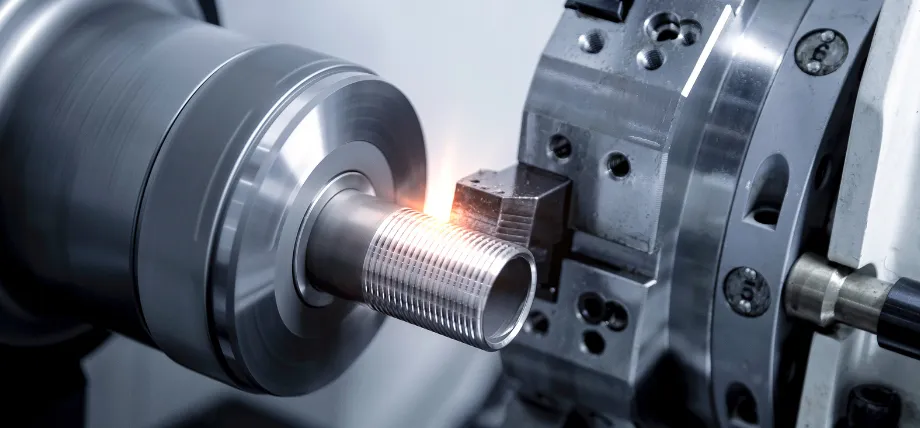
CNC Thread Turning Operation
Precision turning of aluminum parts is the best technique for creating cylindrical aluminum machined parts. It gives you excellent roundness and size control because aluminum cuts with low force.
Swiss machining is mainly used to create small-diameter aluminum CNC turning parts. You can achieve fine surface finishes (Ra ≤ 1.6 µm), high-speed processes, and reliable micro-component production with swiss machining (especially for parts like shafts, bushings, and fasteners).
Advanced Cutting: Waterjet, Laser, and EDM Options
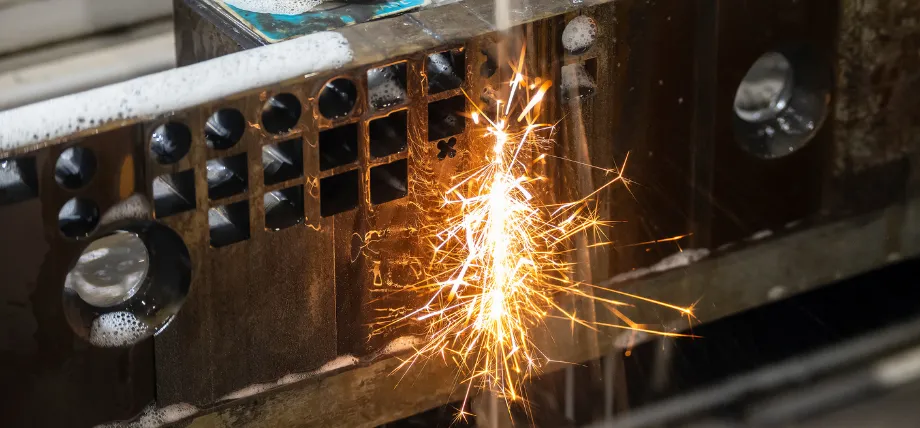
EDM Spark Erosion Process
When the standard cutting techniques are insufficient or risky to use for achieving advanced and precise features, you can choose advanced cutting techniques.
- Waterjet cutting – A beam of high-pressure water, including an abrasive, sometimes cuts parts. You can use this method when you need to avoid heat generation strictly.
- Laser cutting – A focused and sharp laser beam cuts thin aluminum sheets fast and cleanly. It’s ideal for creating flat patterns and sheet parts before secondary machining.
- EDM (Electrical Discharge Machining) – EDM removes material using electrical sparks. You can achieve sharp, fine, and detailed features that are hard to tool mechanically with EDM.
Surface Finishing and Secondary Operations
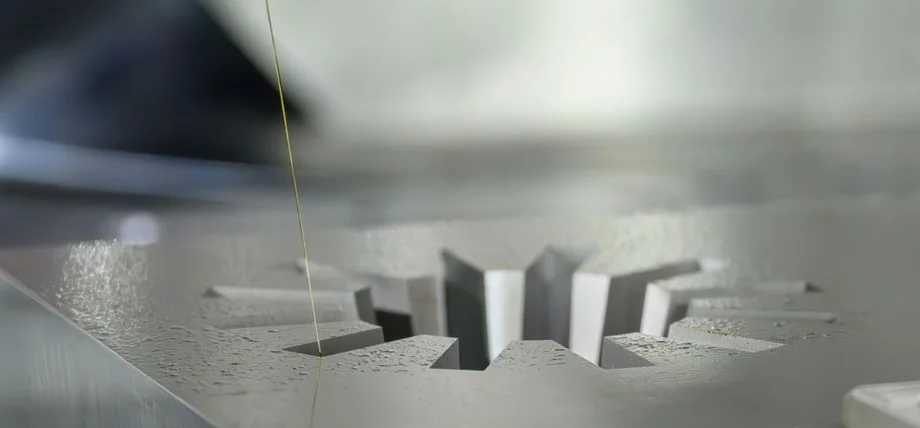
Wire EDM Process
Aluminum naturally comes with good corrosion resistance and surface properties for general applications, but sometimes you might need to employ secondary strategies for high-level performance.
Anodizing and Plating for Corrosion Protection
Anodizing builds a strong and uniform oxide layer on aluminum machined parts, mainly to improve corrosion resistance. Sometimes, it is used to improve surface hardness, wear resistance, or provide electrical insulation.
Bead Blasting and Mechanical Surface Treatments
Bead blasting removes marks formed due to tools and creates a uniform matte texture. It also refines surface features and edges to support a better fit and improve appearance.
Chemical Conversion Coatings and Powder Coating
Conversion coatings are used to improve corrosion resistance and the adhesion of other coatings. Powder coating forms a thicker layer than conversion coatings and is used as a protective and decorative layer for aluminum components.
Key Industrial Applications of Aluminum Parts
Aerospace and Defense Components
Lightweightness with high strength is a major criterion considered when choosing a material for aerospace parts. Therefore, you can notice the use of aluminum parts almost everywhere in aerospace applications. Some of the common applications are:
- Aircraft brackets
- Structural housings
- Avionics enclosures
- Precision connectors
Medical Device Manifolds and Housings
Medical equipment manufacturers use aluminum machining for precision housings and manifolds. Since most of the medical and surgical tools must be non-reactive and easy to sterilize, aluminum machined parts are a great choice with proper surface preparation.
Automotive and Industrial Equipment Fasteners
Automotive industries use aluminum CNC turning parts for:
- Lightweight fasteners
- Engine components
- Sensor housings
- Heat dissipation parts
Automotive components need precision turning of aluminum parts and tight tolerance machining due to strict safety and performance requirements.
Quality Control and Manufacturing Standards
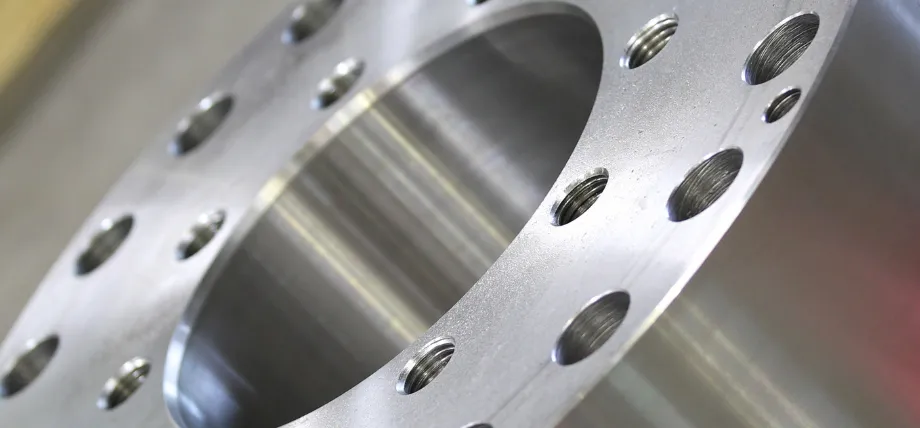
Precision Machined Aluminum Part
Standard Precision and Tight Tolerance Capabilities
The requirements can vary depending on the requirements, but most of the professional machining setups can achieve:
- Standard tolerance: ±0.05 mm
- Tight tolerance: ±0.01 mm or higher
For high-end aluminum machined parts, you might also need to keep an eye on the quality of the tools and proper calibration of machinery, since these can strongly affect the tolerances.
Inspection Procedures and Dimensional Accuracy
In most aluminum precision machining settings, manufacturers use multiple integrated inspection layers, consisting of both automated and manual inspection. These inspections mainly confirm dimensions, surface quality, and consistency before releasing for customers.
- CMM inspection (Coordinate Measuring Machine) is used for verifying precise 3D dimensions.
- Optical measurement systems are a non-contact inspection method used for checking the quality of features and profiles.
- Surface roughness testing for validating finishes and textures.
- First Article Inspection (FAI) is a cross-verification technique between the actual dimensions and the design specifications.
Material Certification and Quality Assurance Standards
Reliable suppliers provide full traceability documentation to guarantee that your aluminum machined parts meet industrial and regulatory requirements. These include:
- Material test certificates (MTC)
- ISO 9001 compliance reports
- RoHS and REACH certification
- Process inspection reports
Selecting a Professional Aluminum Machining Service
Design for Manufacturability (DfM) Optimization
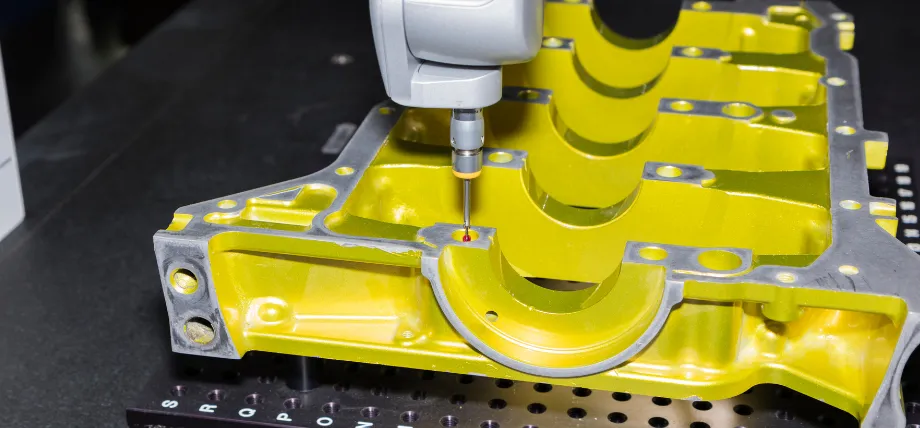
Aluminum CMM inspection
You should always check DfM before finalizing your design. This will greatly protect you from unnecessary cost drivers, slower machining times, and higher tool damage from your aluminum machined parts. Several major DfM considerations are:
- Avoid very thin walls that can bend or deform during cutting.
- Using proper corner radii to match tool paths.
- Keeping hole sizes standard for easier drilling.
- Following proper sheet metal design guidelines and referring to a standard sheet metal bend radius chart when designing mating parts in aluminum sheet metal fabrication.
- Removing unnecessary complex features that can slow down machining processes and raise costs.
Prototyping vs. High-Volume Production
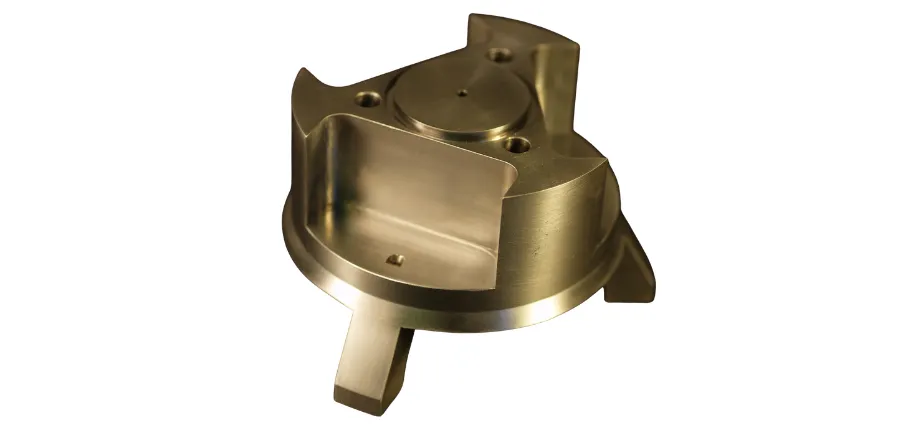
Precision Machined Aluminum Component
Prototyping mainly needs speed and flexibility. Your main goal of prototyping is comparing designs, testing fits, and adjusting quickly with flexible setups.
Production has completely opposite requirements. It needs stable processes, automated aluminum machining, and lower cost per part. It should give consistent and repeatable aluminum machined parts with the highest efficiency.
Factors Influencing Cost and Lead Times
The main cost drivers that affect the cost of aluminum machined parts are:
- Specific grade(s) of aluminum used
- Complexity of geometry
- Surface finishing requirements
- Required tolerance level
- Production volume
- Secondary operations or additional inspection rounds
Aluminum precision machining processes and the need for advanced machining techniques can also raise overall cost. For best cost-effectiveness, the best choice is to work with a manufacturer that offers integrated services, including CNC milling aluminum, precision turning of aluminum parts, finishing, inspection, and full quality documentation. This will make it easy for you to achieve your expectations, as well as give trust and safety.
Custom Metal Machining
At ProleanMFG, we provide custom CNC machining with tolerances as tight as ±0.005 mm that support your complex project geometry. We have in-house 3-axis, 4 axis, and 5-axis CNC milling and Swiss machining facilities that can process any metal from aluminum to titanium and high-performance alloys.
Work with our manufacturing team to get
- Ra 0.4µm surface finishes
- ISO 9001 certified supplier
- 100% inspection and material traceability
- Detailed quotes in as little as 24 hours
- Optional DFM support to scale your prototype to low and high volume manufacturing
Reach us to get a reliable, high-quality instant quote today!