
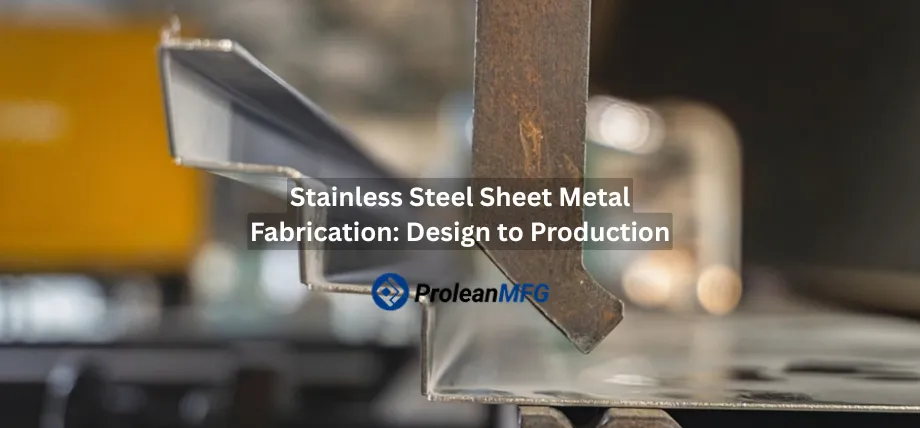

Stainless steel sheet metal fabrication is a precision manufacturing process used to produce functional components from flat stainless steel sheets. In modern industry, manufacturing stainless steel products through sheet metal fabrication is considered a performance-driven solution.
Stainless steel fabrication is widely used to make components that are expected to operate specially under high corrosion and chemical exposure. Therefore, understanding how metal fabrication stainless steel works allows you to pick the right choices and meet performance needs in an effective manner.
What is Stainless Steel Metal Fabrication?
This process uses a series of operations, including cutting, bending, forming, assembly, and finishing. This is a cold-working manufacturing process.
Stainless steel fabrication differs from bulk metal forming methods since this is a technique that focuses on thin-gauge metal processing. This is an effective technique that preserves the corrosion resistance and mechanical properties of the alloy while also achieving precise geometries.
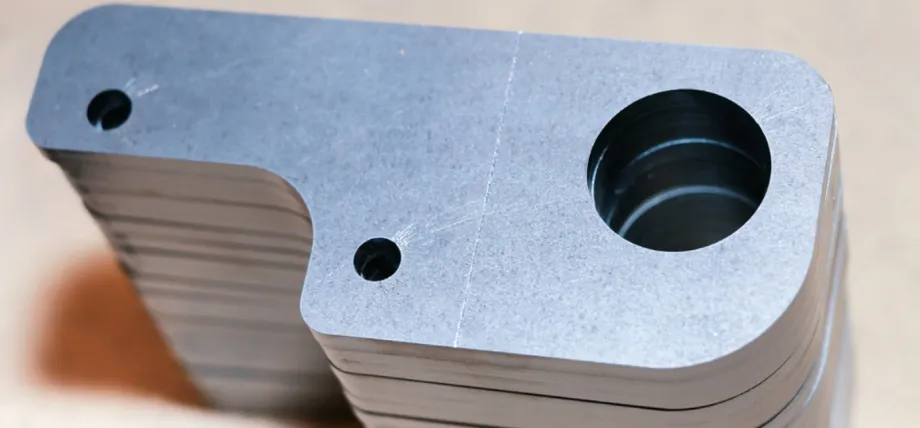
Functional Parts Fabricated from Stainless Steel Sheet Metal
Stainless steel parts you see every day, such as brackets, tanks, cabinets, frames, and panels, are some of the widely created products using this process.
Stainless Steel in Sheet Metal Fabrication Compared to Other Metals
When comparing stainless steel with other popular metals used for sheet metal fabrication, such as carbon steel and aluminum, stainless steels are known for giving better mechanical and corrosion performance. You can see a concise comparison below.
Table 2: Stainless Steel vs. Aluminum vs. Carbon Steel in Sheet Metal Fabrication
| Property | Stainless Steel | Aluminum | Carbon Steel |
| Corrosion Resistance | Excellent | Good | Poor |
| Strength | High | Medium | High |
| Formability | Good | Excellent | Medium |
| Maintenance | Very low | Low | High |
| Surface Appearance | Premium | Good | Industrial |
Referring to the above table, you can clearly see that the metal fabrication stainless steel is the ideal option if your components are needed to perform well under aggressive environments (marine, chemical, wet, etc.).
Common Stainless Steel Grades and Types
One of the most important steps in custom stainless steel fabrication is selecting the right grade. As different types of stainless steel material are available, the choice depends on your requirements of strength, corrosion resistance, weldability, and formability..
In stainless steel sheet metal fabrication, grades are mainly classified based on their metallurgical structure. The most commonly used families are austenitic, ferritic, and duplex stainless steels. These are identified as series, and you can find specific grades under these series.
Austenitic Stainless Steel (300 Series)
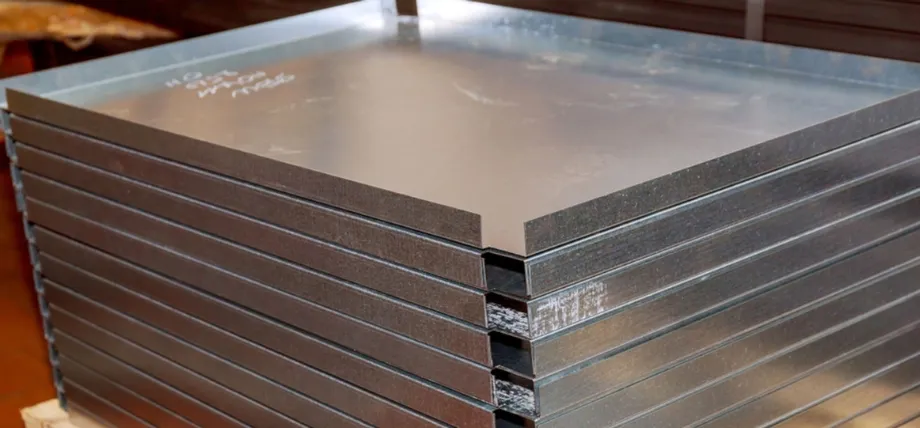
Stacked Metal Sheets
Austenitic stainless steels are well known for their excellent corrosion resistance, superior formability, and weldability. These are generally non-magnetic and maintain good mechanical properties over a wide temperature range. Below are a few widely used austenitic stainless steel grades for sheet metal fabrication.
304 Stainless Steel
304 stainless steel is the most widely used grade in metal fabrication stainless steel. 304 steel contains 18% of chromium and 8% nickel as alloying elements, which is the reason behind its excellent corrosion resistance. Main properties of this grade are:
- Excellent general corrosion resistance
- Very good formability and ductility
- Excellent weldability with TIG and MIG welding
- Suitability for deep drawing and bending operations
Because of the above properties, 304 stainless steel is commonly used in food processing machinery, medical equipment housings, industrial enclosures and cabinets, etc.
316 Stainless Steel
316 stainless steel can be introduced as an upgraded version of 304 with improved corrosion resistance. Some important points about 316 steel are:
- Presence of molybdenum for improved chemical resistance
- Excellent resistance to chlorides and saltwater
- Superior performance in aggressive environments
- Very good weldability and formability
316 stainless steel is widely used to make many marine/offshore equipment, chemical processing tools, and surgical equipment due to its chemical stability. When your application is expected to be exposed to salt, chemicals, or sterilization environments, 316 is the preferred material for your custom stainless steel fabrication.
Ferritic Stainless Steels
Ferritic stainless steels provide good corrosion resistance at a lower cost than austenitic grades. They contain chromium but no nickel (sometimes available as small traces). This makes ferritic steels more cost-effective than austenitic stainless steels. They are magnetic and also provide good resistance to stress corrosion cracking.
430 Stainless Steel
430 stainless steel is the most commonly used ferritic grade in stainless steel sheet metal fabrication. It’s very popular as an affordable good performer in the industry due to its:
- Lower cost than 304 stainless steel
- Good corrosion resistance in mild environments
- Magnetic properties
- Good formability for shallow bending and forming
However, 430 steel is not suitable for heavy welding compared to austenitic grades. 430 stainless steel is commonly used in kitchen equipment and appliances, decorative panels, automotive interior components, and household equipment. It is an excellent choice when moderate corrosion resistance and cost efficiency are required.
Duplex Stainless Steel
Duplex stainless steels are a special grade that combines the properties of austenitic and ferritic steels. They provide very high strength and excellent corrosion resistance. Duplex stainless steels usually carry twice the strength of 304 and 316 steel approximately. The key properties also include:
- Excellent resistance to stress corrosion cracking
- High resistance to pitting and crevice corrosion
- Good fatigue strength
Duplex stainless steels are highly used in pressure vessels, offshore oil and gas platforms, chemical tanks, heat exchangers, and piping systems due to their high performance levels. They are selected for heavy-duty structural applications where both mechanical strength and corrosion resistance are critical in manufacturing stainless steel products.
Sheet Metal Fabrication Process
Stainless steel behaves differently from mild steel and aluminum (higher work hardening, more springback, lower thermal conductivity). Therefore, the sheet metal fabrication process should be built around careful process control.
A standard stainless steel fabrication process includes several main stages:
- Material selection and specification
- Cutting and profiling
- Bending and forming
- Assembly operations (welding, mechanical assembly)
- Secondary operations and surface finishing
- Final inspection
If the process parameters are not properly controlled, the impacts usually come out as distortions, defects, or corrosion issues. If welding is included, it is highly recommended to perform passivation or electropolishing during the surface finishing stage to restore the corrosion performance.
Cutting Techniques in Stainless Steel Sheet Metal Fabrication
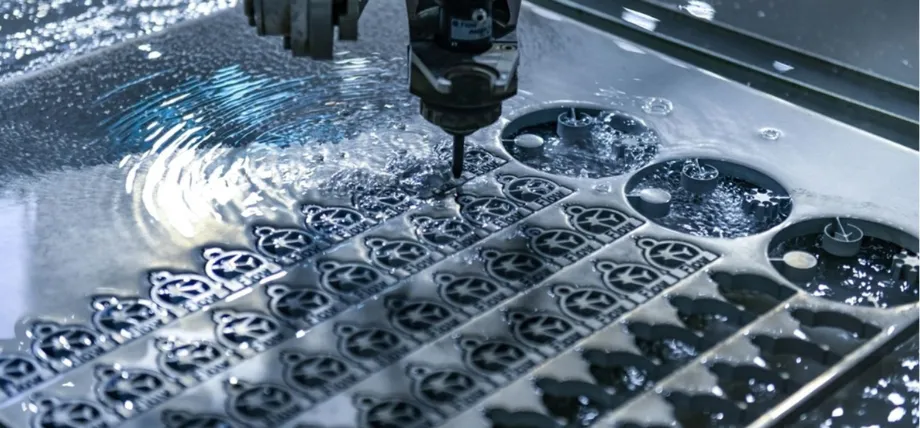
CNC Milling with Coolant
Cutting is the first physical step in sheet metal fabrication. This should be done carefully because an error in this stage goes up to the final assembly stage and is hard to repair and fix. Some of the widely used cutting techniques and their use cases are explained below.
Shearing
In shearing, straight blades are used to cut flat sheets into rectangular blanks. This is highly suitable for straight-line cuts. Shearing is a cost-effective method and does not give any thermal distortion. Shearing is widely used to cut panels, plates, and blanks.
Plasma cutting
In this cutting technique, an ionized gas is used to melt and remove material. This is more affordable than laser cutting and is also fast. Therefore, many sheet metal fabrication services offer plasma cutting for stainless steel. This method is highly suitable for cutting thick stainless steel sheets.
Laser cutting
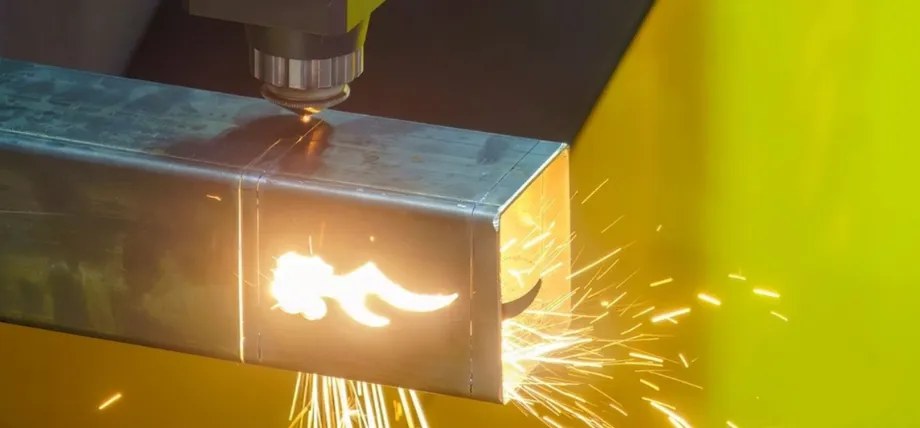
Precision Metal Cutting
Laser cutting can be known as the most widely used method in custom stainless steel fabrication. This method is very popular due to:
- Very high precision
- Smooth edge quality
- Minimum heat distortion
- Ability to cut complex profiles
Laser cutting is used for cutting precision components due to its high accuracy and repeatability.
Waterjet cutting
Waterjet cutting uses a high-pressure water stream to cut the pieces. In most cases, small amounts of abrasive particles are also mixed in that water. The specialty of this method is that it doesn’t generate a heat-affected zone. It provides excellent edge quality, so it is highly used when you need to avoid thermal distortion.
Bending and Forming
After cutting, the parts are formed using CNC forming equipment to achieve precise geometry and structure. Since stainless steel has higher strength and springback, it requires accurate bend allowances, correct tooling, and consistent press settings.
Press Brake Bending
In press brake bending, the sheet is placed on a CNC press brake and bent using a punch and die. The machine applies force along the bend line. The springback is compensated by slightly overbending to achieve the final angle.
Roll Forming
The sheet is passed through rolling dies that gradually curve it into a cylindrical or curved shape. This is done without creating sharp bend lines.
Assembly Techniques
In this stage, individually finished parts are joined together to form a functioning product. There are two main assembly techniques named welding and mechanical assembly.
Welding
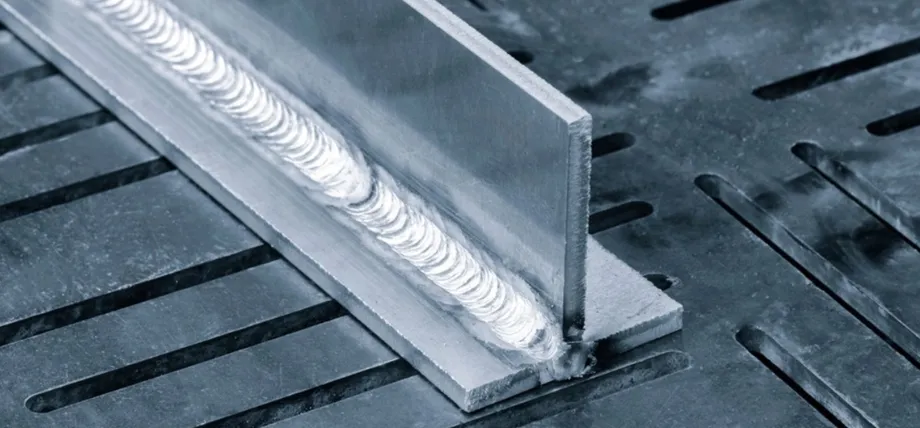
Precision TIG Weld
Two parts are melted (in most cases) and joined to form a permanent joint by applying heat and pressure. Sometimes, filler materials are also used. There are different types of welding, such as resistance welding, MIG & TIG welding, laser welding, etc. TIG welding (Tungsten Inert Gas welding) is the most preferred type for stainless steels since it provides strong and corrosion-resistant joints.
Mechanical Assembly
In mechanical assembly, you align parts, drill or punch holes if needed, and secure them with screws, rivets, or clinch fasteners. Fastening is used when you need disassembly or service access. In stainless steel assemblies, fastener selection also considers galvanic compatibility and corrosion resistance.
Adhesive Bonding
Adhesive bonding joins parts using a chemical adhesive without using heat or fasteners. The joint is held until the adhesive cures. It’s used with stainless steel mainly to avoid welding distortion on thin sheets, keep the surface clean, and bond stainless steel to dissimilar materials when mechanical fastening isn’t the best option.
Surface Finishing Techniques
Surface finishing is important for sheet metal fabrication since it improves both the appearance and the corrosion performance. Polishing, passivation, and electropolishing are the three main techniques used for stainless steel.
- Polishing – Smooths the surface using mechanical methods to improve appearance and reduce dirt.
- Passivation – Chemically removes surface contaminants (free iron) to restore and strengthen the protective oxide layer.
- Electropolishing – Electrochemical finishing that microsmooths the surface for maximum corrosion resistance and easy cleaning.
Applications of Stainless Steel Sheet Metal Fabrication
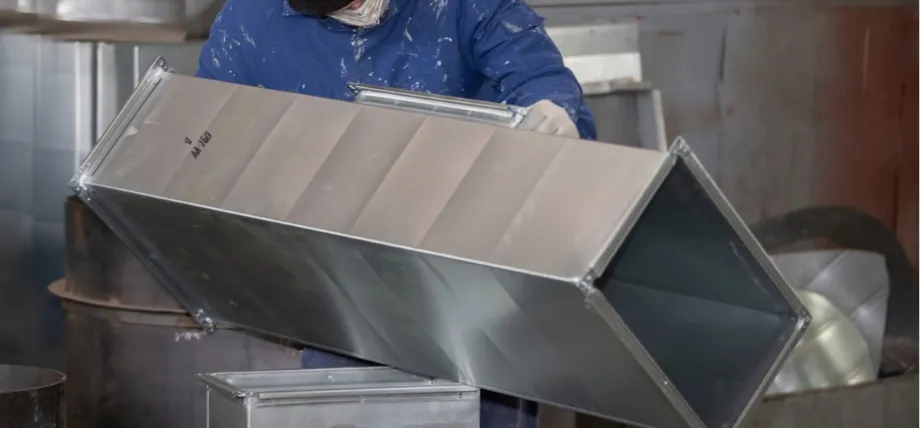
HVAC Duct Fabrication
Due to the unique combination of strength and corrosion resistance, many custom stainless steel fabricators prefer stainless steel for many custom metal productions. You can find the applications of stainless steel sheet metal fabrication in almost all industries.
Automotive and Transportation Industry
Used for exhaust components, heat shields, brackets, underbody covers, and enclosures where strength and corrosion resistance are needed.
Chemical Processing and Marine Applications
Used for tanks, vessels, piping supports, and panels that must withstand chemicals, saltwater, and harsh outdoor environments.
Aerospace industry
Used for lightweight structural panels, ducts, brackets, and heat-resistant components requiring reliable strength and stability.
Medical and Pharmaceutical Sector
Used for equipment housings, cleanroom furniture, trays, and process enclosures where hygiene, sterilization, and corrosion resistance matter.
Food Processing and Beverage Industry
Used for processing lines, conveyors, tanks, and machine guards because stainless is easy to clean and resists corrosion from washdowns.
Advantages of Stainless Steel Sheet Metal Fabrication
Compared to many other metals, stainless steel parts provide excellent performance and need less maintenance. At the same time, stainless steel components can hold tight dimensions and a premium finish over time. Some of the highly useful advantages of using stainless steel parts are:
- Corrosion resistance: Resists rust and chemical attack. Highly reliable in wet, outdoor, marine, and washdown environments.
- High strength and durability: Strong and impact-resistant. Parts can hold their shape under high loads.
- Formability: Can be bent and formed into precise shapes without losing structural properties.
- Low maintenance and long-term cost effectiveness: Requires little to no coating or painting. Reduces maintenance and replacement costs.
- Aesthetic appeal: Offers clean, premium sheet metal finishes such as brushed, polished, and mirror surfaces.
Sheet Metal Fabrication Services
Proleanmfg provides sheet metal fabrication that relies on precision and efficiency. Whether you require sheet metal prototypes, custom enclosures, structural components or high-volume identical sheet metal parts, Proleanmfg has capabilities in CNC bending, welding and finishing, like electroplating, brushed finish and custom finishes.
Key benefits of our sheet metal fabrication services include:
- Material guarantee: we have a wide selection of materials, including aluminum sheets, stainless steel sheets, mild steel, copper and brass sheet metal.
- Durability: All Proleanmfg sheet metal fabricated components offer structural integrity and longevity, depending on your custom dimensions.
- Flexible production: We produce all components in-house and can iterate on your design, update it and produce complex geometries through forming, cutting and assembly.
- Rapid turnaround: We have an optimized shop floor design that streamlines the prototyping run and in-house capabilities to reduce lead times without affecting quality.
Request a free quote today!
FAQs
What is the thickness used in stainless steel sheet metal fabrication?
It depends on your application, but most applications use 0.5 mm to 6 mm thickness.
What is the best stainless steel grade for fabrication?
The best choice highly depends on your performance needs, cost, and the level of corrosion protection. 304 stainless steel is the most widely used all-round grade used for many applications.
What is the most precise cutting method for stainless steel?
Laser cutting provides the highest precision, but it is relatively more expensive than other techniques.
Is stainless steel expensive?
The initial cost is relatively higher. But since it is durable, the lifetime cost is low for long-term service.