

CNC Machining Services are among the primary foundations of modern industrial manufacturing. Whether it is for simple consumer electronics, auto parts, advanced aircraft parts, or defense components, companies rely on OEM manufacturers instead of producing them themselves.
Although CNC machining is considered a single type of manufacturing method, it encompasses several different processes and specialized operations. Meanwhile, several different equipment and tools are used for them.
This article will discuss eight common types of machining processes: Milling, Turning, Drilling, Grinding, Routing, EDM, Turn-Milling, and Laser Cutting.
Machining Terminologies
Before diving into a detailed discussion of machining processes, let’s look at the key terminologies used in machining.
| Machining Term | Description |
| Feed Rate | The speed at which the tool is moving towards the workpiece |
| Cutting Speed | Surface speed between tool and workpiece (m/min). |
| Depth of Cut | The material depth that the tool cuts in a single pass |
| Surface Finish | Measurement of texture roughness on a machined surface. |
| Coolant | Coolant fluid used for heat dissipation and chip evacuation |
| Chip Load | Material thickness removed by a cutting edge in a revolution. |
| CNC | An automated machining system, called Computer Numerical Control |
| G & M- Code | CNC programming language |
| Axis | Linear and rotary movement directions: X, Y, Z, A, B, C, etc. |
| Tolerance | Allowable dimensional deviations |
| Fixture | Accessories for workpiece securing |
| Chuck | A clamp for holding a workpiece in a lathe machine |
| Collet | A grip for a tool or a workpiece |
| Runout | Deviation of a rotating tool or workpiece from its original position |
What is the CNC Machining Process?
First of all, machining is a manufacturing process in which raw materials are shaped into the required form using cutting tools. Cutting tool and workpiece, with one of them remaining stationary, and the other spins, so that the material can be removed from the work. In some cases, the tool and material can both rotate.
In traditional lathes, mills, drill presses, grinders, or saws, the operator manually controls the process with mechanical sub-systems.
In CNC machines, all of the movements (tool/work), speed, depth, tool path, and most other variables are automated. A CNC program is uploaded into the control unit, and the machine interprets the instructions and carries out the machining process.
CNC not only allows for faster production, but it can also shape complex parts with great precision and a smooth finish.
Types of CNC Machining Processes
There are several types of CNC machining processes, each with distinct capabilities for shaping materials. Here, eight processes will be briefly discussed: milling, turning, drilling, routing, turn-milling, grinding, laser cutting, and EDM machining.
1. CNC Milling
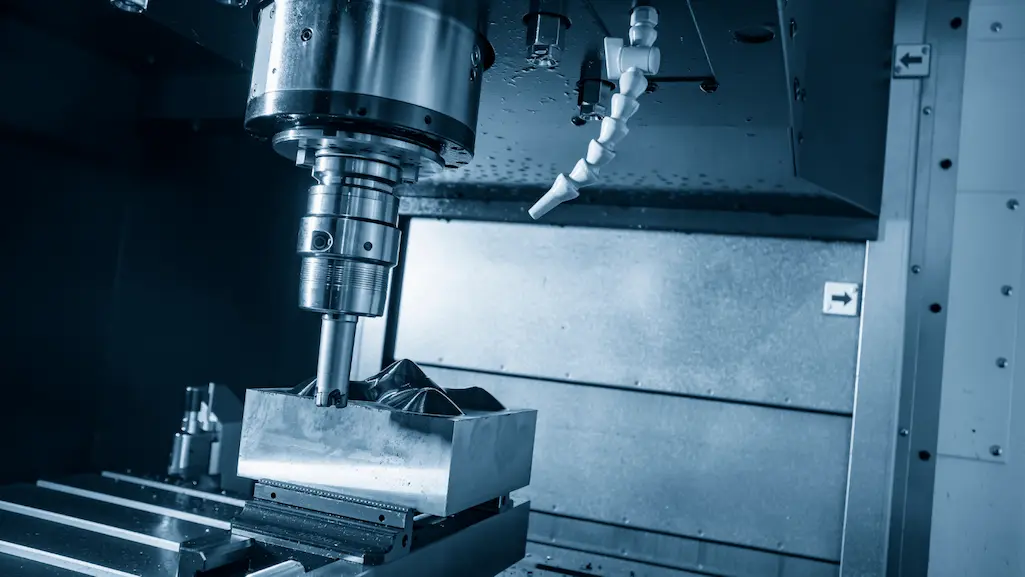
Milling machining
Milling involves rotating cutting tools attached to the spindle, which move across a stationary workpiece according to a CNC program. As the tool engages the work, its rotating edges shear, or chip away, the material.
Based on the machine’s axis capability, the spindle moves along 2, 3, 4, 5, or more axes. As the number of axes increases, more complex features are allowable, and machining speed also increases.
Milling is ideal for designs with complex or irregular contours and intricate internal geometries, such as undercuts, pockets, channels, and slots.
Learn about: CNC Milling
2. CNC Turning
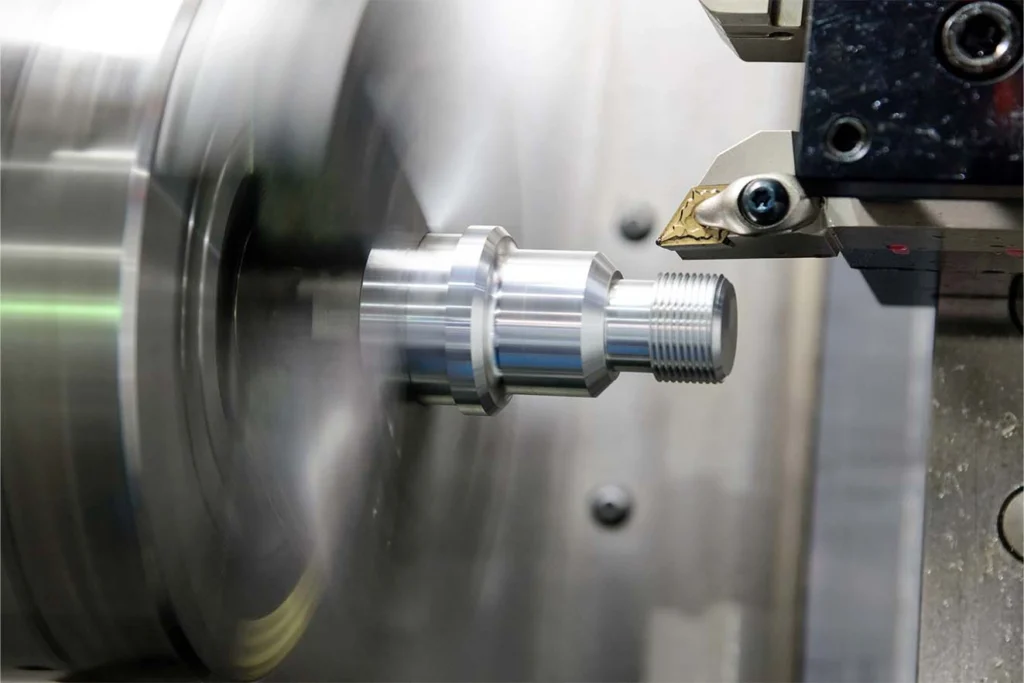
Turn machining
Unlike milling, the workpiece rotates at high RPM, and the stationary tool moves along with the tool post to engage the rotating material.
CNC lathes or turning centres are used for this process. They can perform diverse CNC-turn machining operations, including facing, taper turning, grooving, boring, threading, and knurling.
The turning process is suitable for machining cylindrical parts and creating features on them, such as shafts, fasteners, gears, and bushings.
Learn about: CNC Turning
3. CNC Drilling
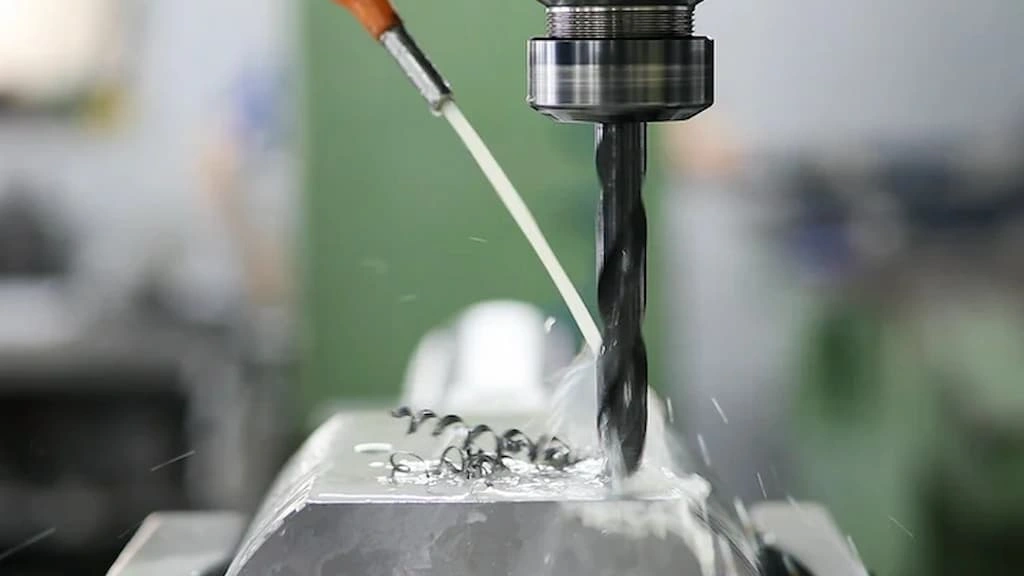
CNC drilling
Drilling is a process of creating holes in a workpiece using rotating drill bits. Meanwhile, the hole diameter depends on the drill bit size. The CNC program precisely controls the hole’s depth and finish.
4. CNC Grinding
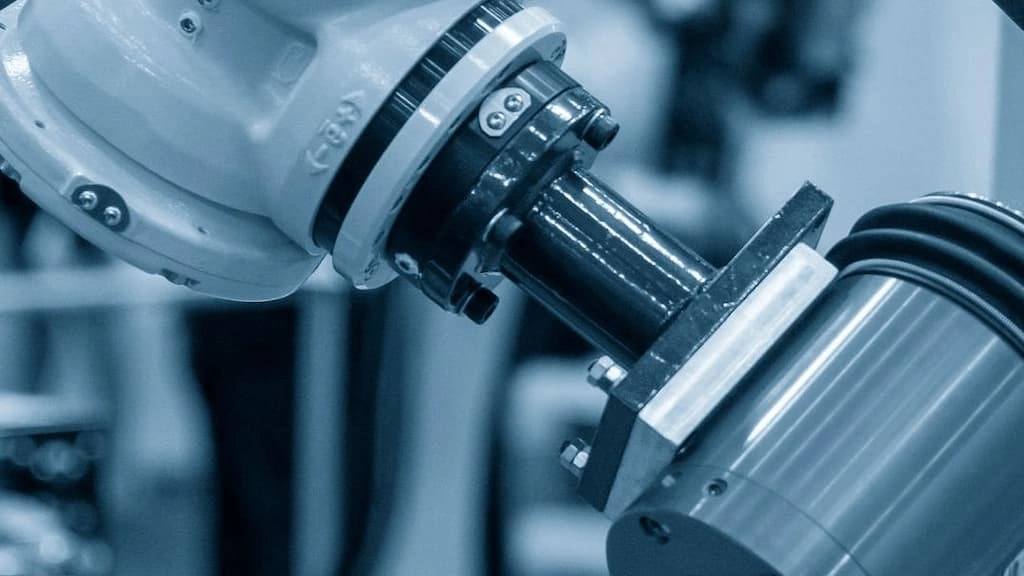
Grinding machining
Grinding is typically used to finish or correct the dimensions of machined parts. CNC grinders use abrasive wheels, where the material is fed, and the abrasive removes it in small amounts.
Furthermore, you can choose internal, external, cylindrical, or centreless grinding processes, based on your parts’ geometry and machining requirements.
5. CNC EDM Machining
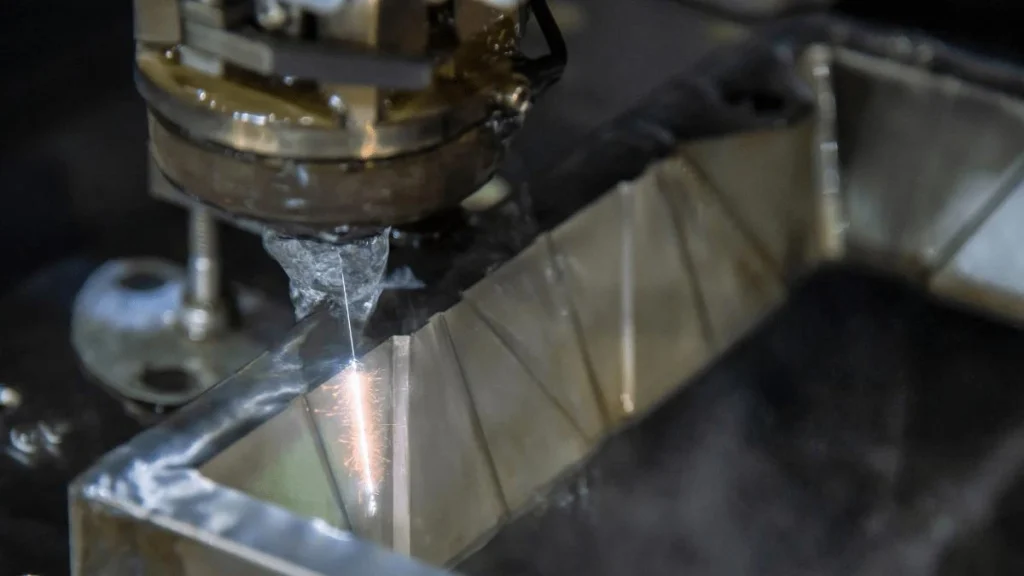
EDM machining process
Unlike other CNC Machining processes, the tool does not engage with the workpiece during EDM machining. It uses a controlled electrical spark (discharge) for material removal.
EDM can cut, shape, engrave, and micro-drill electrically conductive workpieces, including metals and alloys. Meanwhile, CNC allows the creation of intricate shapes, profiles, and features with tight tolerances.
Consequently, EDM can shape hard alloys that milling tools often struggle with, such as Inconel and hardened tool steel.
Some industrial applications of EDM machining include die tooling, fixtures, automotive engine parts, and custom medical implants.
6. CNC Laser Cutting
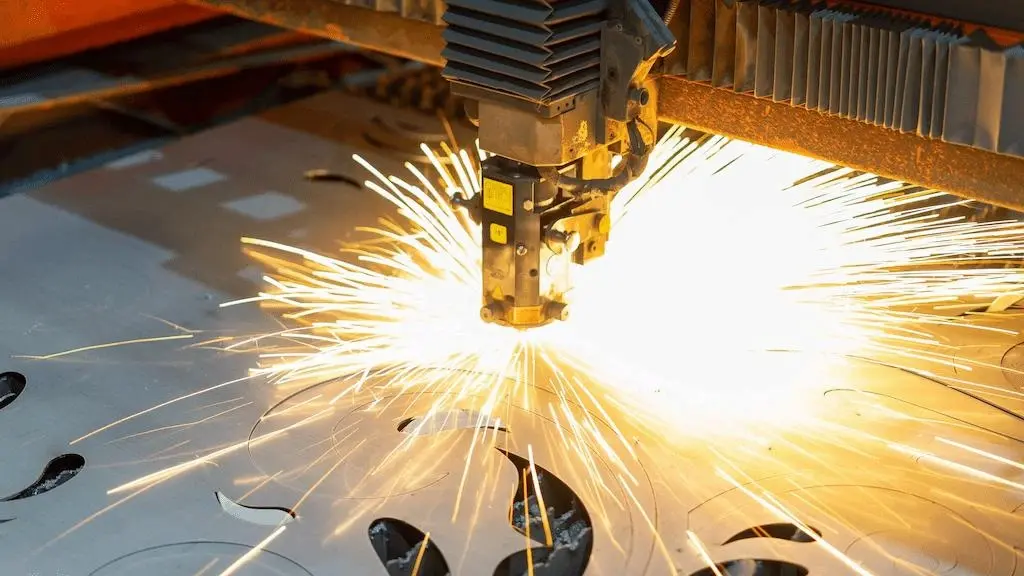
Laser cutting process
In laser cutting, a highly concentrated laser beam is used to cut and shape the workpiece. The CNC program controls the laser head’s movement. As the high-temperature laser beam strikes, it melts the material and vaporizes it, creating precise, clean cuts.
There are two common types of CNC laser cutters, CO2 and Fiber Laser. Fiber lasers offer high speeds, and they are suitable for metallic machining materials, whereas CO2 lasers are preferred for non-metallic materials.
7. CNC Routing
The routing process is used for machining of large-sized sheets. A CNC router can perform multiple machining operations on them, including cutting, drilling, engraving, and profiling.
You can use the routing process to make sign boards, display panels, acrylic enclosures, furniture arts & patterns, etc.
8. CNC Turn-Milling
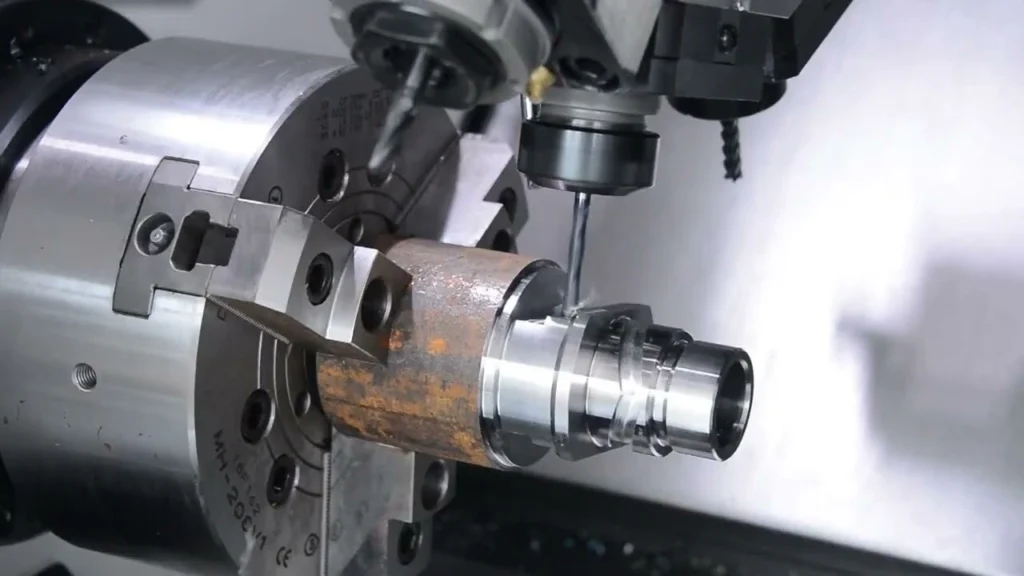
CNC turn-milling
As the name suggests, the CNC turn-milling process is a combination of CNC turning & milling. CNC mill-turn centres are used for this, where both work and tools can rotate simultaneously in a single setup.
Typically, this hybrid machining is used when off-axis contours need to be machined and require intricate slots, holes, and other features on a cylindrical surface.
Learn about: High Speed Machining
What Are the Common Machining Materials?
A wide variety of materials are compatible with the CNC machining processes, including metals, alloys, plastics, and composites.
What makes material type critically important in the CNC machining process is that tooling and parameters must be selected based on the material’s properties.
Some machining materials are soft and highly machinable, which can be shaped with HSS tooling, whereas hard materials need diamond-coated tools.
Let’s look at the list of CNC machining materials below:
- Metals: Aluminium alloys, Mild steels, Stainless steels, Copper, Brass, Inconel, and Bronze are the common materials for machining and metalworking.
- Plastics: Acrylonitrile butadiene styrene(ABS), Polycarbonate, Nylon, Polyethene, Delrin, and PEEK.
- Composites: Carbon fiber, fiberglass, and phenolics.
- Ceramics: Alumina, zirconia, and silicon carbide.
What Are the Machining Tools?
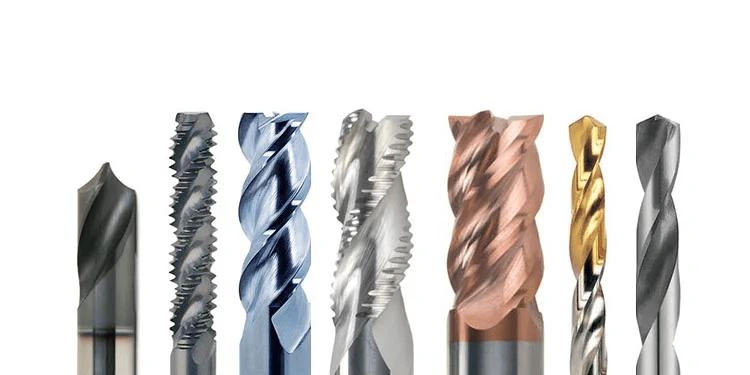
CNC machining tools
Tools are essential elements in the machining process that engage with the work and remove unwanted material. End mills, drill bits, thread cutters, reamers, and taps are among the most used tools.
While choosing a machining tool, you must consider the machining operations you want to perform, the hardness & machinability of the work material, the tool geometry, and the tool material.
Next, the list below outlines the common machining tools.
- End mill
- Face mill
- Drill bit
- Indexable inserts
- Reamer
- Boring bar
- Threading tap
- Grinding wheel
- Thread mill
- Chamfer tool
- Deburring tool
Advantages and Disadvantages of the Machining Process
There are several advantages of using CNC machining operations in the manufacturing of both metallic & non-metallic parts. You can produce complex parts with high detailing & precision. Additionally, it is flexible with all volume types.
On the other hand, high initial setup costs and the need for skilled operators are two disadvantages of machining.
Advantages
- Diverse Machining Types: Machining involves many distinct types of processes & operations, covering diverse capabilities.
- Precision: CNC machining offers tolerances down to ±0.127mm.
- Repeatability: Each part produced from CNC machining is consistent in dimensions and overall quality.
- Rapid Prototyping: Machining allows for making custom prototypes quickly with a low tooling cost.
- Surface Finish: Precision machining leaves a smooth surface finish with minimal tool marks.
- Volume Flexibility: It is flexible with any production volume; small, medium, or large batches of industrial machining parts/products.
Disadvantages
- The initial machine installation and setup cost is higher. A small industrial CNC mill costs $50,000+.
- Operations of CNC equipment and quality control instruments require trained and skilled manpower.
How Does Machining Work?
The CNC machining process involves part design, CNC programming, machine & tool setup, machining operations, and post-processing. These steps are interrelated and must be performed carefully.
Let’s further break down the CNC machining steps.
- Part Design: Create an engineering design for machining a part in CAD software.
- G&M Codes: Generate the G&M codes, called the CNC program, which controls the tool positioning, movement, feed, and auxiliary systems.
- Machine Setup: Upload the CNC program and set the variables for the CNC machine (mill, lathe, etc.), followed by the tool and workpiece settings.
- Machining Operations: Ensure the alignment and position of the tool & workpiece, run the CNC program, and machine perform machining operations.
- Post-Processing: After completion of machining, parts undergo post-processing & finishing operations, such as deburring, beadblasting, painting, coating, and plating.
What is the Average Cost of Machining Processes?
The cost of the machining process includes CNC programming cost, material cost, tooling & setup cost, quality control cost, manpower cost, and overhead cost.
Consequently, factors like part complexity, material type, desired precision, finish, and production volume determine the overall cost.
Typically, the average machining cost is $30-100 per hour, but it can exceed $200 per hour for high-precision machining that requires machines with 5 or more axes capabilities.
Conventional Vs. Non-Conventional Machining Processes
Conventional machining refers to those processes where the cutting tools or abrasive tools are used to shape the material. The tool directly engages with the workpiece and removes the material in a controlled manner. CNC milling, drilling, turning, and grinding are key conventional machining processes.
On the other hand, the cutting tool does not contact the workpiece while shaping the workpiece in the non-conventional machining processes. Instead of shear or mechanical forces, they rely on heat, chemical, or electrical energies. Some examples are laser cutting, EDM machining, and plasma cutting.
How Can I Choose the Right Machining Process?
The best machining process for your parts is primarily determined by the shape, geometrical features, and type of material.
Milling For Complex 3D shapes with features like undercuts, channels, irregular contours, and deep slots.
- Turning→ For cylindrical items, threading, and rotational parts.
- Drilling→ For rapid and precise hole making
- EDM→ For Intricate and precise holes, slots, cavities, and other features on hard metallic workpieces.
- Turn-Milling→ For Complex components that require both milling and turning in a single setup.
- Laser Cutting→ For Cutting, engraving, and shaping of both metallic & non-metallic work.
Summing Up
Overall, there are several types of CNC machining processes, and we have discussed eight of them in this article. Each process has distinct capabilities for shaping workpieces; milling excels for complex 3D parts with irregular contours & complex features, turning is ideal for symmetrical part machining, drilling is for hole creation, and so on.
Which machining process to use depends on the design you have and its features, such as shape, size, precision, finish, etc. Consequently, you might need to use multiple processes.
For the highest quality and cost-competitiveness of the CNC-machined parts, ProleanMFG is the go-to option. With 100+ modern CNC machines and a team of skilled professionals, we deliver the results that exceed your expectations.
FAQ
What are the three most common machining processes?
Milling, Turning, and Drilling are the three most common machining processes.
Is CNC a type of machining?
Yes. CNC is a type of machining where computers control machine tools like mills, lathes, and drills to remove material with precision and achieve the desired shape.
What is the objective of CNC machining?
The objective of CNC machining is to automate the tool movement, positioning, coolant flow, and other mechanisms through a CNC program. So, high precision, consistency, complexity, and efficiency can be achieved.