
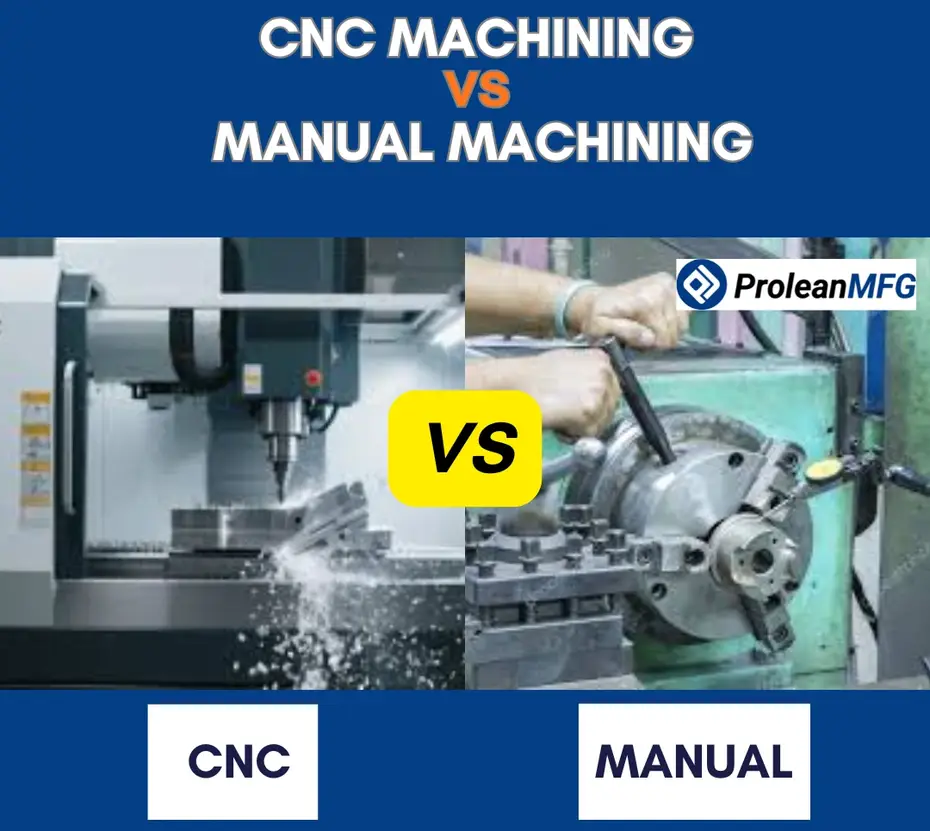

Both CNC machining and manual machining continue to provide industries with parts of various complexities and capabilities. Be it stainless steel parts for medical devices, PTFE (Teflon) for seals, or aluminum alloys in cars, the list of machining applications is endless.
However, it is noteworthy that both machining approaches have their benefits and shortcomings, which is why some users prefer one over the other. The main difference is that while manual machining entails extensive hand control, CNC machining involves automated machining.
This basic difference results in distinctions in machining volume, accuracy, required skillset, cost, and repeatability. Indeed, these are the factors one should focus on when choosing a machining process.
This article breaks down these differences to help you choose a machining path that best aligns with your project goals.
What is CNC Machining?
Computer Numerical Control (CNC) machining is the automated control and operation of machinery in manufacturing. Computer programmes are used for mills, lathes, drills, and other types of machines. Pre-programmed codes and software instruct the machine on what to do.
Different Types of CNC Machines
You will find different types of CNC machines in a machine shop, including CNC mills, machining CNC lathes, CNC plasma cutters, and CNC routers.
CNC Mill – Performs cutting and drilling operations
Machining CNC Lathe – The machining CNC lathe performs different turning operations
CNC Plasma Cutter – Uses a plasma torch to cut metal
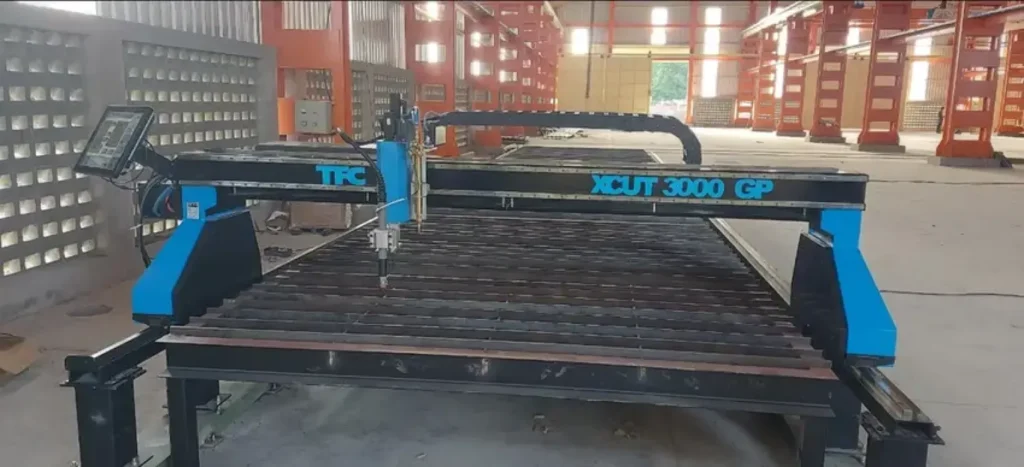
CNC plasma cutting machine
CNC Router – Cuts a wide range of materials, including plastic, wood, and metal.
EDM Machine – An EDM (Electrical Discharge Machine) uses an electro-thermal mechanism to erode the workpiece.
These machines get instructions from a CAD (Computer-Aided Design) file. This is a special file for the part’s blueprint. CAM (Computer-Aided Manufacturing) programs control machines, enabling the production of precise parts across various industries.
Main CNC Machine Components
A standard CNC machine comes with a drive system, a tool holder, a machine bed, an interface, and a controller.
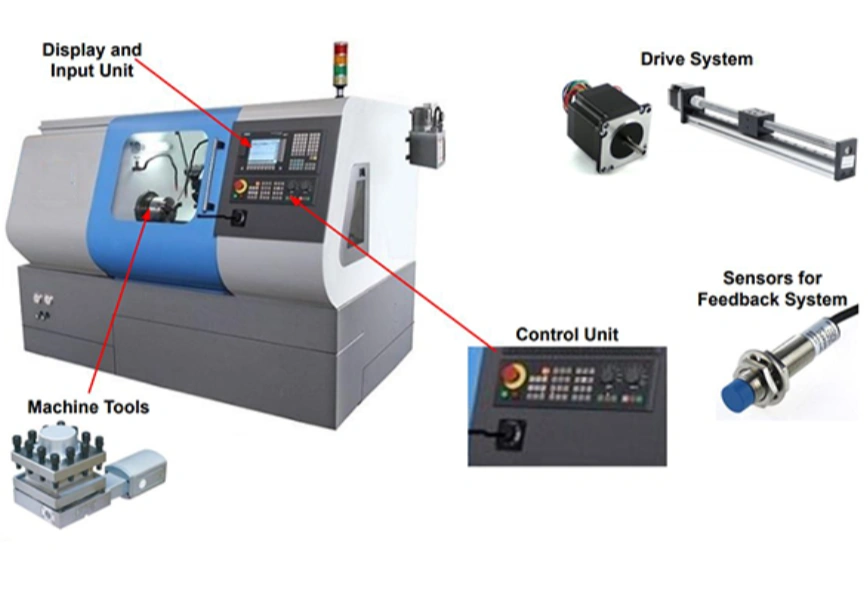
Parts of a CNC machine
These parts combine to deliver accurate, predictable, and repeatable machining of the relevant parts.
Drive System – This system comprises actuators and motors. Its function is to move the different parts of the CNC machine.
Tool Holder – This component is sometimes also called the spindle. It holds and rotates the workpiece or cutting tool.
Machine Bed – It is the sturdy frame that supports the rest of the machine.
Interface – CNC machines also require an interface, which is basically a platform for the machinist to feed the machine with instructions. It also enables monitoring of machining operations.
Controller – This is considered the “brain” of the CNC machine. Its function is to interpret G-code and M-code instructions into electrical signals and coordinates. These coordinates drive different components of the CNC machine.
Advantages of CNC Machining
The advantages of CNC machining include;
- Produces complex parts
- Supports mass manufacturing
- Fast turnaround for meeting tight deadlines
- Room for human error is limited
- Can scale easily
- Precision consistency
Limitations of CNC Machining
Here are the limitations of CNC machining;
- Requires skilled programming
- Machines must be maintained regularly, more advanced than in manual machining
- Not ideal for small production runs
- Requires a high initial investment
Is CNC Machining Hard?
Yes, CNC machining can be hard, especially from a technical perspective. The machinist should be well-versed in material behaviour, tooling requirements, programming, and fixturing.
While the machining does most of the work, the machinist is tasked with ensuring everything is correct – code, setup, and machining parameters.
It takes a single programming error to cause extensive damage to a workpiece, tool, or even the machine itself. Well-trained CNC machining professionals are behind the excellent parts that come out of the workshops. Use this to ensure high-quality, timely, and cost-effective parts.
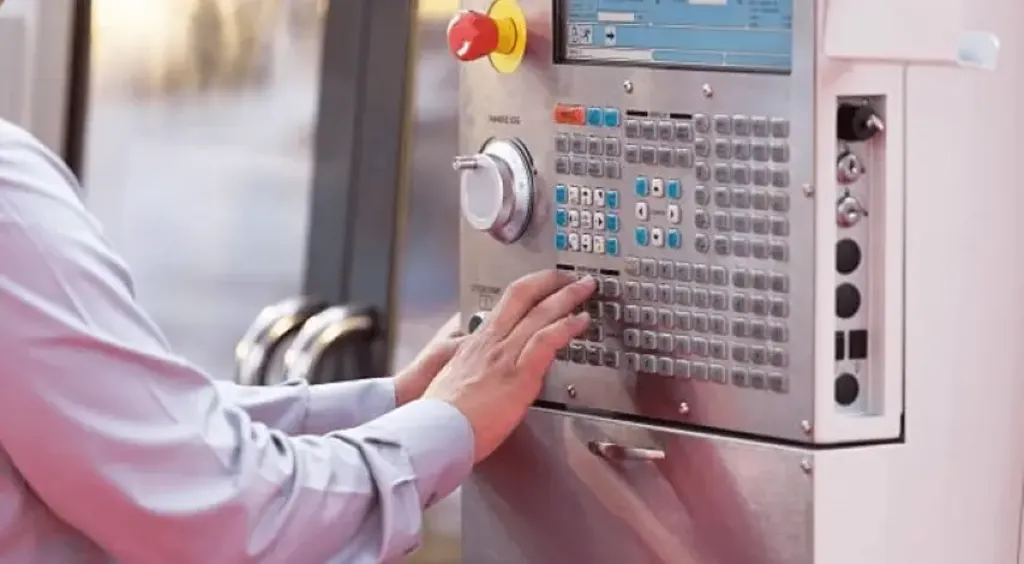
Programming a CNC machine
What is Manual Machining?
Manual machining involves conventional machine tools such as manual machining mills and manual lathes. An expert machinist directly controls the machine. Every adjustment and movement is done manually.
Advantages of Manual Machining
The advantages of manual machining services include lower cost, the capability to undertake additional jobs, and the assurance that you are working with a skilled machinist.
Lower Machining Cost – Cost is a major factor when you are deciding whether to use CNC machining or manual machining. With a significantly lower initial cost, a manual machine allows the service provider to keep the machining costs low.
Additional Jobs – The jobs that the CNC machine is not practical for can be done on the manual machining mill or lathe. This could be due to the busy schedule as the machine runs large orders. Short orders, for instance, a single automotive shaft, can be conveniently taken using the manual machine.
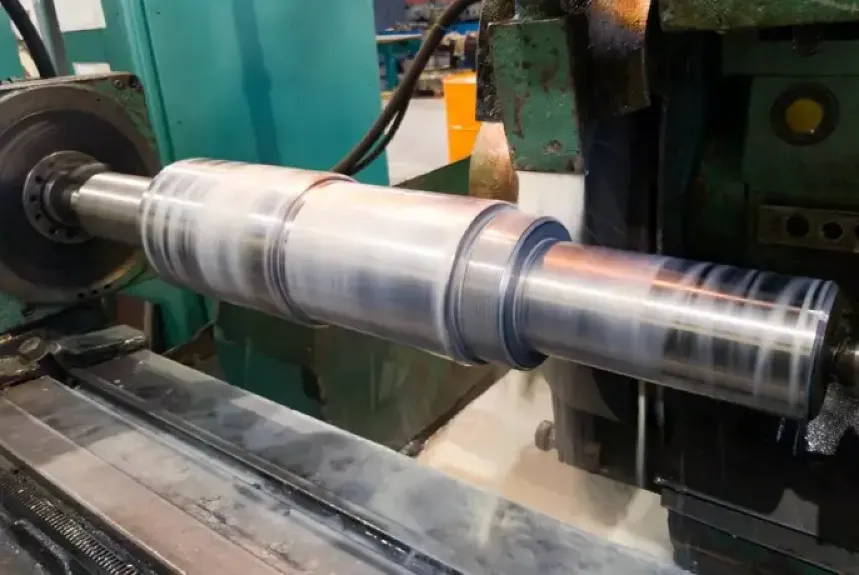
Shaft manual machining
Skill is Assured – Using a manual machine almost certainly requires a high skill level. Unlike the CNC milling machine, a manual machining mill’s accuracy is controlled by the machinist. So, there is a benefit in that you are sure you are working with a skilled machinist when a manual machine is involved.
What are the Disadvantages of Manual Machine?
Some major limitations of manual machining services are;
- Slow manufacturing rate
- Potential for compromised precision due to human error
- Higher part rejection rate due to the human error element
- Incapable of handling modern large-scale manufacturing
Is Manual Machining Hard?
Yes, as the above point reiterates, manual machining can be demanding. It requires extensive skill for one to deliver an excellent part devoid of defects. The understanding and judgment of the machinist determine the quality of results.
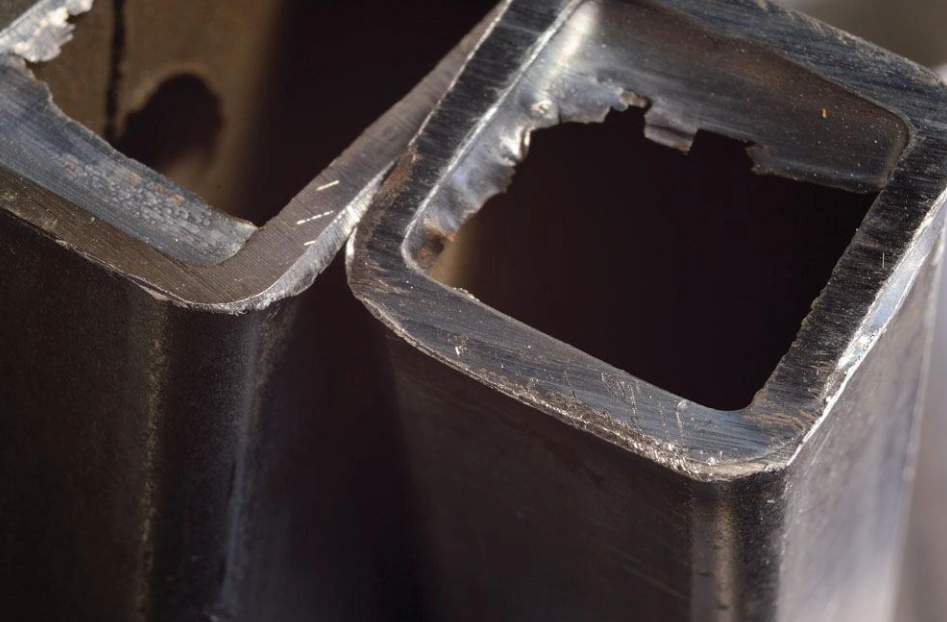
Machining defect
Achieving consistent results on the manual machining mill doesn’t occur accidentally. A slight mistake can ruin the whole part and cause loss to the business. That explains why businesses opt for professional machining services over in-house processes, unless they have dedicated professionals for the same.
Differences for CNC vs Manual Machining
CNC machining and manual machining differ in accuracy, production volume, skills required, and cost.
CNC vs Manual Machining: Precision
When it comes to machining accuracy, CNC machines and manual machines can be significantly different. A CNC machine can manufacture the same piece over and over again with the same consistency due to its superior precision machining capability.
However, this kind of performance is a big challenge for manual machining. Skills vary for different machine operators. Tiredness also kicks in and affects machining precision.
CNC vs Manual Machining: Production Volume
Since CNC machining is automated, it is well-suited for large volumes. Provided the machine is programmed, it can produce parts for as long as is desired.
On the contrary, the requirement for constant human intervention means that manual machining is best for small-volume production.
CNC vs Manual Machining: Skills
Both techniques require machining skills, but in different angles. For CNC machining, the core skills include programming and CNC machine control.
The machinist in conventional machining should have deep knowledge and expertise about cutting tools, cutting techniques, and different materials.
CNC vs Manual Machining: Initial Cost
The upfront costs for CNC machining are higher. Costs are related to skilled programming, longer setup time per job (initially), and maintenance for the advanced systems.
For manual machining, the initial costs include payment for a skilled machinist and simpler maintenance. If the task is simple, the setup time is fast.
Note that these costs can vary based on the job. Remember that CNC machines can handle large volumes, while manual machines suit one-off projects.
CNC vs Manual Machining: Machining Cost
CNC machines have been proven to work faster and generate less waste than conventional machines. Tool changeover is also faster than in manual machining, by up to four times, according to some quarters.
So, parts get finished faster with fewer scrap, elements that have a direct implication on cost.
Factors When Choosing CNC vs Manual Machining
The available budget, part complexity, machining time, and production volume are the main factors to guide in choosing between manual and CNC machining. Looking at these factors closely, it all revolves around what you are making.
Available Budget
At first, conventional machining may appear cheaper than CNC machining. However, complex or repetitive jobs are usually more affordable when done using CNC machines. So, consider the budget against the type of part you are looking for.
Part Complexity
Manual machining milling services may be adequate for simple geometries. However, complex parts with multiple features and contours require the capabilities of CNC machines.
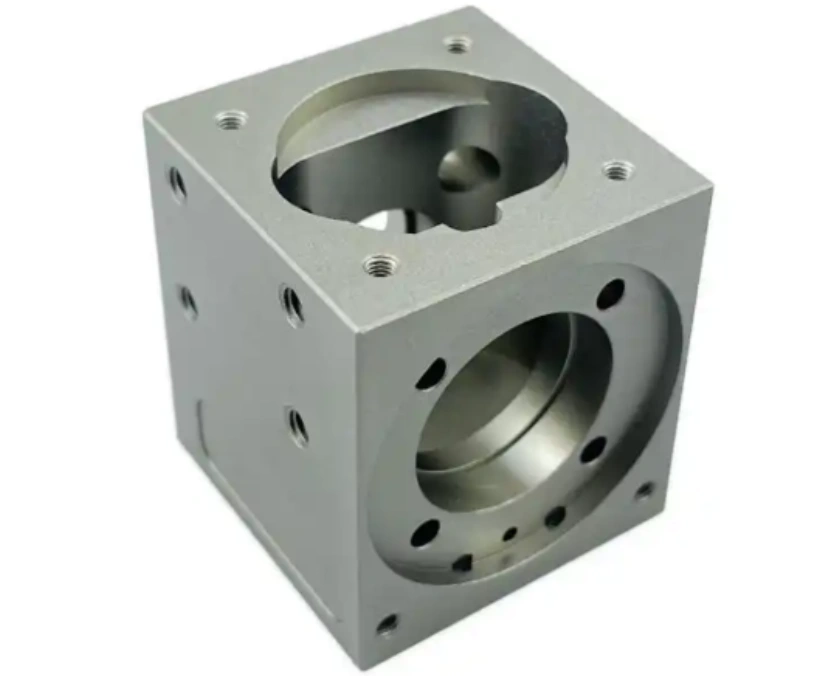
Machined complex part
Machining Time
Since the skill of the machinist is at the center of manual machining, detailed projects can take time. For such works, it is better to use CNC machining technology and save time.
Production Volume
For a few parts or one-off projects, it is okay to apply conventional machining. However, it becomes necessary to use advanced CNC machining when the volumes are high, and the parts must be delivered promptly.
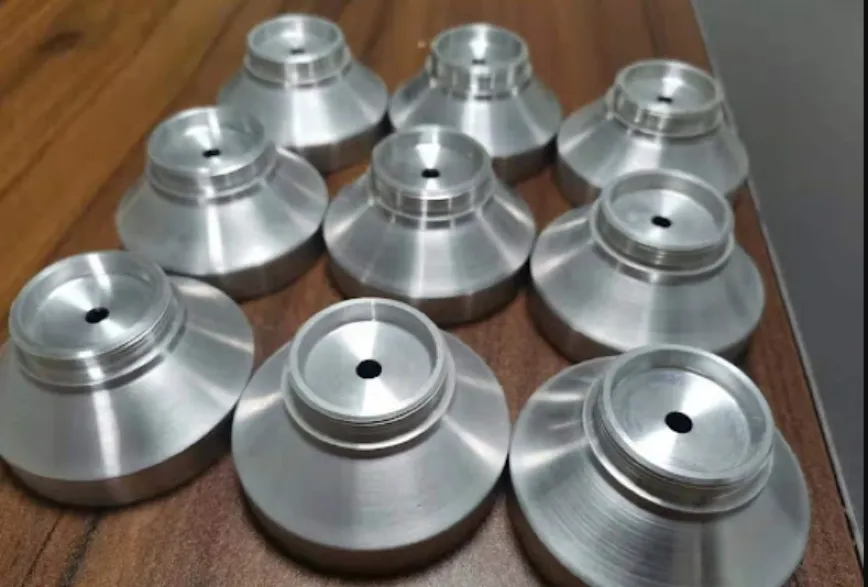
Low-volume machining products
Conclusion
To summarize, comparing CNC vs manual machining brings out stark differences in precision, production volume, machining cost, initial cost, and user skills. CNC is acknowledged as precise and perfect for large production runs.
Manual machining requires patience and is mostly dependent on the machinist’s skills. It is still relevant where singular parts are required. Small custom orders can be perfectly managed with this conventional approach.
So, both machining techniques have a role to play in manufacturing. Experts at ProleanMFG are ready to answer all your questions regarding manual or CNC machining.
You can bet on our CNC machining services to deliver the parts you are looking for, no matter your industry. Call today!