

Plastics are vital in modern manufacturing as they are extensively used in automotive, electronics, medical equipment, consumer products, and many other areas.
Plastic CNC machining products are worthy alternatives for metals and other conventional materials for their low weight, insulating properties, and corrosion resistance. But for the manufacturer, CNC machining plastic parts entails countering challenges such as surface damage and poor dimensional stability.
Those challenges aside, the market offers a broad range of plastic materials. Options include ABS, polycarbonate, and acrylic. Each of these materials offers specific qualities that can match your project requirements.
Managing the plastic material type selection and the machining for parts is an intricate, professional process. This article discusses the materials, processing methods, applications, and tips.
Can Plastic Be CNC Machined?
Yes, plastic can be CNC-machined. This question is understandable because CNC machining is mostly associated with metals and other conventionally rigid materials. And even when the process is targeted at plastics, it is usually done as a complementary process.
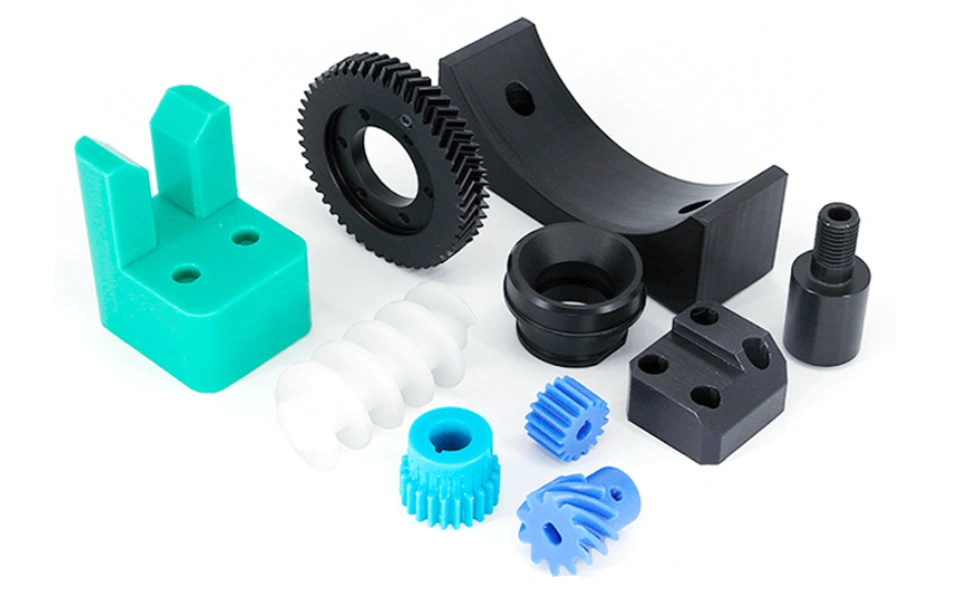
CNC plastic machining parts
That said, CNC machining plastic parts is popular and still growing in popularity. Some reasons for this are cost-effectiveness, flexibility for complex geometries, and support for tight tolerances.
More about plastics for CNC machining is covered in the properties section next.
Properties of Machinable Plastic
CNC-machined plastics have unique properties such as corrosion resistance, low thermal conductivity, optical properties, impact resistance, lower density, and biocompatibility. Plastics are also more susceptible to cutting forces and thermal expansion.
- Corrosion Resistance: Plastics have good corrosion resistance, making them suitable for plastic CNC machining applications requiring such qualities. Some of the best options in this case are UHMW, PVC, PP, and Teflon® (PTFE).
- High Thermal Expansion Coefficient: The expansion of plastics under heat is higher than that of metals. For instance, POM’s linear expansion coefficient of approximately 100 × 10⁻⁶/K is higher than that of C2801 brass – 20.8 × 10⁻⁶/K.
- Optical Properties: Plastic CNC-machined parts offer different optical options, ranging from transparent to opaque. The factors that determine this performance include additives, crystallinity, and synthesis method.
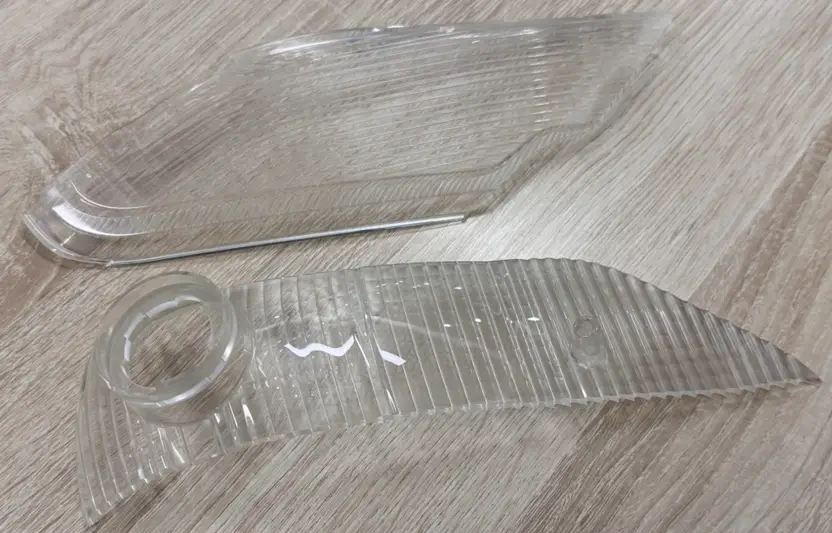
Transparent acrylic machined parts
- Impact Resistance: If you are looking for impact resistance in your next CNC machining project, you can rest assured that there are plastics that fit those requirements. Popular ones are ABS, PC, PET, and HDPE.
- Lower Density: Using custom-machined plastic parts also comes with the benefit of low weight. If plastics can match the properties of metal in applications where low weight is critical, then they are a perfect alternative.
- Biocompatibility: When it comes to a sensitive industry such as medical, the biocompatibility of parts is crucial. Some plastics are engineered for such requirements. Examples are polymethyl methacrylate (PMMA) (Acrylic) and silicone (polydimethylsiloxane (PDMS)).
What is the Best Plastic for CNC Machining?
The best plastic for CNC machining is mostly dependent on the desired properties of the finished product. Popular CNC machining materials include Acrylic (PMMA), Nylon (PA), Delrin (Polyoxymethylene, POM), PTFE (Polytetrafluoroethylene), ABS (Acrylonitrile Butadiene Styrene), and Polycarbonate (PC).
Acrylic (PMMA)
Acrylic, also called polymethyl methacrylate (PMMA), is a clear and lightweight material. It can be used in plastic CNC machining as a substitute for conventional glass. It makes impact-resistant products with smooth surfaces.
Nylon (PA)
Nylon (PA, Polyamide) is another popular CNC machining plastic renowned for its abrasion and wear resistance. You can order nylon CNC-machined services for gears and related parts that undergo constant stress and friction. This material has incredible dimensional stability.
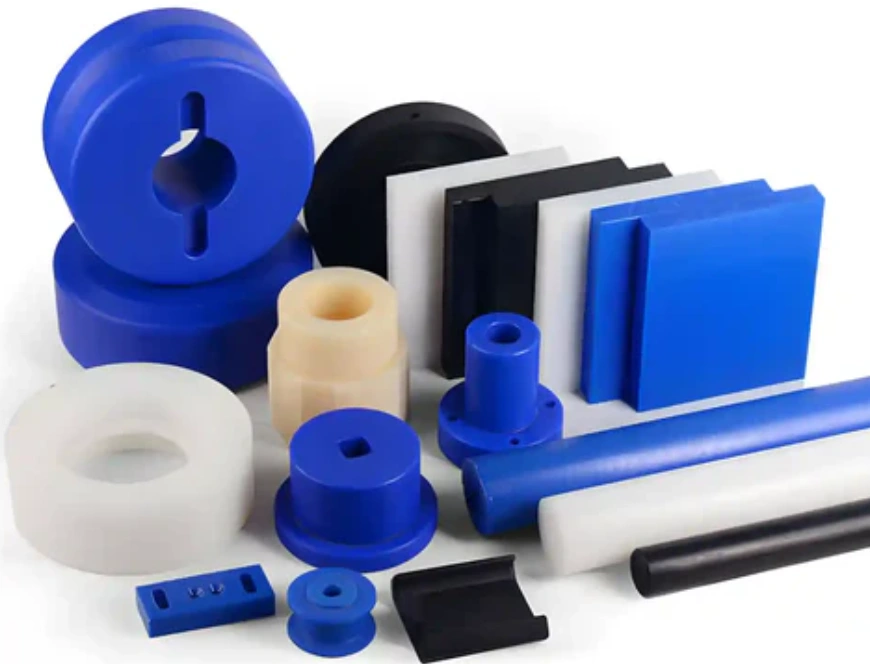
Machined nylon parts
Delrin (Polyoxymethylene, POM)
Since Delrin is one of those strong plastics, manufacturers prefer it for fasteners, gears, and other applications where precision engineering is key. Precision machining easily generates accurate and smooth parts from this low-friction engineering thermoplastic.
PTFE (Polytetrafluoroethylene)
This is another low-friction material, which is also commonly called Teflon. Its soft nature can be challenging for plastic CNC machining. However, maneuvering through this problem is worthwhile because the material offers unmatched chemical resistance and low-friction characteristics.
ABS (Acrylonitrile Butadiene Styrene)
ABS is good for impact-resistant machined parts. Its most popular application areas include automotive and electronics. The thermoplastic is also easy to machine into accurate, smooth parts.
Polycarbonate (PC)
The durability and strength of polycarbonate are highly valued in the engineering field. Manufacturers are mostly contracted to CNC-machine PC for machine guards, safety shields, and related parts. Mostly, it is a perfect plastic for durable, strong, and transparent parts.
Comparison Table for Different Machinable Plastic Materials
The success of plastic CNC machining is closely tied to selecting the right material. The following comparison table for different plastics can guide this process.
| Material | Machinability | Strength | Heat resistance | Wear resistance | Best used for |
| Acetal (POM / Delrin®) | Excellent | High | Medium | High | Bushings, gears |
| Nylon (PA6 / PA66) | Good | High | Medium | Very high | Bearings, gears |
| ABS | Excellent | Medium | Low-medium | Medium | Automotive parts, electronic parts |
| Polycarbonate (PC) | Good | Very high | Medium | Medium | Machine guards |
| UHMW-PE | Fair | Medium | Low | Extremely high | Conveyor guides and liners |
| PEEK | Good | Very high | Very high | Very high | Aerospace and medical parts |
| HDPE | Good | Medium | Low | Medium | Lightweight structural parts, tanks |
| PTFE (Teflon®) | Fair | Low | Very high | Very high | Seals |
| PMMA / Acrylic | Good | Medium | Low | Low | Display panels, lenses |
| Rigid PVC / CPVC | Good | Medium | Medium | Medium | Industrial enclosures, plumbing fittings |
CNC Machining Processes for Plastic Parts
The main CNC machining processes for plastic parts are CNC turning, precision CNC milling, CNC drilling, and CNC grinding. Here is basically how we determine which of these processes to use at any given instance.
CNC Turning
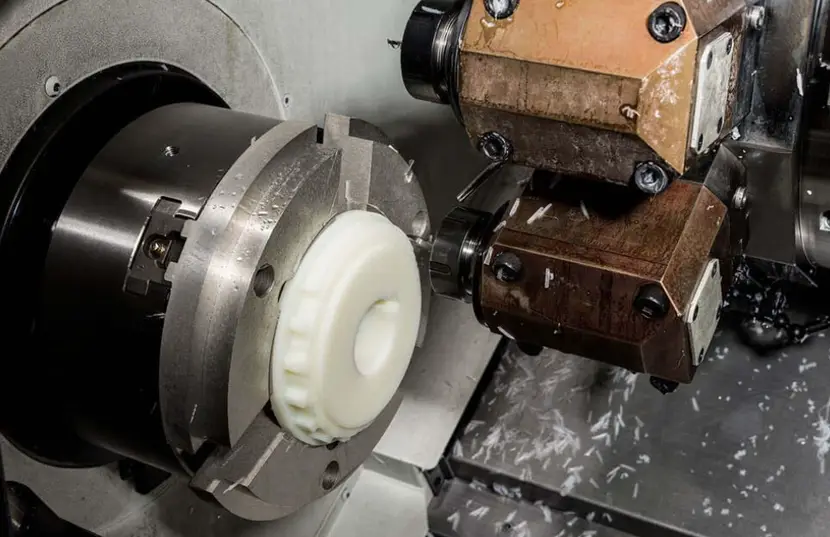
CNC turning
CNC turning is used to produce bushings and other cylindrical parts. It delivers exceptional accuracy (rotational accuracy as good as ±0.005 mm), ensuring the parts fit in their direct application points and assemblies.
CNC Milling
Precision CNC milling is for manufacturing plastic parts of varying complexities. Brackets are some common CNC-milled plastic parts. The process is preferred for its excellent surface finishes and tight tolerances.
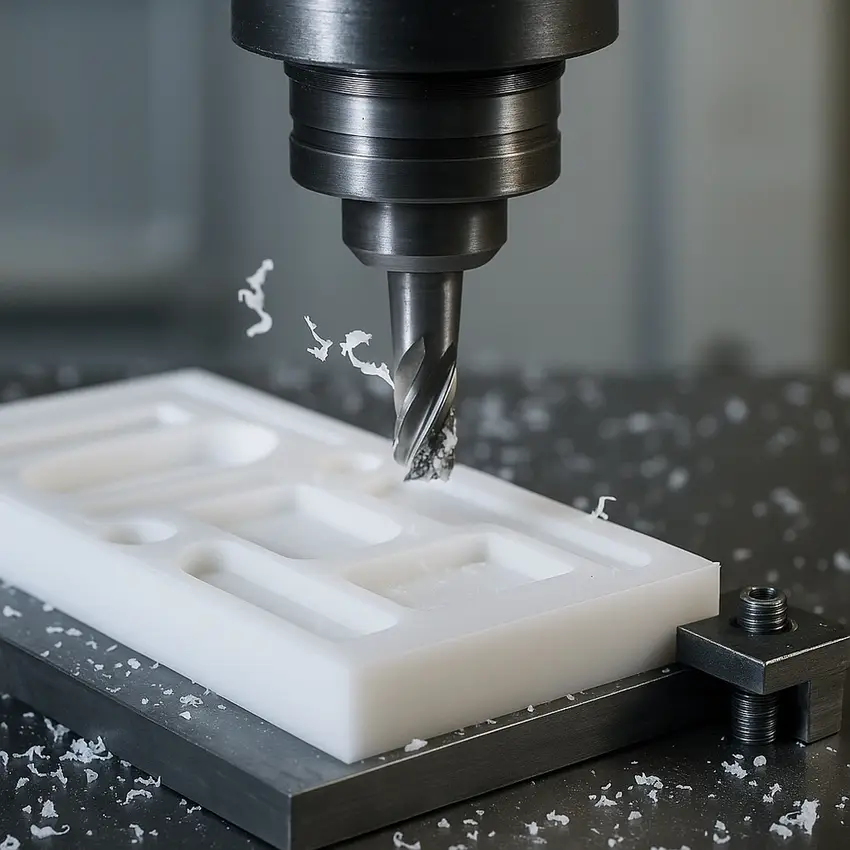
CNC milling
CNC Drilling
CNC drilling is a reliable process for producing ports and holes required for mounting parts. It places the features to the accuracy level of ±0.01 mm. It ensures CNC-machined plastics fit and assemble without misalignment.
CNC Grinding
Manufacturers use CNC grinding to achieve perfect surface finishes on plastic parts. A surface quality of Ra ≤ 0.4 µm, necessary for sealing parts and other smooth surfaces, is achievable. The aerospace industry is one of the industries that extensively uses this service.
Post-Processing for CNC-Machined Plastic
The most common post-processes for CNC-machined plastic parts are deburring, polishing, coating, and heat treatment.
These post-processing steps help enhance the aesthetics, performance, and quality of the plastic parts.
Deburring: This removes remaining burrs from the edges. Manual deburring involves knives, files, or sandpapers. Automated deburring machines are often used for larger batches.
Polishing: Polishing enhances the surface finish for a smoother feel and more attractive appearance. Buffing wheels and sandpapers are common tools for this step.
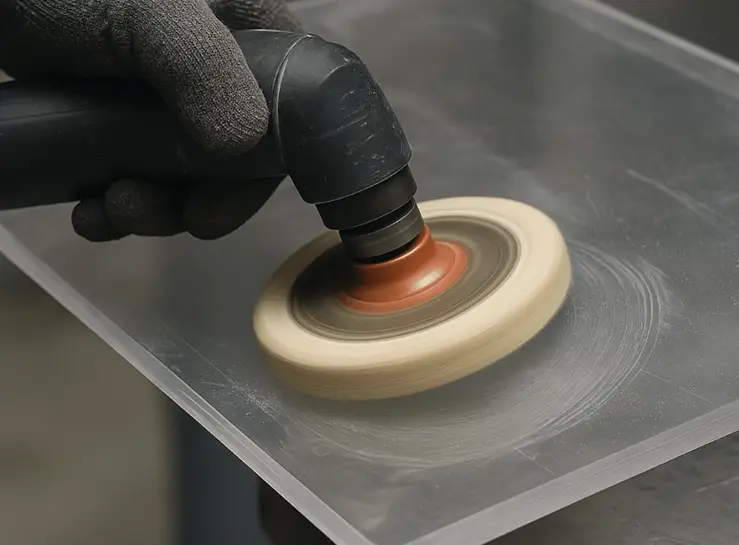
Plastic polishing
Coating: The goal of coating is to add aesthetic value and enhance the performance of the plastic parts. Decorative coatings change the part’s appearance. Protective coatings enhance resistance to chemicals, abrasion, and other environmental factors.
Heat Treatment: Heat treatment may also be necessary on CNC machining parts, specifically to relieve internal stresses. Each type of plastic material has its own effective heat treatment strategy.
What Materials Cannot Be CNC-Machined?
Materials that cannot be CNC-machined include some extremely soft, brittle, and fragile, heat-sensitive, flammable, and irregularly shaped materials. Their detail are;
- Extremely Soft Materials – Polyurethane gel, silicone rubber (low-durometer grades)
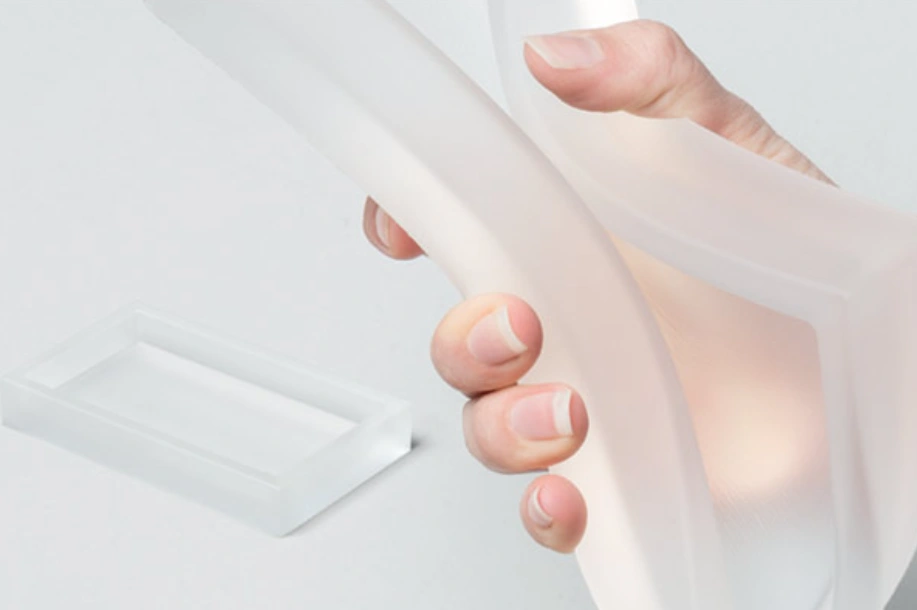
Soft polyurethane gel
- Brittle and Fragile Materials – Ceramic-filled plastics, internally-stressed acrylic glass, phenolic laminate (paper-based grades)
- Heat-Sensitive Materials – Expanded polystyrene, hot-melt polyolefin sheets
- Flammable Materials – Wood-plastic composites with high resin content, some polyurethane foams
- Irregularly Shaped Materials – Recycled plastic lumps, warped thermoplastic panels, flexible plastic sheets
It is important to note that while difficult-to-machine plastics/materials exist, the range of machinable plastics continues to expand thanks to technological advances. When in doubt, always ask precision machining experts whether a material can be processed.
Benefits of Machinable Plastic
Here are the major benefits of using machinable plastic parts instead of metal or other alternatives;
- Corrosion resistance
- Higher design flexibility – variants of the material available
- Excellent machinability
- More cost-effective
- Supports smooth surface finish
Limitations of Plastic CNC Machining
Here are the biggest limitations of CNC machining plastic parts.
- Cracking and chipping problem in brittle plastics
- Distortion
- Burring
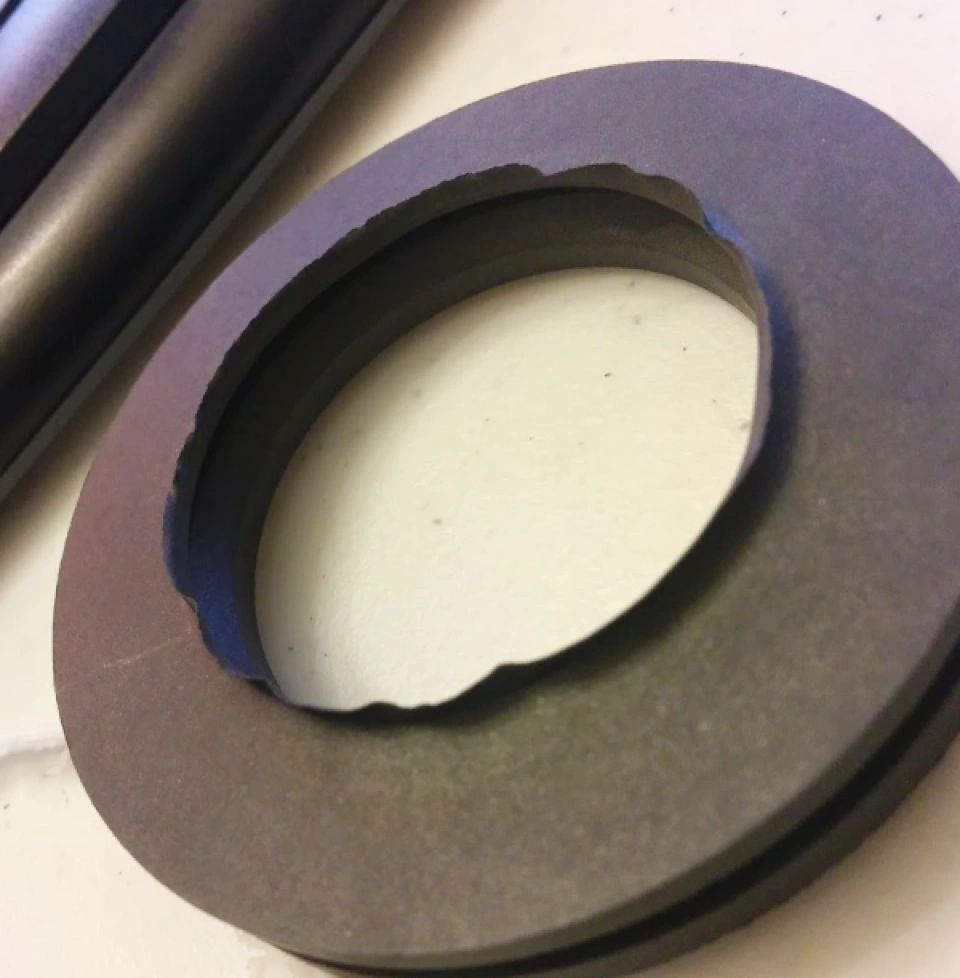
Plastic part burrs
- Warping
- Fixturing and tooling of soft and brittle parts
Challenges and Tips for Effective Plastic Parts CNC Machining
The prominent challenges in plastic CNC machining include the wrong selection of plastic type, poor cutting parameters, thermal damage, chip formation, and part distortion.
- The Right Plastic Type: We listed here different types of plastic, each with unique properties. So, the type of plastic material chosen determines the part’s capabilities. Some are brittle, others flexible, chemical resistant, or dimensionally stable.
- Optimized Cutting Parameters: The properties highlighted here demand unique cutting setups, different from what metals and other materials require. Optimizing the cutting and tooling parameters is a big requirement.
Working closely with the CNC machining service provider helps get it right with tool geometry, depth of cutting, spindle speed, and other cutting parameters.
- Thermal Damage Control: Since plastics have low thermal conductivity, they are prone to thermal damage. The materials can easily melt and warp due to excessive heat. Adequate cooling, high-quality tools, and minimized dwell time usually help avoid this problem.
- Chips Management: Plastics are notorious for generating extended stringy chips. These chips can distract the machining process and affect part surface quality. Machinists have a few tricks for this, including peck drilling and using chip breakers.
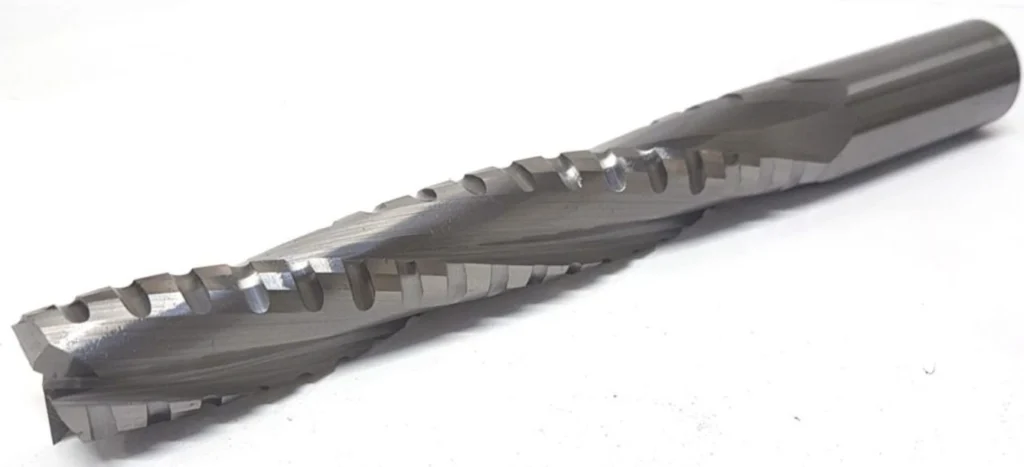
A chipbreaker tool
- Part Distortion Control: Distortion is a serious challenge in CNC machining plastics, especially in thin-walled and complex parts. Vacuum tables and robust fixtures are some effective means to counter the issue.
Common Industries for Machined Plastic Products
Machined plastic products benefit a wide range of industries, including automotive, aerospace, medical, architecture, food processing, and electronics. Here are some specific applications in these industries.
Automotive – Door handles, dashboard panels, ducts, housings, and custom interior parts.
Aerospace – Lightweight and high-strength components such as interiors, bearings, rollers, insulation parts, windows, and transparent panels.
Medical – Surgical devices, prosthetics, implantable materials
Architecture – Lettering and acrylic panels
Food Processing – FDA-approved conveyor belts
Electronics – Protective housings, casings
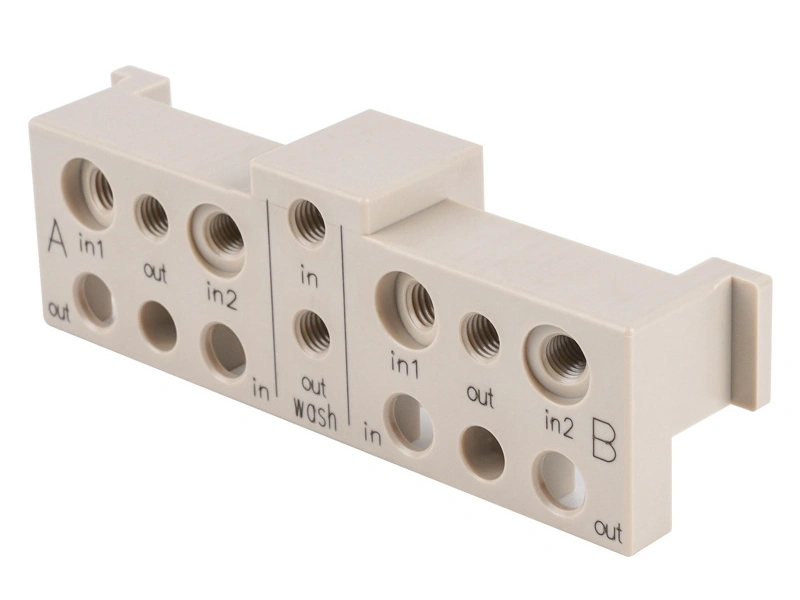
Electronic part
In Conclusion
Plastic CNC machining is a critical manufacturing method for different quality parts. Its wide use in automotive, medical, electronics, and other industries demonstrates reliability, versatility, and cost-effectiveness.
Material selection from the many plastic types and grades, and subsequent processing or manufacturing, determines the machined part’s quality. It’s important to have every one of these steps done professionally to avoid costly damages and reworks to plastic parts.
Our CNC machining services are designed to create quality, precision CNC-machined plastic parts for diverse industries. Contact us with your specifications and performance requirements.