Home » Services » Sheet metal Fabrication Services » Laser Cutting Service
Custom Laser Cutting Service For Sheet Metal
Precision laser cutting services for custom sheet metal parts.
Clean edges, tight tolerances, and fast turnaround for prototypes and production.
- Production-ready parts in as fast as 24 hours
- Linear dimensional tolerances up to ±0.05 mm
- Custom profiles, complex geometries, and fine details
- Fast laser cutting quote
Laser Cutting Capabilities
Aluminum
Thickness Range: 1.0 – 6.0 mm (0.039 – 0.236 in)
Max Sheet Size: 3000 × 1500 mm (118.11 × 59.06 in)
Laser Considerations:
Aluminum has high reflectivity, which affects laser energy absorption. Cutting thickness depends on alloy type and surface condition. Fiber lasers with optimized parameters ensure clean edges and stable cutting performance.
Brass
Thickness Range: up to 6.0 mm*
Max Sheet Size: 3000 × 1500 mm (118.11 × 59.06 in)
Laser Considerations:
Brass is a highly reflective material, requiring optimized fiber laser parameters. Suitable for thin to medium-gauge parts with controlled edge quality and precision features.
*Thickness capability depends on alloy composition and surface condition.
Stainless Steel:
Thickness Range: 0.5 – 16.0 mm (0.0197 – 0.6299 in)
Max Sheet Size: 6000 × 1500 mm (236.22 × 59.06 in)
Laser Considerations:
Stainless steel offers excellent laser absorption, allowing thicker sections to be cut with high accuracy, minimal heat-affected zones, and consistent dimensional control.
Carbon & Alloy Steel (Cold Rolled / Hot Rolled)
Thickness Range: up to 20.0 mm*
Max Sheet Size: 6000 × 1500 mm (236.22 × 59.06 in)
Laser Considerations:
Low reflectivity and stable material properties make carbon steel ideal for high-speed laser cutting, supporting both prototype and production volumes.
Sheet Metal Material Choices
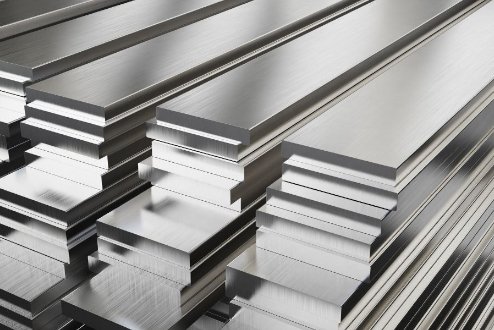
Stainless Steel
Main Property: Tough, durable, and corrosion resistant.
Best Use: Precision parts, enclosures, and heavy-duty industrial and electronic enclosures.
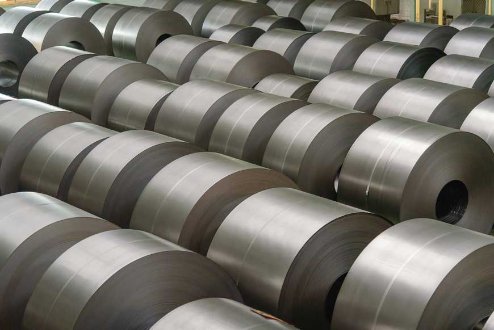
Cold Rolled Steel
Main Property: Smooth surface finish and good dimensional accuracy
Best Use: Custom parts, brackets, and general laser cut sheet metal applications.
Hot Rolled Steel
Main Property: Cost-effective with a rougher finish
Best Use: structural parts, prototypes and parts where aesthetics are not important
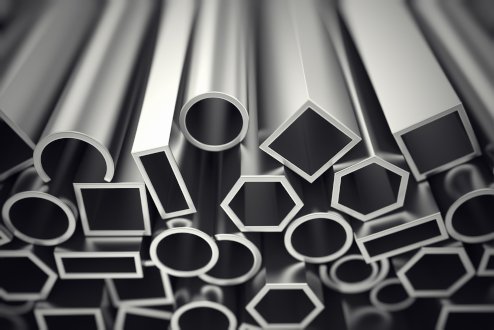
Aluminum
Main Property: Lightweight and corrosion-resistant
Best Use: Aerospace, electronics, and laser cut enclosures
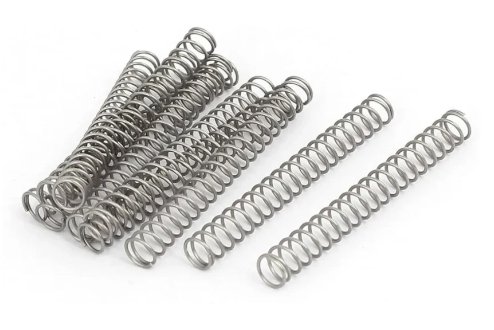
Spring Steel
Main Property: Excellent elasticity and tensile strength
Best Use: Clips, spring and moving parts
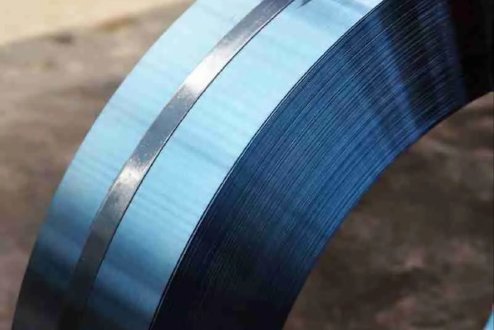
Blue Tempered Steel
Main Property: Wear resistant
Best Use: Ideal for tools, and smaller precision components
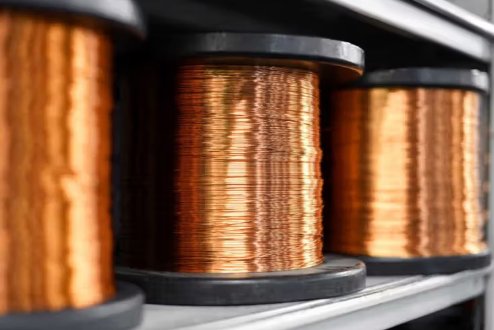
Copper
Main Property: High thermal conductivity and electrical conductivity
Best Use: Sheet metal electrical parts, contacts and laser cut circuit components
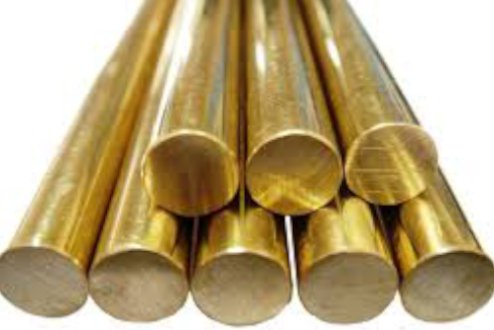
Brass
Main Property: Corrosion resistance and machinability
Best Use: Decorative parts, nameplates, and low-friction components.
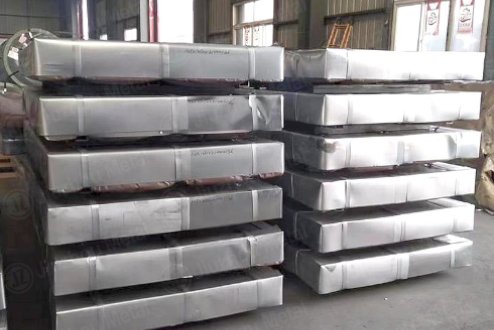
Galvanized Steel (G90)
Main Property: Zinc-coated for corrosion resistance
Best Use: Zinc-coated for corrosion resistance
Sheet Metal Finishing Options
Deburring
Deburring is a process that removes sharp edges and leftover protrusions from machining or laser-cut sheet metal. We offer both mechanical and manual deburring depending on the sheet metal part geometry and the tolerance requirement.
What to expect: Clean edges, burr-free parts, and better handling, safety, and fit.
Brushed Finish
A brushed finish is a directional grain on the sheet metal surface. Brushed finish creates a consistent texture and a matt finish for aesthetics. It is common for stainless steel sheet metal parts.
What to expect: Matte grained texture, better color diffusion and reduced glare on parts
Anodizing
Anodizing is an electrochemical process that grows a natural oxide layer on aluminum, adding both protection and a color of your choice. Anodized finish laser cut parts are wear resistant and ideal for outdoor use.
What to expect: Hard and wear-resistant part with micron-level coating and durable color retention.
Powder Coating
Powder coating uses dry powder to coat a metal surface that is electrically charged. Curing the attached powder on the metal creates a thick, uniform finish.
What to expect: Vibrant colors, matte finish, durable coating with textured surface.
Plating
Electroplating laser-cut parts deposits a thin metal layer, usually of zinc or chrome, to enhance corrosion resistance and aesthetics of a part. We offer plating finishes and advise using electroplating for electronic parts and precision laser-cut components.
What to expect: Bright, smooth metallic finish with varied color.
Polishing
Polishing uses tiny abrasive media or oils to remove a tiny layer from the sheet metal (generally imperfections) and delivers a mirror-like finish ideal for aesthetic appeal. Polishing is the last step for decorative laser cutting.
What to expect: Mirror finish, clean and reflective surface
Bead Blasting
Bead blasting is a surface finishing technique that removes paint, marks, and contaminants from the surface of the sheet metal. It also creates a consistent surface finish with a matte texture that can hide imperfections.
What to expect: Non-reflective finish, smooth matte
Laser Marking
Laser marking uses a smaller intensity laser to produce permanent marks on laser-cut parts. Laser marking is extremely common in high-volume laser cutting to engrave identifiers or serial numbers without altering the geometry or properties of the material.
What to expect: High-contrast and permanent marking
Applications of Laser Cutting
- Custom Sheet Metal Parts
- Sheet Metal Enclosures & Housings
- Prototyping & Low-Volume Production
- Electrical Panels & Faceplates
- Gaskets, Shims & Thin Metal Components
- Ventilation Panels, Grilles & Perforated Sheets
- Heat Shields & EMI / RF Shielding Components
Benefits of Laser-Cut Parts
- High Precision & Accuracy
- Clean Edges with Minimal Deburring
- Fast Turnaround
- Supports a Wide Range of Sheet Metal Materials
- Reduced Post-Processing
- Cost-Effective
- Minimal Heat-Affected Zone (HAZ)
- Fast Lead Times with PROLEAN On-Demand Manufacturing
Tolerances for Laser Cutting
| Feature | Typical Tolerance |
|---|---|
| Linear tolerance | ±0.05 – ±0.20 mm (±0.0020 – ±0.0079 in) |
| Hole diameter accuracy | ±0.05 – ±0.10 mm (±0.0020 – ±0.0039 in) |
| Position tolerance | ±0.05 – ±0.10 mm |
| Edge perpendicularity | 0.08 – 0.10 mm |
| Flatness* | 0.2 – 0.5 mm (material & thickness dependent) |
| Minimum feature size | ≥ material thickness (typical guideline) |