Sheet Metal Bending Services
Custom CNC press brake bending for precise sheet metal parts—from prototypes to production.
- CNC press brake bending with tight angle and radius control
- Fast turnaround: bent parts in as little as 3 days
- DFM support with bend allowance & relief recommendations
- Supports both low-volume prototypes and high-volume production
- Consistent quality across aluminum, steel, and stainless steel
- ISO 9001:2015 certified bending services.
What is the Sheet Metal Bending Process?
Sheet metal bending is a fabrication process used to deform flat metal sheet into precise shapes by applying force along a bend line. Techniques like air bending, wipe bending, and roll bending allow control over bend radius, bend allowance, and springback, depending on material thickness, metal gauge, and tensile strength.
Whether you’re working with steel and stainless steel, thin sheet, or parts cut by laser, the bending process transforms flat stock into functional geometries.
1. Sheet Metal Stock Preparation
In this step, skilled technicians select the right material thickness and gauge, and ensure that clean sheet metal is used.
2. Choosing the Bending Method
Options include air bending, wipe bending, roll bending, or rotary bending.
3. Press Brake Setup
Installing the correct press brake tool based on the bend angle, radius, and requirements in the part drawing.
4. Calculate bend allowance
Bend allowance is calculated using CAD software through the bend allowance, k-factor, and spring-back counter.
5. Apply a bending force.
This is an irreversible step, where a hydraulic press or CNC brake bends the sheet metal to the desired angle.
6. Post-processing
If any welds or assemblies are needed for the bent parts, they are completed at the end with other metal fabrication processes.
Sheet Metal Bending Capabilities
| Description | |
|---|---|
| Maximum Sheet Metal Part Size | 2 m x 2 m |
| Metal Bending Forces | Up to 500 tons |
| Bending Line Length | Up to 4000 mm |
| Material Thickness | Up to 20 mm |
| General Tolerances | Based on ISO 2768 standards |
| Bend to Edge/Hole | +/- 0.2 mm (+/- 0.008 in.) |
| Bend Radius | Minimum equal to material thickness |
| Bend Angle | +/- 1° |
| Maximum Bend Length | Up to 3000 mm |
| Lead Time | As fast as 3 days |
| Bending Thickness (Aluminium) | 0.5 mm - 12 mm (Max) |
| Bending Length (Aluminium) | 3000 mm (Max) |
| Bending Width (Aluminium) | 1500 mm (Max) |
| Bending Thickness (Steel) | 0.5 mm - 10 mm (Max) |
| Bending Length (Steel) | 6000 mm (Max) |
| Bending Width (Steel) | 1500 mm (Max) |
| Bending Thickness (Stainless Steel) | 0.5 mm - 8 mm (Max) |
| Bending Length (Stainless Steel) | 3000 mm (Max) |
| Bending Width (Stainless Steel) | 1500 mm (Max) |
Types of Sheet Metal Bending Parts
Bending is used in sheet metal fabrication to create a wide range of sheet metal parts with different functions. Sheet metal parts are sturdy, durable and depending on the bend angle, material thickness, and bend radii required, the bending process can produce simple flanges and complex bent sheet metal parts.
Custom sheet metal bending parts include:
- Flanges and brackets
- Enclosures and housings
- Channels
- Bent parts for welding
- Frames
- Panels
- Boxes
- Covers
- Braces
- Chassis parts
With CNC bending and advanced bending equipment, a piece of sheet metal can be bent into almost any desired angle. Whether you want to bend steel and stainless steel, aluminum, or other common sheet metal materials, the right bending method at PROLEANMFG ensures high efficiency and lower-cost production.
Sheet Metal Bending Materials
Alloy Steel
Alloy steels have higher strength than mild steel, better fatigue resistance, but are difficult to form and require careful bend specifications. They are often used for structural parts.
Ready grades: SAE / AISI 4130, 4140; 4340; 8620
Aluminum
Aluminum is very ductile for bending, has good corrosion resistance, is lightweight, and has heat-treatable and non-heat-treatable alloys. Non-heat treatable alloys like 6061 are stronger alloys, but complicate tight bend radii.
Ready grades: 1XXX series, 3XXX series, 6XXX series | Get your custom sheet metal grade
Copper
Copper is a highly ductile material with good thermal and electrical conductivity. It is easier to bend for smaller bend radii.
Ready grades: Copper C110 and soft copper alloys | Get your custom sheet metal grade
Brass
Brass is an alloy of copper and zinc. It has good strength, aesthetic functionality, and corrosion resistance.
Ready grades: Brass C260, C360,C260, C360, C28000 | Get your custom sheet metal grades
Stainless Steel
Stainless steel has strong corrosion resistance and is less ductile than mild steel. It has a spring-back effect and requires larger bend radii.
Ready grades: Grades 304, 316, 409, 430 | Get your custom sheet metal grades
Titanium
Titanium has an excellent strength-to-weight ratio and corrosion resistance. It is a hard sheet metal to deform, and bending requires larger radii and special CNC bending processes.
Ready alloys: Ti-6Al-4V | Get your custom sheet metal grades
What Kind of Surface Finishes Can be Used for Sheet Metal Parts?
After sheet metal bending, many products require additional finishing to improve corrosion resistance and aesthetic appearance. The surface finish depends on the material thickness, the piece of sheet metal used (aluminum and titanium can be anodized, while steels can be coated), and whether the bent parts will be welded.
Surface Finishes for Sheet Metal Parts
| Name | Applicable to | Feature | Color | Thickness | |
|---|---|---|---|---|---|
 | As Machined | Metals & Plastics | Tool marks visible | Material | N/A |
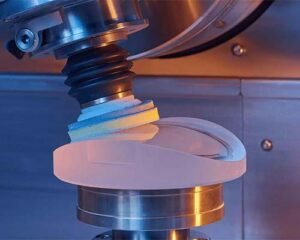 | Sanding & Polishing | Metals & Plastics | Brushed & gloss mirror surface | Material | 0.02–0.05 mm removed |
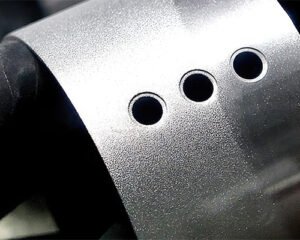 | Sand / Bead Blasting | Metals & Plastics | Matte or satin texture | Material | N/A |
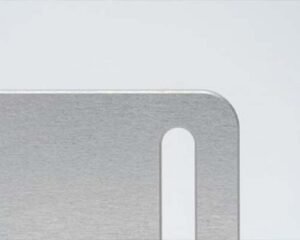 | Anodizing (Type II) | Aluminum | Corrosion resistance, decorative colors | Black, Silver, Red | 8–25 μm |
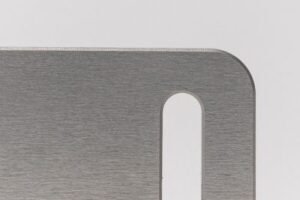 | Hard Anodizing (Type III) | Aluminum | Wear resistance, hard coating | Grey to Dark Bronze | 25–100 μm |
 | Powder Coating | Metals | Durable, uniform color finish | Various RAL Colors | 50–150 μm |
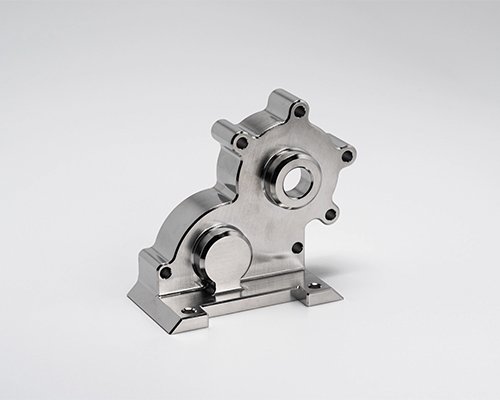 | Electropolishing | Stainless Steel | Smooth, bright finish | Natural metal | Up to 0.025 mm removed |
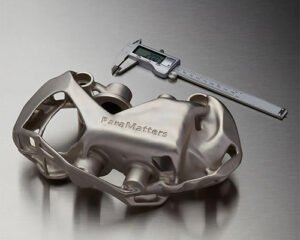 | Zinc Plating | Steel | Corrosion protection | Silver, Yellow | 5–25 μm |
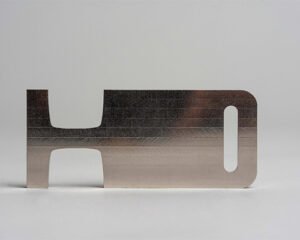 | Nickel Plating | Steel, Copper, Brass | Smooth, corrosion-resistant coating | Silver | 5–30 μm |
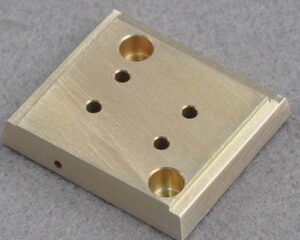 | Chromate Conversion (Alodine) | Aluminum | Mild corrosion protection | Yellow, Clear | ~0.5 μm |
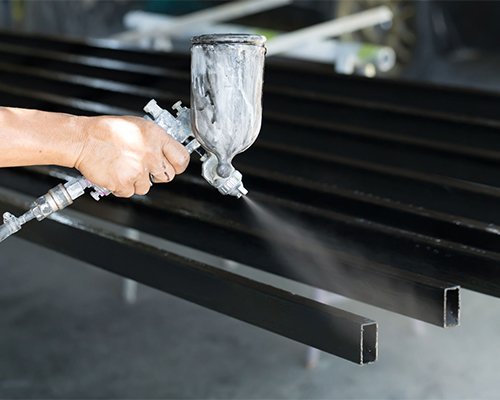 | Painting / Wet Spray | Metals & Plastics | Decorative or protective finish | Custom | 10–50 μm |
Advantages of Using Sheet Metal Bending For Your Parts
Sheet metal bending offers greater efficiency in metal fabrication, transforming flat metal sheets into functional parts with minimal waste and low costs.
Cost Efficiency
Sheet metal bending reduces part count, eliminates welds, and lowers material costs.
Design Versatility
Bending methods like air bending and wipe bending allow us to create complex flanges and custom geometries, which are ideal for advanced sheet metal design.
Precision & Repeatability
CNC bending systems deliver tight tolerances, consistent bend allowance, and accurate bend radii, even on thin sheet and laser-cut pieces.
Material
Bending is used across a wide range of sheet types, including steel and stainless steel, aluminum, and copper. The process adapts to different material thicknesses and metal gauges.
Lower Tooling Requirements
Compared to multi-part assemblies, bending requires fewer tools, which reduces lead times further.
Reduced Springback
CNC sheet metal bending techniques account for springback, ensuring the final bend angle matches the functional requirements
Scalable Production
Bending specifications can be easily adjusted using CAD software and bending calculators, making it ideal for both custom and high-volume manufacturing.
FAQs
How To Bend Sheet Metal?
Use a press brake or manual tools to apply force along a bend line, controlling bend angle and radius.
How Do You Bend Sheet Metal?
Place the sheet metal between a punch and die, then apply bending force using a CNC brake. Make sure to account for any springback.
How To Bend Aluminum Sheet Metal?
Use air bending or wipe bending with a press brake, adjusting for material thickness, bend radii, and springback due to aluminum’s softness.
How To Bend Sheet Metal Without A Brake?
Clamp the metal sheet between rigid bars and manually apply force.