
Home » Materials We Support » ABS Machining Service
ABS Machining Service
ABS CNC machining is ideal when you need tough, dimensionally stable plastic parts without the tooling cost of injection molding.
We machine ABS components for enclosures, housings, brackets, and other load-bearing plastic parts where impact resistance and consistent tolerances matter.
- Typical wall thickness: ≥ 1.5 mm (recommended)
- Machining methods: 3-axis & 5-axis CNC milling
- Surface finish options: as-machined, bead blasting, light polishing
- Suitable for post-processing (painting, bonding)
- Certified Quality: ISO 9001:2015
ABS Plastic for CNC Machining: Properties & Applications
Acrylonitrile butadiene styrene (ABS) is a commonly machined thermoplastic when functional plastic parts require impact resistance, stable dimensions, and cost efficiency without injection tooling.
ABS is commonly selected for CNC-machined components such as housings, covers, fixtures, and structural parts where moderate strength, tight tolerances, and repeatability are required.
Engineering note: ABS is best suited for indoor or non-UV-critical applications unless surface protection or coatings are applied.
Common Applications of CNC-Machined ABS Parts
*These examples highlight where ABS plastic is commonly used in CNC machining, based on functional and environmental requirements.
Automotive Dashboard Components
Center console trim (impact-resistant, tight-fit interior parts)
Glove box covers (lightweight, dimensionally stable)
Electrical & Electronic Enclosures
PCB housings (good insulation, easy machining)
Junction box covers (consistent wall thickness)
Switchgear and control enclosures (post-processing friendly)
Industrial & Medical Equipment Housings
- Diagnostic equipment covers
- Instrument panels
- Handheld device housings
Note: ABS is typically used for non-implant, non-sterile housings. Material selection and compliance depend on specific regulatory requirements.
Consumer & Appliance Housings
- Vacuum cleaner body panels
- Small appliance covers
- Remote control housings
- Speaker enclosures
Try Prolean Now!
Not sure if ABS is right for your application? Get engineering feedback from our CNC team.
What Is the Appearance of ABS Plastic Parts?
ABS plastic parts, produced through precision CNC machining, have an appearance shown by their smooth, uniform surface finish. ABS plastic can be colored, polished, textured, and comes in opaque white raw form.
Machined ABS parts typically feature a glossy or semi-glossy finish, achieved through advanced CNC milling and turning.
Surface Finishes Available for ABS Plastic Parts
| Name | Applicable to | Feature | Color | Thickness/Impact | |
|---|---|---|---|---|---|
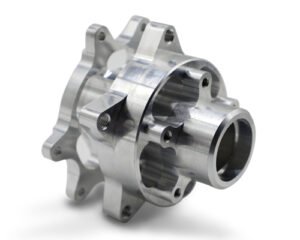 | As-Machined | ABS Plastic | CNC-machined surface with visible tool marks depending on cutting parameters | Natural material color | No additional material removal beyond machining |
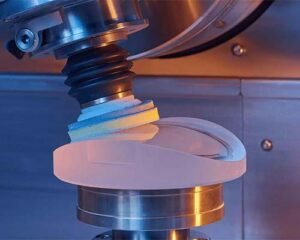 | Mechanical Polishing | ABS Plastic | Improved surface smoothness with reduced machining marks; gloss level depends on part geometry | Natural material color | Minor material removal; not recommended for tight-tolerance or functional surfaces |
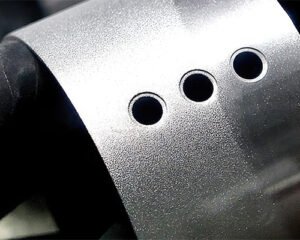 | Light Bead Blasting | ABS Plastic | Uniform matte surface texture; surface whitening may occur | Natural material color | Slight dimensional change possible; not suitable for precision mating features |
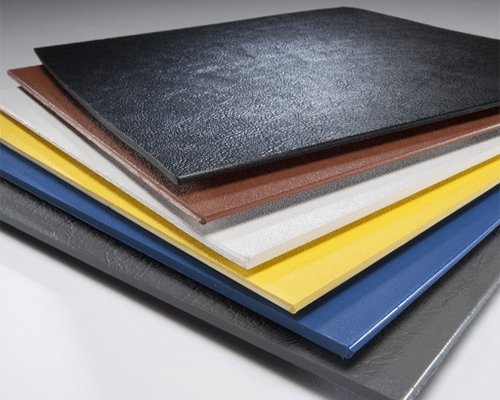 | Painting / Spray Coating | ABS Plastic | Decorative or functional coating for color, appearance, or surface protection | Custom | Typical coating thickness 10–30 μm; dimensional impact should be considered for assemblies |
 | CNC Textured Machining | ABS Plastic | Machined surface patterns created through controlled toolpaths for grip or visual effect | Natural material color | Dimensional impact depends on texture depth and pattern density |
*Surface finishes may affect part dimensions, surface properties, and assembly fit. Finish selection should be confirmed during design review, especially for tight-tolerance or functional features.
Types of ABS Plastic for Machining
ABS (Standard)
General-purpose ABS commonly used for CNC-machined prototypes and low-volume production parts. It offers balanced strength, impact resistance, and good machinability, making it suitable for enclosures, brackets, and structural components.
Machining Notes:
Supports complex geometries with stable dimensional performance under standard CNC milling and turning operations.
Medical-Grade ABS
ABS materials selected for use in medical or laboratory equipment housings where controlled material sourcing and documentation are required. Material suitability depends on specific grade, supplier certification, and application requirements.
Machining Notes:
Used for non-implant, non-patient-contact components such as device housings and covers. Regulatory compliance must be evaluated on a case-by-case basis.
Flame-Retardant ABS
Flame-Retardant ABS
ABS grades formulated with flame-retardant additives, commonly specified for electrical enclosures and industrial components requiring improved fire performance.
Machining Notes:
Machinability may vary by grade. Flame-retardant performance (e.g., UL 94 rating) should be specified at the design stage.
High-Impact ABS
ABS variants designed to provide increased toughness and impact resistance compared to standard grades. Suitable for mechanically stressed housings and protective components.
Machining Notes:
Maintains good machinability while offering improved resistance to cracking and impact during handling and use.
Transparent ABS
Special ABS grades offering partial transparency for visual inspection or aesthetic applications. CNC-machined parts typically appear translucent rather than optically clear.
Machining Notes:
Surface finishing can improve appearance, but optical transparency comparable to polycarbonate or acrylic is not achievable through CNC machining alone.
ABS Material Properties
| Property | Typical Value/Range |
|---|---|
| Density | 1.03–1.07 g/cm³ |
| Tensile Strength | 40–55 MPa (ASTM D638) |
| Elongation at Break | 10–30% |
| Flexural Modulus | 2.0–3.0 GPa |
| Impact Strength (Izod, Notched) | 150–300 J/m (3–6 ft-lb/in) |
| Heat Deflection Temperature | 85–105°C @ 0.45 MPa |
| Vicat Softening Point | 90–105°C |
| Chemical Resistance | Moderate; limited resistance to solvents and oils |
| Machining Stability | Good dimensional stability under standard CNC conditions |
ABS Machining Properties
| Property | Description |
|---|---|
| Machinability | Easy to machine with 5-axis CNC milling and turning, with minimal tool wear. |
| Impact Resistance | High impact strength withstands mechanical stress. |
| Dimensional Stability | Maintains consistent dimensions during machining. |
| Surface Finish Quality | Achieves smooth, polished, or textured finishes via CNC machining. |
| Thermal Stability | Moderate heat resistance for stable machining performance. |
| Weldability | Supports welding or bonding post-machining. |
| Cost-Effectiveness | An efficient machining process reduces production time and costs. |
FAQs
Is ABS Suitable for End-Use Parts or Only Prototypes?
ABS can be used for both functional prototypes and low-volume end-use parts, particularly for indoor applications. For long-term outdoor use, high-temperature environments, or structural load-bearing applications, materials such as polycarbonate or glass-filled nylon may be more appropriate.
For applications involving aggressive chemicals, alternative materials such as nylon or polypropylene may be more suitable.
What Tolerances Can Be Achieved When CNC Machining ABS?
Typical CNC machining tolerances for ABS parts are ±0.1 mm, depending on part geometry and feature size. Tighter tolerances may be achievable for simple features but should be reviewed during the design stage to account for material behavior and machining conditions.
For applications involving aggressive chemicals, alternative materials such as nylon or polypropylene may be more suitable.
Can You Make Prototypes With ABS?
Yes. ABS is commonly used for CNC-machined prototypes, especially for functional and fit-check parts. It offers a good balance of strength, impact resistance, and machinability, making it suitable for housings, enclosures, and structural components in early-stage and pre-production testing.
However, ABS is typically selected for indoor or non-UV-critical applications and may not be suitable for high-temperature or chemically aggressive environments.
Are ABS Parts Chemically Resistant?
ABS offers moderate chemical resistance and performs well against dilute acids, alkalis, and many oils. However, it has limited resistance to solvents such as acetone, esters, and some hydrocarbons, which can cause surface damage or stress cracking under prolonged exposure.
For applications involving aggressive chemicals, alternative materials such as nylon or polypropylene may be more suitable.
When Should ABS Be Chosen Over PC or Nylon?
ABS is often selected when cost efficiency, ease of machining, and impact resistance are prioritized. Compared to polycarbonate, ABS offers lower heat resistance but easier machinability. Compared to nylon, ABS provides better dimensional stability and surface finish but lower chemical resistance.
For applications involving aggressive chemicals, alternative materials such as nylon or polypropylene may be more suitable.
Can ABS Parts Be Painted or Coated After Machining?
Yes. ABS is well suited for painting and spray coating, which are commonly used to improve appearance or add surface protection. Coating thickness and surface preparation should be considered during design, especially for tight-tolerance or mating features.
For applications involving aggressive chemicals, alternative materials such as nylon or polypropylene may be more suitable.