

Did you know CNC turning can manufacture small items like medical pins to large ones such as helicopter rotors, all with unmatched accuracy and repeatability? CNC control combined with the powerful machining capability of the turning machine creates an unbeatable force in manufacturing that is the CNC turning process.
CNC turning is a subtractive manufacturing method entailing a single-point cutting tool removing material from a rotating workpiece. The result is a cylindrical or related machined part.
To achieve this, the machinist designs the part using CAD software, uses CAM software to generate the CNC code, sets the CNC turning machine, loads the code to the machine, and then proceeds to machine the part as guided by the program.
Industries that need cylindrical, helical, or circular parts of high tolerances turn to CNC machined parts a lot. Such industries include automotive, aerospace, medical, and electronics. These industries use high-quality cylindrical and round parts in different ways.
As CNC turning is such a critical manufacturing process, this article focuses on its basics, versions, applications, and more.
History Of CNC Turning
Over the centuries, CNC turning, which is synonymous with the lathe machine, has undergone a massive transformation. Indeed, the “mother of all machine tools,” also called the lathe machine, is several thousand years old. Its early beginnings can be traced back to 1300 BCE in ancient Egypt.
The lathe design continued to develop through the Greek and Roman times, and later, the Middle Ages, when Islamic and European influence became prominent.
Before the Industrial Revolution, when turning became very popular, there were the Renaissance and Pre-Industrial developments associated with the spring pole lathe and slide rest.
Then came the industrial revolution, an era that catapulted turning to a whole new level. The conventional lathe underwent a massive transformation, with the following changes being notable:
- More rigid and robust machine beds
- Introduction of threading capability
- Slide rest and tool carriage development
- Mass manufacturing using the lathe machine
The 20th century saw even higher excellence in turning because it ushered in safe precision CNC turning and automation. These innovative developments were largely prompted by the growing requirement for machined parts for aerospace, automotive, and electronic applications.
CNC technology took over and led to the introduction of the CNC lathe in the mid-20th century. With the accompanying automation, turning became more precise and Computer-Aided Design (CAD) and Computer-Aided Manufacturing (CAM) software solutions became prominent.
What Is CNC Turning?
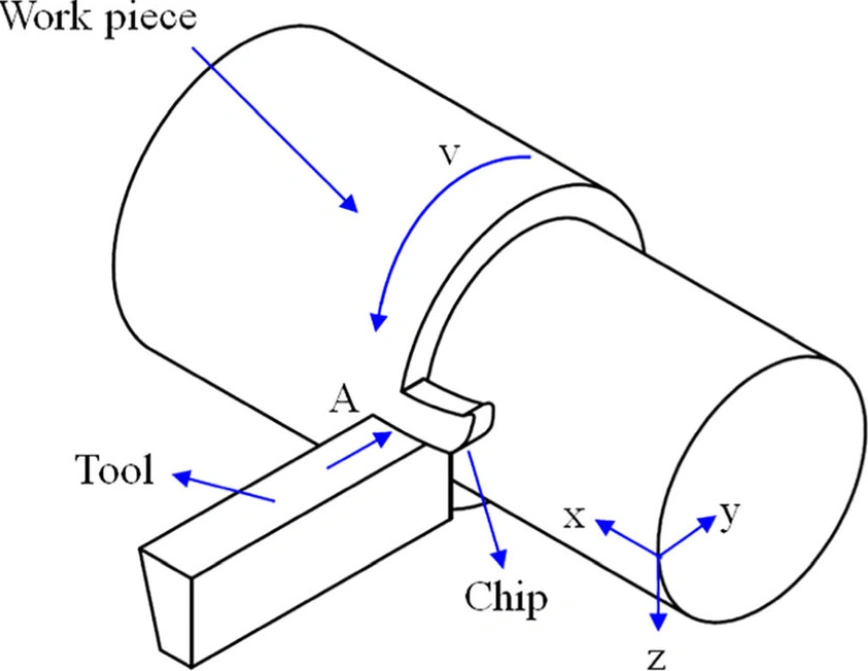
CNC turning diagram
CNC turning is a manufacturing technique typically done on the lathe and entails turning a workpiece as a single-point cutting tool removes material along its length. This process is controlled by a computer program, which is fed into the CNC lathe.
While the fundamental parts from CNC turning are cylindrical, the process can also be used for complex geometries such as custom threaded profiles, eccentric shafts, crankshafts, and internal splines.
The CNC turning manufacturing process is precise, versatile, and cost-effective, making it preferable for applications like custom automotive parts, precision machinery parts, decorative products, and household items.
What Are The Basics Of CNC Turning? The Working Principle
CNC is one of the most basic but effective ways to create parts with cylindrical or circular profiles from many materials. At the core, this process entails an interaction between a stationary cutting tool and a rotating workpiece in a lathe machine setup. A computer program controls most of this interaction, leading to precise parts suitable for many industries.
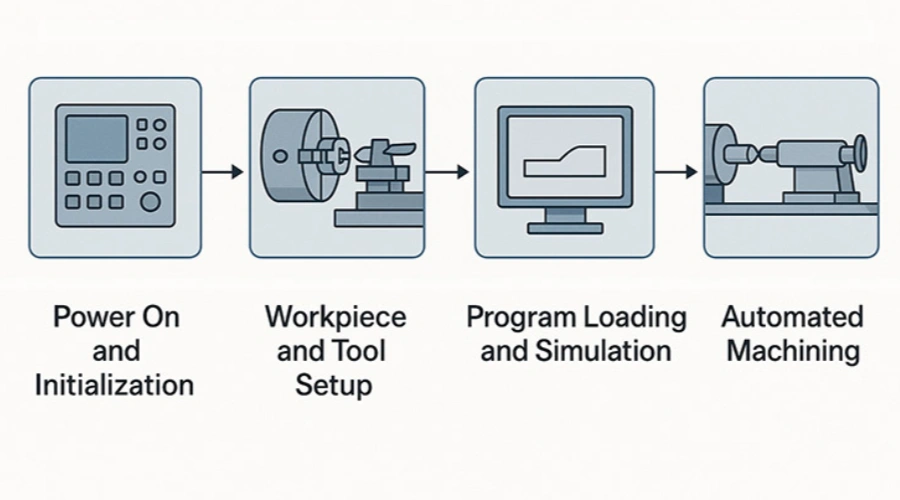
CNC lathe workflow
The basic steps of CNC turning are;
Step 1: CAD Modeling
The first step in CNC turning is to create the model of the part to be manufactured. This step is widely called CAD modeling because the software for this task is called CAD (Computer-Aided).
Step 2: CAM & G-Code Generation
In the second step, the machinist or engineer turns to CAM (Computer-Aided Manufacturing) to change the CAD model to a version that the CNC machine can decipher. The resulting instructions will determine how the CNC turning machine will work to deliver the machined part.
Step 3: CNC Machine Setup
With the machining instructions ready, the only remaining bit is to set the machine, which includes keying in the code. The machinist also loads the workpiece on the lathe machine’s chuck and the tool on the tool post. The cooling system, and any additional tools are also put in place in readiness for the computer-controlled turning process.
Step 4: The CNC Turning Operation
After conducting a test run, the operator switches ON the machine and sets the operation in motion. Depending on the machine complexity and the type of part being machined, human intervention may or may not be crucial after the process starts.
The machine works on the part according to the code and should disengage the cutting tool from the workpiece surface when the process is complete.
Step 5: Post-processing And Quality Checks
CNC turning, like other machining processes, may require post-processing to fine-tune on surface finish, aesthetics, and dimensions. Note that this step may be unnecessary with advanced CNC turning machines that can produce excellent finishes.
What Is A CNC Lathe?
Following the brief coverage of the history and overview of CNC turning above, it is important to look at the specifics of the machine that does this work – the CNC lathe. A CNC lathe is one of the major and popular categories of precision machines used in subtractive manufacturing.
This device uses the power of computer programs to control the operation and movement of the cutting operation. It typically holds several workpieces in a tool turret, with the selected one being used to remove material from the workpiece.
Being very accurate, CNC lathes are ideal for various industries including energy and aerospace. Modern versions of this machine come with the capability to work on multiple axes (courtesy of live tooling). These are machines that can provide a second set of tools to add the X and Y axes, among other enhancements.
These improvements make the CNC lathe a literal powerhouse that can drill, tap, and mill with high-level reliability and versatility.
Parts of a CNC Turning Lathe
Before discussing how CNC turning works, it is worthwhile to review the parts of this machine. From the control panel to spindle, and tailstock to machine bed, all parts of the CNC lathe work together to ensure the reliability and dynamism related to the technology.
Here’s a coverage of the main parts of the CNC turning lathe.
Machine Bed
The machine bed is the backbone of every CNC turning machining process because it provides a rigid support for all the other parts. Depending on the machine’s size and performance requirements, the bed can be made from cast iron, composite materials, granite, or even steel.
Overall, the machine bed should absorb vibrations and maintain the dimensional stability of the types of cnc turning operations.
CNC Control Panel
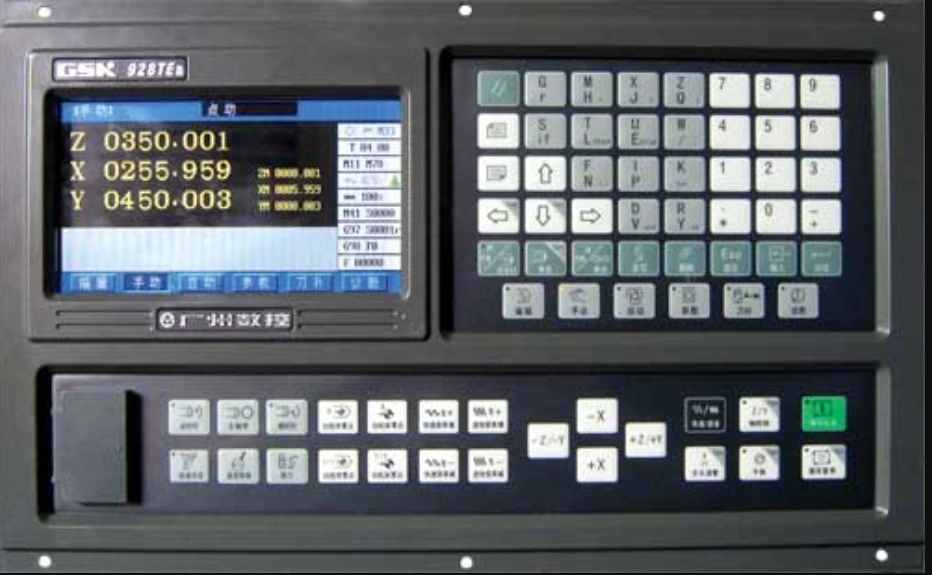
Control panel
This part of the CNC turning machine carries a keyboard and a display screen. It has different buttons including soft keys, address number keys, main function keys, and automatic machining key. The specific layout and design of this panel may vary from manufacturer to manufacturer.
Spindle
The CNC turning operation relies on the spindle system for the precise rotational motion of the part. The chuck derives its power from a system comprising drive connection, a shaft, and bearings.
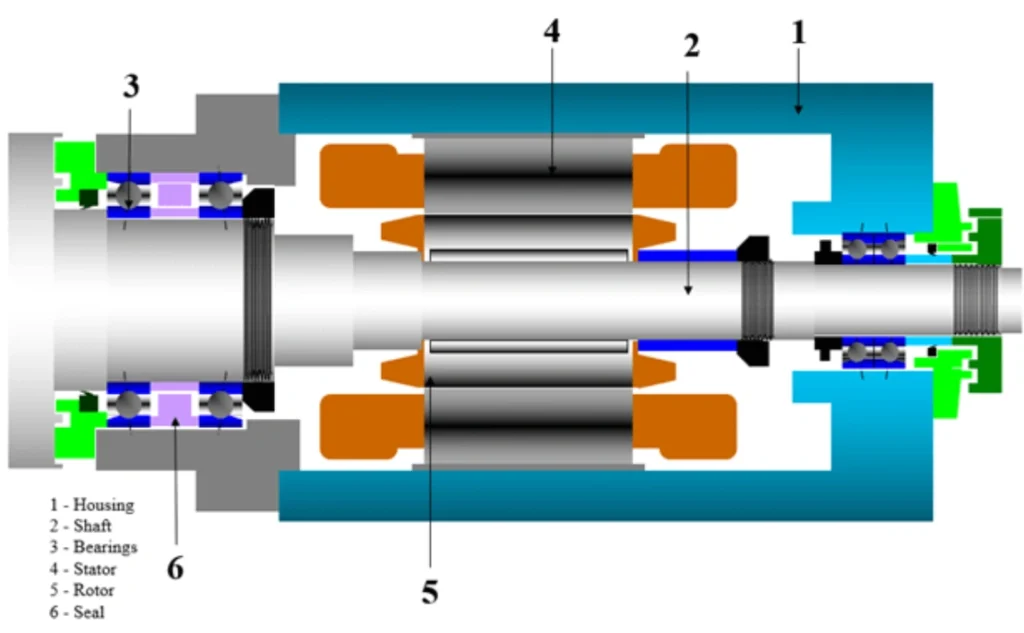
The spindle
Headstock And Tailstock
These two components sit opposite each other across the machine bed. The headstock holds the workpiece along its center axis. Holding the motor and drive system of the machine, this part is the power behind the CNC turning machining process.
Its workholding components ensure the workpiece is always well aligned and fixed during the machining process.When the workpiece is large, it is held between the headstock and tailstock. This added support prevents the formation of unmanageable operating loads.
Tool Turret
This is another critical part of the CNC turning machine. It holds different turning tools in readiness for machining. The tool turret makes the machining operations effective and quick where multiple steps are involved.
These and other parts of the CNC lathe machine are shown in the diagram below.
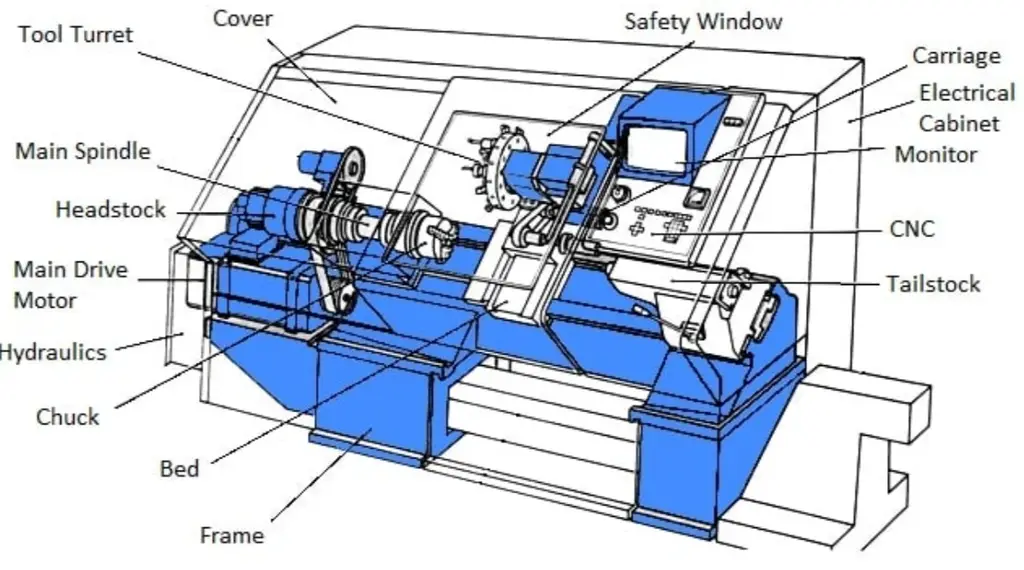
CNC lathe diagram
Difference Between NC and CNC Machines
People often confuse between numerical control (NC) and computer numerical control (CNC) machines, and there is a justification for the misconception. First, it might not be that easy to tell the difference between these machines from their outward appearance.
The main difference between NC and CNC machines is that NC machines tend to be open loop while CNC is typically closed loop. So, while the CNC machine can send feedback to the CPU and enhance its cutting accuracy, the same cannot be said of NC machines.
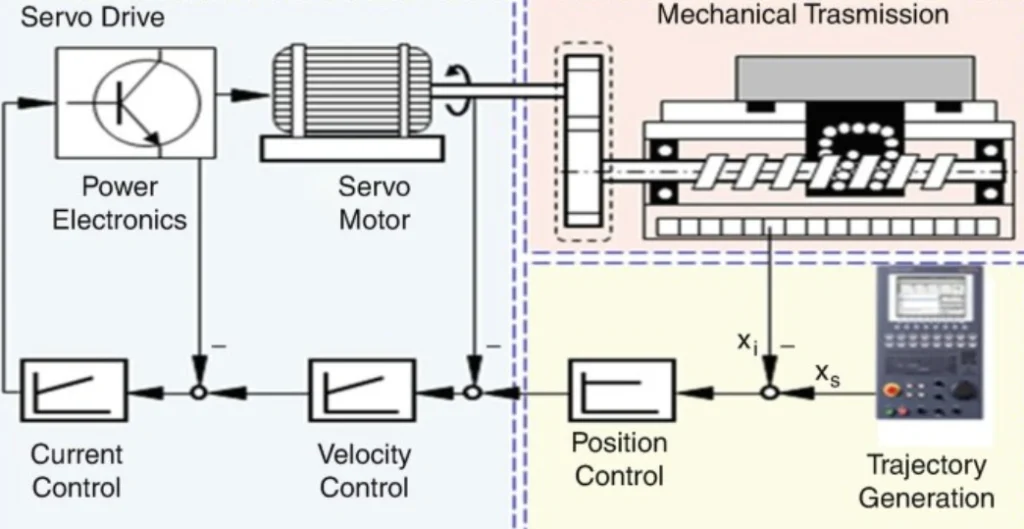
Computer numerical control
With such a significant difference, NC and CNC machines have their shares of pros and cons. For instance, NC machines are more manual, hence tend to be more affordable. Their maintenance requirements are also relatively minimal.
The challenge with NC machines is that they can be slower and require more human effort compared to CNC machines.
For CNC machines, the higher cost and the need for programming expertise are major considerations for manufacturers. However, their accuracy, versatility, and capability to run for hours are major benefits to manufacturers and parts clients alike.
What Is A CNC Turning Job?
A CNC turning job is any machining process performed on the CNC lathe machine. The fundamental of these jobs is the rotation of the workpiece on the spindle as a stationary cutting tool removes material.
From this definition, there are numerous jobs or turning services that fall under CNC turning. The next section highlights different general turning processes.
Types Of CNC Turning Processes
CNC turning means more than just removing material from the surface of a workpiece. There are specific techniques, and these result in various types of CNC turning – Turning, facing, drilling, grooving, and others. Regardless of the approach and results, each of these processes contribute to the variety of CNC turning parts used in manufacturing today.
Turning
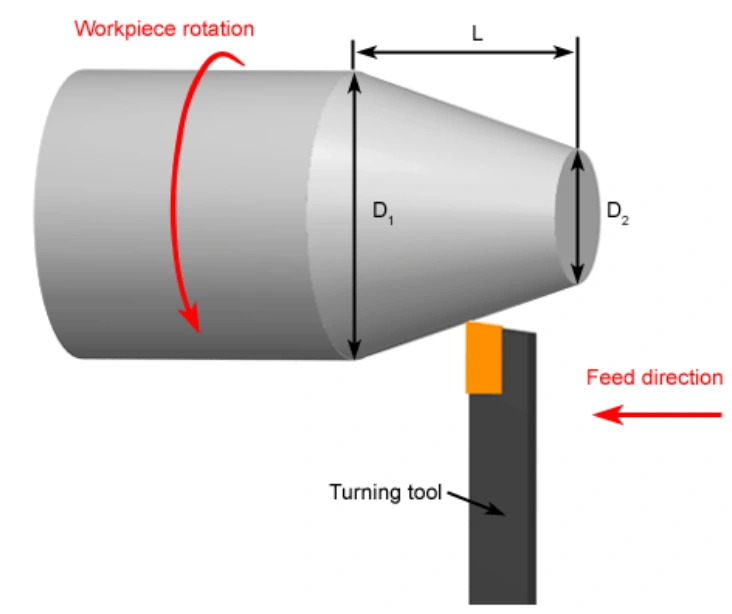
Turning operation
Turning refers to a wide range of machining operations that remove material from the outer surface of a workpiece. These variations are based on whether the tool and workpiece are at right angles to each other or at an angle. Uniformity of these relationships throughout the process can also be varied, for instance, in contour turning.
Facing
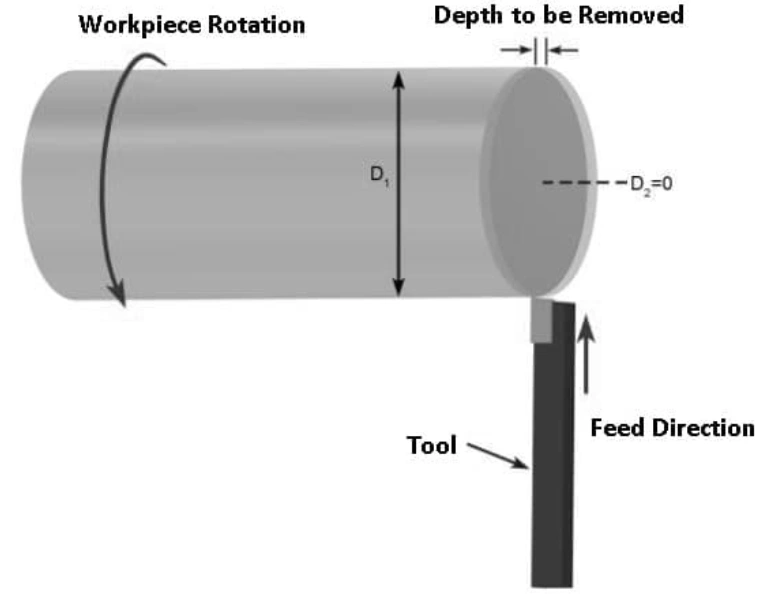
Facing operation
This operation is done by a facing tool and entails machining the end of the workpiece to produce a flat surface perpendicular to the axis. During the operation, the facing tool normally starts from the periphery of the workpiece and feeds towards the center axis.
Grooving
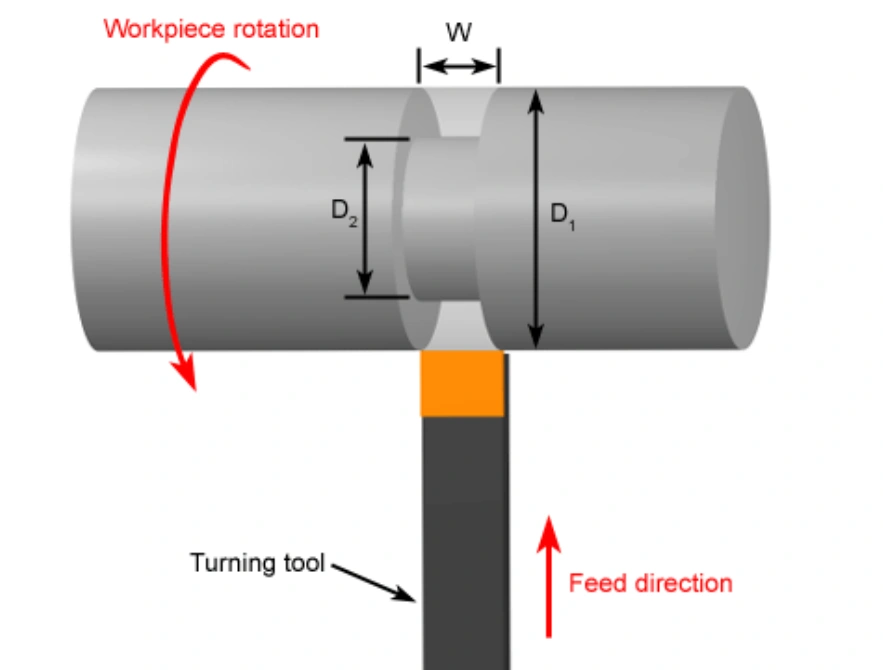
Grooving operation
Grooving is a CNC turning operation that produces a channel around the workpiece. The groove can be of any depth depending on the intended use. When the groove is deep enough to cause the falling off of the part from the main part, it is called parting off.
Knurling
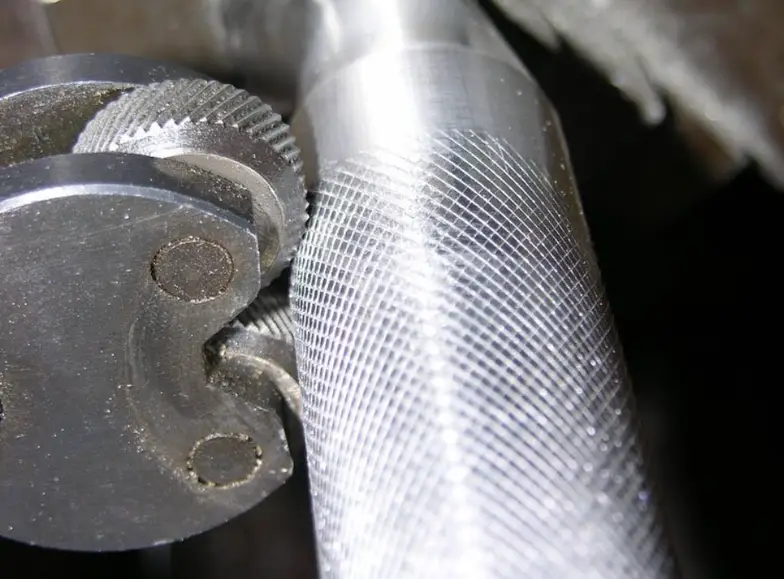
Knurling operation
A lathe machine can also be equipped with a knurling tool, a special device with serrations that are transferred to the workpiece. The patterns can be anything, for instance, diamond, which can be decorative or for enhanced grip.
Drilling
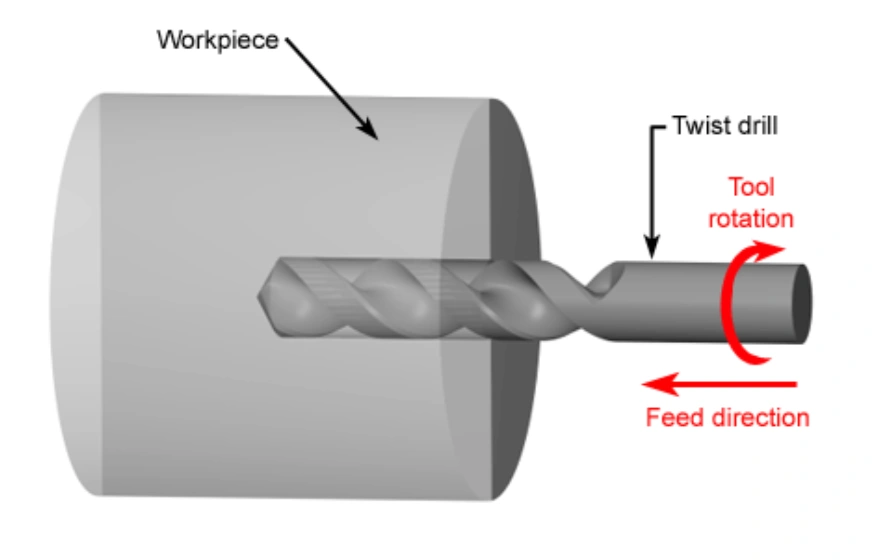
Drilling
Drilling mostly entails creating a hole along the rotational axis of a workpiece in the lathe machine. Note that some advanced CNC turning machines that can drill a hole in any orientation.
Boring
Boring is the CNC turning process that enlarges an already formed hole. A boring tool is fed into the drilled hole and as the workpiece rotates, the tool removes chunks of material from the inside until the required size or finish is attained.
What Materials Can Be CNC-Turned?
One of the main advantages of CNC turning is its unmatched material versatility. Whether it’s plastics, metals, or wood, this method is highly adaptable and reliable. In the industrial environment, this characteristic comes in handy where products of different materials are required.
Common Metals to CNC-Turn
Metals that are popularly processed on the CNC lathe include:
- Aluminum alloys
- Carbon steel
- Stainless steel
- Copper
- Brass
- Titanium
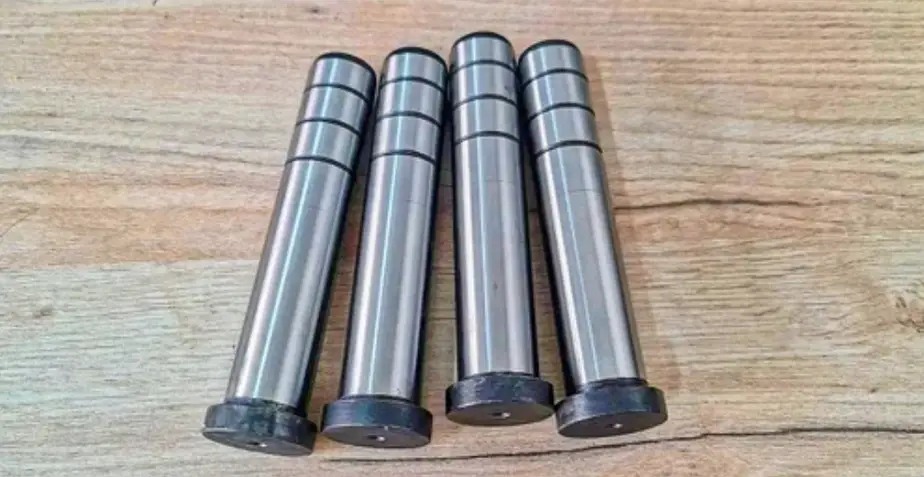
CNC turned carbon steel parts
Non-metals For CNC Turning
Many non-metals can also be CNC-turned because their parts are highly valued in manufacturing. These materials include;
- Ceramics
- Composites – Fiberglass, carbon fiber
- Plastics – PVC, nylon, etc.
- Wood – Oak, teak, mahogany, etc.
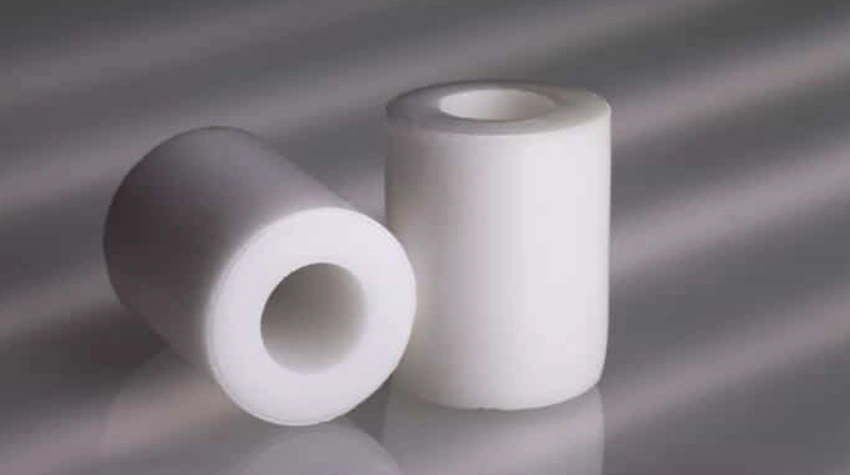
CNC machined ceramic parts
Types of CNC Turning Machines
CNC turning machines are designed differently, and there are reasons for that. Mostly, it is about the capability of the machine pertaining to the complexity and type of part to be machined.
These machines can be categorized as vertical CNC lathes, horizontal CNC lathes, vertical CNC turning centers, and horizontal CNC turning centers.
Vertical CNC Lathes
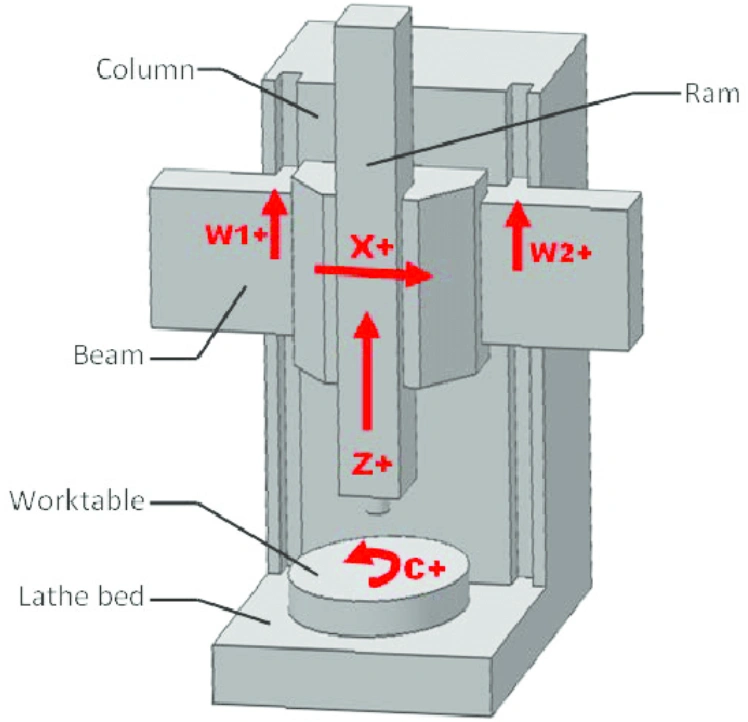
Vertical CNC lathe
Vertical CNC lathes are designed to hold the workpiece vertically. In other words, the machine spindle is vertically-oriented. This special lathe setup is meant for space-constrained shops and heavy sturdy workpieces.
Some advantages of vertical CNC lathes are ease of handling heavy workpieces and an increasing capability to multitask as technology advances.
Common Turning Applications Of The Vertical CNC Lathe
Vertical CNC lathes are used for the following applications;
- Large gear machining
- Producing ship engine parts
- Parts for industrial machinery, for instance, pumps and presses
- Mechanical power transmission parts
- Wind turbine parts
Horizontal CNC Lathes
When the CNC machine spindle is horizontal, we have the horizontal CNC lathe. It is the typical lathe machine and extremely popular with manufacturers. Unlike the vertical design, this one is sizable and can handle larger workpieces.
The horizontal CNC lathe design presents various advantages including high rigidity, improved chip removal, multi-axis machining, and continuous production. In addition, these lathe machines can machine larger workpieces.
Common Turning Applications Of The Horizontal CNC Lathe
- Aerospace – Landing gear parts, turbine blades, and engine covers
- Automotive – Axle shafts, engine parts, transmission parts
- Medical – Surgical instruments, prosthetics, implants
- Oil & gas – Drill bits, valves
- Heavy machinery – Agricultural equipment, construction equipment, etc.
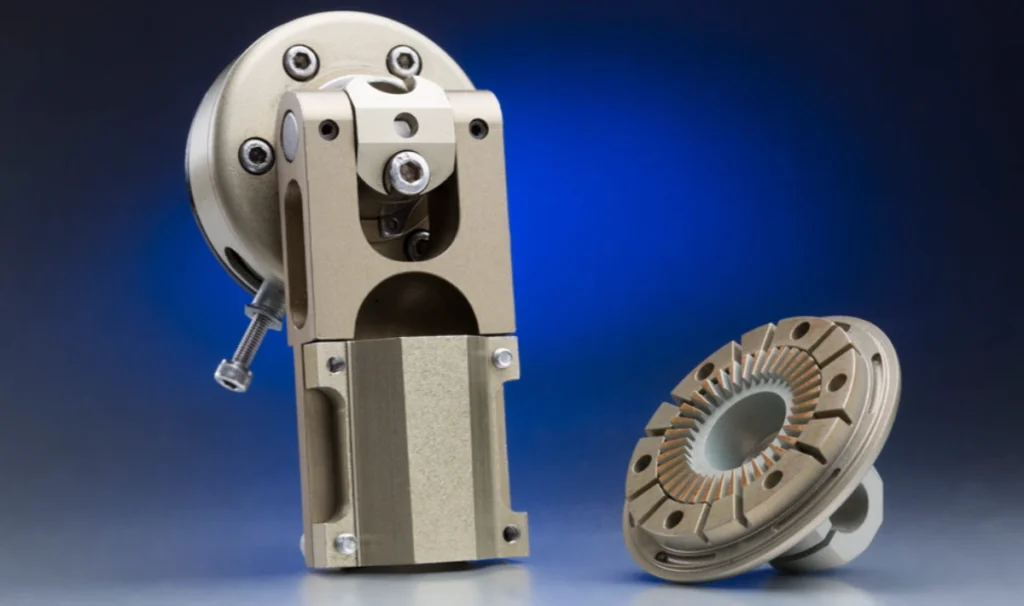
CNC turned medical parts
Summary For Horizontal CNC Lathe vs. Vertical CNC Lathe
For the vertical and horizontal CNC lathes, the main difference is in their engineering to tackle different types of jobs. For a clearer distinction between the two, check the table below.
| Vertical CNC lathe | Horizontal CNC lathe | |
| Design or setup | Spindle vertically positionedHorizontal chuck for workpiece | Spindle horizontally positionedWorkpiece perpendicular to the axis |
| Ideal Machined Parts | Larger diametersHeavier Shorter workpieces | Longer, cylindrical workpieces |
| Advantages | Gravity helps in clampingEnhanced access to the workpiece during machining | Easier chip removalHandle bulkier and longer workpieces more easily |
Vertical CNC Turning Centers
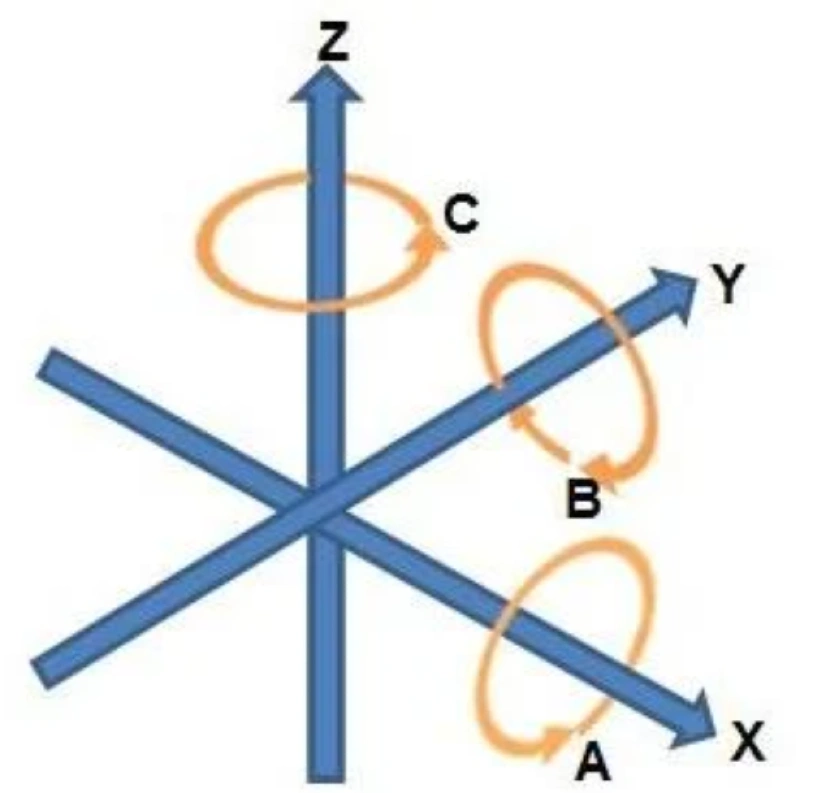
Axes for vertical turning center
A turning center is an improved lathe machine because it can also perform drilling and milling operations. It is termed vertical if the spindle is oriented vertically, a setup that suits large and oddly shaped parts.
As the spindle rotates with the workpiece, while the tool held by the tool holder or turret does the CNC turning machining.
Horizontal CNC Turning Centers
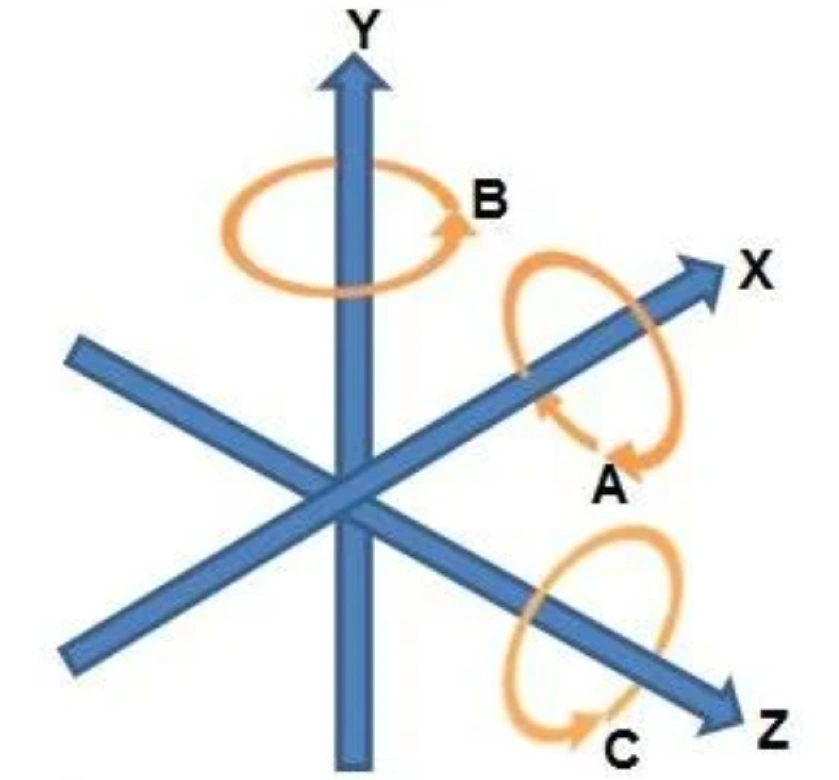
Axes for horizontal turning center
The horizontal turning center has a horizontally oriented spindle, comparable to the conventional CNC lathe. However, it is more advanced than the CNC lathe in that it can multitask. It often features automatic tool changers and live tooling.
Difference Between CNC Turning Centers and CNC Lathes
Despite their similar appearances, CNC turning centers and CNC lathes differ in number of axes used in machining, cost of the machine, capabilities, and applications. In simple terms, the CNC turning center is an upgrade of the CNC lathe.
The following table captures the fundamental differences between the two machines in terms of design, applications, and advantages.
| CNC turning center | CNC lathe | |
| Number of axes | 3-5 axes, rotary axes added | Limited to 2 axes, X and Y |
| Setting up | Complex | Simpler |
| Number of spindles | One or two | One |
| Operations on machine | Turning plus milling, drilling, and tapping | Turning only |
| Live tooling | Yes | No |
| Production volume | Medium to high | Low to medium |
| Cost | Relatively high (Could go up to $730 000+) | Lower (usually lower than $100,000) |
| Applications | Aerospace partsMedical partsAutomotive – high-volumeComplex shafts and other parts with cross-holes | Bushings, rods, shaftsPipe couplingsSymmetrical profile parts |
| Advantages | Can multitask Can machine complex geometriesHigher productivity due to fewer setupsMinimal manual intervention | More cost-effective, easier setupEasier to operateLower maintenance requirements |
What Are The Machine Axes In A CNC Turning Center?
The machine axes in a CNC turning center determine the movement of the workpiece and cutting tool. The X-axis for radial movement and Z-axis for longitudinal movement are the basic ones, but advanced turning centers usually feature extra axes.
These additions are often in the form of Y-axis, B-axis, and C-axis for off-center milling, rotational tilt, and spindle rotation for indexing respectively.
Understanding how these axes operate is important because they contribute to the machine’s capability to machine complex parts in a single setup. Higher axes mean a turning center is more capable of machining complex parts.
So, the CNC turning usually can have up to five axes, some have six axes. The axes and their functions are as outlined below;
X-axis: Vertical movement
Y-axis: Horizontal movement
Z-axis: Depth movement
A-axis: Rotation around the X-axis
B-axis: Rotation around the Y-axis
C-axis: Rotation around the Z-axis
CNC Turning Tools
Apart from the CNC turning machine designs, it is also also important to look at the tools – the success of the process also depends on these devices. The tools are based on the different types of cnc turning operations, which we have already outlined.
| CNC turning tool | Function |
| Boring bar | Enlarges or improves the inside dimensions of a pre-machined hole |
| Parting tool | Separates a machined part from the main raw stock |
| Facing tool | Removes material from the end of a workpiece to form a flat surface perpendicular to the rotational axis |
| Turning tool | Machines the outside surface of a workpiece to reduce the diameter |
| Drill bit | Machines holes along the centerline of the workpiece |
How To Ensure Safety And Efficiency In CNC Turning Operations
Ensuring safety in CNC turning operations is about acknowledging the potential hazards and putting measures in place to prevent them. Here are basic rules or standards that machinists follow for safety and efficiency when performing CNC turning:
- Ensuring comprehensive training for knowledge about emergency procedures, CNC turning, software, and general CNC turning machine operation
- Following inspection and maintenance recommendations covering axis calibration, tools maintenance, so on.
- Always wearing the right Personal Protective Equipment (PPE)
- Adhering to guidelines related to how to secure fixtures and workpieces
- Managing chips and dust to reduce fire hazards and fire risks.
Applications of CNC Turning
The smooth finishes and tight tolerances of CNC turning are widely accepted in manufacturing. Plumbing fittings, aerospace parts, car parts, and medical devices are only examples of what this technique can do.
CNC turning is used in the following and many other areas:
- Built environment – Nuts, screws, hinges
- Automotive – Transmission shafts, gears, steering systems
- Energy – shafts, rotors
- Medical – prosthetic limbs, orthopedic implants
- Industrial – robot parts, hydraulic system parts
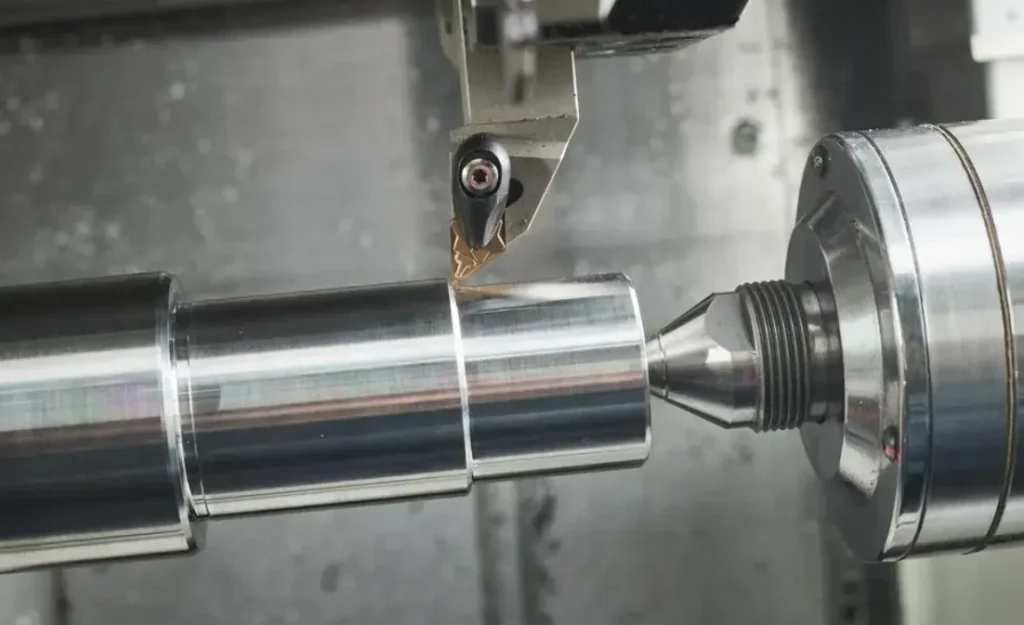
Shaft production through CNC turning
Advantages Of CNC Turning
CNC turning is a preferable manufacturing technique for cylindrical components because of advantages like dimensional accuracy, repeatability, and faster production. This method doesn’t require a lot of manual intervention, so related errors are avoided.
The fact that it supports a wide range of shapes and sizes aligns with the requirements of many industries including medical, automotive, and construction.
So, let’s enumerate the advantages and limitations of CNC turning.
Advantages of CNC turning
- No human errors because of the use of software and automation
- A more versatile manufacturing method, accommodating different part designs and sizes
- Shorter lead time yet the machined parts are still high-quality
- It is more reliable for safety precision cnc turning parts
Limitations of CNC Turning
The advantages above are irresistible, but the cnc turning machining supplier, manufacturer, and user still have to remember a few reservations about CNC turning like;
 High setup cost of the CNC turning machine
- The machine may not be suitable for the larger workpieces
- Wastage material may be relatively substantial
What Is The Difference Between CNC Milling And CNC Turning?
Although CNC milling and CNC turning are both reliable precise machining solutions, they have fundamental differences. The difference in cutting tools, machine configurations, and processing approach means that even the machined parts are different.
Depending on the capability, CNC milling machines can produce flat and parametric pieces of varied complexities. That’s because the setup comprises a multi-point cutting tool rotating as the workpiece is held firmly on the machine bed.
When the axes are increased, for instance, in 5-axis CNC milling, the tool access to the workpiece is higher. This makes it possible to generate complex parts.
CNC turning is different because the machine spindle rotates the workpiece while the single-point cutting tool is stationary. The technique is best for cylindrical, circular, or helical parts.
Economic And Environmental Factors in CNC Turning
The modern progressive manufacturer must consider economic and environmental factors together in their operations, and CNC turning brings exactly that. CNC turning operations deliver high-quality parts cost effectively and fast, supporting clients for seamless business.
Any business, from aerospace to electronics, needs modern CNC turning services to keep in tabs with this pair of factors and remain competitive. In summary, here’s how the economic and environmental impact of CNC turning makes sense for modern businesses.
Economic Factors in CNC Turning
- Reduced labor costs
- Cost-effective use of raw materials – less wastage (scrap)
- High accuracy and precision – Less need for redoing the processes
- Faster manufacturing of parts leading to enhanced productivity
Environmental Sustainability Steps
- Recycling metal waste
- Reducing emissions and using advanced machinery that produces less noise
- Optimizing energy consumption in CNC turning operations
- Handling coolants and lubricants appropriately to minimize environmental impact
In Conclusion
CNC turning is an irreplaceable machining process that manufacturers use for accurate and precise parts for diverse industries. By understanding the basics of this process, including lathe parts, types of lathe machines, material being machined, and the processing steps, users can make orders for CNC turned parts with confidence.
Contact ProleanMFG experts for all your CNC turned parts to support your projects. Our team will guide on the best machine, materials, and approach for optimal turning services.