
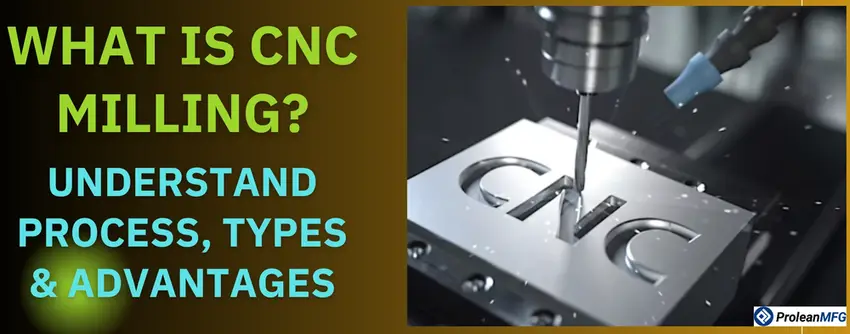

CNC milling may appear complex, but it’s a simple subtractive machining process entailing a computer-controlled multi-point cutting tool shaping a workpiece. The workpiece can be fixed or can move along a predetermined axis during the machining process.
The CNC milling machine precisely shapes the workpiece following the G-code (CNC programming) instructions, which define the speed, depth of cut, tool path, feed rate, and other parameters. The workpiece material can be metal, plastic, composite, or even wood.
There are various types of CNC milling machines like 2-axis, 3-axis, and 5-axis mills, and their choice depends on several factors including the part’s complexity. Every version is designed to meet specific demands.
CNC milled parts are everywhere, from automotive to medical industries, and military to electronics. With styles such as end milling, gang milling, and angular milling, this manufacturing solution is versatile, fast, and cost-effective.
Let’s now go into the detailed meaning and relevance of CNC milling.
What Is CNC Milling?
CNC milling entails using a multipoint rotating cutting tool to remove material from a workpiece, which is held by a rotating spindle. This process is controlled by a computer program and done on a CNC machine. Held by a table that is accessible by the cutting tool, the workpiece can be oriented at different angles depending on the CNC machine’s capability.
Talking of capability, CNC milling is renowned for producing all manner of parts for industrial, commercial, and even home-based applications. With the 5-axis milling machine, for instance, manufacturers can produce complex parts at one go, something that was unheard of with conventional milling.
Such capabilities are attributed to the advanced technologies on these machines, including modern software solutions and quality parts. Quality inspections are also part of the CNC milling process, to ensure strict compliance with requirements.
For more on this exciting machining technique, let’s look at different aspects, starting with the working principle.
How CNC Milling Works
There are several steps in CNC milling, which can be categorized as Computer-Aided Design (CAD), Computer-Aided Manufacturing (CAM), machine setup, and the CNC milling operation. Each of these plays a crucial contribution to the production of a machined part from a digital design.
- Computer-Aided Design (CAD)
The first step in the CNC milling process is the creation of the CAD design with the help of CAD software. Popular software options for this task are Autodesk Inventor, SolidWorks, and Creo.
There are two ways to arrive at the CAD design: Full-scale design and reverse engineering. For the first option, the machinist builds the part shape and inputs all the data from scratch. Reverse engineering entails taking a sample of the final machine part and working backwards.
- CAM (Computer-Aided Manufacturing) software
The function of this step of CNC milling is to generate instructions that the machine can understand. The code as it is now must be subjected to CAM (Computer-Aided Manufacturing) software, which generates tool paths, then G code.
In some instances, CAD and CAD software solutions come as one package, but sometimes, they are separate.
To conclude this step, the G code is transferred to the CNC mill via the control panel.
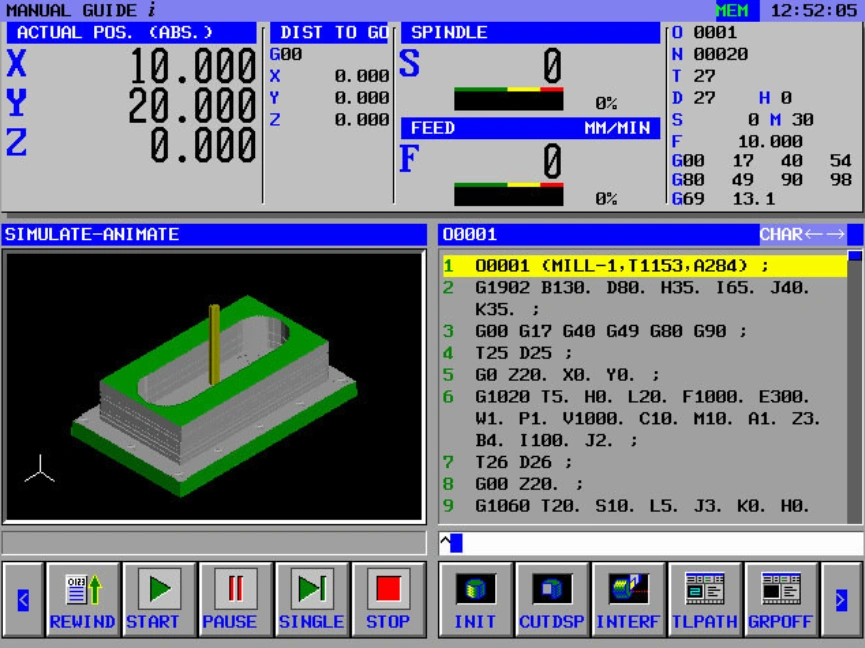
CNC milling program simulation
- CNC Milling Machine Setup
Then comes this other engaging step of the CNC milling procedure. Although we are dealing with automatic equipment, some interventions are still required. Of course, the more advanced CNC machines have minimal human effort requirements.
The main things that the machinist usually does at this juncture are;
- Setting the tool and work offsets
- Verifying the CNC program
- Loading the right cutting tools
- Loading the workpiece
- Performing the test run
- The CNC Milling Stage
With the workpiece tightly and accurately set on the CNC milling machining table and the cutting tool all set, the machinist can finally press the START button. The cutting tool approaches the workpiece and machines it according to the set parameters – speed, feed rate, coolant, and shaping.
The process continues until the final part is produced, which should resemble the CAD design.
For the best CNC milling service providers, this process is effortless and delivers quality parts, even for custom projects. The secret is having skilled machinists, engineers, and programmers that also adhere to best practices of safe, high-quality, and cost-effective CNC milling.
The Importance of Workpiece Holding for CNC Machining Centers
The success or failure of the machining operation significantly depends on how the workpiece is held on the CNC machine. Whether it is in multi-axis CNC machining or the simpler machines, the forces and angles or approach between the cutting tool and workpiece can generate substation forces.
Poor workholding can be a recipe for surface anomalies, dimensional errors, and tool breakage. But with effective workholding, the milling process gives its true worth – high precision, excellent surface finish, process repeatability, and so on.
Whether it is a T-slot table, compact centric clamp, vacuum table, or rotary swivel table, good workholding benefits CNC milling in the following ways;
- Minimized Machining Mistakes
If the machining setup is poorly done and an error occurs, an option may be to remake the machined part. On the other hand, quality workholding reduces machining time and effort.
- Enhances Machining Safety
When the workpiece is well-secured, its chances of falling off during machining are eliminated, or significantly reduced. This reduces the risk of injury to the operator or damage to the machine.
- Increases Machining Rigidity
Rigidity is a crucial milling property because it can affect tolerances. Not even the slightest movements are desirable during the process. Good workholding takes care of that.
CNC Milling Machine Parts
For a better visualization of the CNC milling process described earlier, it is important to note the main parts or components of the machine. Each process and step in the milling process is courtesy of important parts, which include the spindle, main frame, table, control panel, and tool holders.
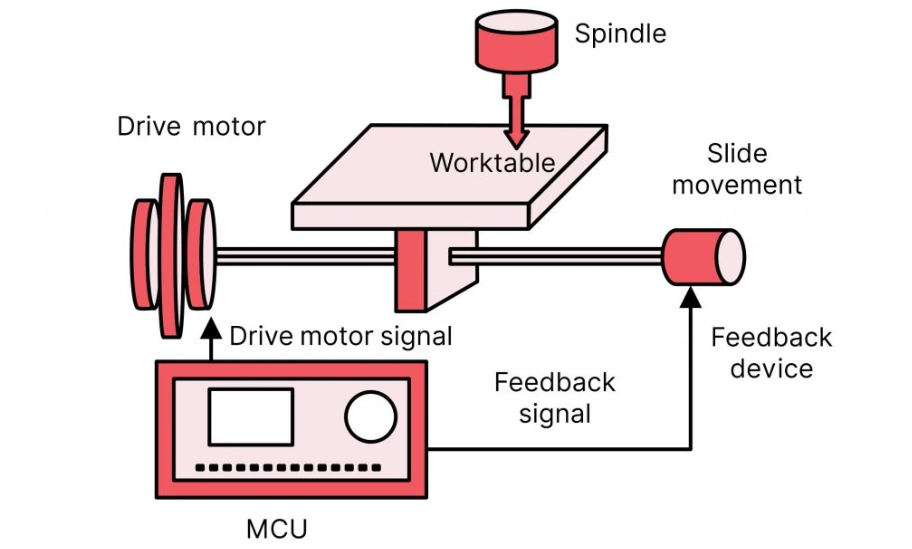
CNC milling machine parts
Let’s review these parts briefly.
| Machine part | Function |
| Axes | Allow movement of the workpiece and cutting tool in different directions and rotations |
| Automatic tool changer (ATC) | Minimizes manual input by automatically changing cutting tools between processes |
| Control panel | Provides a platform for operating and CNC programming |
| Coolant system | Provides coolant to cool the tool/workpiece and wash chips away |
| Frame | Structural support for main components of the CNC milling machine |
| Drive system | Drives the axes and spindle |
| Spindle | Rotates the mill cutter |
| Tool holder | Holds the cutter and connects to the spindle |
| Worktable | Firmly holds the workpiece during the milling operation |
Types Of CNC Milling Machines
Being widely accepted machines with varied CNC milling applications, these machines come in different configurations and designs, mostly differentiated by workpiece handling and spindle orientation. The main types of CNC milling machines based on the number of axes are 3-axis CNC milling machine, 4-axis CNC milling machine, and 5-axis CNC milling machine.
3-Axis CNC Milling Machine
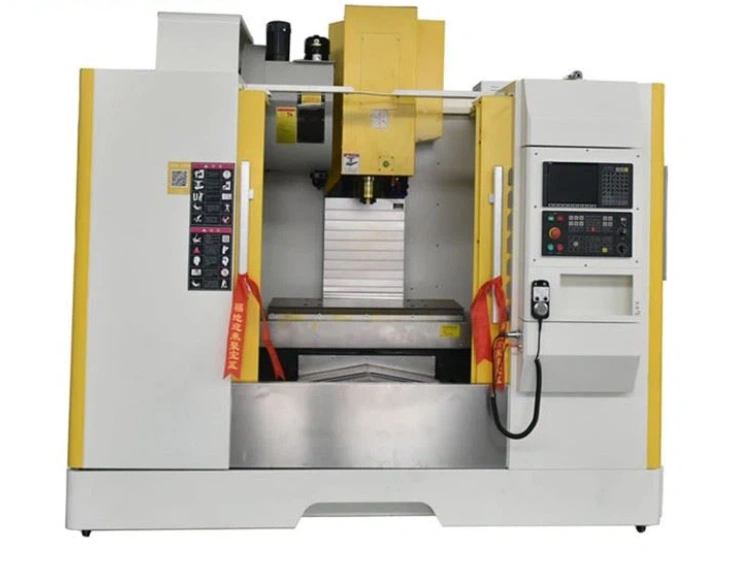
3-axis CNC milling machine
For this fundamental CNC milling machine, the spindle moves the cutter along the X, Y, and Z linear directions to execute the cutting process. These types of machine are excellent at machining in 2D, but it could do a step better, albeit with tasking and lengthy adjustments.
For more economical and effective results, it is better for the manufacturer to restrict the 3-axis CNC milling machine to the simpler milling processes.
4-Axis CNC Milling Machine
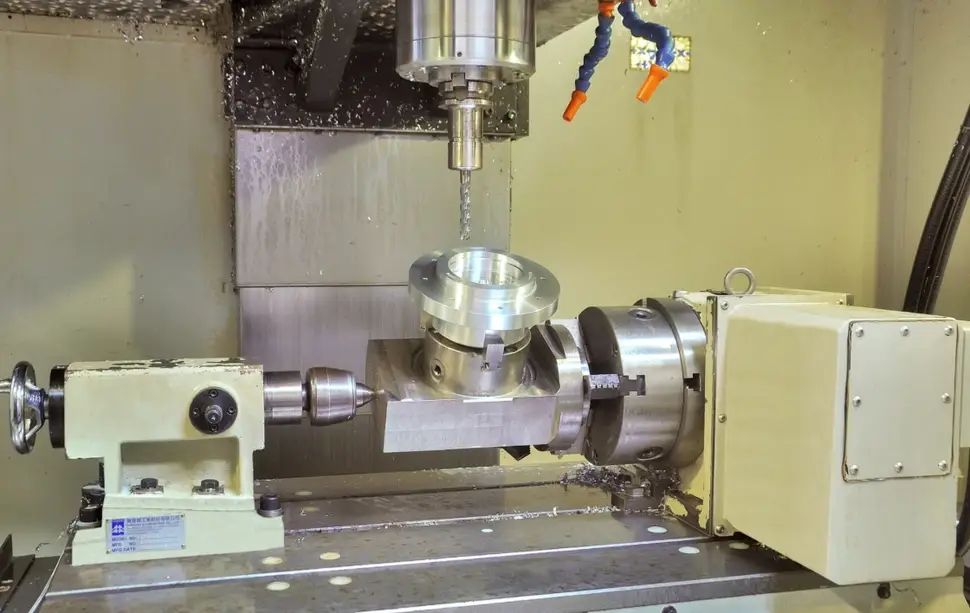
4-axis CNC milling machine
Adding a rotary axis to the three linear axes of the 3-axis milling setup creates the 4-axis CNC milling machine, which can easily machine four sides of the workpiece. It eliminates the need to set up the machine multiple times, hence adding versatility and speed to the machining procedure.
5-Axis CNC Milling Machine
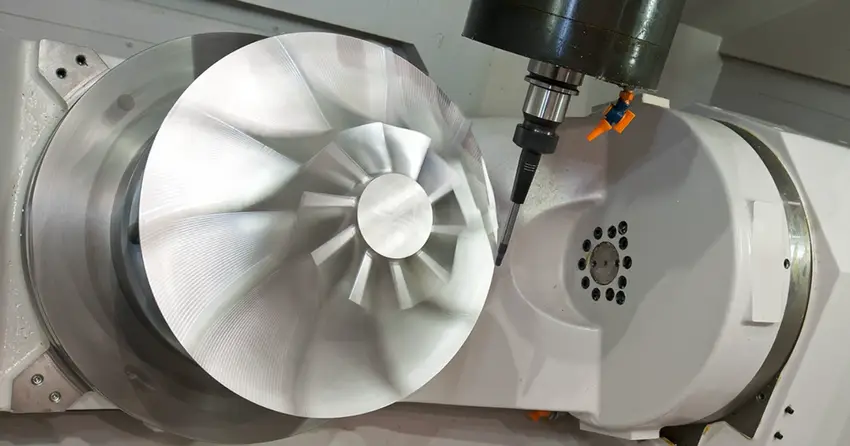
5-axis CNC milling machine
This is an even more complex and capable arrangement, consisting of two rotary axes to add to the fundamental X, Y, and Z axes of the 3-axis milling machine. At any given time and depending on the specific type of 5-Axis milling machine, only a pair of these rotary axes is functional.
Whichever the case, this setup is the most advanced in milling manufacturing shops today. It is an effective solution to the required intricate parts for aerospace, medical, military, automotive, and many other applications.
Different CNC Milling Processes
CNC milling is a broad category of processes, namely plain milling, angular milling, face milling, gang milling, side milling, contour milling, and groove milling. This rich variety of outcomes from CNC milling machines is designed to supply parts for modern manufacturing, which keeps on becoming more complex.
Face Milling
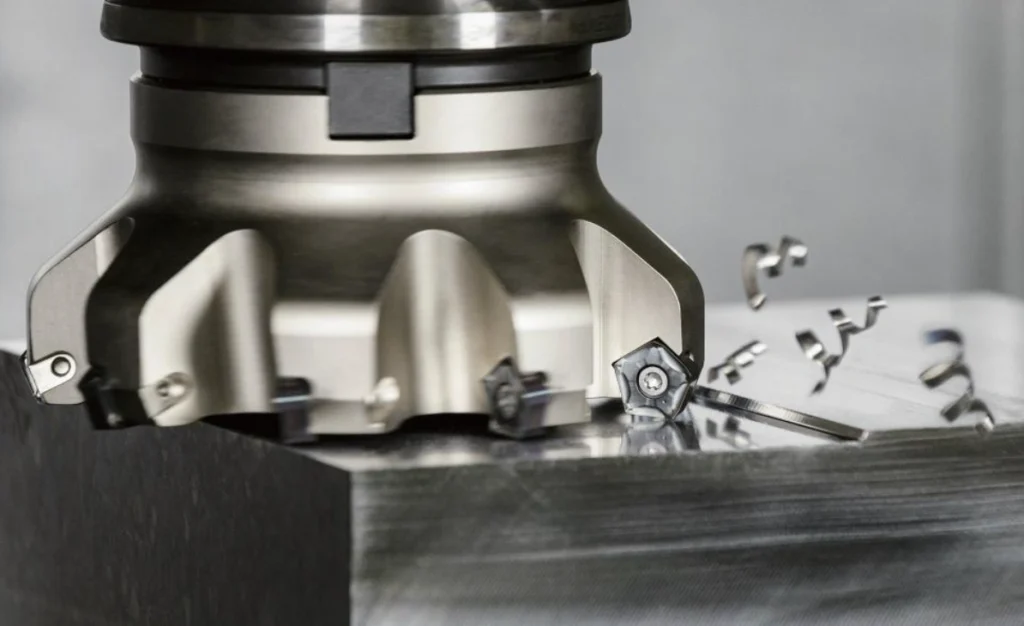
Face milling
Face milling entails machining a workpiece with the milling cutter aligned perpendicularly to the surface. The teeth at the face and sides of the tool do the cutting. Interestingly, most of the cutting is done by the side teeth of the cutter.
Angular Milling
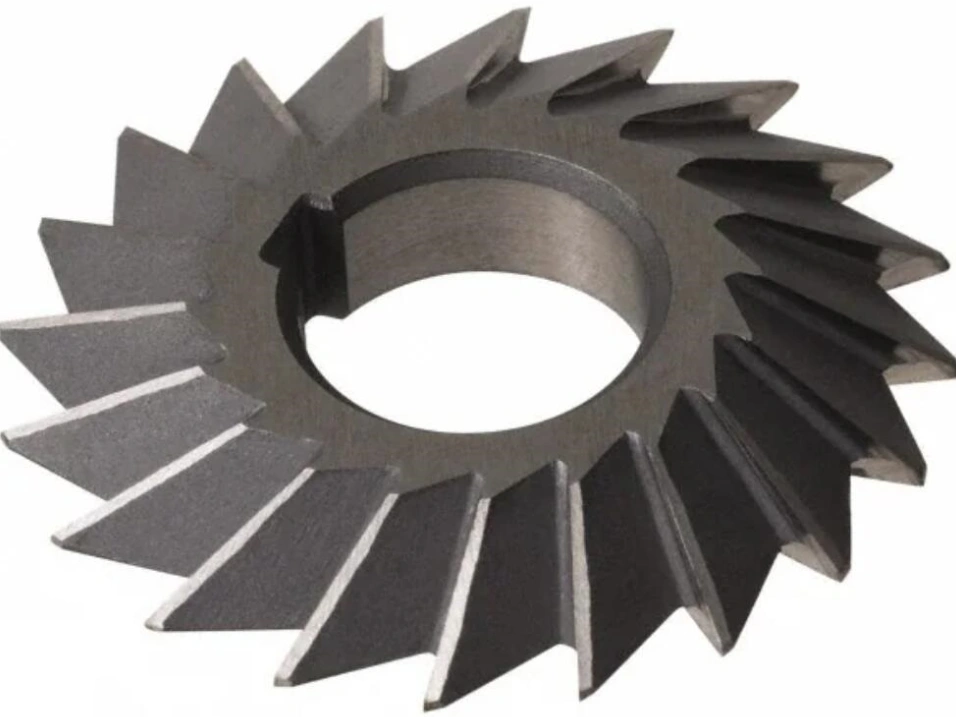
Angular milling cutter
This milling variety is great for making grooves and chamfers, because the cutter is angled. The cutting tool’s axis can be parallel or perpendicular to the workpiece’s surface.
Plain Milling
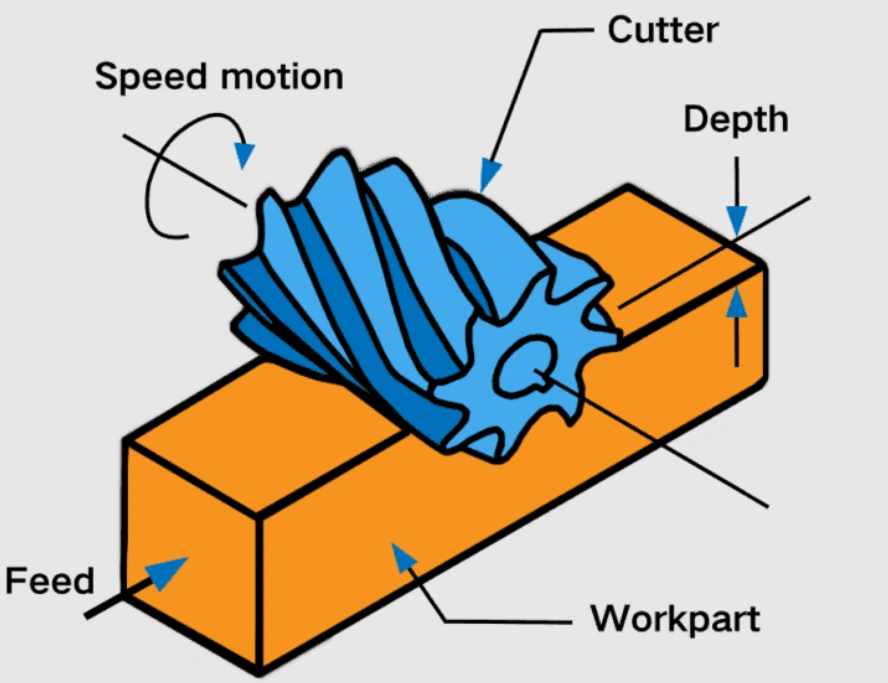
Plain milling
Plain milling, also called surface milling, involves the axis of the plain cutter moving parallel to the workpiece surface. Manufacturers can adjust many elements of this cutting method to achieve the desired CNC milling machining results – width of cutter, coarseness of the teeth, and so on.
Side Milling
Side milling is performed using a plain cutter with one or multiple teeth on the side. As the name suggests, the side of the cutter does the cutting. However, most of these cutters have facial teeth too. Side milling can machine slots in workpieces.
Groove Milling
This takes us to slot milling or groove milling, which is the ideal strategy for making keyways and pockets in workpieces. Different from comparable processes, groove milling makes deeper slots or grooves.
Gang Milling
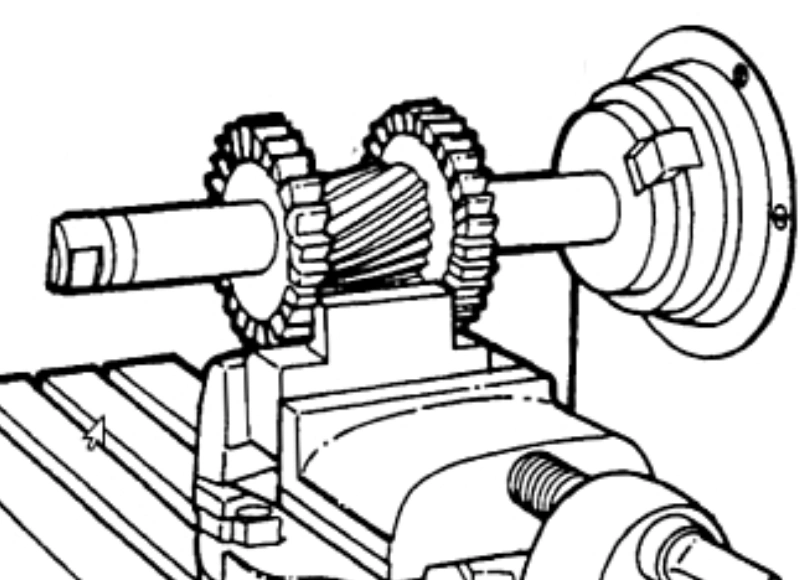
Gang milling
In gang milling, the machining is executed by several cutters fixed of different sizes to an arbor. As the cutters move across the workpiece, they leave a profile depending on their shapes and sizes.
An interesting rule in gang milling: The largest diameter tooth dictates the spindle peripheral speed while the one with the fewest teeth is for calculating the feed rate.
Material Selection For CNC Milling
CNC milling applies to all manner of materials, from metals to plastics and ceramics. Each material category has its properties, and therefore, has particular CNC milling requirements.
Important points to guide in the selection process are the intended application, operating conditions, aesthetics, cost of raw material, stress loads, machinability, and dimensional tolerance.
So, how exactly do these points help?
Part Application And Stress Load
This is an important consideration because the application guides on the durability, strength, and weight to target. A material like aluminum is preferred in aerospace because it is lightweight, and the right alloys have sufficient strength.
Talking of strength, the capability of a material to withstand force before failure also varies. Titanium and steel are renowned for tensile strength while cast iron is perfect for compression.
Operating Conditions
Chemical exposure, moisture, temperature, and physical stress have different effects on CNC milling machining materials. Consider these factors carefully to ensure optimal performance for parts.
Aesthetics
Many CNC milled parts must have a good appearance in terms of coating, color, surface finish, and surface texture. The choice of the material affects all these elements of the overall aesthetics of the product.
Cost Of Raw Material
The availability and properties of a material often determine the cost. Some materials can be costly to acquire but pay back with durability and superior performance. Cheaper initial investment of a material may mean regular maintenance and repairs of the CNC machined part.
Machinability
Aluminum is an example of highly machinable materials, which are very cost-effective to produce due to minimal tool wear and faster production. Machining a material like Inconel is totally different, with project costs related to machining much higher.
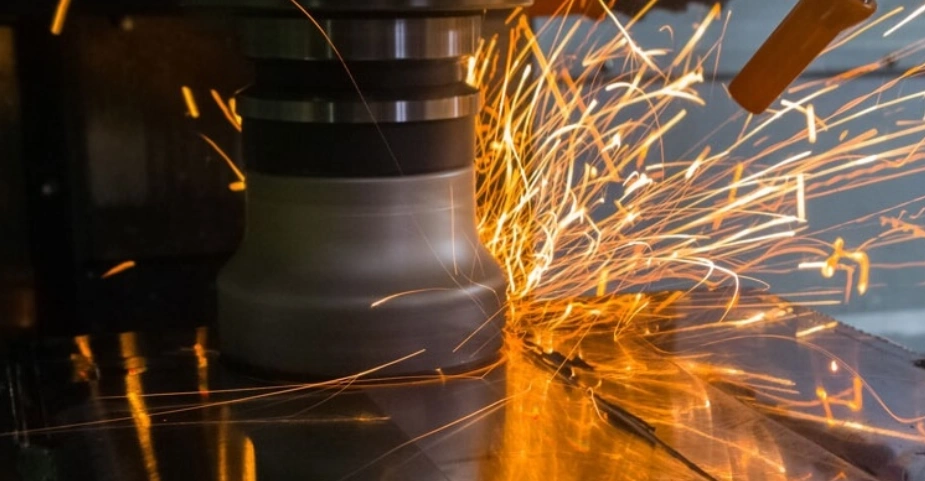
Inconel CNC milling
Dimensional Tolerance
The tendency of a material to expand, shrink, or warp matters a lot because it affects the precision of the machined part. It is advisable to choose materials with tighter tolerances to enhance precision.
Advantages of CNC Milling
CNC milling is renowned for its versatility and precision, which is much better than what conventional milling offers. The repeatability or predictability of the process is also remarkable. As the expounding of these points below explains, these are the reasons many manufacturers today are choosing this CNC machining solution.
Capability to Produce Complex Parts
Compared to traditional milling methods, CNC milling is capable of producing very complex parts to suit virtually any industrial application. The advanced 5-axis milling technique can approach the workpiece from virtually any angle and orientation. Coupling this with superior software solutions and unmatched expertise available, no part is too complex to make.
Fast Machining Process
Traditional milling required a person to manually do most of the adjustments, including tool & workpiece positioning, setting workpiece parameters, and lever-based movement of axes. These processes are not only tiring but also time-consuming.
Modern milling machines have solutions such as rotating carousels that hold multiple tools for fast and efficient machining processes. Their CNC capability makes such processes fast and precise.
Versatile Machining Method
The versatility of CNC milling, particularly regarding the materials it can handle, is impressive. CNC mills can easily machine metals, plastics, and composites. Provided the materials can be presented in blocks, the machines have no problem creating amazing pieces from them.
Cost-effective Manufacturing
Versatility, precision, and all the other advantages of CNC milling are worthwhile, but without cost-effectiveness, the part’s user or reseller may not be completely pleased. The fact that CNC milling is one of the most affordable manufacturing processes today is the icing on the cake.
Limitations of CNC Milling
Despite the advantages of CNC milling listed above, this process has its share of limitations. Here are the main ones;
Relatively More Material Wastage
As a subtractive manufacturing technique, CNC milling removes material from the workpiece. Therefore, some material is inevitably lost, and in this respect, the process is more wasteful than alternatives such as 3D printing.
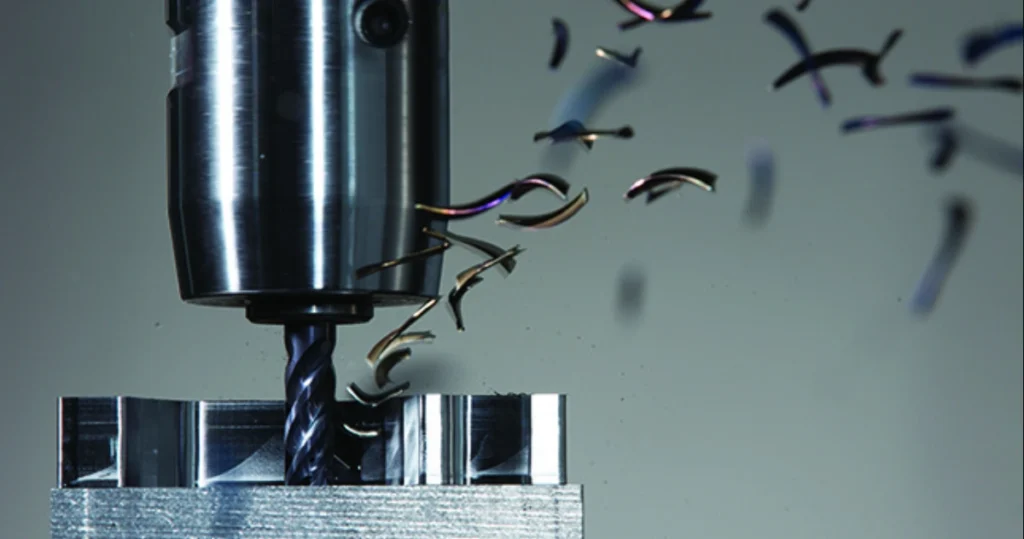
CNC milling chips formation
Need For Highly Qualified Machinists
Despite being automated to a larger extent, CNC milling still requires expert hands for programming, setting up the machine, overseeing the process, and quality control. Many machine shops cannot afford these professionals, and this sometimes can lead to below-par quality work or even disastrous outcomes.
Applications Of CNC Milling
The capability of CNC milling to manufacture complex parts with precision and repeatability is valued in many industries. Yes, many people would associate CNC milling with aerospace and automotive manufacturing, but there are other applications too, as the table below shows.
| Industry or sector | CNC milled parts |
| Automotive | Accessories, suspension system, transmission system, engine parts |
| Aerospace | Landing gears, transmissions, fuel bodies, and hydraulic manifolds |
| Electronics | Heat sinks, enclosures, and connectors |
| Medical | Surgical instruments, orthopedic implants, prosthetic parts |
| Defense | Barrels, frames, and vehicle parts |
| Industrial machinery | Gears, shafts, pump housings, couplings |
| Tooling | Jigs & fixtures, molds, dies |
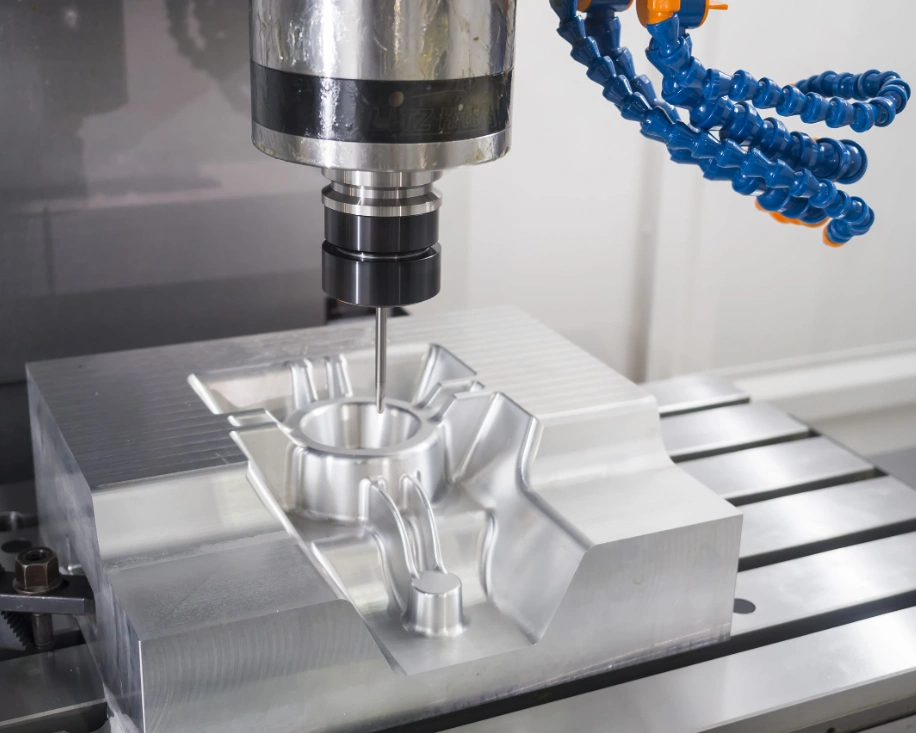
Mold-making through CNC milling
How Much Does CNC Milling Cost?
The cost in a CNC milling project can vary a lot because there are many factors at play. Aspects such as part design, design complexity, production volume, and type of CNC milling machine have a cost-impacting effect. Other factors are raw material, surface finishing, and completion-related costs.
Part Complexity And Design
Parts have different designs and complexities. The more complicated a part is, the more advanced CNC machine it is likely to require, and the higher the potential milling cost.
Production Volume
The concept of economies of scale applies in production volume, meaning that parts produced in bulk are likely to have a lower cost per unit.
Amount of Labor And Machining Time
Usually, the CNC milling service provider charges per hour. Complex machining setups require services for longer, and this will show in the final cost of the service.
Raw Material Type
The prices and machinability of different CNC machining raw materials can vary significantly. For instance, Nylon is typically much cheaper than titanium and stainless steel.
In Conclusion
Now that you know what CNC milling is all about, the next step is probably how to get the best CNC-milled parts. Establishing your project requirements will always be the starting point, then you can set out to talk to expert CNC milling service providers.
ProleanMFG prides itself on being a trusted CNC manufacturing service provider in China and overseas. Get in touch today to transform your machining processes.
FAQ’s
What does CNC mean?
CNC means Computer Numerical Control, a method of using automated computer controls for machine tools.
What does a CNC milling machine stand for?
A CNC milling machine is an automated machine with computer control capabilities for its toothed cutters that precisely remove material from workpieces.
What is the difference between CNC turning and milling?
CNC turning and milling are fundamentally different in that turning is done on the CNC lathe while milling is done on the milling machine. In turning, the workpiece rotates while the cutting tool is stationary. For milling, the reverse applies.