
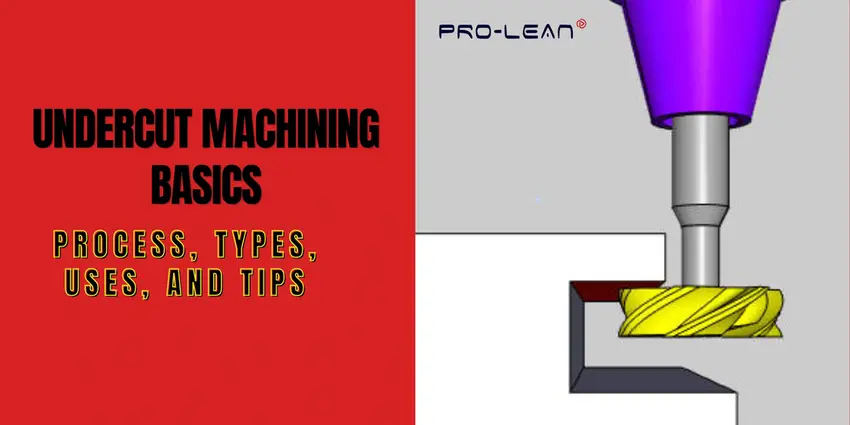

Some features on machined parts are done using non-standard tooling and machine setups. One such is an undercut, which is a machined feature below the surface or top layer of the workpiece. Creating such a feature is a top-level CNC machining process.
Manufacturers use this machining technique to produce complex geometries for numerous industrial applications. Commonly supported industries are electronics, automotive, aerospace, medical, tool & die making, and oil & gas.
They have several types of undercuts to choose from, including one-sided undercut, T-slot undercut, dovetail undercut, and tapered undercut. These styles come with respective tools, such as undercutting end mill cutters and T-slot Cutters.
For the successful production of external undercuts and internal undercuts, a few best practices are followed. These, plus other fundamentals of this type of machining, have been discussed in this article.
What is Undercut Machining?
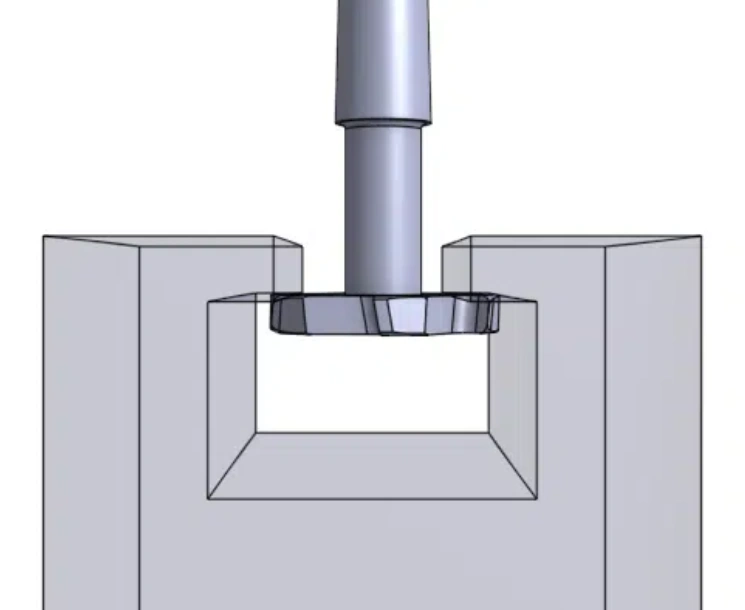
Undercut machining cross-section
To define undercut in engineering terms, it is a recessed feature with a width of the internal feature that is larger than the size of its opening. This recessed surface can be of any shape. It can also be externally on the workpiece (external undercut) or internally (internal undercut).
Creating such a feature or surface requires a special type of machining tool. The process is also systematic, as the following section outlines.
Main Steps in Undercut Machining
When machining an undercut, the first step is to understand the geometry of the cut. This is done through an analysis of the expected part. The subsequent steps are machine setup, CNC programming, machining the undercut, post-processing, and quality control.
Step 1: Component Analysis
The component’s size, geometry, and material type are the first details to address. A most important element is whether the undercut is external or internal. From this step, the machinist can choose the ideal type of undercutting tool.
Step 2: Machine Setup
The second step entails setting up the machine and the respective tooling. Attaching the correct machine spindle and the undercutting tool are critical aspects of machine setup.
Step 3: CNC Programming
For CNC machining, the machine process is based on a program. Programming the machine for this is a critical stage. These machines come with CAD software to support this process. The machinist inputs the codes into the machine.
Step 4: Machining the Undercut
Undercuts come in all manner of styles, so no specific tool is recommended. Mostly, the tool is chosen depending on the material and shape of the undercut. With all set, the machining proceeds, and the undercut is produced.
Step 5: Post-Processing
Undercuts, like other types of machining, can produce burrs and other imperfections. This step is about getting rid of those imperfections. Post-processing enhances the aesthetics and functionality of the part. Popularly used post-processing techniques are deburring, coating, and cleaning.
Step 6: Quality Control
Finally, to ensure the undercut came out as designed, dimensions, tolerances, and surface finish are inspected. CMMs (coordinate measuring machines) and laser scanners are typically the tools of choice for this work.
Manual vs CNC Undercut Machining
Like in many machining processes, the comparison of manual vs CNC undercut machining is inevitable. CNC undercut machining means that the process is largely automated. Manual undercut machining relies on conventional tools or hand tools to make the recessed features.
Now, the CNC approach is much better in terms of repeatability, precision, and complexity. It can machine a wider range of materials. The lead time is also shorter.
Therefore, it makes sense to invest in precision machining for undercuts, especially if you are looking at the longer-term impact on your business.
Types of Undercuts
In order to define undercut further, it is important to note that this feature can be either internal or external. Then there are geometric profiles, which include dovetail undercut, keyway undercut, and T-slot undercut.
Other types of undercuts are O-ring grooves, threaded undercut, tapered undercut, and spherical undercut. Each of these undercuts is generated differently and for a unique function.
Internal Undercut vs. External Undercut
Internal Undercut: This is a machining feature made on the inner side of a workpiece. It could be of any type, including a thread or cavity. Since getting the tools to the inner surfaces is difficult, internal undercutting is challenging.
External Undercut: An external undercut is a recessed feature made on the outer surface of a workpiece. It is easier to machine because tool access is simpler.
Different Geometric Profiles of Undercuts
Dovetail Undercut: This profile has a dovetail-like shape. The cutting tool is commonly positioned at 45° or 60°, but increments of 10° can be done up to 100°.
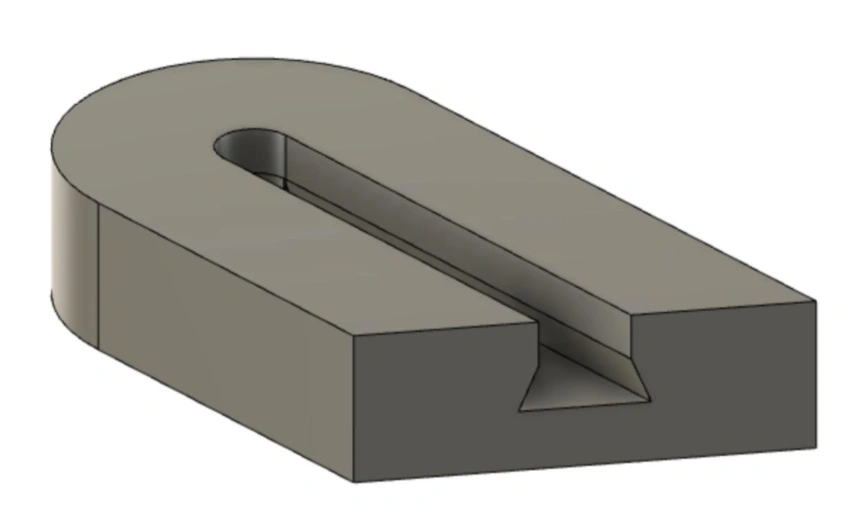
Dovetail undercut
Keyway Undercut: A keyway undercut is typically performed on a shaft to accommodate a key. The machinist uses a keyway undercutting tool or a broacher to produce this profile.
T-Slot Undercut: This is a T-shaped profile characterized by long sides and a flat bottom. The feature is used in interlocking parts and mounting slots.
O-ring Grooves: These grooves are designed to hold O-rings and seal surfaces. This combination is popular in hydraulic and pneumatic systems. It helps prevent leaks and maintain pressure.
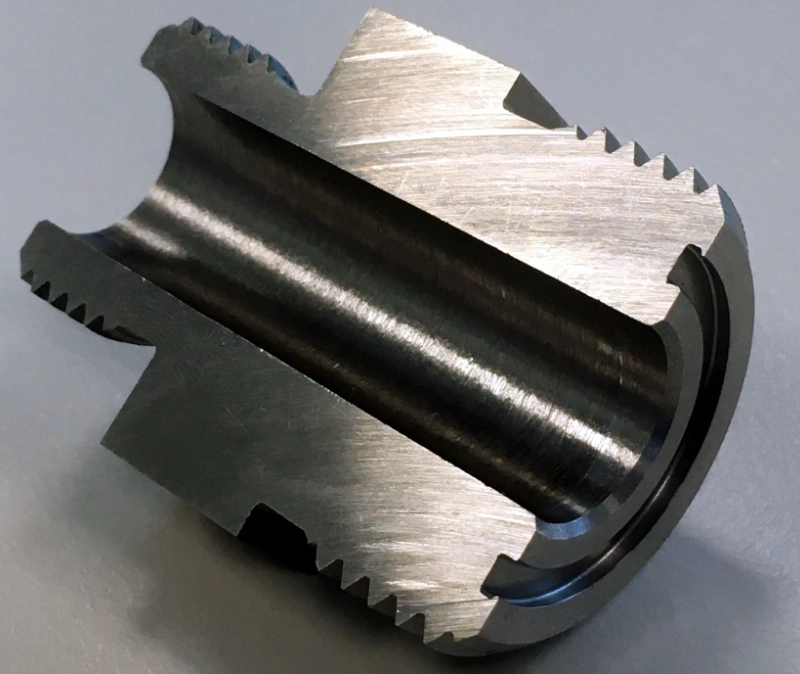
O-ring groove
Threaded Undercut: This type features internal threads created using a special thread milling tool. These threads can attach to a bolt or screw.
Tapered Undercut: True to its name, the tapered undercut has a slant face. Fabricators use this feature to achieve a press fit.
Spherical Undercut: This type of undercut has a curved internal surface. Machinists use ball-nose-like undercutting end mills to produce the feature. This undercut is designed to carry a bearing or mate a spherical surface.
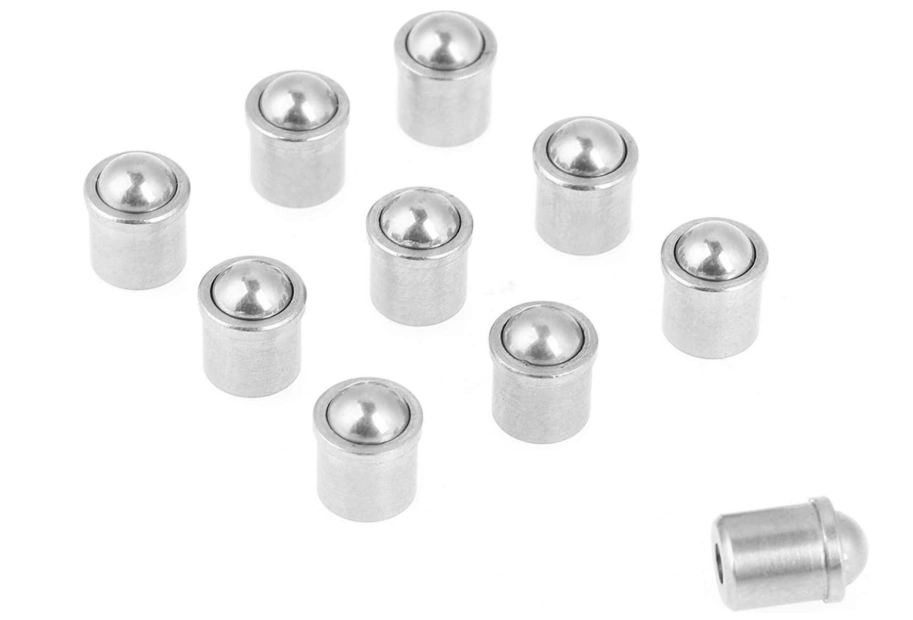
Spherical undercut application
Directional and Functional Undercuts
As we continue to define undercut, another category based on function or tool access emerges. This gives variations such as relief undercut, one-sided undercut, shoulder undercut, snap-fit undercut, and blind undercut.
Relief Undercut: It is created at the sharp transitions of a part for tool clearance and stress-relief. Examples of such locations are bearing seats and thread ends.
One-Sided Undercut: This undercut is made on one side of a feature. It is for limited tool access or single-direction clearance.
Shoulder Undercut: Machinists use this type of undercut where two diameters transit. It is popularly used on shafts for gears and bearings.
Snap-Fit Undercut: This is an elastic deformation type of mechanical lock between parts. The undercut holds the mating part, acting as an alternative to fasteners.
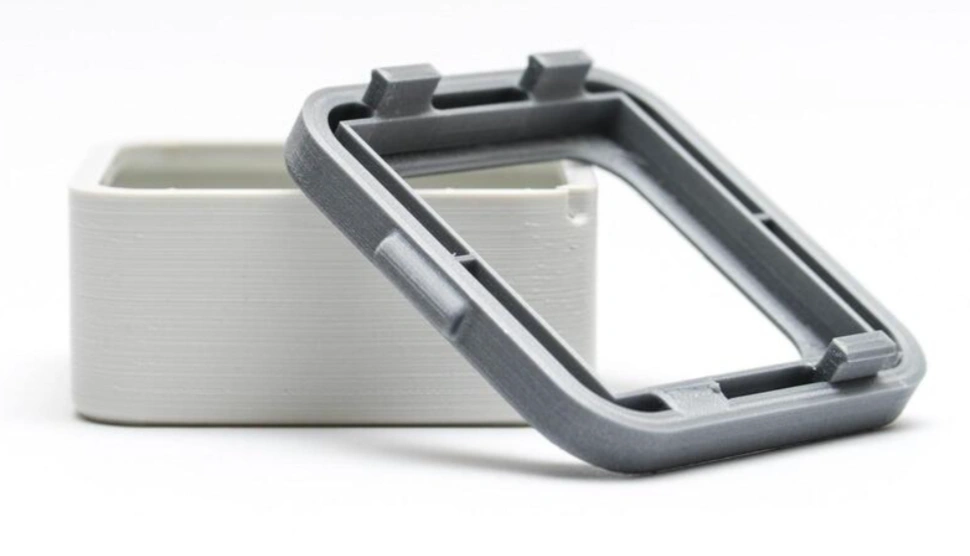
Snap fit design
Blind Undercut: This type of undercut is created where through-cutting is undesired or impossible. Common places for the cut are inside bores or pockets.
Undercut in Different Scenarios
Machining undercuts is so versatile that it can be done in CNC turning, CNC milling, and even on plastics. Regardless of the complexity of the workpiece, there are adequate techniques and machinery to produce the desired recessed profiles.
Undercut in CNC Turning
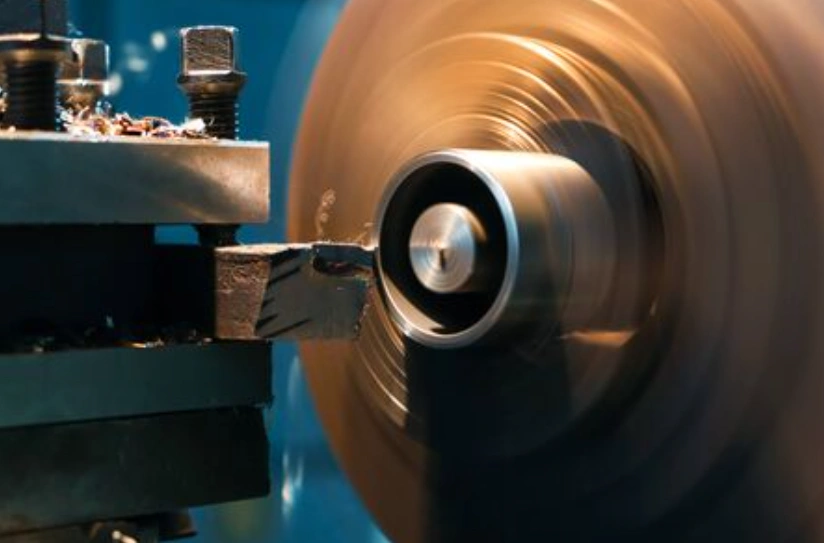
Undercut in CNC turning
This entails machining an undercut on a cylindrical workpiece. It can be for aesthetics or enhanced functionality. Manufacturers use this specific type of undercut for cooling channels, sealing features, enhanced design elements, and flanges for attachment.
Slot cutting in CNC turning is done using various techniques, including combined turning and milling, multi-axis turning, and tilted tool holders.
Undercut in CNC Milling
In CNC milling, grooves or cavities are generated on a workpiece surface. It is a versatile process – it works on flat, curved, or contoured surfaces.
You need this service for coolant passages, decorative elements, splines, or keyways on a workpiece. Pocket undercuts can also be produced this way.
Undercut in Plastics
Regarding material versatility, machined undercuts are possible on plastics, not just metals. These undercuts may be used for decoration, snap fits, threaded features, or sealing elements.
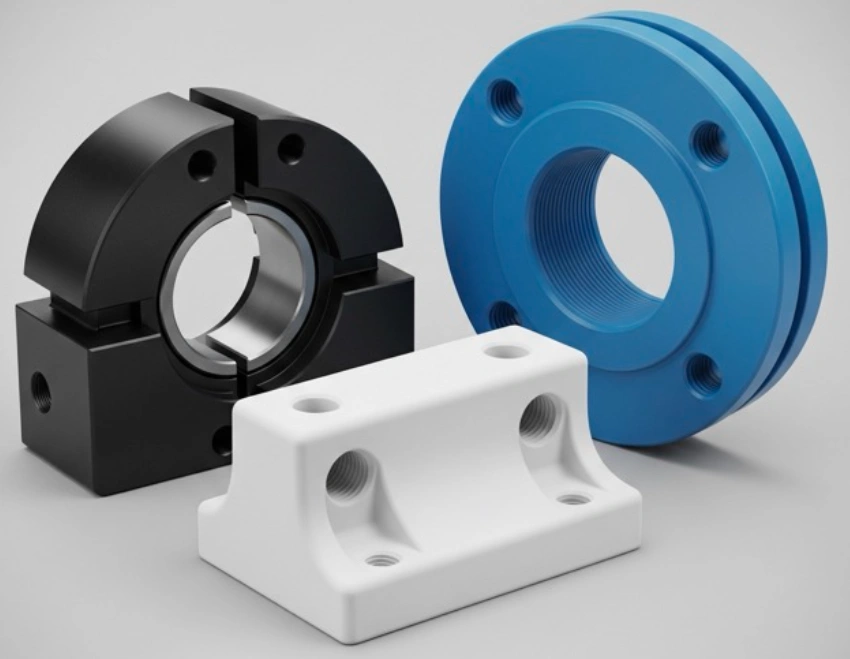
Undercuts in plastic parts
With the challenges of machining plastic, such as tool deflection and material warping, this process requires expert hands and superior machinery.
Tools for Undercut Machining
Popular undercutting tools are dovetail cutters, keyway cutters, lollipop cutters, T-slot cutting tools, and undercutting end mills. Undercuts can be simple or complex, so the tool designs come in different forms.
Dovetail Cutters:
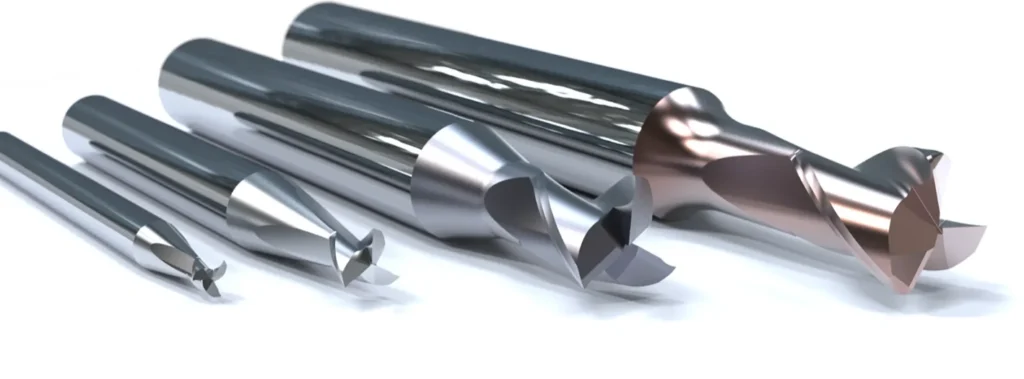
Dovetail cutters
These cutters come with edges shaped like a dovetail. The top section is narrow, and the bottom one is wider. The result is a self-locking joint. You will mostly get two options of this undercutting tool: 45° or 60°.
Keyway Cutters:
These undercutting tools are ideal for producing keyways. With a straight cutting edge, a keyway cutter can create the channel in one pass.
Lollipop Cutters:
Like a lollipop, this cutter has a rounded tip and a long, narrow neck. Designed for smooth countering and reaching tight corners, these cutters are preferred for complex geometries.
T-Slot Cutting Tools:
The T-slot Cutting tool comprises interconnected, horizontal, flat blades. The blades are typically between 3mm and 4mm. The undercuts in CNC machine beds are made using this type of cutter.
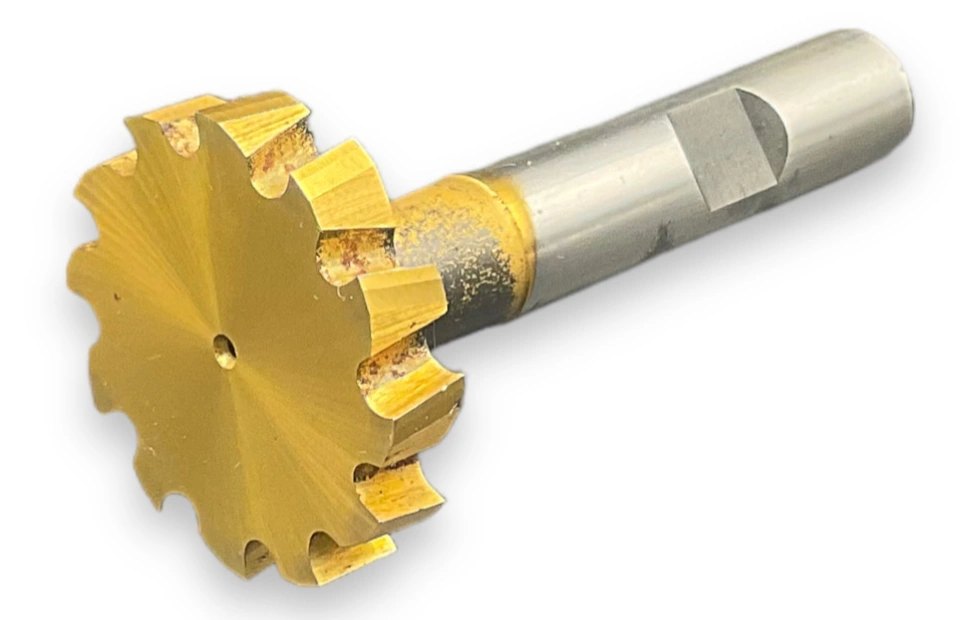
T-slot cutting tool
Undercutting End Mills:
These tools have cutters on the sides and the tip. Machinists can choose from tapered, spherical, and other styles.
What Are The Main Applications of Undercut Machining?
Various sectors benefit from machined undercuts, including aerospace, automotive, and medical. The specific applications include:
- Undercut channels for aerospace structures
- Undercut gears in the automotive industry
- Hose barbs in the medical field
- Custom inserts in sculpting
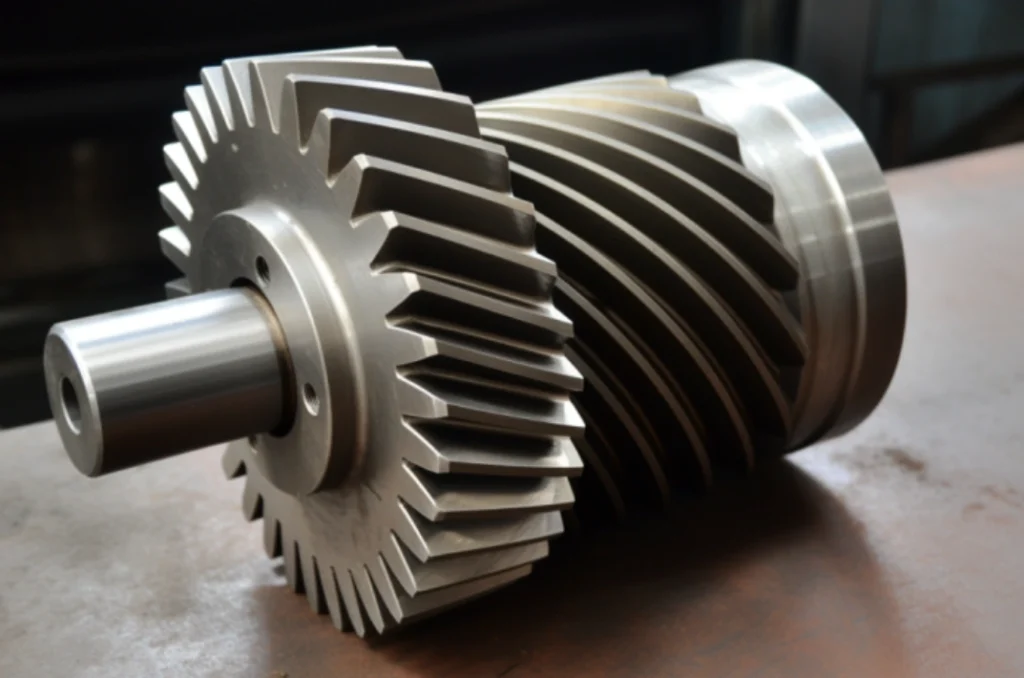
Gear undercut
Whatever the application, the capability of machining undercuts to enable part assembly and function is undeniable. It is one of the areas where many engineers will agree that engineering simplicity comes second to function.
Potential Issues in Undercut Machining
This discussion would be incomplete without discussing undercut manufacturing problems, which include tool wear & breakage, compromised surface finish, difficulty in CNC programming, and tool limitations.
Tool Wear & Breakage – Cutting forces and abrasive materials can cause wear and breakage of cutting tools. Coated carbide tools are usually effective in countering this issue.
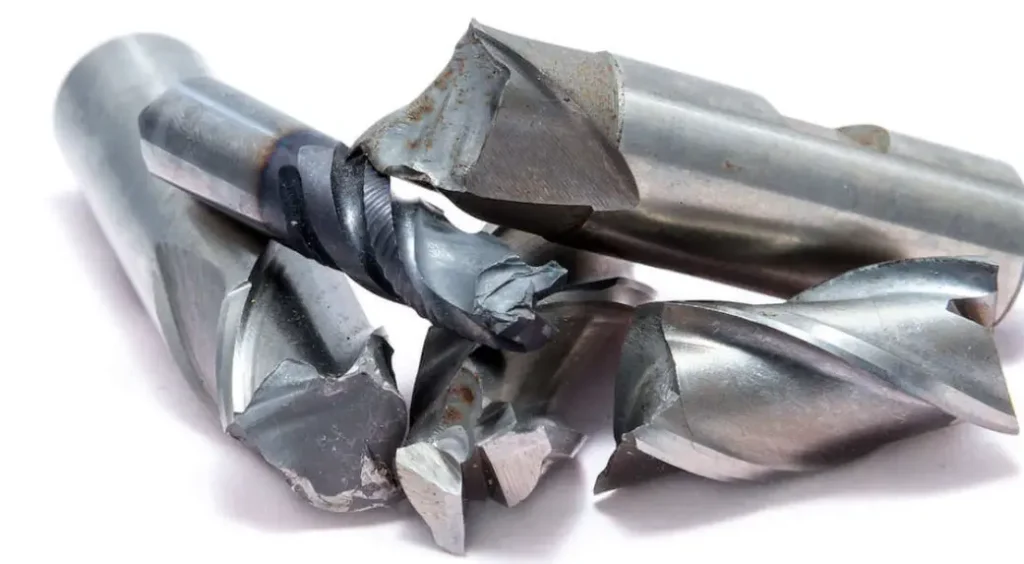
Broken cutters
Compromised Surface Finish – Incorrect cutting parameters and variations in material properties can affect the surface finish. A machining expert always knows how to optimize cutting parameters to achieve the desired surface quality.
CNC Programming Difficulty – The more complicated an undercut is, the more difficult the CNC programming is likely to be. The solution is to use the best CAD/CAM software and experienced machinists.
Tool Limitations – Highly recessed areas are difficult to reach and machine. Advanced multi-axis CNC machines are the best bet for such machining areas. Combining this with professional design and machining strategy makes it even easier.
Tips for Effective Undercuts
First, if you can avoid undercuts, the better. If this feature must be used on a part, consider machining narrow ones. Other tips for success are using standard tools and processes and engaging a machining expert.
Shallow Undercuts
Shallow undercuts are more preferable to deep ones. Considering that undercutting tools are normally connected to a vertical shaft, the depth is limited. Nevertheless, it is important to make the undercut as shallow as possible.
Standard Undercutting Tools
Using custom tools for personalized work comes at an extra cost. In that case, standard tools are always the best for cost-effectiveness. Sticking with standard dimensions, even with a custom tool, could also work.
Expert Machining Service Providers
To avoid all the headaches and focus on your core business, consider collaborating with a reputable CNC machining firm. Advanced machinery, coupled with experienced machinists, makes all undercutting projects achievable.
In Conclusion
Undercut machining is essential in manufacturing projects. Its versatility in creating hidden features of varying complexities is valuable. Engineers use high-quality undercutting tools to achieve the necessary tolerances and overall quality.
Understanding the basics of this crucial feature can help when partnering with a reliable CNC machining service provider. Whether you deal in parts for aerospace, hydraulics, precision instruments, or power transmission, precision machining services can help.
Contact ProleanMFG today for more details.
Learn More: Eight Common Types of Machining Processes