
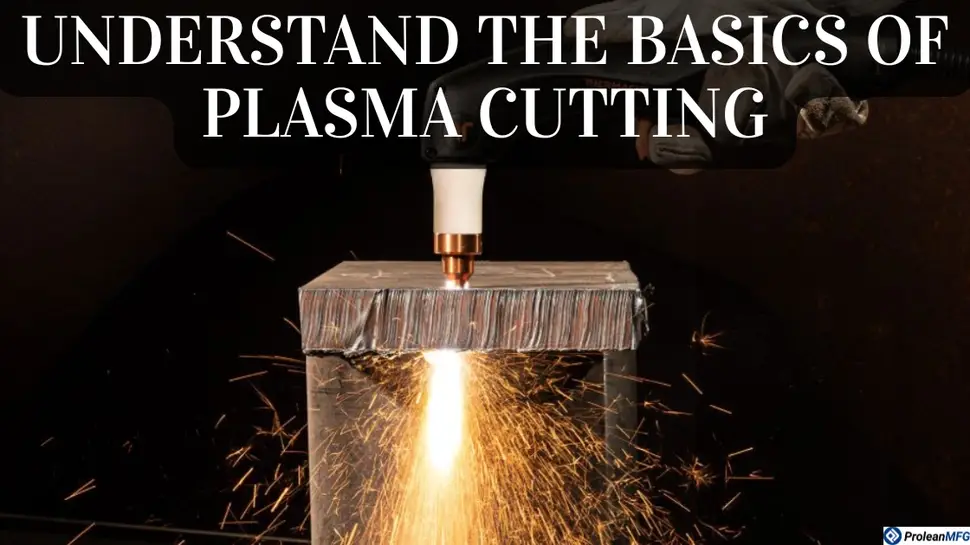

Plasma cutting, the shortened and more commonly used name of plasma arc cutting (PAC), refers to a popular technique of cutting conductive materials using controlled ionized gas called plasma.
With such power, CNC plasma cutting is common in many industrial applications where it is used to cut materials of different types and shapes. Compared to some alternative cutting techniques, this option is highly regarded for creating minimal heat-affected zones and material wastage.
A typical plasma cutting machine comprises a gas supply, drive system, CNC controller, plasma torch, and a working table as the main components. These point to a simple machine setup, despite the seemingly serious science behind its operation.
While the technique is still advancing, its main versions remain as Water injection plasma arc cutting, Plasma arc cutting utilizing a secondary medium, plasma marking, and plasma gouging, among others.
The speed, affordability, and versatility of this cutting method appeal to a wide pool of manufacturers who are able to manage the power requirements and fume challenge of this option that only cuts conductive materials. Most of these are in industries that cut steel, brass, aluminum, cast iron, and related materials.
More information on this cutting technique is covered in the next sections of this article. Read on.
What is Plasma Cutting?
How plasma cutting works
Plasma cutting is a thermal cutting method that uses plasma, a certain type of powerful ionized gas, to cut through material. The high velocity of the plasma also helps eject the cut piece. This fast-cutting technique with both manual and automated capabilities is engineered for electrically conductive materials.
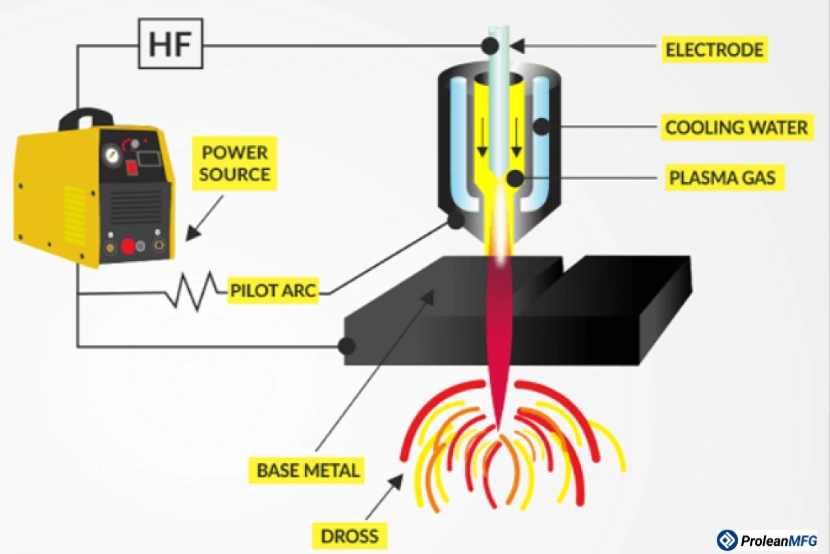
The ionized gas is released as a jet from a compressed state and works in tandem with a fixed electrode as the other primary feedstock. When the plasma is directed on the material, it melts it, with a shielding gas ensuring precision and removing molten material.
As seen below, plasma cutting has a rich history, growing from the 1950s to today, when it is a core cutting process in metal fabrication projects.
A Brief History Of Plasma Cutting
Plasma cutting technology can be traced back to the 1950s as an improvement or extension of plasma welding, which was largely an invention of the American Robert Gage. Union Carbide Corp engineers were at the center of the developments of plasma cutting in the late 1950s and 1960s.
Much of the improvements were focused on the longevity of the electrodes and nozzles, and thanks to these efforts, many people started appreciating and using the technology. The capability of the method to cut nonferrous materials at incredible speeds was particularly appealing.
For every decade that followed, plasma cutting advanced and many aspects of the technology were improved including ease of use, speed of cutting, precision, and safety. Specifically, plasma cutting has seen massive leaps in terms of power supply, nozzle design, CNC and Automation Integration, and cut level.
Today, plasma cutting is renowned for versatility, speed, and unmatched capability to precisely make excellent cuts in electrically conductive materials.
How Plasma Cutting Works
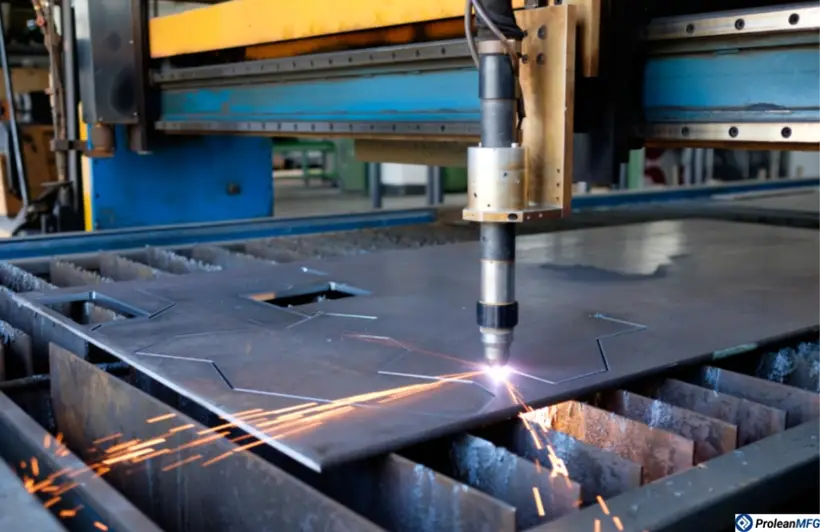
Plasma cutting has an ingenious working principle – an extremely hot stream of plasma (electrically ionized gas) is forced through a nozzle to cut through a specific section of metal. The cutting process is through melting, with the powerful stream blowing away the molten material.
The ionized gas is at about 20,000°C, a temperature that can melt virtually any conductive material on Earth. During the cutting process, the workpiece works as the anode while the machine’s electrode is the cathode. An electric arc is formed between these terminals and plasma is formed.
The plasma jet is directed on the workpiece and as it strikes it, ionization and electrical resistance happen and a very high amount of heat is formed as the gas returns to its original state. The heat melts the metal while the gas flow helps eject the piece.
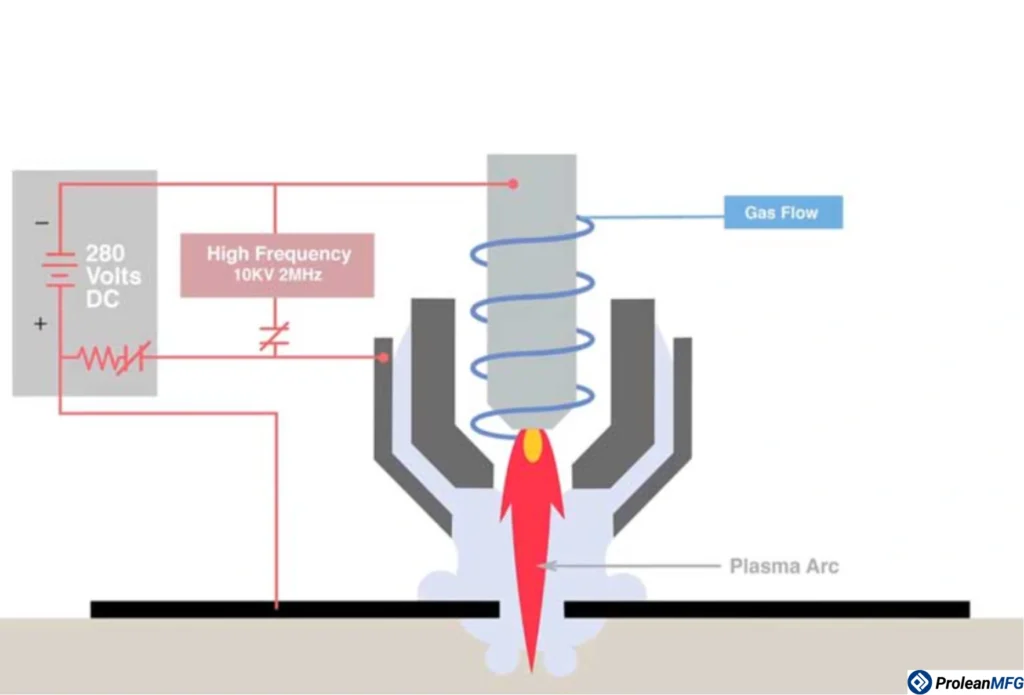
Plasma arc formation
Types Of Cutting Processes In Plasma Cutting
There are several categories of plasma cutting depending on use, arc formation, and torch control mechanism. The main ones are;
- Plasma arc cutting with increased constriction,
- Water injection plasma arc cutting
- Plasma arc cutting utilizing a secondary medium (gas or water)
- Underwater plasma arc cutting
- Plasma gouging
- Plasma marking
Users choose any of these types to suit requirements for automation, speed, and precision, among other aspects. Check out the details of some of these types below to see what manufacturers consider during material fabrication.
Plasma Arc Cutting With Increased Constriction
This is one of the fundamental improvements to basic plasma cutting. It emerged in the late 1950s and the 60’s, with the plasma being passed through a constricted nozzle. The goal of this enhancement was to improve cutting quality. It added some control to the cutting process because the nozzle could be manipulated.
Water Injection Plasma Arc Cutting
This type was developed in the decade that followed, the goal being to use water as a better stabilizer to the plasma arc. Water is also used as a coolant in this method, as most of it remains on the workpiece after the cutting procedure.
Plasma Arc Cutting Using A Secondary Medium
The secondary medium here is gas or water, and the aim is for the medium to combine with the plasma arc and fine-tune the cut speed and quality. This technology is as old as the 1980s.
Underwater Plasma Arc Cutting
Further developments of plasma arc cutting to reduce fumes and noise are the motivations behind this type. It works best at 60 mm – 100 mm depth range in terms of the depth of water above the workpiece.
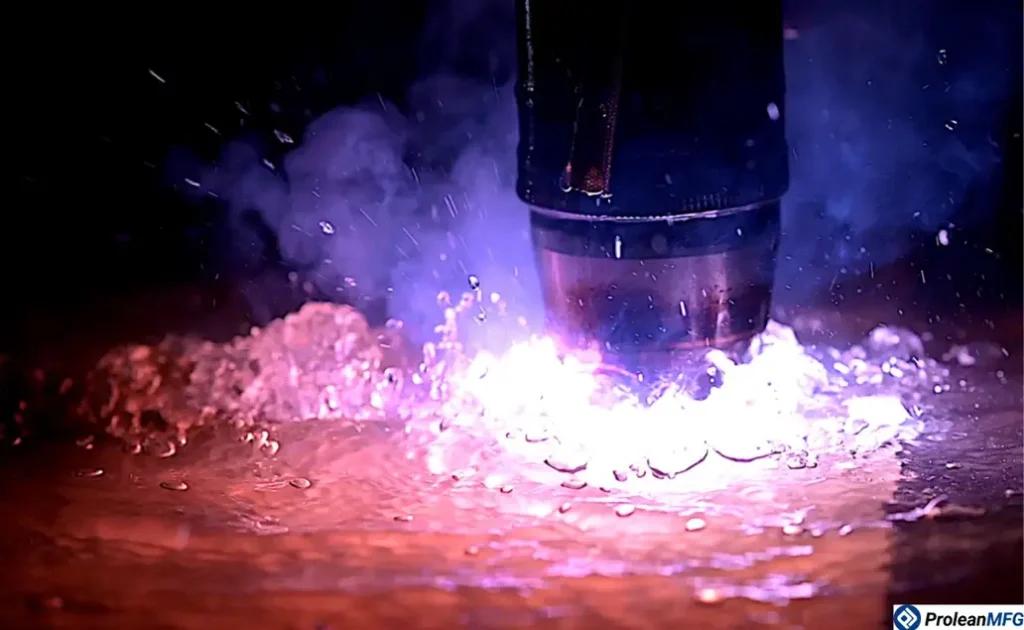
Underwater plasma cutting
Plasma Gouging
It has a much improved plasma arc control capability, hence excellent at forming bevels and grooves on metal. Some fabricators also use it to remove metal and prepare surfaces for welding.
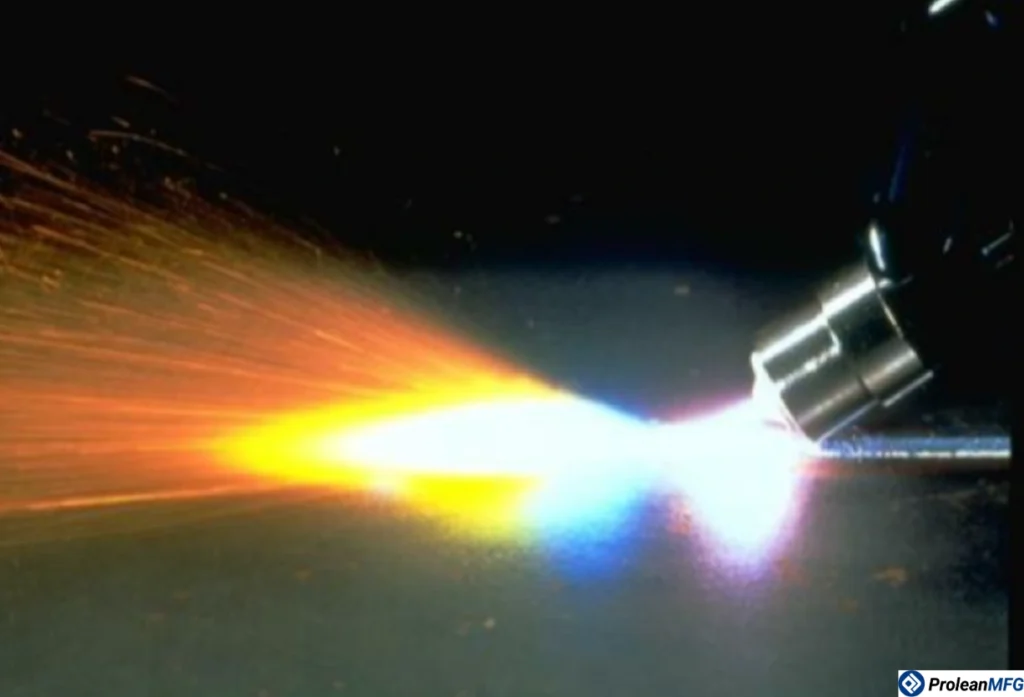
Plasma arc gouging
Plasma Marking
This one is unique because instead of cutting through metal, it creates marks on the surface. It is common in part identification and decorations. Plasma marking is automated, less energy-intensive, and more precise compared to conventional marking methods.
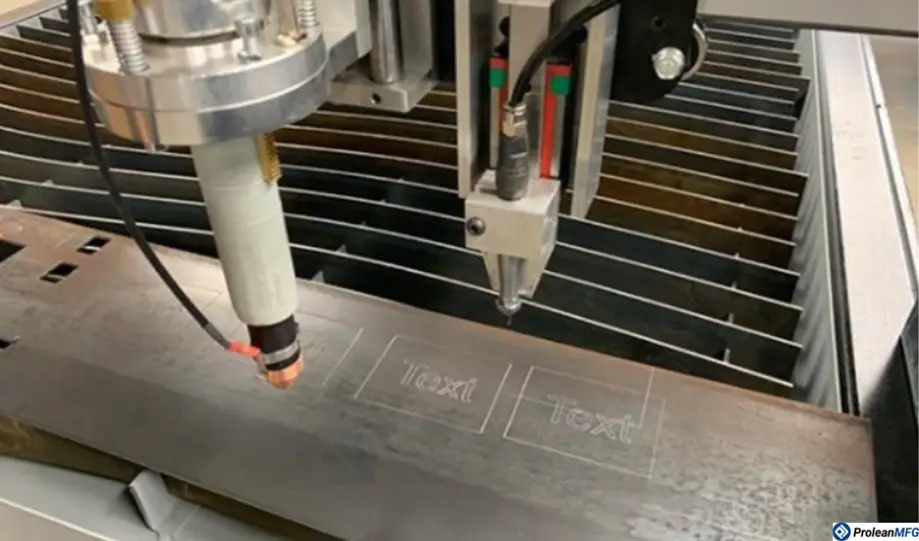
Plasma marking
The Role Of Gas In Plasma Cutting
Gas plays two major fundamental functions in all plasma arc cutting processes: Melting the metal and blowing away the molten metal.
The CNC plasma cutting sytem’s nozzle directs the gas at high temperature towards the workpiece, and with the ionization effect, it cuts metal. Thus, the main function of gas is to help generate the arc that cuts the material.
On top of that, the gas removes the molten metal and stabilizes the plasma arc for enhanced cut precision.
Types Of Gases In Plasma Cutting
Argon, oxygen, hydrogen, and nitrogen apply in plasma cutting as means or agents of forming the powerful arc that cuts metal. Since each of these gases has unique properties, you can expect them to be used selectively in projects. The choice of any of these gases depends on cut quality, material thickness, and type of material.
Argon/Hydrogen For Plasma Cutting
This mixture offers the most powerful cutting capability because it is extremely hot. Even on thick aluminum and steel, this combination provides a clean smooth cut. Of course, such a setup calls for extra precaution, and it is also relatively expensive.
Oxygen For Plasma Cutting
Oxygen is popular for cutting thicker workpieces, mostly at least 1 inch. It is mostly used on mild steel, and not recommended on stainless steel or aluminum due to the risk of oxidation.
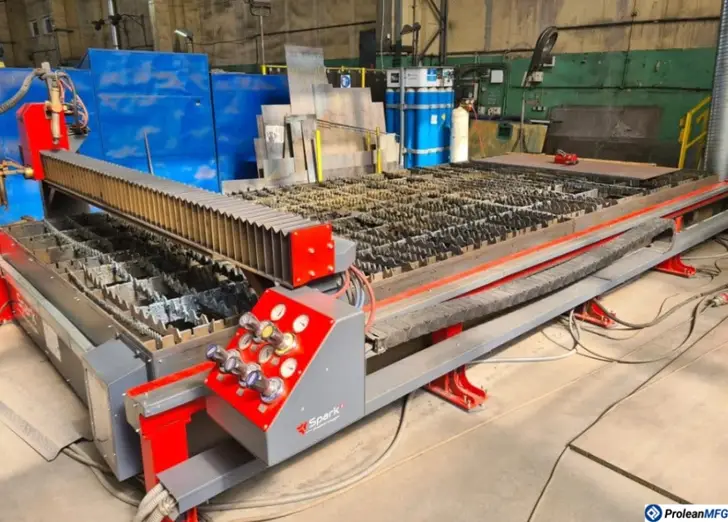
Oxygen plasma cutting machine
Nitrogen For Plasma Cutting
Fabricators should opt for this type for the metals prone to oxidation such as stainless steel and aluminum. The good thing with nitrogen is that it is abundant, hence more affordable. It also provides very clean cuts In thin to medium thickness metals.
Compressed Air
We end the list with the most used gas. Compressed air is not only widely available but also very inexpensive for this process. Although it presents the risk of oxidation, manufacturers use it extensively on common materials including mild steel and stainless steel.
Materials That Can Be Cut Through Plasma Cutting
Plasma cutting is ideal for any electrically conductive material, so the range of materials this method can cut is wide. Common materials in this category are aluminum, copper, brass, and steel.
Noteworthy, CNC plasma cutting can comfortably handle various thicknesses of these materials, and it doesn’t matter whether they are rusty or painted.
Aluminum
Aluminum plasma arc cutting is popular in the automotive and aerospace industries because the metal has a high strength-to-weight ratio. The major challenge is the high conductivity, which can make the cutting process challenging.
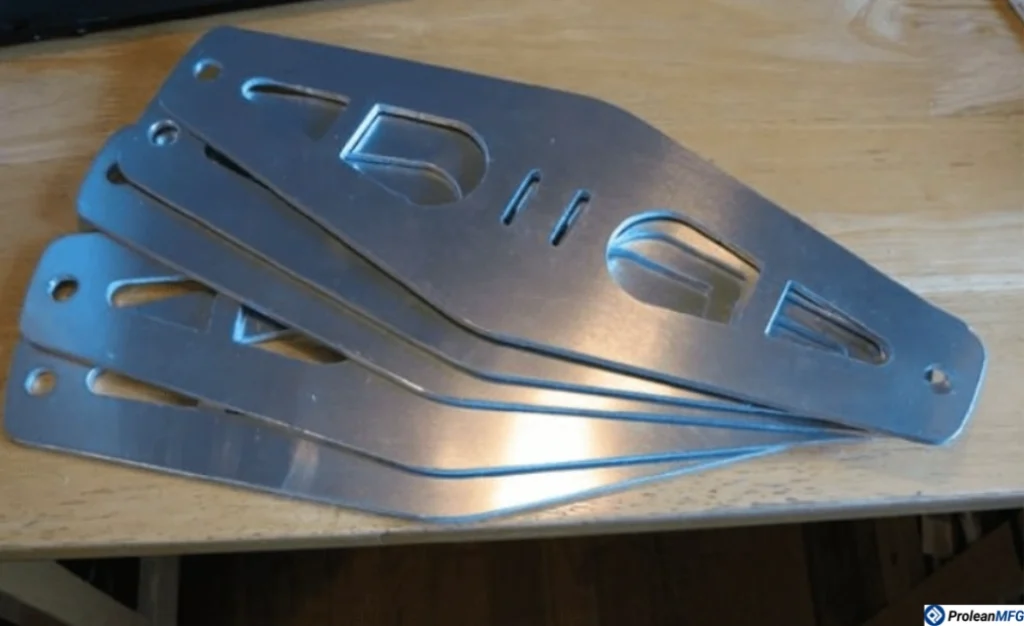
Plasma-cut aluminum
Copper
Plasma cutting of copper for crucial applications such as electricals, plumbing, and aerospace gaskets is a popular fabricator’s task. Like for aluminum, cutting this highly conductive material requires great skill and quality plasma cutters.
Brass
Brass cutting is also common, particularly for decorations. This is another highly conductive material that can pose challenges if the task is not well handled.
Steel
Plasma cutting is applied to various steel grades, including stainless steel and mild steel. Depending on which type is used, both thick and thin materials can be cleanly cut using this technique.
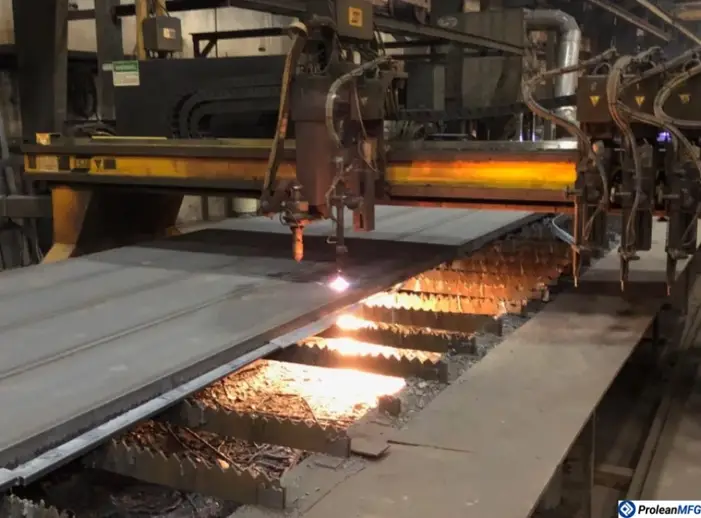
Plasma arc cutting stainless steel
The Benefits Of Plasma Cutting
The level of versatility, precision, and speed from plasma cutting is incomparable to what alternative cutting methods offer. This technique cuts through thick and thin materials with superior accuracy, leaving a clean cut all the time.
For manufacturers looking for a reliable and fast way of cutting conductive materials, this is one of the best methods for the following reasons;
- It Is Cost-effective
Plasma arc cutting is generally cost-effective for materials of up to medium thickness (about 50 mm) . It can accommodate thicker workpieces depending on the type being used.
- It Applies To All Conductive Materials
This demonstrates the versatility of this cutting technique, especially when compared to the flame cutting, which can only cut ferrous materials.
- It Can Cut Complex Shapes
Since plasma cutting is accurate, it is widely used to cut complex metal shapes. Blowing off molten metal and fast-cutting capability minimizes heat transfer, therefore ensuring accurate cuts.

Plasma cut intricate shapes
- HAZ Can Be Minimized
Where the formation of HAZ is likely, the manufacturer can use a method that addresses that, for instance, underwater plasma cutting.
The Limitations Of Plasma Cutting
Plasma cutting can sometimes exhibit some limitations when it comes to handling specific projects. For instance, if you are fabricating non-conductive materials, this technique may not help. On top of that, the cutting method does generate fumes, which can pose health challenges.
- Forms Heat AffectedAfffected Zone
This is easily the biggest drawback of plasma arc cutting. An alternativealternate such as laser cutting, beats this method in this respect.
- Limited Cut Thickness
Still compared to alternative cutting methods like flame cutting and waterjet cutting, plasma cutting may not cut similarly thick materials.
Conclusion
Using the fourth state of matter to cut is a unique property that sets plasma cutting apart from other cutting solutions. Other than that, the technique is versatile, reliable, and affordable. Despite its restriction to conductive materials, it remains one of the most preferred methods in a wide range of projects.
ProleanMFG makes excellent cuts using plasma arc cutting methods. Contact us to learn more about these and related capabilities.
ProleanMFG can process your metal parts using modern cutting technologies to meet customer requirements for precision, cost-effectiveness, and fast turnaround.