

Stainless steel is a versatile metal widely used across industries such as automotive, medical, and aerospace, as well as consumer products. Its popularity comes from its combination of strength, durability, heat resistance, and exceptional corrosion resistance. These properties make stainless steel a reliable choice for demanding applications where performance and longevity are critical.
Not all stainless steel grades are easy to machine. Some can be challenging due to high strength, work hardening, or heat generation during cutting. Understanding the characteristics of different stainless steel types is important to planning feeds, speeds, tooling, and cooling strategies for successful CNC machining.
Why Choose Stainless Steel for Precision Machining Projects
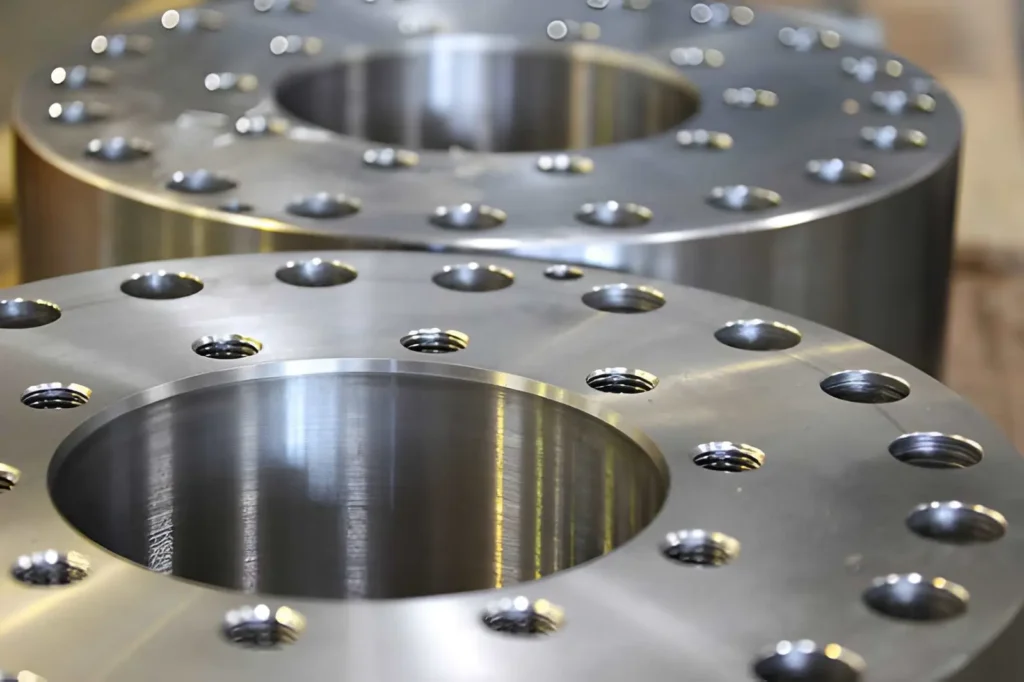
Stainless steel machined flanges
Here are the reasons why stainless steel is a top choice for precision machining:
- High Tensile Strength: Stainless Steel has a higher tensile strength than many other CNC machining materials, such as mild steel, brass, and aluminium alloys. It can withstand bending, rolling, and heavy loads with great success.
- Cryogenic Resistance: Certain types of stainless steel (such as Austenitic) will retain their properties and be resistant to heavy stress at cryogenic temperatures. However, it is not true for all types of stainless steel.
- Corrosion Resistance: Stainless steel resists rust, staining, and water damage due to a naturally forming chromium oxide layer on its surface. Due to its high corrosion resistance, it is an ideal material for indoor and outdoor use, as well as for high-pressure applications.
- Clean Appearance: Its bright silver/white finish also retains a clean appearance and does not rust or discolour. As a result of these characteristics, stainless steel is suitable for use on visible parts that will require no loss of structural integrity.
CNC Stainless Steel Challenges & Quick Tips
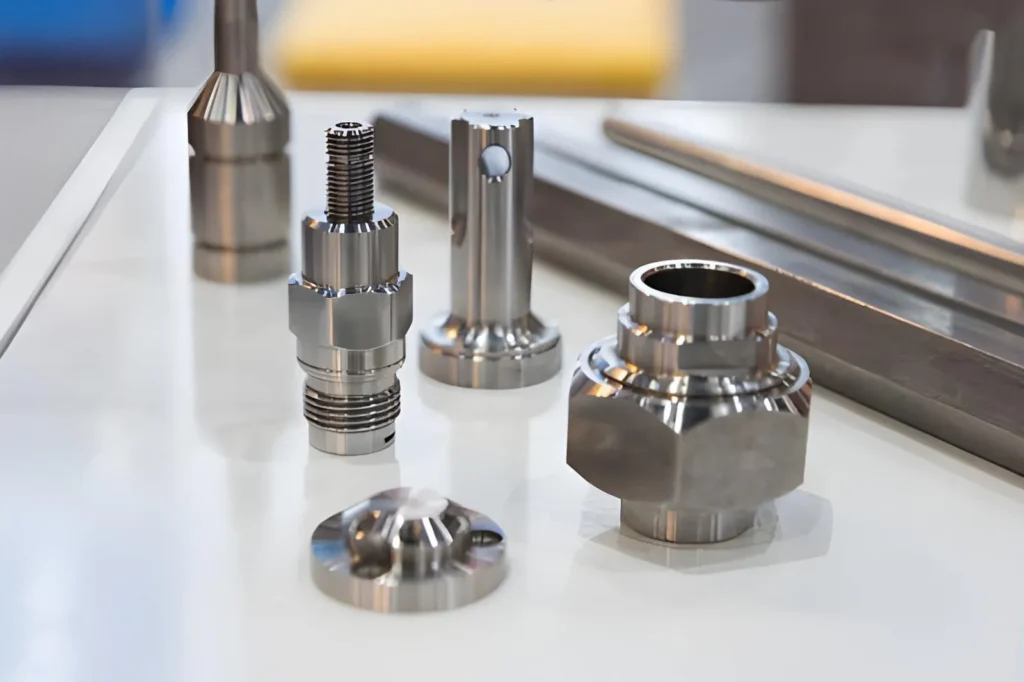
Stainless steel machined inserts for assembly
Machining stainless steel is an art that requires expertise and patience. Stainless steel is difficult to machine due to its high toughness, tendency to work harden, and low thermal conductivity.
Heat Build-up
When cutting stainless steel, the cutting tool experiences rapid heat buildup due to its low thermal conductivity. Excessive heat on the tool may lead to premature failure of the cutting edge. Using the appropriate cooling agent along with proper feed rates will significantly reduce this issue.
Finish Quality
A high-quality finish improves the metal’s corrosion resistance. A high-quality finish improves the part’s appearance and reduces surface defects, making it easier to inspect and handle. Therefore, you should carefully consider how you will cut and polish your stainless steel parts.
Technical Experience
Machining stainless steel needs meticulous attention. The wrong speed or tool can cause work hardening or chatter. Experience helps you avoid mistakes and get consistent parts.
Low Machinability
As mentioned earlier, stainless steel machines poorly due to rapid surface hardening; therefore, do not rush your machining operation. Other metals, such as aluminium or mild steel, are generally easier to machine than stainless steel. Carbide- and coated tools can improve the machinability of stainless steel.
Quick Tips for Stainless Steel CNC Machining
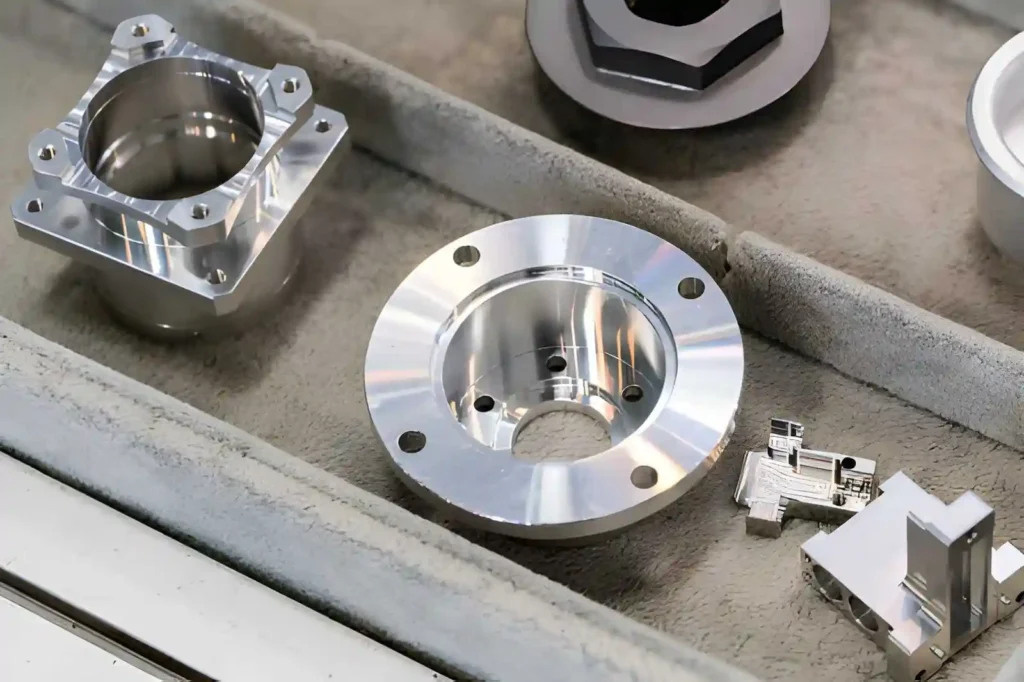
Stainless steel mechanical parts
To machine stainless steel effectively, you need to adjust your approach to get the job done faster and with less hassle.
- Choose the right end mills and drill bits made of HSS, carbide, or coated carbide.
- Control heat using slower speeds and proper coolant.
- Manage chips with pecking or chip-breaking cycles.
- Prevent part deformation by monitoring speeds, feeds, and tool condition.
- Maintain a high-quality finish by careful cutting and polishing.
- For 5-axis CNC machining of stainless steel, choose the right end mills and drill bits made of HSS, carbide, or coated carbide for CNC machining. Cheap tooling wears quickly, significantly slowing your production.
Common Stainless Steel Alloys for CNC Machining
Stainless Steel is not simply “rust resistance”; it is a family of alloys that can include a variety of other metals to provide greater strength, machinability, and/or heat resistance. The heat-treating process also alters the hardness of stainless steel; therefore, it is essential to handle finished parts carefully to prevent warping or uneven cutting. Here are the common grades used for machining stainless steel:
Austenitic Stainless Steel
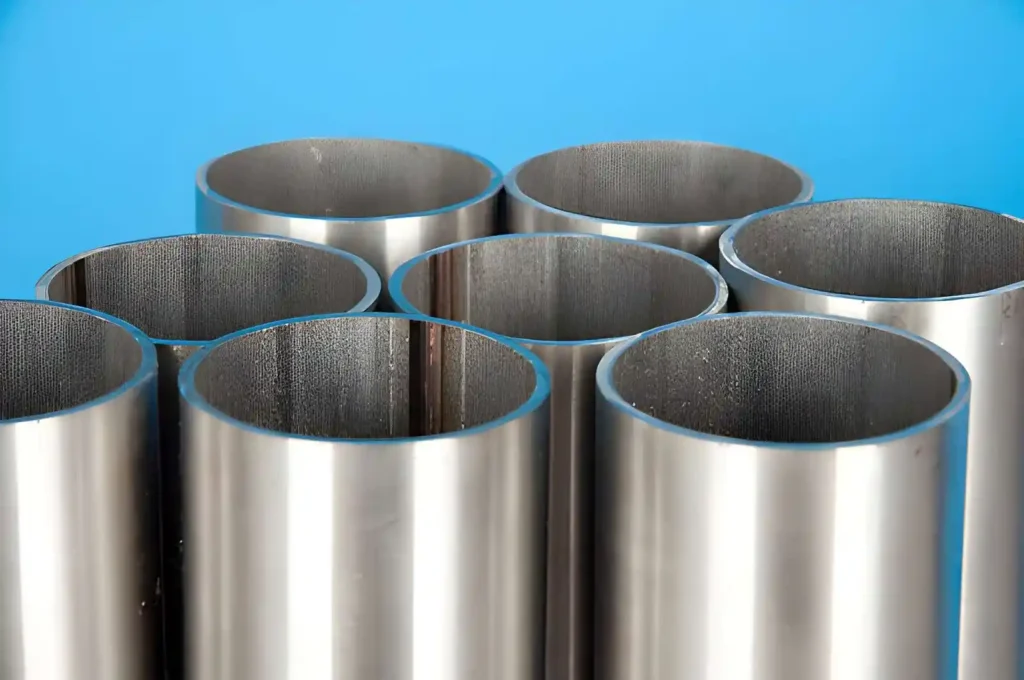
Austenitic stainless steel pipes
These include grades such as 200- and 300-series. Austenitic grades will bend and form well without cracking. Austenitic stainless steels, such as 304 and 316, tend to work harden quickly during machining. When annealed, austenitic grades are non-magnetic. Austenitic grades are used to make panels, brackets, or parts that require forming or bending. Popular austenitic grades are:
303 & 304
- 303 doesn’t harden with heat and can corrode in harsh environments. 304 can crack if overheated and requires careful cutting for tight tolerances.
- 303 is commonly used for nuts, bolts, screws, bushings, and small fittings. 304 is used in food processing equipment, heat exchangers, automotive parts, and architectural hardware. (Also read: stainless steel 201)
Ferritic Stainless Steel
Ferritic grades are magnetic and have superior thermal conductivity compared to austenitic grades. Ferritic grades will not work harden when subjected to heat, so the strength of ferritic grades comes from the alloy itself. Ferritic grades are well-suited for use in structural panels, housings, or components that require good corrosion resistance but do not require extensive machining.
Martensitic Stainless Steel
Martensitic stainless steels, such as 416 and 420, are hardened by quench-and-temper heat treatment. These grades offer excellent tensile strength and wear properties. Sharp tools and controlled feed rates should be employed to minimise the risk of work hardening. These are primarily used on shafts, gears, tools, or components subject to stress.
Duplex Stainless Steel
Duplex grades are alloys combining austenitic and ferritic grades. Duplex grades exhibit both good corrosion resistance and strength under stress. Duplex grades are commonly used in custom stainless steel machining of industrial piping, chemical processing equipment, and structural components that require both strength and durability.
Precipitation-Hardening Stainless Steel
- 17- 4 PH: It’s sensitive to heat, so too much cutting speed can warp the part. It is used in turbine parts, aerospace components, and oil & gas equipment.
- 416: 416 has poor corrosion resistance in marine or chlorine environments; it is not excellent for welding. 416 is used in Shafts, gears, valves, pumps, and fasteners.
Surface Finishing Options for Stainless Steel Machined Parts
The optimal finishing determines how your stainless steel parts perform and how they will appear. The common finishing options include:
Polishing
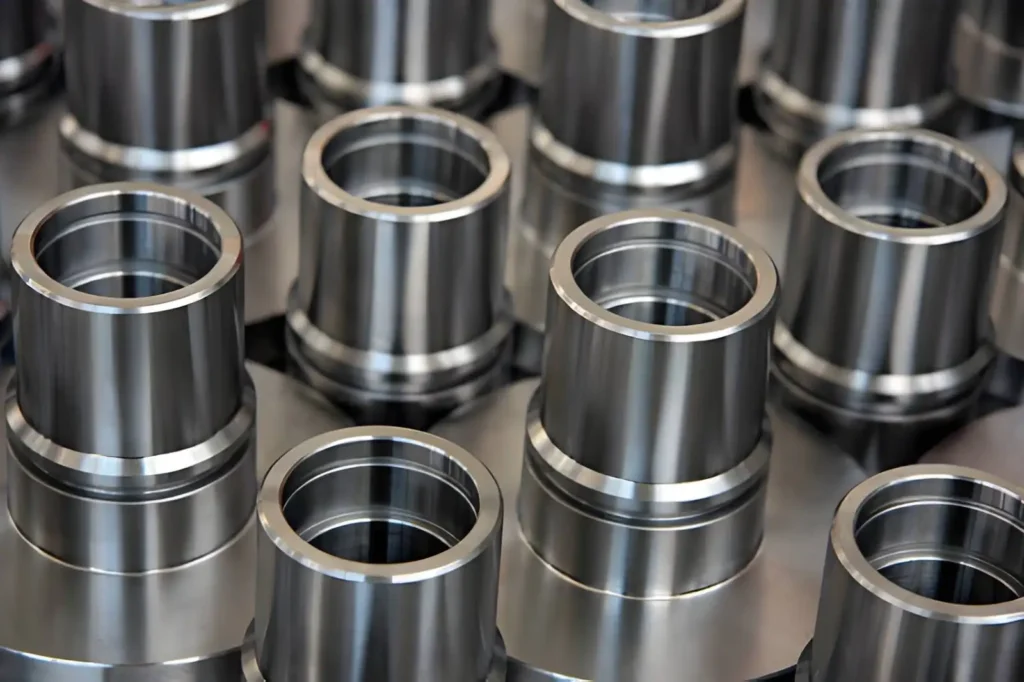
Stainless steel turned parts
Polishing will provide your stainless steel with a clean, reflective, shiny appearance. Some of the most common polishing finishes include #3, #4, or #8 (mirror). A mirror-finished surface will reflect light strongly and feel very smooth to the touch. As such, polished parts are best suited for use on visible surfaces, decorative applications, and similar uses.
Blasting & Pickling
The Blasting/Pickling process produces a flat, dull, industrial-type finish. After being blasted using beads to remove all mechanical contaminants, the part is placed into a passivation tank for chemical cleaning. This method does an excellent job of hiding imperfections and can be used for many applications, such as marine or exterior applications, when corrosion protection is essential.
Brushing
Brushed finishes will have fine parallel lines and a slight sheen. Brushed finishes will not reflect as much light as polished finishes, which provides a softer, professional appearance. Brushing is a favourite among appliance manufacturers, furniture makers, and those who produce parts that require a less bold finish.
Start Machining Stainless Steel Parts with Prolean MFG
Machining stainless steel requires experience and attention to detail. As it work-hardens quickly and generates heat, using the right tools, speeds, and feeds is crucial.
At Prolean MFG, we handle custom metal machining with proper tooling, cooling, and cutting strategies. We carefully evaluate your design, suggest the right materials/grade, so your parts are machined efficiently.
Contact us today, and get an instant non-obligatory quote!
FAQ
Is stainless steel hard to machine?
Stainless steel bends instead of breaking. Moreover, it work-hardens quickly and generates heat. This increases tool wear if not appropriately managed.
What speed should I use for milling stainless steel?
Use a surface speed (SFM) between 100 and 350. Also, adjust chip load depending on tool size, for example, 0.0005″ for 1/8″ end mills and 0.006″ for 1″ end mills.
Which stainless steel grade is easiest to machine?
430F is a machinable ferritic grade. It provides additional sulfur, reducing tool wear and making cutting easier.