
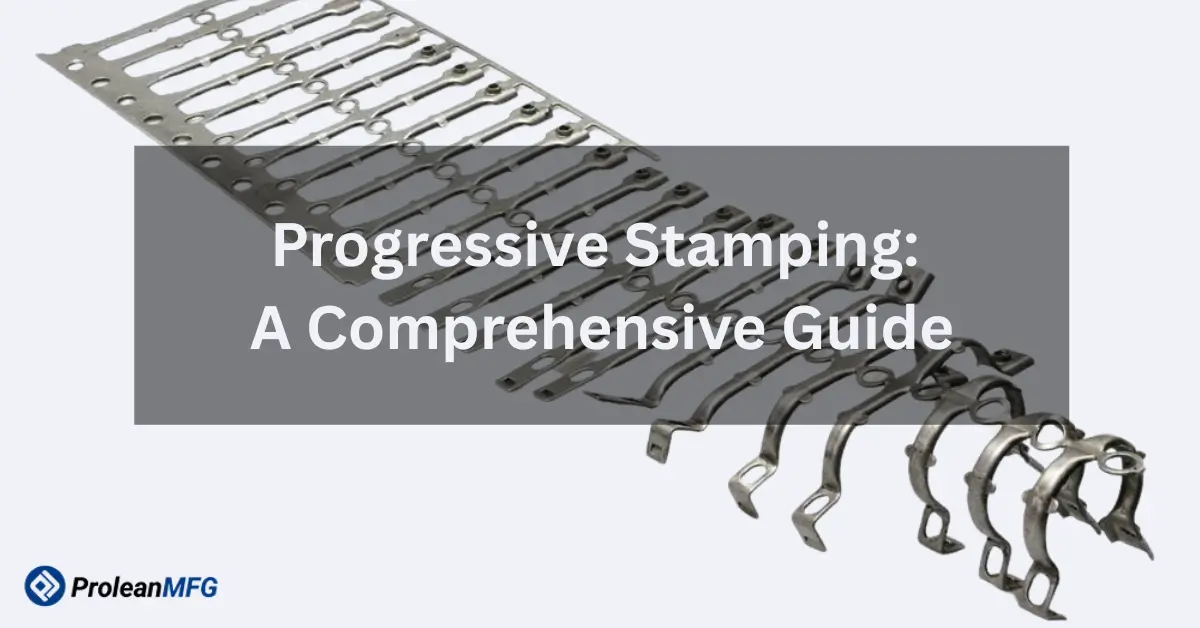

Progressive stamping is a versatile and cost-effective sheet metal fabrication process to create numerous parts and products. This metalworking process can produce metal parts in various shapes and sizes, reducing production costs and lead times.
Therefore, progressive metal stamping is such a sophisticated method that brings a next level of optimization to the most intricate or mass production orders. This guide deep dives into the advantages of progressive die stamping and compares the processes, equipment, and materials used in progressive die stamping.
What is Progressive Stamping?
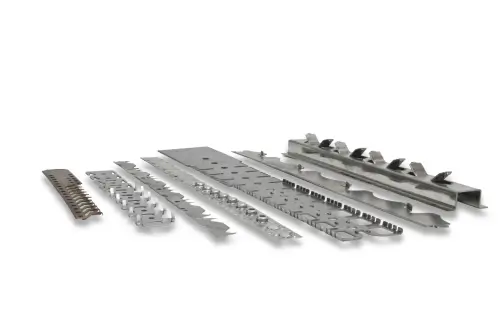
Progressive stamping is also known as progressive die stamping. Progressive stamping is a metalworking process where a strip of metal is fed through a series of dies to create a workpiece. Each station performs its own operation, including punching, bending, coining, extruding, lancing, or blanking, until the final part is produced.
Moreover, multiple operations occur simultaneously in this metal forming fabrication process. That’s why it is highly efficient for high-volume production by maintaining consistency. Ultimately, the progressive die stamping process reduces the number of processing steps by saving time.
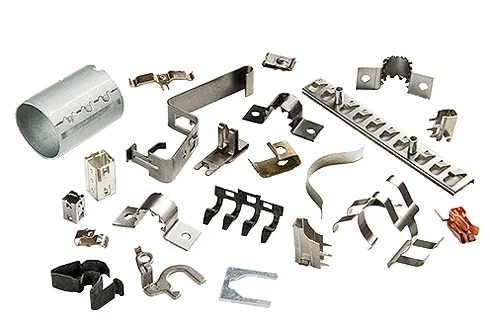
Advantages of Progressive Stamping
Progressive die stamping comes with many benefits that cannot be ignored among other metalworking methods. Therefore, this process becomes a go-to method to create intricate parts with accuracy.
High Production Rate
The progressive type of metal stamping process can produce high-volume production efficiently and quickly since the parts are continuously fed. Ultimately, exceptionally ideal for businesses looking for mass production because this technique offers a low time per part.
Cost Efficiency
As the progressive die stamping is an automated process ensures higher repeatability, requires less setup time, and generates less waste. Hence, there is no need for more equipment and secondary operations. Moreover, this process also requires fewer employees to produce the parts.
Consistent Quality and Precision
The progressive stamping method ensures the quality of each component with the same level of precision. Progressive stamping dies with fixed tooling produce complex parts with tight tolerances and multiple features.
Broader Design Freedom
Progressive die stamping is capable of dealing with both simple and complex geometries accurately, saving time and resources.
Material versatility
The process of progressive stamping dies can accommodate various materials, including steel, aluminum, plastics, and copper.
How Progressive Die Stamping Works: Step by Step
Progressive die stamping works step by step, that involve various key stages that work simultaneously.
Strip Loading
A coil of metal sheet, commonly steel, aluminum, brass, copper, or stainless steel, is placed on an uncoiler and fed into the press using a servo feeder. Then the feeder pulls the strip with a precise interval into the press, called pitch. The accuracy of the feed is up to ±0.001″. Even a small mistake affects the next step. However, the gauge of the material is between 0.010″ and 0.250 for progressive stamping. And the strip width is from 0.5″ to 24″, depending on the size of the part.
Pilot Hole Punching
Small holes, also called pilot holes, are punched into the strip at the first station. Then these pins fit into the holes. This keeps the strip in the exact place before each press stroke. This way progressive precision metal stamping maintains accurate alignment across 5,10 or even 15 stations to create each part correctly.
Progressive Forming Station
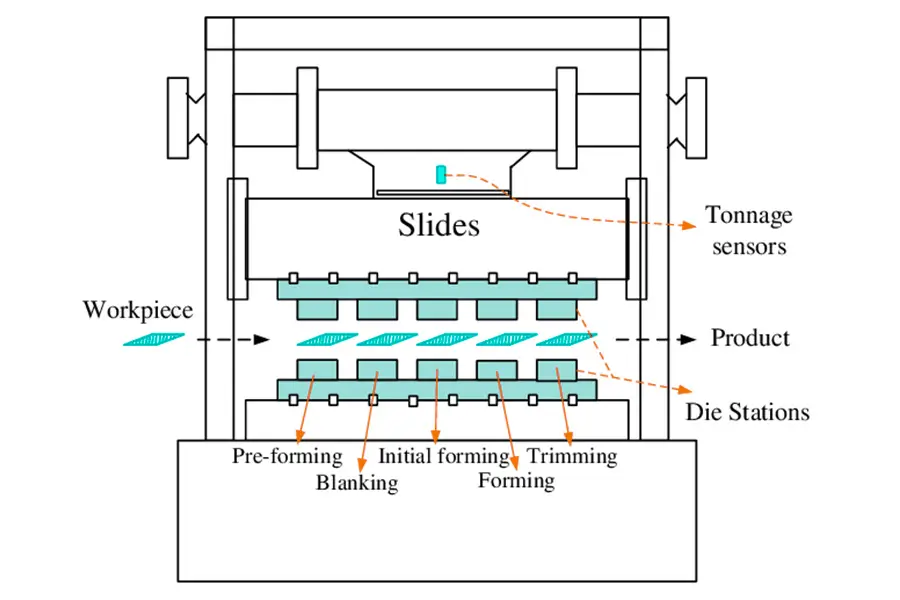
As the progressive die stamping has multiple stations, each has to perform its own operation. Here is the sequence:
- Blanking: Cutting out the final part shape or removing material sections.
- Piercing: Creating holes, slots, or cutouts.
- Bending: Folding the metal into desired angles, such as forming tabs, flanges, and channels
- Coining: Applying high pressure to create fine details or embossing and eliminating springback.
- Drawing: Pulls the metal into a three-dimensional pocket to create a complex shape with consistent thickness
- Lancing: Cutting small tabs in the metal that are partially attached so they can be shaped later.
Moreover, the simple parts run through only 3-5 stations, whereas the complex parts go through multiple runs, 8-15 stations for bending, holes, and formed features.
Cutoff and Ejection
The finished part is separated from the strip at the final station. It then falls into a bin, and the leftover strip comes out as a scrap. The good design left around 15-25% scrap of the material. But the poor design wastes over 40% that ultimately causes extra cost.
In-Die Quality Control
The built-in features of modern progressive stamping include embedded sensors monitoring every stroke. These sensors detect defects, misfeeds, and force problems. The press is stopped if something goes wrong. Ultimately, it helps to reduce the waste and protect the tooling.
Progressive Stamping Dies: What’s Inside the Tooling?
The components of progressive stamping die allow you to ask the right question if you are evaluating a metal stamping services provider.
Die Set (Upper and Lower Plates): The die set is the structural frame of the tool, typically made from the hardest D2 or H13 tool steel. The plates hold the station components in place. These dies weigh around 50 lbs for simple tools and 2,000+ lbs for large multi-station dies.
Punches and Dies: Punches and dies are the cutting and forming parts at each processing step. These punches and dies are fabricated by carbide or high-speed steel (M2) for mass production runs. Carbide lasts 5-10 times longer than HSS, resulting in a reduced replacement cost. Hence, it’s a good option to deal with the orders of over 500,000 parts.
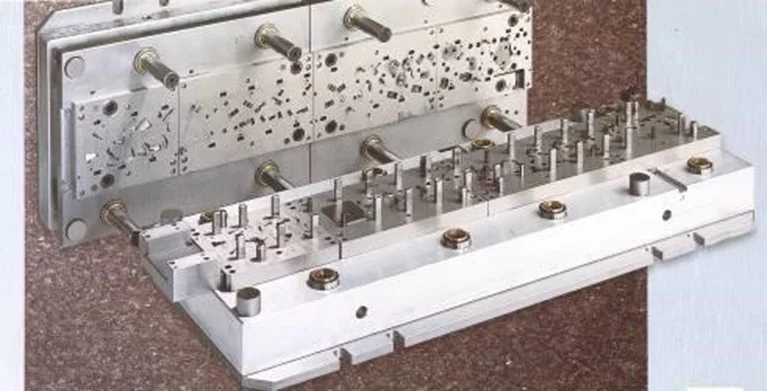
Stripper Plate: The stripper plate keeps the metal strip flat during punching. Then lifts it away on the return stroke. If the stripper is not well-fitted, then it can stick to the punch and misfeed.
Guide Pins and Bushings: The alignment of the upper and lower dies must be within ±0.0002 to ensure millions of strokes. This level of mechanical precision is crucial for the feasibility of progressive precision metal stamping. However, the alignment remains the same until or unless a part wears out or gets damaged.
Pilots: Incorporating pilot holes helps to position the strip accurately. The size of the diameter of the pilot is usually within +0.000″ / −0.0002″.
Materials Used in Progressive Stamping
Progressive metal stamping works well with almost every sheet metal material frequently used in every industry:
Steel (Cold-Rolled, HSLA, Stainless)
Steel is the most commonly used material in several applications. Specifically, cold-rolled steel (CRS) is used with gauges 0.015″–0.187″. The high-strength low-alloy (HSLA) steel grades are ideal for automotive lightweight parts. Similarly, 304 and 316 are used to produce parts for medical and food applications.
Aluminum
Aluminum is a lightweight, corrosion-resistant, and formable metal that runs well at gauges 0.020″–0.125″ in a progressive die. The most commonly used grades are 1100, 3003, 5052, and 6061. The demand for stamped aluminum is increasing due to the weight saving of 50-65% than steel. Commonly used in EV battery brackets, aerospace components, and electronics enclosures.
Copper and Brass
Copper and brass have excellent electrical and thermal conductivity. Copper is typically used in thicknesses ranging from 0.010″ to 0.093″, whereas brass (C260, C360) is used where formability and rust resistance are needed. These materials are commonly used in connectors, busbars, terminals, and relay components.
Exotic Alloys
Exotic alloys include Inconel, titanium, phosphor bronze, and beryllium. These alloys are used to produce where standard alloys cannot fulfill the performance requirements, such as medical, defence, and aerospace applications. However, the carbide tool and slower press speeds are required due to the hard-to-cut and abrasive nature of these materials.
Achievable Tolerances in Progressive Die Stamping
| Feature | Standard Tolerance | Precision Tolerance |
| Hole diameter | ±0.003″ | ±0.001″ |
| Hole location | ±0.005″ | ±0.002″ |
| Blank / part profile | ±0.005″ | ±0.002″ |
| Bend angle | ±1–2° | ±0.5° |
| Flatness | ±0.010″ | ±0.003–0.005″ |
| Part-to-part repeat | ±0.001–0.002″ | ±0.0005″ |
The progressive precision metal stamping is used for automotive sensor brackets, aerospace connectors, and medical parts. These parts can maintain the accuracy up to ±0.001″ even across millions of units.
Progressive Stamping vs. Other Metalworking Processes
The comparison table below guides when progressive stamping wins among other types of metalworking processes.
| Process | Best For | Volume Sweet Spot | Tooling Cost | Per-Unit Cost |
| Progressive Stamping | Small–medium sheet parts, multiple features | 10,000–millions | High | Very low |
| Transfer Die Stamping | Large or deep-drawn parts | 5,000–500,000 | High | Low–medium |
| Compound Die Stamping | Simple flat parts, one stroke | 5,000–100,000 | Medium | Low |
| Single-Stage Stamping | Prototypes, low volume | 1–5,000 | Low | High |
| CNC Machining | Complex 3D geometry, thick stock | 1–5,000 | Low | High |
The progressive die stamping is ideal in terms of cost if your part has multiple features and you require 10,000 units per year.
Progressive Die Stamping Applications
The progressive die stamping method is applied in various industries and applications:
Automotive: Progressive die stamping is critical in the automotive industry, where rapid production of intricate shapes is essential. For instance, brackets, panels, and various engine components.
Aerospace: This method is helpful to produce lightweight and durable components ideal for the aerospace industry. Examples are shims, brackets, structural parts of an aircraft engine, and various other metal fittings.
Electronics: High precision parts are required for electronics such as connectors, terminals, and shields.
Telecommunication: The process of progressive stamping is employed in this industry to produce reliable and long-lasting functionality components, such as antenna parts and electronic enclosures.
Medical: The medical field requires strict hygiene and safety standards, is possible by progressive precision metal stamping. These components include brackets, small containers, and surgical tools.
Unlock the Efficiency of Your Manufacturing Process with Progressive Die Stamping
As a premier provider of metal stamping services, ProLean MFG offers cost-effective solutions for a broad range of applications, including progressive die stamping, effective die stamping, and fine blanking. Our in-house tooling design, with years of experience and full material traceability from blank to finished part, allows us to manufacture high-quality components followed by ISO 9001 quality systems.
Get in touch with us right now to learn more about our progressive die stamping capabilities. To get started, you can get a quote to start.
Final Thought
Progressive die stamping is an important process of sheet metal fabrication. This method is an exceptional choice for high production runs with cost efficiency. This precision process allows the production of both simple and complex parts with different materials at remarkable speed and consistency. Moreover, progressive die stamping is widely used across different industries such as aerospace, automotive, medical and electronics.
Frequently Asked Questions for Progressive Stamping
A progressive stamping press is a machine that moves a metal strip through multiple stations inside one die. Different operations happen at different stations simultaneously until the final part comes out.
Progressive stamping is a metalworking process where a strip of metal is fed through a series of dies to create a workpiece. Each station performs its own operation, including punching, bending, coining, extruding, lancing, or blanking, until the final part is produced.
The part stays attached to the strip throughout the process in progressive stamping. While the part is separated early and goes through different stations in transfer stamping. Transfer stamping allows more flexibility for intricate shapes.
The progressive stamping cost ranges from $5,000 to $50,000+, depending upon the complexity of the die and the number of stations. However, it’s an economical option for above 10,000 units because of the cost.