
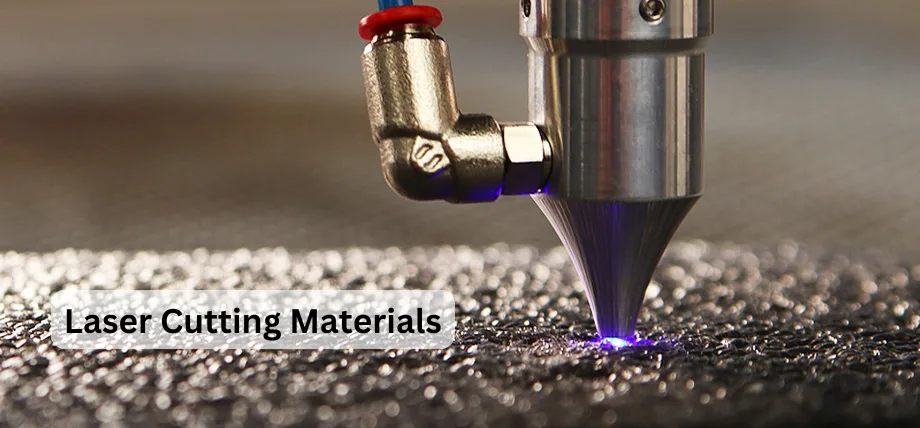

Laser cutting is used to cut and engrave text or logos on various materials. Aerospace and artisanal crafting industries use laser cutting for many components, like metal brackets or decorative elements.
Being a detailed and all-purpose manufacturing process, it relies on using a laser beam. The laser light and material must interact for a precise engraving or cut. Before using a laser, you must check if the material is suitable for laser cutting.
Physical properties determine if you can use a material for laser cutting.
Three of these properties must be examined: the material’s ability to absorb the laser’s wavelength, the material’s tendency to catch fire or produce toxic fumes during the process, and the material’s melting point.
This article will explore all the materials suitable for laser cutting, their distinct characteristics, and the optimal settings for excellent cutting and engraving results.
What Makes a Material Suitable for Laser Cutting
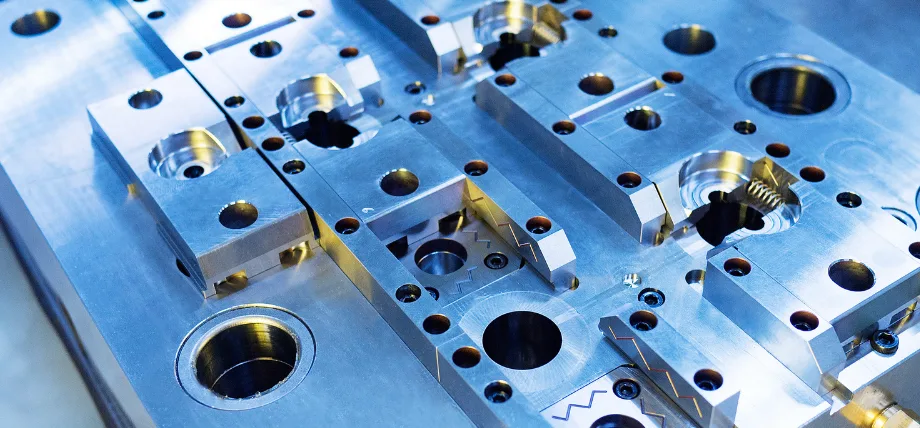
Mold plate
The interaction of the material with the wavelength and power of the laser determines whether it can be a choice for laser cutting.
When exposed to a good laser, a material that allows itself to vaporise and melt without excessive burning can be used for laser cutting, provided it doesn’t produce toxic gases or fumes. Additions to determine materials’ suitability include predictable behaviour and reduced risk of adverse reactions, such as catching fire or the release of chlorine gas through polycarbonate.
Materials suitable for laser cutting can also be identified by their consistent composition. Cutting results are consistent with uniform materials like MDF, whereas heterogeneous materials produce uneven cuts.
Additionally, wavelengths can differ for different types of laser machines. These types are a CO2 laser, a fibre laser, and a diode laser. The absorption of laser wavelength also plays a part in determining what materials can be cut or engraved efficiently. For example, 10.6 µm for CO2 lasers.
In addition, materials with high melting points are challenging to cut, but those with low melting points, such as acrylic, cut well.
The size of a material is also a notable factor. A thicker sheet is harder to cut compared to a thin sheet. This is because thin sheets use less laser power, reducing the risk of burning the material.
Lastly, you must tailor the laser cutter’s power settings to the material’s thickness and composition. Clean cut and precise engraving can be achieved by setting the right speed and focus.
For example, a powerful laser can cut through thin sheets of acrylic but will burn the material if the settings are not optimized for thinness.
On the other hand, materials like polycarbonate are ineffective at cutting polycarbonate because they resist the laser’s energy and produce toxic fumes.
List of Materials Used for Laser Cutting
You must understand the range of materials and how they behave under laser processing in detail for optimal cutting and engraving results.
Acrylic (PMMA): Cast vs. Extruded
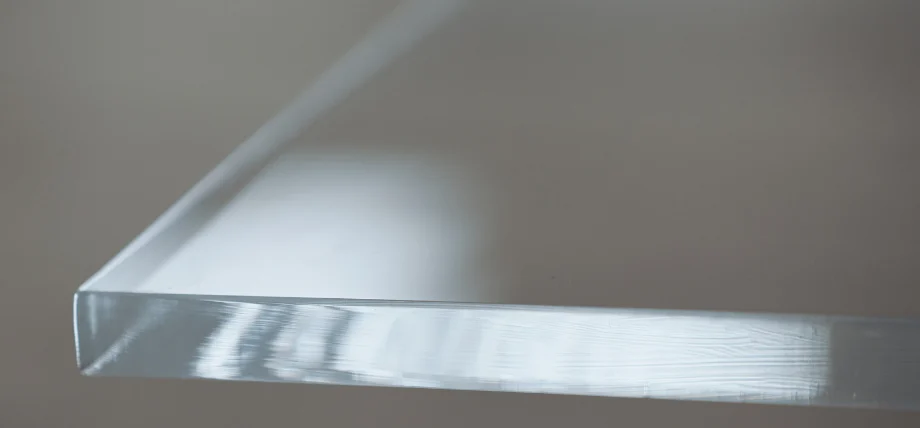
Acrylic glass
Acrylic offers excellent optical clarity and durability and is easy to work with. So, it is preferred for laser cutting and engraving.
There are two types of acrylics: cast and extruded. Acrylic engraving produces a frosted, highly contrasted finish. As a result, cast acrylics are best suited for engraving applications. However, extruded types are best for cutting, as they melt well under the laser, allowing for edges that are smooth to the touch and polished.
Both types of acrylics are readily workable. However, extruded acrylic would have a lower power setting because it has a lower melting point.
Acrylic is highly versatile and widely preferred for laser cutting, like making signs, displays, or fine designs. One should remember that proper ventilation techniques ought to be followed since fumes may be emitted during cutting and engraving acrylic.
Plywood Variants
The most common material for laser-cutting is plywood because it is affordable, and there are different types of wood.
Depending on its thickness and types of resin contained therein, one plywood variant would be better suited for cutting and engraving: birch, oak, or walnut.
Thin plywood, up to 6 mm, in a CO2 laser cuts well, giving minimal charring when optimizing laser settings.
Resin-rich plywood may emit ample fumes upon laser working or require a high-power laser that cuts.
Plywood engraving can produce very intricate designs, but engraving results depend on the grain and quality of the wood. Plywood is excellent for laser cutting applications of furniture, decorative panels, and model making.
MDF
Medium-density fiberboards (MDF) constitute the other wood-based material commonly laser cut. MDF has a uniform composition that facilitates engraving and cutting for highly consistent results.
It is generally employed to cut complicated shapes or to engrave detailed patterns in architectural models or signage. However, cutting MDF generates large fumes that necessitate a strong ventilation system to counter the risk.
In addition, if the laser power is set too high, MDF may start burning and damage the material.
As a result, it is essential to precisely control the laser cutter settings for different materials. Usually, MDF is cut using laser cutters at medium power, which proves to be a cheaper production for many projects.
Cardboard
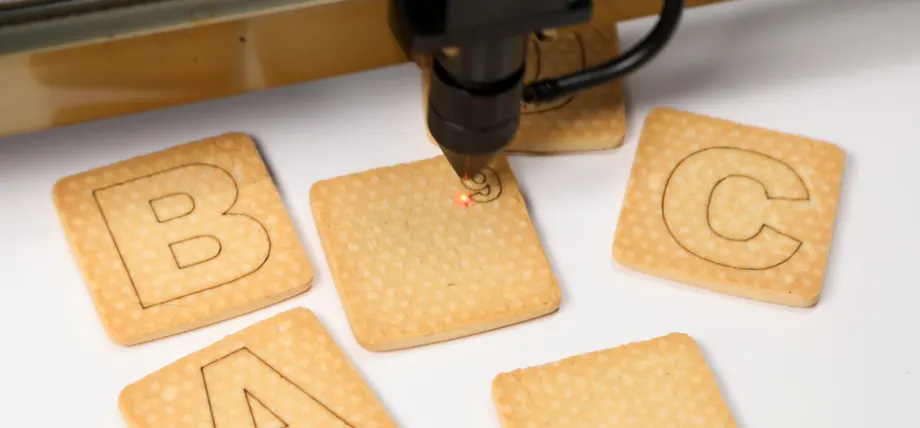
Cardboard laser engraving
Cardboard is incredibly lightweight and thinner than other materials, making it easier for a laser cutter to cut. One can prototype, package, or develop artistic projects with cardboard. The laser cuts cleanly and fast with very little power.
It should be further burned and engraved due to incorrect laser settings. Additionally, it is one of the low-cost and accessible materials for laser cutting. So, the choice is mostly favored for small-scale projects.
Nonetheless, if the laser is not installed with a proper setup, extensive attention must be paid to eliminate the chance of fire.
POM (Delrin®/Acetal)
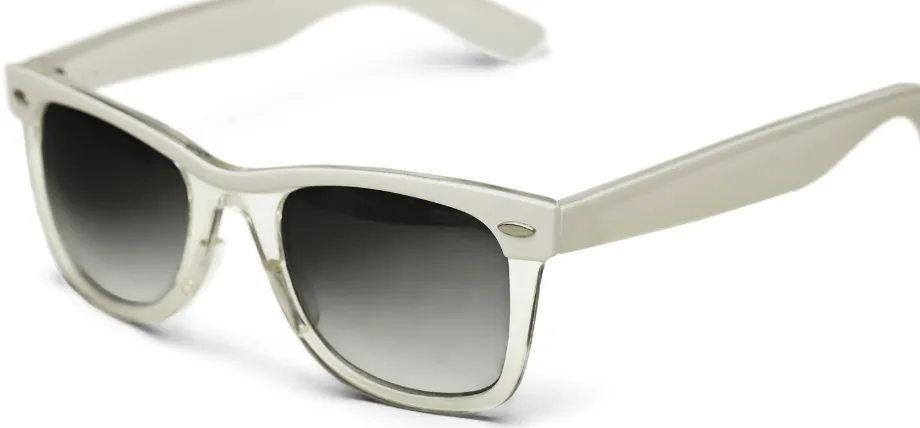
Acetal frame
Polyoxymethylene (POM), the trademark name Delrin®, or sometimes more simply Acetal, is a plastic of high strength, desirable for laser cutting in thin sheets. POM stands for CO2 laser for good cutting with smooth edges and nearly no melting.
Generally, it is valued for its strength and low friction when cutting into gears or mechanical components in engineering applications. POM can emit toxic fumes when cut, so adequate ventilation should be necessary.
Less common is engraving POM, yet it is doable with low power for subtle markings. This material’s high melting point makes it a reliable choice for laser cutting.
Foam Types
Foams, such as EVA (ethylene-vinyl acetate), EPS (expanded polystyrene), and Depron, are lightweight materials suitable for laser cutting in cosplay, packaging, and insulation applications.
EVA foam cuts nicely with a laser, which is very popular with costume design and model making. EPS or Depron simply disintegrate if the laser power is too great, or else they become sticky with residues.
Sometimes you can also engrave foams, mainly for a textured finish. These are best done on low-power settings and in a well-ventilated area that manages fumes safely and efficiently.
Metals: Carbon Steel, Stainless, Aluminum for Laser Cutting
Metals such as carbon steel, stainless steel, and aluminum can be laser-cut or laser-engraved. Fiber-laser-based machines are mostly used since CO2 lasers are not effective for metal.
Thin sheets can usually be cut with powerful lasers to a thickness of around 1-2 mm, depending upon the particular laser cutter; thicker sheets will probably need to be cut by industrial machines. Metal engraving is mostly used to put markings, serial numbers, or decorative patterns.
The laser cutter settings for different metals must be carefully adjusted to avoid overheating or poor cutting results. Metals are a premium choice for laser cutting due to their durability and aesthetic appeal in industries like jewelry and manufacturing.
Leather
Being highly acclaimed in fashion, upholstery, and accessory design, leather can be cut by laser. Natural leather cuts and engraves well, but forms a distinctive burnt edge that sets the aesthetics.
The synthetic-leather kind also conforms to cutting and engraving but may emit more fumes. Both, however, require medium laser power with thorough calibration to not burning the materials.
Being soft and malleable in structure, leather can be an interesting material for laser cutting and engraving, yet one must take care concerning the ventilation system to prevent unwanted fumes.
Plastics (Polycarbonate, Polyimide, Polystyrene)
Not all types of plastics are safe to laser cut.
Polyimide and polystyrene are suitable for laser cutting. You can use polyimide in electronics and aerospace because this plastic can perform excellently. Polystyrene requires monitoring to avoid catching fire or melting, but it cuts well in thin sheets (it is a fire hazard and requires careful attention).
However, lasers are ineffective at cutting polycarbonate because they release toxic fumes like chlorine gas.
As a result, selecting the right materials and laser settings is critical to ensure safety and quality.
Material‑Specific Cutting Parameters
If you want a successful engraving or cutting, you must tailor the cutter’s settings to the material.
The settings you need to be mindful of are cutting speed, laser power, and focus. These change depending on the composition and thickness of the material
Below, you will learn about the specific settings required for certain material types.
Non-Metallic Materials
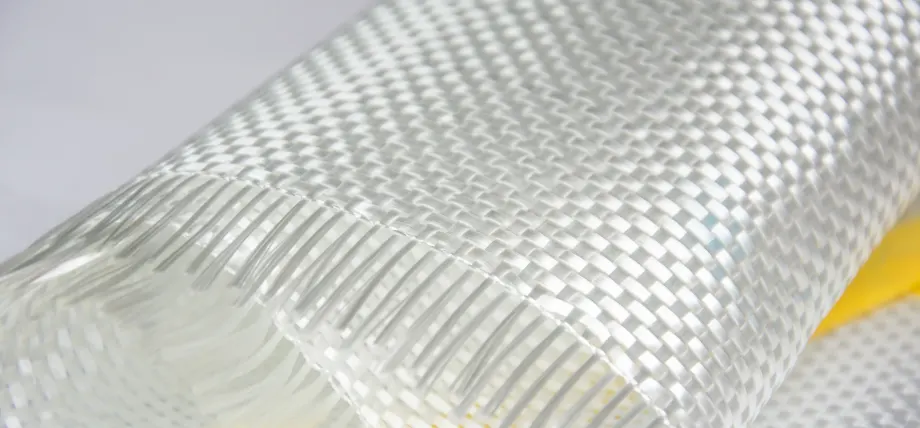
Laser-cut fiberglass
A CO2 laser is used for cardboard, MDF, acrylic, and plywood materials.
You need a normal amount of power for acrylic, about 30-60% of a 60W laser. You also need a 0- 30 mm/s speed to make clean cuts.
A power setting of 50-80% and a slower speed of 10-15 mm/s is to be set for plywood and MDF because they are prone to charring.
A low power of 10-20% and a high speed of 30-50 mm/s are the settings at which cardboard cuts well. These figures also prevent burning the material.
Additionally, for precise engraving results with an enhanced contrast, you need a low power of 10-30% for these materials.
Plastics
Plastics need to be dealt with more carefully.
A power of 40-60% and a speed of 15-25 mm/s is the ideal setting to cut POM. On the other hand, polystyrene is prone to melting, so you need to keep it at a temperature of 10-20%.
As far as engraving is concerned, it’s less common for plastics. However, you can make subtle markings with a power of 5-15%.
Remember, polycarbonate should never be cut because it can release toxic fumes.
Metals
Cutting metals needs to be done with a fibre laser.
A 0.5-1 mm thin sheet of steel and carbon can be cut using a high power of 80-100% from a fibre laser of 1kW. You also need a low speed of 5-10 mm/s.
Highly reflective metals like aluminum require higher power fiber lasers and proper gas assist to cut effectively.
Additionally, 20-40% of power is used for metal engraving. This low power helps in making intricate marks with minimum heat.
Process Considerations
When using a laser cutter, you need to factor in some factors so that the process is safe and efficient.
These factors are also important so that you can produce consistent cutting and engraving results for a variety of materials.
Ventilation and Fume Management
When you cut or engrave certain materials, they produce fumes. Acrylic, some plastics, and MDF are some of these materials.
You need to install a strong ventilation system to remove toxic gases released by POM and polystyrene. This system helps eliminate health hazards.
For example, cutting polycarbonate is unsafe when using an AO laser because it releases chlorine gas.
Laser Power and Speed Settings
You must optimize the cutting speed and power of each material.
This is because a powerful laser can efficiently cut acrylic but burn plywood if you don’t set it properly.
To figure out the right settings, you can test on scrap material first so that you can minimize burning or incomplete cuts.
Material Thickness and Composition
Thin sheets require less power to cut, so you can cut them easily compared to thick sheets.
You must carefully monitor the cutting of heterogeneous materials. This is because they may produce non-uniform results or excessive fumes.
An example of this is plywood, which has a high resin content.
Laser Wavelength and Type
Cutting efficiency is affected by laser wavelength.
CO2 lasers of about 10.6 µm are great for non-metals, while metals work best with a fibre laser having 1.06 µm.
Additionally, diode lasers are suitable for cutting thin and non-reflective materials. The use of diode lasers is less common, though.
You must choose the laser type best suited for each material for optimal cutting results.
Safety Precautions
Materials like cardboard or foam are prone to catching fire. This is why you should ensure that you are using the right settings and that the laser head is aligned.
The risk of toxic fumes released from polycarbonate necessitates that it should never be cut.
So, before diving into the process, you must always ensure that a material is safe to laser cut.
Maintenance of the Laser Machine
For CO2 lasers, it’s essential to regularly clean the laser head, lenses, and mirror so that the machine can perform well. Fiber lasers require less frequent cleaning but require maintenance of the protective glass and nozzle.
This is because misalignment and unhygienic conditions can damage the material and lead to cutting inefficiency.
The lifespan of the cutting machine can also be increased via routine maintenance.
Laser Cutting Service at PROLEANMFG
PROLEANMFG provides high-quality laser cutting and engraving services. PROLEANMFG works with a range of materials for low and high-volume on-demand manufacturing orders.
You can request a free quote today!
Conclusion
By selecting the right materials, adjusting laser cutter settings for different materials, and prioritizing safety through proper ventilation and maintenance, users can unlock the full potential of laser cutting machines.
Whether for industrial applications or creative projects, the ability to cut or engrave a wide range of materials makes laser cutting a transformative technology in modern manufacturing.