

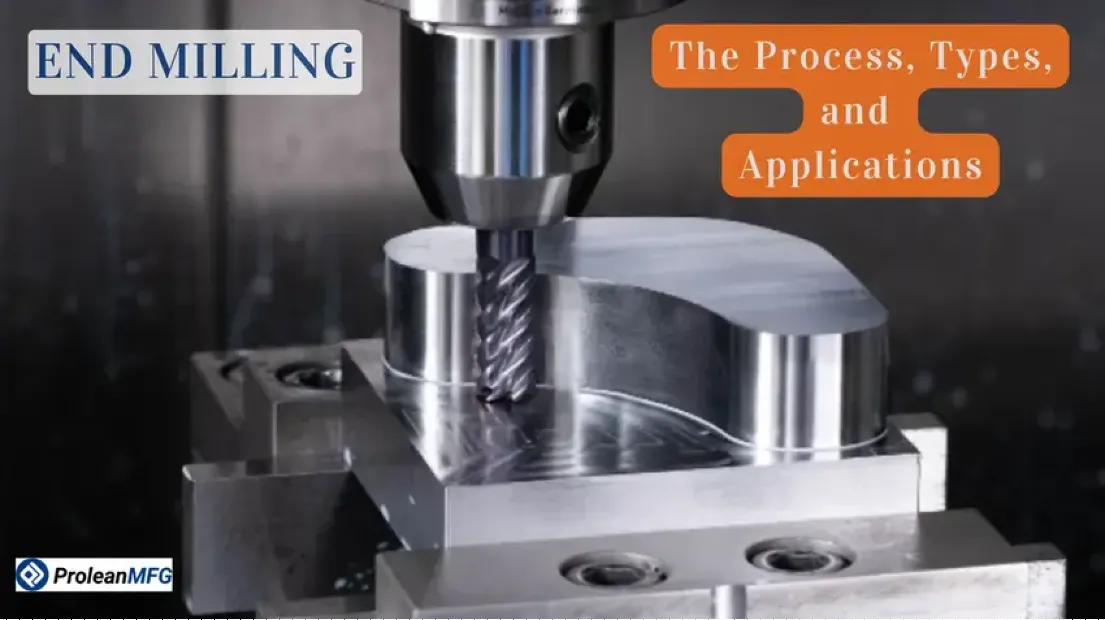

CNC Milling is designed for manufacturing complex, precise parts from different materials. But it is a wide area with different versions, end milling being one of them. If you want to create cavities, pockets, keyways, slots, hole patterns, complex 2.5D and 3D contoured surfaces, and such, end milling is the solution.
The core of the end milling process is a special tool made up of a shank, flutes, and cutting edges. Of course, the tool material is tough, say, high-speed steel and such.
If you are wondering what cut of material can be end milled, the list is endless. Whether it is aluminum alloys, titanium alloys, composites, or plastics, end mill machining can get the job done.
You just have to ensure the correct tool material and design is used. It all appears simple, but the end milling process involves a lot. This article unpacks the details so that your next milling project moves on smoothly.
Learn More: Common Machining Processes
What is end milling?
End milling is a type of machine milling process that uses a rotating cutting tool called an end mill to remove material from a workpiece. As seen in the image below, end milling can be confused with conventional drilling.
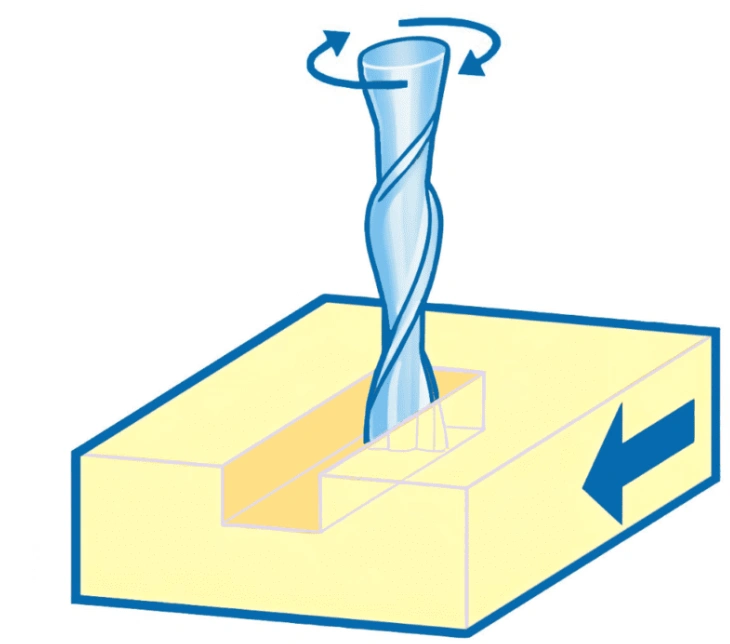
End milling diagram
However, end milling is different in that it doesn’t stop at making a hole. It shapes and refines materials to achieve complex profiles. This milling type is the ideal option for making intricate slots, profiles, contours, and cuts.
What is the Purpose of an End Mill?
As indicated above, an end mill is designed for making slots, profiles, contours, and cuts. It is a highly versatile subtractive manufacturing process. While it can machine flat surfaces, its capabilities also extend to complex 3D geometries.
Therefore, customers can procure these services if they want to create different forms of metals, plastics, or ceramics. Any machined shape or surface that helps parts fit and function properly – cavities, faces, grooves, and so on.
And as will be outlined in a later section, there are different types of end mills to help achieve all the variations you can imagine.
Advantages of End Milling
Here are the main benefits of end milling;
- End mill machining covers a variety of operations – cutting, contouring, etc.
- The end milling cutter is highly accurate and precise – precision machining down to ±0.002 mm
- Creates complex surfaces and shapes
- Only minimal additional finishing processes are required
- Cutting tool designed for achieving deeper cuts
Limitations of End Milling
The potential challenges of end mill machining are;
- Chatter and vibration
- Excessive tool wear
- Heat build up
- Poor surface finish
The Process of End Mill Machining
The end milling process is simple, entailing tool & material preparation, machine setup, cutting parameters, and milling.
Step 1: Tool & Material Preparation
Selecting the material and right tooling to go with it is the first step. The type of end milling tool chosen determines the machining accuracy, speed, and overall quality of the cut or profile.
Step 2: Machine Setup
Once the material and tool are ready, the machinist now sets the CNC milling machine. This step is mostly about ensuring that the workpiece and cutting tool are well secured and in the right position.
This setup is critical as it ensures the machined part turns out dimensionally accurate and with a improved surface finish.
Step 3: Cutting Parameters
Before machining, it is important to adjust the cutting parameters to suit the task at hand. The cutting depth, feed rate, and spindle speed affect the cutting tool performance and workpiece surface finish. Therefore, they must be selected keenly.
Step 4: Milling
A lot happens during the end milling step – cutting, chip removal, and quality control. The rotating cutting tool contacts the workpiece and begins cutting according to the toolpath defined in the CNC program. It could be on a single axis or several of them.
Material pieces are generated during the end milling process, and they could easily crowd out the cutting area. They can be removed using coolant, air, or a vacuum system.
In the final stage of end milling, the workpiece is inspected for surface finishing and dimensional accuracy.
Different Types of End Mills
End mills can be categorized based on tool geometry, tool material, number of flutes on the tool, and tool application.
Types of End Mills Based on Tool Geometry
Considering the tool geometry, different types of end mills are roughing end mill, ball end mill, corner rounding end mill, dovetail end mill, V-bit end mill, square end mill, and finishing end mill.
Roughing End Mill – This is the ideal end mill for removing large chunks of material to start off the machine milling process. Its main features are serrated cutting edges.
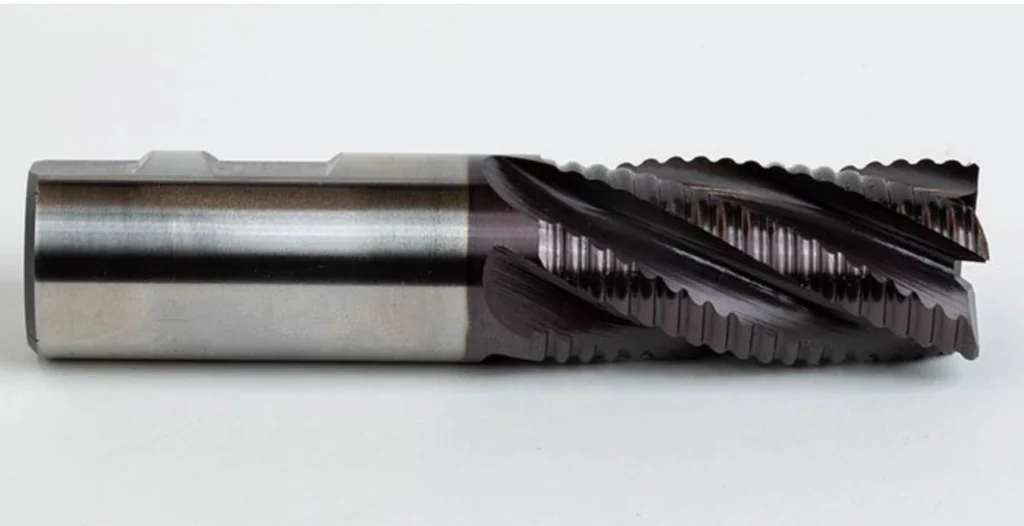
Roughing end mill
Ball Nose End Mill – Its rounded cutting-edge is perfect for making 3D contours on the workpiece.
Corner Rounding End Mill – The cutting edge has a radius to help round off corners. It is usually used in the final phases of machining.
Dovetail End Mill – Dovetile end mills or fishtail milling cutters have characteristic angled edges for making dovetail-shaped profiles. These end mills are usually used for undercut features, notches, and dovetail joints.
V-bit End Mill – The specialized V-bit end mill that’s built for carving and engraving. While 60° and 90° are the most common angles, there are also other angles for the tool.
Square End Mill – Also called a flat end mill, it is defined by 90-degree corners that are perfect for making precise flat-bottomed cuts. It is one of the most common end mill designs.
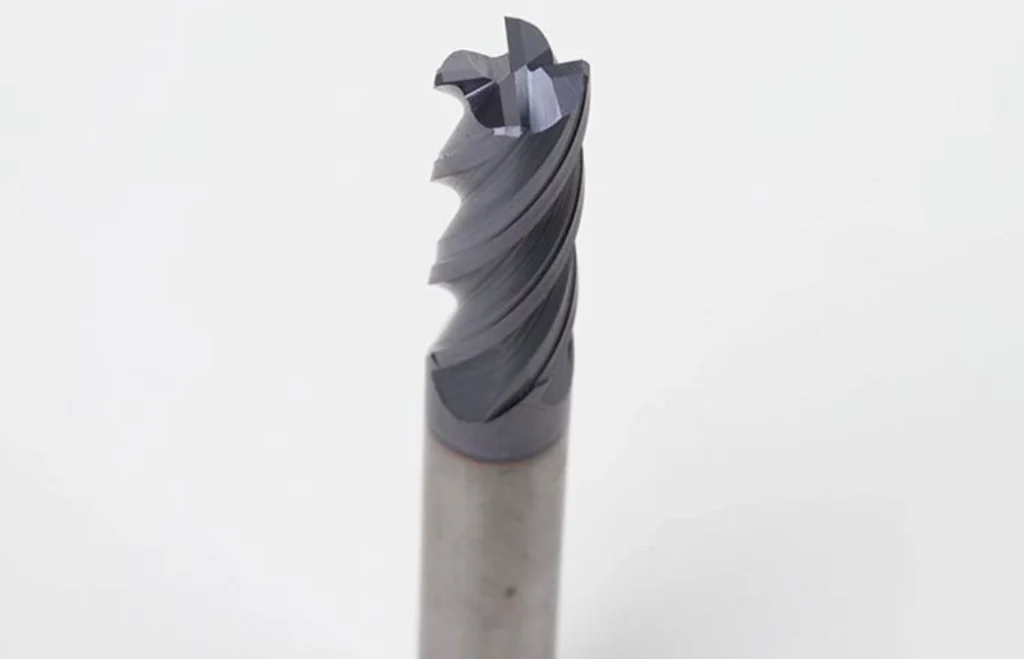
Square end mill
Finishing End Mill – This specialized tool helps achieve tight tolerances and fine finishes. Its helix angles are designed for effective chip removal.
Flat End Mill – It has a flat cutting edge for producing pockets and slots. It is designed for making precise angles and measurements.
Types of End Mills Based on Tool Material
Another categorization of end mills is based on tool material. This gives the following options;
- Carbide end mills
- Cobalt end mills
- High-Speed Steel End Mills (HSS)
Types of End Mills Based on the Number of Flutes
There is also a classification based on the number of flutes on the tool. The main types in this case are;
- Two-Flute End Mills
- Three-Flute End Mills
- Four-Flute End Mills
Suitable Materials for End Milling
The right end mill for the job depends on several factors, the material being one of them. The main material options for end mills are carbide and high-speed steel (HSS).
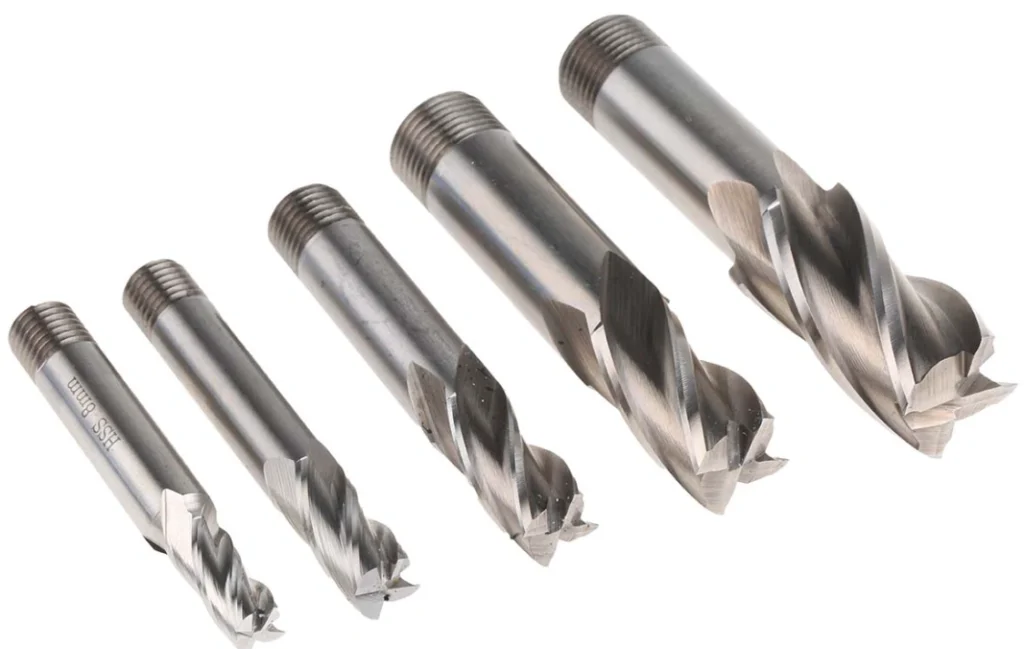
HSS end mills
Carbide is more preferable for CNC machining. It is more productive, requires fewer tool changes, and supports higher speeds.
HSS is an alternative for one-off machining projects. These are usually slower and are probably performed on older machines.
As for the material we can process using end milling, the list is endless. Some of the common materials are;
- Aluminum alloys
- Titanium alloys
- Composites
- Engineering plastics (such as POM, Nylon, PEEK)
- Carbon steels
- Copper and brass alloys
- Magnesium alloys
- Nickel-based alloys
- Stainless steels
- Tool steels
Industrial Applications for End Milling
Many areas use end-milled parts. The most common industries include automotive, medical, aerospace, and tool & die-making.
Automotive – Different types of end milling bits are used in the manufacture of transmission and engine parts.
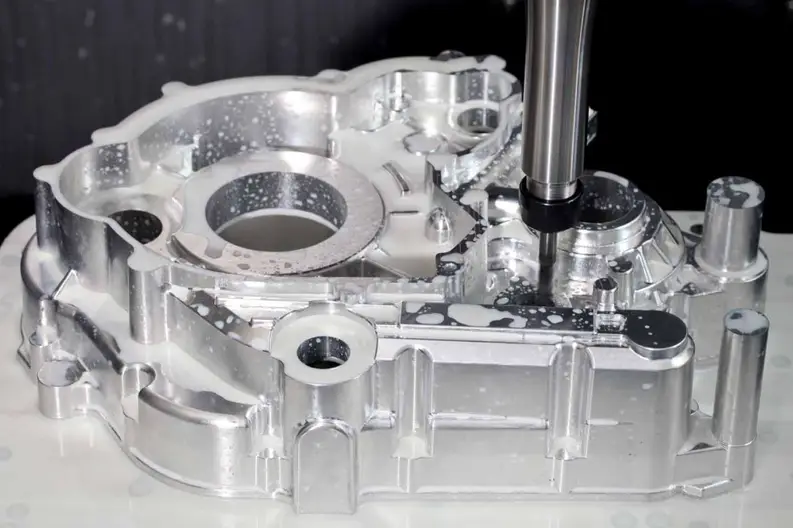
End milling a car part
Medical – Some operational tools and body implants are produced through this milling operation.
Aerospace – Precision fittings and turbine blades are examples of aerospace parts manufactured through end milling.
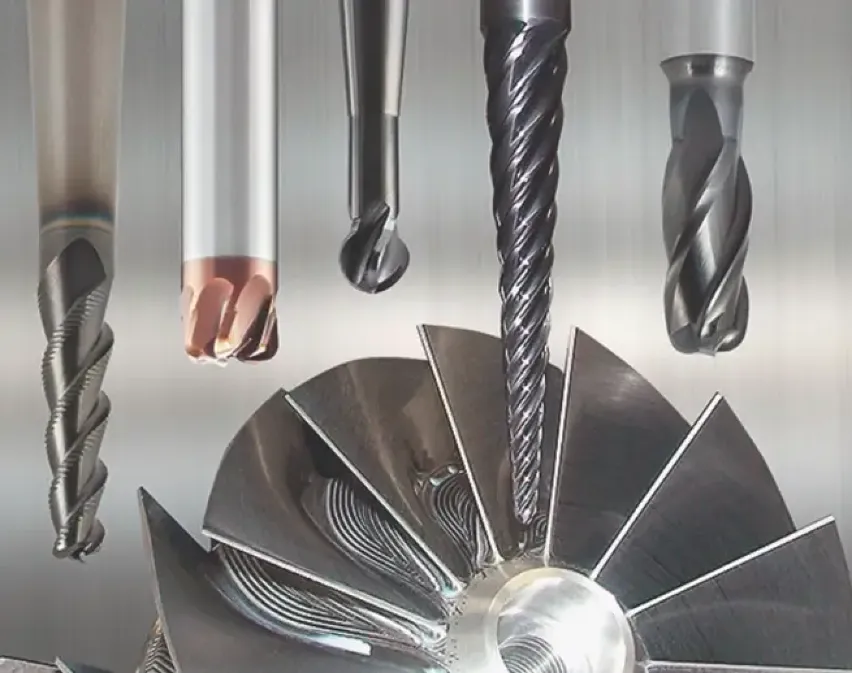
End mills for turbine blades
Tool & Die-Making – End mills for roughing and finishing milling are widely used in the production of dies, molds, and tooling.
Considerations for an Effective End Milling Process
The most important considerations in end milling processes are end mill material, end mill length, number of flutes, tool geometry, and end mill coating.
End Mill Material – As discussed earlier, the main options are carbide and HSS materials. HSS is more expensive, but unsuitable for high production runs.
End Mill Length – We determine the required depth of cut so we can align that with the most suitable end mill length.
Number of Flutes – Aluminum and other long-chipping materials require end milling with fewer flutes (2 to 3). More flutes are recommended if the focus is on higher productivity and materials are short-chipping.
Tool Geometry – Parameters on end milling bits that we consider include rake angle, core thickness, and helix angle. Proper selection of these parameters has an effect on heat generation, chip formation, and other machining factors.
End Mill Coating – Tool coating is applied to minimize friction and protect the underlying material from heat.
End Milling vs Alternative Manufacturing Processes
The alternative manufacturing processes to end milling are plain milling or peripheral milling, surface grinding, and turning (lathe machining). Each of these offers unique properties.
What is the Difference Between Plain Milling and End Milling?
The difference between these processes is that while end milling is designed for making slots, profiles, and pockets, peripheral milling thrives where large, flat surfaces are required. In other words, end milling is for 3D shapes and more detailed features.
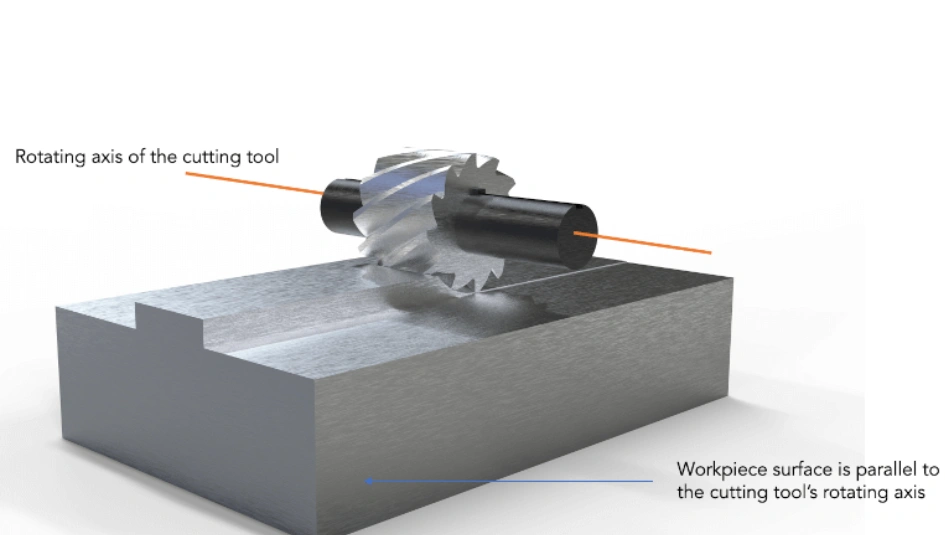
Plain milling
How End Mill Machining Compares to Surface Grinding
Both end mill machining and surface grinding generate flat surfaces, but the functional objectives are different. End milling is more controlled, as its goal is to produce functional and structural geometries.
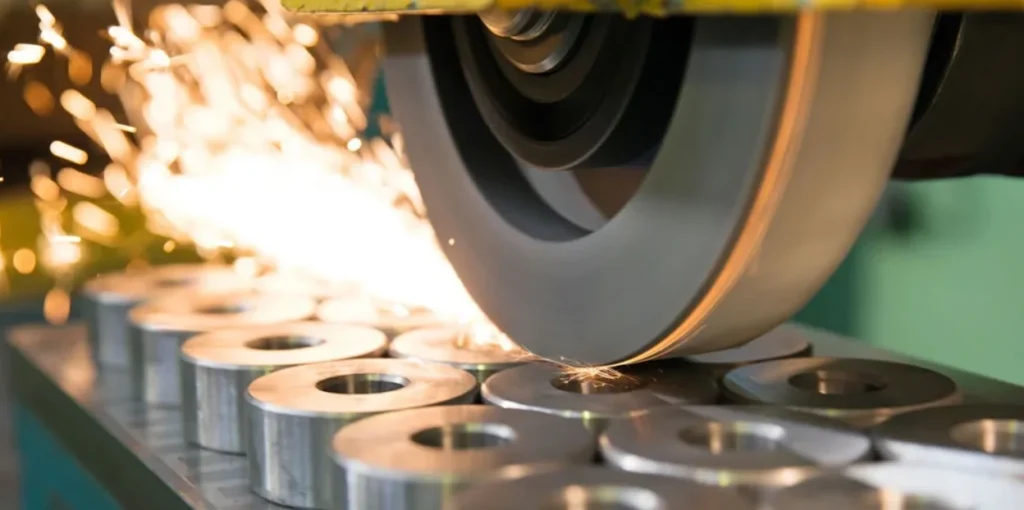
Surface grinding
The machinist uses surface grinding to achieve better surface finishes, tighter tolerances, and higher flatness.
End Milling Comparison with Turning (Lathe Machining)
The difference between end milling and lathe machining boils down to the cutting mechanism and part geometry.
Unlike the contours and complex shapes produced by the end milling process, turning helps manufacture cylindrical or rotationally symmetric parts – threads, shafts, and so on.
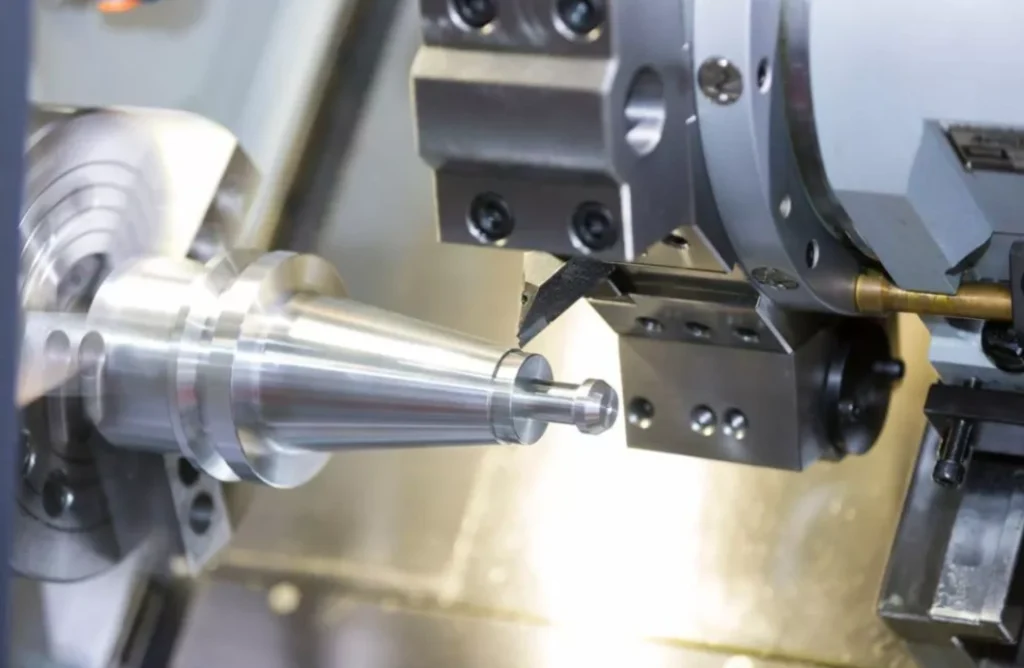
Lathe turning
Also, an end mill uses a rotating cutting tool against a stationary workpiece, while turning uses a stationary cutting tool against a rotating workpiece.
Conclusion
If you are in a related business, it is necessary to understand end milling, including its purpose, how it is performed, pros & cons, suitable materials, and types of end mills, among other angles of the process.
In this article, we have outlined how the process suits aerospace, automotive, and medical industries. These and other industries use the method to process common as well as unique materials.
The different types of end mills enable manufacturers to deliver complex parts. Of course, a professional CNC design and machining company is the secret to optimizing roughing and finishing milling capabilities.
You can never go wrong with our CNC milling services. Upload your CAD file for further discussions and an instant quote.