

Precision machining is a precise manufacturing process crucial for producing high-accuracy components, and it is used in the aerospace and automotive industries.
Computer Numerical Control (CNC) machinery achieves tight tolerances and precision for critical components.
This article provides an overview of precision machining processes and their tolerance ranges, highlighting CNC machines’ use in modern precision industries, such as aerospace and electronics.
What Is Precision Machining?
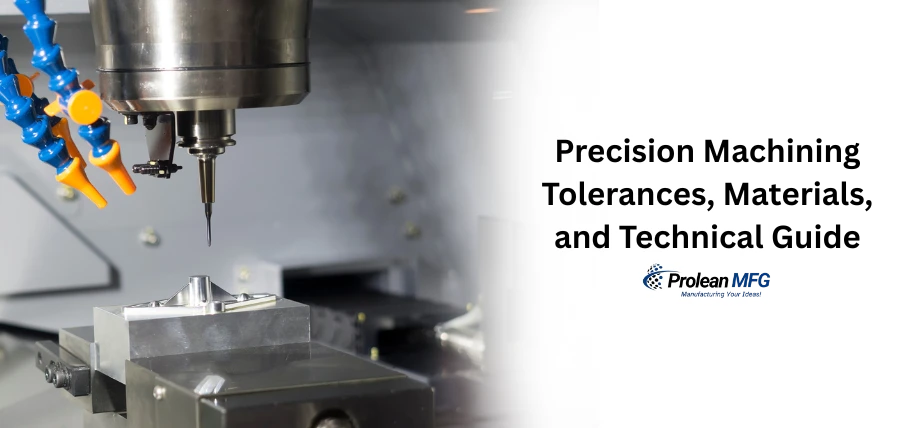
Precision Machining is used to make high-precision components with close tolerance finishes using machine tools such as CNC machines.
Precision machining encompasses drilling, milling, grinding, and electrical discharge machining (EDM), all of which are used to shape raw materials into finished products.
The procedure is controlled by a precision machinist who uses Computer-Aided Design (CAD) and Computer-Aided Manufacturing (CAM) to design and test materials such as metals and plastic composites for complex parts.
CNC machinists and CNC programmers are crucial to accurately interpret 3D models and blueprints for CNC machines.
This is useful for maintaining high precision in components for applications such as aircraft engine parts and automotive components.
How Is Precision Machining Different From Other Machining Types?
The primary differentiating factor of precision machining is the complex technology used to achieve tight tolerances.
Conventional machining is done by manual lathes, mills, drills, and presses, whereas precision machining relies on CNC technology to achieve tight tolerances of up to 0.0001 inches.
CAM/CAD software integrated systems enable manufacturers to automate the process. This helps to enhance efficiency and minimize errors.
Furthermore, CAD and CAM software are essential for high-precision components in aerospace and automotive applications.
Traditional techniques rely on hand-drawn sketches and manual setups. This increases cost and time, leading to an inefficient procedure.
Advanced techniques such as EDM and laser machining facilitate intricate geometries using metal materials. This sets precision machining apart from traditional methods.
What Are The Precision Machining Processes?
Precision machining is a broad term that means various subtractive processes use specialized machine tools to remove material to produce components. Some common processes are mentioned below:
CNC Milling
CNC milling
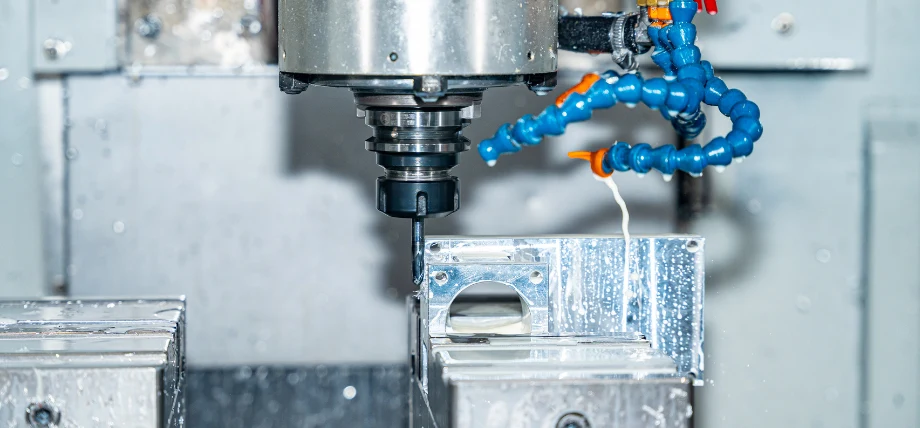
CNC milling is a multi-axis process commonly uses 3-axis or 5-axis machines with a specialized high-speed rotating cutting tool.
The high-speed cutting tool helps to achieve tight tolerance as close as 0.001 inches in complex parts and designs such as undercuts and slots.
It is commonly used in industries such as aerospace for its high precision and excellent surface finish.
Turning
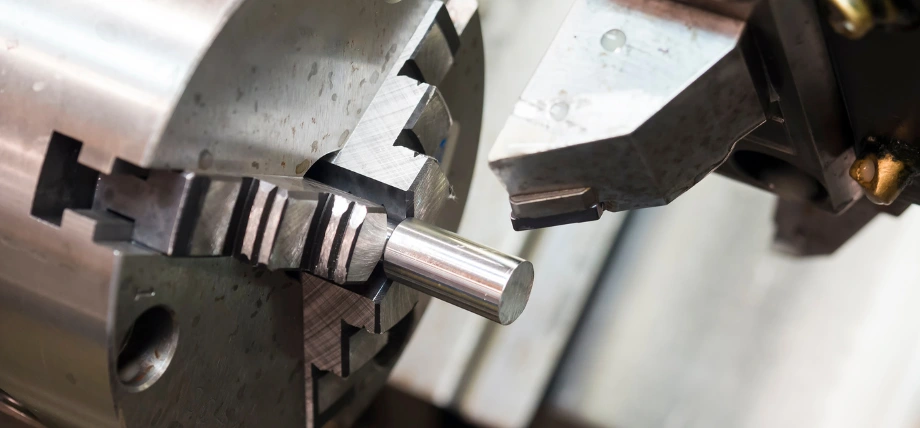
CNC turning
Turning is primarily used to make cylindrical components. It is done by mounting a workpiece on a CNC lathe and turning it while a stationary tool removes excess material.
Precision CNC turning can achieve precision up to 0.0005 inches, ideal for parts such as shafts and axles used in the automotive industry.
Grinding
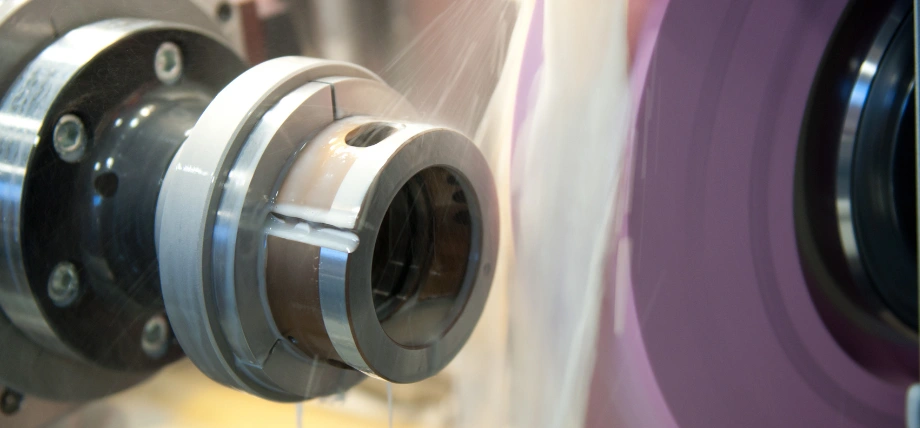
CNC grinding
CNC grinding is done with the help of abrasive wheels, which slowly grind down excess material. This gives a polished and refined surface with tight tolerances. Hard materials such as tool steel undergo CNC grinding.
Swiss Machining
Swiss machining is distinguished by the machinery used in the process. It is performed on CNC Swiss lathes, which are mainly used to make long cylindrical parts.
The medical device and electronics industry uses Swiss machining for small components that require high precision.
Electric Discharge Machining
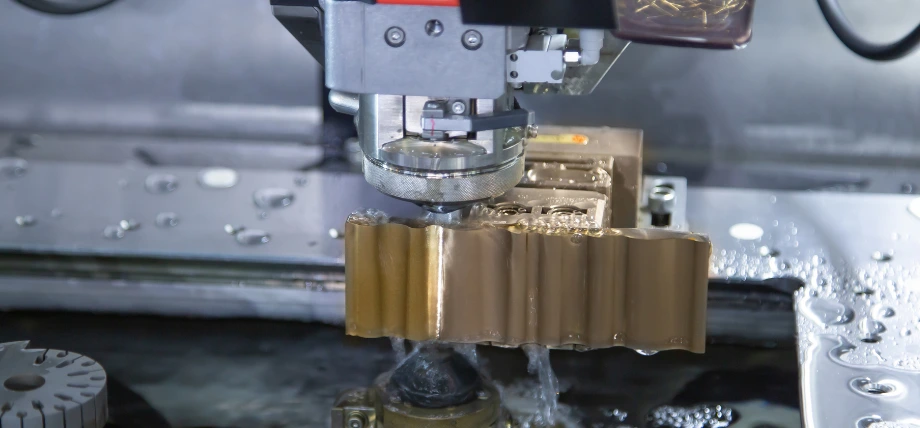
EDM machining
EDM is commonly used to machine hard metals such as titanium. It uses an electric spark to vaporize material. EDM is used to make complex features in components, and its tolerance can be as fine as 0.0002 inches.
Mill-Turn Machining
Mill-turn machining is a multi-operation process that combines milling and turning procedures into a single setup.
This is useful for improving efficiency in complex parts that require multiple operations and tight tolerances.
These processes require periodic machine tool calibration and maintenance to maintain accuracy and consistency across processes.
Precision machining results from integrating advanced technology, even high-speed robots, with traditional practices to make machines that automate the machining process and ensure precision and consistency.
What Are The Precision Machining Tolerances?
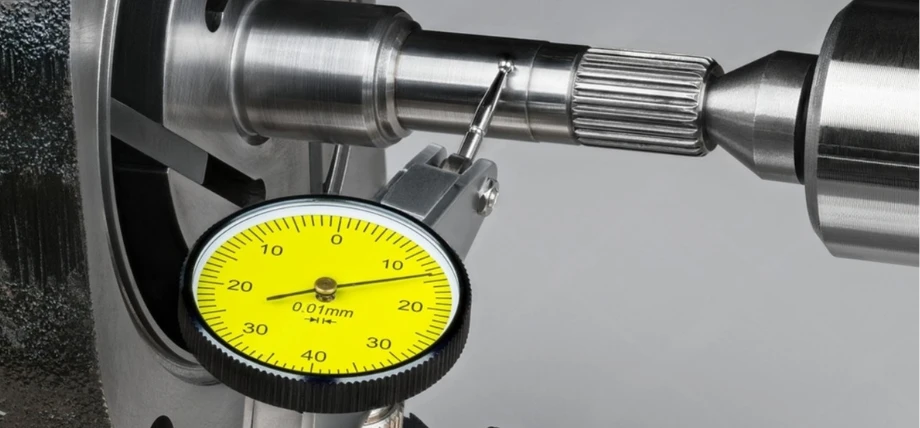
Surface control
Precision machining tolerance is the maximum allowed deviation in a component’s dimension without compromising functionality. It varies depending on materials, part complexity, and process.
- CNC Milling: The standard tolerance for 3-axis milling is ±0.005 inches, and in the case of high precision applications such as aerospace turbine blades, tolerance can be as little as ±0.001 inches.
- Turning: the tolerance for high precision parts such as automotive shafts can be as tight as ±0.001 inches, but ±0.005 inches is the standard tolerance for CNC lathes
- Grinding: Precision grinding is primarily used as a finishing process for steels and ceramics in medical implants. Tolerances of ±0.001 inches are the standard for grinding.
- Swiss Machining: It is commonly used for small precision parts such as screws and bolts. It can achieve a tolerance of 0.001 inches.
Precise CNC setup and control over environmental factors such as temperature and humidity are required to achieve ultra-tight tolerances.
CNC machine tolerance requires specialized tools and strict quality control to ensure reliability and consistency for critical applications such as aerospace components.
What Materials Can Be Precision Machined?
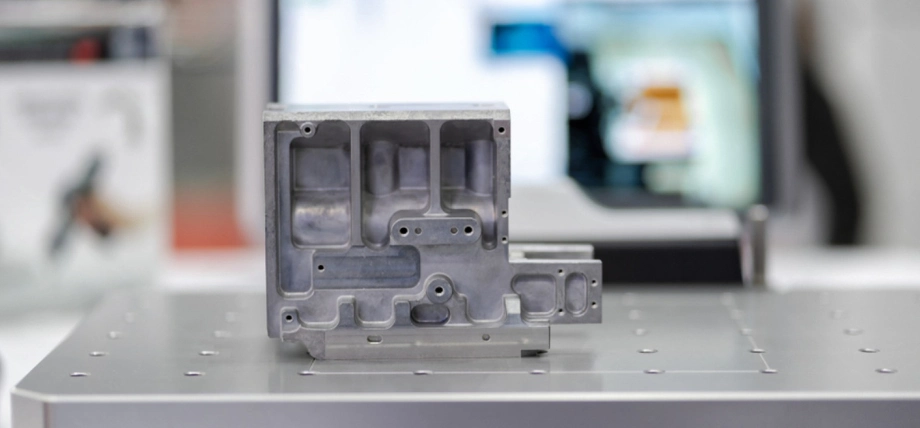
3D Metal printed part
There are numerous Material options for precision machining. Each material has different physical properties such as machinability, hardness, and thermal conductivity.
The varying properties require the precision machining process to be designed and adjusted according to the material’s inherent properties.
High-strength alloys and metals, such as titanium and stainless steel, require special tools such as diamond-coated carbides due to their strength and hardness.
Cooling systems are installed in CNC machines to prevent heat buildup, since it can cause workpiece deformation and excessive tool wear.
PEEK and nylon are heat-sensitive plastics that require carbide tools with low cutting speeds to prevent melting and warping during machining.
Carbon fiber and other composite materials are machined using specialized tools to avoid delamination and ensure clean cuts.
Material choice directly impacts cutting parameters and tool selection, making it a crucial step of the manufacturing process.
The following table lists common materials used in precision machining, their properties, and typical applications:
| Material | Properties | Typical Applications |
| Aluminum (6061, 7075) | Lightweight, corrosion-resistant, machinable | Aerospace fittings, automotive parts |
| Stainless Steel (304, 316) | High strength, corrosion-resistant | Medical implants, food processing equipment |
| Titanium (Ti-6Al-4V) | High strength-to-weight, heat-resistant | Aircraft components, medical devices |
| Copper (C101, C110) | High conductivity, ductile | Electronics connectors, heat exchangers |
| Brass (C360) | Easy to machine, corrosion-resistant | Fittings, decorative components |
| PEEK | Heat-resistant, lightweight, biocompatible | Medical devices, electronics housings |
| Nylon | Flexible, low-friction | Gears, bushings |
| Carbon Fiber | High strength, lightweight | Aerospace structures, automotive panels |
Material selection depends on the project requirements. The machinability and cost of material can vary, and machining metals is more demanding compared to plastics and composites.
What Type of Parts Are Precision Machined? And What are The Applications of Precision Machining?
Precision machining is primarily used to manufacture components with intricate features and tight tolerances. Some applications and major industries that use precision-machined parts are mentioned below:
Aerospace Components
Aerospace components are made of high-performance alloys such as titanium and aluminum alloys due to the nature of their application.
Most parts with complex geometries, such as turbine blades, structural components, and landing gear components, are manufactured using 5-axis CNC milling and EDM due to their tight tolerances of ±0.0005 inches.
Automotive Parts
Engine components and transmission gears are high-tolerance parts made from steel or aluminum.
CNC turning and milling are used to manufacture these parts, ensuring consistent performance in high-volume production.
Medical Devices
Medical devices such as surgical instruments and implants require extremely tight tolerances to ensure reliable function.
Biocompatible materials such as stainless steel and PEEK are primarily processed using Swiss machining or grinding.
Electronics components
Electrical components such as heat sinks require tight tolerances and precise fittings to ensure proper thermal performance and functionality.
Materials such as copper and aluminum are commonly used in electrical components. CNC milling and EDM are used to carve complex patterns in them.
What Are Precision CNC Machines?
Precision CNC machines are an advanced technology that uses automation and robotics to achieve tight tolerances in components and parts.
Computer-controlled machine tools are guided using CAD/CAM software instructions to adjust precise, tight toolpaths that improve efficiency.
Modern CNC machines have state-of-the-art control systems and features such as multi-axis high-speed spindles to machine complex geometries using demanding materials.
Below is a list of specific precision CNC machines, their types, and their specialties, focusing on models from leading manufacturers:
Makino A61NX (Horizontal Machining Center)
- The Makino A61NX features a 4-axis horizontal machining center for machine tolerances of ±0.002 inches.
- The high-speed spindles ensure easy metal removal and high efficiency during manufacturing to minimize production time.
- It has a robust construction and integrates advanced control systems for automation. This is useful for producing aerospace components with excellent chip management and repeatability.
Makino V33i (Vertical Machining Center)
- The Makino V33i has a high-precision vertical machining center that is used for complex 3D geometries.
- It has tolerance capabilities of 0.0001 inches, making it suitable for aerospace and mold-making applications that require high-quality surface finishes.
- It has temperature control spindles and core-cooled ball screws to maintain thermal stability.
Makino U3 (Wire EDM)
- The Makino U3 is a wire EDM machine that uses a 0.012-inch coated wire technology for high-speed cutting.
- Primarily used for machining tight corners and complex shapes in hard materials such as titanium.
- The eco-friendly features and automatic wire threading are useful in aerospace and medical device manufacturing.
The advanced CNC technology used in these machines integrates high-precision control systems and robust designs to meet the standards of precision machining industries.
This machine can work with a variety of materials and produce highly accurate parts and components, which makes them crucial for modern industries.
Precision Machining and Manufacturing Services
Precision machining companies like PROLEANMFG offer services such as design, production, and quality control to maintain consistency in parts and components. They work closely with various precision industries, such as the aerospace industry.
Our machining complies with aerospace-grade standards such as AS 9100 and ISO 9001.
Request a free quote today!
FAQ
What Do Precision Machining Schools Teach?
Precision machining school trains students to use traditional and advanced computer-controlled machines. They focus on teaching people to use CAD and CAM software to design and optimize the machining process.
What Is Precision Machine Technology
Precision machining technology involves the use of computer-controlled CNC machines to machine precise components used in various industries, such as the automotive and aerospace industries.