

Fasteners are essential to vehicles’ structural integrity, safety, and functionality in the automotive industry.
Mechanical devices designed to join or secure parts must withstand harsh vibrations, thermal expansion, and mechanical stress conditions.
Automotive fasteners are precisely crafted to meet strict performance, durability, and safety standards.
In this article, you will explore various types of automotive fasteners, their applications, material considerations, and a guide to select the right fastener for your specific automotive applications.
Importance of Fasteners in the Automotive Industry
Fasteners are the backbone of automotive assembly because they have to hold a lot of components, from chassis frames to interior panels.
They assure structural stability and make the process of assembly and disassembly easier. Additionally, they provide more value with vehicle safety by maintaining the functionality of critical systems under dynamic stresses.
All fasteners must be corrosion, fatigue, and wear resistant because vehicles operate in all environmental conditions, from extreme heat to freezing temperatures.
Furthermore, fasteners also contribute to cost savings during production by allowing the modular assembly of parts, resulting in ease of maintenance.
The choice of fastener impacts the vehicle’s performance, longevity, and reliability, making their selection a critical aspect of automotive engineering.
Types of Auto Fasteners
Automotive fasteners are diverse, each designed for specific applications based on load requirements, material compatibility, and environmental factors. Below is a detailed examination of the most common types of fasteners used in the automotive industry.
Bolts
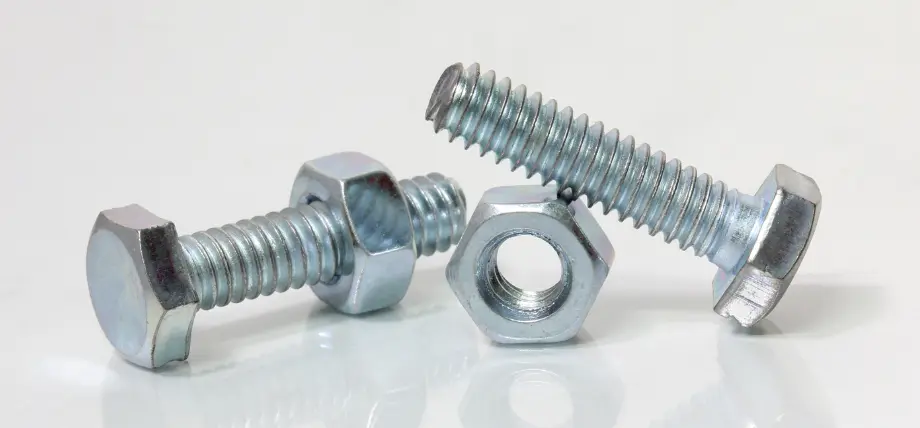
Set of bolts
Bolts are threaded fasteners characterized by an external helical thread and a head, where they usually pass through components. They are fastened with a nut on the opposite side. Bolts hold parts together by generating a clamping force during the final tightening of the nut and are designed to keep parts under significant tensile loads.
In automobile applications, bolts assemble the engine, suspension systems, and chassis interconnections.
They come in different grades; the higher the grade, the stronger the bolt. For example, Grade 8 bolts are made from medium carbon alloy steel, which has been heat-treated to maximize its tensile strength. These bolts are used in areas of high stress, such as engine mounts.
Screws
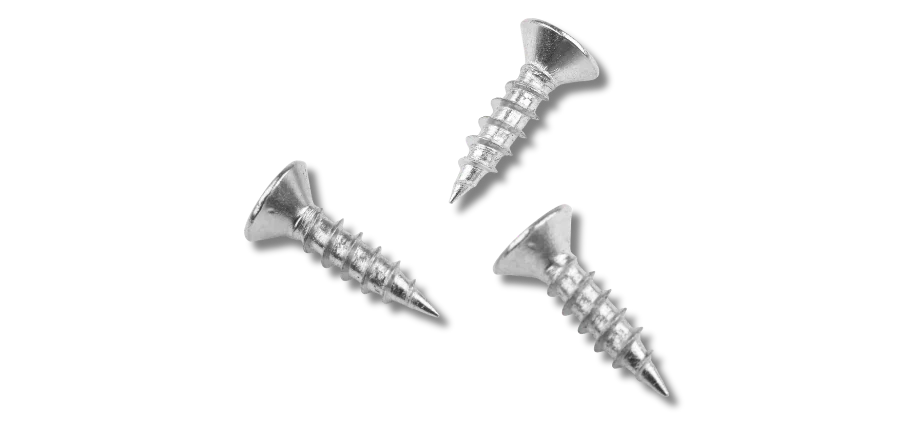
Steel screws to avoid corrosion
Screws are similar to bolts, with the main distinction that they usually have a pointed end and are driven into tapped holes or self-tap into softer material. They fasten by cutting or forming threads inside the material to secure the connection by resisting friction.
Usually, in automotive uses, screws fasten interior parts such as the dashboard panel and areas that require a lower amount of torque than bolts. Self-tapping screws are helpful, in particular, for fastening plastic or thin metal parts, cutting down assembly time.
Nuts
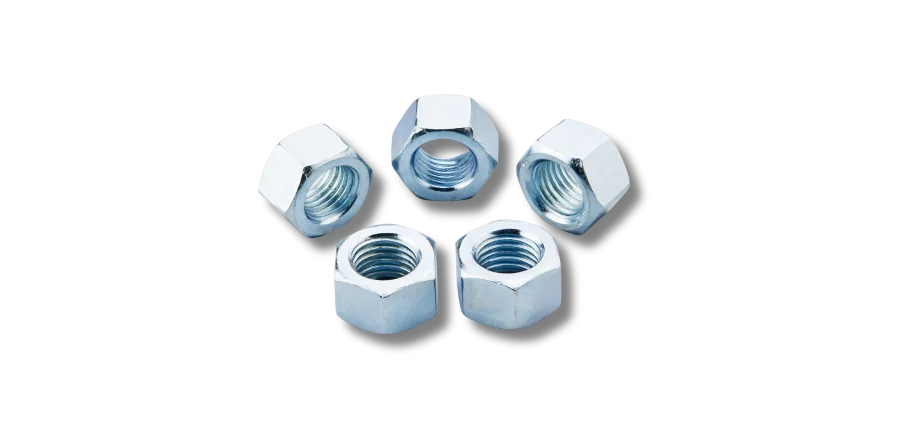
Nuts to hold bolts
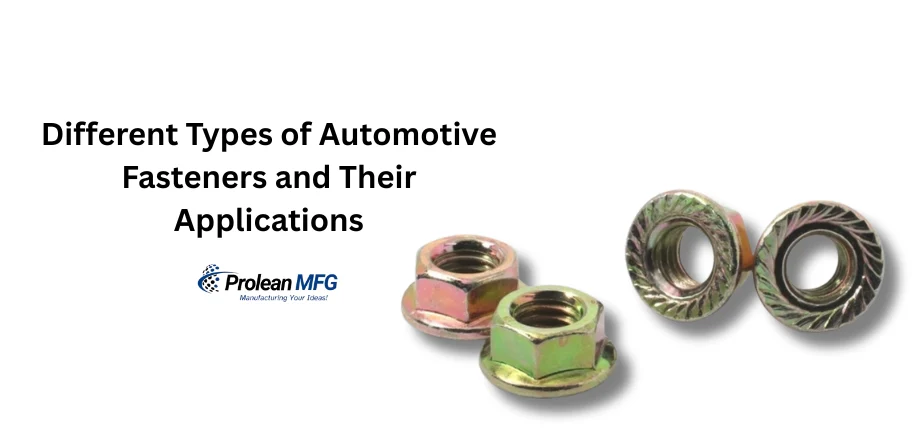
Nuts are internally threaded fasteners mated with bolts to form a secure joint. By lashing the threads of the bolt, they create the clamping force when tightened. Some common types are the hex, lock, and flange types of nuts.
Lock nuts resist loosening caused by vibration and include nylon-insert-type or prevailing torque types. These are usually used in wheel assemblies and suspension systems.
Flange-type nuts have an integrated washer-like base used in chassis and body panel connections, distributing loads more evenly.
Self-Clinching Fasteners
Self-clinching fasteners, such as self-clinching nuts or standoffs, are pressed into sheet metal to create permanent threaded mounting points.
These fasteners work by deforming the surrounding metal or material around themselves during installation to secure themselves without any other hardware.
These fasteners are used extensively within automotive electronics and interior assembly, where thin sheet metal or composite-type materials must be fastened reliably and with strength. Their design imparts high pull-out and torque resistance.
Riveting Fasteners
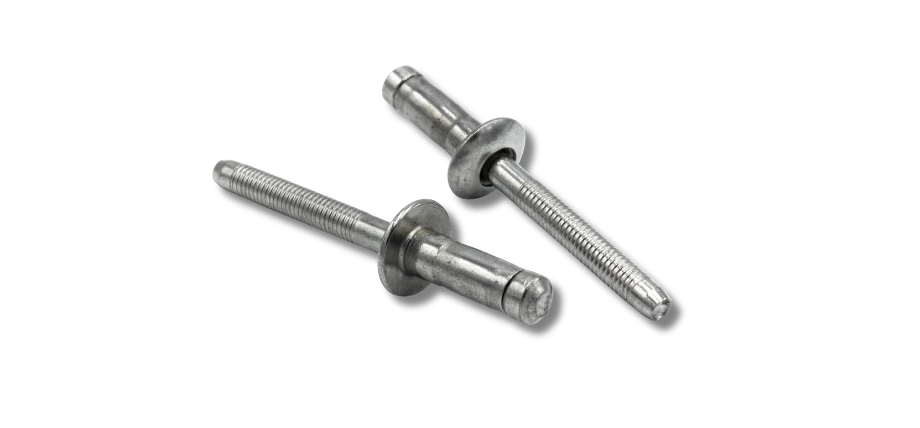
Riveting Fasteners
Rivets are permanent fasteners with cylindrical shafts and a head that deforms the tail to secure workpieces.
These fasteners are inserted through aligned holes and have expanded end tails. This creates a tight and non-reversible joint. Blind rivets, or pop rivets, are preferred for automotive applications because they are easy to install in areas you cannot reach.
Riveting fasteners are commonly used to join sheet metal components like door panels and structural components.
Blind Threaded Inserts
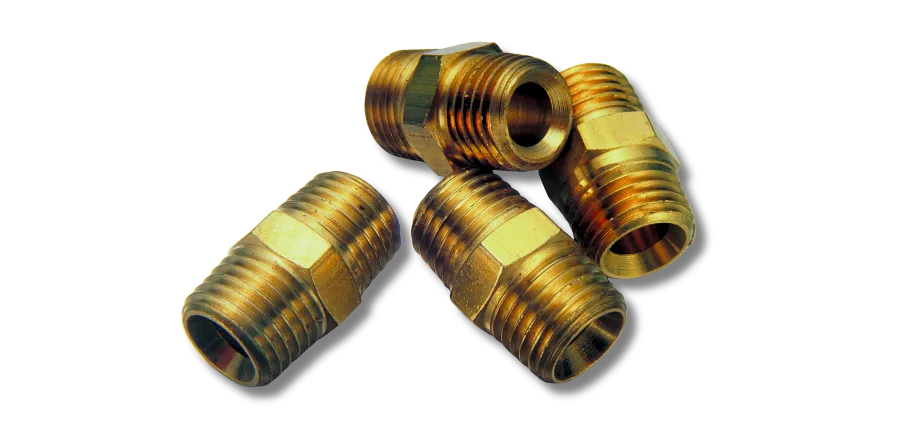
Bronze threaded fasteners
Blind threaded inserts are cylindrical fasteners with an internal thread installed in thin materials to provide a strong threaded mounting point.
They fasten by being inserted into an existing drilled hole, then expanded or compressed to grip the material firmly, creating an anchor.
Since they are installed from one side, they have an advantage over threaded inserts that require access from two sides, also known as through-hole inserts. You can use them for hollow structures such as tubular frames or sealed seam compartments.
They are also used inside automobile applications in body panels and structural components with limited access.
Studs
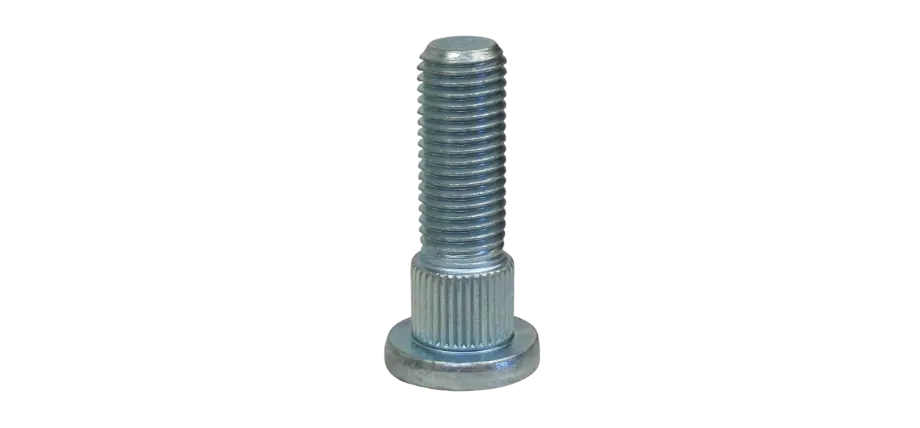
Wheel Studs that hold lug nuts
Studs are threaded rods without a head, generally having threads on one or both ends. They fasten by screwing into a tapped hole on one end, with the nut being tightened on the other end to secure the component and create a strong joint in perfect alignment with each other.
Studs are used to fasten parts such as exhaust manifolds or cylinder heads in order to gain better alignment. These are ideal for use in high-temperature atmospheres like engine compartments, where you must provide thermal expansion.
Washers
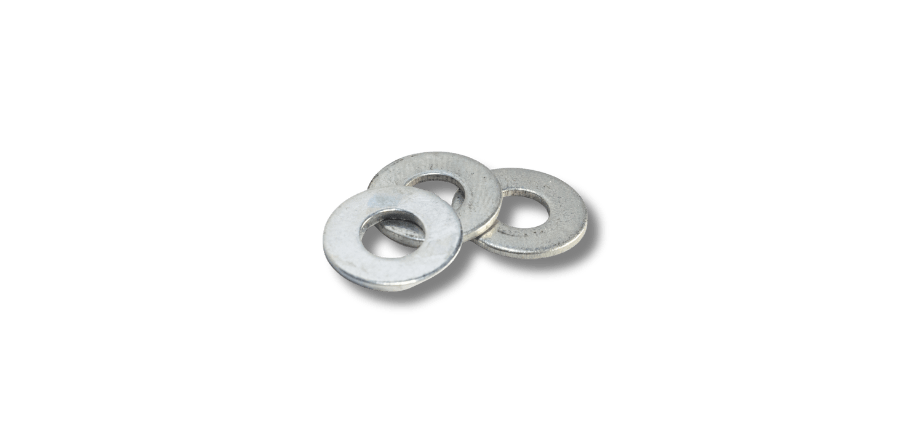
Washers
Washers are flat-disc-shaped components placed beneath the bolt or nut to distribute the load. They fasten by distributing the clamping force over a greater area to avoid surface damage and ensure even pressure.
Flat washers are used in general applications, while lock washers, such as split or toothed washers, prevent loosening in high-vibration environments like suspension systems.
Bushings
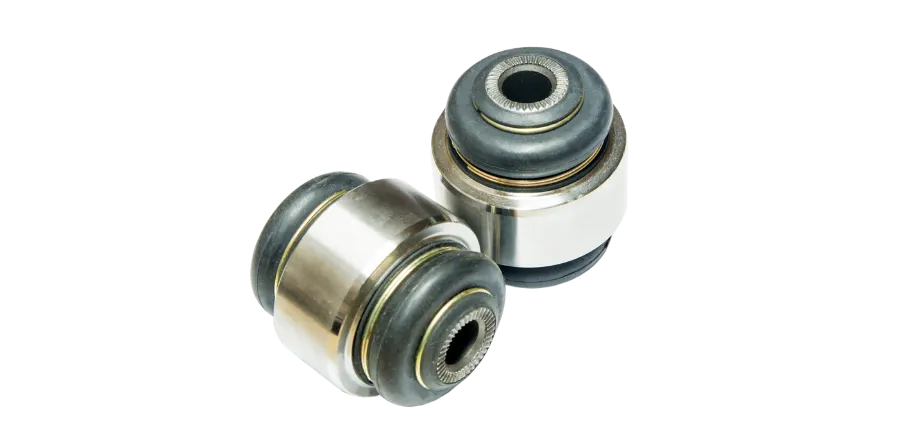
Suspension bushings
A bushing is a cylindrical part that goes between two moving parts to reduce friction or impart alignment. Bushings are fastened using a press fit or by securing them into the housing. They hold components and collectively allow controlled movement to take place.
In automotive applications, bushings are found in suspension and steering systems to dampen vibrations and allow smooth functioning. Usually, these are made of rubber or polyurethane for a certain amount of flexibility and durability.
Auto Clips
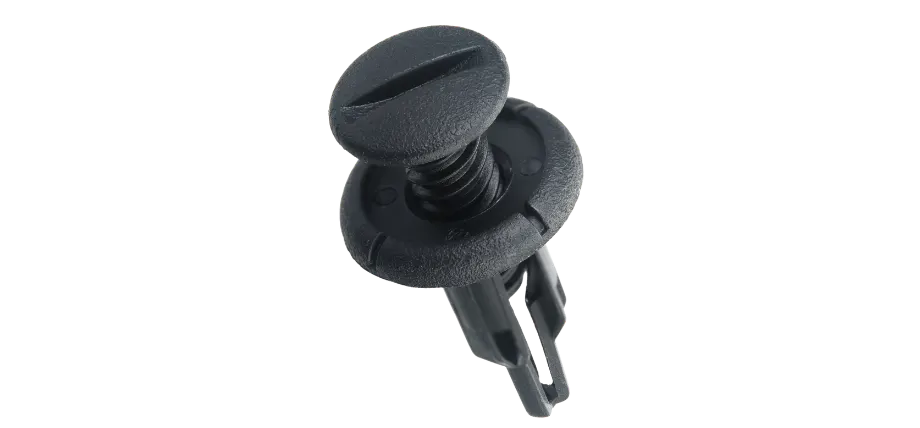
Plastic clip
Auto or trim clips are fasteners used to hold panels by snapping into position. They fasten using flexible prongs or barbs that lock into holes or slots in the mating member. They provide a fast and temporary connection.
They fasten interior and exterior panels, including dashboards, door trims, and bumpers. The fasteners allow easy installation and removal, which levels the playing field for easy maintenance.
From a construction point of view, they can be made of plastic or metal, depending on the load and the environment in which they will work.
Pins
Pins are cylindrical and non-threaded fasteners that can be used to align or secure components. You can insert these pins through aligned holes in components. They either lock in place or secure them with cotter pins.
Cotter pins help prevent nuts from loosening in high-vibration areas, like wheel assemblies. They do this by passing through a hole in the bolt and bending to lock in place.
In engine or transmission assemblies, dowel pins help in precisely aligning, so that one can maintain positional accuracy under load.
Choosing The Right Fastener for Your Car Part
You must carefully consider factors like load, material, assembly requirements, and environmental conditions. Bel, you will learn about these factors for automotive applications.
Interior Panels and Dashboards
Interior parts and dashboard fasteners must be fast in installation, inconspicuous to the eye, and resistant to vibrations.
Standard fastening options for interior parts and dashboards include auto clips and self-tapping screws because they install quickly and can hold lightweight materials such as plastics or composite panels.
Self-clinching fasteners are also employed to mount electronic components within dashboards.
Door Panels
Door panels require fasteners that can withstand repeated opening and closing forces. These include rivets, clips for fastening trims, and blind threaded inserts to mount hinges or latches.
You must select a corrosion-resistant material for this task, such as stainless steel or coated fasteners, since fasteners will be subject to moisture.
Chassis
Chassis require fasteners capable of resisting very high tensile and shear loads. Such fasteners include Grade 8 bolts and lock nuts. Washers are there to distribute the load and avoid any damage to the surface.
Since the chassis is subjected to road salts and other environmental factors, you must use fasteners that are resistant to corrosion.
Bumpers
Bumpers require fasteners that permit quick installations/disassemblies during repairs. Auto clips and plastic rivets are used mostly for the ease of installation and securing ability for lightweight materials.
Bolts with corrosion-resistant coatings are used for structural connections to the chassis.
What Are Car Bolts and Car Bolt Grades
Car bolts are designed to ensure the attachment of automotive components under tensile and shear loads.
They are typically created out of carbon steel or stainless steel and classified in grades based on their strength and material properties.
The Society of Automotive Engineers (SAE) and the International Organization for Standardization (ISO) provide grading systems for bolts. Some of them are:
- SAE Grade 5: Made of medium carbon steel, it has a tensile strength of roughly 120,000 psi and is generally employed in medium stress situations such as body panel attachment.
- SAE Grade 8: Made of medium carbon alloy steel and heat treated, it has a tensile strength of about 150,000 psi and is used in heavily stressed areas like engine mounts and suspension systems.
- ISO Class 8.8: These are general automotive-grade bolts similar to SAE Grade 5.
- ISO Class 10.9 and 12.9: They have high strength and are used for significant applications, including chassis and powertrain components, because of their tensile strength and fatigue resistance.
The bolt grade selection depends on the application’s loading, environmental conditions, and safety.
Yellow Zinc Plating For Automotive Fasteners
Yellow zinc plating is popular for automotive fasteners, offering corrosion resistance and an attractive finish.
The process includes electroplating the fastener with a thin zinc layer, followed by applying a chromate conversion coating that yields a yellow or gold hue.
This chromate coating is somewhat thicker. This further enhances durability by protecting the item against rust and environmental degradation when underbody components are exposed to road salts and moisture.
By factoring in cost, longevity, and performance, yellow zinc-plated fasteners usually find use in chassis, suspension, and exterior applications.
Automotive CNC Machining Service
PROLEANMFG provides high-quality CNC machining for low and high-volume automotive parts from engine blocks to pin fasteners. We provide complete control of manufacturing all components in our in-house facility for the highest quality.
Request a quote today!
Conclusion
Automotive fasteners are paramount to the design and manufacture of a vehicle to sustain the structural integrity, safety, and reliability of vital components.
Engineers and designers create the best-improving means of vehicle performance by understanding the types of fasteners, their respective mechanisms, and applications.
Selecting the right fastener and combining it with surface finishing such as yellow zinc plating, the correct fastening method can ensure prolonged durability and life, leading to the vehicle’s overall quality.
FAQ
What Are Automotive Fasteners?
Automotive fasteners are mechanical components used to join or secure parts in a vehicle to ensure structural qualities and guarantee functionality. These include bolts, screws, nuts, rivets, and clips, all designed according to various applications that include their load, materials, and environmental needs.
What Is a Fastener in Automotive?
A fastener in the automotive context is a device designed to mechanically join or affix two or more vehicle components. Fasteners ensure the parts remain held together tightly against dynamic loads, vibrations, and stresses from the environment, thereby contributing to the safety and performance of the vehicle.
What Are Automotive Fasteners?
Automotive fasteners include bolts, screws, nuts, rivets, clips, and pins used in assembling vehicle components. They are designed and manufactured according to certain performance and safety standards to reliably function under various conditions.
What Is the Strongest Bolt Type?
ISO Class 12.9 is the strongest bolt type for common usage in the automotive industry. Presented in high-strength alloy steel and heat-treated, it could exert tensile strength in excess of 170,000 psi, making it best suited for applications such as the engine and chassis assemblies.