
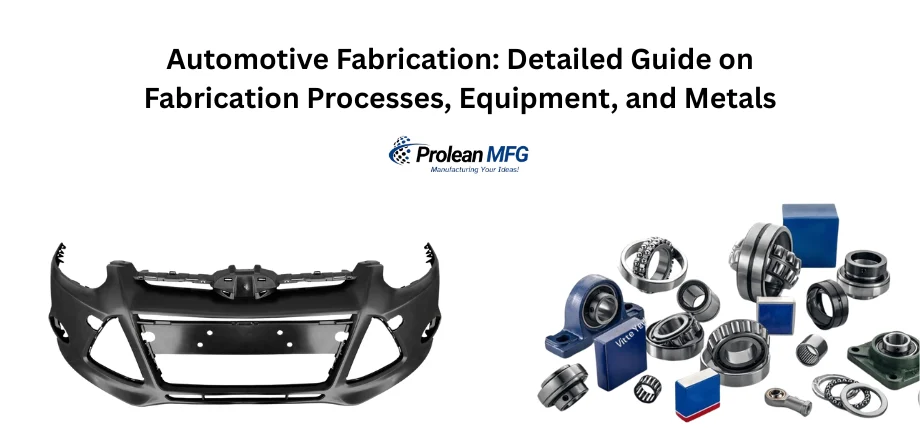

Automotive fabrication allows for making parts for vehicular performance, safety, and aesthetics. These parts offer more quality, high durability, and stage of endurance while weighing less.
The guide explores fabrication methods, materials, tools, and applications involved in the manufacturing of automotive parts. So, it provides accurate and useful knowledge for engineers and fabricators.
What are the Different Types of Automotive Fabrication Processes
Automotive fabrication is the process of making parts and components involving metal cutting, metal forming, and metal assembling. Seven major fabrication processes are discussed in this section.
Automotive Metal Stamping
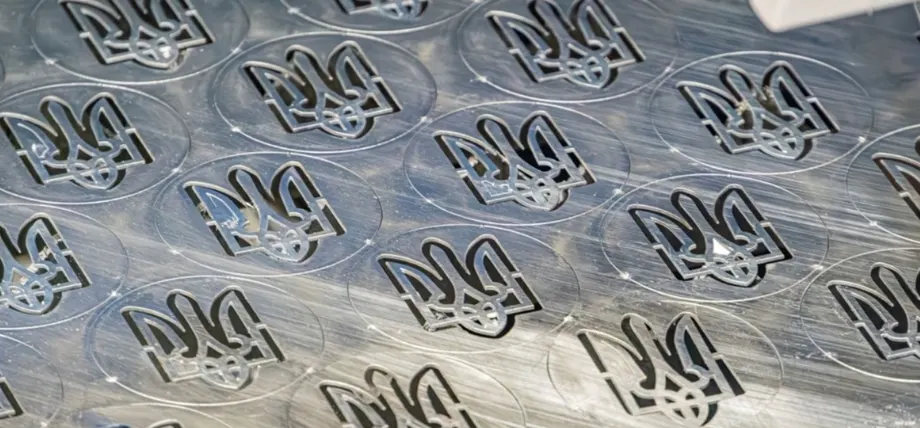
Metal-stamped sheet
Metal stamping involves the act of shaping metal sheets into components using hydraulic or mechanical presses through blanking, embossing, bending, or coining operations.
Small parts are made with utmost precision and little waste, including body panels (like hoods, fenders), brackets, and chassis components.
For example, hot stamping is used to produce lightweight, high-strength steel parts for electric vehicle frames that can be formed into thinner sections, thereby lowering weight without deteriorating structural strength. It is a part of high-volume production that allows parties working on automotive components to ensure quality.
Automotive Metal Casting
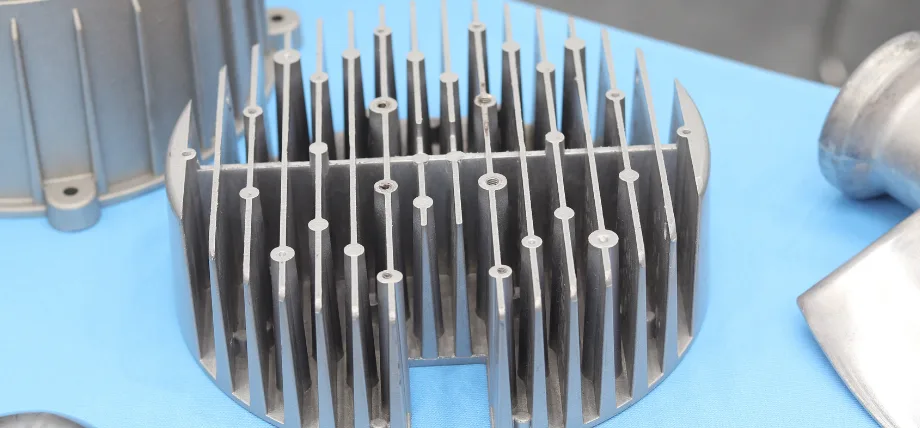
As cast aluminum heat dissipator
Casting consists of pouring molten metal into a mold or die to form parts such as engine blocks, transmission housings, and suspension components (control arms). Die-casting injects molten metal under pressure, allowing very precise parts to have a smooth surface.
Permanent mold casting uses permanent molds for cost-effective production. It allows the mass production of complex geometries like intricate engine parts with great repeatability.
Automotive Metal Cutting
For processes that cut metal sheets into specified shapes using laser, plasma, or waterjet systems, CNC equipment is often used for control. These processes create parts like door panels and chassis frames with less material waste.
For example, laser cutting provides for the fabrication of intricate patterns for lightweight body panels with accuracy and clean edges for the upcoming assembly processes.
Automotive Metal Bending
Bending forms a metal sheet on press brakes at a particular angle to create parts like fenders, hoods, and chassis frames.
It can be held to extremely tight tolerances for components needing more complex shapes, such as curved roof supports that aid with aerodynamic performance and structural strength.
Additionally, in a high-volume production environment, automated bending increases consistency.
Automotive Metal Welding
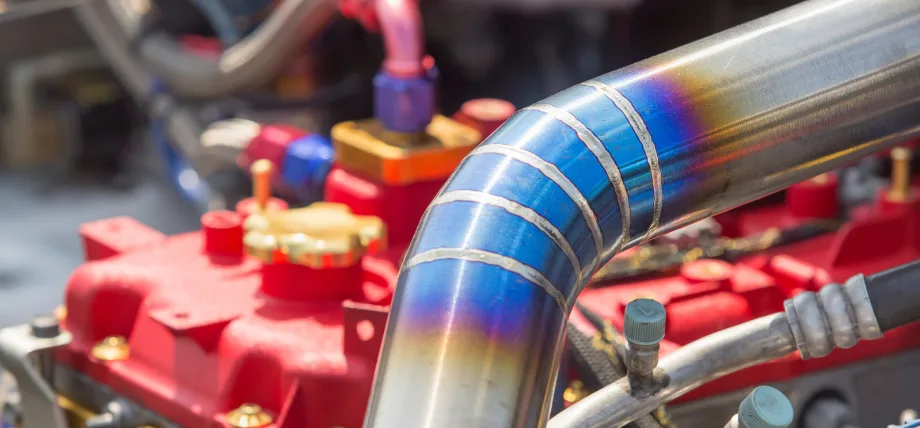
Racing car exhaust weld
Welding methods using MIG, TIG, or robots join metals and create strong connections for chassis frames, roll cages, and exhaust systems. For instance, assembling stainless steel exhaust pipes by TIG welding ensures durability and corrosion resistance.
This technique is used both in standard manufacturing and custom assembly for special vehicles.
Automotive Metal Machining
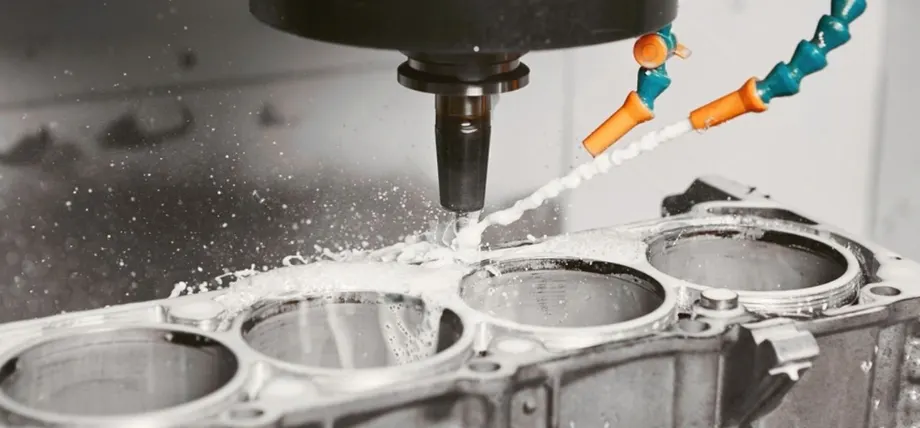
CNC milling engine
Machining is one of the processes used for removing metal material from workpieces, such as drilling, milling, or turning, to produce accurate components, such as cylinder heads, drive axles, and gearbox parts.
CNC machining has tight tolerances for parts with complex geometries. For example, engine crankshafts must be machined to very high tolerances as these parts are required to attain an optimum performance in automotive applications.
Automotive Metal Hydroforming
Metal sheets and tubes are hydroformed by the application of a high fluid pressure to shape them into components destined to be frame rails and roof supports. Hydroforming allows the creation of thinner, more complex aluminum frame rails, reducing weight and improving fuel efficiency.
This technology produces minimal part wastage and can create seamless, lightweight parts with very intricate shapes.
These processes facilitate the production of various automotive components and guarantee that automotive manufacturing is precise and efficient.
What Materials are Best for Automotive Fabrication?
Selection of materials greatly affects the performance, weight, and durability of automotive parts. The metals mentioned below are commonly used depending on the respective properties they possess.
- Steel: Having high strength and durability, a steel (chromoly or DOM mild steel) chassis frame can be used for the suspension components, such as control arms, as well as for the roll cage. Advanced high-strength steel (AHSS) offers a good strength-to-weight ratio for safety-critical parts.
- Aluminum: Being light and corrosion-resistant, aluminum is used in the manufacture of body panels, wheel rims, and exhaust pipes. This helps reduce vehicle weight and improve fuel efficiency.
- Titanium: This is a high-strength, corrosion-resistant metal used in brake rotors of high-performance vehicles. However, using titanium in your desired application can be limiting because of its high cost.
- Copper: Copper is used in electrical systems and exhaust components due to its high conductivity. Also, it is usually alloyed with other metals to increase strength.
- Metal Alloys: Stainless steel and aluminum alloys maintain a good balance of strength, weight, and corrosion resistance. They are used in exhaust systems and structural frames.
Additionally, to ensure that you select the best possible material, you can use computer-aided design (CAD). This handy software ensures compatibility with fabrication processes and performance requirements.
What Car Parts Use Automotive Fabrication?
With fabrication, many types of parts can be produced:
- Body Panels: Sheet metal is stamped and bent to form hoods, fenders, and door panels for aesthetic and structural purposes.
- Chassis Frames: High-strength steel or aluminum offers rigidity and safety to vehicle frameworks.
- Suspension Systems: Fabricated control arms and struts for precision and durability.
- Exhaust Systems: Pipes and mufflers of stainless steel or aluminum carry a corrosion-resistant property.
- Roll Cages: Using high-strength steel to weld for safety in racing or vintage-style cars.
- Interior: Dashboard frames and seat supports are how form meets function.
These parts are meant both for mass production and for custom work, such as prototype vehicles or restored vintage cars.
Sheet Metal Fabrication Processes
The sheet steel fabrication processes given below are used for the shaping of metal sheets for automotive parts:
- Cutting: Laser or plasma cutting methods are used to make body panels and chassis frames with good precision.
- Bending: Press brakes are used to form the metal into various shapes like hoods and fenders so that the parts can develop structural integrity.
- Welding: To join sheet metals for frames and exhaust systems, welding helps to ensure that a strong connection is made.
- Stamping: Produces consistent parts like door panels for high-volume manufacturing.
These processes deliver lightweight, durable components tailored to automotive needs.
What are Metal Fab Tools Used in the Automotive Industry?
The processing equipment used in automobile metal works includes:
- Laser Cutting Machines: To cut metal sheets for body panels with a high degree of precision.
- Press Brakes: To bend metals to the precise angle required for chassis and fenders.
- Welders: To weld two parts, like frames, among others, using MIG and TIG welding processes.
- CNC Machine: For cutting, bending, and machining complex parts with precision.
- Power Tools: These would be grinders, shears, and drills employed in carving and assembling metal parts.
Such machines are employed by skilled fabricators to make quality automotive parts.
Car Body Fabrication: Key Processes
Car body fabrication is generally concerned with constructing the exterior and structural frame of the vehicle using:
- Sheet Metal Fabrication: To cut and bend metal sheets into body panels and frames. For example, curved fenders are made in a way that helps in aesthetics and aerodynamic efficiency.
- Welding: Assembly of metal parts into one structure such as chassis frames or body panels for structural strength.
- Stamping: For producing identical body panels in high-volume production.
- Custom Fabrication: These comprise custom-made parts such as custom fenders for newly restored vintage automobiles or frame designs with special considerations for a prototype vehicle that grants performance or aesthetic modifications.
These processes ensure body panels and frames fit in with specific requirements of aesthetics, structure, and safety.
Conclusion
The fabrication of automotive parts materials produces superior and durable lightweight parts that conform to performance and safety standards.
The forming and fabrication operations involved include stamping, casting, cutting, bending, welding, machining, and hydroforming to convert materials such as steel, aluminum, and titanium into chassis frames, body panels, or suspension systems.
From new innovations in tooling or CAD systems to a manual style, fabrication surely helps with special projects such as prototype vehicles and vintage car restoration.
Both techniques and materials cater to the automotive sector for effective and innovative vehicle manufacturing.
PROLEANMFG Automotive Parts Machining
We provide machining of the highest quality and rapid prototyping services for automotive parts and products from chassis to custom fasteners.
Request a free quote today!
FAQ
How To Fabricate Automotive Fiberglass & Carbon Fiber Parts?
Lay fiberglass sheets or chopped strand mat with resin. Roll it to remove any air and cure it at the right temperature.
What Is Automotive Fabrication?
Automotive fabrication is the cutting, bending, machining, welding, and assembling of metal parts into vehicle components.
How To Fabricate Automotive Fiberglass & Carbon Fiber Parts?
Use carbon fiber cloth or prepreg carbon. Use epoxy with a mold and trim any extra carbon fiber.