
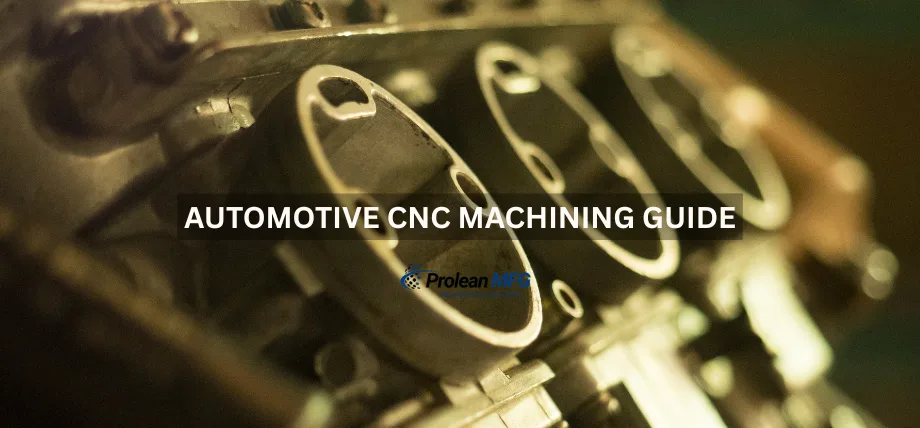

The modern vehicle industry has elevated its standards, requiring the automotive industry to be highly precise and efficient in producing vehicles. In order to achieve these high standards, automotive CNC machining has been integrated into the production process.
Computer numerical machining (CNC) is a vital part of the automotive industry as it allows you to produce complex parts and high-quality automotive components with high accuracy and consistency.
After reading this article, you’ll have a basic understanding of how CNC machining is used in the automotive sector, alongside the applications of CNC machining and factors that have led to its wide use in the automotive industry.
How Does CNC Machining In The Automotive Industry Work?
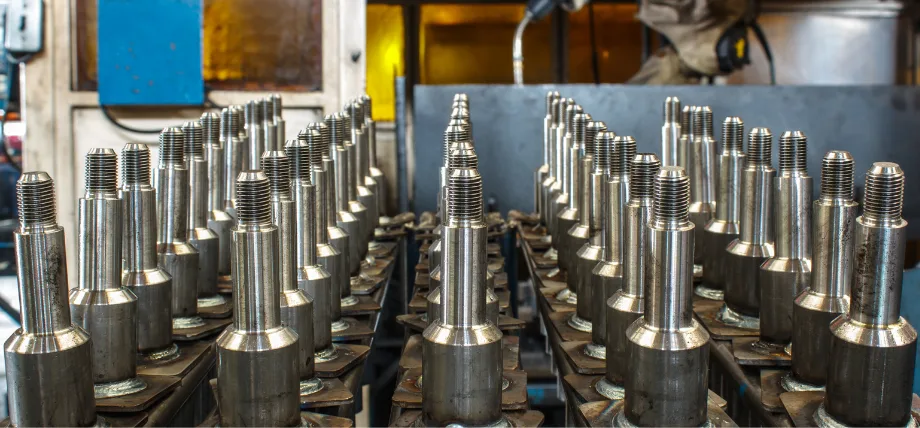
Steel automotive parts
CNC machining is a widely used manufacturing process that uses machine tools to produce precise components and parts that are used in the automotive industry.
CNC machining services have a broad function and include a variety of machines that can range from CNC lathes, CNC milling machines, to CNC routers, all of which serve to produce parts with high precision and complexity.
The whole process is computer-controlled and automated, which reduces the room for error and ensures consistency across the entire process. The important steps of CNC machining are mentioned below:
Design and programming
The initial step of CNC machining is to create a digitized design of the automotive parts using CAD software, which can then be turned into a CNC machine program. The design details include dimensions, material types, and tolerances of the component to be produced.
The machine program instructs and guides the CNC machine tools as required to shape the component ensuring accuracy and consistency in complex parts.
Material selection and setup
Material selection is based on mechanical properties, machinability, thermal stress tolerance, and application-specific requirements. CNC machining is applicable to a wide range of materials that include aluminum, steel and plastic composites that are commonly used in the automotive industry.
Setting up involves securing the workpiece in a stable manner to prevent any accidents and ensure the machining process proceeds without errors or flaws. A proper setup is essential to achieve high precision and quality in automotive parts and components such as cylinder heads.
Machining and Quality Control
CNC machines excel in achieving high accuracy and precision when executing machining operations that range from CNC milling to CNC lathes.
To ensure the production meets the standard a series of various inspections are done mid-process and post machining to ensure consistency and high tolerance requirements are met.
CNC machining ensures high quality consistent products due to automation making it idea for parts that need to withstand rigorous and harsh environments.
What Are The Key CNC Machining Processes for the Automotive Industry?
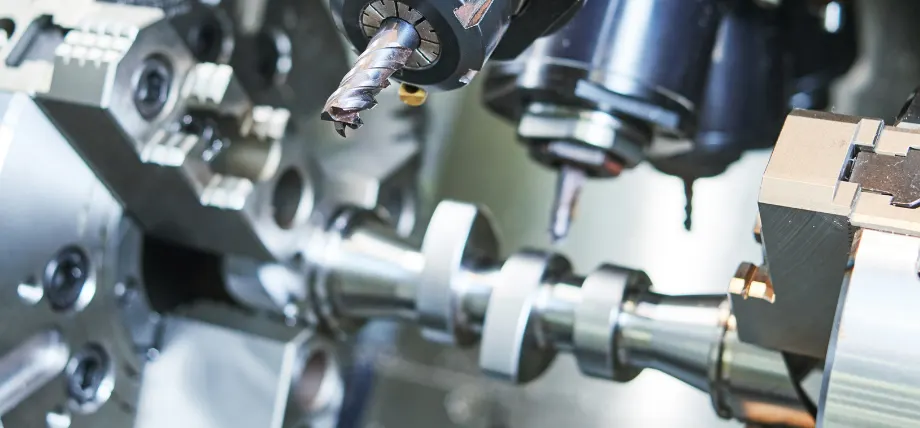
Camshaft cutting
There are several types of CNC machines used in Automotive manufacturing. Some of the most common types include CNC mills, CNC lathes, CNC routers, and CNC plasma cutters.
Each machine is suited to a specific machining operation and excels in it and are used together in an inter-connected web which allows automotive manufacturers to produce parts with a high precision and exceptional quality.
CNC Milling
CNC milling machines are widely used in the automotive sector to produce complex parts that require high precision such as cylinder heads. The process involves using a high speed cutting tool to slowly remove excess material from the workpiece, gradually shaping its features with precision.
The precision of CNC milling ensures that parts produced using the process are consistent, of high quality, and meet strict requirements.
CNC Turning
CNC turning is a prominent process that is used to produce cylindrical components with high precision. It is done by using a CNC lathe, where a sharp cutting tool is used to slowly shave away excess material and shape the component.
CNC turning produces high-quality parts with exceptional surface finishes, making it one of the most widely used processes in automotive production.
CNC Plasma Cutting
CNC plasma cutting is occasionally used for rough cutting of large sheet metals in structural applications that need to be cut to create brackets and various structural components. Although not a common automotive machining process due to less tolerance.
It is a less prominent processing method than turning and milling, and is a specific case used for CNC machines. They are highly valuable in efficiently processing large metal sheets and components.
The various types of machines used in the automotive industry ensure precision, consistency, nd enable automotive manufacturers to produce a wide range of automotive components efficiently
Prototyping Automotive Parts
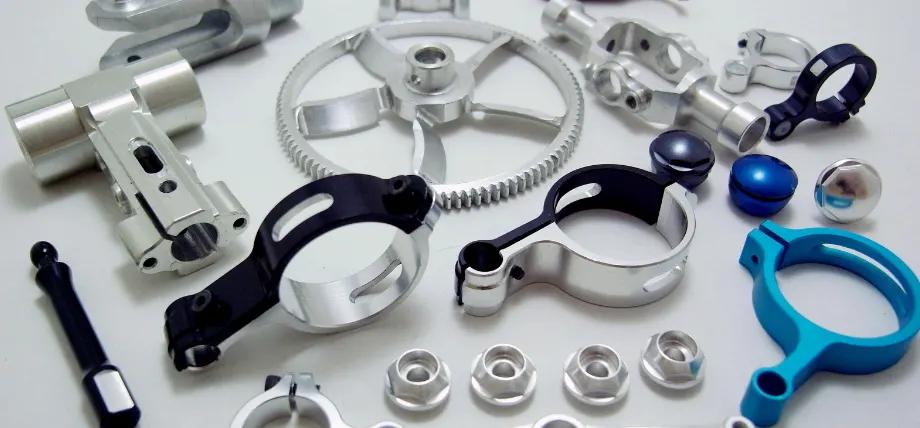
Automotive Parts
Prototyping is a vital step in automotive manufacturing of a component prior to mass production, enabling you to highlight fatal flaws in the component, which can save you from the hassle of a bad or faulty performance and production.
CNC machining can produce complex parts and components with high accuracy and efficiency, making it one of the most widely used processes for rapid prototyping of automotive components
Automotive companies rely on CNC machining for prototyping of engine components due to its high precision and quality. CNC machined parts ensure that the prototype is closest to the final product, allowing for the most accurate testing results for the final product.
CNC machining offers various advantages over other traditional processes that can range from rapid turnaround time to being able to work with a wide range of materials. This is especially useful in the production of electric vehicle components, where innovative materials are being used.
Using CNC machining allows automotive manufacturers to iterate on design and materials efficiently, minimizing costs and time.
High Volume Production in The Automotive Sector
CNC machining plays an essential role in high-volume production in the automotive industry, which demands consistency and precision. The repeatability and consistency of CNC machining make them ideal for producing large quantities of components.
CNC machining centers integrate multi-axis capabilities with automatic tool changers to enable the efficient production of complex parts in high volumes. CNC machining ensures that parts are manufactured to meet their requirements and can withstand demanding conditions.
Some of the most common high-volume parts produced using CNC machining in the automotive industry are mentioned below
GEARS
Gears are a component that has a unique tooth profile, which requires extremely tight tolerance to ensure smooth operation. CNC milling and turning can easily achieve these tight tolerances.
PISTONS
CNC lathes produce pistons with complex geometries and a high-quality surface finish that minimizes friction and wear in applications.
BRAKE COMPONENTS
CNC milling machines are used to manufacture brake callipers after casting that ensure reliable performance and enhanced corrosion resistance.
SHAFT AND AXLES
Shafts and axles are cylindrical components that are produced using CNC turning machines for optimal performance.
SUSPENSION COMPONENTS
CNC milling ensures high precision and accuracy in the production of control ties and arm rods.
Precision of CNC machining ensures that the parts and components produced using the machining process meet the requirements of the automotive industry and can be used in various critical applications.
Applications of CNC Machining, Specifically for the Automotive Industry
CNC machining has become a vital component of the automotive industry, and its application ranges from making interiors to engine components. Some of the most common applications are listed below:
- Engine Components: Common engine components, such as cylinder head and pistons, are produced using CNC machining to ensure precision and reliability.
- Transmission Systems: CNC machining provides the high precision and tight tolerance required for gears and shafts to operate properly.
- Suspension and Steering Parts: Vehicle handling components, such as control arms, are precisely machined to ensure vehicle stability.
- Interior and Exterior Parts: CNC machining is used to manufacture dashboards and other trims with complex geometries and shapes.
CNC machines also play an important role in the electric vehicle component sector of the automotive industry in producing complex parts such as battery housings, making CNC machining a major contributor to car manufacturing.
Why CNC Machining Is So Popular for Car Parts
CNC machining is an extremely versatile part manufacturing method that is widely used in the automotive industry. There are numerous technical advantages of CNC machining when compared to traditional machining. CNC machining offers high precision and consistency, which makes it an ideal choice for automotive manufacturers.
Some advantages of automotive CNC machining are mentioned below:
High precision and tight tolerance
CNC machining ensures the production of precision machined parts and components that withstand high mechanical stress, such as engine components and transmissions.
Material
CNC machines are highly versatile and can process a wide range of materials from metal to plastic and composites. The automotive industry works with a variety of materials, so it is ideal for manufacturers to use CNC.
Superior surface finish
CNC machining provides a clean and polished surface finish that reduces friction and enhances the aesthetic appeal of the autoparts
Complex geometry capability
Modern vehicle parts and components involve unique geometries and shapes that are suited for CNC machining, making it vital in automotive production.
Automation and efficiency
Automation is ideal to increase efficiency and high-volume production, which reduces errors and labor costs.
Error reduction through the automation of CNC machines also ensures consistency and precision by eliminating the variable factors of errors in manual machining. This is ideal for automotive component production, producing flawless components.
Automotive CNC Machining at PROLEANMFG
PROLEANMFG provides CNC machining services for the automotive industry. From automotive prototyping to scaled production of gears, engine blocks, pistons, cylinders, and assembly services for car parts.
Get an instant CNC machining quote today.
Conclusion
In modern manufacturing, CNC machining technology is irreplaceable in the automotive industry due to its versatility paired with exceptional accuracy and precision. Its uses range from prototyping to high-volume production. CNC machining is vital in every manufacturing process.
The various types of CNC machines, such as CNC lathes, CNC mills, and multi-axis machining cutters, are used to produce a wide range of engine components and aesthetic trims
.
There are numerous advantages to CNC machining, such as the ability to produce high-quality surface finishes and complex geometries, which makes CNC machines a vital resource in the automotive industry, especially with the surge in electric vehicles, which require special battery housings.
CNC machining will remain a vital processing method that ensures parts and components meet the requirements.