

Aerospace manufacturing is a type of manufacturing that involves producing precision components for aircraft and aviation-associated systems.
It combines advanced engineering with precision manufacturing to produce high-quality aerospace components used in various applications.
This article aims to provide a deep look into aerospace manufacturing and highlights the material and advanced processing methods used to manufacture the precision component, while also focusing on quality control and logistics.
What Is Aerospace Manufacturing?
Aerospace manufacturing is a broad term that involves various steps such as designing, production, and assembly. And testing trials to manufacture high-quality components for aerospace applications and related systems.
Aerospace manufacturing is a precision process with tight tolerance requirements and the use of advanced materials paired with modern technology to produce parts and components that can withstand harsh environments, high temperatures, and pressures.
The first step of the process is designing the component with the help of computer-aided design (CAD) software to produce a design with a tight tolerance of up to +/- 0.01mm, which is critical for precision components such as turbine blades.
Manufacturing follows designing, which involves various additive and subtractive processes. The last two steps are assembly and application into various aerospace systems such as turbines and boosters.
In modern manufacturing, advanced digital twin technology is used for modeling. This is a complex process that combines both mechanical and system engineering with data science and automation.
This allows manufacturers to monitor the manufacturing process in real time and make necessary changes to it.
What Are The Aerospace Manufacturing Technologies?
Aerospace manufacturing uses many processing methods and machinery to produce high-quality components that can perform in demanding environments.. The technology and processing methods used are detailed below:
CNC Machining
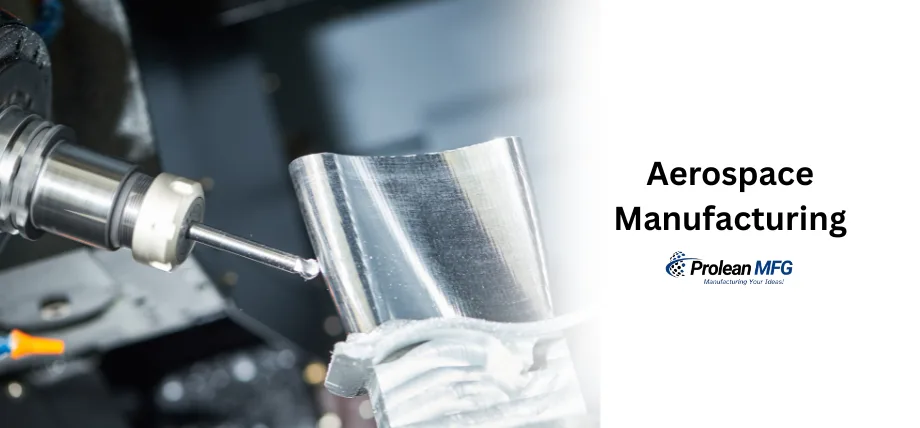
Computer numerical control (CNC) machining is a multi-axis precision manufacturing process that uses a set of programmed instructions to control precision tools to process raw materials into components.
It is a highly efficient and accurate process producing precision components with a tight tolerance of up to ±0.01 mm. This is useful for producing critical components used in turbines and landing gears.
Aerospace manufacturing uses CNC machining with advanced technology such as HSM and adaptive control systems using machine learning to alter the machining process in real-time for optimal results..
Common CNC tools and procedures include milling, grinding, and turning, and hard materials such as inconel and titanium can be easily processed.
Casting and Forming
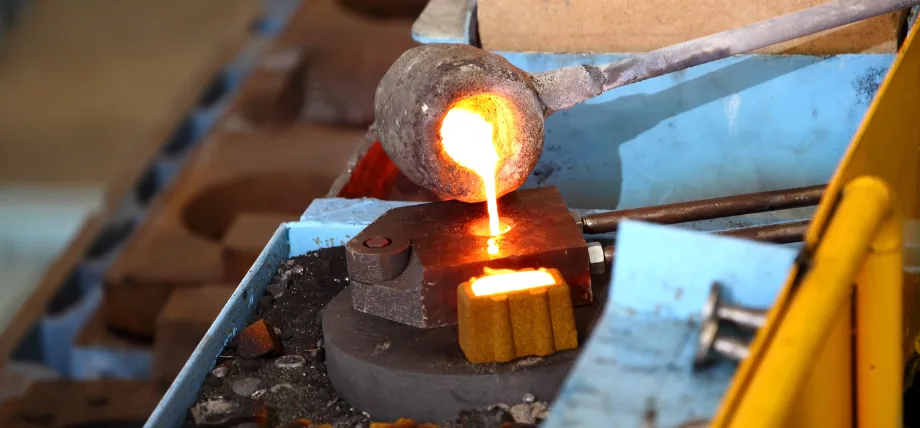
Casting parts
Complex aerospace structures and parts production uses casting and forming to process special materials and super alloys such as Inconel and titanium.
Investment casting is used to process Inconel 718. It involves pouring molten metal into an aceramic-coated wax model at a temperature of up to 1600°C.
Superplastic forming (SPF) is a commonly used process for forming titanium. It gives titanium alloys elongations up to 800%, critical for aircraft frames and components that undergo stress.
Surface Treatments
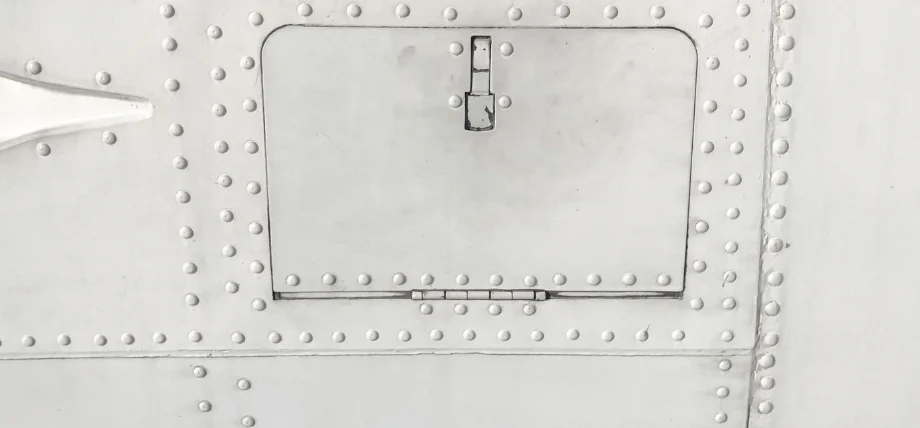
Anodized aluminum panels
Aerospace components are used in high-performance applications in demanding conditions. Surface treatment such as anodizing, plasma spraying, and PVD can improve their durability in corrosive and harsh environments.
The anodizing process produces a protective oxide layer that improves surface hardness and corrosion resistance. Plasma spraying uses a thermal coating that gives protection against high temperatures.
PVD involves depositing a wear-resistant coating such as titanium nitride (TiN) onto components, which reduces friction and improves longevity.
Aerospace Manufacturing Materials
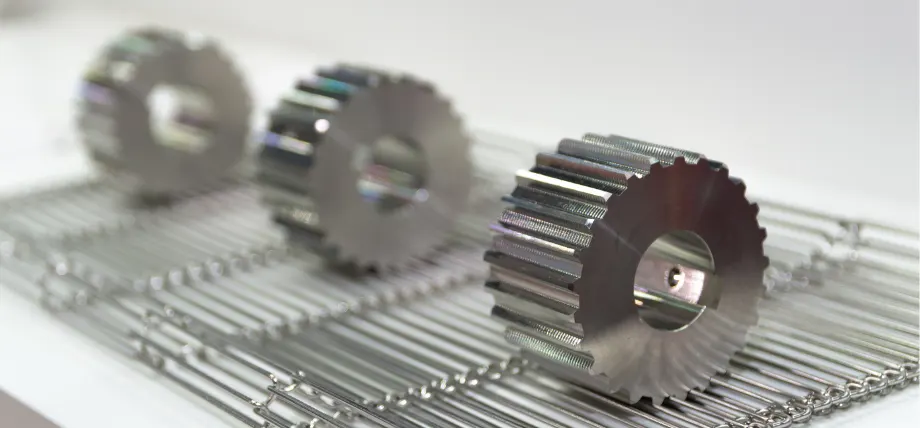
Titanium gears
Material selection depends on the component’s application and the material’s physical properties, such as hardness, tensile strength, and corrosion resistance. Commonly used materials are mentioned below:
- Titanium Alloys (e.g., Ti-6Al-4V): Titanium alloys have excellent strength-to-weight ratios (ultimate tensile strength up to 1,200 MPa) and corrosion resistance, making them suitable for frames and high-performance engine components.
- Aluminum-Lithium Alloys: These alloys are lightweight and feature lower densities (5-10%) than standard aluminum, which helps build lightweight aircraft structures and improve fuel efficiency.
- Nickel-Based Superalloys (e.g., Inconel 718): High-temperature applications such as turbine blades and exhaust systems use Inconel due to its high creep and oxidation resistance, which helps it withstand extreme temperatures.
- Carbon Fiber-Reinforced Polymers (CFRP): high-performance composites can have low density and tensile strengths up to 3,500 MPa, making them ideal for wings and fuselage sections to reduce weight.
- Ceramic Matrix Composites (CMCs): Ceramic composites have high thermal stability up to 1500°C, which is essential for engine components.
Each material excels in different applications and uses; titanium has high durability, whereas aluminum alloys have lower density and are lightweight.
Aerospace Manufacturing Quality Control and Standards
Aerospace components have no room for errors, and quality control is an essential part of the manufacturing process to produce reliable components that meet international standards.
ISO Standards for Aerospace Manufacturing
Some important procedures issued by the International Organization for Standardization (ISO) for quality management and control in the aerospace industry are mentioned below:
- ISO 9001:2015: This includes a quality management system, process control, and risk-based thinking to ensure product consistency.
- ISO 9100:2016 (EN 9100): This standard further emphasizes ISO 9001 by increasing requirements such as configuration management and supplier oversight to ensure traceability and safety standards.
- ISO 17025:2017: This oversees calibrations and testing to ensure that coordinate measuring machines (CMMs) are standardized and maintain accuracy and precision within 0.002 mm.
- ISO 14001:2015: This standard oversees and calculates the environmental impact and waste management of the processing methods, such as casting used in manufacturing.
- ISO 27001:2013 focuses on information security by protecting sensitive design and production information.
AS Standards for Aerospace Manufacturing
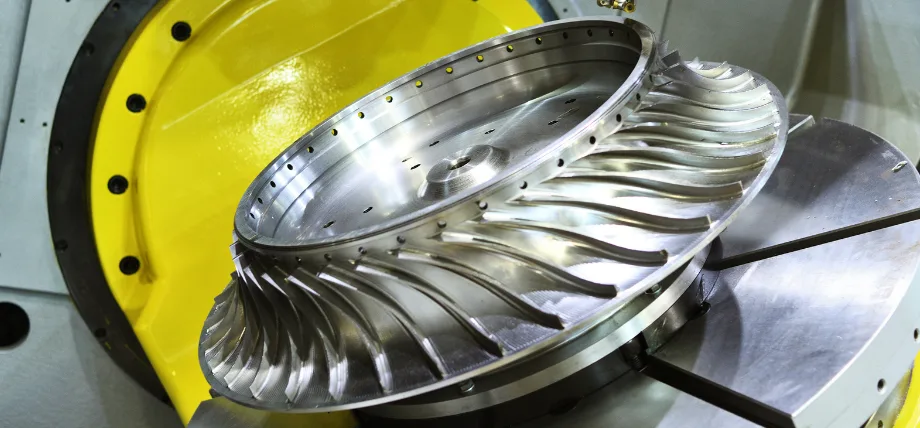
Impeller component on a machine bed
The Aerospace Standards (AS) series was developed by the Society of Automotive Engineers (SAE) to address specific aerospace requirements:
- AS9100D: This standard has clauses to ensure product safety and prevent counterfeit parts, which is important in manufacturing avionics and airframes.
- AS9110C: Maintenance and repair are the key focus points of this standard. It ensures repairs are done through proper procedure and the aircraft is fit to fly.
- AS9120B: This distributor-related standard ensures supply chain integrity, preventing counterfeit parts and non-compliance with regulations.
- AS6174A: It demands that suppliers verify their authenticity by using certified suppliers for raw materials such as titanium billets.
- AS5553D: This standard mandates inspection and testing of electronic parts used in manufacturing. It focuses on avionics components and semiconductors, preventing forgery.
Testing Methods
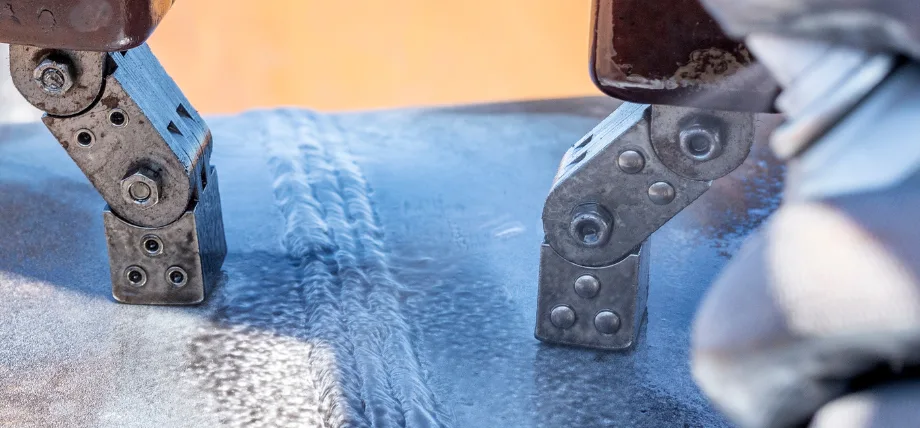
Checking a weld seam for microscopic gaps using MPT
Non-destructive testing (NDT) verifies and ensures component reliability without destroying the components. Some common NDT methods are mentioned below:
- Ultrasonic Testing (UT) involves using high-frequency sound waves up to 10 MHz to highlight internal voids and inclusions in a component.
- Radiographic Testing (RT): This process uses X-rays or gamma rays to detect internal structures at a high resolution of 0.01mm, highlighting inclusions and defects.
- Magnetic Particle Testing (MPT): This testing method is generally used for near-surface testing and works by applying a magnetic field and fluorescent particles.
- Eddy Current Testing (ECT): It measures the electrical conductivity of conductive materials, which is then used to identify cracks in the surface. It is commonly used for aluminum airframes.
Destructive testing, such as tensile and fatigue testing, is mainly used for material testing to ensure its reliability and performance in aerospace applications.
Titanium alloys have a high ultimate tensile strength of 900- 1200 MPa, which is verified by tensile testing and cyclic loading.
Supply Chain and Traceability
The aerospace manufacturing supply chain involves multiple suppliers for electronics and raw materials.
The main concern regarding the supplication is authenticity and traceability, which is important to standards and regulatory compliance. This helps prevent counterfeit parts from entering the market.
Traceability is preserved by issuing a distinct tracking ID to the components, such as a bar code or batch code, directly linking the part to a digital record detailing its manufacturing and raw materials.
Supply chain management uses strategies such as dual sourcing to reduce risk and prevent any disruption in the supply chain to ensure consistency. It also oversees supplier audits to ensure compliance with International standards such as AS9120.
Modern technology, such as machine learning models, is used to predict supply chain bottlenecks and optimize lead time for important parts and components like avionic modules.
Aerospace Industry CNC Machining
PROLEANMFG provides high-precision aerospace components from turbine blades to riveting assemblies and engine components in line with ISO and MIL standards.
Request a free quote today!
Conclusion
Aerospace manufacturing is a complex and niche industry that uses a combination of advanced technology, strict compliance, and a regulated supply chain to produce high-performance aerospace components.
The manufacturing process involves CNC machining, casting, forming, and surface treatments to produce complex components that are in compliance with ISO and AS standards, ensuring safety and consistency.