
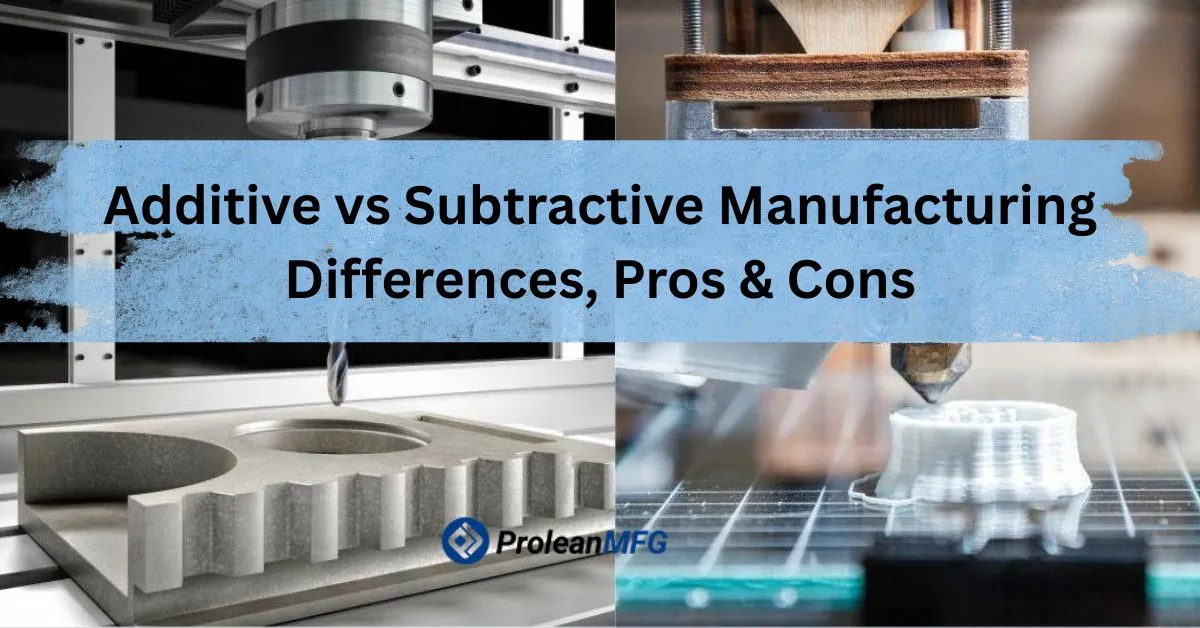

The manufacturing industry has changed dramatically in the last few decades. This has given engineers and product designers a greater variety of options. This evolution is driven by a fundamental decision: should you start from scratch or start with a solid block to create a component (additive manufacturing vs subtractive)? This question is at the heart of the debate between additive and subtractive manufacturing. The answer will have major implications on cost, speed, quality, and sustainability. Both approaches are used to create products that we use every day, from aerospace components to medical implants. However, they follow a different philosophy in terms of how the material is transformed into a finished product.
We work every day with manufacturers, design engineers, startups, and other professionals to match the best process to their needs. You can choose from our geometric freedom or the rigidity of our 3D Printing Service. Our tight tolerances, repeatability, and quality are our hallmark in CNC Machining Services.
Understanding the differences between additive manufacturing and subtractive manufacturing will help you make the best decision for your project. This guide breaks down both processes into their fullest form, including techniques, benefits, drawbacks, applications, costs, and a practical framework to choose between them.
Difference Between Additive and Subtractive Manufacturing Processes
They differ in their basic principle of operation. To create the shape you require, the additive manufacturing process is used. Subtractive manufacturing starts with a solid block of workpiece. Material removal can be done by friction, erosion, heat, or sharp tooling.
Therefore, in additive manufacturing, the part grows from nothing into its finished form. Many additive processes require post-processing such as machining, grinding, or support removal. However, in this, we can start with a big piece of the workpiece and remove material to reach the final product.
What is Additive Manufacturing
Additive manufacturing (AM) builds a part from feedstock materials such as powder, filament, wire, or resin. It is guided by a digital 3D model.
Initially, the material is present in the form of filament, resin, or granules. Through various processes, material is heated and turned into the required part. It is a simple manufacturing process.
Common Additive Manufacturing Techniques
There are different kinds of additive manufacturing techniques. Some common additive manufacturing techniques are listed below.
3D Printing
It acts as a parent category that encompasses all layer-by-layer build strategies. If you understand how 3D printing works, you can understand all other additive manufacturing techniques easily.
Material Extrusion
It is a widely used manufacturing process due to its low cost, wide material availability, and easy operation.
VAT Polymerization
In a vat, a UV light source is used to cure and harden liquid photopolymer resin. It is known for high precision, smooth surfaces, and detailed, complex geometries.
Powder Bed Fusion
It is one of the most powerful and versatile processes in additive manufacturing. Under a single operating principle, it covers both polymer and metal applications.
Direct Metal Laser Sintering
Within additive manufacturing, it is one of the most industrially used processes. A high-power laser is used to melt the metal part to create the complex structures. It is best for rapid, tool-free production of intricate, high-precision, and lightweight components such as those in aerospace, automotive, and medical industries.
Material Jetting
Material jetting is similar to inkjet printing. In this technique, deposit droplets of photopolymer resin, which are then cured by UV light. It is used in producing high-resolution, multi-material, and accurate parts. It delivers the high surface quality and multi-material capability of any polymer AM process.
Binder Jetting
Without the thermal stress of laser melting, a wide range of powder materials, including metals, can be processed. It is used to bind materials layer by layer.
Direct Energy Deposition
For large-scale metal builds and component repair, this process is used.DED can deposit material directly onto existing components. It can extend additive manufacturing’s reach into maintenance and repair.
Sheet Lamination
By using welding or adhesives, stack and bond the sheets of material (paper, metal, or plastic). It is one of the earliest additive manufacturing techniques. It is a low-cost strategy for concept models and casting patterns.
Advantages of Additive Manufacturing
Understanding the pros and cons of additive manufacturing will make your selection process easier. Below are the advantages of additive processing.
Reduced Wastage
The main benefit of this process is that material waste is lower. Material is added only when needed.
Reduced Tooling
There is no need for molds, fixtures, or cutting tools. This will reduce our tooling cost.
On-Demand Production
We can print the parts as needed. This can reduce inventory and storage costs.
Short Lead Times
The turnaround can be hours or days, not weeks. The lead time in this manufacturing is low.
Sustainability
Due to lower material wastage and the ability to recycle. It improves environmental sustainability.
Customization
It provides a good room for customization for processes like 3D printing. It is ideal for personalized medical implants and consumer products.
Material Range
Many engineering materials cannot currently be processed using additive manufacturing. The materials can be printed by this technology, such as polymers, metals, ceramics, composites, and biomaterials.
Complex Part Manufacturing
We can create complex parts with this process. Shapes that are impossible to machine. Through this process, we can print without additional cost.
Disadvantages of Additive Manufacturing
Some of the disadvantages of additive manufacturing are
Imperfection Surfaces
There are many surface imperfections on parts made with these processes. To achieve smooth finishes, post-processing such as sanding, tumbling, or coating is required.
Low Mass Production Capability
In this process, cycle times per part are slower compared to injection molding or high-speed CNC. For mass production, it is not cost-effective.
Quality Inconsistency
Due to a lack of consistency, the quality control is not good.
Material Restrictions
A lot of materials cannot undergo additive processes. Material that doesn’t melt easily is hard to use in additive manufacturing. Thermoplastics and a few metals are suitable for this process. Not all engineering alloys or high-performance polymers can be printed easily.
When to Use Additive Manufacturing?
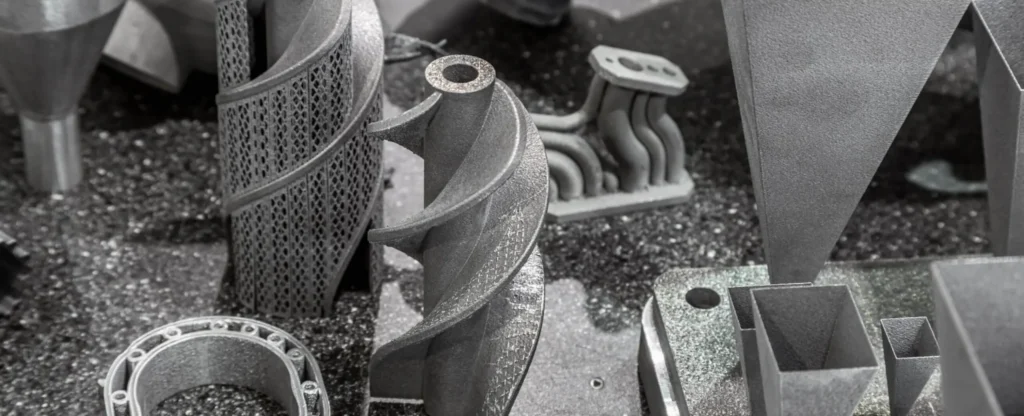
Application of additive manufacturing
For manufacturing small parts in small batches, this is good. It can create parts with cooling vents built in. Additive manufacturing machines, such as 3D printing, are good for small-scale prototyping processes.
Some of the common applications are.
Aerospace
Due to lightweight, ducting, and fuel nozzles with internal geometries. It is used in the aerospace industry.
Medical
Due to easy customization, it is used in patient-specific implants, surgical guides, and prosthetics.
Automotive
Due to rapid prototyping, custom tooling, and lightweight materials. It is also good for the production of low-volume specialized parts.
Construction
For creating custom architectural elements,3D printing and large-format concrete printing of structural components are used.
What is the Subtractive Manufacturing Process?
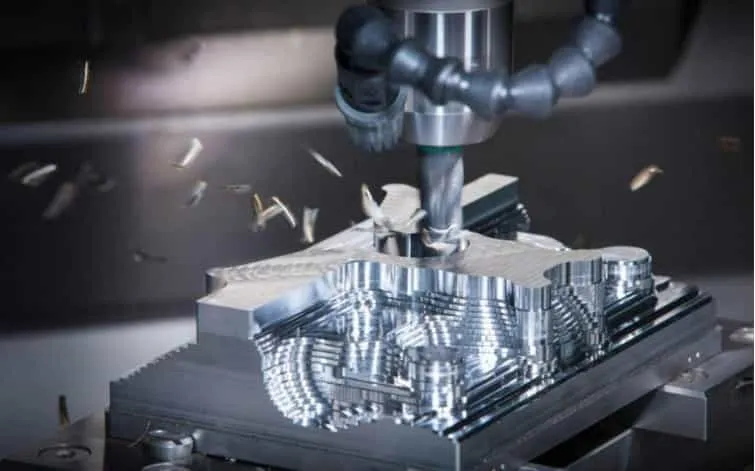
What is subtractive manufacturing?
The subtractive manufacturing process starts with a block of material. Systematically remove the material to create the desired shape. Through machining, this process is controlled. The material can be a solid block, cylinder, sheet, or other shapes. For decades, this process has been the backbone of precision manufacturing.
Common Subtractive Manufacturing Techniques
In the manufacturing sector, these techniques are used on different scales. Some of the common techniques are.
CNC Milling
In CNC milling, a single rotating cutting tool is normally used at a time.
Turning
In CNC turning to produce cylindrical parts, the workpiece rotates against a stationary tool. Laser Cutting Tool
It uses a focused laser beam. To cut sheet metal, plastics, and wood.
Waterjet Cutting Tool
It uses a high-pressure stream of water. To cut materials without heat.
Drilling
Drilling is the process in which we can create holes using rotating drill bits.
Electrical Discharge Machining
It uses controlled electrical sparks to erode material.
Grinding
To achieve extremely tight tolerances and fine surface finish, grinding is used.
Reaming
To precise dimensions and surface quality. It enlarges and finishes drilled holes.
Advantages of Subtractive Manufacturing
Below are some advantages of subtractive manufacturing.
High Precision
It offers high precision and accuracy. It provides high-quality surface finishes.
CNC Automation
It uses computer numerical control. Once the CNC machine is programmed, the system can run with minimal operator intervention.
Superior Surface Finish
It provides a highly smooth surface finish. Mostly, the finished product does not require secondary finishing.
Intricate Design Capability
In a single setup, highly complex external geometries are produced. Even wood carving can be done with CNC machining.
Fast Production Speed
At a very high speed, we can create the parts. Machining processes often require coolant to control heat and tool wear.
Design Flexibility
With small adjustments to the CAD software customization, the design is very easy.
Error Detection via CAD
In the designing or programming phase, errors are easily detectable via CAD software.
Material Versatility
Many materials cannot be machined easily, including certain ceramics, superalloys, and brittle composites.
Post-Processing
Many machined parts still require deburring, heat treatment, surface finishing, coating, or grinding.
Easy Part Modification
To change the design, just update a program. New tooling investment is not required.
Disadvantages of Subtractive Manufacturing
Below are the common disadvantages of subtractive manufacturing.
Wastage
Material that is removed as chips is often irrecoverable. It is expensive to recycle.
Cost
For small volume production, this is not preferable method. Material and tooling costs are higher upfront.
Environmental Impact
High wastage can badly affect the environment.
Tool Wear
Tools wear out faster. It increases waste and cost.
Safety
In this process, sharp cutting tools are used. It may cause safety risks.
Material Dust
Material that causes dust in the workplace can be removed through this process.
Energy Consumption
In this process, heavy machinery is used. It consumes a lot of electricity.
When to Use Subtractive Manufacturing?
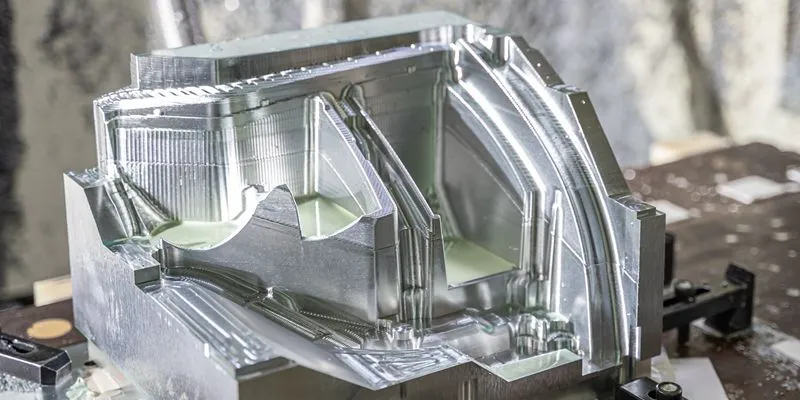
Application of subtractive manufacturing in the automotive industry
When precision and consistency are major concerns, subtractive manufacturing is a great choice. Common examples of this manufacturing are
Automotive & Aerospace
It is used in making the structural brackets, engine, and transmission components.
Medical Devices
Due to material traceability and surface finish. It is used in surgical tools and implants.
Prototyping
For a small batch of parts. It is ideal for creating high-quality prototypes.
Industrial Machinery
It is used to create the mechanical components that demand tight fits and wear resistance, such as gears and shafts, etc.
Comparison of Additive vs Subtractive Manufacturing
Here are the key differences between additive manufacturing and subtractive.
| Criteria | Additive | Subtractive |
| Material Wastage | Very low material added only where needed | Higher chips and offcuts are discarded |
| Dimensional Accuracy | Moderate (±0.1–0.5 mm typical) | High (±0.005–0.05 mm typical) |
| Supported Materials | Polymers, metals, ceramics, composites (printable grades) | Almost any solid material |
| Complex Shapes | Excellent — internal channels, lattices, and overhangs possible | Good for external geometry; limited for internal features |
| Hollow/Closed Parts | Excellent — built in place without assembly | Challenging; requires multiple operations or assemblies |
| Production Volume | Best for low to medium volume (1–1,000+ units) | Best for medium to high volume |
| Manufacturing Speed | Slower per part; no setup time between designs | Fast per part at volume; setup time required |
| Surface Finish | Rougher; post-processing often needed | Smooth; near-net finish achievable |
| Skill | Requires design and process parameter knowledge | Requires machining setup, tooling, and CAM expertise |
| Customization | Every part can differ at no extra cost | Design changes require program updates |
| Safety | Fewer sharp hazards; some resin/powder risks | Rotating tools, swarf, and coolant hazards |
How to Choose Between Additive and Subtractive Manufacturing?
Before choosing the manufacturing technique, these factors can help you choose the best one according to your needs.
Type of Material
Additive manufacturing is ideal for thermoplastics, while subtractive manufacturing is a great choice for metals and alloys.
Production Volume
For large production runs, subtractive manufacturing is suitable. For smaller batch production, additive manufacturing is good.
Sustainability
Additive manufacturing minimizes the wastage. Subtractive manufacturing wastes more material but can give better results.
Accuracy Requirements
If you want high-precision results, then subtractive manufacturing is the best one.
Operator Skill Level
If you don’t have a skilled team, then go with additive processing. If workers are trained, then subtractive manufacturing works well.
Cost Considerations
For small parts in small batches, additive processing is cost-saving. Subtractive processing is cheaper when producing big parts in large volumes.
Part Design Complexity
For complex designs, subtractive manufacturing is better. Additive manufacturing works best for parts that have internal features, such as cooling vents.
Cost of Additive vs Subtractive Manufacturing
Here is the quick comparison table that will help you to understand the cost of additive manufacturing vs subtractive
| Cost Factor | Additive | Subtractive |
| Equipment Costs | $10,000–$2M+ (varies by technology) | $50,000–$2M+ (CNC machining centers) |
| Material Costs | Higher per kg (powder/filament) | Lower per kg (standard stock bar) |
| Secondary Processing | High — support removal, heat treatment, finishing | Low — deburring, surface treatment only |
| Labor Costs | Build prep, support design, post-processing | CAM programming, setup, and machinist operation |
| Electricity Consumption | Low (polymer AM) to High (metal AM) | Medium to High (large spindles, coolant) |
| Waste Disposal | Spent powder, failed prints, support structures | Chips, cutting fluid, coolant — regulated disposal |
| Best Volume Range | 1–100 parts | 100–100,000+ parts |
| Overall Cost at Low Volume | Lower | Higher |
| Overall Cost at High Volume | Higher | Lower |
Conclusion
There is no universal winner in the debate between additive manufacturing and subtractive manufacturing. The answer depends on context. Additive manufacturing offers unmatched design flexibility, minimal waste, and a rapid time-to-part, even for low-volume, complex components. Subtractive manufacturing offers superior dimensional accuracy and surface finish at low volume, as well as lower costs per part. Understanding the difference between subtractive and additive manufacturing, and knowing what the pros and cons of additive manufacturing are, will help you make the best decision.
At ProLean MFG, we can help you make these decisions by providing expertise from both sides. Our team will recommend, quote, and deliver the best process for you, whether it’s a few functional prototypes or tens of thousands of production-grade parts. Contact us to discuss your project needs or browse our entire range of CNC Machining Services.