
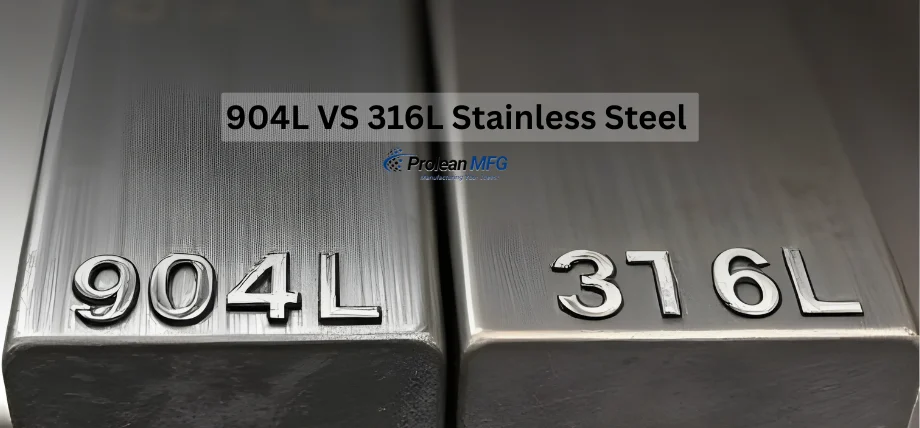

Stainless steels are highly versatile and corrosion-resistant, which makes stainless steel a widely used material for industrial applications.
The most widespread stainless steels are 904L and 316L, which are classified as austenitic stainless steel and are used in various applications ranging from heavy machinery to luxury watch frames.
This article compares 904L and 316L, detailing their chemical composition and physical properties, such as corrosion resistance, while highlighting cost and task-specific applications.
After reviewing this article, you’ll have an excellent understanding of how to select the right stainless steel for your project.
What Is 904L Stainless Steel?
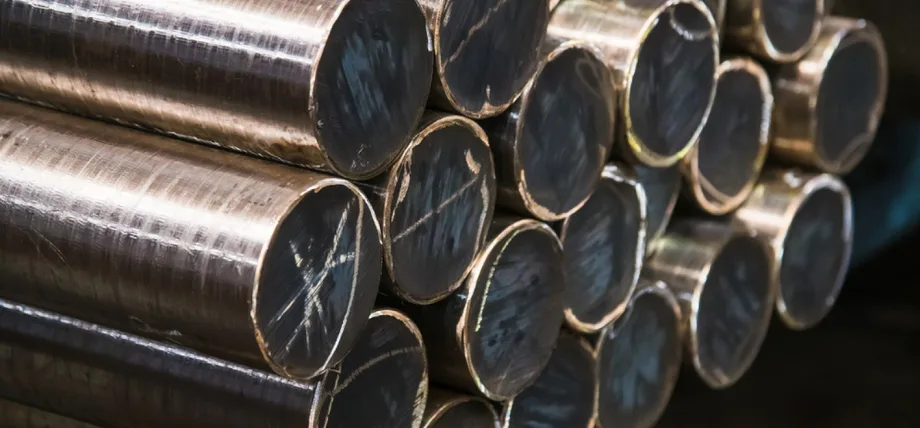
904L steel stock
904L stainless steel is a high austenitic stainless steel that is mainly used in demanding applications and harsh environments such as the oil and gas industry. It is nicknamed the “Uranus steel” due to its toughness.
The superior properties are a result of the unique chemical composition of 904L stainless steel, which comprises 20-23% chromium and 23-28% nickel with 5% molybdenum and around 2% copper. It has a low carbon content of less than 0.2%
The high nickel and molybdenum content, paired with the copper, improves the corrosion resistance and increases affinity against reduction agents. This means sulphuric and phosphoric acids are ineffective.
904 steel is used in the chemical processing and pharmaceutical industry due to its excellent corrosion resistance in chloride-rich and acidic conditions.
Apart from that, the durability and wear resistance of 904L stainless steel make it a common material for high-end watch manufacturers. For example, Rolex uses 904L due to its high durability and aesthetic appeal.
What Is The Difference Between 904L and 316L Stainless Steel?
The difference between 904L and 316L stainless steel is attributed mainly to their chemical composition and physical properties, such as corrosion resistance.
316L stainless steel (UNS S31603) comprises 16-18% chromium, 14% nickel, and 2-3% molybdenum. Its low carbon improves weldability and reduces intergranular corrosion.
The alloy constitution of 316L is less compared to 904L steel, which means that it is less resistant to corrosion compared to 904L
904L contains more chromium than 316L, making 904 stainless steel more corrosion resistant compared to 316L, which is crucial for demanding applications such as chemical processing.
These superior physical properties and higher alloy composition make 904L more expensive than 316L.
The balanced cost and properties make 316 steel suitable for use in marine and medical equipment, whereas 904L is better suited for high performance in harsh applications such as acid storage and offshore platforms.
Comparing Properties of 904L and 316L Stainless Steel
The difference between 904L and 316L stainless steel becomes prominent once you compare their properties. Some common properties are listed below:
904L VS 316L Comparison Table
Comparison of 904L vs 316L Stainless Steel Properties;
| 904L | 316L | |
| Grade | Austenitic, non-magnetic | Austenitic, non-magnetic |
| Common Name | Rolex Steel | Marine Grade Stainless Steel |
| UNS Number | S90400 | S31600 |
| Chemical Composition | Carbon: 0.02% maxChromium: 19-23%Nickel: 23-28%Molybdenum: 4-5%Manganese: 2% maxSilicon: 1% maxCopper: 1-2% | Carbon: 0.03% maxChromium: 16-18%Nickel: 10-14%Molybdenum: 2-3%Manganese: 2% maxSilicon: 1% max |
| Corrosion Resistance | Superior, especially against pitting and crevice corrosion in chloride environments | Good, but less resistant than 904L in aggressive chloride environments |
| Yield Strength | 220 MPa | 240 MPa |
| Tensile Strength | 490 MPa | 580 MPa |
| Hardness (Brinell) | 150 HB | 200 HB |
| Density | 7.95 g/cm³ | 7.98 g/cm³ |
| Applications | High-end watches, chemical processing, marine environments | Marine, food processing, medical implants |
| Cost | Higher due to increased nickel and molybdenum content | More cost-effective |
| Weldability | Good, but requires care to avoid hot cracking | Excellent |
| Availability | Less common, specialty alloy | Widely available |
Weldability
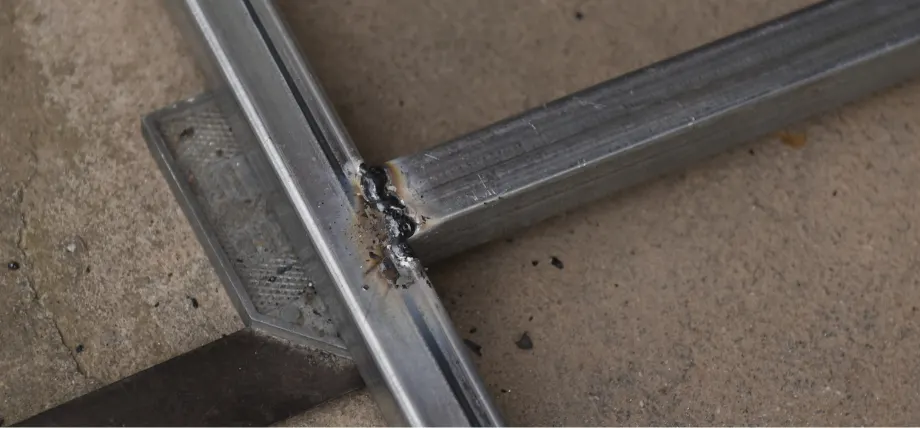
Weldability of steels is important for metal fabrication
316L and 904L are both weldable steel grades that are joined using standard techniques such Tas IG and MIG welding.
316L has a lower alloy composition that improves the weldability and ductility, making it easier to weld and form.
Additionally, the low carbon content minimizes factors such as carbide precipitation and intergranular corrosion in the heat-affected zone.
904L requires careful attention and precise handling to prevent loss of corrosion resistance since it has a high nickel and molybdenum content. 904L requires more skill in order to properly weld, which makes the process challenging compared to 316L
Thermal Resistance
The thermal resistance of 904L is higher than 316L, with a melting point of around 1350 °C °C to 1400 °C, it can easily withstand extreme temperatures with minimal oxidation.
904L has better heat retention due to its lower thermal conductivity (12.6 W/m·K at 100°C) compared to 316L’s (16.0 W/m·K). This mask is useful in applications such as heat exchangers.
316L is prone to oxidation at high temperatures compared to 904L. This makes 904L steel a more proficient material in high-temperature environments with temperature fluctuations.
Corrosion Resistance
Corrosion resistance plays an important role in material selection. 316L stainless steel has a significant molybdenum content that shields against pitting and crevice corrosion.
This makes it suitable for chloride-rich environments such as marine applications. However, it provides minimal protection against sulfuric and phosphoric acids.
904L stainless steel has greater corrosion resistance compared to 316L. Its higher molybdenum content, paired with copper, makes it suitable for orchloride-heavy and acidic environments.
Additionally, it has a Pitting Resistance Equivalent Number of around 34-37, which is higher than 24–26 of 316L. This validates 904L’s pitting and crevice corrosion resistance for engineers, making it ideal for chemicals and seawater.
Strength comparison of 904L and 316L stainless steel
During material selection, mechanical properties play an important role, validating their reliability in an application or project.t904LL has a tensile strength of 490-690 MPa and a yield strength of 220-450 MPa.
316L has a lower tensile strength of 485-620 MPa and a yield strength of 170-310 MPa compared to 904L. This makes it suitable for moderate stress applications.
Additionally, 904 L steel exhibits greater hardness and stiffness due to a higher elasticity modulus (200 GPa) and Brinell hardness (170-220HB ). 316L stainless steel has an elasticity modulus of 193 GPa and a hardness of 146-217 HB.
The superior mechanical property of 904L makes it suitable for high mechanical stress and performance applications compared to 316L
Appearance 904l vs 316l Stainless Steel
Both grades of steel, 904L and 316L, exhibit a clean and polished look, which is aesthetically appealing. 904L stainless steel can achieve a high surface finish quality due to its high alloy content, which increases its polishability.
Watch manufacturers prioritize the use of 904L stainless steel mainly due to its high luster and difference in scratch resistance. The higher scratch resistance is attributed to 904L’s hardness.
316L can achieve a visually appealing mirror polish, but it readily wears down in high-contact applications such as a stainless steel watch case.
For example, Rolex was the first watch manufacturer to use 904L to make 904L steel watches to display its polished aesthetic and durability..
904L Advantages over 316L Stainless Steel
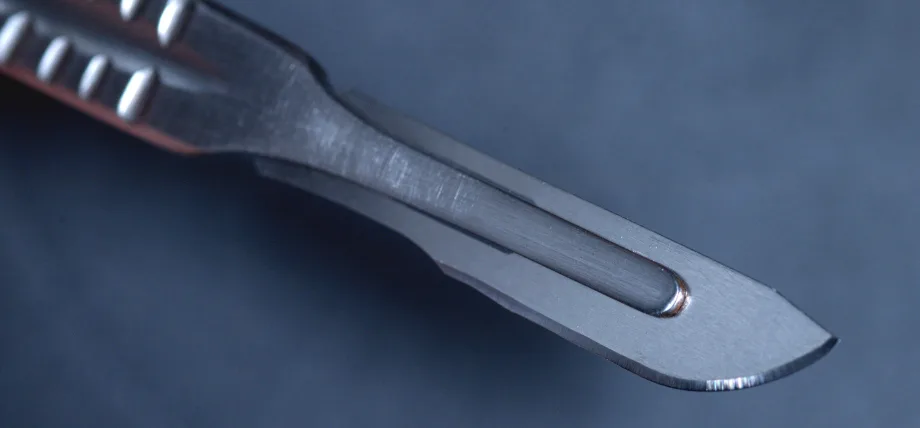
Stainless steel scalpel for precision surgeries
904L outperforms 316L, offering several advantages that have made it crucial to various industries. Some key advantages are listed below:
- Corrosion Resistance: 904L has higher corrosion resistance than 316L; this is mainly due to a higher alloy composition that includes nickel, chromium, and copper in the case of 904L. This makes it more resistant to acids and chlorides, making it suitable for chemical processing and offshore use.
- Enhanced Durability: 904L’s higher yield strength and tensile strength are useful in high-performance components that undergo mechanical stress
- Premium Aesthetic: It offers a higher quality surface finish, such as mirror polish, which is highly desired in luxury applications such as watches.
- Thermal Resistance:904Ll has higher thermal resistance, meaning it can bear high temperatures with minimal oxidation. 904Ll has numerous advantages, but the trade-off is its cost. It is more expensive than 316L due to the complex alloy composition.
904L Stainless Steel For Watch Making
The watch industry heavily refers to 904L stainless steel as “oystersteel”. It is used to make steel cases, bracelets, and bezels due to its durability and versatility.
904 steel has higher hardness, which means a greater resistance to scratches and the ability to achieve a higher quality finish.
904L-grade steel is corrosion-resistant, which means that it can be used for timepieces that can be worn underwater. Being resistant to seawater. Apart from the 904L steel, cases are resistant to pitting, ensuring longevity of anesthetics.
Since 904L is cost-effective compared to other metals such as titanium, it allows watch manufacturers to cater to a diverse range of customers while preserving premium quality.
What IS 904L Rolex?
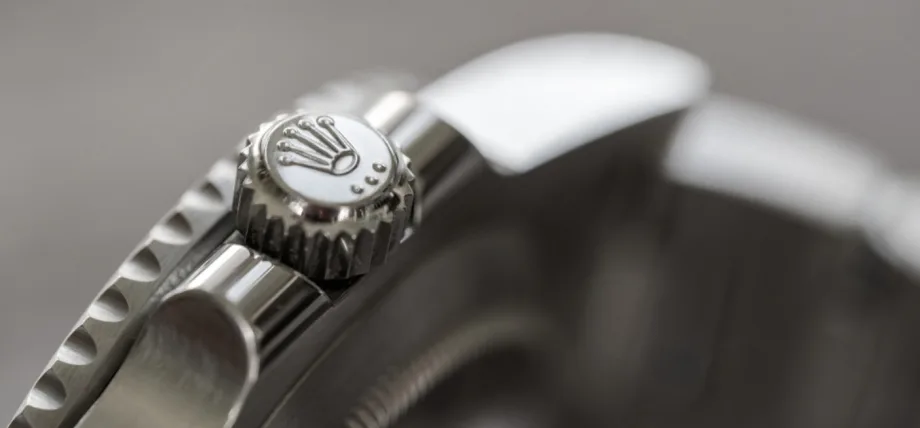
Rolex and other luxury watches use 904L stainless steel bodies
Rolex was the first luxury watch company to implement the use of 904L stainless steel in its watches due to its superior corrosion resistance and polishability.
It was branded as oystersteel, which gave it a unique class. Prior to that,316L6l was the primary steel used by watchmakers to manufacture watches. 904L grade steel is typically used in the Rolex Submariner, GMT-Master II, and Datejust, which is why these watches have a high luster and can be worn underwater due to their high corrosion resistance.
Additionally, Rolex is unique due to its choice to use 904L stainless steel since it requires a specialized procedure to process such a hard metal.
Rolex prioritizes its quality and longevity, so using 904L steel to make watches was the ideal choice for their luxury standard and performance.
316L VS 304L Stainless Steel
304L is another widely used steel grade that comprises nickel and chromium as its major alloying elements. The differentiating factor is that it lacks molybdenum, which makes it less resistant than 316L.
316Ll has a small percentage of molybdenum, which is crucial to prevent pitting and crevice corrosion in chloride environments. This is the primary reason why it is used in marine and chemical applications.
Apart from that, 304L is softer than 316L, which is why it is used in various applications such as kitchen knives and architecture.
23/28 Grade Stainless Steel
23/28 grade stainless steel is another name for 904L, which refers to its nickel content that is 23-28%. The high nickel content, paired with chromium and molybdenum, makes it a super austenitic stainless steel.
Compared to the low nickel content of 316L, 904L’s nickel content imparts excellent corrosion resistance that makes it ideal for acidic and chloride-rich environments.
Cost Comparison of 316L and 904L Stainless Steel
The choice of 316L and 904L depends on various factors such as application requirements and cost. 316L is the most commonly used due to its cost-effectiveness and good balance of properties. It excels in projects or applications that have a tight budget constraint.
904L is more expensive than 314L. This is mainly due to the higher alloy composition and the more complex procedure to produce 904L stainless steel.
314 is suitable for common applications that have moderate requirements, such as food processing, whereas the use of 904L is oriented toward high-performance or luxury applications, such as chemical processes or luxury watches made from 904L.
Which Is Right For Your Project, Between 904L and 316L Steel?
The choice between 316L and 904L depends on your project’s requirements:
- 316L Stainless Steel: It is suitable for applications that require moderate corrosion resistance and high weldability, such as marine hardware and medical devices. Its high weldability and softness make it a top choice for machined components.
- 904L Stainless Steel: It has superior physical and mechanical properties, which make it a suitable choice for high temperature and corrosive environments such as the oil and gas industry and chemical processing.
316L is the more suitable choice for a budget-friendly approach, whereas 904L serves the high-performance requirements of demanding environments, which also justifies its high price.
Explore further: Materials We Support
Conclusion
314Land 904L stainless steel is both a highly renowned and versatile grade in the world of stainless steel.
316L has excellent corrosion resistance and high weldability, which is a trait that is desired for common applications such as medical and marine applications.
On the other hand, 904L stainless steel is used in specialized applications such as high-performance components and high-end watches due to its high temperature and corrosion resistance.
Proper analysis and understanding of chemical composition, along with the mechanical and physical properties of stainless steel, allow engineers to select the most appropriate and reliable steel grade for their project.
Stainless Steel Precision Fabrication Services
Expand your stainless steel part production using our CNC machining and fabrication services. Discuss your needs with our engineering team and receive a tailored quote today!
FAQ
What Is The Meaning of L in 904L Stainless Steel and 316 Stainless Steel?
The L in stainless steel grades indicates the low carbon content, typically around 0.02% for 904L and 0.03% for 316L. A low carbon content means high weldability and ductility.
Is 904l Stainless Steel Good?
904L stainless steel has excellent corrosion resistance and durability, which is suitable for demanding environments such as the oil and gas industry and marine applications.
Is 904l Stainless Steel Magnetic?
904L stainless is an austenitic grade that is nonmagnetic in its annealed state.
What Is 904l Stainless Steel?
904L stainless steel is an austenitic steel that comprises chromium, nickel, molybdenum, and copper as its main alloying elements. Its unique composite gives it excellent corrosion resistance properties that are crucial in various applications.
What Is The Difference Between 316 And 904l Stainless Steel?
The main differentiation factor between 316Ll and 904L is the chemical composition. 904 has a higher percentage of alloy composition than 316L. Additionally, 904L also contains copper, which 316L lacks. 904L has high resistance whereas 316 has better weldability.
Is 904l 316l Stainless Steel?
No, both of them are different steel grades, which are distinguished by their physical and mechanical properties due to their varying alloy composition. 904 has a higher alloy composition, which makes it suitable for harsh environments compared to 316L stainless steel.