
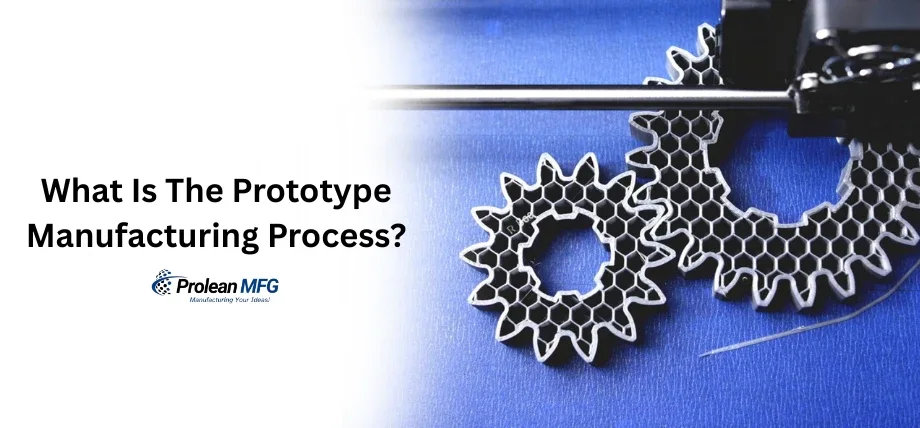

Prototypes are the physical iteration of a concept or digital design, and prototype manufacturing is the first step of product development.
Prototype manufacturing is a crucial process that helps ensure the functionality and performance of a product design, highlighting potential flaws before full-scale production.
It enables manufacturers to validate design and highlight flaws or errors before full-scale production. This reduces the risk of product failure.
After reading this article, you’ll have an in-depth understanding of the prototype manufacturing process, differences between standard and rapid prototyping, while highlighting the technical principles involved in manufacturing.
What is the prototype manufacturing process?
Prototype manufacturing is a critical process that is used in every industry. The process helps to validate and test the functionality and reliability of a product.
The process involves creating a physical iteration of a digital design or concept. This is useful in highlighting flaws and errors before full-scale production.
The initial prototypes can be a proof of concept and can transform to be entirely different final products that are fully functional.
It is an iterative process that combines various engineering disciplines, such as mechanical and electrical, to iterate various prototypes.
Different rapid prototyping methods can be used to create testing or function models of prototype designs. Meanwhile, 3D printing and CNC machining are the most widely used procedures in the prototyping and manufacturing industry.
How To Manufacture a Prototype?
The prototype manufacturing process involves various steps, which are detailed below:
- Ideation
Ideation is the initial part of the prototyping process. It involves analyzing market demand and technical requirements to brainstorm ideas and concepts to conceive a product.
It involves the collaboration of engineers and designers to target the functionality and requirements of a product.
This step can be as simple as some sketches that highlight a product’s core principles and purpose.
- Concept Development
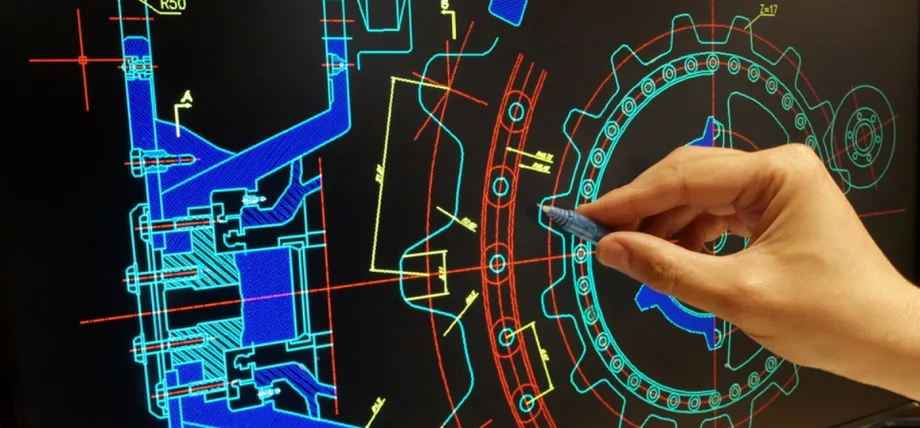
Producing designs on CAD
Concept development involves creating digital designs and prototypes of the concepts and ideas.
It involves using computer-aided design (CAD) software to create digital models, refine design and detail parameters such as material tolerances and specifications.
Various analysis software, such as finite element analysis and computational fluid dynamics, are used to stress test and observe the performance of the product.
- Design
The design process transforms the digital models into detailed designs for manufacturing.
This step follows the design for manufacturability (DFM) principle to select manufacturing and assembly methods that are cost-efficient and produce high-quality products.
- Prototype Fabrication
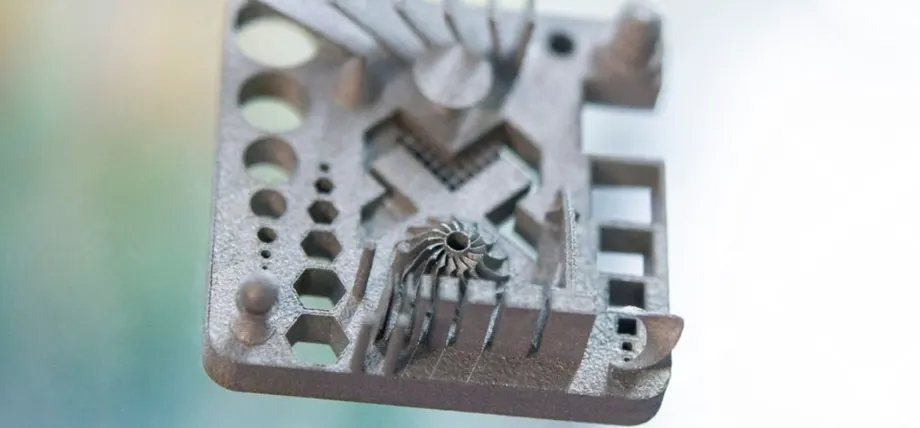
3D printing metal prototypes
Prototype fabrication means making the physical component. There are various fabrication procedures used for prototype manufacturing.
- Additive Manufacturing (3D Printing): It is a high-precision process that is capable of making complex geometries, such as internal lattices and supports, using various materials such as polymers and metals.
- CNC Machining: It is a subtractive process that produces high-precision parts with excellent surface finishes.
- Injection Molding: It is a high-volume production method used for bulk plastic prototypes.
- Sheet Metal Fabrication: It is used for sheet metal prototyping of large structural components such as car panels and frames.
- Testing
Trial and testing are crucial to evaluate the prototype’s performance in various conditions. The testing process includes various mechanical tests, such as stress and fatigue resistance, to test if limitations.
Environmental tests, such as temperature and humidity, are also conducted to test the reliability and functionality of a component in harsh environments.
These tests give important data that is used to adjust and modify the prototypes, directly translating to a better-performing final product.
- Pre-Production
Pre-production is the final hurdle for a prototype to pass. It is the production of the almost finalized product that is used to validate manufacturing and assembling procedures, ensuring smooth operation.
The preproduction prototypes undergo various testing to ensure quality and consistency. Additionally, machines are calibrated and equipment is tested to minimize risk.
- Mass Production
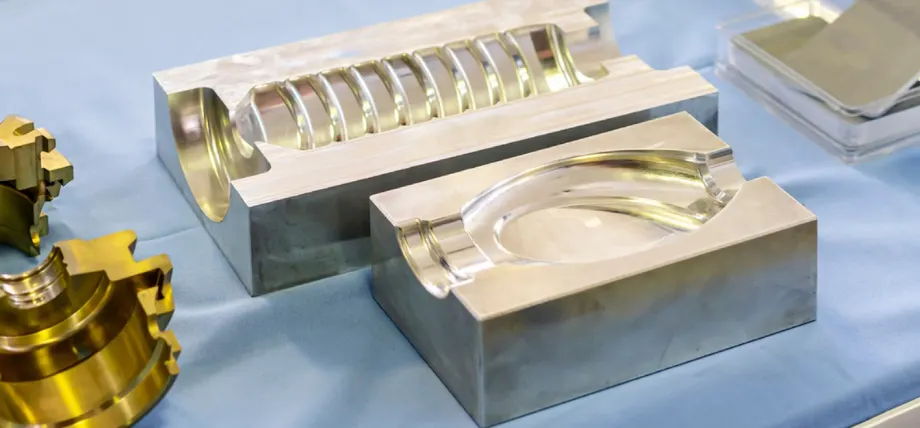
Prototype mold to scale production
This is the last step of the prototyping process and involves scaling the manufacturing and managing supply chains, as well as regulation to maintain quality and consistency.
All the previous testing, designing, and development ensure a streamlined and smooth mass production.
Standard Prototyping VS Rapid Prototyping: What Is The Difference?
Standard and rapid prototyping are entirely different processes. Standard prototyping is a slow and inefficient process that uses traditional CNC machining to make prototypes.
The resulting prototypes are precise and durable but require significant time and labor to manufacture and are less flexible.
Rapid prototyping, such as 3D printing, uses SL and SLa techniques that can produce highly precise and durable prototype parts within a matter of hours and days for large-scale prototypes
It requires minimal tools and is excellent for initial prototyping, but has limitations in material strength. The table shown below details some key aspects:
| Aspect | Standard Prototyping | Rapid Prototyping |
| Methods | CNC machining, injection molding, manual assembly | Stereolithography (SLA), fused deposition modeling (FDM), selective laser sintering (SLS) |
| Timeline | Weeks to months | Hours to days |
| Cost | High due to tooling and labor | Lower due to minimal tooling |
| Material Options | Broad range, including production-grade metals and plastics | Diverse but often limited to polymers, resins, and select metals |
| Design Flexibility | Constrained by tooling and process limitations | High, supports complex geometries and rapid iterations |
| Application | High-fidelity prototypes for pre-production testing | Early-stage concept validation and iterative design |
What Are Top Prototype Companies?
The top companies with high expertise and experience are listed below:
- Proto Labs, Inc: Proto Labs offers a wide range of services such as 3D printing, CNC machining, and injection molding. They have quick turnaround times, and their automated quoting system simplifies the process, making them the leading company in prototype manufacturing.
- PROLEANMFG: Prolean MFG provides rapid prototyping services with metal 3D printing and CNC machining of high-performing plastics, aerospace alloys, and super alloys. They provide DFM support, heat treatment and material finishing options.
- Stratasys Ltd: They specialize in 3D printing and additive manufacturing. They offer a broad range of materials options, which include high-performance polymers and metals.
- 3D Systems Corporation: They are renowned for their advanced 3D printing systems that are used in precision industries such as aerospace and the automotive industry to make complex parts and components.
- Xometry, Inc: Xometry is one of the largest companies operating in North America. They offer various prototyping services, such as additive manufacturing and sheet metal fabrication.
- Fictiv: Fictiv has connected engineers and suppliers across the globe for quick prototyping and allowed low-volume production for small consumers.
These companies leverage advanced technologies and engineering expertise to support product development across industries, from consumer electronics to aerospace.
PROLEANMFG Rapid Prototyping Services
Rapid prototyping can help you build functional products from the start. With our optional DFM support throughout the prototyping process, you can scale from one unit to thousands with the shortest lead times.
Request a free quote for today!
Conclusion
Prototype manufacturing is the basic step of the product development process. It allows manufacturers to validate the reliability and performance of a product.
Engineers and designers have utilized this structured prototype manufacturing approach to produce a high-quality and refined product that meets all aspects, including market requirements and technical demands.
The two main prototyping procedures used are standard and rapid prototyping, both of which have various advantages and trade-offs, such as production time and material choices.
The top prototyping manufacturers, such as Xometry and Proto Labs, are excellent examples of the industry’s ability to deliver high-quality prototypes with efficiency and precision.
The challenging and strict testing procedure of prototype manufacturing ensures the final products have minimal risks and high success rates.
FAQ
How To Manufacture A Prototype?
Start by creating your product design and create a detailed CAD model with appropriate material selection. Use 3D printing or CNC machining to start making functional prototypes and testing them.
How To Manufacture A Prototype Product?
Sketch your idea, develop a precise CAD design, choose suitable materials, and employ rapid prototyping techniques like 3D printing.
How To Get A Prototype Manufactured?
To get your prototype manufactured you can use one of the many prototype manufacturing services with DFM support and material availability.
How Do I Manufacture A Prototype?
Conceptualize your idea, design using CAD software, select cost-effective materials, and build the prototype using 3D printing at home for quick iteration. For professional printing and prototype manufacturing you can work with prototype manufacturing services.
How To Find A Manufacturer To Make A Prototype?
You can find a prototype manufacturer by searching for services that provide material 3D printing and CNC machining. Prototype services in China are generally cheaper, faster, and specialize in prototype to product scaling.