
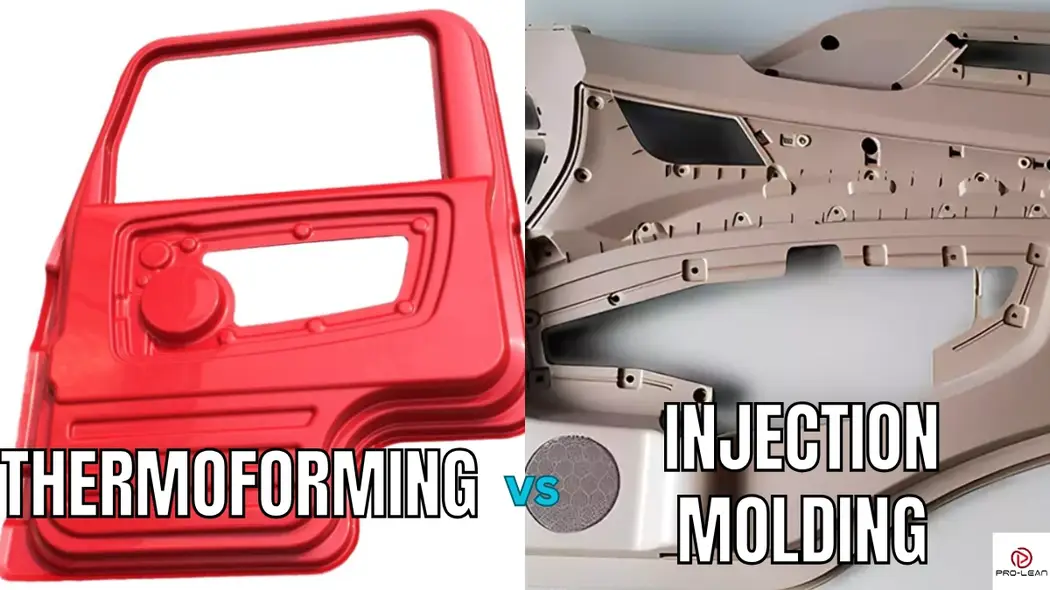

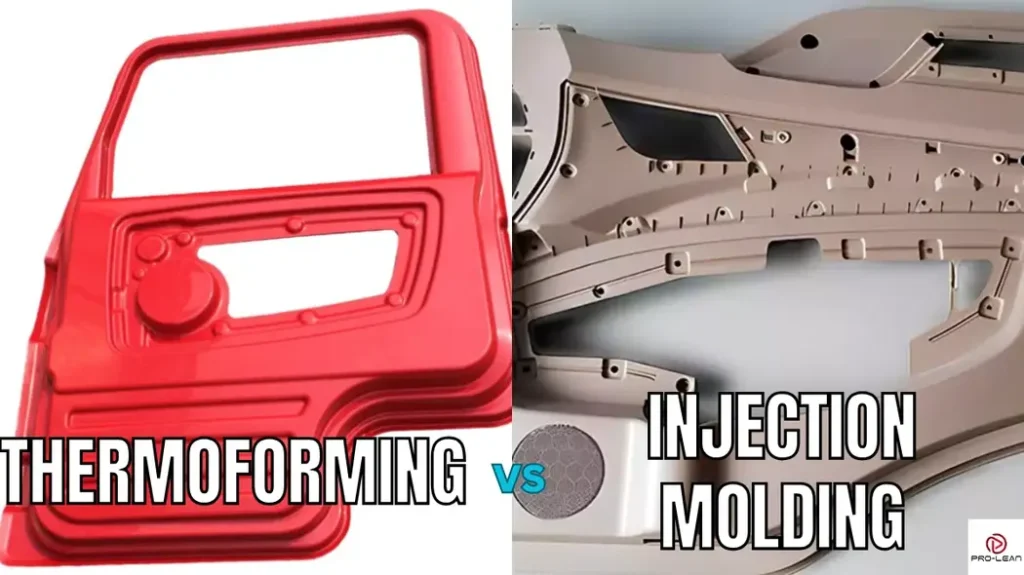
Thermoforming vs injection molding
Thermoforming and injection molding emerged in the manufacturing scene during the rise of modern plastic in the period around the 1930s to 1950s. True to the original intention, both technologies support mass manufacturing.
However, the shared nature of thermoforming manufacturing and injection molding processes using thermoplastics triggers the thermoforming vs injection molding debate.
In thermoforming, a thermoplastic sheet is softened through heating, then stretched over a single-sided mold for shaping. The final shape can be achieved through mechanical forming, pressure forming, or vacuum forming.
Injection molding involves melting thermoplastic material and injecting the melt into a mold. It is renowned for producing reliable plastic injection molded parts for laboratories, eateries, and the automotive industry, among other areas. Thermoforming is also popular, especially in medical packaging, retail packaging, and making shipping trays.
So, these processes are relatable, but the specific working mechanisms are some of the differences. We will now analyze the two manufacturing methods for a better understanding.
What Is Thermoforming?
Thermoforming is a manufacturing process for thermoplastics entailing heating the material to its soft or pliable form, and then stretching it across a mold. Manufacturers use various strategies to ensure conformance of the material to the mold shape – mechanical forming, vacuum forming, and pressure forming.
After cooling, the thermoplastic acquires the shape of the mold. Very minimal, if any, waste is involved in this procedure. Apart from producing prototypes, common thermoforming examples include vehicle panels and packaging trays.
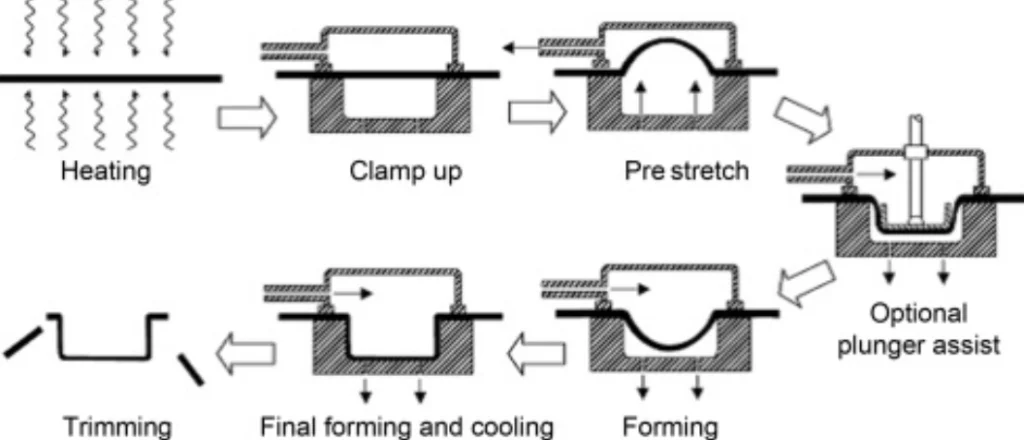
Thermoforming process
When executed correctly, this method presents several advantages, including low tooling costs and production of low-weight parts. These parts can be made from ABS, PET, and PVC, among other thermoplastics.
How Thermoforming Works
The thermoforming moulding process is simple but very effective. It follows these steps: Clamping, heating, forming, cooling, trimming, and finishing(if necessary).
Step 1: Clamping The Thermoplastic Sheet
A clamp is used to hold the thermoplastic sheet firmly in place. This clamping must be sufficient to prevent process failure as the molding pressure is applied. Slightly teethed clamps, which are pneumatically operated, are one way to ensure the sheet remains in place.
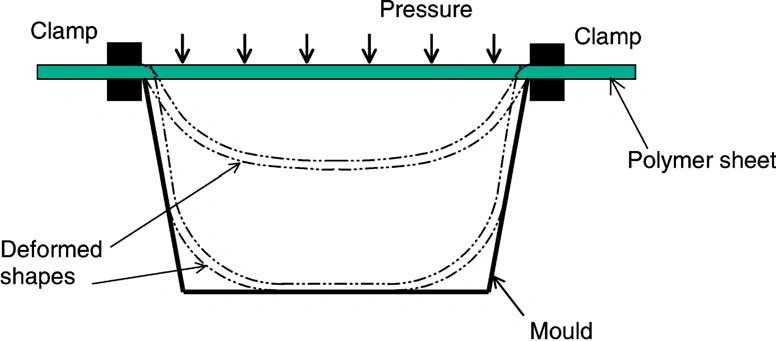
Pressure thermforming schematic
Step 2: Heating The Sheet
Heating changes the thermoplastic sheet into a pliable material that can be easily formed. Generally, the thickness and properties of the material determine the necessary amount of heat.
Step 3: Forming The Softened Sheet
The part is technically generated at this stage. A precisely machined one-sided mold gives the soft sheet the desired shape. The mold is also designed to enhance the cooling of the part.
Step 4: Cooling The Shaped Plastic Part
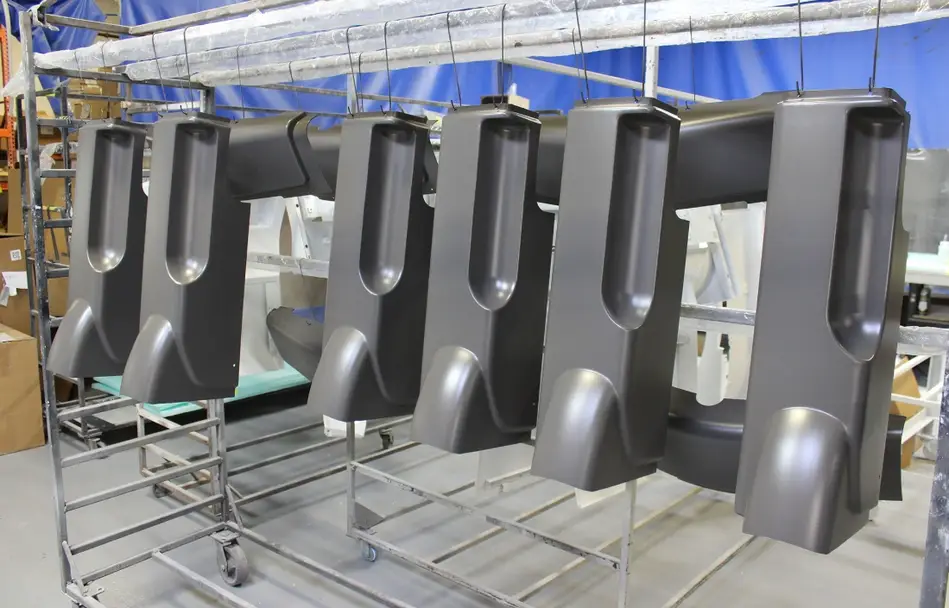
Cooling thermoformed parts
Thermoforming parts must be cooled correctly to ensure the correct shape and dimensional stability. An important requirement is to use a mold with reliable thermal conductivity.
Step 5: Trimming Excess Plastic
The finished part is removed from the original thermoplastic sheet. There is often a cutting station where this process is undertaken to ensure the parts are cut to the correct dimensional specifications.
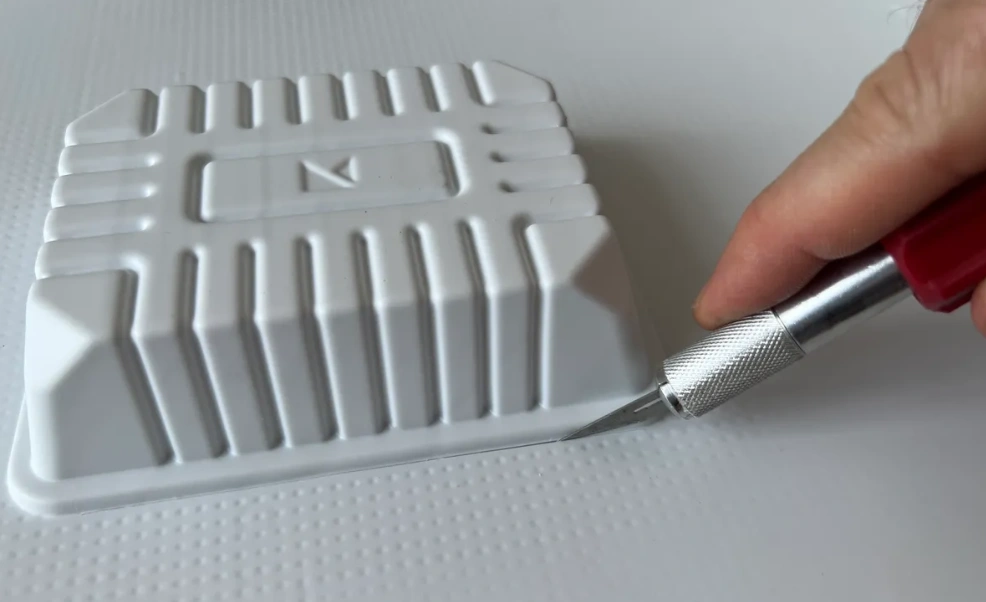
Thermoformed part trimming
Advantages Of Thermoforming
Thermoforming has several advantages that make it appealing for end-use parts, rapid prototyping, and even tooling. Its versatility is relevant in the production of thermoformed plastic parts with thin walls. It is also cost-effective and fast, but the advantages don’t stop there. Let’s list them below;
- Cost-effective
- Design freedom
- Allows addition of details
- Quick turnaround time makes thermoformer parts supply ideal for urgent manufacturing needs
- Low minimum order quantities
Limitations Of Thermoforming
The list of advantages shared above is indeed convincing, but parts users and resellers have a few issues to consider about this manufacturing technique. A glaring one is that the thickness of these parts is limited. Others are the general weakness of thermoformed parts and a relatively lower precision.
As can be learned from these limitations, thermoforming can present challenges where scalability or design versatility are priorities.
- Uneven spots can cause weakness, especially in thin sections of the thermoformed parts
- Limited to plastic sheets – a versatility challenge
- The plastic sheet is generally expensive
Injection Molding Definition: What Is Injection Molding?
The Injection Molding definition describes it as a relatively complex plastic manufacturing method that uses a specialized injection molding machine to melt, inject, and process the plastic material to acquire the shape of a mold.
This manufacturing method is perfect for making high volumes of identical parts. The versions of the technology available today include micro-injection molding and thin-wall injection molding.
Indeed, the different Injection Molding Materials are thermoplastic polymers, thermosetting polymers, and glass, among others. Different materials can also be combined to achieve desired part properties.
How Injection Molding Works
The injection molding machine operates systematically, starting with the melting of plastic pellets and continuing through other steps until the solidified part is removed or ejected. After the brief explanation of each of the steps below, you will appreciate why it pays to engage a manufacturer who insists on consistency and quality.
Step 1: Clamping
As the injection molding process starts, a clamping unit tightly clamps the two halves of the mold together. This clamping remains in place during the injection process.
Step 2: Injection
Plastic granules or any other suitable raw material are sent to the mold, where a combination of heat and pressure melts them. The melted material is then forced into the mold cavity via sprues.
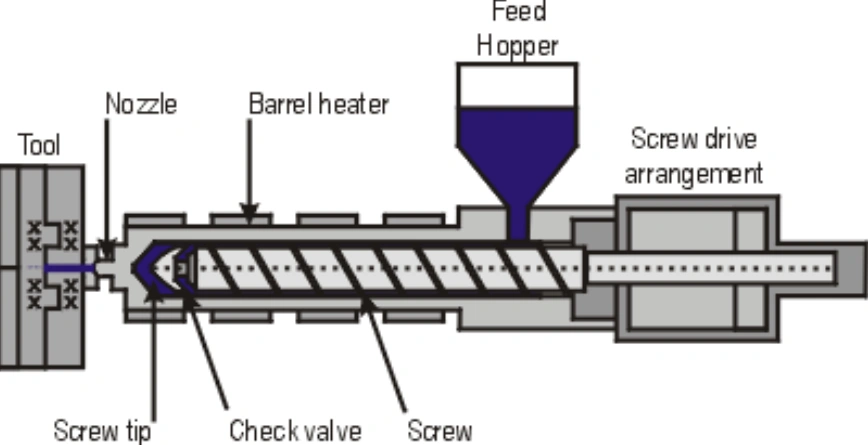
Injection molding process
Step 3: Cooling
Cooling starts immediately after the plastic material comes in contact with the mold. Solidifying enables the material to take the mold’s shape. The mold will remain closed to allow this process to complete.
Step 4: Ejection
Ejection of the molded part from the mold system is the last step in injection molding. A mechanism forces the molded part out of the injection molding system for further processing, stacking, or assembly.
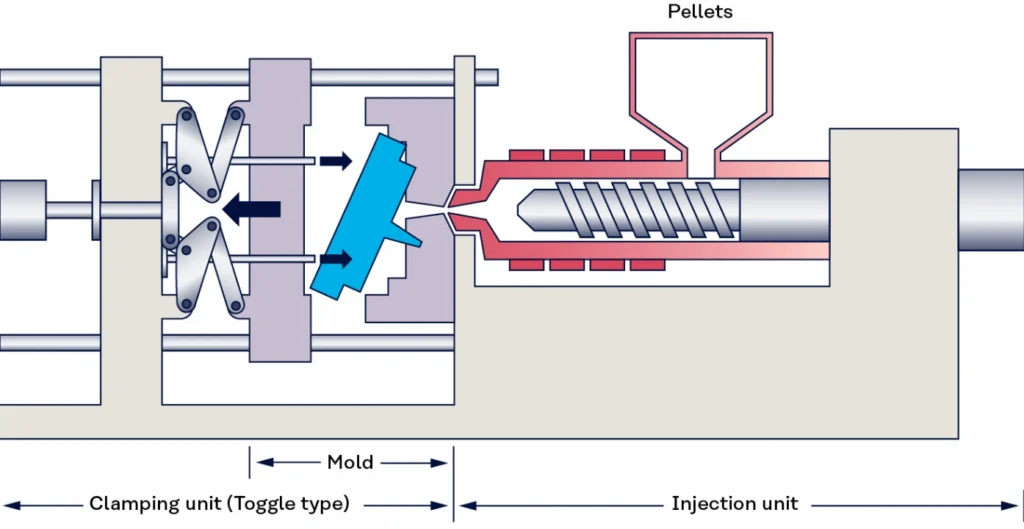
Injection molding part ejection
Advantages Of Injection Molding
One of the biggest advantages of injection molding is the capability to produce high-quality parts in large volumes. The process is also suitable for a wide range of plastics, from polypropylene (PP) to nylon polyamide (PA).
The summary of these advantages includes;
- Efficient for high-volume production
- Easy to automate – can promote labor cost reduction
- Consistent dimensions and part precision
- The part’s surface is usually smooth
- Applies to different materials – plastics, ceramics, etc.
- Waste is minimal or non-existent
Limitations Of Injection Molding
For injection molding, the high initial cost of the equipment is often considered a significant challenge. Manufacturing the mold can also take time, adding to the lead time. There is also the aspect of the technique being limited in the complexity of parts it can deliver.
Here’s an outline of the limitations;
- Equipment and tooling are relatively expensive
- Part shape and size limitation
- Not suitable for low volumes, but there can be low volume injection molding solutions
- Relatively long lead time – mold design and manufacturing considered.
What Is The Difference Between Thermoplastics And Injection Molding?: A Summary Of Comparison
Choosing between thermoforming and injection molding revolves around fundamental elements like part complexity, manufacturing volume, technology cost, and cycle time.
Precision And Tolerance:
Being a highly controlled process, injection molding is more precise than thermoforming. The tolerance for parts in injection molding mostly depends on the tooling, which can be superb with quality CNC machining.
While tolerances of 0.1 mm are expected for injection molding, thermoforming offers about 5 mm per part. Many things are not controllable, for instance, ensuring a uniform sheet thickness during stretching.
You can better understand molding tolerances & design tips in this text.
Surface Finish:
Injection molding produces a better surface finish because molds are carefully CNC machined and polished before the process. When the raw material is also selected well, the surface finish can be even more effective.

Surface finish for injection molding
For thermoforming, exposure to the environment is one of the contributors to a poorer surface finish. The other one is that manufacturers are not usually focused on aesthetics at this point. That aspect can be improved through printing and painting.
What Is Thermoformed And Injection Molded?:
Thermoforming has a shorter list of eligible materials than injection molding. Injection molding can use a wider range of plastics, including high–quality polymers and thermosets. When it comes to thermoforming, thermoplastic sheets are usually the main material.
How Much Does Thermoforming Cost and Injection Molding Cost?
The thermoforming tooling process, or mold-making process, differs significantly from injection molding. Since thermoforming only uses one side of a mold, the cost is lower. The mold can also be manufactured from low-cost materials such as aluminum.
Cooling is a major concern in thermoforming, so its handling can affect process cost. For larger parts, the mold is larger and better at heat dissipation. Therefore, the process tends to become more cost-effective for larger parts.
Preparing tooling for injection molding is more demanding and expensive. It has to be made to attain the intricacies needed in the part. There are usually special details in the molds, which can increase the injection molding cost. For instance, the 40-micron diameter air release vents can only be CNC machined using special drills.
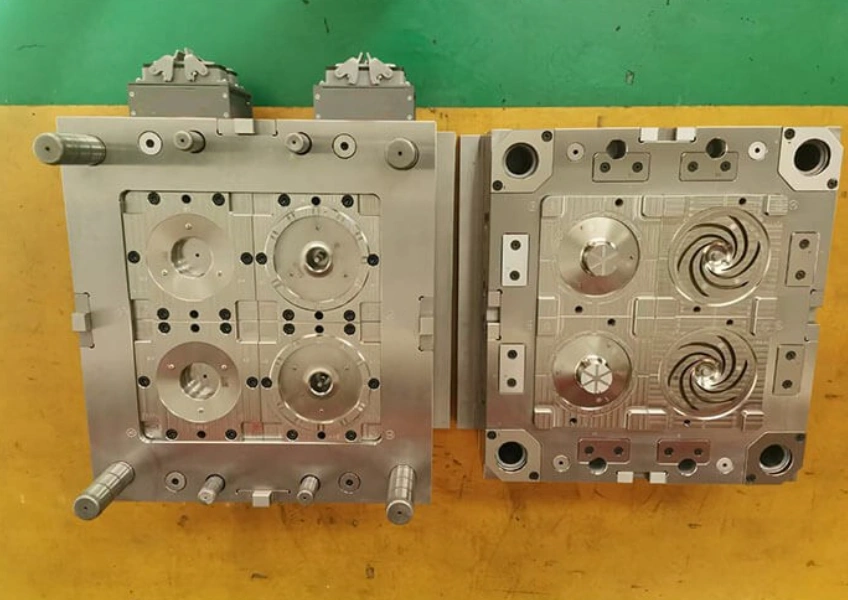
Air release vents
Conclusion And ProleanTech Support
Both thermoforming and injection molding are popular in the plastic part manufacturing field, but each has its unique properties.
For any dealer, reseller, and end user considering these two processes and wondering which one would deliver the right service, the main considerations are lead time, details in the parts, size of the part, and budget.
You can never go wrong with ProleanTech, a firm that has successfully provided quality parts in the country and beyond. We are ready to provide excellent thermoforming and injection molding services, while also supporting you with any CNC machining requirements you may have.
Contact us today!