
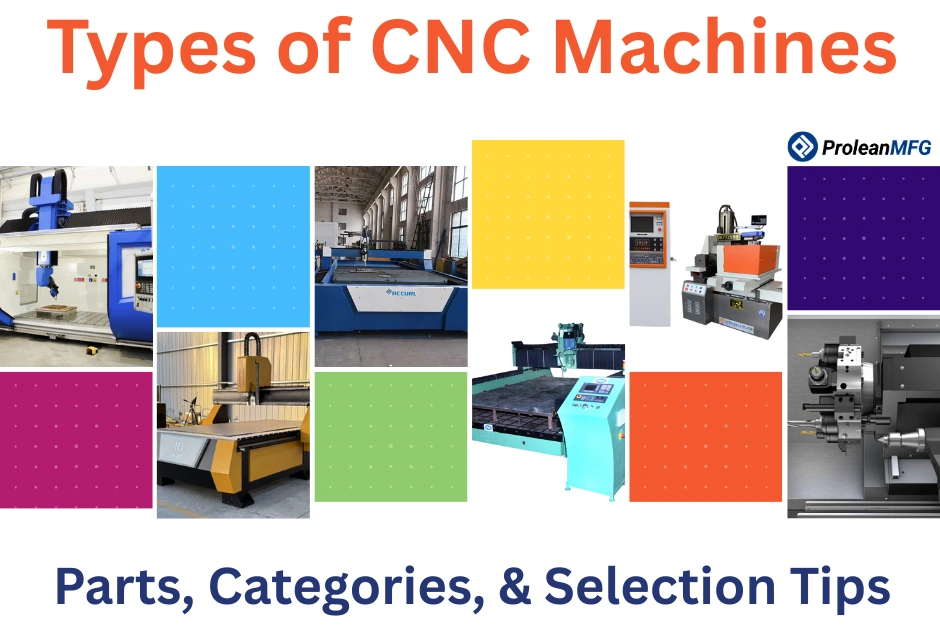

Imagine transforming your creative digital design into a real part, quickly and cost-effectively – that’s what the different types of CNC machines can help you achieve. These machines are the main enablers of different industries, from aerospace to decorations, and medical to defense.
Armed with CNC lathes, CNC milling machines, CNC grinders, and CNC laser cutters, among many others, manufacturers can provide almost any machined or fabricated part you can think of. We are in a world of limitless possibilities powered by the versatility, high capabilities, and cost-effectiveness of different types of CNC machines.
Choosing the most suitable CNC machine is a common challenge for anyone looking for parts, but even handling these machines themselves can be tasking, leave alone the investment cost. That’s where professional CNC machining providers come in.
In this post, we share all the basics of the different CNC machine types, starting with an outline of the different machines. Let’s go.
What Is A CNC Machine?
A Computer Numerical Control (CNC) machine refers to any machine that executes cutting operations with the help of computer programs, mostly in the industrial environment. Numerous machines fall under this definition – shapers, mills, lathes, and many others. The list is very long considering each of these categories has many options.
CNC machines are usually found in dedicated shops where intricate machining processes to serve different industries are undertaken. The programs or codes to direct the machining processes are often prepared separately and then input in the machine’s control panel.
A lot happens in between the programming and attainment of the machined part. Experts are involved from the start of the processes to the end. The quality of the programs and machines also determine the type of machined parts.
Learn about: What is CNC Machining
What Are The Main Components Of A CNC Machine?
Before delving into the different types of CNC machines, it is important to identify the fundamental components of these powerhouses that drive manufacturing. Every CNC machine has a blend of mechanical, electrical, and electronic components. Of course, software solutions are there as the brains of the machine.
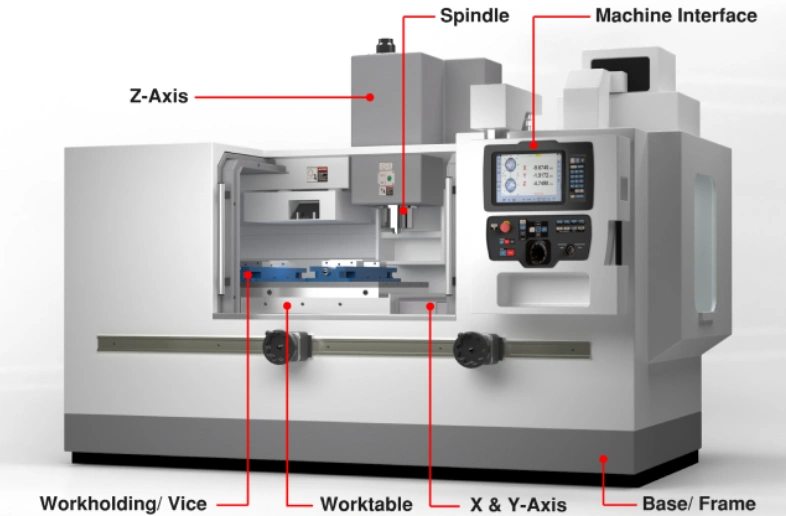
Components of a CNC machine
Here are the main components of a CNC machine;
- Input equipment
- Machine Control Unit (MCU)
- Driving system
- Display section (Monitor)
- CNC machine tool
- Feedback system
By working seamlessly in harmony, these parts ensure the CNC machine produces precise parts cost-effectively.
How Many Different Types of CNC Machines Are There?
Beyond the components, there is an important question for anyone looking for quality CNC machined parts – The types of CNC machines available. As outlined below, there are various ways of classifying CNC machines – By operation, number of axes, control system, or moving trail.
What Are The Types Of CNC Machines By Operation?
One of the most recognizable ways to categorize CNC machines is by the type of machining operation they mostly provide. This gives options such as CNC milling machines, CNC lathe machines, drilling CNC machines, grinding CNC machines, and plasma cutting CNC machines.
Others are laser cutting CNC machines, EDM (Electric Discharge Machine), and CNC router machines.
CNC Milling Machines
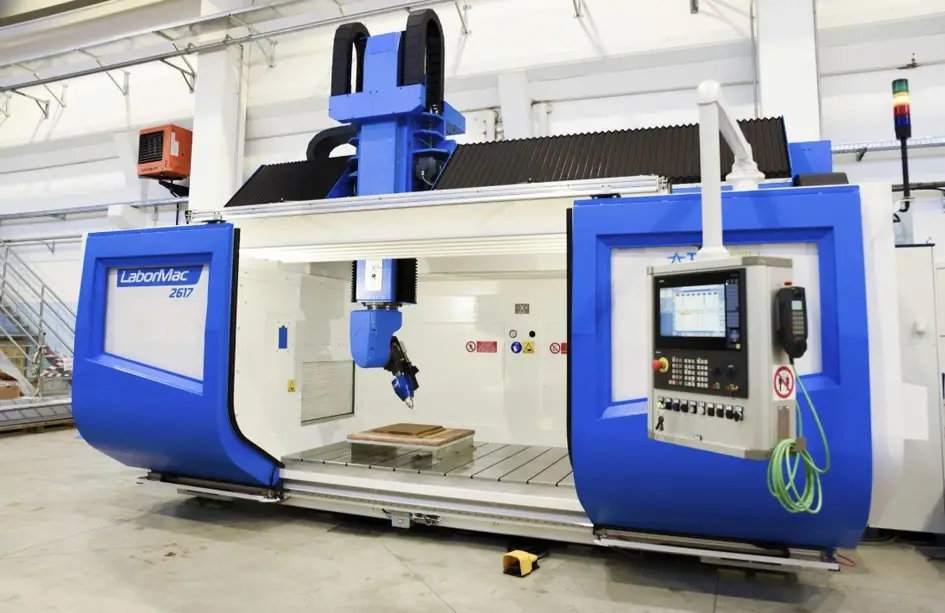
CNC milling machine
CNC milling machines are engineered to controllably remove material from a workpiece using rotary cutting tools. These machines are renowned for their capability to repeatedly manufacture complex geometries on blocks of materials without manual intervention.
CNC Lathe Machines
Different from milling machines, lathe machines are limited to machining conical and cylindrical parts. A central axis connected to the spindle rotates the workpiece as a single-point tool machines the surface.
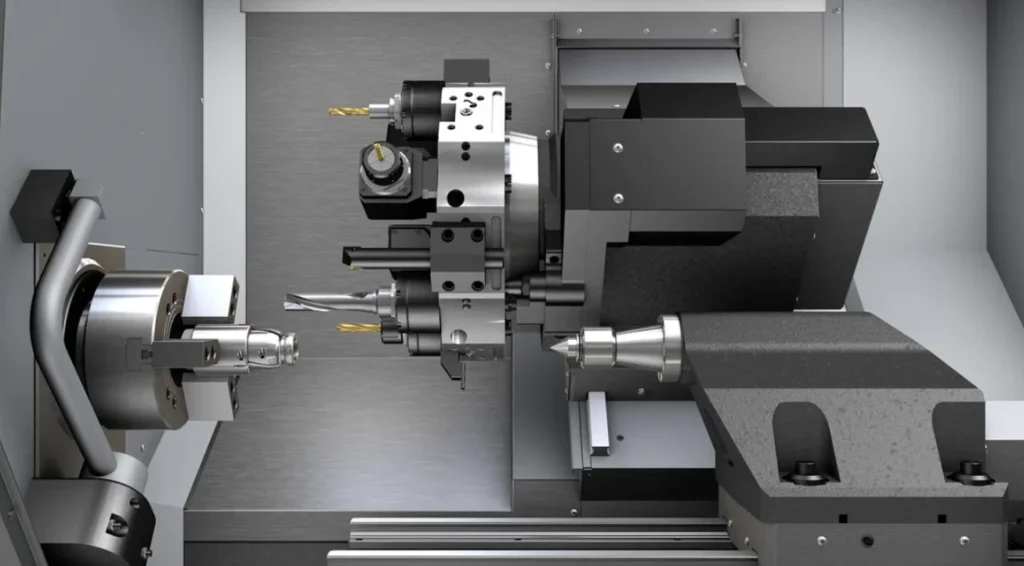
CNC lathe machine
By limited, it doesn’t mean the variety of tasks the CNC lathe machine can handle are few by any means. Indeed, this type of CNC machine suits automotive, sports, medical, aerospace, woodworking, and many other industries.
CNC Drilling Machines
Drilling is extensively used in manufacturing, and so is the drilling CNC machine. This equipment is renowned for making accurate and high-quality holes for aesthetic and functional purposes. Manufacturers have a large pool of drill bits to use including chucking reamers, peck drills, and spot drills.
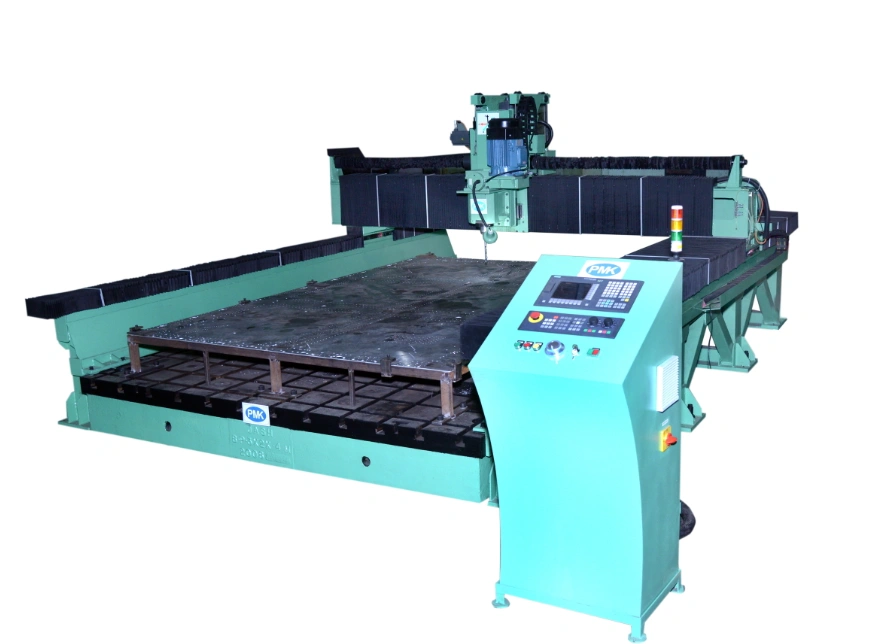
CNC drilling machine
CNC Grinding Machines
Grinding is also crucial in manufacturing because it perfects the surface of already-machined parts. It is a common machining process in the production of shafts and bearings.
The machines are equipped with a sharp rotating wheel that removes small particles of material from the workpiece until the desired properties are produced.
Plasma Cutting CNC Machines
CNC plasma cutters are based on the production of ionized air, which strikes the surface of a material, melts it away to cut it. It uses an electric arc to initiate the process, which can only work on electrically conductive materials.
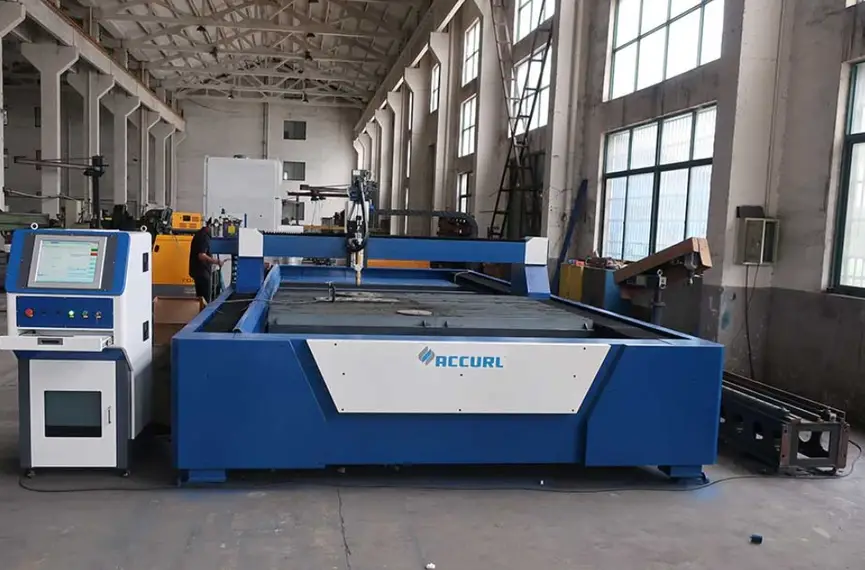
CNC plasma cutting machine
The cuts are accurate and precise, hence CNC plasma cutting is popular in many metal fabrication projects.
CNC Laser Cutting Machines
This is another category of CNC machines for cutting materials. It is more diverse than plasma cutting in terms of the materials it can cut. The cutting element for this type of CNC machine is a focused light beam, better known as a laser.
Since this laser has a minimal point of contact and less spread, laser cut tends to be cleaner and more accurate. Medical devices, aerospace parts, and intricate engravings are usually manufactured by this method.
EDM (Electric Discharge Machine)
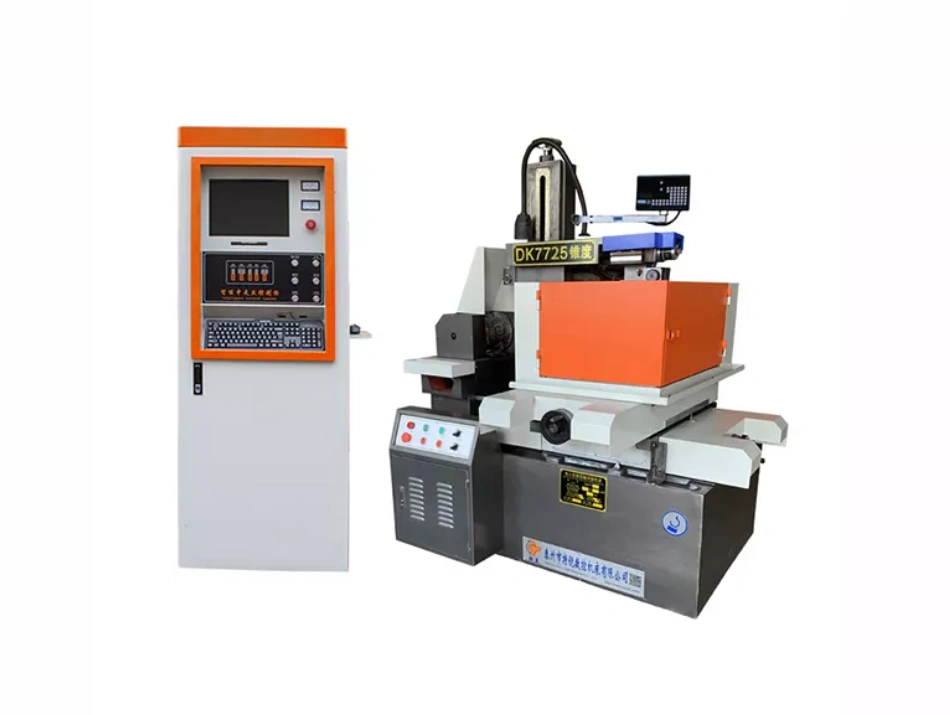
CNC wire EDM machine
The Electrical Discharge Machine, also referred to as spark CNC machine, generates electric sparks that progressively remove material from a workpiece. It uses the transient property of electric discharge, which allows for the controlled reshaping of materials.
The computer segment of the setup controls the amount of sparks produced and the path/area to be machined.
CNC Router Machines
Generally speaking, the CNC router machine is a version of the CNC mill, but designed for machining softer materials. This type of CNC machine is rampant in shops that process foam, wood, plastic, composites, and comparable materials.
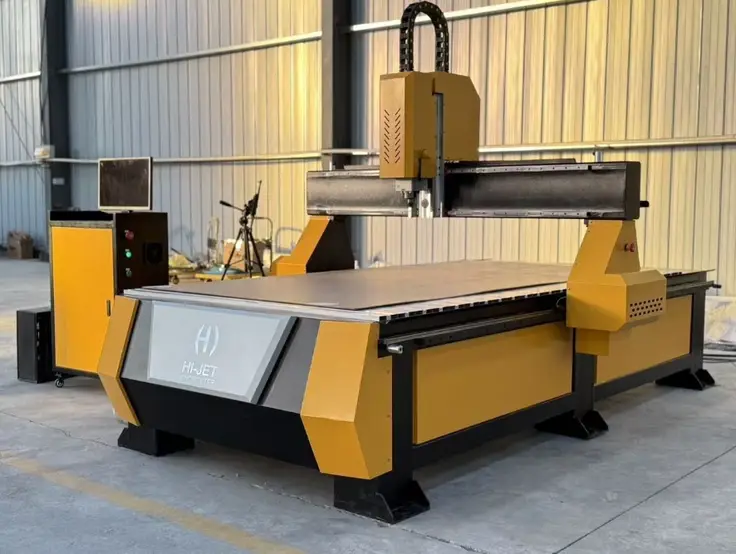
CNC router machine
CNC Waterjet Cutting Machines
This type of CNC machine utilizes a powerful waterjet controlled by a computer to cut through a material. Since CNC Waterjet Cutting Machining has no material limitation, it is one of the most popular cutting techniques in the industrial world.
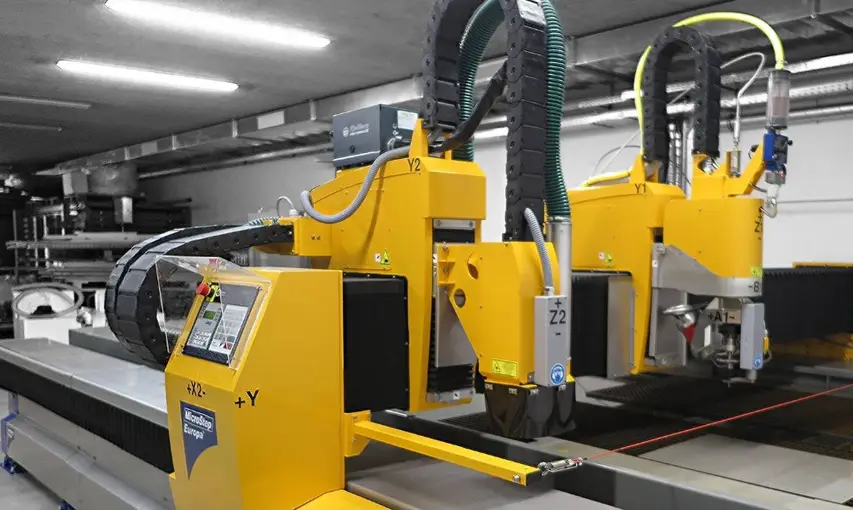
CNC waterjet cutting machine
If the manufacturer is comfortable with the relatively lower cutting speed of the waterjet, they can rely on it to process a wide range of materials – sheet metal, stone, plastic, rubber, fiberglass, etc.
What Are The Types Of CNC Machines By The Number of Axes?
Another popular classification of CNC machines is by the number of axes utilized. The main machines are 2-axis, 3-axis, 4-axis, and 5-axis, but we could go on and on with more axes up to the 12-axis CNC machines.
Axes are movement directions, and the more they are, the more complex the machine. With more complexity comes higher capability of the CNC machine to machine intricate parts.
2-Axis CNC Machines
This is the most fundamental type of CNC machine, and comprises only the x-axis and the y-axis. Due to these limits, this type is mostly used for engraving, drilling, and cutting parts.
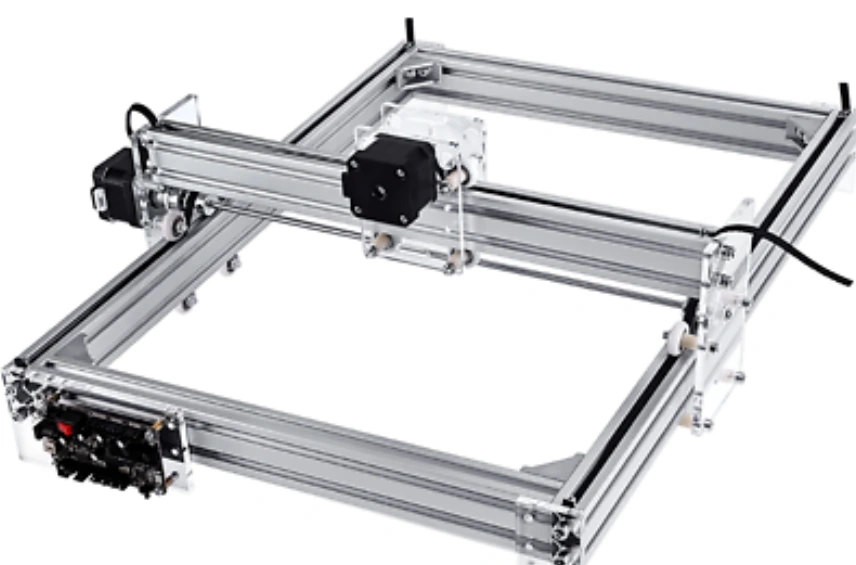
2-axis CNC engraving machine
3-Axis CNC Machines
The 3-axis CNC machine is more complex because it has an extra linear axis to make them x-axis, y-axis, and z-axis. A variety of industries use these machines for complex parts, more power, and generally, more capability compared to the 2-axis machine.
4-Axis CNC Machines
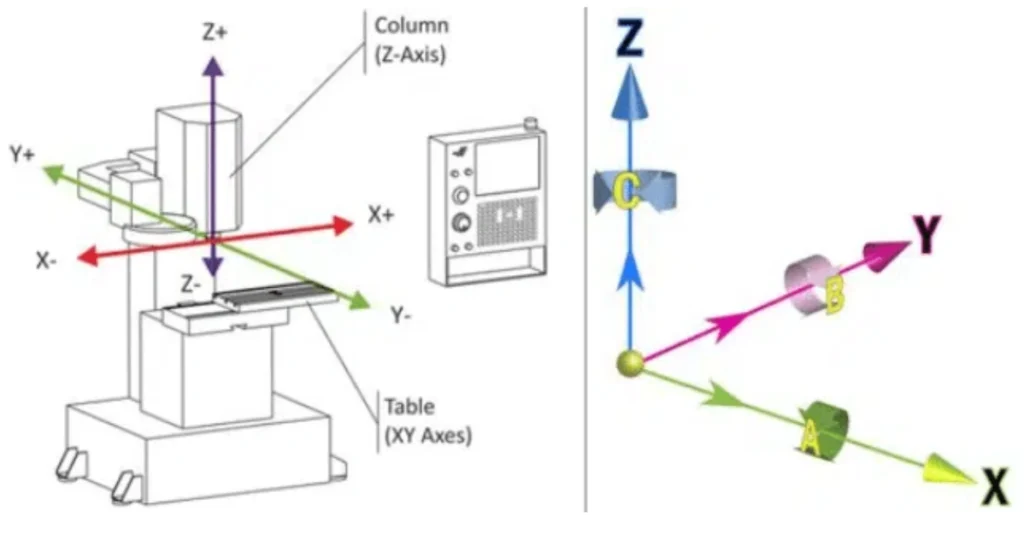
4-axis CNC machine
The tooling for the 4-axis CNC machine can move along four axes, thus capable of producing CNC machined parts in three dimensions. This machine type is ideal for manufacturing prototypes, carvings, machinery parts, and so on.
5-Axis CNC Machines
The 5-axis CNC machines feature five axes – X, Y, Z, A, and B. A and B are rotary axes, with one of them determining the amount of material the machine removes from the workpiece.
This type can create complex geometries in a single setup, so it is popular among manufacturers of intricate parts for medical, automotive, and aerospace industries.
7-Axis CNC Machine
The 7-axis CNC machine has seven motions, which enable it to manufacture complex items, even slender ones. To add to the standard three linear axes, this setup also features axes for tool spinning, workpiece rotation, toolhead rotation, and movements related to workpiece clamping.
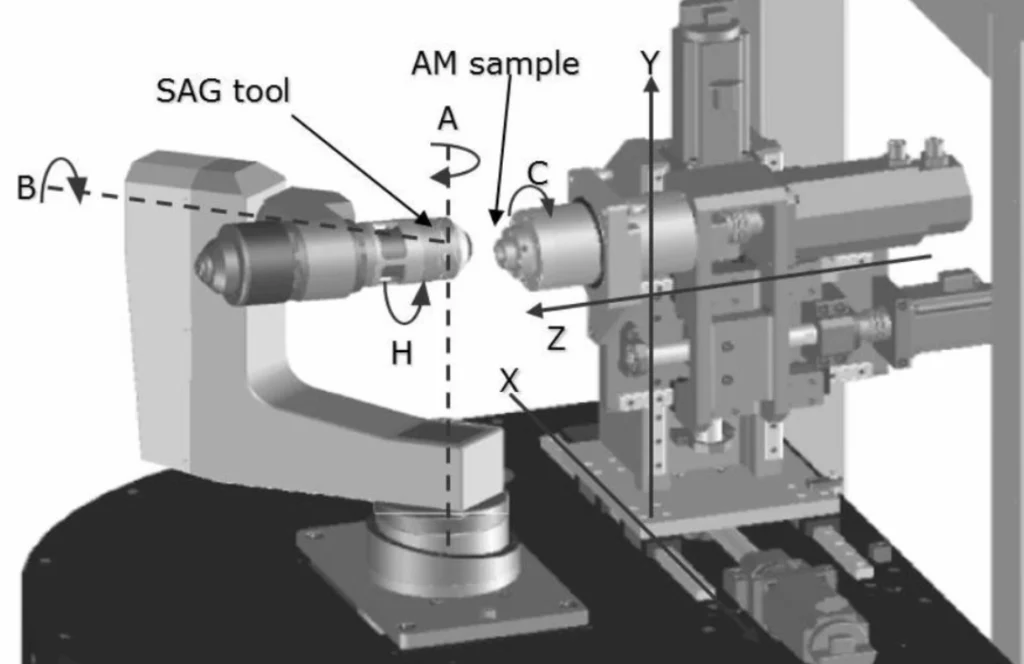
7-axis CNC machine
The resulting machined parts from this equipment rarely need post-fabrication touches because the accuracy is already top-notch. That makes this arrangement vital in industries that need extremely accurate parts, for instance, aerospace.
In summary, here are the different motion covered in 7-axis CNC machines:
- X-axis movement
- Y-axis movement
- Z-axis movement
- A-axis rotation
- B-axis rotation
- C-axis rotation
- E-axis rotation for arm twisting
9-Axis CNC Machine
Beyond the 7-axis machine, we have the 9-axis machine, a truly remarkable arrangement that blends the capabilities of 5-axis and 4-axis CNC machining. 5-axis machining is dedicated to milling while 4-axis machining goes to turning processes. The milling processes are usually for surface machining and turning processes for internal surfaces.
You can already imagine the result of this combination – turning and milling on all angles, in a single setup. Indeed, it is possible to machine a product to its conclusion without changing the setup. Manufacturers use this exciting machining approach for medical devices and aerospace components.
12-Axis CNC Machining
When it comes to 12-axis CNC machining, the accuracy and production is next to none. This setup features two heads that can move along three linear axes and three rotary axes. The result is a machine that can produce the most complex parts, fast and accurately.
Though rarer than the rest, this machining technology can be found among manufacturers of high-precision parts for medical, automotive, aerospace, and electronic applications.
Learn more: 3 Axis vs 5 Axis CNC, Horizontal vs Vertical Milling
What Are The Types Of CNC Machines By The Control System?
In yet another approach, CNC machines can be categorized by their control system. This refers to the interpretation and execution of instructions or code. The options in this area are open-loop control system, closed-loop control system, and semi-closed-loop control system.
Open-loop Control System
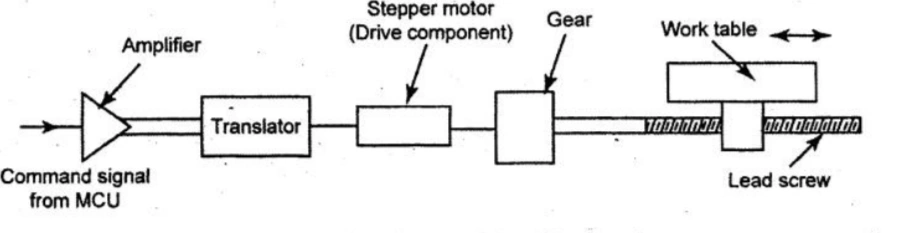
Open-loop control system
An open-loop control system signifies that the control system does not receive feedback to verify the information sent to the motor. The CNC software simply directs the machine to perform a task and leaves it there.
Closed-loop Control System
For the closed-loop system, the output from the motors is closely monitored through a feedback system.
Semi-closed-loop Control System
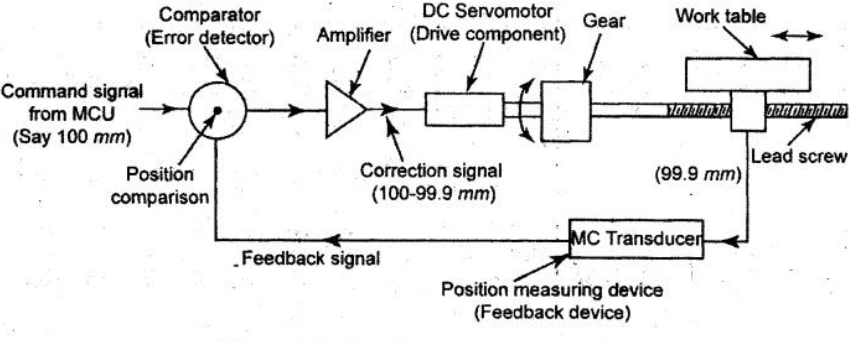
Closed loop control system
The semi-closed-loop control system type of CNC machine is equipped with a device that can sense angular displacement current. The sensor is usually fixed on the servo motor’s shaft or the machine tool.
Once it detects the screw’s rotation angle, the sensor sends feedback to the numerical control device for the necessary adjustments.
The Types Of CNC Machines by Moving Trail
CNC machines can also be categorized by moving trail, which is the motion style of the machine during operation. The main categories in this case are point-controlled CNC machine, linear control CNC machine, and contour control CNC machine.
Point-controlled CNC Machine
In this type of CNC machine, the machine tool’s moving parts are accurately positioned from point to point. There is no control of the motion trajectory. This kind of categorization captures CNC machines like punching machines, drills, and milling machines.
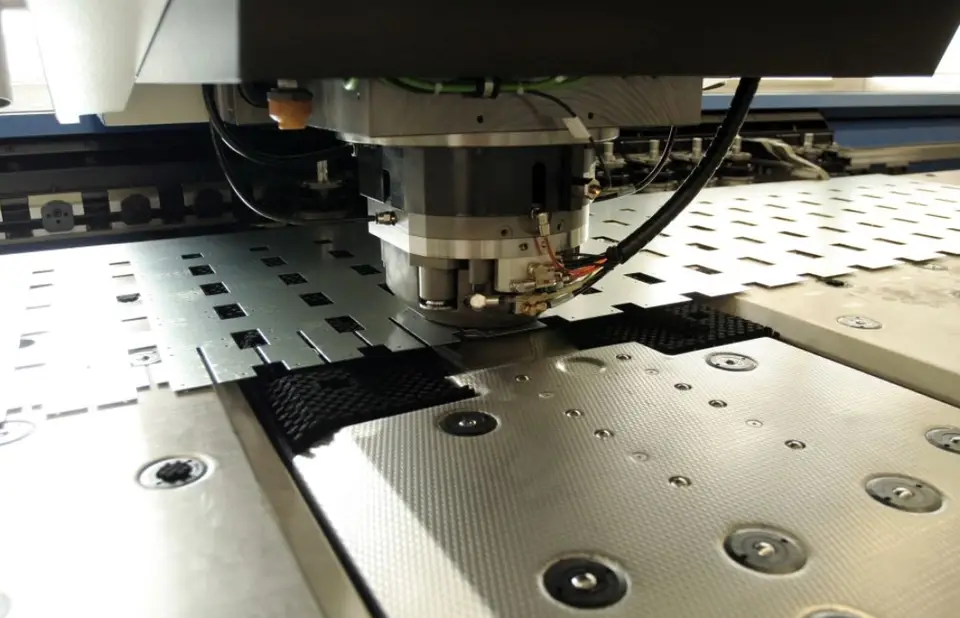
CNC punching machine
Linear Control CNC Machine
To add to the point control highlighted above, these ones bring the parallelism of the tool coordinate axis into play for motion trajectory. This means the cutting tool has a particular feed speed. Linear control CNC machines usually apply to grinders, CNC lathes, and CNC milling machines.
Contour Control CNC Machine
To close this list is this class of CNC machines, which can simultaneously coordinate the speed and displacement of multiple motion coordinates. They are some of the most complex setups because of the involvement of several coordinate axis controllers.
How To Select The Best CNC Machine
With such an array of CNC machine operations, capabilities, and classifications, and with the pressing requirement to meet project requirements, deciding on the CNC machine type for machined parts can be challenging. Expert manufacturers make it easy by focusing on aspects such as manufacturing requirements, material type, and budget.
Follow these tips for the best from any type of CNC machine:
- Determine the type of parts you want machined
- Consider the complexity of your parts
- What type of material are you machining?
- Discuss your production volume with the manufacturer
- Confirm the required dimensions and tolerances for the machined parts
- Ensure design files align with the CNC machining software requirements of the machine type
- Consider the cost-effectiveness of the CNC machine
All things considered, choosing the right type of CNC machine is about balancing the efficiency, accuracy, and cost aspects of the project. That’s where expert guidance comes in – a team that has extensively used CNC machines for multiple projects can offer valuable help.
The Advantages Of Using CNC Machines
You may be wondering the specific reasons why CNC machines are so popular among manufacturers and the CNC machined parts widely used across sectors. Reasons for this include versatility, cost-effectiveness, safety, precision, and enhanced productivity. Let’s expound on these advantages below;
High Versatility
A wide range of parts or components can be produced on the CNC machine very easily. You only need to adjust the CNC program and maybe the machine setup to switch to the new product.
Cost-effectiveness
The initial cost of a typical CNC machine may be high, but the manufacturer is mostly assured of recouped cost and high profitability thereafter – These machines have a high output of quality products and minimize costs because of less errors.
Enhanced Safety
Conventional machining pitted the operator against the operations directly, thus was very risky. For CNC machining, any machining error mostly affects the machine, not the user. Provided the operator follows the laid-down safety procedures, chances of injuries are very minimal.
Increased Precision
The CNC element reduces machining error chances to almost zero because this technology is extremely consistent. The result is flawless products that match the precision requirements of modern applications.
Enhanced Productivity
Because of the programming capability, the machine can be left to run with minimal observation. This includes even manufacturing during odd hours when people would normally be away from the workplace. This alone increases productivity manifold.
Conclusion
Knowing the different types of CNC machines means analyzing their capabilities, designs, and cost-effectiveness. It is usually not an easy task to determine the most useful machine for a project because they were all designed for a purpose. It is often a case of looking at the fewer and less impactful trade-offs based on a project.
ProleanMFG has been providing CNC machining services for years with advanced multi-axis machines. Our experts know which type of CNC machine to use at any given instance. Get in touch for more insights for successful projects.
FAQ’s
What is the mother of all machine tools?
The lathe machine is widely considered as the mother of all machine tools.