
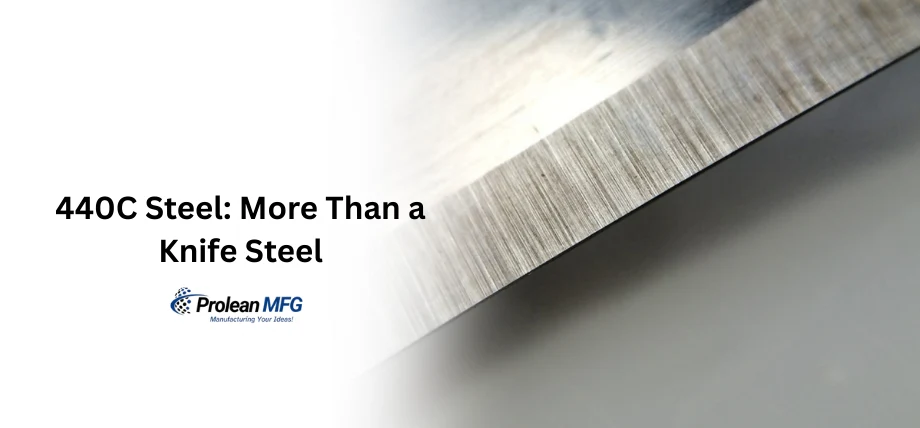

Grade 440C stainless steel is a very high carbon martensitic steel known for extreme hardness, wear resistance, and moderate corrosion resistance.
Being part of the 440 steel series, 440C steel is the only one with a high carbon content and very large amounts of chromium, thereby ensuring an elite place for 440C in the stainless steel category, with its hardness roughly measured to be 60 on the Rockwell C scale.
Contrary to the typical designation, this grade is called UNS S44004, and the alloy is usually specified per ASTM A276 for round bar and flat bar forms.
Stainless steels are called high alloy steels, and 440C is valued in areas where it offers high strength plus good hardness and wear resistance, such as knife making and precision components.
This article intends to discuss the chemical composition of stainless steel 440C, mechanical properties, thermal and electrical properties that are typical, weldability, machinability, and applications.
What Is 440C Steel Made of?
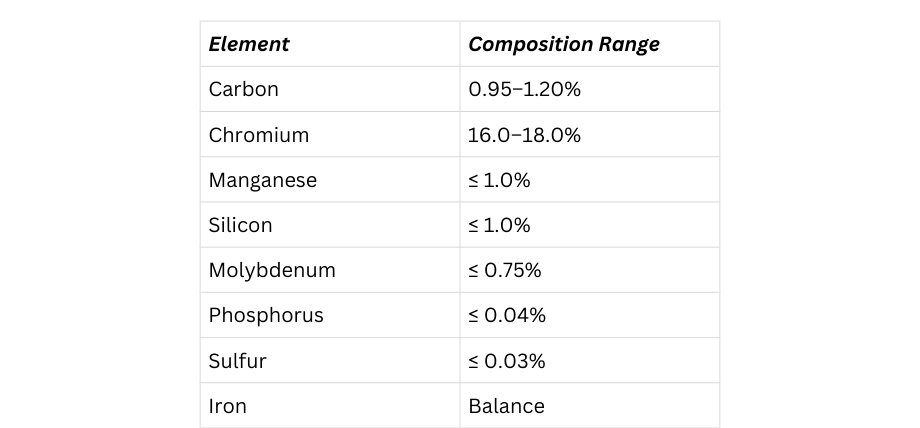
Composition of 440C steel
The chemical composition of 440C stainless steel dictates its performance. As a high-carbon martensitic stainless steel, 440C contains:
- Carbon: 0.95–1.20% — The highest carbon in the 440 steel series, allowing for supreme hardness and wear resistance.
- Chromium: 16.0–18.0% — Possesses a higher degree of corrosion resistance than other martensitic steels, which prevents mild acids and atmospheric corrosion through forming a passive oxide layer.
- Manganese: ≤ 1.0% — Imparts strength and toughness.
- Silicon: ≤ 1.0% — Adds strength and provides casting aid.
- Molybdenum: ≤ 0.75% — Provides resistance to pitting corrosion and strength.
- Phosphorus: ≤ 0.04% — Controlled to avoid embrittlement.
- Sulfur: ≤ 0.03% — Controlled at a low level to increase weldability while avoiding embrittlement.
This type of combination distinguishes 440C from austenitic or ferritic stainless steels, so a heat treatment gives it super-hardness and wear resistance.
Compared to other groups of stainless steels, such as those that are precipitation hardened, 440C provides a unique balance for high wear.
What are The Mechanical Properties of Stainless Steel 440C?
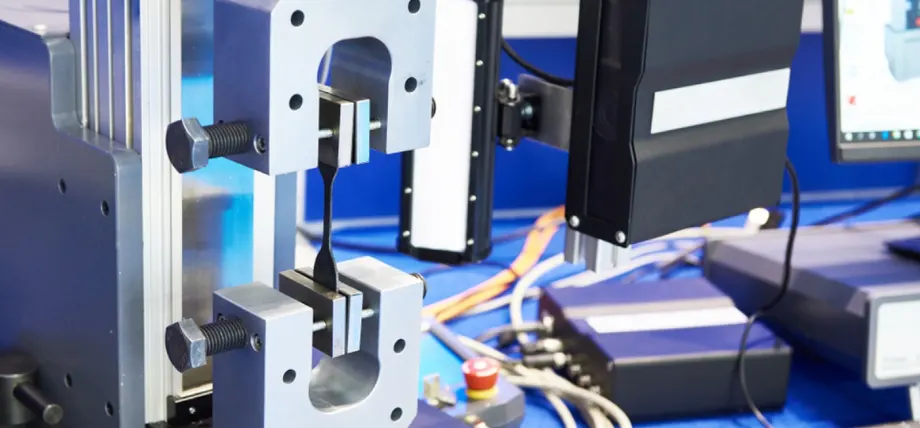
Tensile strength test of a steel sample
The mechanical properties of 440C steel are optimized by heat treatment, especially when hardened and tempered.
In 440C’s annealed state, it is relatively soft and machinable, whereas the heat-treated one captures the highest strength and hardness of any stainless steel. Mechanical properties typical for the tempered state include:
- Ultimate Tensile Strength: ~1,750 MPa (254,000 psi)
- Tensile Yield Strength: ~1,230 MPa (186,000 psi)
- Hardness: Approximately 58–60 HRC, or ~560 Brinell hardness
- Modulus of Elasticity: ~200 GPa (29,000 ksi)
- Charpy Impact Energy: ~19.0 J (14.0 ft-lb)
This makes it possible for 440C to take high stresses with a good degree of dimensional stability. Its high hardness compromises its ductility, and often, it will afford very little protection against the impact forces.
With this steel’s carbon content increase, the strength also becomes greater, and the toughness increasingly becomes less. 440C, therefore, is best for wear resistance but not for impact resistance.
What are The Thermal Properties of Steel 440C (UNS S44004)
Thermal properties in relation to performance specify behavior at extreme temperatures for 440C stainless steel. Important thermal properties include:
- Thermal Conductivity: 18-20 W/m·K at room temperature – moderate, typical for martensitic steels.
- Coefficient of Thermal Expansion: ~10.2 µm/m·°C (20–100°C) – low, thus giving it dimensional stability.
- Specific Heat Capacity: ~460 J/kg·K–Energy required to raise the temperature by one degree.
When subjected to high heat, 440C steel could over-temper, losing hardness and strength due to the softening of its martensitic structure. At temperatures below 0°C, it will behave in a brittle manner, losing all capacity for ductility and impact resistance.
So, 440C is useless in cryogenic or high-temperature environments, where austenitic or precipitation-hardening steel is the better choice.
What are The Electrical Properties of Stainless Steel 440C?
The electrical properties of 440C stainless steel are important in particular applications like precision instruments. The important characteristics are:
- Electrical Resistivity: ~600 nΩ·m-High in comparison to pure metals because of alloying.
- Magnetic Properties: 440C is ferromagnetic, originating from its martensitic structure, which can be utilized for magnetic sensor components.
Such are properties of high-carbon martensitic stainless steel and are dependent on chromium and carbon.
Why is 440C Steel Famous For Knives?
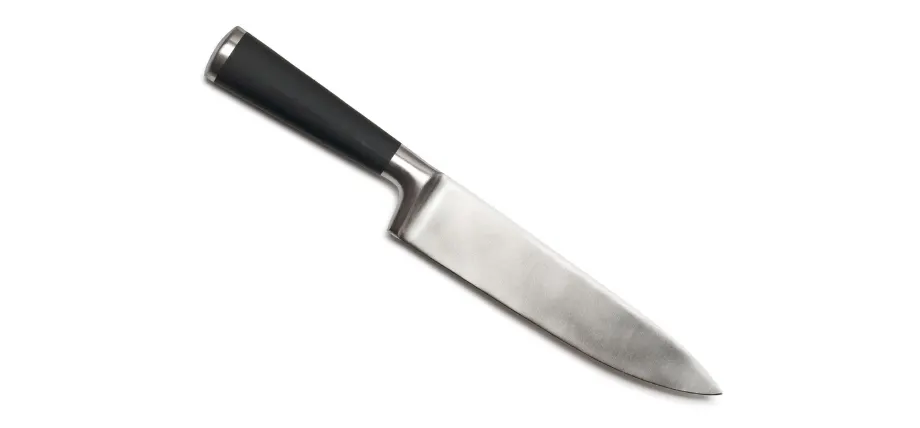
440C Steel knife
440C stainless steel is more commonly used in knifemaking due to its maximum attainable hardness (~60 HRC) and wear resistance under heat treatment.
Its hard, wear-resistant edge, depending mostly on high carbon and heavy chromium content, remains sharp for a long time. Moderate corrosion resistance protects the steel from rusting in a humid or mildly acidic environment, which is just right for cutlery.
Compared with other stainless alloys, 440C stands at the window of high hardness, good toughness, wear resistance, and ease of sharpening, which is the case for most of the knifemaking industry.
What Are The Applications of 440C Stainless Steel?
440C stainless steel, a high-carbon martensitic alloy, is valued for its hardness and wear resistance, achieving ~60 HRC after heat treatment. Its applications include:
Cutlery and Blades
440C’s high carbon and chromium content ensure sharp, durable edges for kitchen knives, tactical blades, and surgical tools.
Bearings and Valve Components
Used in ball bearings and valve seats, leveraging high strength and wear resistance per ASTM A276.
Molds and Dies
Ideal for plastic injection molds and industrial dies due to durability and wear resistance.
Precision Instruments
Suitable for gauges and sensors, benefiting from machinability in the annealed condition and corrosion resistance, as noted by Penn Stainless.
Industrial Cutting Tools
Used in shear blades and rotary tools, where edge retention is critical.
These applications highlight 440C’s versatility.
Key Properties of Stainless Steel 440C
Some important properties of stainless steel 440C are:
- High Hardness and Wear Resistance: Up to 60 HRC, ideal for cutting tools.
- Moderate Corrosion Resistance: Suitable for mild acids and atmospheric conditions.
- High Strength: The highest among stainless steels is in hardened condition.
- Good Machinability in Annealed Condition: Facilitates fabrication before heat treatment.
These properties make stainless steel 440C great for use in various applications.
Heat Treatment of 440C Steel
Stainless steel 440C is subject to heat treatment processes comprised of:
- Annealing: Steel is annealed at 843–871 °C and cooled in the furnace to eliminate cracking.
- Preheating: Preheated at 760 °C or 260 °C to avoid thermal shock.
- Austenitizing: Heated at a temperature of 1010-1065 °C to dissolve carbides and form the austenitic phase.
- Quenching: Quenching in warm oil or air to form a martensitic structure.
- Tempering: Treated at 150°C–370°C to reduce brittleness.
This ensures maximum hardness and wear resistance, making 440C easily air hardened.
Work Hardening of 440C Steel
Work hardening of 440C stainless steel is limited by its martensitic structure. Unlike austenitic stainless steels, due to 440C’s high carbon content, strain-induced hardening is minimal. Cold working slightly increases hardness, but it is a minor effect compared to heat treatment.
Weldability of 440C Steel
The welding process is difficult for 440C stainless steel because of its high carbon content, which can result in cracking. When welding is required, the 440C stainless steel is preheated to 260°C before it is welded, and postweld heat treatment is preferred. 440C is rarely welded in critical applications.
Machinability of 440C Steel
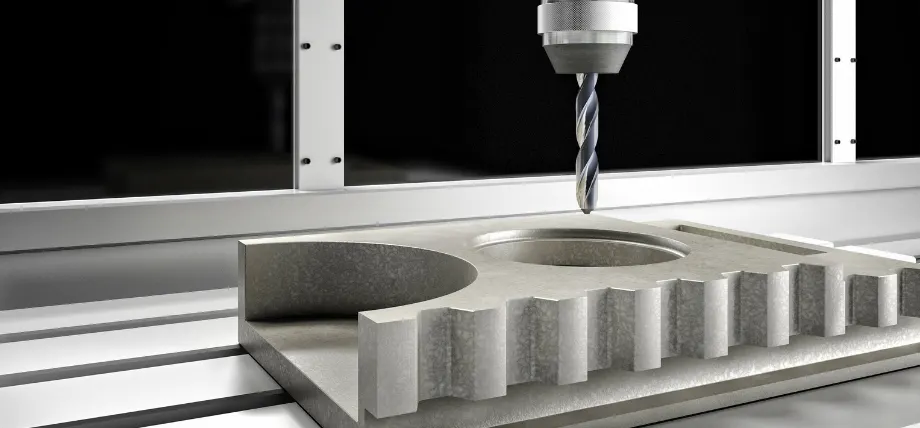
CNC Machining steel workpiece
The 440C stainless steel can be machined in the annealed state, where it is less tenacious and stringy than the austenitic grades. Machining is difficult in its hardened state because of the very high hardness. Carbide tools with fine parameters must be employed.
Key Methods for Machining Stainless Steel 440C
Metal Machining procedures for 440C steel include:
- Turning: Carbide tools, low speeds to avoid work hardening.
- Milling: Rigid setups, sharp tools.
- Drilling: Cobalt drills with coolant.
- Grinding: For finishing hardened 440C.
These processes help in effective stainless steel 440C machining.
What Kind of Parts Can You Make With 440C?
Some examples of parts made from 440C stainless steel include:
Knife Blades: For cutlery and surgical tools.
Surgical Instruments: Scalpels.
Bearings: For machinery.
Molds: For plastic molding.
As a result, 440C offers diversity in the creation of parts.
What Are The Alternatives to 440C Stainless Steel?
- 440A and 440B: Lesser hardness, other advantages include better corrosion resistance.
- VG-10: Same hardness, slightly better corrosion resistance.
- S30V: Better toughness and corrosion resistance.
- D2 Tool Steel: High wear resistance, low corrosion resistance.
You can look at factors like cost and availability to choose the material that fits your application.
Find out more: Materials Overview
Stainless Steel Machining Services
Precision machining for 440C stainless steel and more with Proleanmfg. Get high-quality, custom parts fast.
Request your free quote now!
Conclusion
Stainless steel 440C is a high-carbon martensitic stainless steel that finds application in several areas requiring high hardness, wear resistance, and medium corrosion resistance.
The chemical composition is rich in chromium and carbon, granting it the ability to achieve the highest hardness among stainless alloys, thus making it suitable for knife making, bearings, and precision parts.
Although welding poses some problems, other than this, 440C is pretty versatile for engineering purposes.
FAQ
Is 440c Steel Good?
Yes, 440C steel finds excellent use in applications requiring high hardness, wear resistance, and moderate corrosion resistance, like cutlery.
Is 440c Steel Good For Knives?
440C stainless steel is good for knife makers due to its maximum hardness (~60 HRC).
What Are The Other Names Of 440c Steel?
UNS S44004, grade 440C stainless steel.
Is 440c Stainless Steel Good For Knives?
Yes, 440C stainless steel makes knives that are sharp and last for a long time.
How To Heat Treat 440c Stainless Steel?
Anneal at 843–871°C, preheat to 760°C or 260°C, austenitize at 1010–1065°C, quench, and temper at 732–760°C.
How To Harden 440c Stainless Steel?
Heat to 1010–1065°C, quench in warm oil, and temper at 732–760°C.