
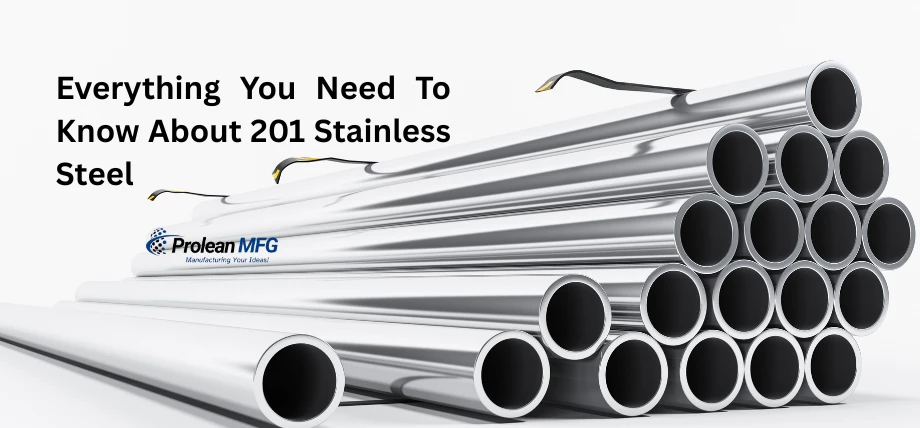

Stainless steel alloy type 201 is a general-purpose austenitic stainless steel alloy that is inexpensive for the user and corrosion-resistant. SS type 201 was developed as a low-cost substitute for machining stainless steel grades, such as 304 stainless steel, with higher manganese and lower nickel content, making it suitable for a wide spectrum of applications.
This article offers an in-depth discussion of stainless steel 201, including its chemical composition and mechanical and physical properties, along with its reference to other stainless steel types, to help engineers and designers select the most suitable material for their project.
What Is The Composition of Stainless Steel 201?
The chemical composition of stainless steel 201, also known as SUS 201, lays down its performance parameters. This austenitic stainless steel contains chromium, nickel, manganese, and other alloying substances.
This makes it highly corrosion resistant, quite formable, and cost-effective, as it has a lower nickel content. Below gives the chemical composition of Type 201 stainless steel from MatWeb:
| Element | Content (% by Weight) |
| Iron (Fe) | Balance |
| Chromium (Cr) | 16.0 – 18.0 |
| Nickel (Ni) | 3.5 – 5.5 |
| Manganese (Mn) | 5.5 – 7.5 |
| Silicon (Si) | 1.0 max |
| Nitrogen (N) | 0.25 max |
| Carbon (C) | 0.15 max |
| Phosphorus (P) | 0.060 max |
| Sulfur (S) | 0.030 max |
This composition, with more manganese and less nickel than other austenitic stainless steels, increases strength and work hardening while having a low cost. The chromium content gives corrosion resistance, making it appropriate for various applications, such as stainless steel sheets and plates in food processing equipment and automotive trim.
What are The Mechanical Properties of 201 SS?
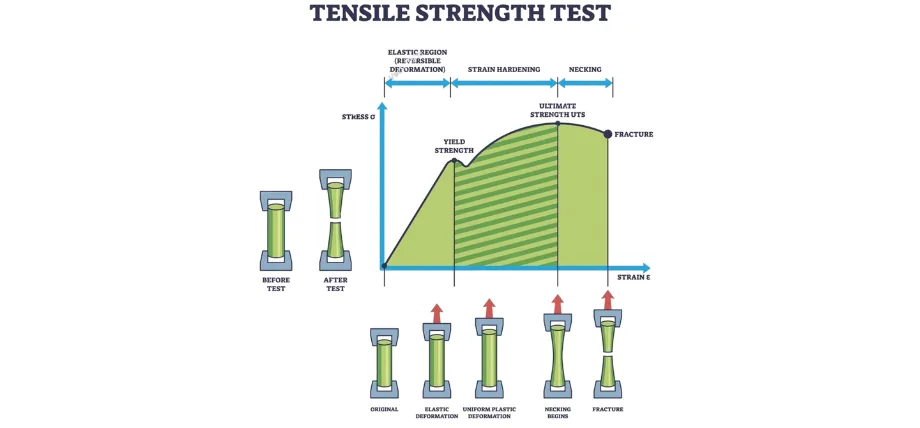
Tensile test breakdown
The mechanical properties of stainless steel 201 determine the use of this type of steel in construction and fabrication applications. They include tensile strength, yield strength, elongation, and hardness, which are essential for assessing the material’s performance under stress.
The table below shows a summary of the mechanical properties of 201 stainless steel
| Property | Value |
| Ultimate Tensile Strength | 655 MPa (95 ksi) min |
| Yield Strength (0.2% Offset) | 260 MPa (38 ksi) min |
| Elongation | 40% min |
| Hardness (Brinell) | 217 max |
| Hardness (Rockwell B) | 95 max |
Type 201 stainless steel has high tensile strength and good yield strength. Such strength makes it applicable in structurally demanding end-use applications, such as stainless steel kitchen components and processing equipment.
Cold work increases its strength, but it may be slightly magnetic in very high working conditions. Its fatigue resistance allows it to be used for dynamic applications such as automotive use.
Stainless Steel 201 Physical Properties
The physical properties of stainless steel 201 affect its performance in different situations and applications. These properties include density, thermal conductivity, and specific heat capacity, which are essential for engineering calculations.
The table below presents the physical properties of Type 201 stainless steel, as referenced on MatWeb:
| Property | Value |
| Density | 7.86 g/cm³ (0.284 lb/in³) |
| Thermal Conductivity | 16.2 W/m·K at 100°C |
| Specific Heat Capacity | 0.50 J/g·°C |
| Electrical Resistivity | 0.000085 Ω·cm |
| Coefficient of Thermal Expansion | 17.0 µm/m·°C (0-100°C) |
These properties make stainless steel 201 a versatile material for applications requiring thermal stability and strength, such as stainless steel plates and strips used in food production equipment. Another benefit for applications where magnetic interference should be minimised is its non-magnetic nature in the annealed condition.
How Does the Density of Type 201 Stainless Steel Compare with Other Types of Stainless Steel Material??
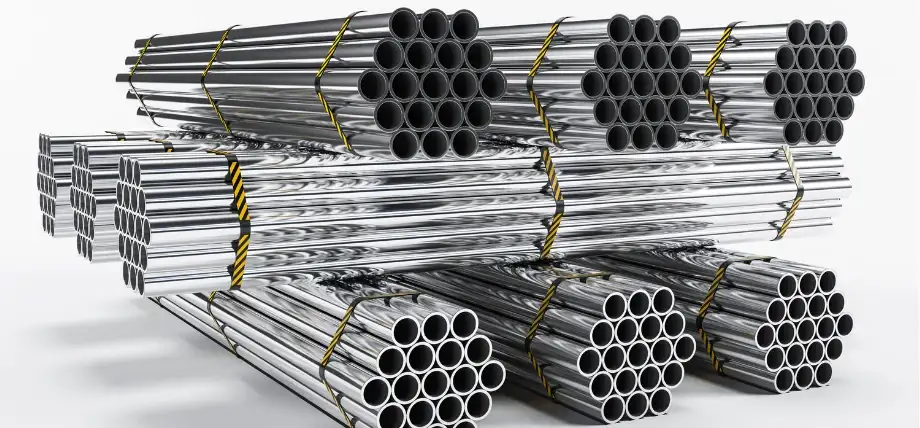
Stainless steel 201 stock
With a density of 7.86 g/cm³, stainless steel 201 is similar to austenitic stainless steels Type 304 (7.93 g/cm³) and Type 316 (8.00 g/cm³). The small differences in density identify variations in the alloying elements, mainly the higher manganese content and lower nickel content in Type 201.
This also means that 201 stainless steel can provide some degree of weight savings in certain applications involving stainless steel sheets and plates, which is advantageous in industries such as automotive and food processing stainless steel, where lightweight yet durable materials are preferred.
However, the difference is minimal and rarely a decisive factor in material selection compared to mechanical properties or corrosion resistance.
Key SS 201 Material Properties That Can Help You Decide Steel Applications
201 stainless steel is valued for its unique combination of properties, making it suitable for various applications. Below are the key material properties that guide its use:
Corrosion resistance
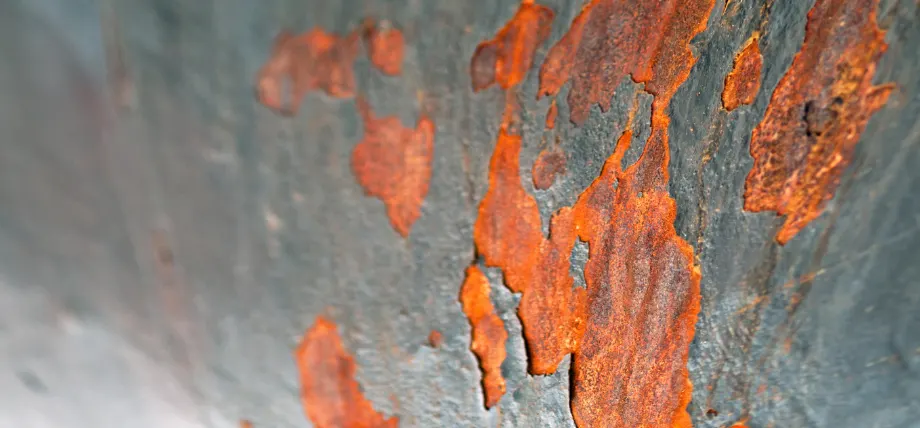
Years of corrosion resistance on steel surface
Type 201 is really good with corrosion resistance, especially in mild environments. Chromium content helps in the formation of a passive oxide layer, which protects against pitting and thus crevice corrosion, though it is less resistant than 304 under ultimate conditions, like in a marine environment.
High toughness
The austenitic structure gives the material excellent toughness, even at cryogenic temperatures, which is useful where stainless kitchen equipment and outdoor structures are involved.
Good formability
Stainless steel 201’s ability to be categorised into complex shapes, such as stainless strips and sheets, supports its use in sheet metal fabrication and automotive trim.
High strength
Type 201 has gained a high tensile and yield strength due to cold working, thus making it perfectly suited for structural components and steel plates.
Lower nickel content
It is cheaper if corrosion resistance is not paramount, with low nickel in 201 compared to other grades.
Higher manganese content
This increases strength and work-hardening, enhancing the fatigue resistance in dynamic applications.
Non-magnetic (in annealed condition)
In its annealed state, stainless steel 201 is non-magnetic, which is best for applications requiring minimal magnetic interference, such as electronic enclosures.
Good weldability
Type 201 can be welded using standard techniques, making it suitable for fabricating stainless steel products like food processing equipment and steel cans.
Having a difficult time deciding on stainless steel material? Get optional engineering support today.
Comparing Type 201 SS with Type 304 SS

304 engraved stainless steel
Type 201 and Type 304 are both austenitic stainless steels, but their differences in composition and properties influence their applications. Below is a comparison based on key factors:
Composition
Type 201 is the type of stainless steel spanning 16-18% chromium, 3.5-5.5% nickel, and 5.5-7.5% manganese. Its counterpart, Type 304, has a chromium content between 18-20% and a nickel content within 8-10.5%, exhibiting a lesser amount of manganese (maximum 2%).
The lower nickel and higher manganese levels in type 201 make it a cheaper purchase for a slightly lowered corrosion resistance.
Resistance to Corrosion
Type 304 has superior corrosion resistance to Type 201, especially because it works well in cases with a high concentration of chloride ions. Thus, it is ideal to work with stainless steel outdoors, and it is fit for food-grade purposes. This is insufficient for Type 201, which is only good for indoor applications or mild corrosive environments, such as stainless steel kitchen fittings.
Mechanical Properties
Type 201 is superior in tensile strength (655 MPa min) and yield strength (260 MPa min) to Type 304 (515 MPa and 205 MPa, respectively) because of relatively high manganese and nitrogen content. Therefore, 201 is stronger than 304 stainless steel in the annealed condition.
Cost Effectiveness
Less nickel content in the Type 201 grade of stainless steel makes it an economical option compared to 304, making it an attractive option for projects short on greenbacks, such as fabricated parts from sheet metal.
Magnetic Properties
The two grades are nonmagnetic in the annealed condition, but Type 201 becomes slightly magnetic after cold working.
Type 201 is a practical alternative to Type 304 for applications where cost is a priority and corrosion resistance requirements are moderate, such as stainless steel plates for food processing equipment or automotive trim.
For more demanding environments, Type 304 is often preferred.
Learn More: Materials Overview
Conclusion
Stainless steel 201 is a cost-effective, austenitic stainless steel alloy offering a balance of corrosion resistance, high strength, and good formability. Its lower nickel and higher manganese content make it an economical choice for applications such as stainless steel kitchen equipment, food processing equipment, and automotive trim.
While it may not match the corrosion resistance of Type 304 in harsh environments, its mechanical properties and affordability make it a versatile material for many industries.
PLMFG Offers High Quality Stainless Steel Machining
Our advanced techniques ensure high durability, accuracy, and efficiency for your custom stainless steel parts. Benefit from competitive pricing, rapid turnaround times, and professional expertise, giving your projects a better manufacturing solution.
Contact us today for a free machining quote!
FAQ
What Is 201 Stainless Steel?
Type 201 is an austenitic stainless steel alloy consisting of chromium, nickel, and manganese. It possesses excellent strength and form-fitting capacities, which provide cost effectiveness due to lower nickel when compared with conventional stainless steels, offering its application in producing stainless steel sheets and plates and manufacturing food processing equipment.
Does 201 Stainless Steel Rust?
Type 201 stainless steel does exhibit good corrosion resistance owing to chromium content, yet it is not as rust-proof as Type 304 in rough environments involving exposure to high concentrations of chlorides. It would be suitable for indoor use with some mild acidity conditions around it.
Does 201 Stainless Steel Tarnish?
Type 201 stainless steel is resistant to tarnishing in mild environments but tarnishes in aggressive environments. Surface discolouration or corrosion may develop in some areas. Proper maintenance can avoid tarnish formation for stainless steel kitchen components.
Is 201 Stainless Steel Food Safe?
Suitable for non-aggressive food environments where design and cleaning practices prevent corrosion. Many specifications prefer 304, particularly for chloride environemtns, because of its corrosion-resistant and smooth surface. However, Type 304 is often mentioned for critical food-grade applications for its superior corrosion resistance.
Is 201 Stainless Steel Good?
Type 201 stainless steel is a good choice for applications requiring high strength, good formability, and cost-effectiveness, such as automotive trim and stainless steel plates. However, it is better suited for environments with moderate corrosion risks.