
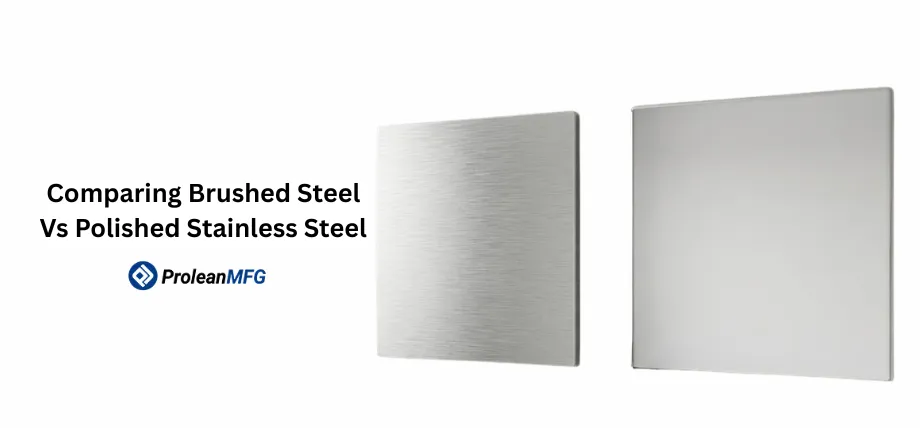

Stainless steel is an iron-based alloy with a 10.5% or more chromium content that forms a corrosion-resistant layer. Brushed steel is a special finish of steel that has fine lines on its surface in a single direction, made using grit pads or abrasives for a matte linear texture.
Brushed steel can also be achieved on non-stainless steel substrates; however, such steels lack corrosion resistance and may require coatings.
Comparison: Brushed Steel vs Stainless Steel
Appearance & Texture
Brushed stainless steel features a matte texture resulting from its unidirectional grit lines created during the abrading process, which produces a non-reflective surface that diffuses light, making it appear dull and textured when touched.
Brushed steel differs from standard stainless steel, which is typically in its mill-finished state and features a smoother, polished surface with minimal lines. Some polished steels have smooth surfaces, and Ra values less than 0.8 micrometers.
The primary difference between brushed and mill-finished stainless steel lies in the way light interacts with them, as the brushed finish scatters light to reduce glare.
| Finish Type | Surface Texture | Reflectivity | Fingerprint Resistance |
|---|---|---|---|
| Brushed Steel | Matte, linear grain | Low | Moderate |
| Brushed Stainless Steel | Satin, directional grain | Low | High |
| Polished Stainless Steel | Smooth, mirror-like | High | Low |
Corrosion Resistance
The finishing process on stainless steel directly affects its corrosion resistance through the formation of a protective oxide layer. Brushed finishes feature micro-grooves that can trap moisture, water, and contaminants, thereby catalyzing the corrosion effects of pitting.
Most Ra values greater than 0.8 micrometres show higher corrosion rates in chloride environments due to increased locations for initiation. Smoother stainless steel finishes, like mirror-polished, provide a passive layer that enhances resistance to atmospheric and marine corrosion elements.
Brushing stainless steel does not affect its corrosion-resistant properties. Corrosion mainly depends on passivation, roughness, and environment. ASTM A967 requires passivation to restore the oxide film, thereby reducing the impact.
Durability & Scratch Resistance
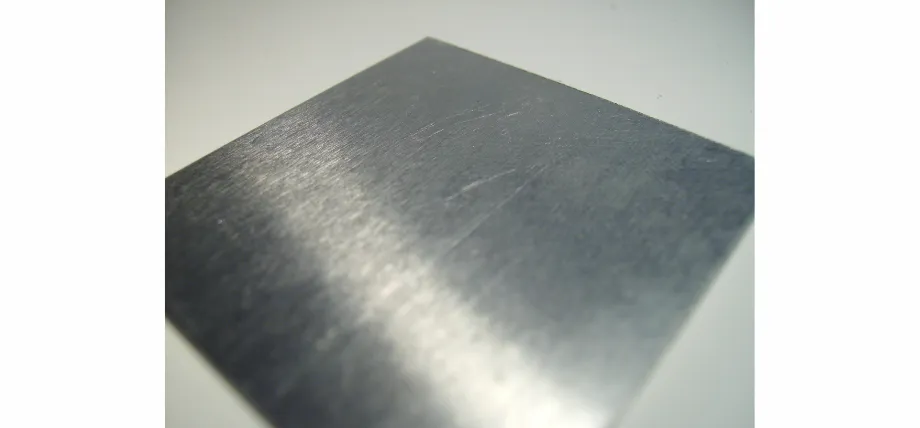
Brushed metal surface texture
Brushed steel is excellent at hiding scratches and imperfections because new marks blend seamlessly with the existing grain lines. This can prolong the aesthetic finish and make it more durable. On polished stainless steel, the scratches are highly visible due to the reflective surface, and using a polished surface requires frequent repolishing.
In terms of hardness, both finishes share the same hardness as the base metal. It has superior resistance to superficial abrasion in high-contact applications.
Maintenance & Cleanability
Brushed steel is easier to maintain because it can hide fingerprints, smudges, and watermarks within its texture. This means you don’t have to clean it as frequently as polished surfaces. Polished stainless steel is easier to clean because it can be wiped clean, and it easily shows any contaminants. Brushed stainless steel with coarse grain finish above and around 1.6 Ra micrometers is prone to bacterial adhesion, which can make it difficult to sterilize it, and is a concern for medical applications. Overall, brushed steel is easier to maintain and costs less to maintain.
Common Finishes in Stainless Steel
Standard Finish Grades
Stainless finishes are standardized for consistency in surface properties, and the grades are defined by grit size, roughness, and appearance.
Brushed vs Satin vs Polished vs Mirror
ASTM A480 and EN 1008-2 outline key finishes:
No. 4 (brushed) is made from 150 – 180 grit abrasives that can produce a surface finish of Ra 0.3 – 0.8 micrometers and a linear grit pattern.
No. 6 (satin) uses finer 220 – 280 grit, resulting in a smoother, semi-reflective surface with Ra 0.2 – 0.5 μm. This finish falls somewhere between brushed and polished aesthetics.
No. 8 (mirror) utilizes sequential polishing to achieve an Ra of 0.2 -0.5 micrometers, providing maximum reflectivity.
Brushed VS Satin VS Polished VS Mirror Finish on Stainless Steel
Brushed (No 4 ) offers moderate cleanability, and it can conceal scratches but has reduced corrosion resistance because of the grooves that are cut into the surface. Satin (No. 5) offers improved hygiene standards with a finer texture, while polished (No. 6) provides enhanced passivation for corrosive environments. Mirror (No. 8) maximizes reflectivity but is easily damaged. Additionally, it can easily attract dirt and marks.
Industry Standards and Technical Specifications for Brushed & Polished Finishes
ASTM A480 requires brushed finishes via directional abrasion. It also places caps on Ra finishes for load-bearing applications.
EN 10088-2 provides further details on mechanical treatments for enhancing corrosion performance. Post-finish passivation (ASTM A967) to achieve greater than 90% chromium enrichment in the oxide layer.
ASTM B117 is used to test the finishes for 1000+ hours of salt spray testing.
Comparing Brushed Steel vs Stainless Steel for Practical Use
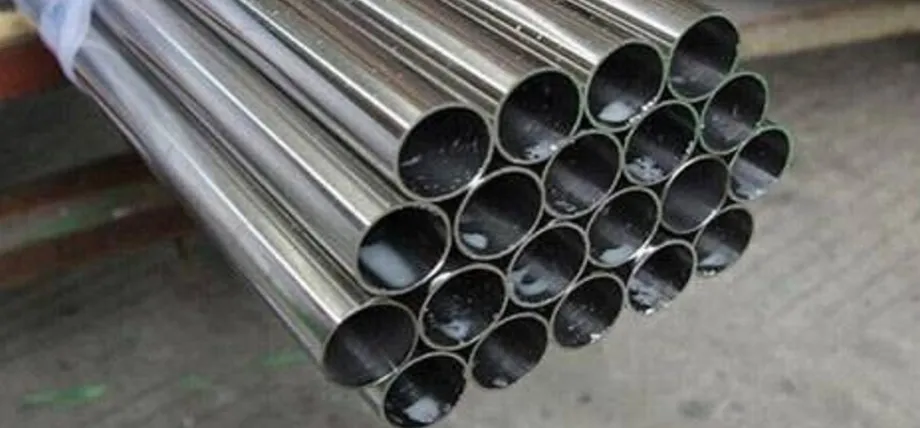
Polished stainless steel piping
Home Appliances
Home appliances include refrigerators, ovens, microwaves, and kitchen aids. Home appliances are often finished in brushed metal due to its fingerprint resistance and durability. Standard stainless steel is primarily used in premium home appliances for its shine and luster, but it requires more frequent upkeep and maintenance.
Kitchen and Bathroom Fixtures
A brushed finish on sinks can hide water spots more effectively, especially in humid environments. In bathrooms, brushed corrosion-resistant stainless steel grades, such as 316 steel, enhance longevity.
Durability in High-Moisture Environments
Brushed stainless steel, finished with a passive layer, is more corrosion-resistant in humid areas but less resistant than low Ra polished steel. Duplex steel grades can endure more than 5000 hours in marine conditions without pitting corrosion.
Industrial Applications
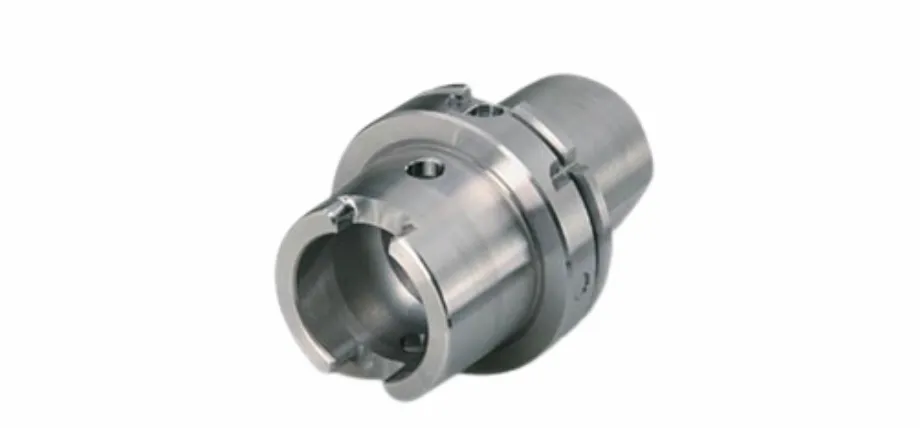
Machined stainless steel part
Stainless steel is strong and can support load-bearing applications, while also reducing galling in sliding parts. Brushed steel is ideal for industrial machinery due to its scratch resistance and enhanced grip.
Strength and Wear Resistance
In terms of strength, both stainless steel and brushed stainless steel share the same yield and tensile strength for identical grades. Martensitic grades offer hardness of up to 600 HV for high-wear scenarios.
Cost Considerations for Brushed Steel
Brushed steel finishes are about 20% cheaper than polished steel, with as machined being the cheapest. For most high-volume orders, a brushed finish can add $ 2-$4/kg, and approximately $5-$7/kg for polished.
Decorative Uses
Brushed Steel Interior Design
Brushed steel is popular with interior designers who want minimalism. Brushed stainless steel accent walls and furniture reflect light softly, while polished steel offers a lustrous finish that reflects most of the light.
Is Brushed Nickel the Same as Stainless Steel?
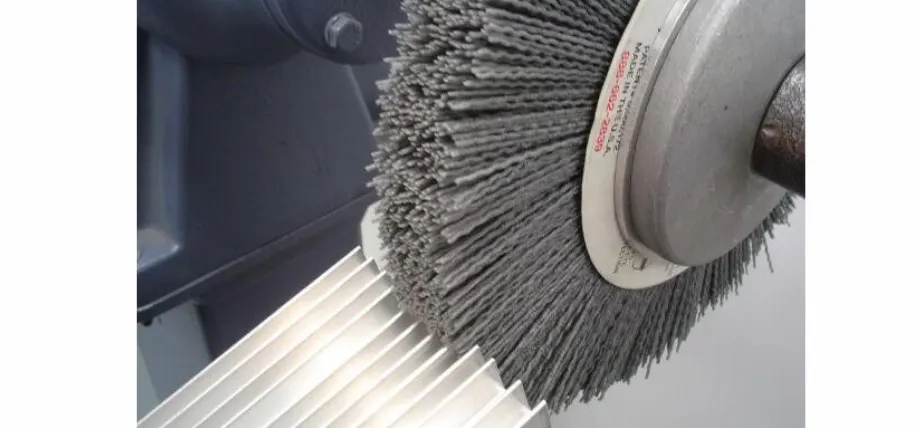
Abrasive wire brush finishing
Brushed nickel is a plated finish applied over a base metal, such as brass, that creates a warm and satin-like texture. Stainless steel, on the other hand, is a solid alloy that has nickel and chromium for corrosion resistance.
Nickel plating offers aesthetic similarity to steel but does not offer the base metal properties, and can peel in harsh conditions.
Polished vs. Brushed Finishes
Polished finishes on stainless steel achieve a mirror-like finish, often with a roughness average (Ra) of less than 0.1 micrometers. Polishing is achieved using buffing that enhances reflectivity and corrosion resistance, but it is prone to scratches. Brushed finishes (Ra 0.4 – 1.0 micrometers) provide a linear texture on stainless steel, offering improved scratch resistance and better concealment of marks and scratches. Brushed stainless steel has a higher chance of corrosion because of the cervices, but brushed steel has better mechanical durability.
Choosing Between Brushed Finished Steel and As-Machined Stainless Steel
Budget
Machined stainless steel (mill finish, Ra 1.6 – 3.2 micrometers) is the cheapest finish for most parts and requires minimal secondary processing. Brushed steel can add $ 0.50 – $1.00 per square foot of abrasion.
Functional Requirements
If your part is prone to marks, fingerprints, or requires a grip, a brushed stainless steel fabrication can be used for these wear-prone applications. As machined steel finish is ideal for structural uses where roughness is tolerable and cost-effectiveness is a priority.
Aesthetic Requirements
Brushed steel offers a matte look with reduced reflectivity and a textured finish. As machiend comes with tool marks and cutting lines with a rough surface.
Pros and Cons of Brushed Finished vs Polished Finish vs Stainless Steel As Machined Finish
| Finish Type | Pros | Cons |
|---|---|---|
| Brushed | Hides scratches; easy maintenance; cost-effective durability | Potential moisture trapping; directional cleaning needed |
| Polished | Superior corrosion resistance; high reflectivity; hygienic | Visible damage; higher cost; frequent upkeep |
| As–Machined | Lowest cost; quick production; sufficient for non-visible parts | Rough texture; prone to contamination; aesthetic limitations |
Sheet Metal Services at Proleanmfg
If you’re looking to complete projects that require precise machining of copper or brass, consider partnering with ProleanMFG.
Our services prioritise quality and include precision tolerance handling, advanced 5-axis CNC milling, and exact alloy selection with rapid turnaround for low- to medium-volume runs.
Reach out today for a free quote and cost-effective solutions to your CNC projects.
Conclusion
Brushed steel and stainless steel are inherently different: one is an alloy, and the other is a finish that can be applied to either alloy steel or stainless steel. As machined stainless steel and brushed steel serve different functions and are selected based on corrosion needs, durability, and cost, it ensures the best outcome for your project.
FAQ
Is Brushed Nickel the Same as Stainless Steel?
Brushed nickel is the result of a plated finish and can be applied to different metals, and stainless steel is a complete alloy.
Is Brushed Nickel the Same as Brushed Stainless Steel?
Brushed nickel has a silvery tone from nickel plating, and stainless steel has a linear grain texture.
What Is Brushed Stainless Steel?
Brushed stainless steel is a corrosion-resistant iron-based alloy with a textured finish that is unidirectional.