
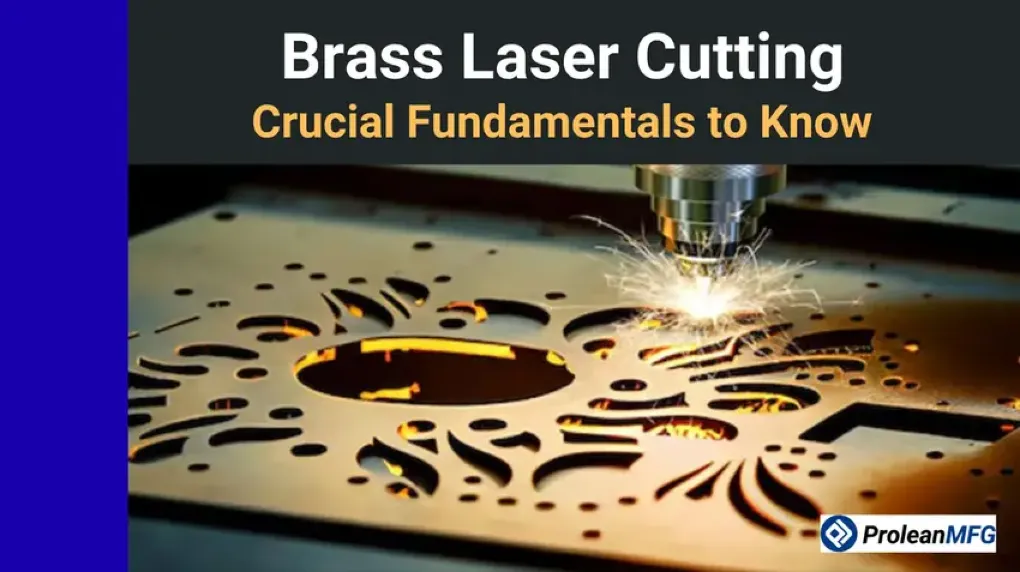

Brass laser cutting is the process in which a sheet metal laser cutting machine cuts brass with high precision. This relatively complex metal laser cutting process uses a high-energy laser beam to melt and cut through the material. An assist gas helps blow molten metal away and maintain a clean, precise laser cut.
Notably, metal laser cutting for brass presents reflectivity, heat conductivity, and oxidation challenges. With a proper cutting strategy defined by optimized cutting parameters and power settings, coupled with basic metal cutting practices such as cleanliness, brass laser cutting works.
Between fiber laser cutting and CO2 laser cutting, the former is the most widely used in brass cutting for its efficient energy-absorbing capabilities when cutting reflective materials. It therefore delivers faster and cleaner cuts. [1]
Brass laser-cut parts are used in a range of industries, from architectural and aerospace parts to automotive parts and fluid systems.
The cut parts may require finishing, with technologies such as deburring, electropolishing, powder coating, passivation, lacquering, and nickel plating available.
Read on to find out more about the laser cutting fundamentals for this golden-hued material, including the main laser cutting technologies, advantages/limitations, brass alloys to consider, and a real-world application case.
What is Brass Laser Cutting?
Brass laser cutting entails using a high-powered laser beam to cut or engrave brass. Brass is an alloy of copper and zinc. Among the laser cutting materials, brass is renowned for its aesthetic value, corrosion resistance, and malleability.
Laser cutting brass is an intricate process requiring the correct choice of laser type, assist gas, and power settings.
How to Cut Brass Sheets?
If you are wondering what the best way to cut brass sheet is, fiber laser cutting is the top choice for most manufacturers. It is one of the two main laser cutting methods, alongside CO2 laser cutting.
Let’s look at the two options in more detail.
1. Fiber Laser Cutting for Brass
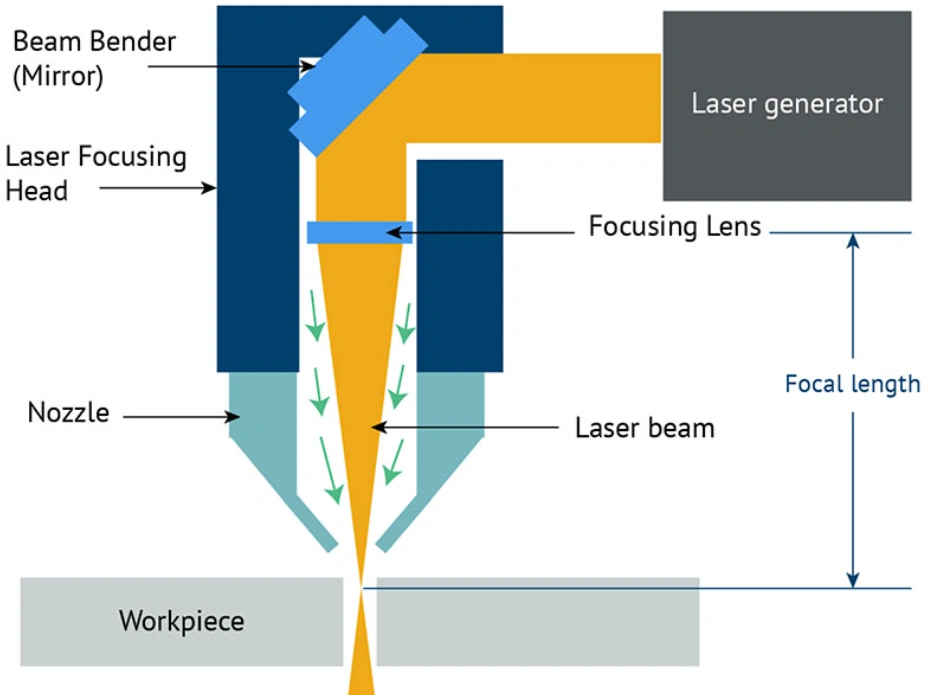
There is a reason why fiber laser cutting is the industrial standard and the best way to cut brass sheet. It has a relatively short wavelength (1.06 µm), which is easily absorbed by the brass material. This property blends well with the high-power source and nitrogen assist gas for clean cuts.
2. Can a CO2 laser engrave brass?
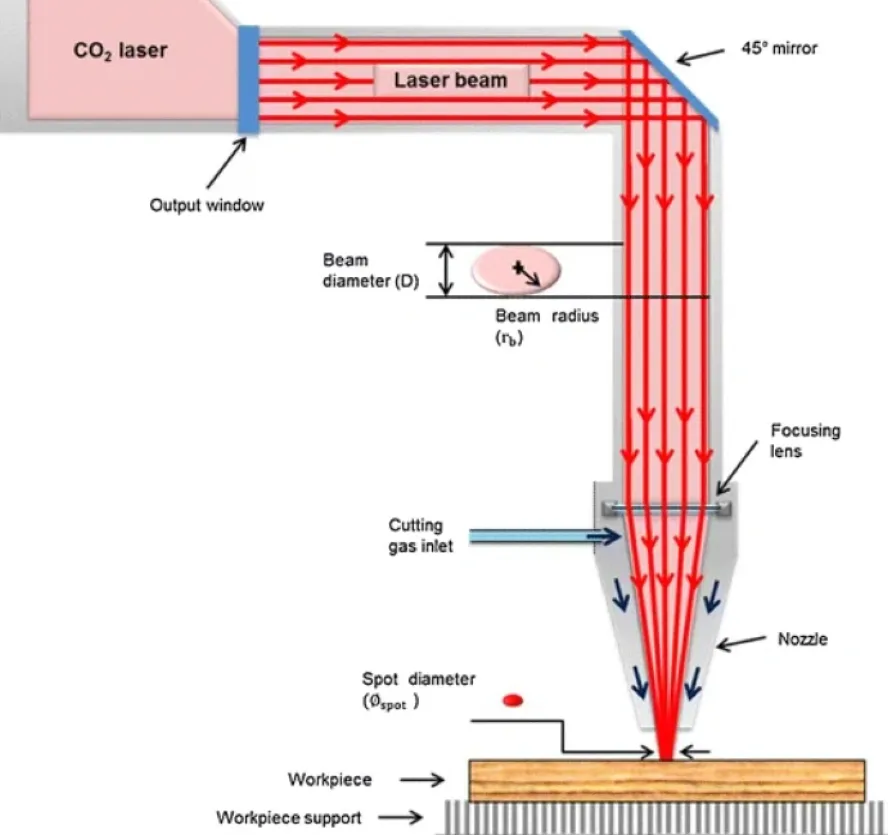
Engraving brass with a CO2 laser will always present challenges due to the material’s high reflectivity, particularly at the CO2 laser wavelength of 10.6 µm, compared to that of fiber laser – 1.06 µm. [2] You don’t want to risk performing this process because of the damage it could cause to the optics.
But that is not to say it is entirely impossible to laser-engrave brass. Special laser-absorbing marking compounds can be used to minimize the reflectivity. Instead of the beam being reflected, it is converted into a surface reaction.
Does Higher Laser Power Result in Faster Cutting of Brass?
Yes, but this takes the cutting process beyond the optimal window concerning the potential risks. With higher power, the feed rate can be higher, which allows for the cutting of thicker brass stock, say 6mm or more.
But you wouldn’t want to have higher power cutting on thinner brass stocks. One of the biggest issues is overburning. The material’s edge can also become rounded, and the kerfs become wider.
As a buyer, the best question should be whether the machining service provider can cut the specific brass grade. Do they use the same setting for all orders or optimize cut parameters?
Main Advantages of Brass Laser Cutting
The main advantages of brass laser cutting are tight tolerances, fast lead times, no tooling cost, clean edges, complex geometry, and material efficiency.
- Tight Tolerances
A well-maintained laser cutting system can produce tolerances of ±0.05 mm to ±0.1 mm. This capability is necessary for parts meant for precision assemblies.
- Fast Lead Times
Standard brass laser cutting orders can be expedited within a few days, say, as fast as 3 days.
- No Tooling Cost
If the geometry of a part is changed mid-way, executing it with brass laser cutting is cost-effective because the process is software-centered.
- Clean Edges
With nitrogen as the assist gas, an inert shield is created. This shield prevents oxidation and discoloration. It also accelerates the laser-cutting speed. The result is a clean edge that may not require deburring.
- Complex Geometry
The superior precision of this cutting process can help produce complex brass parts. There’s minimal kerf width, which means that parts with tight tolerances can be manufactured.
- Material Efficiency
Still on precision, the manufacturer can minimize material wastage. The CNC nesting technique is often used to maximize efficiency and safeguard brass cost.
Main Limitations of Brass Laser Cutting
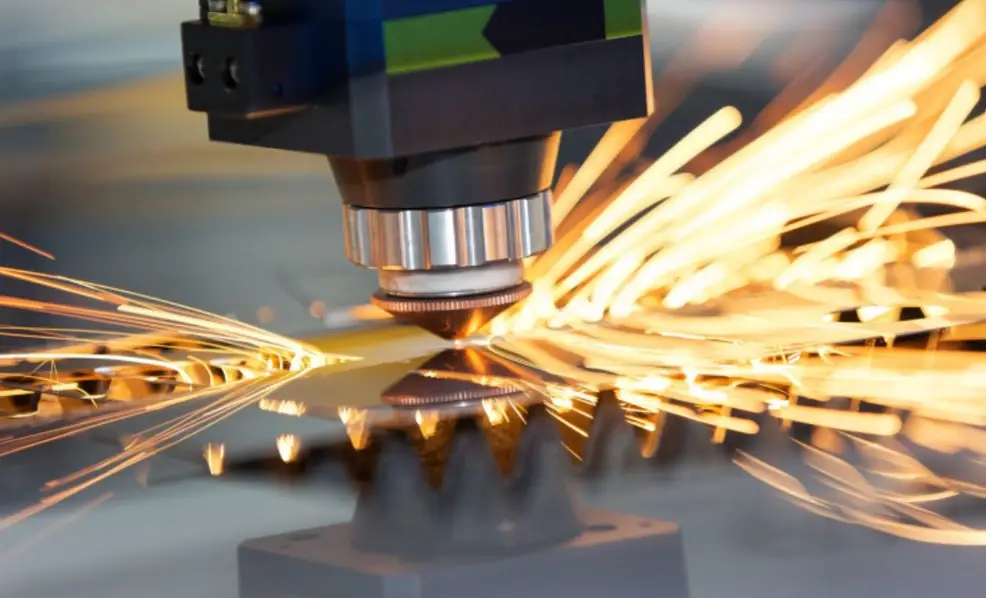
The practical limits of brass laser cutting include high reflectivity, HAZ sensitivity, limitation to 2D cutting, and thickness limits.
1. High Reflectivity and Conductivity
2. HAZ Sensitivity
Since brass has high reflectivity like aluminum, the heat-affected zone (HAZ) in the metal can distort thin sections. [3] Power and feed rate optimization is a critical strategy to counter this limitation.
3. Limitation to 2D Cutting
Brass laser cutting is not designed for 3D cutting; it works best with 2D cutting. If you need 3D features such as contours and threads, you need to use secondary machining processes.
4. Thickness Limits
From our experience, brass laser cutting is dependable up to about 10–12 mm in material thickness. Beyond this, the laser cut starts to degrade. Considering the secondary processes for improving such cuts, you can expect the cost per part to increase.
For thicker brass parts, it would be better to consider alternative cutting methods, for instance, waterjet cutting.
Common Applications of Brass Laser Cutting
Brass laser cutting is commonly used in industries such as automotive, aerospace, electrical & electronics, architectural & signage, instrumentation, and fluid systems.
- Automotive Parts
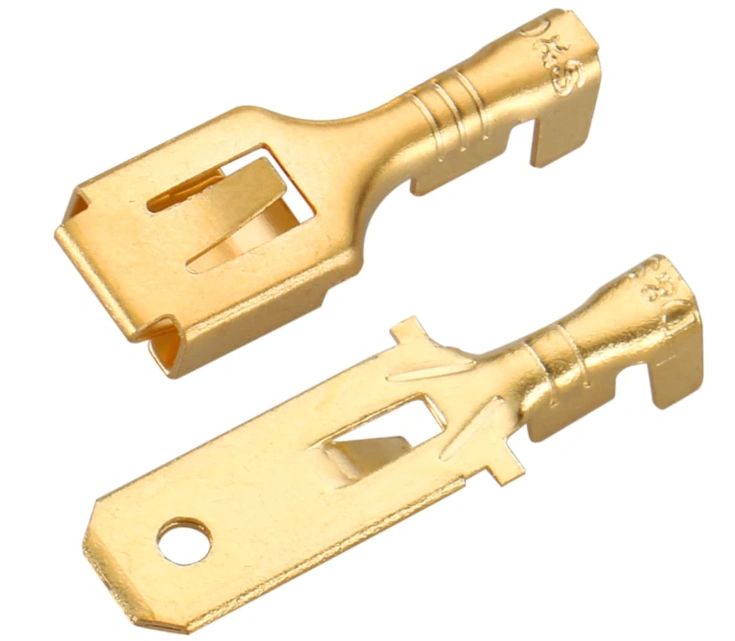
Brass laser-cut parts are commonly used for connector terminals, fuse strip blanks, and sensor housings. Manufacturers tap into the material’s corrosion resistance and electrical conductivity.
- Aerospace Parts
The most notable use cases in this industry are precision spacers and connector housings. Traceability is a key requirement for aerospace parts, so consider only suppliers with AS9100 or equivalent.
- Electrical & Electronics
Popular applications of laser-cut brass parts include shielding parts, contact plates, and bus bars. The material is a preferred alternative for copper parts, particularly where the conductivity-to-cost ratio is a major consideration.
- Architectural & Signage
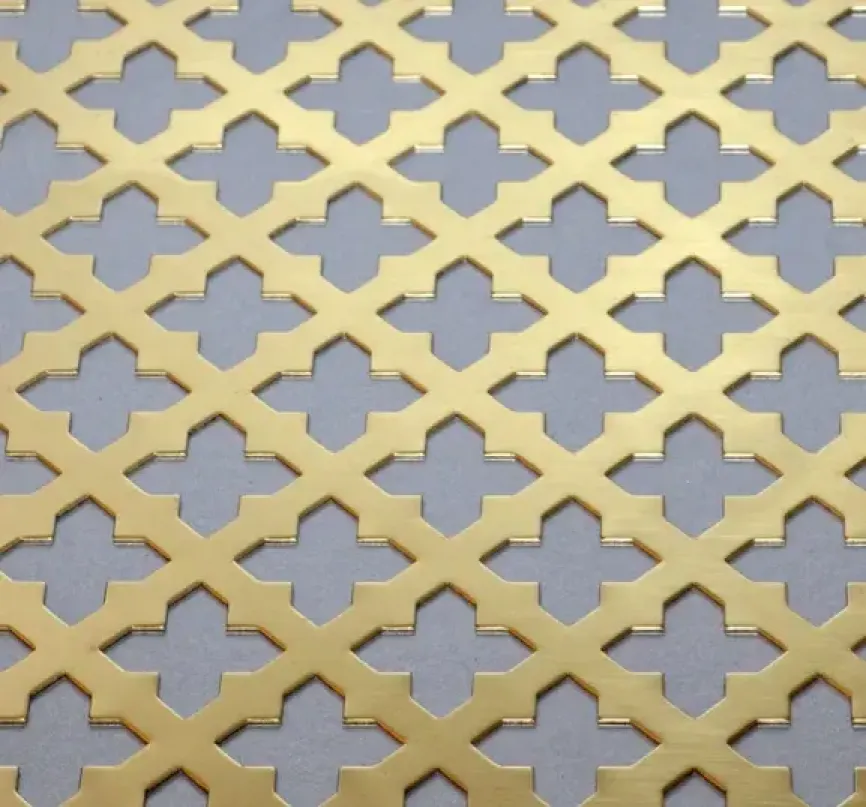
Surface appearance and edge finish are important elements in nameplates, decorative grilles, and wayfinding panels. Brass laser cutting provides the required properties for such parts, including minimal requirements for secondary machining.
- Instrumentation
The instrumentation sector demands tight tolerances, precision, and reliable turnaround. Brass makes encoder discs, panel cutouts, and scale plates that meet these requirements.
- Fluid Systems
Key components in this area include sealing gaskets, orifice plates, and valve bodies. With brass laser cutting, the requisite dimensional accuracy can be attained. For parts that require oxide-free edges, for instance, fluid-contact components, that is manageable too.
Brass Alloys to Choose for Laser Cutting
Popular brass alloys in laser cutting projects are C36000 (Free-Machining), C26000 (Cartridge Brass), C46400 (Naval Brass), and C85700 (Leaded Yellow Brass). [4]
Since these grades present different properties, your choice of brass grade can affect machinability, edge quality, and other machining elements.
Typically, cartridge brass offers the best combination of ductility and strength. The alloy is also easy to laser cut.
Design Guidelines for Laser Cutting Brass
Designing for laser cutting brass requires consideration for kerf, feature size, corner radii, thin walls, nesting, and edge-to-edge clearance.
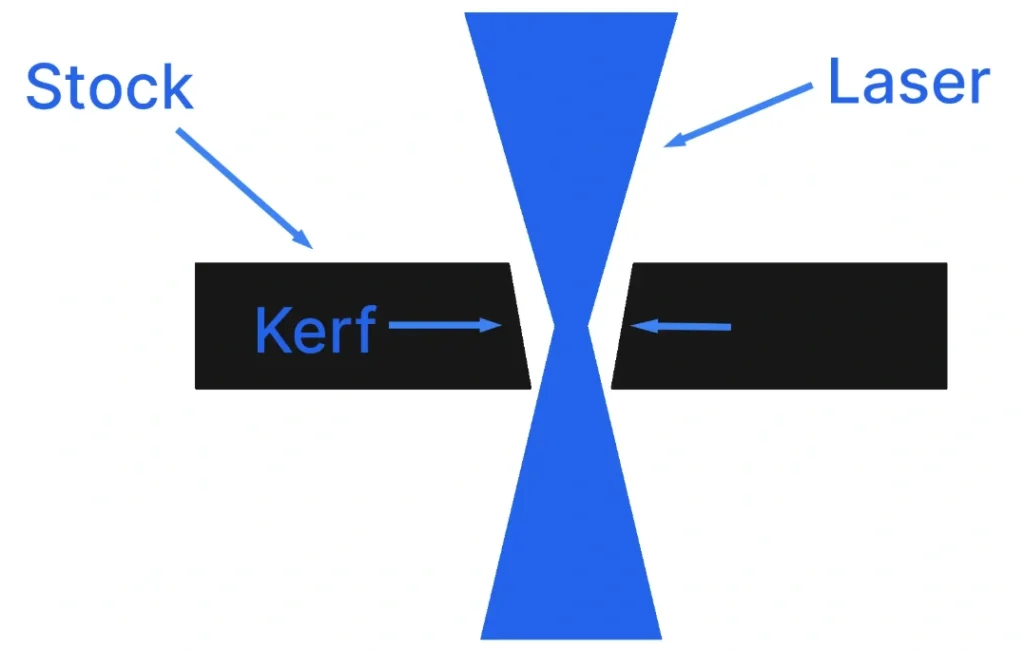
- Kerf
The recommended kerf is between 0.1 and 0.3 mm, with the exact value depending on power and material thickness. Include kerf compensation in your CAD geometry.
- Feature Size and Corner Radii
The minimum internal feature should be 1× material thickness. If it is smaller than this, the risk of edge tearing and thermal deformation is rife. The internal radius to corners should be at least 0.5 mm. If sharp corners must be incorporated, consider relief cuts.
- Thin Walls
For a stock thicker than 3 mm, walls thinner than 0.8 mm present a distortion risk. Redesigning is the best option to ensure proper heat dissipation.
- Edge-to-Edge Clearance
Adjacent features should be separated by a distance of at least 1× material thickness. Unpredictable edge quality and distortion can occur if the spacing is smaller.
- Nesting
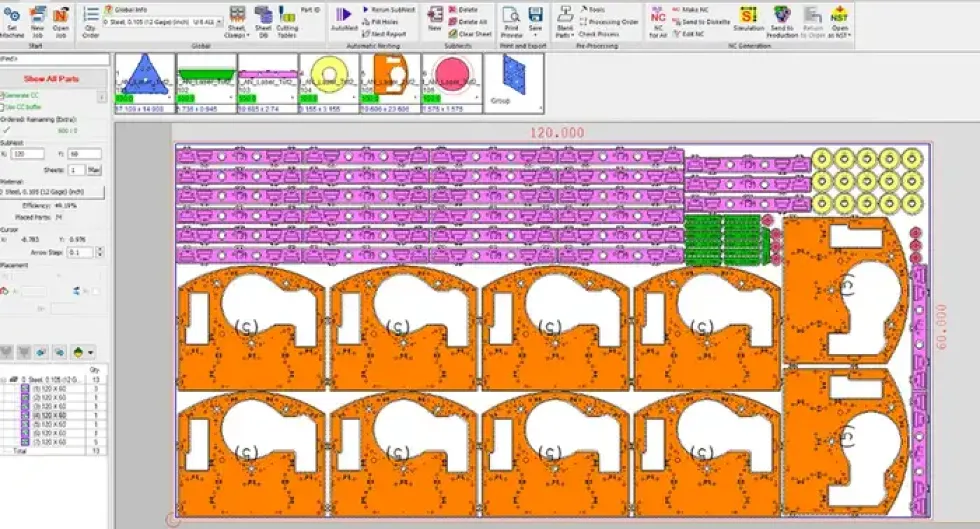
Since brass is a premium-priced material, lowering the per-unit cost through nesting is a common practice. Manufacturers will use the strategy to reduce costs, and these cost savings can be realized by your business in the part pricing.
Common Challenges and Solutions in Brass Laser Cutting
Challenges associated with brass laser cutting include burr formation, reflectivity, zinc fuming, dimensional drift, and thermal distortion. Fortunately, the challenges have solutions, which we share next.
Challenge 1: Burr Formation – If the brass sheet is thicker than 6mm and the cut speed is slower, dross adhesion tends to occur at the bottom edge.
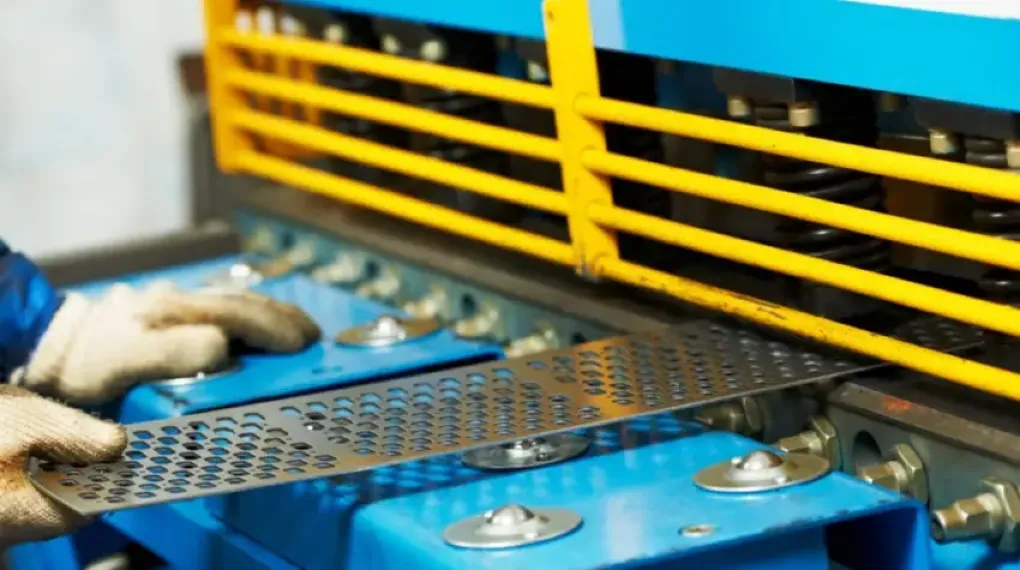
Solution: Optimize focus position and nitrogen pressure. Deburring is also a common corrective strategy.
Challenge 2: Reflectivity – Brass laser cutting causes the material to reflect laser energy – can reflect up to 70% of the fiber laser wavelength (1.07µm). [5] Optic damage is a real risk, particularly at low power densities.
Solution: Use a high-power fiber laser
Challenge 3: Zinc Fuming – This is the production of zinc oxide fumes by C28000 and C36000 brass alloys.
Solution: Advanced fume extraction systems [6]
Challenge 4: Dimensional Drift – Laser cutting large brass sheets presents shifts in tolerances.
Solution: Critical-tolerance projects should be subjected to nest orientation strategies.
Challenge 5: Thermal Distortion – Thin brass sheets can accumulate heat where there are intense feature patterns.
Solution: Strategies such as micro-joint strategies and pierce sequencing can help.
Finishing Options for Laser-Cut Brass Parts
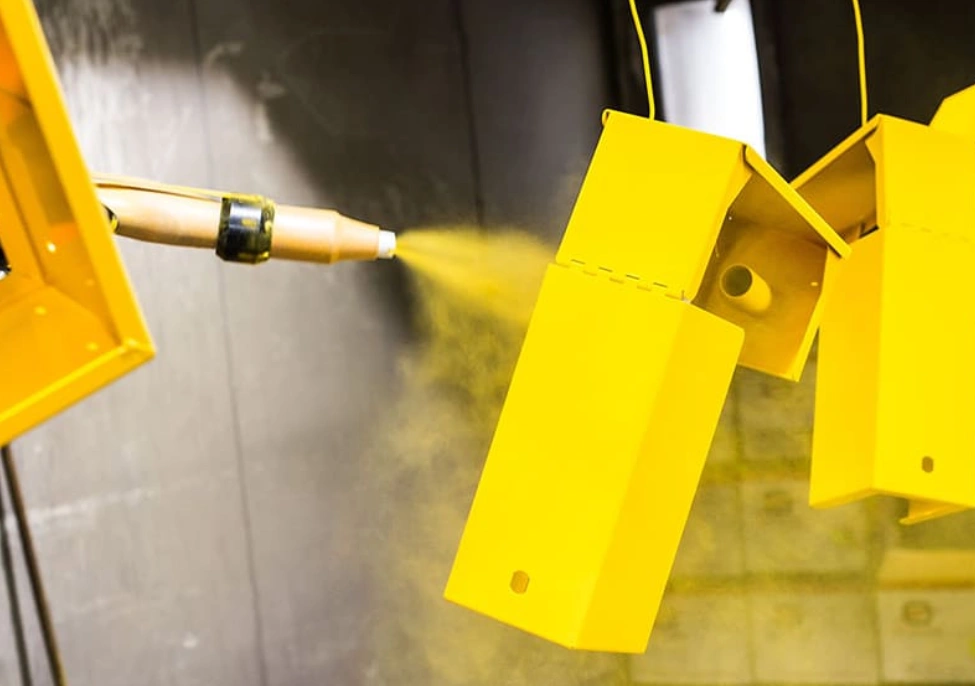
While well-planned and executed laser cutting produces clean edges on brass parts, some applications may still require finishing in the form of deburring, electropolishing, powder coating, passivation, lacquering, or nickel plating.
Real-World Application Case for Brass Laser Cutting
Case: One of our clients in the HVAC sector required precision brass orifice plates. The plates were to be delivered within 7 days and in batch sizes of 50-150.
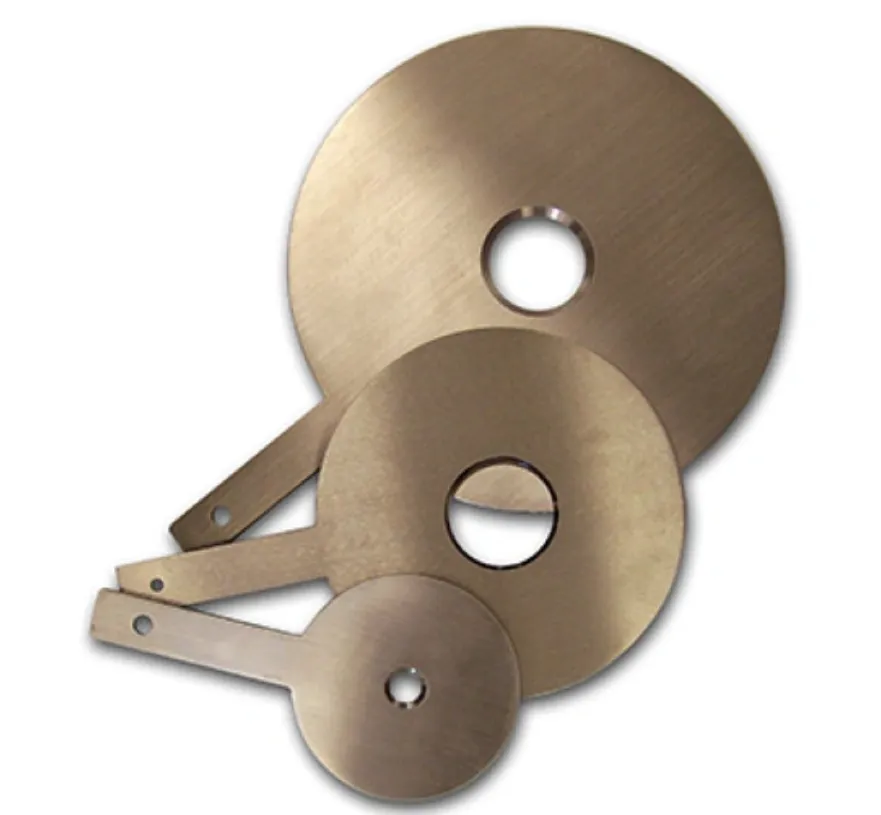
Challenge: The parts, which were of tight tolerances (±0.05 mm bore), had oxide-free edges and were made of C26000. As the client explained, they had previously used waterjet cutting, but the results were below par – poor edge quality meant secondary deburring for 100% of the parts was required, increasing the production cost.
Solution: Using our advanced brass laser cutting programs and machinery, we produced parts with clean edges. The requirement for secondary deburring was reduced to only 15% of the parts.
The lead time was cut by approximately 50%, and the per-unit cost was also reduced.
Conclusion
Brass has outstanding visual appeal and machinability. Its laser-cut parts are durable, corrosion-resistant, and structurally sound. That’s why, as we have highlighted in this article, brass laser cutting appeals to automotive, architectural, and other industries.
The main technologies to consider are fiber and carbon dioxide laser cutting. However, the fiber technology usually comes out on top for its higher capability to absorb the short wavelength from brass.
Overall, brass gives the manufacturer very little room for inconsistent finishes or rough edges. Reflectivity, burr formation, thermal distortion, and zinc fuming are serious challenges that laser cutting brass presents.
For your high-value projects, you don’t want to gamble with the accuracy and quality of cuts. With our Laser Cutting Services, production accuracy, repeatability, and sharp detailing are assured.
We provide brass laser cutting services using fiber technology at our facility in China. We laser-cut brass plates and sheets ranging from 0.9mm to 5mm, and in different grades.
What are your exact requirements? Inquire today, upload your design, and request an instant quote for your next laser-cut brass profiles.
References
[1] https://www.senfenglaser.com/knowledge/fiber-laser-cutter-for-brass-what-you-should-know/
[2] https://www.harsle.com/docs/fiber-lasers-vs-co2-lasers/
[3] https://jlccnc.com/blog/avoid-haz-laser-sheet-metal
[4] https://www.jeelix.com/what-brass-is-made-of/
[5] https://arcuscnc.com/laser-cutting-brass/
[6] https://fumexinc.com/laser-fumes-present-health-hazards/