
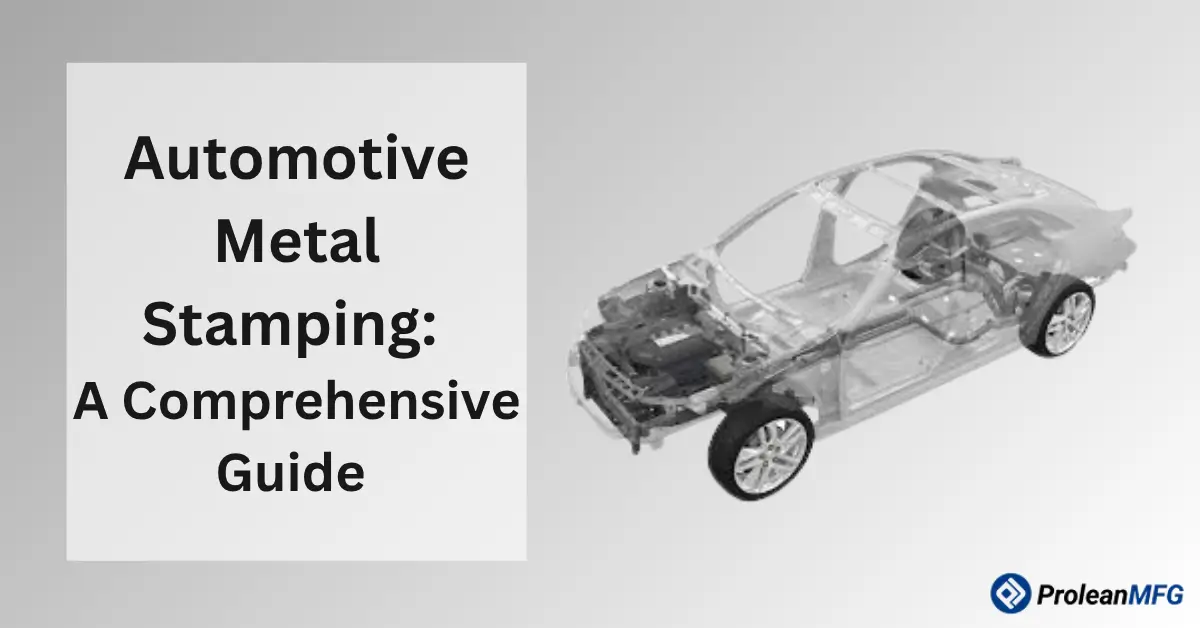

Automotive metal stamping is a cornerstone of production, transforming metal sheets into precise parts for every vehicle. Automotive stamping ensures precision, consistency, and durability for mass production. This process meets rigorous standards for quality and safety. Automotive metal stamping enables automakers to form intricate components efficiently.
However, a tolerance of ±0.003 inches on a part results in assembly failure. From door panels to every bracket of the engine, an EV battery pack is produced via metal stamping. This guide explores everything you need to know, from stamping processes and metal stampings for automotive components to EV-specific demands and supplier selection.
What is Automotive Metal Stamping?
Automotive metal stamping is a process to transform flat metal sheets into precise vehicle parts using custom dies and high-pressure presses at up to 1,500 strokes per minute. Metal stamping is a cost-effective production process. Automotive stamping ensures dimensional consistency, structural integrity, surface quality, and material trcability.
Moreover, automotive stampers can produce identical components across a large volume production run. Automotive metal stamping does not bear minor variation because it can stop production worth millions of dollars per hour. The global demand is projected to exceed $300 billion by 2025 for automotive stamping, driven by EV production.
Automotive Metal Stamping Processes
Choosing the right automotive metal stamping processes is a critical step because every step involves different part geometry, volume, and complexity level. Hence, engineers must understand basic sheet metal forming to make smarter process decisions.
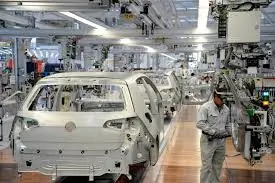
This process involves feeding metal strips into a stamping press through multiple custom-designed dies. Each station performs different operations such as punching, bending, coining, or blanking. During the process, the stamp is cut into basic shapes by forming, trimming, and piercing. This step allows us to achieve the required features and precise dimensions. Metal stampings for automotive components are durable and accurately fulfill the need for high-performance vehicles.
Materials Used in Automotive Stamping
The selection of material directly affects the production cost, vehicle weight, and fuel efficiency in automotive stamping. This decision becomes more complex due to the shift toward EVs. Because every gram of body structure counts due to the battery weight.
| Material | Key Property | Common Automotive Use |
| Mild Steel (CRS) | Low cost, easy to form | Interior brackets, non-structural parts |
| HSLA Steel | High strength, good formability | Chassis members, door beams |
| Advanced High-Strength Steel (AHSS) | Ultra-high strength, lightweight | B-pillars, crash structures, roof rails |
| Aluminum 5052 / 6061 | Lightweight, corrosion-resistant | Hood panels, door outers, EV enclosure |
| Aluminum 7075 | Extreme strength | Structural EV battery frames |
| Stainless Steel 304/409 | Corrosion and heat resistance | Exhaust components, fuel system parts |
The material selection becomes more crucial for EV than ICE vehicles. ICE vehicles mostly use steel for most parts, whereas EVs require aluminum-intensive body structures to overcome the weight of the battery, weighing 400-600 kg. So, this factor forces automotive stampers to spend more on aluminum tooling and process expertise.
Automotive Stamping Parts
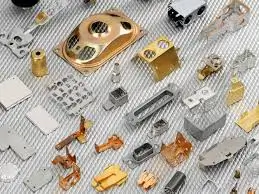
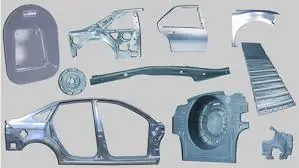
Here is the breakdown of stamping manufacturing components in a modern vehicle:
Body Structure: Roof panels, door outers and inners, hood outers and inners, fenders, firewall panels, trunk lids, floor pans, and A/B/C-pillars.
Chassis and Suspension: Subframe brackets, cross-members, spring perches, control arm reinforcements, and shock tower reinforcements.
Powertrain: Oil pans, engine mount plates, transmission brackets, exhaust heat shields, and catalytic converter housings.
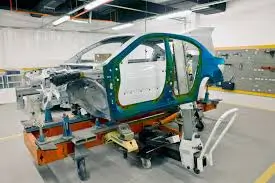
EV-Specific Components: Battery enclosure trays, cooling plate assemblies, cell module brackets, high-voltage bus bar housings, and motor mount brackets.
Interior and Safety: Seat frames and rails, airbag housings, steering column brackets, seatbelt anchor brackets, and dashboard reinforcement bars.
Fasteners and Hardware: Weld nuts, spring clips, retainer brackets, clinch studs, and grounding straps.
The automotive stamping parts are tailored with high-quality standards and are safety-critical.
Tolerances in Automotive Metal Stamping
Tight tolerances are the baseline in automotive. A door panel of 0.5mm off in any dimension shows clear gaps in the body-in-white assembly. Similarly, A chassis bracket 0.003″ out of position cannot ensure proper bolt-up.
| Feature | Standard Tolerance | Precision Tolerance |
| Linear dimensions | ±0.010–0.015″ | ±0.003–0.005″ |
| Hole diameter | ±0.005″ | ±0.001–0.002″ |
| Hole location | ±0.005–0.010″ | ±0.002–0.003″ |
| Bend angle | ±1–2° | ±0.5° |
| Flatness (body panels) | ±0.010–0.020″ | ±0.005″ |
Tight tolerances are only used when the component needs them for fitting or assembly. Because it takes more time to set up the tools and process.
Quality Standards in Automotive Stamping
Quality standards are the first thing that a Tier 1 supplier or OEM procurement team checks in automotive stamping.
IATF 16949
IATF 16949 is the quality management standard for the automotive industry. It is replaced by ISO/TS 16949. However, it is necessary for the suppliers working with most global OEMs, including Toyota, BMW, GM, Ford, and Volkswagen. It focuses on defect prevention and process control.
PPAP (Production Part Approval Process)
PPAP is a set of documentation submitted to OEMs before full production starts. This certification shows that the stamping process can make the parts correctly and within the required limits every time. The complete PPAP involves material certificates, dimensional results, control plans, and process steps.
SPC (Statistical Process Control)
SPC is for real-time checking of component dimensions during production. Therefore, the built-in sensors and optical inspection systems detect the faulty parts before they are made in large quantities.
APQP (Advanced Product Quality Planning)
APQP is a step-by-step system to make sure the stamping process is validated before production starts. It helps reduce risks when launching new, complex automotive stamping parts.
How EV Production is Changing Automotive Metal Stamping
Electric vehicles are the real competitive edge, fundamentally redesigning the stamping needs by replacing combustion engines.
- The new body panels replace the battery enclosure in the electric vehicles. EV battery trays are complex, big, and structurally critical. They must be fully sealed to protect the high-voltage battery cells. This provokes the demand for deep drawing, knowledge of aluminum alloys, and proper leak testing.
- Gigacasting is creating new demand for smaller precision automotive stamping parts such as brackets, connectors, and reinforcements. For instance, Tesla’s gigacasting process applies single-cast sections rather than large multi-piece stamping.
- The next accelerating factor is the lighweighting pressure. So, if a vehicle becomes 10% lighter can improve the electric vehicle driving range approximately 6-8%. Therefore, the companies prefer the use of aluminum and advanced high-strength steel instead of normal steel.
- Another growing and specialized segment of metal stamping for automotive components is the production of thermal management parts. Parts like stamped aluminum plates, channels, and manifolds are used in the EV cooling system. These stamped parts must maintain tight tolerances to contact with battery cells.
Advantages of Automotive Stamping
High precision: Automotive stamping ensures accurate and precise automotive stamped parts. Therefore, these stamped components are safe, reliable, and consistent across thousands of vehicles.
Cost-Effectiveness: The process of metal stamping reduces costs by saving material waste and requires less labor. So, vehicles become more affordable for the customers.
Strength and Durability: Car parts face a lot of pressure and wear. Stamped metal parts are strong and long-lasting, so they can handle tough road conditions. This helps the vehicle last longer and makes it a better investment for buyers.
Speed: The manufacturing process allows rapid production of the stamped parts. Ensures the making of cars quickly and sooner delivery to the customers.
Versatility: Automotive metal stamping is ideal for both simple and complex parts. This versatility is crucial with the evolving design demands for vehicles.
These automotive metal stampings are the key players due to these benefits in the automotive industry.
ProLean MFG Automotive Metal Stamping Capabilities
ProLean MFG offers automotive metal stamping services that cater to a variety of automotive stamped parts. Our engineers get involved at every stage of the part production and identify material, bend, and tolerance issues before they cost you time and money.
We handle fabrication of automotive parts from AHSS chassis brackets to aluminum EV enclosures. Ensures full PPAP documentation and SPC monitoring on every run. Our metal stamping services cover deep drawing, fine blanking, progressive die, and transfer die, all supported by in-house tooling, finishing, and ISO 9001 certification.
Start your next program with us! Contact ProLean MFG for a quote today.
Final Thoughts: Automotive Metal Stamping and the Road Ahead
Automotive metal stamping is evolving rapidly for the manufacturing of auto-stamped parts. The fabrication of automotive parts ensures high-quality components that meet the rigorous demands of the automotive industry. Therefore, suppliers such as ProLean MFG are building the foundation of modern mobility.
Frequently Asked Questions
Automotive metal stamping is a cold-forming process that transforms flat metal sheets into precise vehicle parts through dies and high-pressure presses. This process ensures the production of 300-400 vehicle parts. Body panels, chassis brackets, and EV battery enclosures are examples of automotive stamping.
There are four types of metal stamping, including progressive die stamping, transfer die stamping, deep drawing, and fine blanking. Each type has its own functionality. Progressive stamping produces high-volume small parts, deep drawing for hollow 3D parts such as fuel tanks and oil pans. Similarly, transfer die stamping is for large complex panels, and fine blanking for safety-critical burr-free parts.
The 7 steps are design and DFM review, tooling fabrication, material preparation, strip loading, stamping operations, post-processing, and final quality inspection.
The upfront tooling costs range from $5,000 to $50,000+. But the per-unit cost significantly drops above 10,000 units. Therefore, the automotive metal stamping is the most cost-effective sheet metal forming method for mass production.