
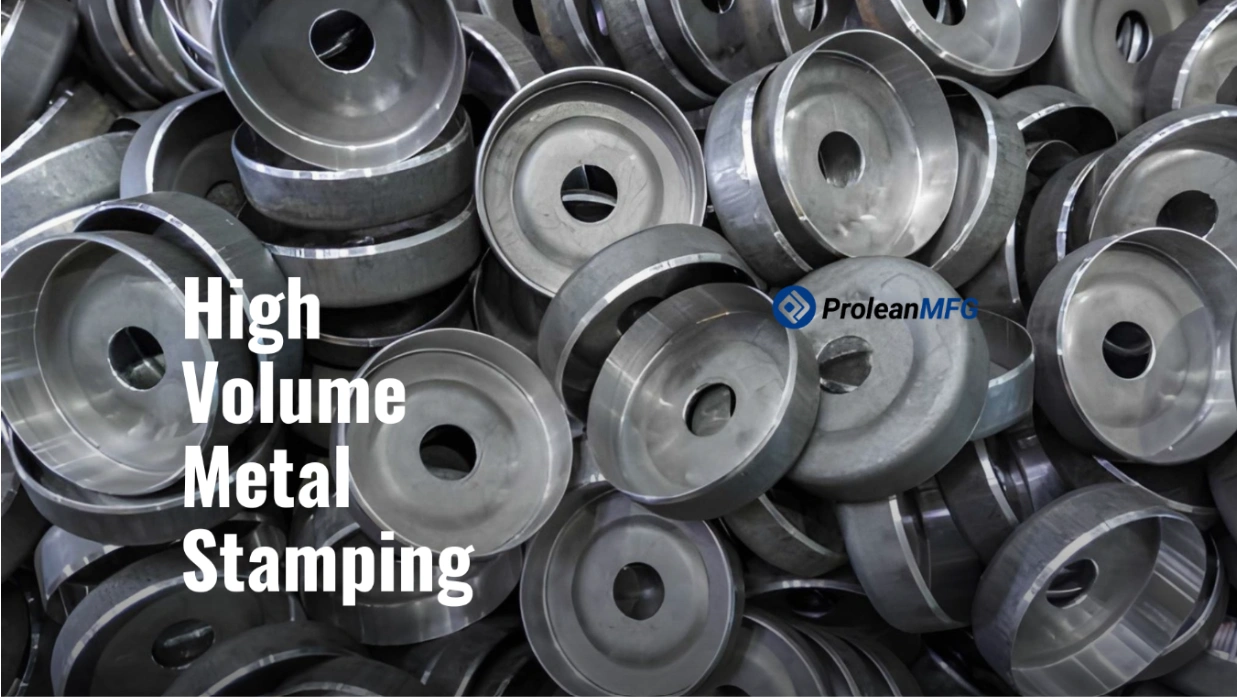

High-volume metal stamping is a mass-production process that uses presses and dedicated dies to produce large quantities of sheet-metal parts. The process uses metal sheets or coil stock, stamping presses, and dedicated dies to form parts at high production rates.
Tooling design plays a pivotal role in high-volume sheet metal production. Dies are developed according to part dimensions, forming sequence, and production targets to maintain stable output throughout long production runs.
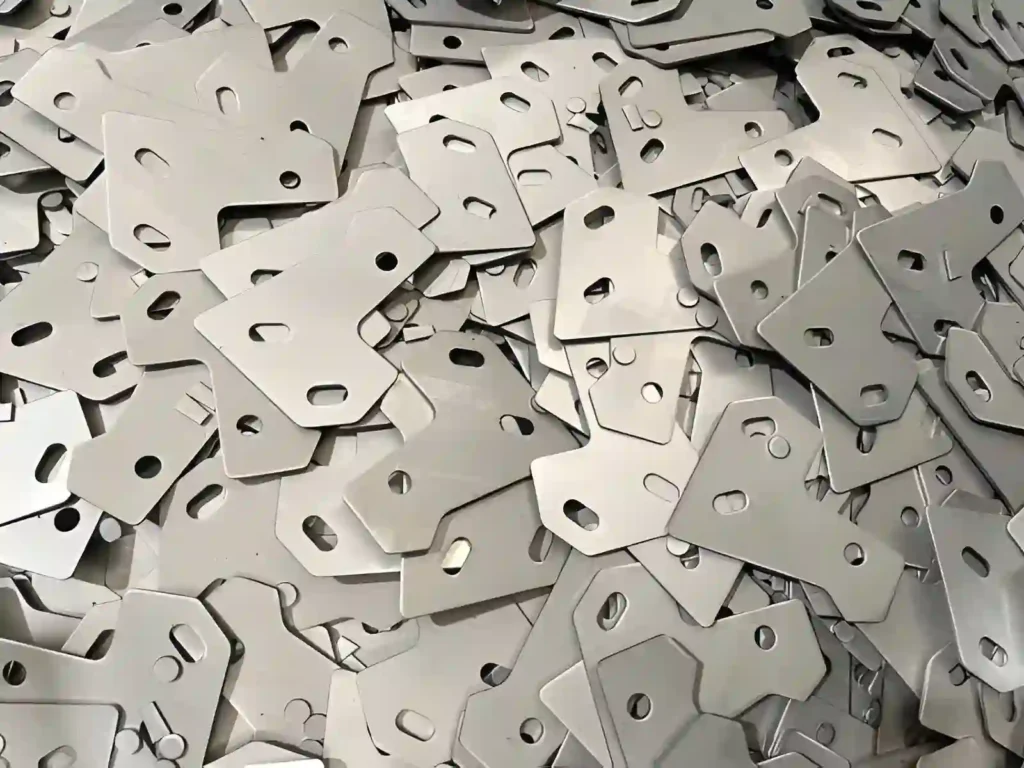
Steel-stamped metal brackets
Manufacturers use different stamping operations depending on part design. For example:
- High-volume progressive metal stamping performs multiple operations in a single sequence.
- Deep-draw stamping forms deeper shapes.
- Four-slide stamping supports smaller formed components.
This article explains high-volume metal stamping, its main production benefits, common stamping operations, and what to check before selecting a manufacturing supplier.
What Are the Common Stamping Machines Used in High-Volume Metal Stamping?
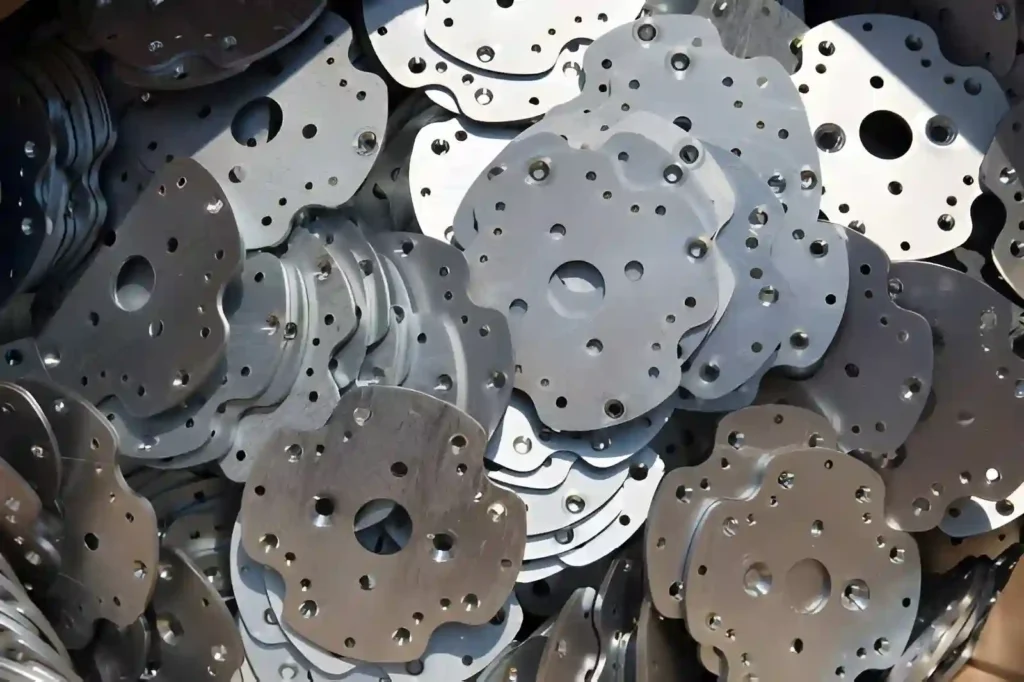
Stamped steel mold parts
The high-volume metal stamping process employs various forming techniques. These are typically based on the part geometry, production volume, material thickness, tolerance requirements, draw ratio, springback behavior, and the forming characteristics of the raw material.
In addition to influencing production rates, the way tools are laid out and fed can greatly affect part-to-part consistency.
Progressive Die Stamping Machine
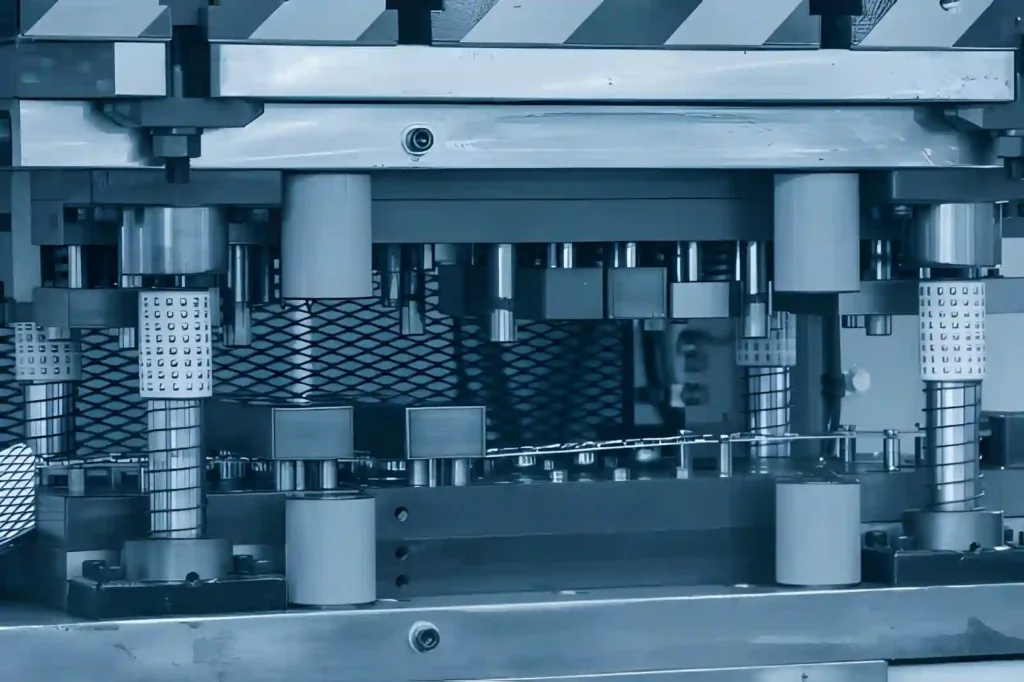
Progressive die stamping machine
Progressive die stamping manufactures the metal strip by passing it through multiple stations within a single die setup. Each station completes an independent operation before advancing the strip to the next station.
Typically, the initial stations perform piercing and blanking, while subsequent stations perform bending, embossing, or other forming. Finally, the completed part breaks away from the strip at the last station.
Because it enables rapid production, manufacturers primarily use progressive die stamping for terminal, bracket, clip, shield, and connector components.
Additionally, manufacturing companies appreciate progressive die stamping because each operation proceeds without manual intervention.
Deep Draw Stamping Machine
Deep drawing stamping creates deep shapes in flat sheet metal through punch force and a carefully regulated material flow. Material is drawn into the die cavity rather than cut off.
Components created by this process typically include metal enclosures, filters, containers, and cylindrical components. The draw radius, Blank Holder Pressure, and Lubricant application all have a significant impact on product quality during part forming.
When material flow is not properly controlled throughout the forming process, then defects such as wrinkling, tearing, or wall thinning can appear around the shaped area of the part.
Transfer Die Stamping Machine
In transfer stamping, individual components are automatically moved between multiple sets of tooling stations. Unlike progressive systems, the part breaks away from the strip immediately upon beginning production.
Transfer die stamping enables the manufacture of larger, more complex parts that require numerous forming operations within a single production run.
Automotive reinforcement components, structural bracket components, and body components formed by transfer stamping are examples of products manufactured by this process. Thicker materials that cannot be easily processed through continuous strip-feeding can also be used with this setup.
Fourslide Stamping Machine
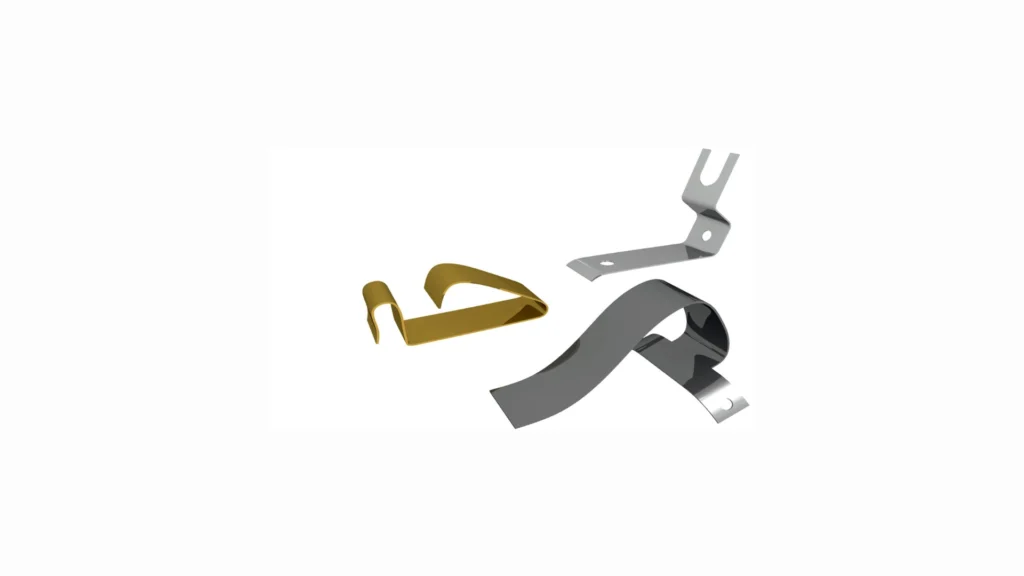
Parts produced using a 4-slide stamping machine
Fourslide stamping uses four slides that operate independently to create different orientations of the workpiece. Tooling is used to bend, tab, and add small details to parts as they pass through the machine.
Fourslide machines use compact tooling layouts that allow multiple bending operations to be performed at the same time.
Because multiple bending actions occur concurrently during production and fewer secondary bending operations are needed to create these types of parts, this process is ideal for producing many small metal parts with multiple close-proximity bends.
Examples of products made using fourslide equipment include electrical terminal components, retaining clip components, spring contact components, and wireform components.
Fine Blanking Machine
Fine blanking generates clean-cut edges with better dimensional accuracy than traditional blanking processes. When punching or shearing blanks, fine blanking involves supplemental holding pressure applied during cutting to prevent edge cracking.
Products manufactured using fine blanking often feature smooth surfaces and straight edges, making them ideal for high-precision applications.
Fine-blanked parts are commonly used in gear, locking plates, seat adjustment mechanisms, and transmission components. After fine blanking, many fine-blanked parts do not require further deburring.
Blanking and Punching Machine
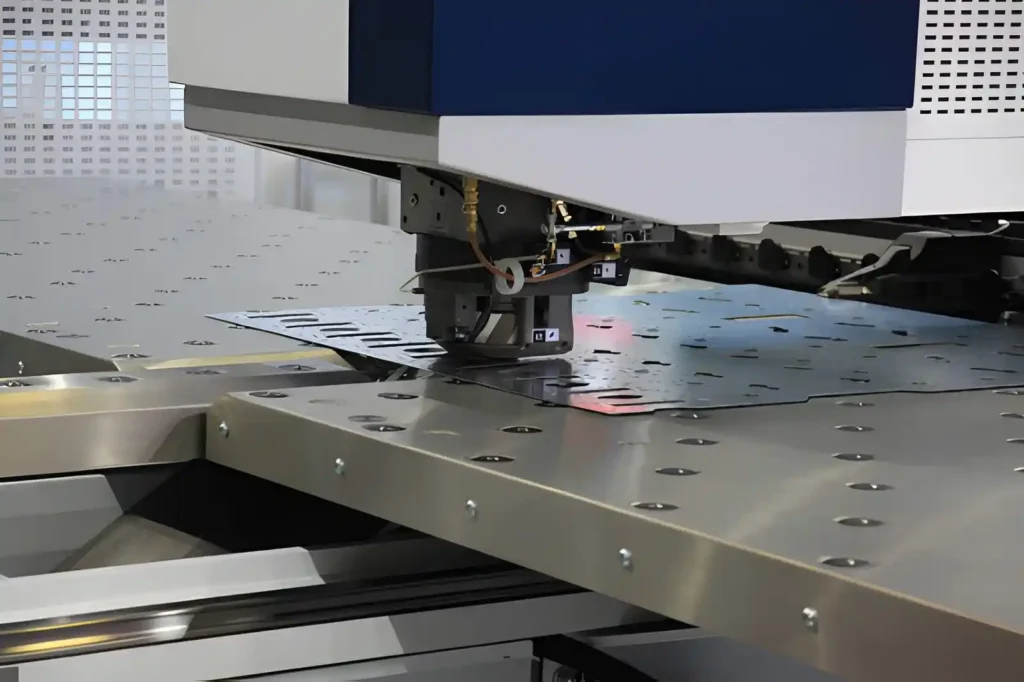
CNC punching machine
Punching creates holes or slots in sheet metal strips, while blanking cuts the outer profile of the part from the material. These are two basic functions in high-volume metal stamping operations.
Proper punch clearances and well-maintained dies help produce clean edges and accurate parts. Clearance is usually adjusted based on the sheet thickness, material, and required edge quality.
Blanking and punching are commonly combined with progressive die stamping to reduce manual intervention between processes and enhance overall production efficiency.
Common Metal Stamping Operations in High Volume Production
Stamping operations define how sheet metal is formed and processed inside the press system. Each operation affects part geometry, edge condition, formability, and production speed.
Sheet Metal Blanking
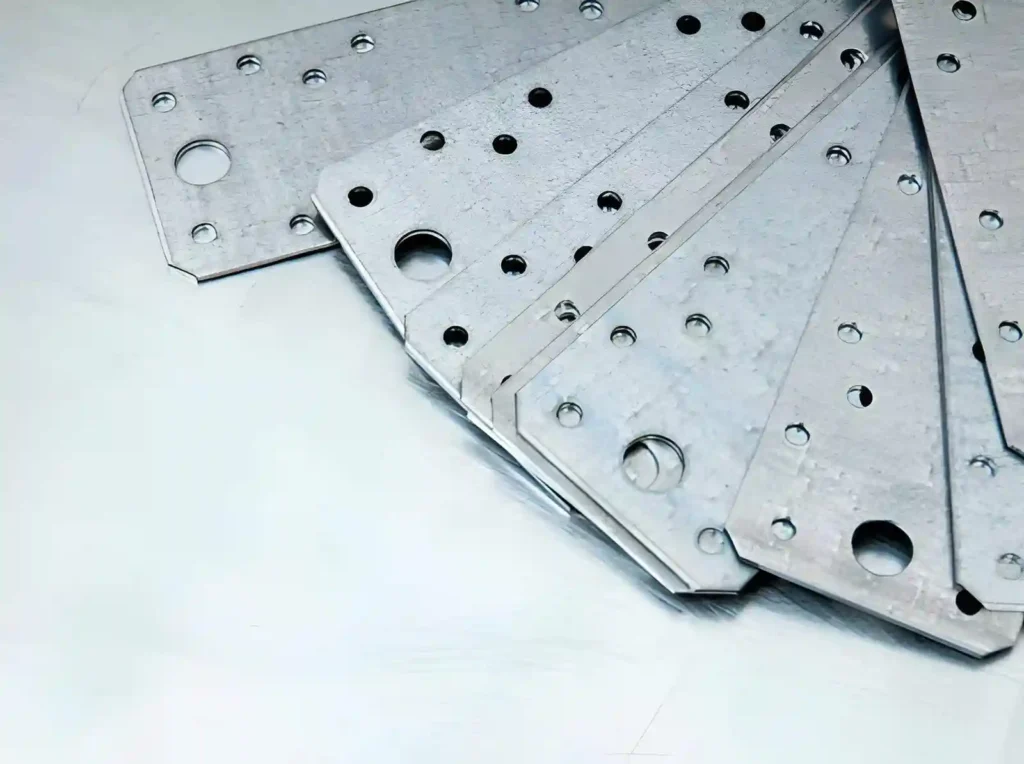
Sheet metal blanked parts
Blanks the desired part geometry out of the sheet metal in one press stroke. The punched-out area is the usable piece; all other sheets are waste. Generally, this step is performed first in the manufacturing process, before secondary forming processes begin. The quality of blanked parts generally depends on:
- Punch clearance
- Material thickness
- Die sharpness
Fine Blanking
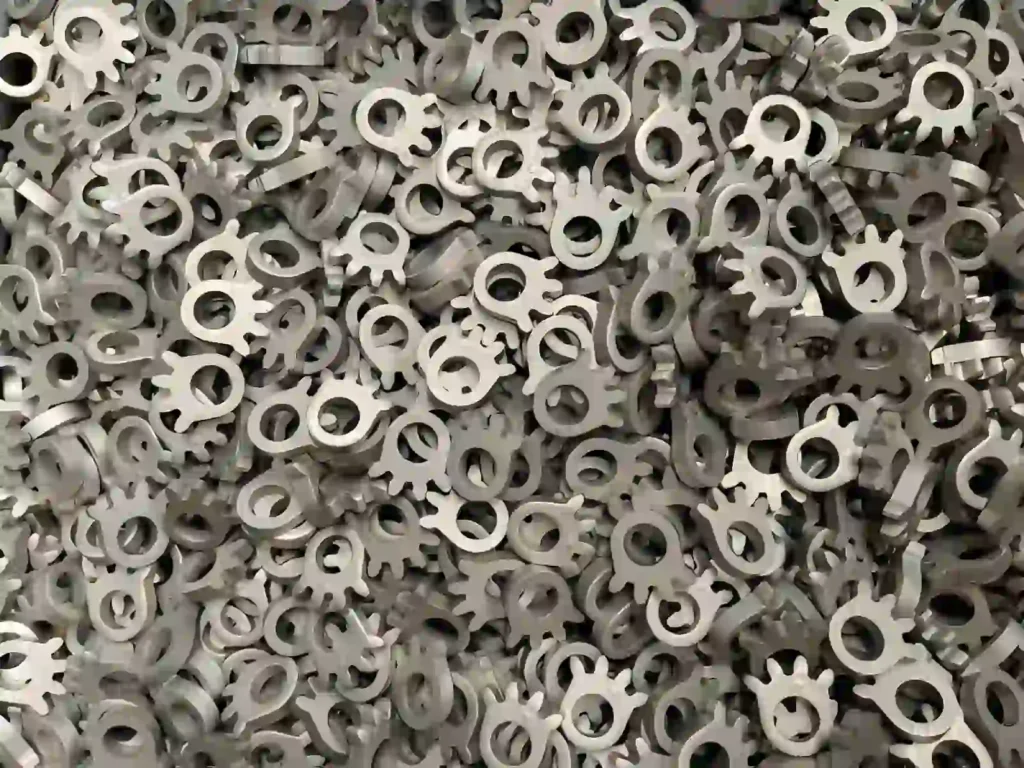
Fine blanked steel parts
Fine blanking produces cleaner edges and improves cut quality during the blanking process. The material being processed usually experiences significant pressure as the punch approaches. This reduces fractured edges and increases the flatness of the blanked material.
Common applications of fine blanking include transmission plates, lock parts, seat components, and precision flat parts. These require clean edges immediately off the press.
Sheet Metal Punching
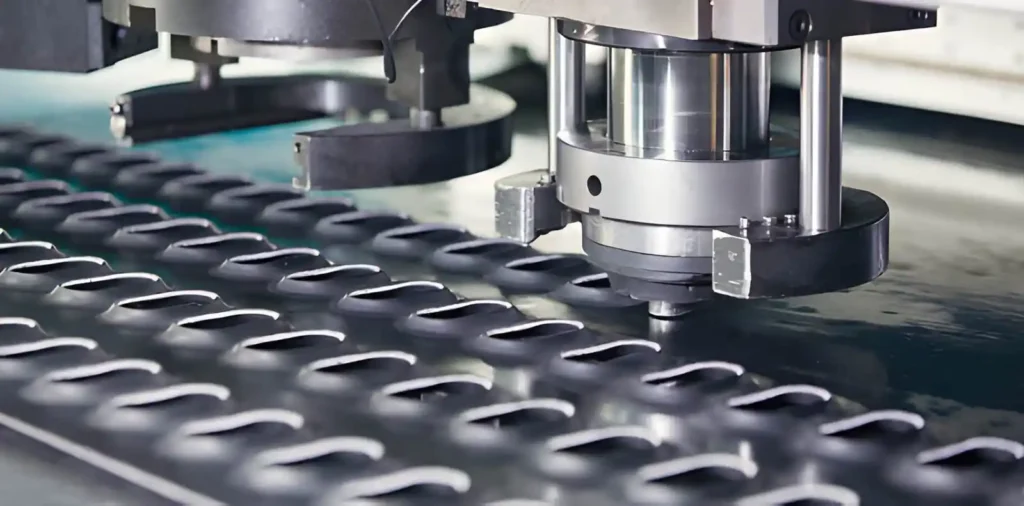
Punching metal parts
Punching removes internal sections of the material, creating holes, slits, or openings. In blanking, the cut-out piece is the final usable part, while in punching, the removed slug is treated as scrap.
A large number of high-speed punching applications include mounting holes, ventilation patterns, electrical panels, etc. Poor punch alignment may increase burr formation and decrease tool life during continuous operation.
Sheet Metal Trimming
This operation trims away excess material remaining after forming and deep drawing. It is performed to provide the finished edge condition on the finished product after the primary forming operations are complete. The common examples of trimming include drawn housings, automotive stampings, and formed covers.
Sheet Metal Lancing
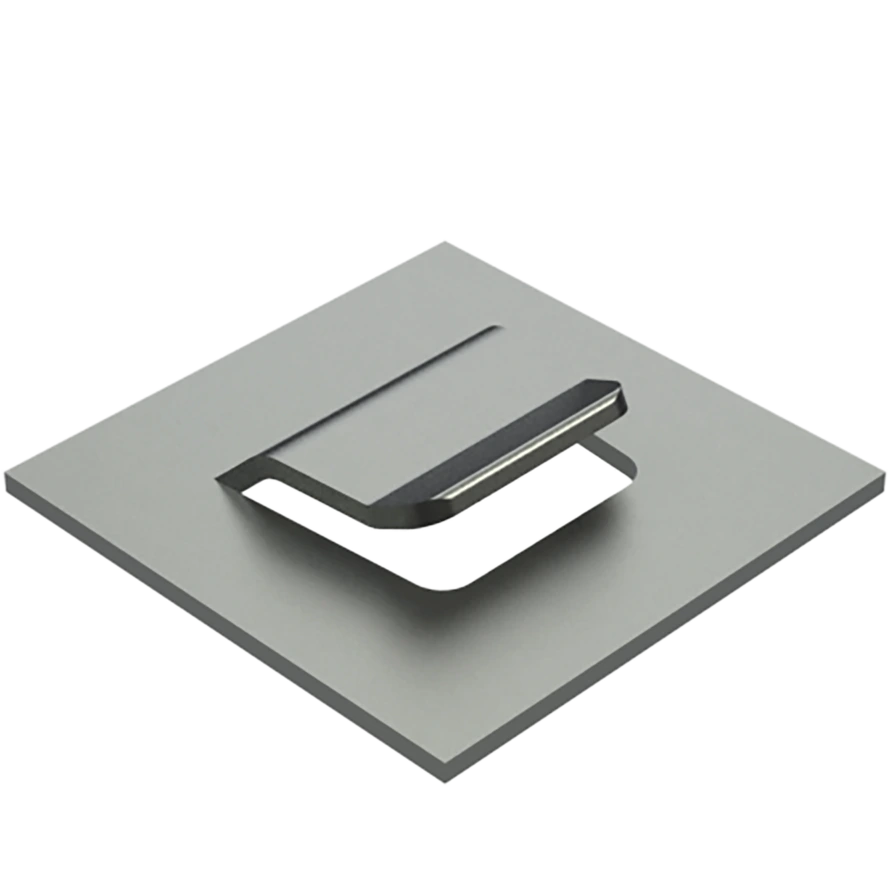
Sheet metal lance
Lancing cuts and lifts an area of the material but does not completely separate it from the sheet. It combines cutting and forming in one press stroke. Applications for lancing include retaining tabs, airflow vents, locking sections, and formed openings.
Sheet Metal Bending
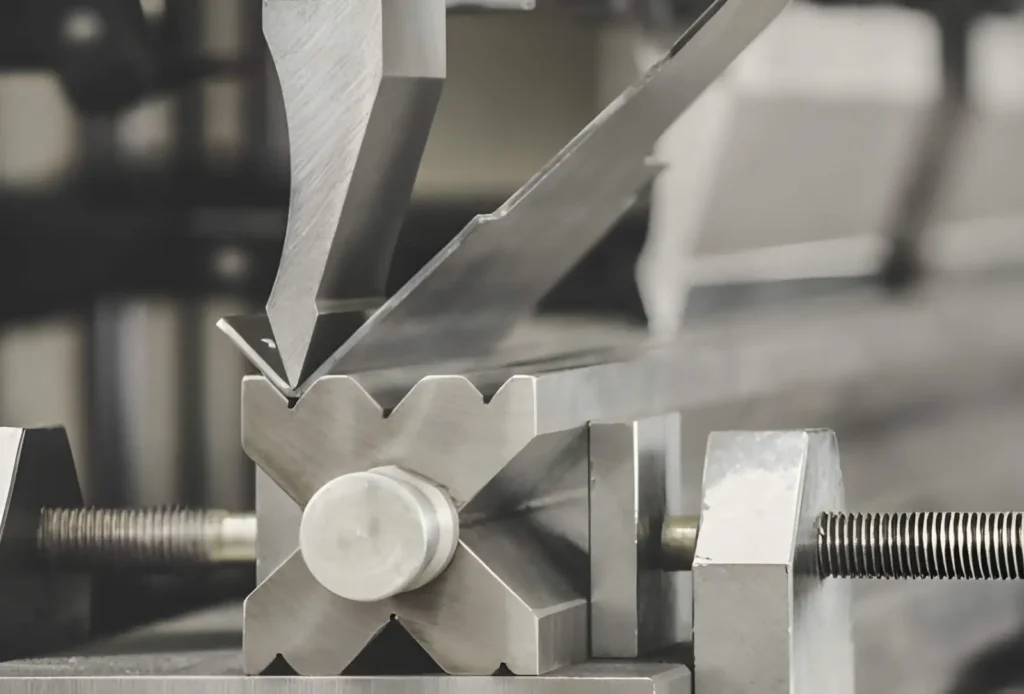
Sheet metal bending
Bending changes the shape of metal along a linear path using punch-and-die forces. As the punch moves through the die, the material extends on one side and compresses on the opposing side.
Common applications for bending include brackets, channels, support frames, and electrical enclosures. However, springback occurs more often in harder materials and thicker sheets.
Bottoming:
During bottoming, the material is forced down into the die angle. Increased pressure provides stability to the final bend shape after release. It helps produce sharper bend angles and better dimensional consistency for production parts.
Air bending:
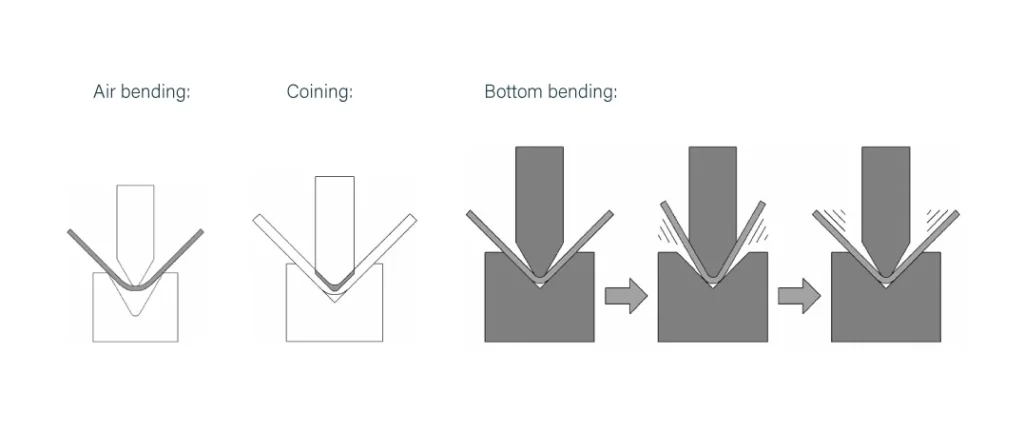
It forms the material without compressing it fully into the die bottom. The bend angle varies with the depth of the punch and die setup. Many manufacturers prefer air bending because it requires fewer tooling changes. One die can produce several bend angles.
Sheet Metal Flanging
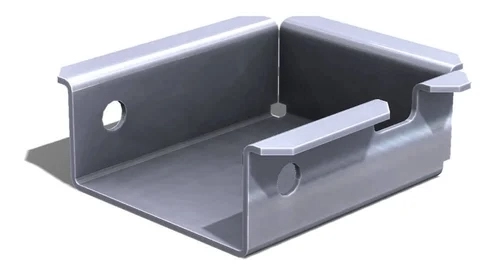
Sheet metal flange
Flanges form raised edges along part profiles and around openings. It strengthens the sheet’s weak areas and provides fastening locations. These raised edges are commonly added to panels, covers, and structural stampings for higher rigidity.
Sheet Metal Deep drawing
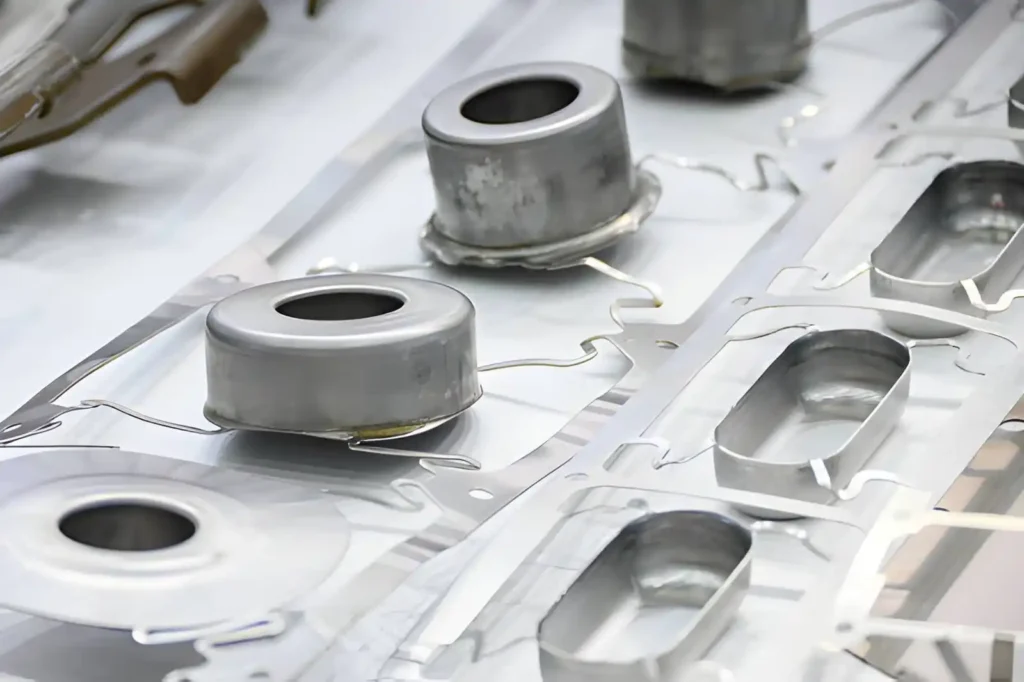
Deep-draw stamping reshapes flat sheet metal into hollow forms by controlling punch movement and blank-holding pressure. Typical examples for deep drawing include cylindrical housings, battery cans, kitchen sinks, and containers. Forming wrinkles and wall thinning become primary concerns when deeper forming is involved.
Sheet Metal Coining

Compresses localized areas of the material under very high pressure, creating accurate features and controlled surface details.
Examples of coining include contacts, identification marks, and precision-formed sections that require high-accuracy detail transfer.
Sheet Metal Embossing and Debossing
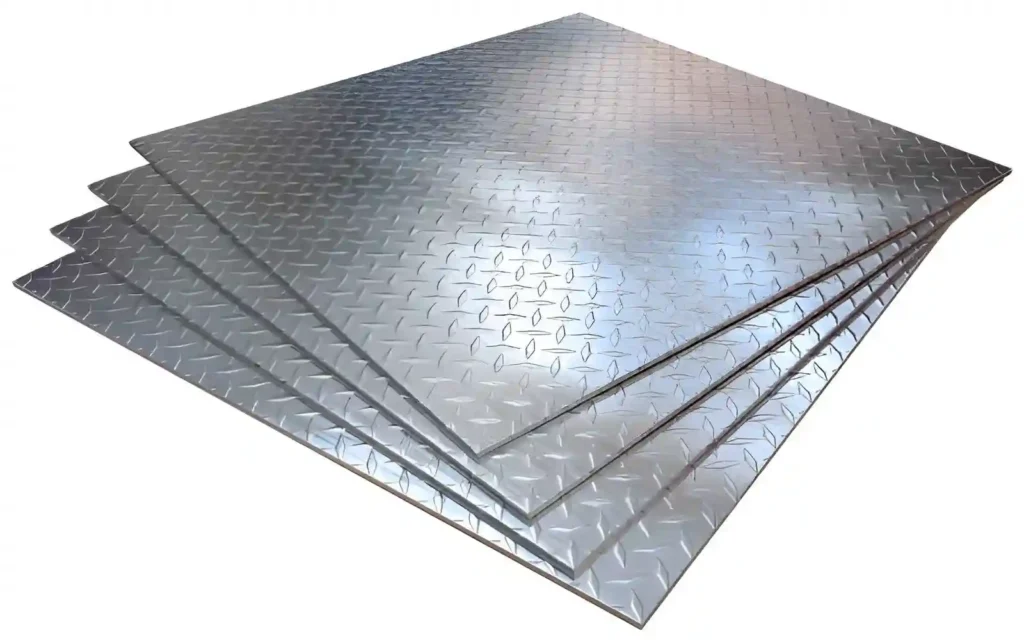
Steel embossed sheets
Embossing raises selected areas above the surface level. Debossing pushes details below the surface. Both embossing and debossing are used for logos, part numbers, textured surfaces, and decorative metal designations.
Why Manufacturers Use High-Volume Metal Stamping
Many manufacturers use high-volume metal stamping to produce multiple parts with an acceptable level of quality.
The advantage is the ability to produce the same part repeatedly with minimal batch-to-batch variability once the setup has been completed and the tooling developed.
Handles Large Production Runs Efficiently
The automotive, electronics, appliance, and industrial equipment industries may require thousands of identical parts daily. High-volume stamping helps maintain a stable supply of parts. This supports just-in-time assembly and reduces production slowdowns.
Stamping allows manufacturers to automate the process, enabling them to continue producing without interruption. This maintains consistent production rates and minimizes the impact of operator fatigue and personnel shortages on production downtime.
Lowers Production Cost Over Time
The initial investment in developing a tool (die) for stamping a part can be substantial; however, this expense decreases substantially per unit as production volumes increase.
Since the die can produce parts quickly, requires minimal manual labor, and shortens cycle times, it is feasible for manufacturers to produce similar parts using the high-volume metal stamping process for extended periods.
Produces Consistent Parts
One reason manufacturers prefer stamping for volume production is that consistency is achieved by properly designing a die to ensure that all holes, bends, cutouts, and measurements are repeatable on each part.
Assembly Issues
Manufacturers experience reduced assembly-related issues and fitting problems due to the consistency achieved through stamping. Additionally, production delays related to inconsistent parts are eliminated.
Combines Multiple Operations in One Process
Many modern stamping machines allow manufacturers to complete numerous operations, including cutting, punching, bending, embossing, and forming, within a single production cycle, utilizing the same die.
In addition to reducing the number of required machine setups for fabrication-type methods, high-volume metal stamping reduces handling time between operations.
Speeds Up Manufacturing
Compared to fabrication methods, which require separate machine setups to produce individual components of a final assembly, high-volume metal stamping significantly increases the speed at which parts are produced.
Modern progressive die systems can feed raw material into the system and produce finished parts in seconds. Faster production enables manufacturers to meet customer delivery requirements and minimize total lead time.
Reduces Material Waste
High-volume metal stamping typically uses strip layouts and die designs that optimize material use to minimize waste. In large-scale production, optimizing material use by even small percentages can yield significant long-term savings.
Supports Different Part Designs
High-volume metal stamping can work with a wide variety of materials, thicknesses, and part geometries. Tooling development can be updated when product design changes or new production specifications become necessary.
How to Choose the Right High-Volume Metal Stamping Supplier
A good high-volume metal stamping supplier should be able to handle large production volumes, maintain consistent part quality, support tooling maintenance, and deliver parts on time over long production runs.
Industry Experience Matters
When you’re looking for a good metal stamping supplier, it’s very helpful to find one who actually does a lot of metal stamping. They will know how to fix production problems quickly and know what works and what doesn’t with their tooling, materials, tolerance, and forming capabilities.
When you get into really complicated metal stamping jobs, short lead time and/or need for close quality control, this is even more important. Automotive, electronic, and other industries that require close quality control fit into these categories.
Check Production Capacity
While some suppliers may do great work producing sample parts, many cannot meet the quantity demands of larger production runs. It is always worth confirming that a potential supplier can meet your required monthly capacity, press tonnage, material thickness range, die maintenance plan, material availability, and inspection frequency before committing to a job.
Also, make sure that if your sales volume grows significantly after an initial order, it can grow alongside you.
Review Their Tooling and Equipment
The quality of a producer’s output is generally dependent upon the state of their tooling and the type/condition of their machines: modern progressive dies, automatic feeders, modern presses, etc.
All contribute to improved consistency and a lower chance of errors during runoff. In addition, having in-house tooling Support allows a supplier to react much quicker when a design change or die repair is necessary.
Look at Their Quality Control Process
Quality control processes need to be robust and consistent. Most reliable manufacturers inspect parts during production rather than only checking finished goods. They also use quality systems and inspection methods such as SPC, FAI, CMM inspection, and PPAP documentation to maintain uniform quality across the batches.
Also, ask how they monitor processes for tools and parts, and how they ensure consistency from one end of a multi-part program to the next.
Lead Time Should Be Realistic
While fast lead times are nice, consistent shipping is even more important for long-term contracts. Make sure the supplier has provided realistic expectations for ship dates and has met those expectations in the past. Failure to deliver timely can cause costly interruptions to your downstream assembly operations and add additional expense due to expedited shipping and overtime labor.
Communication Should Be Clear
Effective communication prevents mistakes in production. Look for a good stamping supplier who communicates clearly about the status of tool development, sample production, material availability issues, the upcoming production schedule, and inspection results. Slowness in communication is even worse when you are dealing with higher volume orders.
Engineering Support Adds Value
Many contract manufacturers simply take the designs given to them by the customer and build exactly what is called out in the prints. Others assist customers in optimizing manufacturability.
Suppliers who assist customers in improving manufacturability can save on raw materials, reduce tooling costs, stabilize forming, and ultimately reduce the total production cost per unit.
Check Long-Term Reliability
Long-term stamping programs can last for years. Selecting a good long-term partner reduces the risks associated with both production and ongoing tool support for repetitive orders.
High-volume stamping is a better choice than CNC machining or sheet metal fabrication when the same part needs to be produced in large quantities at a lower per-part cost.
High-Volume Metal Stamping Services for Production Parts
Prolean MFG supports manufacturers that need reliable, high-volume metal stamping for production-ready components. For example, we often produce custom brackets, covers, clips, terminals, housings, supports, and custom-formed components used in automotive, electronics, industrial equipment, consumer products, and energy applications.
Our Metal Stamping Service capabilities include:
- Progressive die stamping for continuous high-speed production
- Precision punching, bending, and forming operations
- Deep draw stamping for formed metal components
- Support for stainless steel, aluminum, copper, brass, and carbon steel
- Secondary operations such as tapping, welding, deburring, and finishing
Please share your CAD file, material specifications, and estimated production volume so we can discuss your project with our engineering team.