
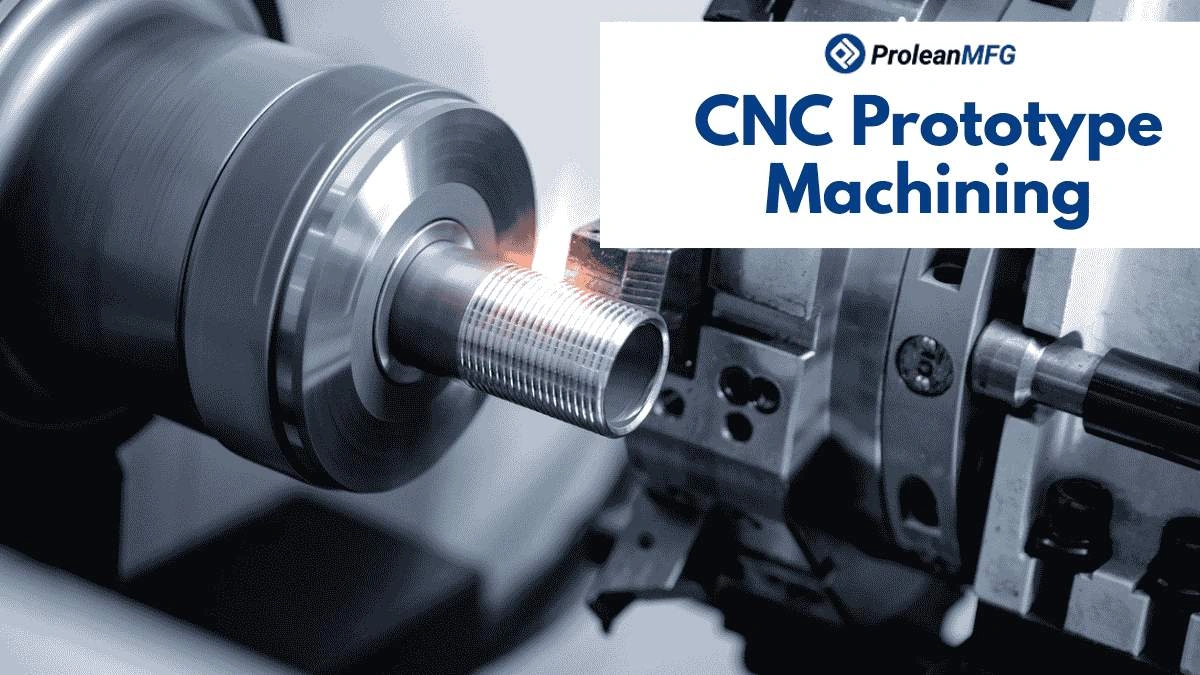

Prototypes are the backbone for new product development and innovations. Manufacturers and engineers rely on them to test designs & ideas in real-world scenarios. Consequently, they can identify limitations and areas for improvement through CNC machining, 3D printing, or other prototyping methods.
CNC rapid prototyping can produce conceptual and functional models within 1-3 days, allowing more time for iterations and quick design changes. Therefore, industries such as automotive, consumer electronics, medical, and aerospace choose CNC prototype machining to leverage its flexibility and gain a competitive edge.
The upcoming sections will elaborate on the CNC prototype machining concept, common materials, applications, advantages, and disadvantages.
Let’s get started!
What is CNC Prototype Machining?
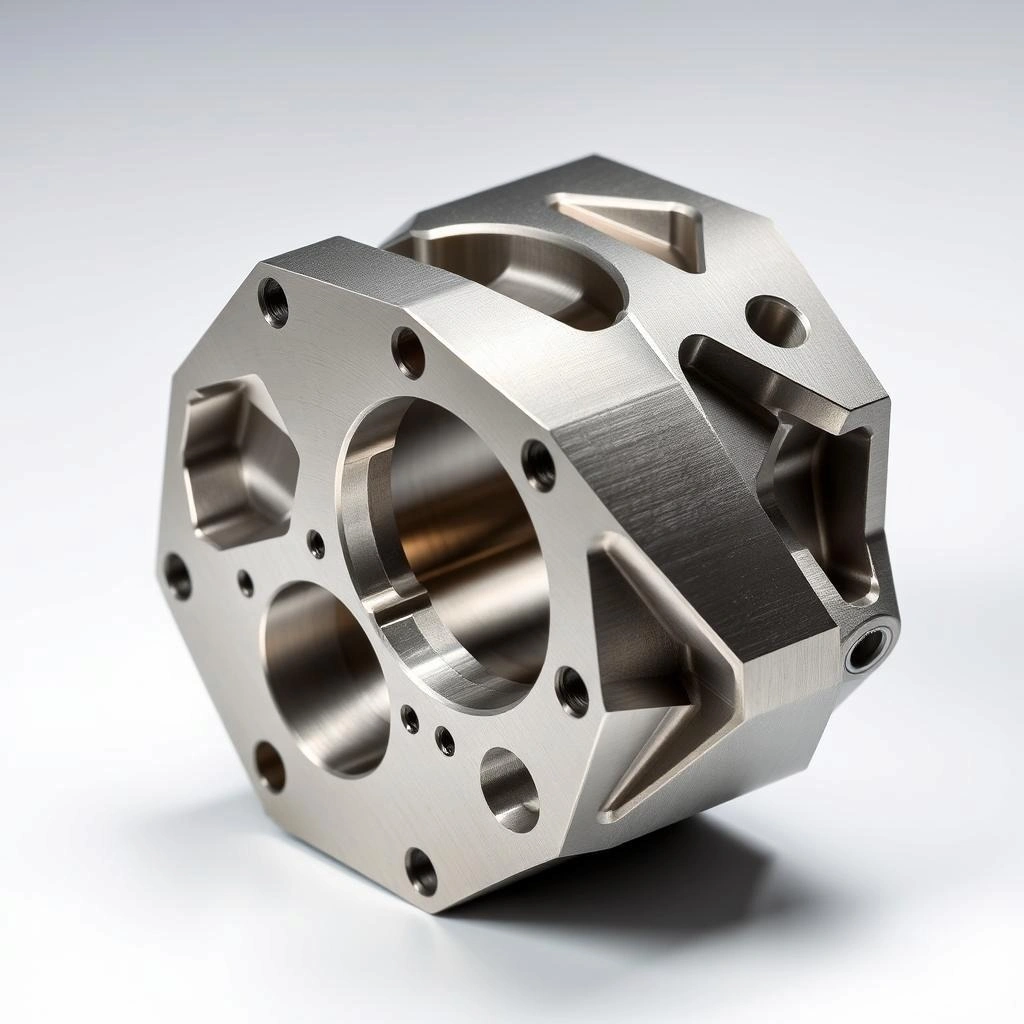
CNC prototype
Prototype machining involves the creation of final parts in small volumes. Conceptual prototypes might not include all the designed features, whereas functional models include all the features and qualities, exactly as desired.
What makes it different from regular machining is flexible tooling, minimal fixturing, and quick-lead-time strategies. Rather than a stable setup and specialized procedures, prototype machinery follows a standard setup, tools, and quick programming. Additionally, it does not prioritize aesthetic finishes and dedicated machining cycles.
No matter which industry you are in, CNC rapid prototyping enables the quick testing of manufacturability, physical defects, functional errors, and performance.
The Process of CNC Prototype Machining
CNC prototype manufacturing involves a series of steps from preparing a CAD model and CNC programming to machining operations and surface treatment.
Let’s break down the steps of prototype machining:
- Conceptual draft and identification of end requirements
- Development of Computer-aided Design (CAD) for a prototype
- Design simplification and DFM optimization
- CNC programming in CAM software
- Selection of Prototype Material
- Tool selection and development of machining strategies
- Machining Operations
- Post-processing operations
- Quality inspection and measurements
- Prototype testing and design adjustments
Is CNC Machining a Good Option for Prototyping?
Yes, CNC machining is one of the best prototyping options in CNC prototype manufacturing. It can convert a CAD design into a physical form using automated instructions for machining cycles. So, the tool can shape the raw materials.
Unlike 3D-printed prototypes, machined prototype parts are structurally robust and more stable. Additionally, they can maintain tight tolerances and a good surface finish.
Rapid CNC Prototyping and Rapid Tooling: Are They the Same?
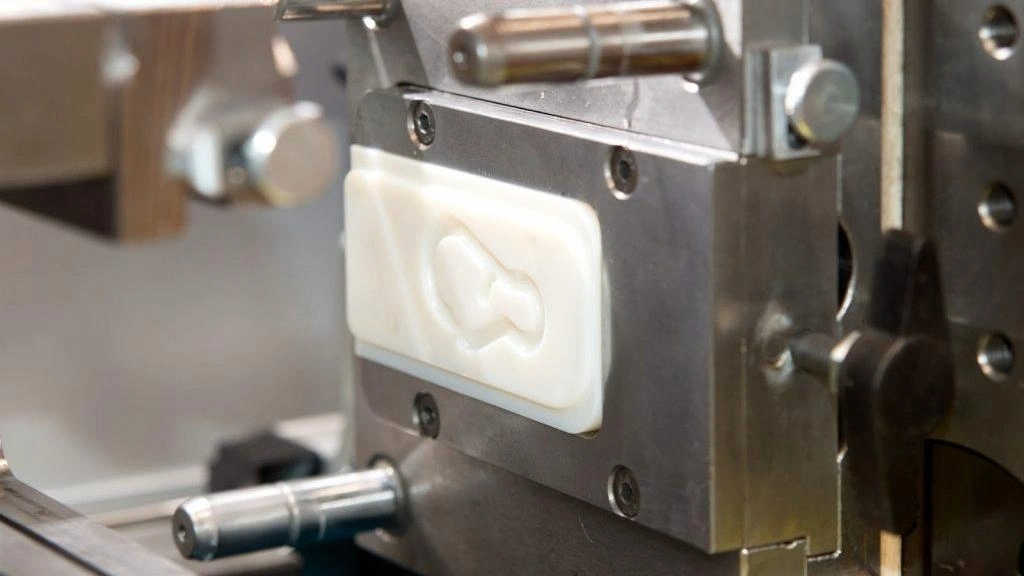
Rapid tooling
No, they are not the same, but somehow related to each other. Rapid tooling is the process of making molds, dies, and fixtures using CNC machining, which are later used to produce injection-molded prototypes. So, rapid tooling is typically beneficial for thermoplastic parts. On the other hand, “Rapid CNC Prototyping” is a broader term and is not limited to molds & tools.
The main idea of rapid tooling is to leverage the benefits of both CNC machining & injection molding. If you need plastic part prototypes, make an injection mold with a CNC machine and produce injection-molded prototypes using molding machines.
What Are the Common CNC Prototyping Materials?
One of the key reasons CNC prototype machining services are preferred across industries is the diversity of materials. You can use different metals, alloys, plastics, and composites.
Each material has a different level of machinability, which affects processing costs and time. Therefore, you must prioritize CNC-machinable materials for prototypes.
Next, the following are the common CNC prototyping materials.
- Aluminum 6061, 6063, 7075.
- Mild Steels
- Stainless Steel 303, 304, 316, and 416.
- Copper
- Brass
- Bronze
- Titanium alloys
- Plastics ( ABS, Acetal, Acrylic, Nylon, Polystyrene, PP, PEEK, PC, etc.)
3D Printing Vs CNC Prototype Machining
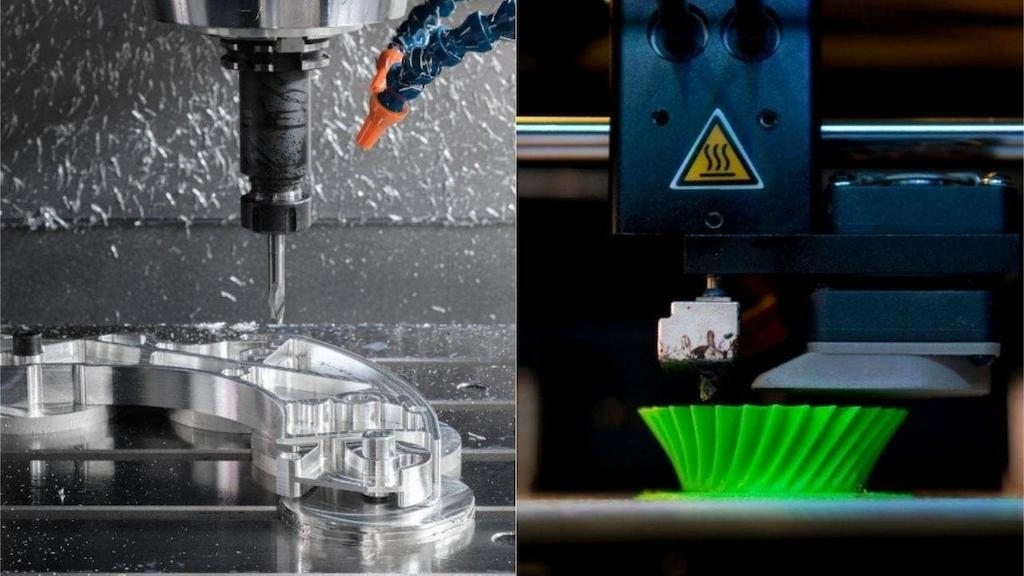
CNC machining vs 3D printing
Unlike CNC machining, 3D printing is an additive manufacturing process for designing and producing parts and products. It involves controlled deposition of material to build the final shape through a layer-by-layer structure.
3D printing does not require complex tooling & fixtures, and prototype building can be started quickly. However, there are limitations regarding
Let’s make a head-to-head comparison with a table.
| Aspect | 3D Printing | CNC Prototype Machining |
| Design Flexibility | Excellent with intricate internal features and non-uniform contours | Limited, and determined by the reach of tools and fixtures |
| Dimensional Accuracy | Lower than CNC: ±0.1 to 0.5 mm | Higher than 3D printing |
| Surface Finish | Visible layers, and need post-processing | Smooth as-machined finishes |
| Material Availability | Mostly plastics and a few metals | Most of the engineering materials |
| Structural Strength | Lower, due to anisotropic layering | Strong and prototypes retain original strength |
| Speed | Faster than CNC: a few hours- 1 day | 1- 7 days, depending on complexity and volume |
| Setup Cost | Low, due to minimal tooling | Higher due to programming, tools, and fixtures |
| Material Waste | Near-zero wastage | Higher |
| Best for Prototypes | For complex shape & rapid iterations | Functional & performance testing prototypes |
Applications of CNC Prototype Machining
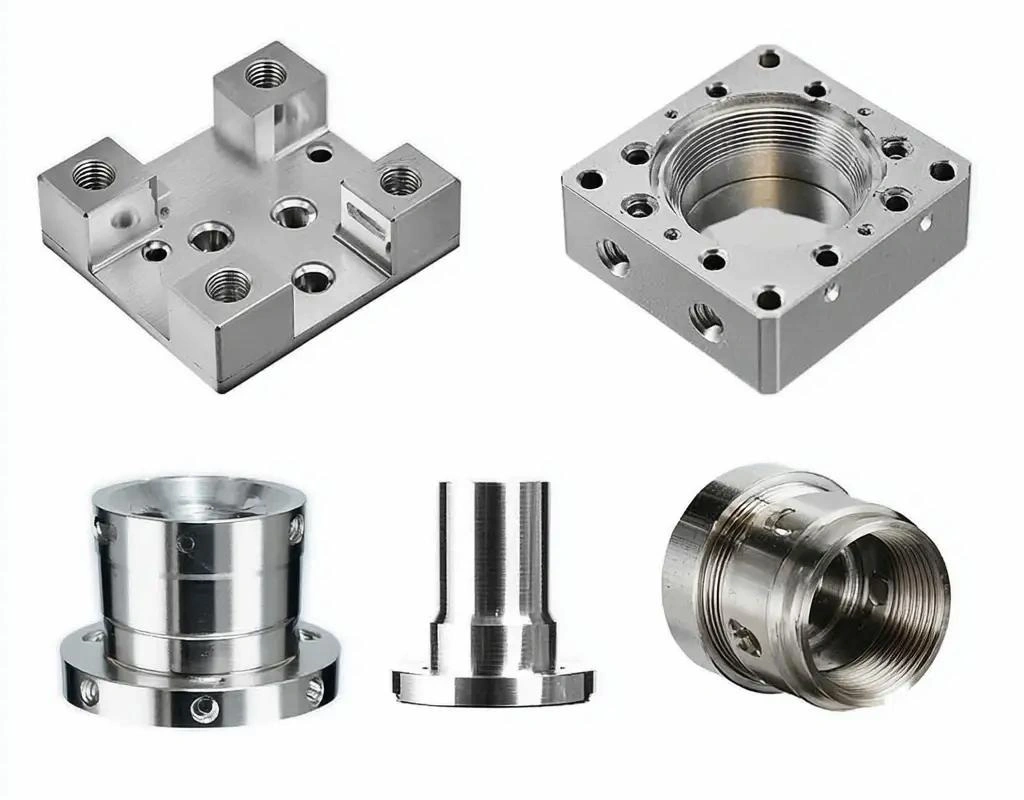
Custom CNC-machined prototypes
Prototyping is critical for all types of companies before introducing new products or parts to the market or making improvements to existing products. Automotive, Aerospace, Medical, Defence, Architecture, and many other industries use CNC prototype manufacturing to validate and test their designs.
Let’s break down the applications further with examples.
Automotive
Automotive companies prefer CNC machining for prototyping of auto parts where strength and precision matter. For instance, transmission parts, suspension knuckles, engine components, and brake calipers.
Aerospace
CNC machining is ideal for prototyping lightweight, precise aircraft components. So, their essential performance and safety can be ensured. Common examples include turbine blade test coupons, fitting components, fuel system parts, and structural items.
Medical & Dental
Patient safety is very critical in the manufacturing of medical and dental components. Any deviation in precision, finish, or quality directly harms the patient. So, CNC prototype machining services help in this regard. E.g., surgical instruments, custom implants, diagnostic equipment components, and prosthetics.
Defense
Whether it is retrofitting existing military equipment and innovating new ones, CNC prototyping plays a huge role in the R&D of the defence industry. E.g., weapon mounts, drone frames, armed vehicle parts, and missile components.
Architecture
Architectural items are prototyped with CNC prototype machining services, which allows the production of custom shapes with good aesthetics in small volumes. For example, decorative panels, railing joints, mounting anchors, and facade brackets.
Construction
You can make heavy-duty functional prototypes with CNC prototype manufacturing, which is beneficial in construction. Subsequently, the structural integrity of machined parts remains intact over time. So, lifting hook, wear plate, drill rig, and other components are tested with CNC prototypes.
Energy
Oil & gas, wind, hydropower, solar, and other energy-related industries also use machined prototypes for testing. E.g., valve bodies, oil & gas fittings, and pump impellers.
Advantages of CNC Prototype Machining
CNC rapid prototyping is a fast, flexible, precise, consistent, and cost-effective process. Let’s further break down these pros.
- Dimensional Consistency: The prototype machined parts are dimensionally accurate and consistent with one another, ensuring repeatability.
- High Precision: Precise prototypes can be produced with CNC machining, which is beneficial for fittings, fixtures, and tools.
- High Production Speed: CNC automation allows for quickly running multiple cycles with the same set of instructions and setups. It helps to reduce the time to market.
- Cost-effective: It saves a lot of money and effort, especially if you plan to scale production after prototyping.
- Flexibility in Design Changes: If any design modifications are needed during prototyping, CNC allows quick changes.
Disadvantages of CNC Prototype Machining
CNC prototype machining also has some disadvantages, such as limitations in geometrical complexity, material wastage, and the need for expert operators and engineersmanpower.
- Material Wastage: As it is a subtractive process, part shaping results in material waste, which increases the cost of the prototype.
- Geometrical Limitations: It is challenging ( or impossible) to create intricate features with machining, such as overhangs, deep & narrow cavities, and thin walls.
- Skilled Manpower: Due to the complexity of the setup and operation of CNC machines, they require skilled engineers and technicians.
Design Tips for Prototype CNC Machining
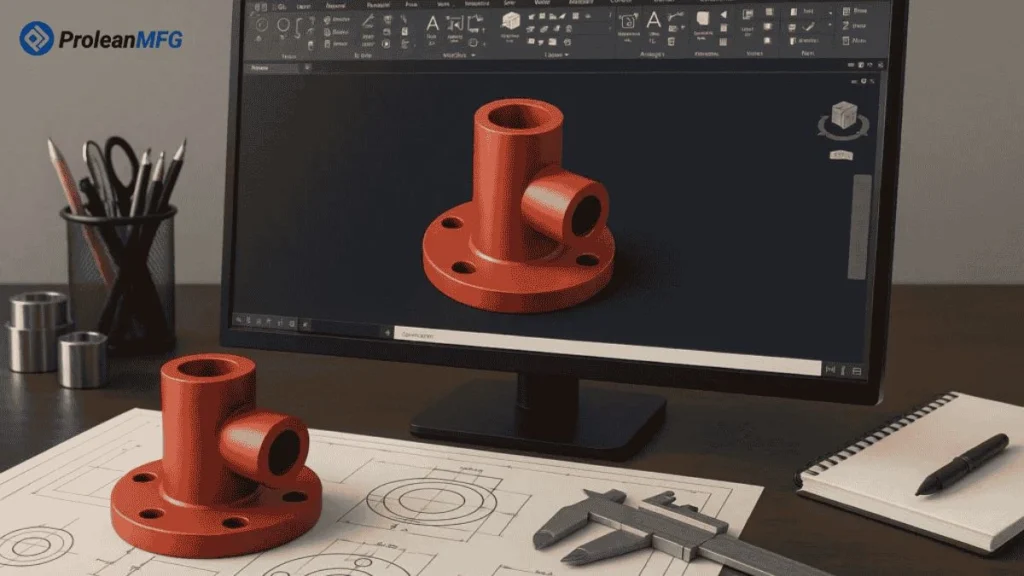
CNC prototype design
As mentioned before, CNC prototype machining starts with the creation of an engineering design that is machinable and meets the desired specifications. Designers prepare the CAD model of the prototype in computer software, from which the CNC programming is generated.
Below are some tips on how you can optimize the design for CNC rapid prototyping.
1. Consider Design for Manufacturability
Consider DFM variables, such as cavities, wall thickness, and irregular profiles. The main idea is to ensure the tool reaches and streamlines the tool passes.
2. Maintain a Minimum Wall Thickness
Ensure uniform wall thickness and maintain the minimum value specified for the material type. For instance, > 1 mm for aluminum and > 1.5 mm for plastics. The reason is that thin-walled surfaces are prone to vibration and chatter during machining.
3. Break down the Design
If possible, break the CAD design into smaller parts and join them later, so the drawing is simpler and easier to machine. Furthermore, consider the machining steps (number of operations required) when creating the CAD drawing.
4. Choose Tolerances Carefully
CNC machines with 5 or more axes can achieve extremely tighter tolerances, but the cost and time increase significantly. Therefore, do not over-precise your drawing and set tolerances that are necessary for testing.
Checklist for Finalizing the CAD File of Prototype
It is better to check all the features and DFM variables of the prototype design before submitting it to the manufacturer for the quotation. For reference, we have listed some points below.
✓ No sharp inside corners
✓ Walls thick enough
✓ Tolerances achievable
✓ Material is easy to machine
✓ Depth-to-width ratio for pocket is greater than 4
Summing Up
Prototyping helps identify mistakes in designed parts/products, test functionality & performance, and avoid long-term defects. Especially, CNC prototyping machining gives businesses a competitive edge in precision, finish, repeatability, and ease of scalability. Additionally, it is a medium of innovation in many industries.
Do you have a ready-to-machine design and are looking for a reliable manufacturer? ProleanMFG can prototype your ideas with great attention to detail and accuracy. Our rapid prototyping services are quick and can deliver the prototypes as fast as 1 day.
FAQ
What is a CNC prototype?
A CNC prototype is a physical part of a CAD design produced through CNC machining.
What does a prototype machinist do?
A prototype machinist interprets the designs, creates CNC programs, sets machines, and operates them to produce designed prototypes.